
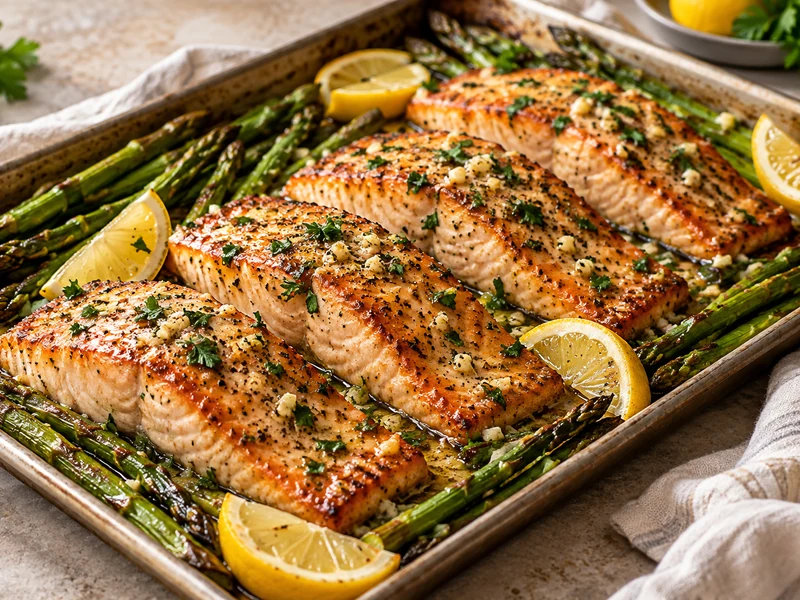
This garlic butter salmon with roasted asparagus turns a short ingredient list into a polished dinner in about 30 minutes. The salmon stays moist beneath a glossy lemon-garlic butter, while the asparagus roasts beside it until tender with lightly crisp tips. Because everything cooks on one pan, the recipe is as practical for a weeknight as it is attractive enough for guests.
RECIPE CARD
Garlic Butter Salmon with Roasted Asparagus
Ingredients
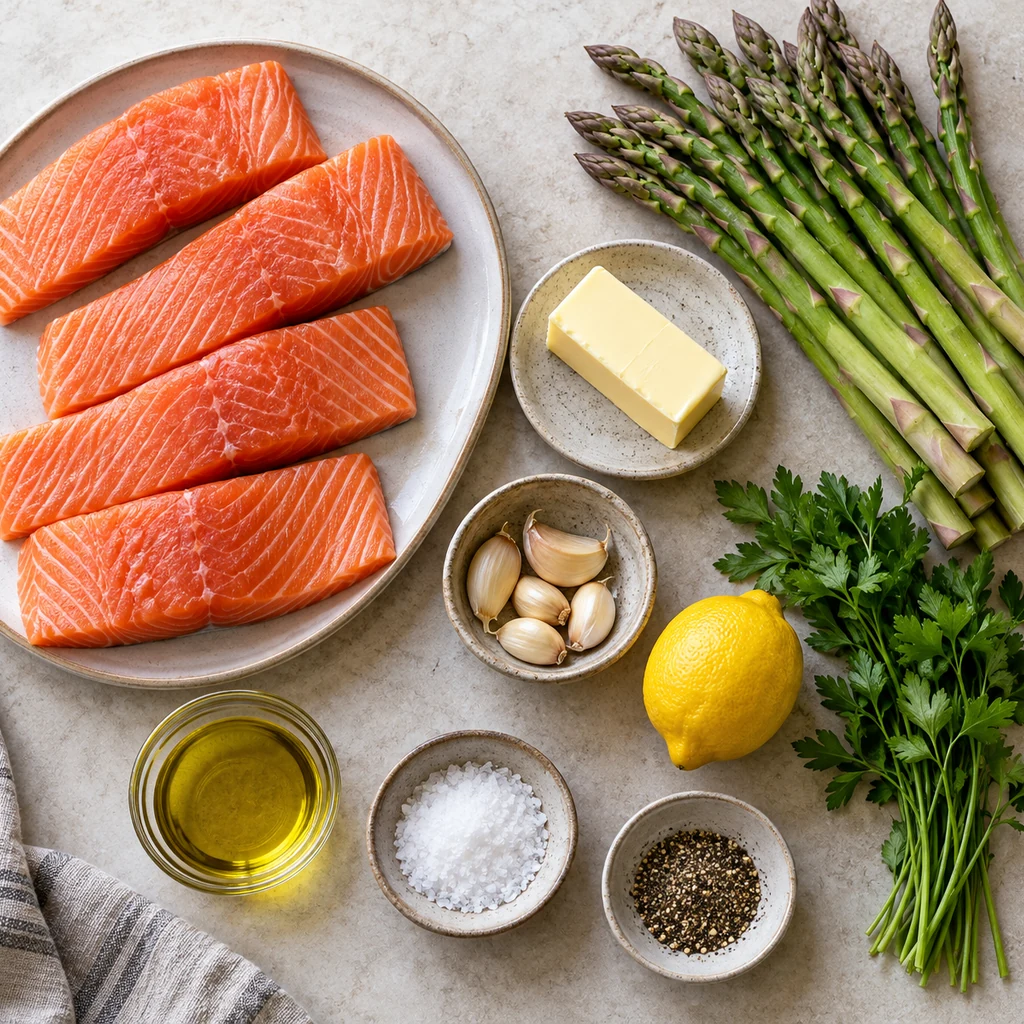
- 4 center-cut salmon fillets (about 6 ounces each)
- 1 pound medium asparagus, woody ends trimmed
- 4 tablespoons unsalted butter, melted
- 4 garlic cloves, finely minced
- 1 medium lemon, zested and juiced
- 2 tablespoons chopped fresh flat-leaf parsley, divided
- 1 tablespoon extra-virgin olive oil
- 1 teaspoon kosher salt, divided
- 1/2 teaspoon freshly ground black pepper
- Lemon wedges, for serving
Quick Method
Condensed overview. Use Full Instructions for the complete method, timing and doneness details.
- Heat the oven: to 425°F (220°C) and line a large rimmed sheet pan with parchment paper.
- Season the salmon and asparagus: Toss the asparagus with olive oil, half the salt and black pepper. Spread it in one layer. Pat the salmon dry, place it on…
- Make the garlic butter: Stir the melted butter with the garlic, lemon zest, 1 tablespoon lemon juice and most of the parsley.
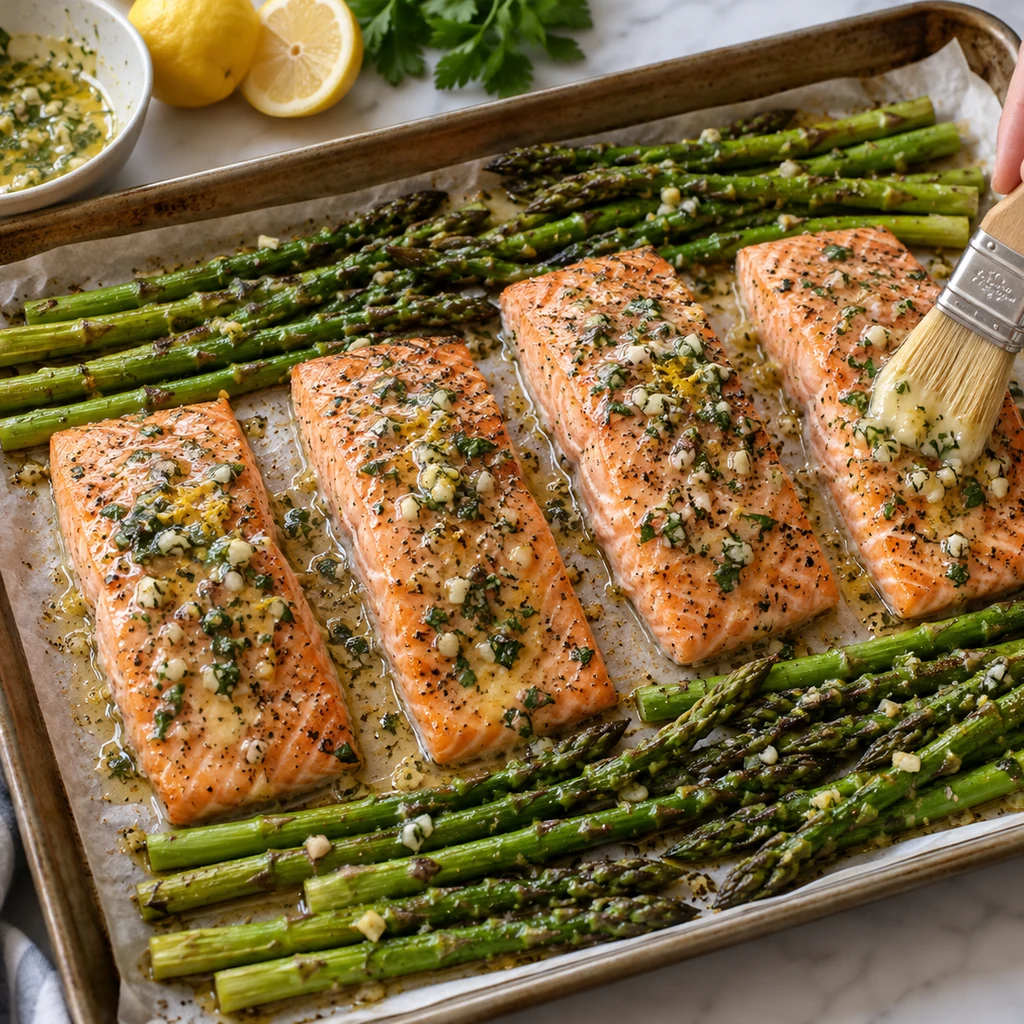
- Coat the pan: Brush most of the garlic butter over the salmon. Drizzle the remainder over the asparagus and toss gently, keeping everything in one layer.
- Roast: for 12 to 15 minutes, until the salmon flakes easily and reaches 145°F (63°C) in the thickest part and the asparagus is tender-crisp.
- Finish and serve: Rest for 2 minutes, then garnish with the reserved parsley and lemon wedges. Serve immediately.
The method is deliberately simple: season the salmon and vegetables, mix the flavored butter, then roast both together. A final squeeze of lemon keeps the rich sauce bright. If you enjoy streamlined dinners with minimal cleanup, this belongs beside our one-pan honey garlic chicken and veggies in your regular rotation.
Why You’ll Love It
- Fast and complete: Protein and vegetables cook together, so dinner is ready in roughly half an hour.
- Big flavor, little effort: Butter, fresh garlic, lemon, and parsley create a restaurant-style finish without a complicated sauce.
- Easy to adapt: You can change the herbs, add another quick-cooking vegetable, or scale the recipe for a smaller household.
Choosing the Best Ingredients
Use four center-cut salmon fillets of similar thickness so they finish together. Skin-on or skinless fillets both work. Pat the fish thoroughly dry before seasoning; surface moisture prevents the butter from clinging and can make the salmon steam rather than roast.
Choose asparagus spears that are firm, bright green, and similar in width. Very thin spears may be ready before the salmon, while extra-thick ones may need a head start. Medium spears are ideal for this timing. Snap or trim away the woody ends, then dry the asparagus after washing so the oil coats it evenly.
Fresh garlic and lemon matter here because there are so few ingredients. Lemon zest brings floral citrus flavor without additional liquid, and the juice sharpens the buttery sauce. Unsalted butter gives you control over seasoning. Flat-leaf parsley adds freshness, but dill, chives, or a little thyme are excellent alternatives.
How to Make Garlic Butter Salmon with Roasted Asparagus
1. Heat the Oven and Season the Pan
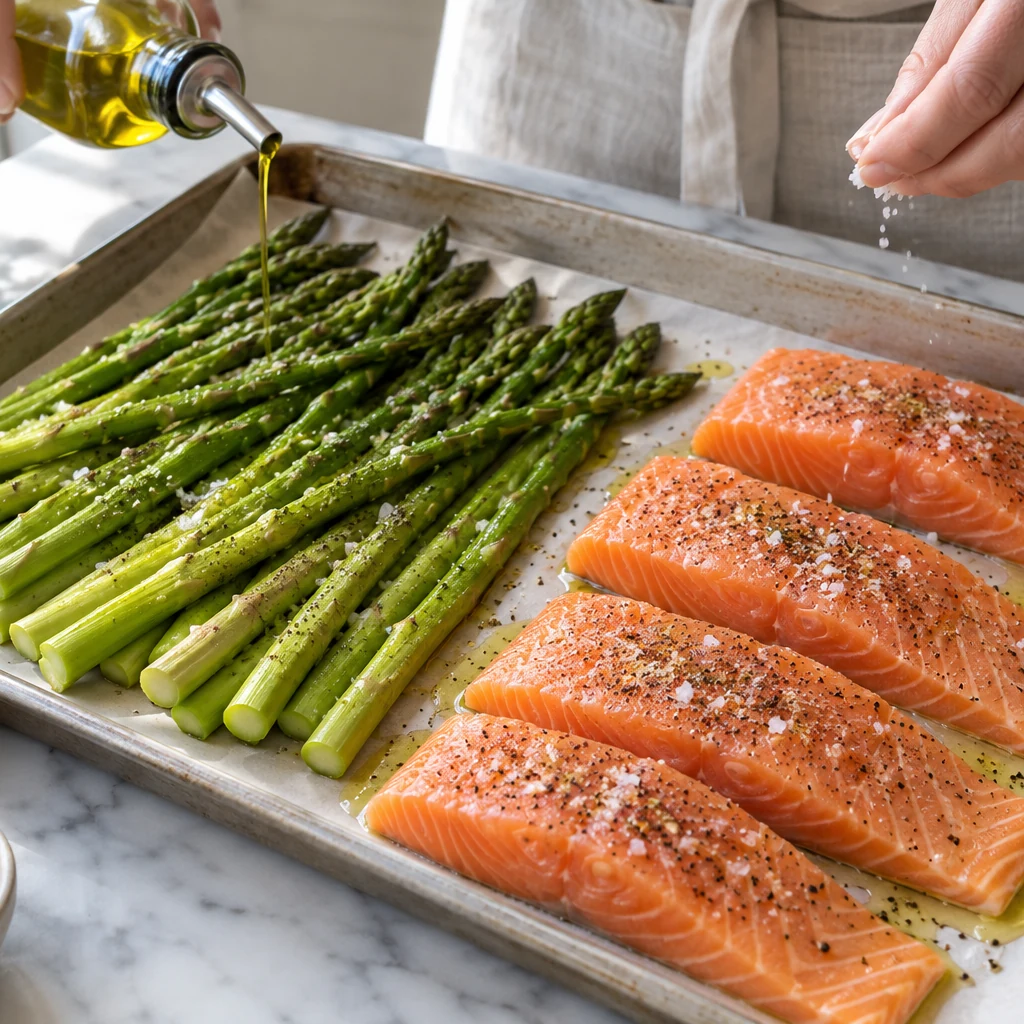
Heat the oven to 425°F (220°C) and line a large rimmed sheet pan with parchment paper. Toss the trimmed asparagus with olive oil, half the salt, and several grinds of black pepper. Spread it in a single layer, leaving room for the salmon. Place the dried fillets on the pan, skin side down when applicable, and season with the remaining salt and pepper.
2. Mix the Lemon-Garlic Butter
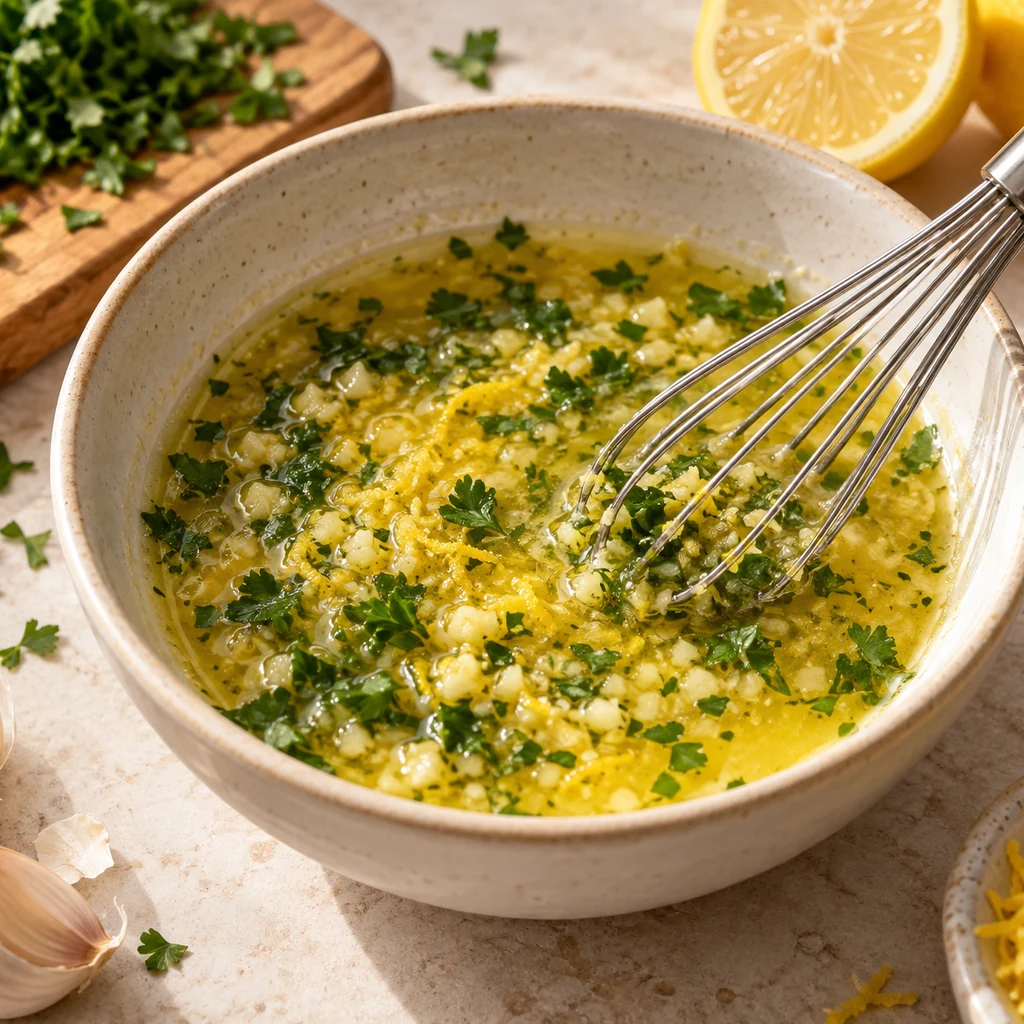
Stir the melted butter with minced garlic, lemon zest, one tablespoon of lemon juice, and most of the chopped parsley. Reserve a little parsley for serving. The butter should be warm and fluid, not bubbling hot. Letting the mixture stand for a minute allows the garlic and zest to perfume the butter before it goes onto the fish.
3. Coat the Salmon
Spoon or brush most of the garlic butter over the tops and sides of the fillets. Drizzle the remaining mixture over the asparagus and toss the spears gently. Keep the fish in an even row and avoid piling the vegetables around it. An uncrowded pan encourages caramelized edges and makes the cooking time more predictable.
4. Roast Until Just Cooked
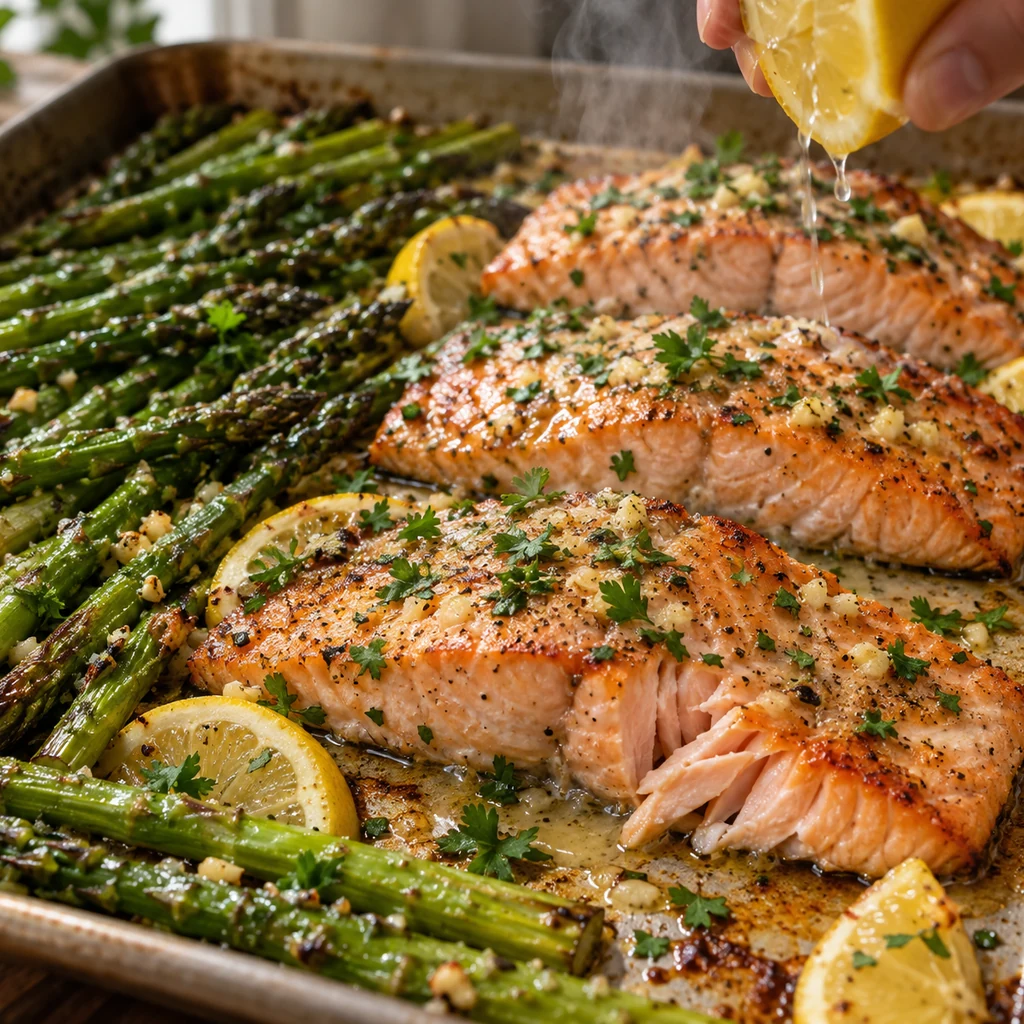
Roast for 12 to 15 minutes. The exact time depends on fillet thickness and your preferred doneness. Start checking at 12 minutes: the flesh should look opaque around the edges and separate into moist flakes when pressed with a fork. For a precise result, insert an instant-read thermometer into the thickest part. The USDA recommends 145°F (63°C), though carryover heat will continue to cook the fish briefly after it leaves the oven.
If the asparagus is thin, inspect it early and transfer tender spears to a plate while the salmon finishes. If your asparagus is very thick, roast it for five minutes before adding the fish. These small adjustments preserve the two textures that make the dish work: succulent salmon and tender-crisp vegetables.
Tips for Moist, Flavorful Salmon
Bring the salmon out while the oven heats, but do not leave it at room temperature for long. Use a pan large enough to avoid crowding and check early. Overcooking is the main reason salmon becomes dry; one extra-thick piece can simply remain in the oven for another minute.
Garlic can scorch under intense heat, so mince it finely and suspend it in the butter rather than leaving large pieces on bare parchment. If you want deeper browning, switch on the broiler for only the final one to two minutes and watch continuously. The butter can color quickly.
Serving Ideas and Variations
This recipe is satisfying on its own, but a simple starch catches every drop of lemon butter. Serve it with brown rice, quinoa, crusty bread, or our bright lemon orzo with roasted vegetables. For a lighter table, add a crisp green salad. The fresh fruit and greens in this grilled chicken and mango salad also offer useful inspiration for a colorful side salad.
For a gentle kick, add red pepper flakes to the butter. Replace parsley with dill for a classic salmon pairing, or add one teaspoon of Dijon mustard for tang. Broccoli florets, green beans, or sliced zucchini can stand in for asparagus, but their cooking times vary. Cut them small enough to become tender during the salmon’s short roasting window.
Storage and Reheating
Refrigerate leftovers in a shallow airtight container within two hours of cooking and use them within three days. Reheat the salmon gently in a covered baking dish at 300°F (150°C) until warmed through. A teaspoon of water or a small dab of butter in the dish helps maintain moisture. The microwave works in short, low-power intervals, although the oven gives a more even texture.
Cold leftover salmon is excellent flaked over salad or folded into a grain bowl. Freezing is possible, but the fish and vegetables will be softer after thawing.
Frequently Asked Questions
Can I use frozen salmon?
Yes. Thaw it completely in the refrigerator, drain any liquid, and pat the fillets very dry. Partly frozen salmon cooks unevenly and releases water onto the pan, so do not roast it straight from frozen with this timing.
How do I know when salmon is done?
The edges should be opaque, the center should flake with gentle pressure, and an instant-read thermometer should reach your preferred safe temperature. Check the thickest fillet first and remove thinner pieces if they finish earlier.
Can I prepare the garlic butter ahead?
Yes. Mix it up to two days ahead, cover, and refrigerate. Warm it gently until fluid before brushing it on the fish. Add the fresh parsley just before use for the brightest color and flavor.
A Reliable One-Pan Dinner
Garlic butter salmon with roasted asparagus proves that a short method can still deliver contrast, freshness, and satisfying flavor. Keep the vegetables in one layer, season confidently, and begin checking the salmon before the maximum time. With those details in place, the oven does nearly all the work and leaves you with a complete dinner—and only one pan to wash.