
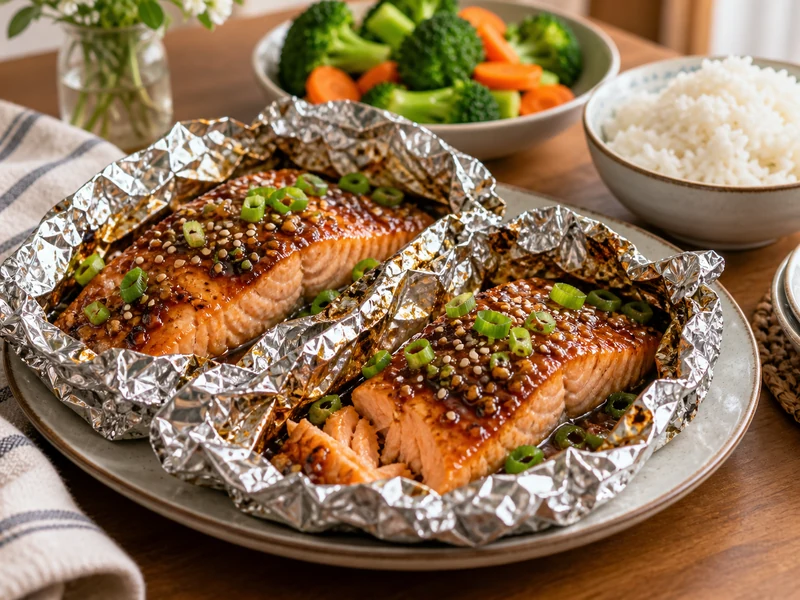
Easy Asian salmon in foil is the kind of weeknight dinner that feels polished without becoming complicated. The foil packet keeps the fish moist, the soy-honey glaze turns glossy as it bakes, and the ginger, sesame, green onion, and lemon make the plate taste bright instead of heavy. It is fast enough for a regular evening but pretty enough to serve when you want dinner to look intentional.
RECIPE CARD
Easy Asian Salmon in Foil
Ingredients
- 4 salmon fillets, about 6 ounces each
- 3 tablespoons soy sauce, or tamari for a gluten-free option
- 2 tablespoons honey
- 1 tablespoon rice vinegar
- 2 cloves, finely minced
- 1 teaspoon fresh ginger, grated
- 1 tablespoon sesame oil
- 1/2 teaspoon crushed red pepper flakes, optional
- 2 tablespoons chopped green onions, plus more for serving
- 1 tablespoon sesame seeds
- Lemon wedges, for serving
- Aluminum foil for packet cooking
Quick Method
Condensed overview. Use Full Instructions for the complete method, timing and doneness details.
- Whisk the Soy-Honey Ginger Marinade: In a small bowl, whisk together soy sauce, honey, rice vinegar, finely minced cloves, grated ginger, sesame oil, and red pepper flakes if using.
- Prepare the Foil Packets: Tear four large sheets of foil, set one salmon fillet in the center of each sheet, and lift the edges to form a shallow…
- Brush the Salmon with Glaze: Spoon or brush the marinade over each fillet, coating the top and sides and letting some sauce collect underneath.
- Seal the Packets for Baking: Fold the foil over each fillet, seal the edges, leave a little air space inside, and place the packets on a baking tray.
- Bake Until the Salmon Flakes: Bake at 400°F for 12 to 15 minutes, opening one packet carefully to check that the salmon flakes easily.
- Garnish and Serve Warm: Spoon the warm glaze over the salmon and finish with sesame seeds, chopped green onions, and lemon wedges.
This method is especially useful because salmon can dry out quickly when it is cooked uncovered. Wrapping each fillet in foil creates a small steamy packet that protects the texture while the sauce seasons the fish from underneath and above. The result is tender salmon with savory-sweet glaze, easy cleanup, and flexible sides like rice, noodles, steamed vegetables, or crisp salad.
Why You’ll Love It
- Quick prep: The marinade takes only a few minutes to whisk together.
- Moist salmon: Foil packets trap steam, helping the fillets stay tender and flaky.
- Easy cleanup: The sauce stays inside the foil, so the baking tray needs very little scrubbing.
Ingredients
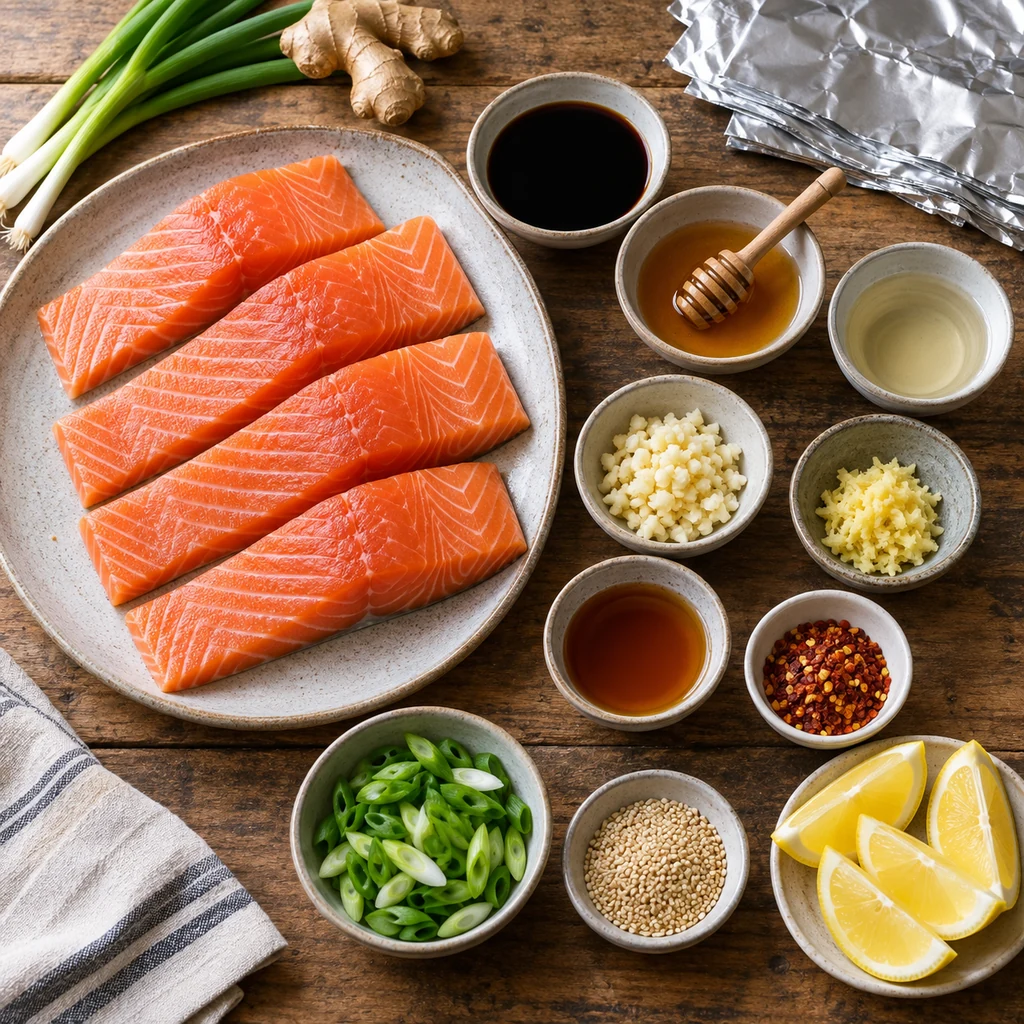
- 4 salmon fillets, about 6 ounces each
- 3 tablespoons soy sauce, or tamari for a gluten-free option
- 2 tablespoons honey
- 1 tablespoon rice vinegar
- 2 cloves, finely minced
- 1 teaspoon fresh ginger, grated
- 1 tablespoon sesame oil
- 1/2 teaspoon crushed red pepper flakes, optional
- 2 tablespoons chopped green onions, plus more for serving
- 1 tablespoon sesame seeds
- Lemon wedges, for serving
- Aluminum foil for packet cooking
This foil packet salmon is built for real weeknights: about 10 minutes of prep, 15 minutes in the oven, and dinner for 4 people in roughly 25 minutes total. Choose fillets that are close in thickness so they finish at the same time. Center-cut pieces are easiest because they cook evenly and look neat on the plate. If one piece is much thinner, fold the narrow end under before sealing the packet. That small adjustment helps prevent the tip from overcooking while the thicker center finishes.
Substitutions & Variations
Tamari can replace soy sauce if you need a gluten-free version, and maple syrup can stand in for honey if you prefer a deeper sweetness. Apple cider vinegar works if rice vinegar is not available, though it has a slightly fruitier edge. For a milder glaze, skip the red pepper flakes. For more heat, add a small spoonful of chili crisp after baking rather than before, so the texture stays lively.
You can use this same foil method with trout or another firm fish fillet, but cooking time may change based on thickness. Add thin vegetables directly inside the packet if you want a complete meal; sliced zucchini, snow peas, bell pepper strips, or matchstick carrots work better than dense vegetables. Keep the vegetables thin so they soften during the short baking time.
What to Serve With
Steamed jasmine rice is the easiest pairing because it catches the extra glaze from the foil packet. Brown rice, coconut rice, soba noodles, or cauliflower rice also work well. For vegetables, choose something fresh and green: broccoli, snap peas, bok choy, cucumber salad, roasted asparagus, or a simple cabbage slaw. The best side dishes add crunch or brightness without competing with the glaze.
If you are serving guests, open the foil packets at the table and spoon the juices over each fillet just before plating. Add sesame seeds, green onions, and lemon wedges at the end so the plate looks fresh. For meal prep, store the salmon separately from rice or vegetables and reheat gently; a lower temperature protects the fish from becoming dry.
Step-by-Step Instructions
Whisk the Soy-Honey Ginger Marinade
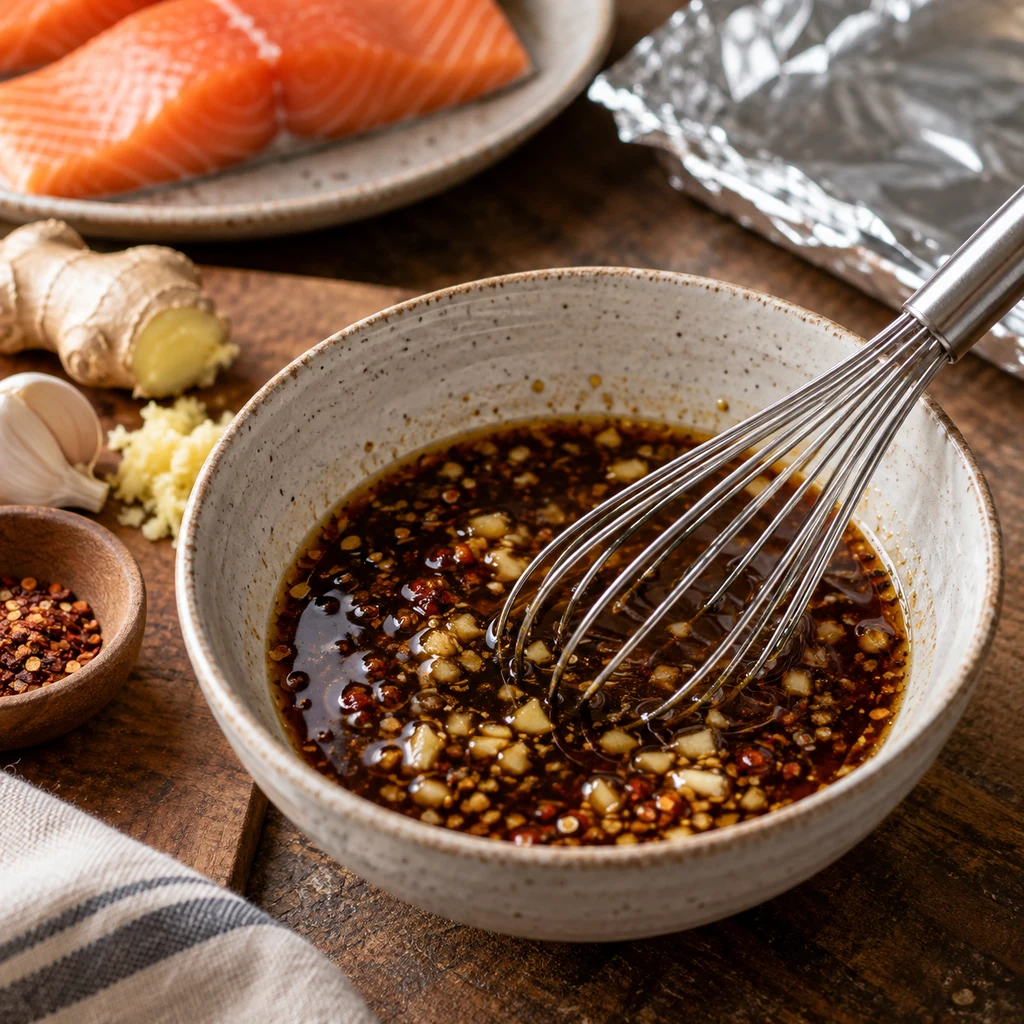
In a small bowl, whisk together soy sauce, honey, rice vinegar, finely minced cloves, grated ginger, sesame oil, and red pepper flakes if using. The honey should dissolve into the soy sauce so the marinade looks glossy and smooth. Taste a tiny amount and adjust only if needed; the sauce should be savory first, lightly sweet, and bright enough to balance the richness of the salmon.
Prepare the Foil Packets
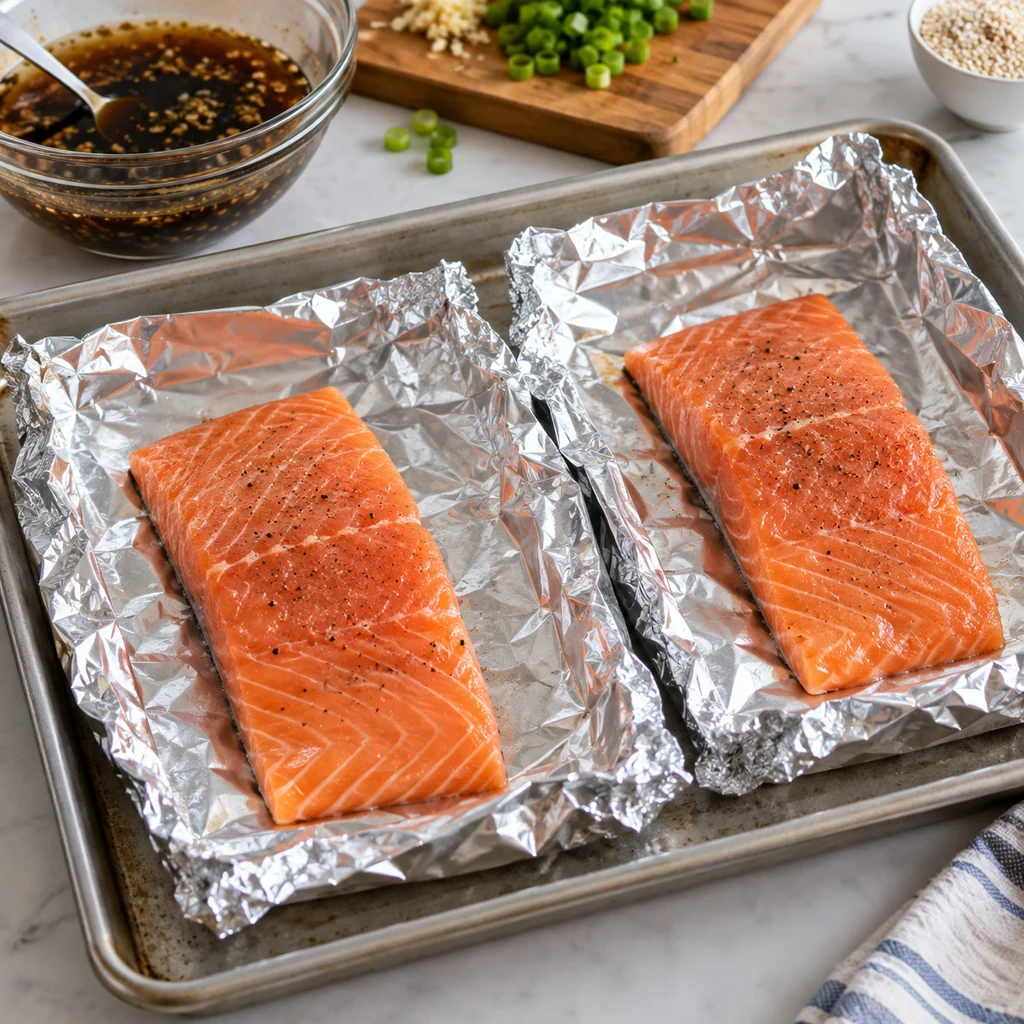
Tear four large sheets of foil and place them on a baking tray. Set one salmon fillet in the center of each sheet, skin-side down if the skin is attached. Lift the edges of the foil slightly to form a shallow bowl around each piece. This shape keeps the marinade from running across the tray and gives the salmon room to steam once the packet is sealed.
Brush the Salmon with Glaze
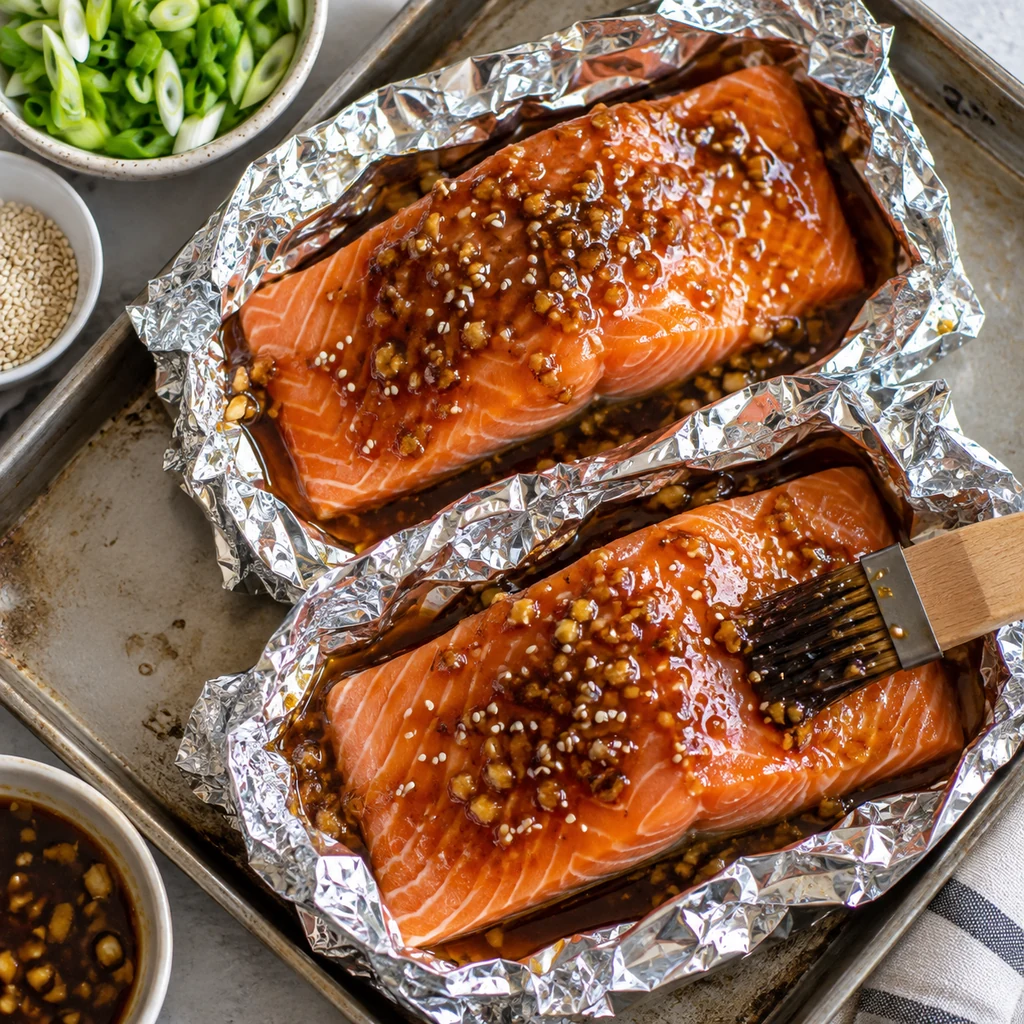
Spoon or brush the marinade over each fillet, making sure the top and sides are coated. Let a little sauce collect underneath the salmon because it will season the fish as it cooks. Scatter a few sliced green onions or sesame seeds over the top if you like a built-in garnish, but save most of them for after baking so the final plate stays fresh and colorful.
Seal the Packets for Baking
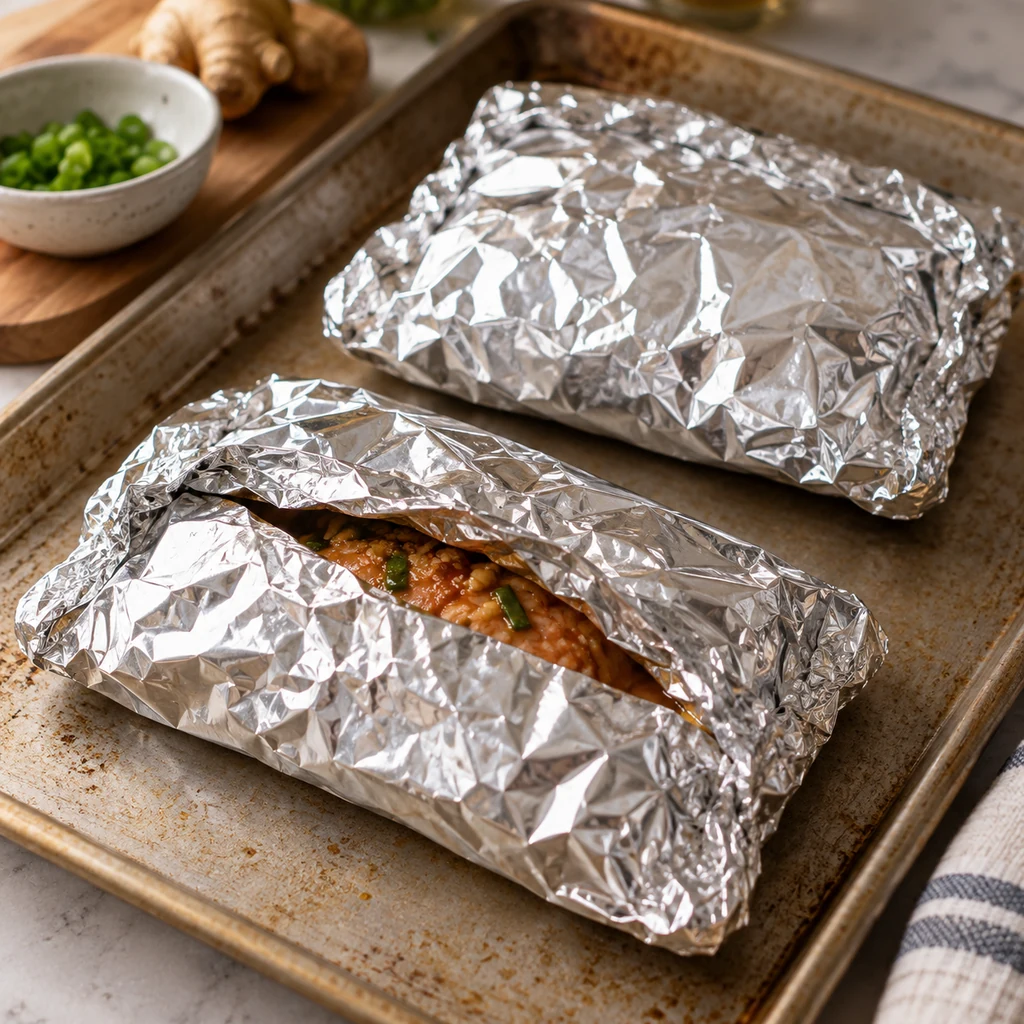
Bring the long sides of each foil sheet together over the salmon and fold them down to seal. Fold the short ends inward so the packet is closed but not pressed tightly against the fish. Leave a little air space inside each packet; that pocket allows steam to circulate and keeps the salmon tender. Place the tray in a preheated 400°F oven.
Bake Until the Salmon Flakes
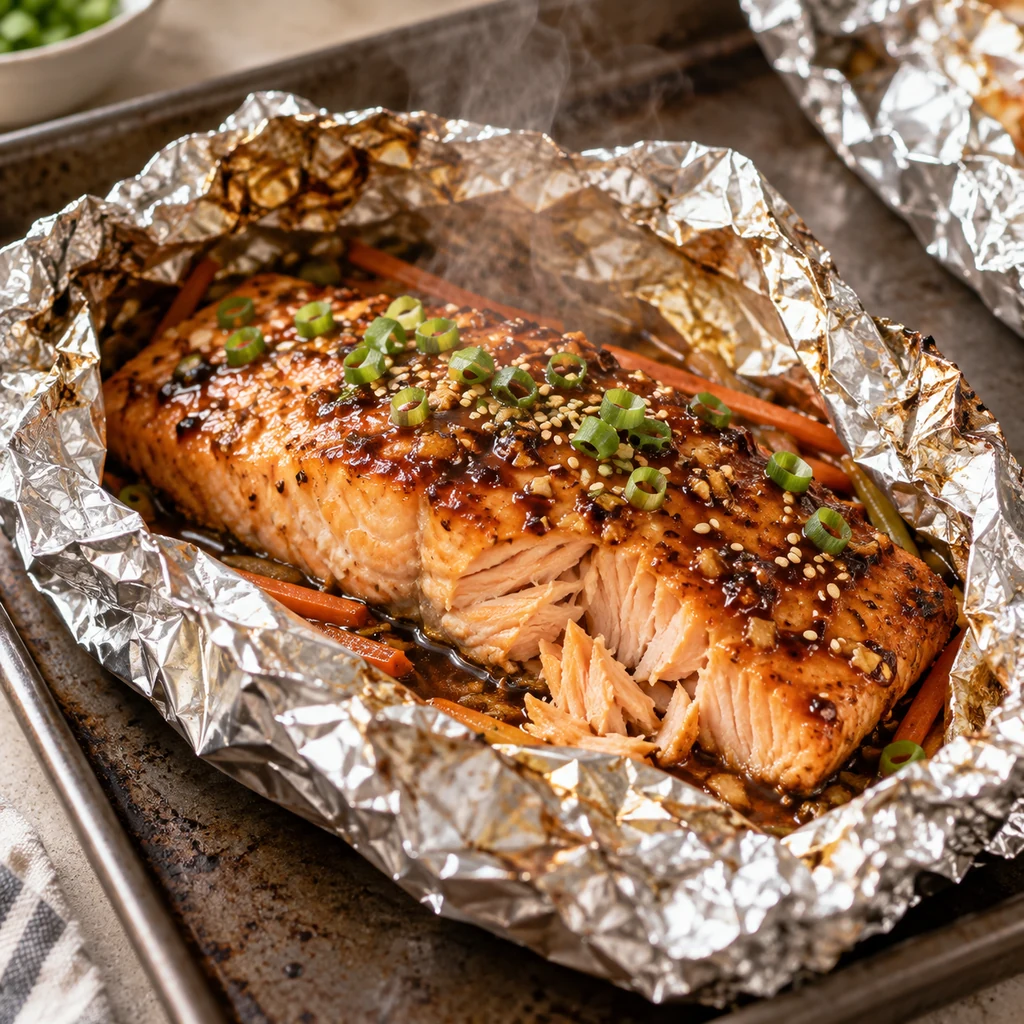
Bake for 12 to 15 minutes, depending on the thickness of the fillets. Open one packet carefully because hot steam will escape. The salmon is ready when it flakes easily with a fork and looks just opaque in the center. If it needs more time, reseal the packet and return it to the oven for 2 to 3 minutes. Avoid overbaking; the fish will continue to warm slightly after opening.
Garnish and Serve Warm
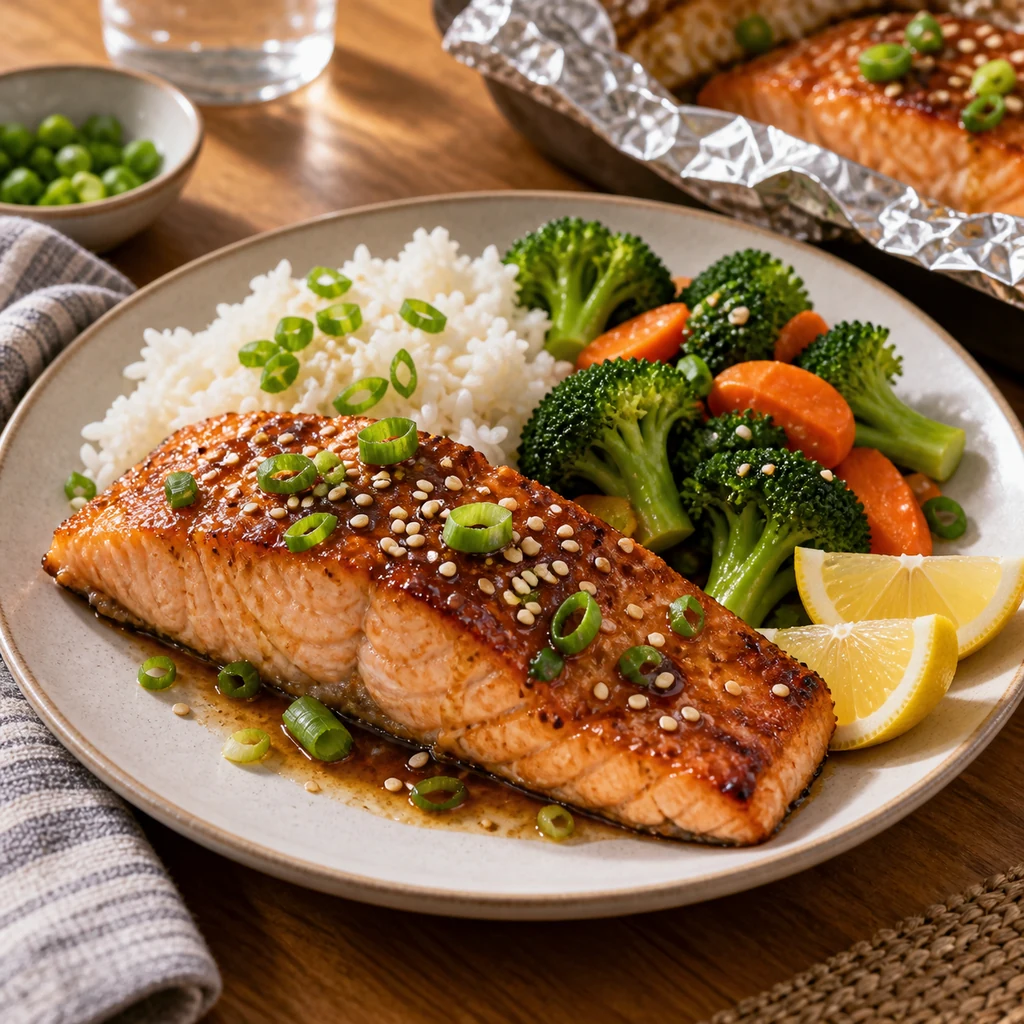
Transfer the salmon to plates or serve it directly in the opened foil packets. Spoon the warm glaze from the packet over the top, then finish with sesame seeds, chopped green onions, and lemon wedges. Serve with rice and steamed vegetables for a balanced dinner. If you have leftovers, chill them promptly and enjoy them the next day over salad or rice bowls.
Frequently Asked Questions
Can I cook salmon in foil without skin?
Yes. Skinless fillets work well, but handle them gently when moving them from the foil to the plate because they are more delicate after baking.
How do I know when salmon is done?
The salmon should flake easily and look opaque through the thickest part. For the cleanest result, check early and add a few minutes only if needed.
Can I make the marinade ahead?
Yes. Whisk the marinade up to 2 days ahead and refrigerate it in a sealed jar. Stir before using because the honey and sesame oil may settle.