
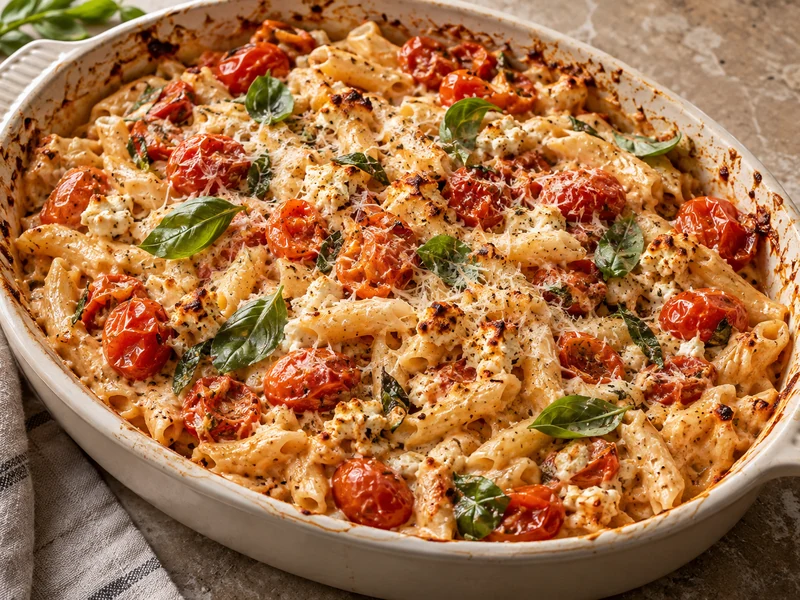
This crispy baked feta pasta with cherry tomatoes turns a handful of everyday ingredients into a creamy, savory dinner with very little hands-on work. The feta softens in the oven while the tomatoes blister and release their juices, creating the base of a sauce right in the baking dish. Once the pasta is folded in, every piece gets coated with tangy cheese, sweet tomato, garlic, and herbs.
RECIPE CARD
Crispy Baked Feta Pasta with Cherry Tomatoes
Ingredients
- 12 ounces (340 grams) short pasta, such as rigatoni or penne
- 1 block (7 to 8 ounces / 200 grams) feta cheese
- 2 cups cherry tomatoes
- 3 tablespoons extra-virgin olive oil, divided
- 3 garlic cloves, minced
- 1 teaspoon dried oregano
- 1/2 teaspoon dried basil
- 1/4 teaspoon red pepper flakes, optional
- 1/2 teaspoon freshly ground black pepper
- Salt, for the pasta water
- 1/3 cup reserved pasta water, as needed
- 1/4 cup grated Parmesan and 1/2 cup torn fresh basil, for serving
Quick Method
Condensed overview. Use Full Instructions for the complete method, timing and doneness details.
- Prepare the baking dish: Heat the oven to 400°F (200°C). Place the feta in the center of a 9-by-13-inch baking dish and arrange the cherry tomatoes around it.…
- Bake the feta and tomatoes: Bake for 30 to 35 minutes, until the tomatoes are blistered and the feta is soft with golden edges. Broil for 1 to 2…
- Cook the pasta: During the final 15 minutes of baking, boil the pasta in well-salted water until just al dente. Reserve 1/3 cup pasta water, then drain.
- Make the sauce: Mash the hot feta and tomatoes together in the baking dish until creamy. Stir in 2 tablespoons reserved pasta water, adding more only as…
- Combine and serve: Add the drained pasta and toss until evenly coated. Fold in most of the fresh basil, then finish with Parmesan and the remaining basil.…
The method is simple, but timing and texture make a noticeable difference. Use a block of feta rather than crumbles, let the tomatoes roast until their skins split, and save some starchy pasta water before draining. Those three details help the sauce become smooth instead of dry or oily. If you enjoy easy tomato-and-herb dinners, our creamy tomato basil pasta is another useful weeknight option.
Why You’ll Love It
- Minimal prep: The feta and tomatoes bake together while the pasta cooks, so most of the recipe is hands-off.
- Big, balanced flavor: Salty feta, sweet roasted tomatoes, garlic, herbs, and a little heat create a sauce that tastes layered.
- Easy to adapt: Short pasta shapes, optional Parmesan, extra greens, or a different level of spice all work without changing the core method.
Ingredients and Smart Substitutions
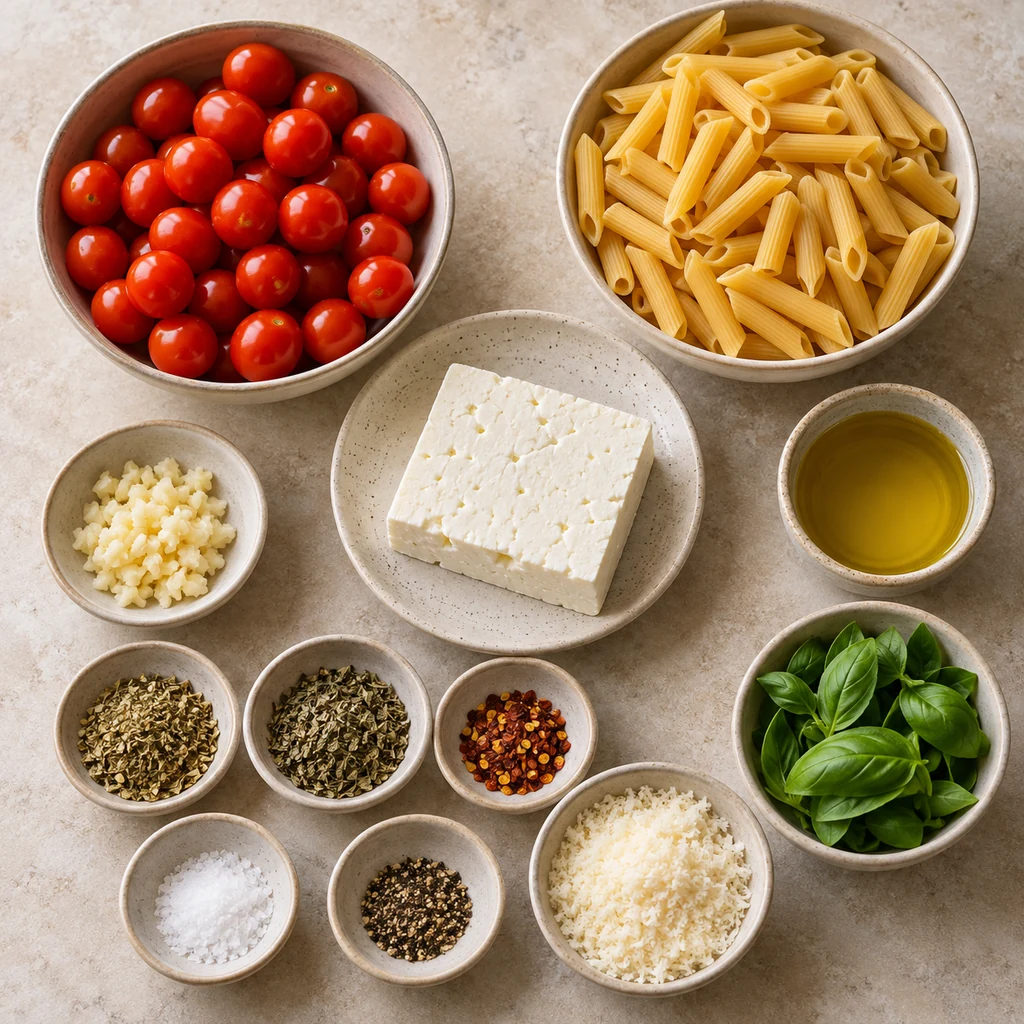
Choose a firm block of feta packed in brine when possible. It melts more evenly than pre-crumbled feta, which is often coated to prevent clumping and may stay grainy. Greek-style sheep’s milk feta has a pronounced tang, while cow’s milk feta is usually milder. Either works, but avoid reduced-fat blocks because they tend to dry out before the tomatoes finish roasting.
Cherry or grape tomatoes both work. Leave small tomatoes whole and halve unusually large ones so they roast at the same pace. Rigatoni, penne, fusilli, and shells are especially good because their ridges and hollow centers catch the sauce. For another pasta that uses tomatoes and fresh herbs differently, try our basil pesto pasta with cherry tomatoes.
How to Make Crispy Baked Feta Pasta
Step 1: Prepare the Feta and Tomatoes
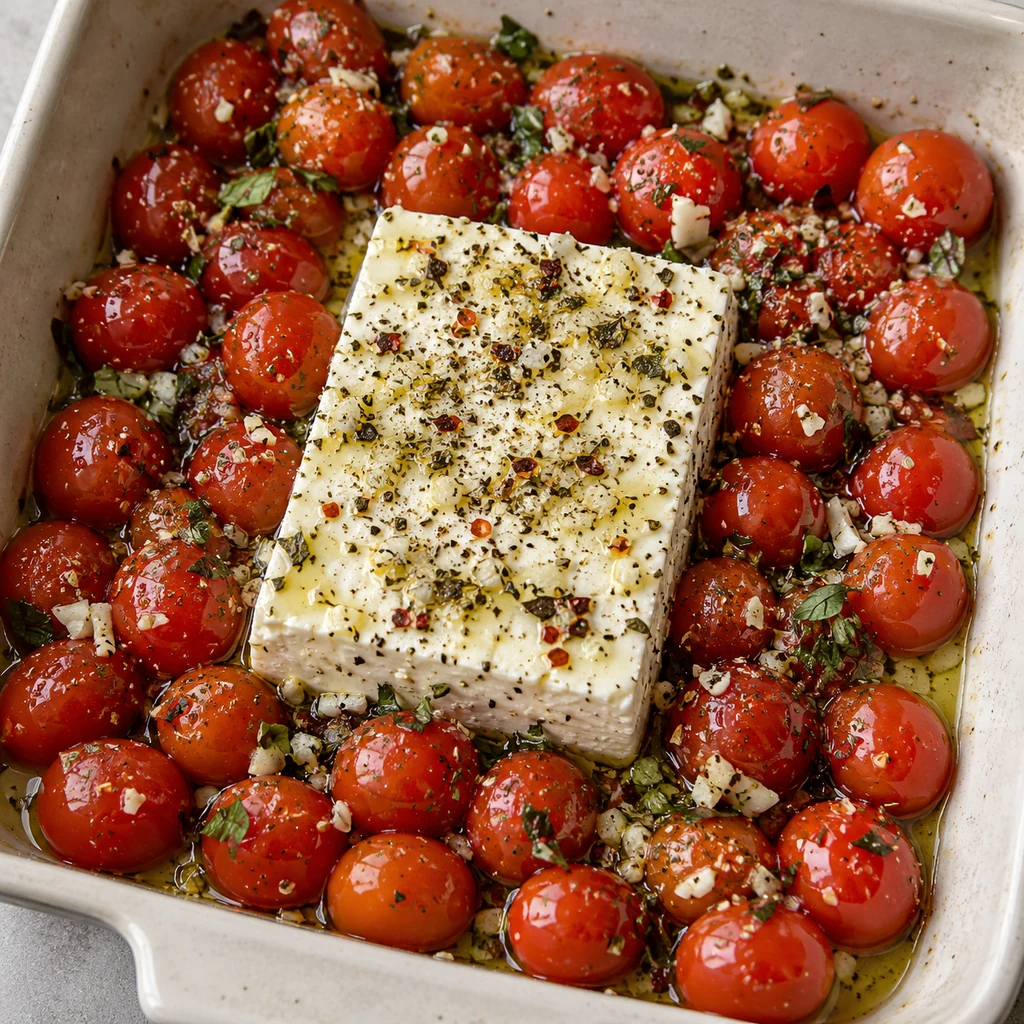
Heat the oven to 400°F (200°C). Put the feta in the center of a 9-by-13-inch baking dish and scatter the tomatoes around it. Drizzle everything with olive oil, turning the tomatoes so they are lightly coated. Add the minced garlic, oregano, dried basil, red pepper flakes, and black pepper. Feta is naturally salty, so wait to add extra salt until the finished sauce has been tasted.
Use a baking dish with enough room for the tomatoes to sit mostly in one layer. A crowded, deep dish traps steam and slows browning. A metal pan can react with the acidic tomato juices, so ceramic or glass is a better choice. Keep loose garlic mostly among the tomatoes; bits left on top of the feta may brown too quickly.
Step 2: Bake Until Deeply Roasted
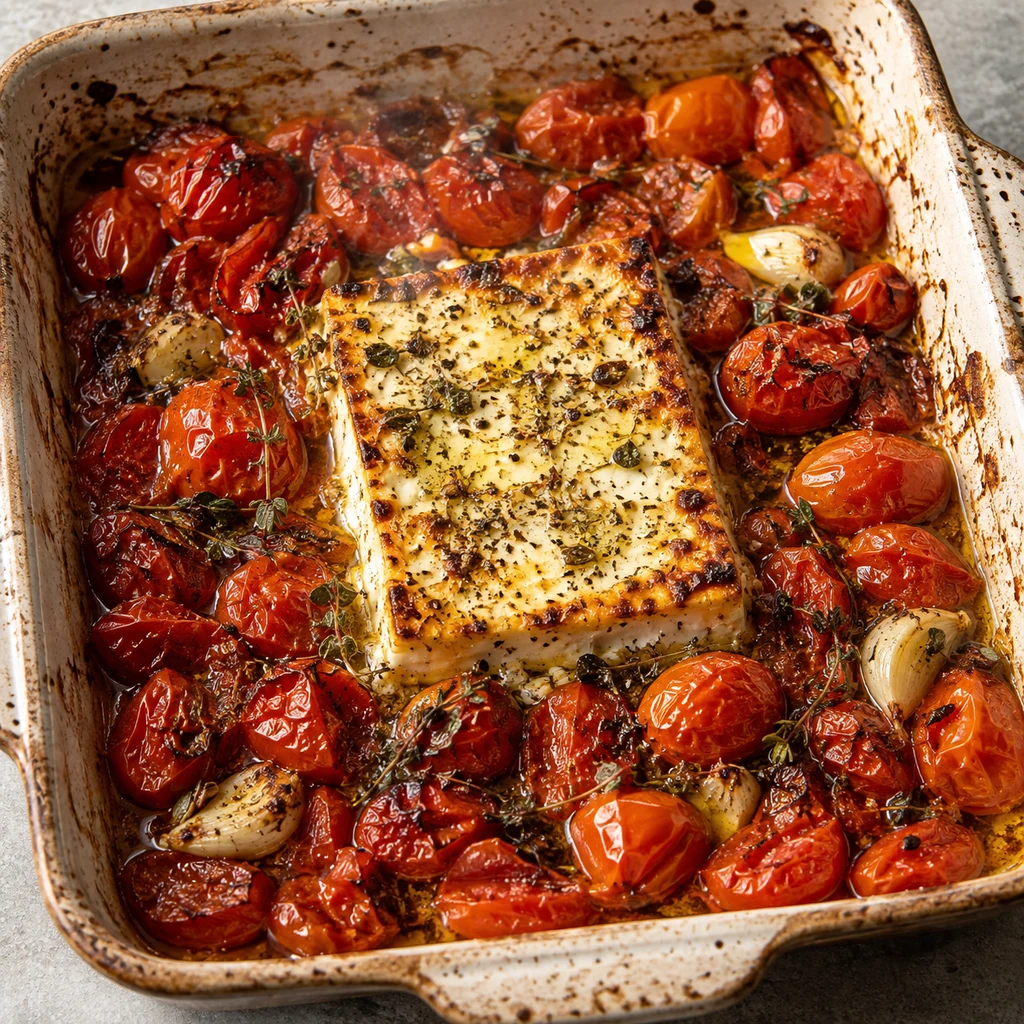
Bake for 30 to 35 minutes. The tomatoes should split, wrinkle, and release plenty of juice, while the feta becomes soft enough to mash. For a more deeply colored top, switch to the broiler for one or two minutes at the end. Stay beside the oven during this step because the cheese, garlic, and herbs can move from browned to scorched quickly.
Do not judge doneness by the feta alone. The tomatoes supply the liquid that loosens the cheese, so they need time to collapse. If they still look firm after 30 minutes, continue baking for another five minutes. Oven temperatures vary, and a heavy ceramic dish may take slightly longer to heat.
Step 3: Cook the Pasta and Reserve Water
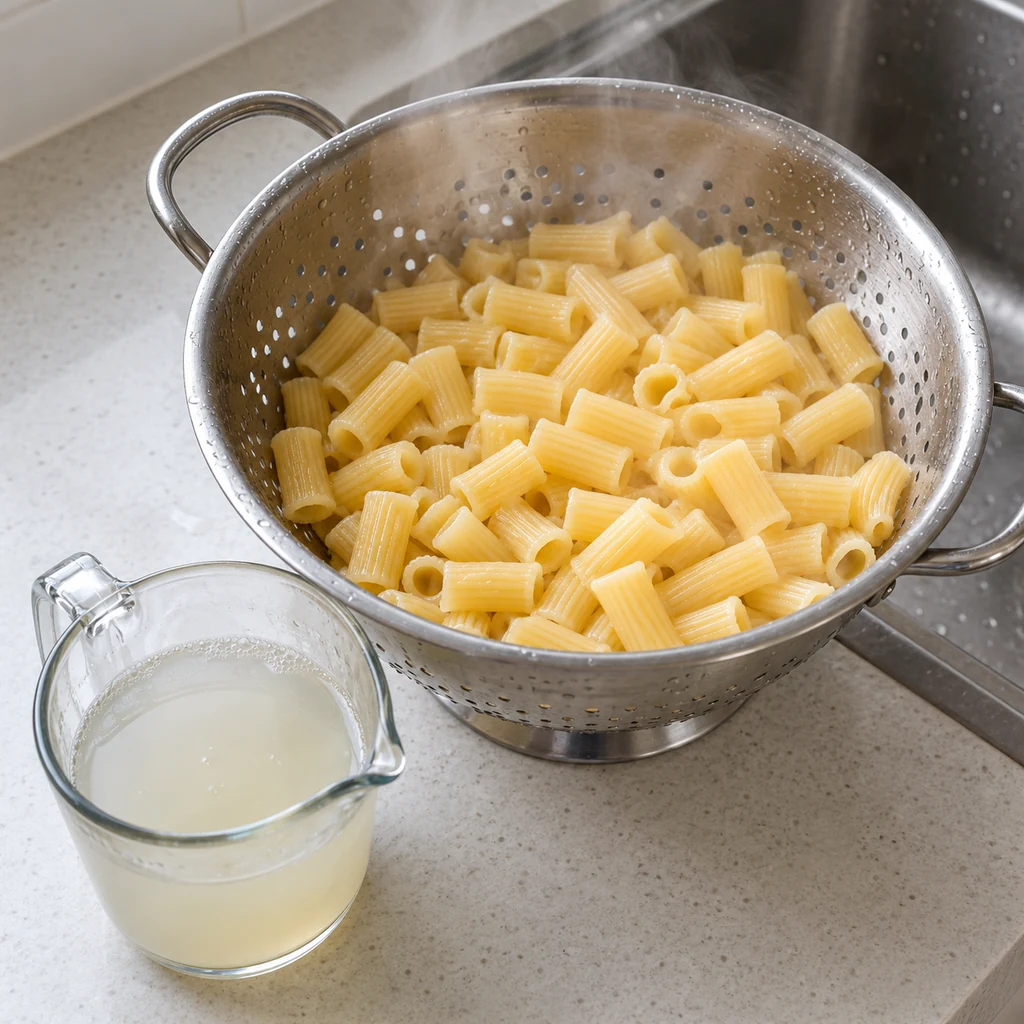
During the final 15 minutes of baking, bring a large pot of water to a boil and salt it well. Cook the pasta until just al dente according to the package timing. Before draining, scoop out about one-third cup of the cloudy cooking water. The starch in this water helps the feta and tomato juices cling to the pasta.
Do not rinse the pasta. Rinsing removes the surface starch needed for a cohesive sauce. Drain it thoroughly but move promptly to the next step while both the pasta and baking dish are hot. If you want another rich pasta with a different cheese-forward profile, save our creamy garlic Parmesan pasta.
Step 4: Mash the Baked Feta Sauce
Carefully remove the hot baking dish from the oven and set it on a heat-safe surface. Use a sturdy spoon to mash the feta into the burst tomatoes, scraping the caramelized juices from the sides and bottom. Stir until the mixture looks creamy but still has a few tomato pieces for texture.
Add two tablespoons of reserved pasta water and stir again. The sauce should be glossy and loose enough to coat pasta without pooling. Add more water one tablespoon at a time only if needed. Adding the full amount at once can make the dish watery, especially when the tomatoes have released a lot of juice.
Step 5: Toss, Finish, and Serve
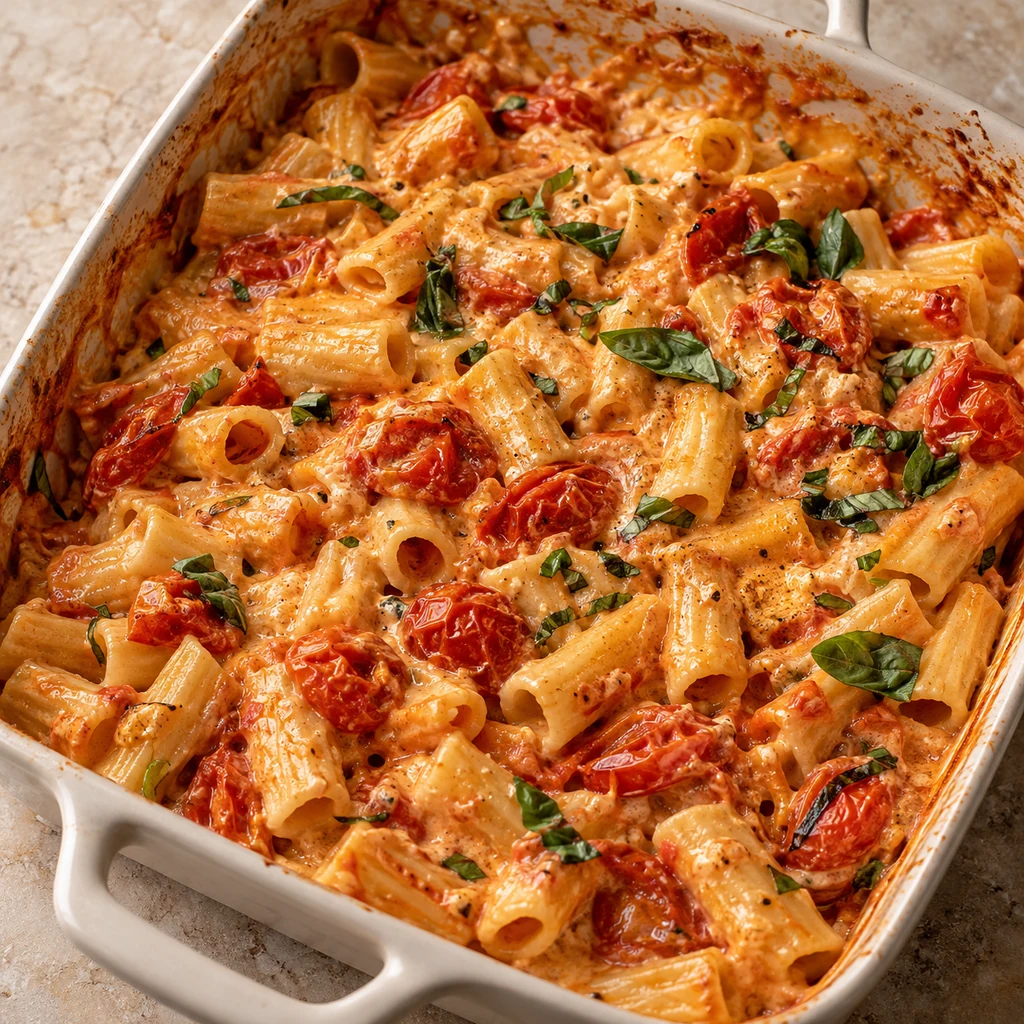
Add the drained pasta to the baking dish and fold until evenly coated. Stir in most of the torn basil, then taste before adjusting the salt, pepper, or red pepper flakes. Finish with Parmesan if desired and scatter the remaining basil over the top. Serve immediately, while the sauce is at its creamiest.
Variations, Storage, and Reheating
Baby spinach can be folded into the hot sauce just before the pasta; the residual heat will wilt it. Roasted zucchini or bell pepper can be added, but use a larger dish so the vegetables brown rather than steam. For extra protein, serve the pasta with grilled chicken or white beans. Keep additions moderate so the feta and tomato flavor remains the focus.
Refrigerate leftovers in a shallow airtight container within two hours and use them within three to four days. Reheat gently in a covered skillet or microwave in short intervals, adding a splash of water to restore the sauce. The pasta will continue absorbing moisture as it rests, so reheated portions will be thicker than the freshly made dish. Freezing is not recommended because feta sauce can become grainy after thawing.
Frequently Asked Questions
Why is my baked feta pasta dry?
The tomatoes may not have roasted long enough to release their juices, or the pasta may have absorbed the sauce while sitting. Mash the tomatoes thoroughly and add reserved pasta water one tablespoon at a time until the sauce becomes glossy.
Can I use crumbled feta instead of a block?
A block gives the smoothest result because it retains more moisture and melts evenly. Crumbled feta can work in a pinch, but it may remain grainy. Keep the crumbles in a compact mound and watch closely so the exposed edges do not dry out.
Can I prepare this recipe ahead of time?
You can assemble the feta, tomatoes, oil, garlic, and dried seasonings in the baking dish several hours ahead and refrigerate it covered. Let the dish lose its chill while the oven heats, then bake and cook the pasta just before serving for the best texture.