
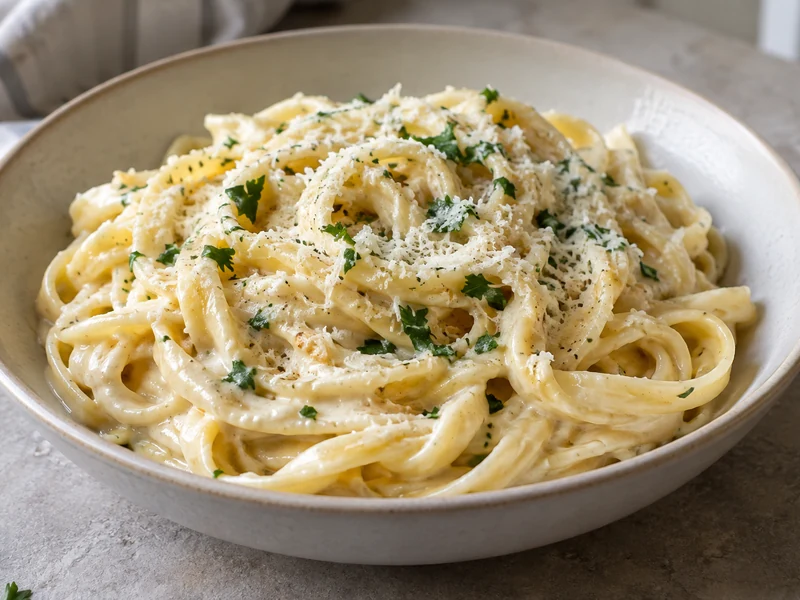
Creamy garlic Parmesan pasta is a satisfying dinner built from a short list of familiar ingredients. The sauce starts with butter and gently cooked garlic, then turns silky when cream and finely grated Parmesan meet the warm pasta. It feels special enough for a relaxed dinner with friends, yet the method is straightforward enough for a busy evening.
RECIPE CARD
Creamy Garlic Parmesan Pasta
Ingredients
- 8 ounces dry fettuccine or spaghetti
- 2 tablespoons butter
- 4 garlic cloves, minced
- 1 cup heavy cream
- 1 cup finely grated Parmesan cheese, plus a little extra for serving if desired
- 1/4 teaspoon ground black pepper
- Salt, to taste
- 1/2 teaspoon dried basil, optional
- Chopped fresh parsley, for garnish
Quick Method
Condensed overview. Use Full Instructions for the complete method, timing and doneness details.
- Cook the Pasta: Cook 8 ounces fettuccine or spaghetti in boiling salted water according to the package directions, usually 8 to 12 minutes, until tender with a…
- Sauté the Garlic: Melt 2 tablespoons butter in a large skillet over medium heat. Add 4 minced garlic cloves and stir for 1 to 2 minutes until…
- Make the Creamy Parmesan Sauce: Reduce the heat to low, add 1 cup heavy cream, and warm gently. Stir in 1 cup finely grated Parmesan a little at a…
- Coat the Pasta: Add the drained pasta to the skillet and toss over low heat for 1 to 2 minutes. Add reserved pasta water one tablespoon at…
- Garnish and Serve: Divide the warm pasta between two generous bowls or three smaller portions. Garnish with chopped fresh parsley and a little extra Parmesan if desired;…
The key is to keep the garlic pale, warm the cream gently, and use a splash of reserved pasta water only when the sauce needs loosening. Those small choices give you pasta that is coated rather than swimming in sauce. This version keeps the original dish’s rich, garlicky character while spelling out exactly what to look for at each stage.
Why You’ll Love It
- Simple pantry-friendly method: Butter, garlic, cream, Parmesan, and pasta do most of the work.
- Flexible texture: Reserved pasta water helps the sauce cling to the noodles without becoming heavy.
- Easy to serve: A little parsley and extra Parmesan make it feel finished with almost no effort.
Ingredients
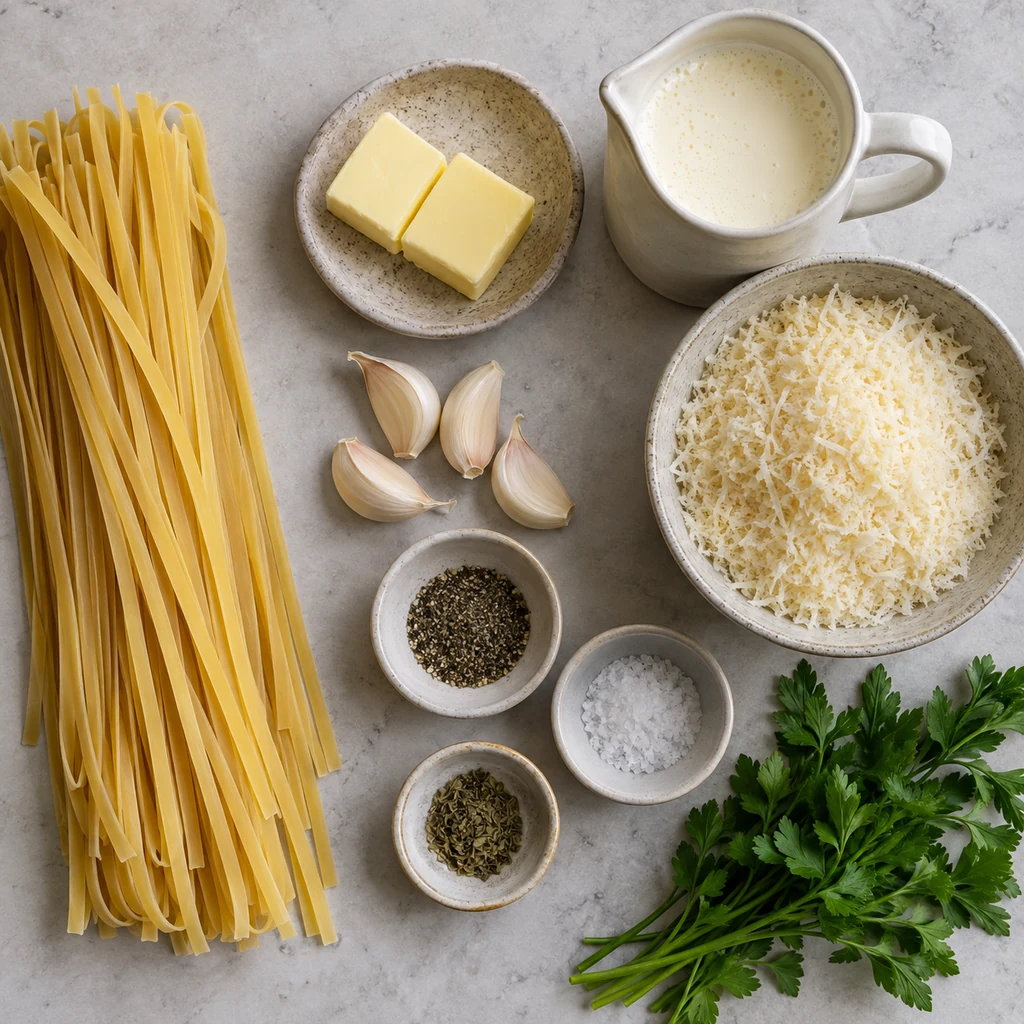
- 8 ounces dry fettuccine or spaghetti
- 2 tablespoons butter
- 4 garlic cloves, minced
- 1 cup heavy cream
- 1 cup finely grated Parmesan cheese, plus a little extra for serving if desired
- 1/4 teaspoon ground black pepper
- Salt, to taste
- 1/2 teaspoon dried basil, optional
- Chopped fresh parsley, for garnish
Choose a large pot for the pasta so the noodles can move freely. Finely grated Parmesan melts more evenly than coarse shreds; grate it before the cream goes into the skillet. Keep a mug near the pot to catch some starchy cooking water before draining. The water is an adjustment tool, not a required addition: you may need only a spoonful, or none at all.
Step-by-Step Instructions
1. Cook the Pasta
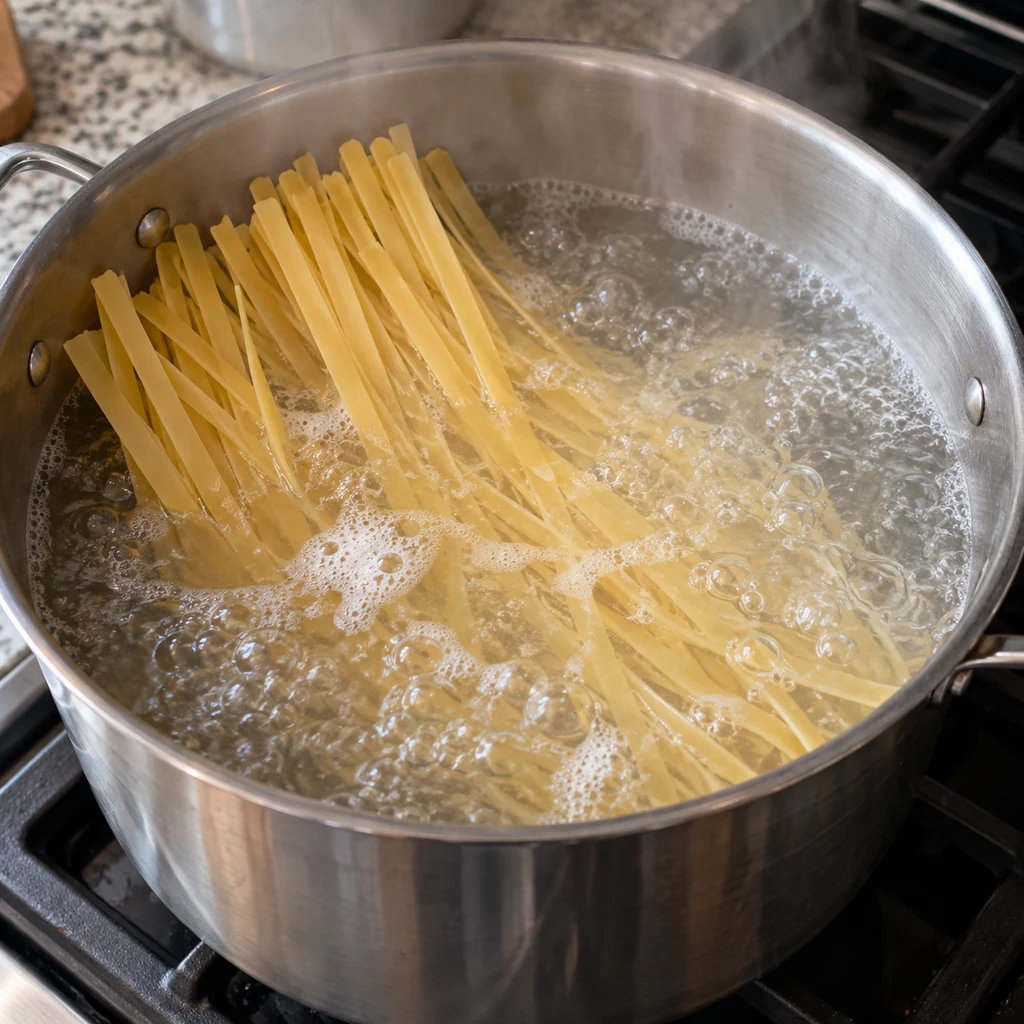
Bring a large pot of water to a full boil, salt it, and add the pasta. Stir during the first minute so the strands do not stick together. Cook according to the package directions, usually about 8 to 12 minutes, until the pasta is tender but still has a little bite. Package times vary, so taste a strand rather than relying on the clock alone. Before draining, reserve about 1/2 cup of cooking water. Drain the pasta; do not rinse away the starch that helps the sauce adhere. You can start the garlic while the pasta cooks, but keep an eye on both pans.
2. Sauté the Garlic
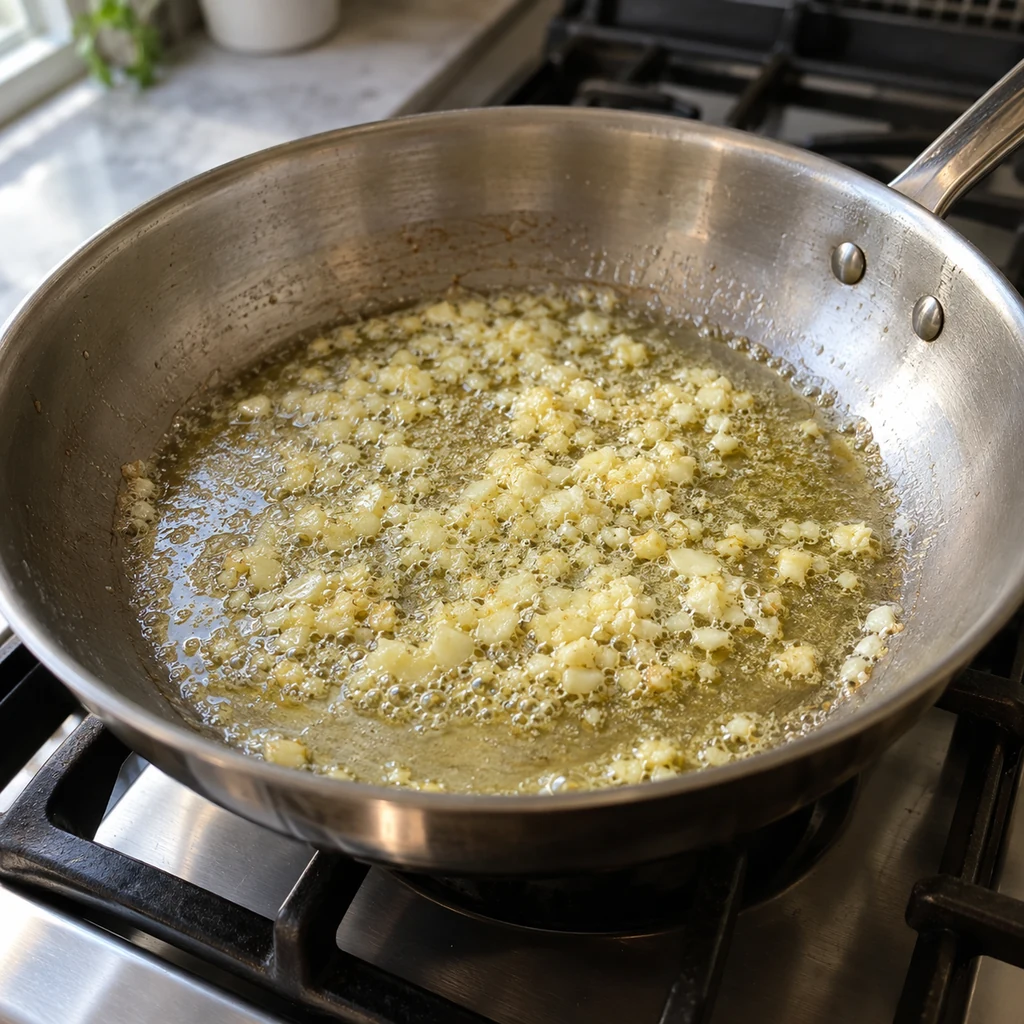
Set a large skillet over medium heat and melt the butter. Add the minced garlic and stir for 1 to 2 minutes, just until it smells fragrant and looks softened. The pieces should remain pale, not dark brown. Garlic can move from fragrant to bitter quickly, especially in a thin pan; lower the heat immediately if the butter is bubbling hard or the edges color too fast. If the garlic burns, begin this stage again with fresh butter and garlic, since cream will not hide the bitter taste.
3. Make the Creamy Parmesan Sauce
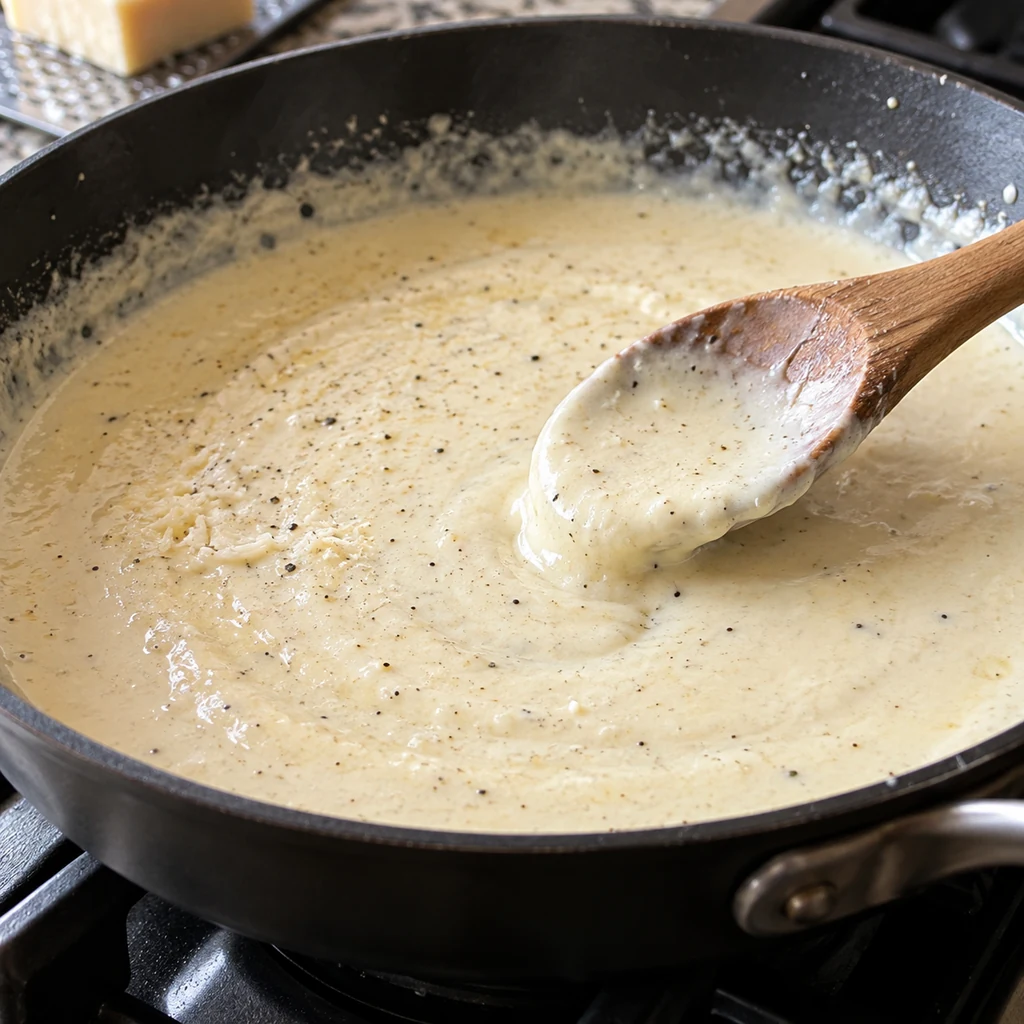
Turn the heat to low. Pour in the heavy cream and stir it through the garlic and butter. Warm it gently rather than bringing it to a hard boil. Add the grated Parmesan a little at a time, stirring after each addition. In about 3 to 5 minutes the cheese should melt and the sauce should lightly coat the back of a spoon. Add the black pepper and optional dried basil. Taste before adding salt: Parmesan already contributes saltiness, and different brands vary. If the sauce looks grainy, remove the pan from the heat and stir steadily; excessive heat is often the cause.
4. Coat the Pasta
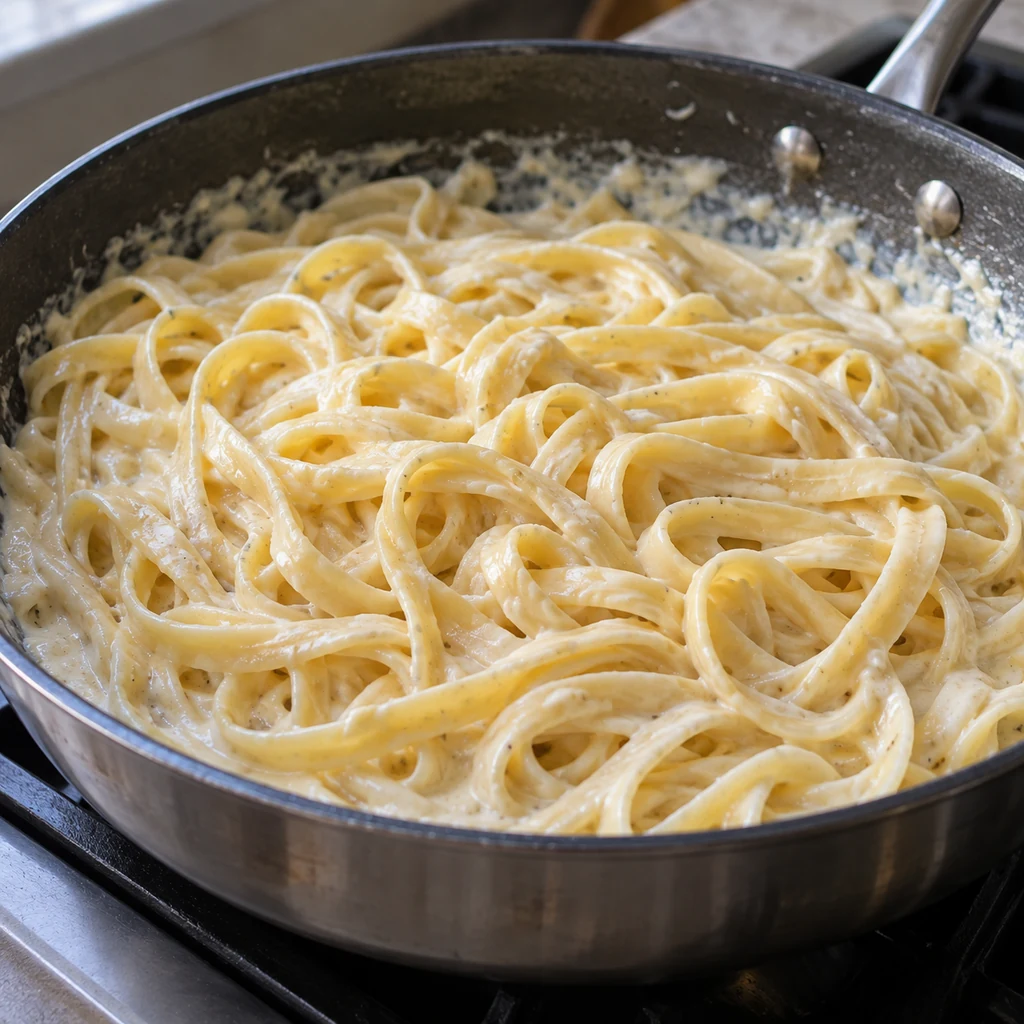
Add the drained pasta to the skillet and toss it with tongs for 1 to 2 minutes over low heat. The sauce should cling to the strands and leave a light sheen, not sit in a puddle underneath. If it has tightened while waiting, stir in reserved pasta water one tablespoon at a time, tossing after each addition. Stop as soon as the noodles separate easily and look glossy. Too much water will dilute the flavor; you can always add another spoonful but cannot easily take it back. Taste again and adjust the salt or pepper only after the pasta and sauce are together.
5. Garnish and Serve
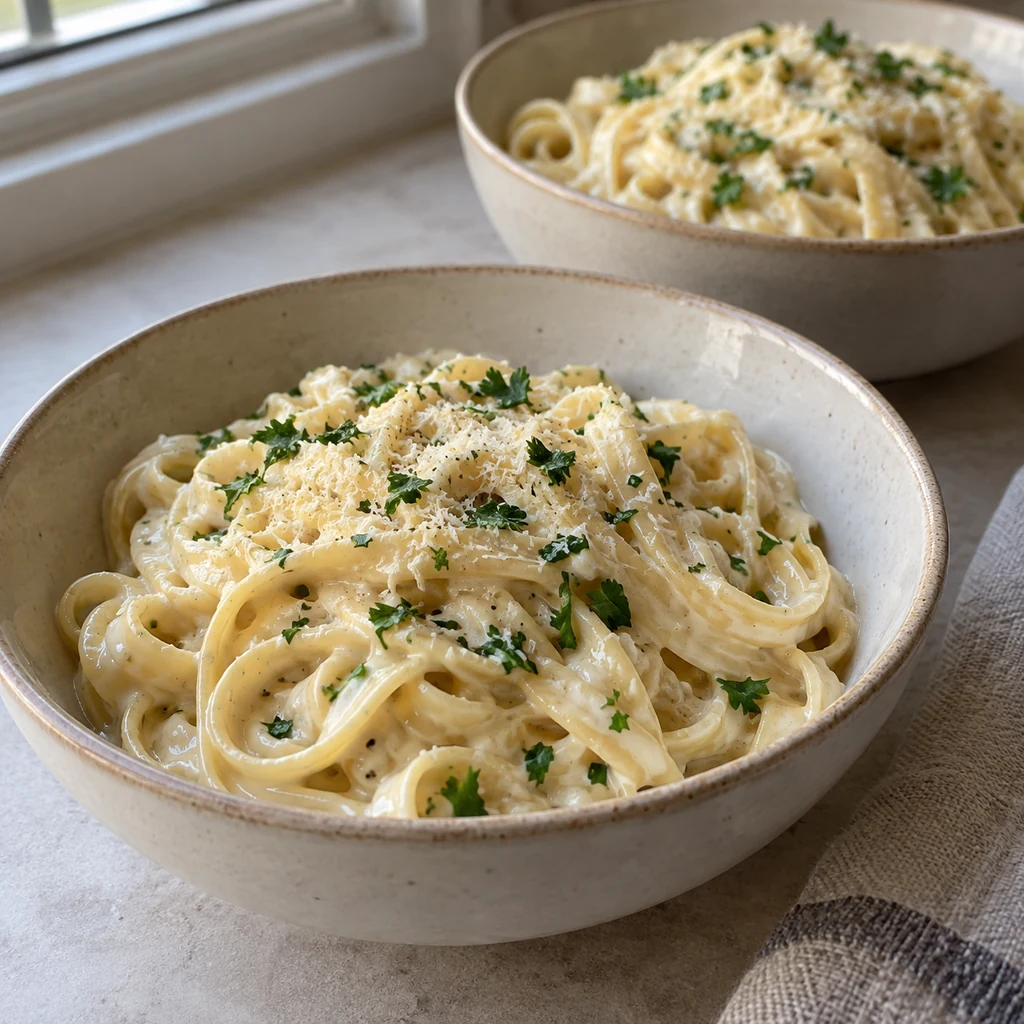
Divide the pasta between two generous bowls or three smaller portions. Scatter chopped fresh parsley over the top and add a little extra grated Parmesan if desired. Serve immediately while the sauce is silky and warm; cream sauces thicken as they stand. If dinner is delayed, keep a spoonful of reserved pasta water and loosen the noodles gently over low heat just before serving. Do not leave the finished pasta simmering in the skillet, which can make the sauce separate and the noodles too soft.
Substitutions & Variations
Spaghetti works in place of fettuccine without changing the method, though its package cooking time may differ. For a meat-free dinner, the basic recipe needs no extra protein. If you want more vegetables, serve them alongside rather than crowding the skillet while the cheese melts. A dairy-free cream can replace heavy cream only as an experiment: the flavor and thickening behavior vary by product, and Parmesan would still make the dish dairy-containing. For a fully plant-based pasta idea, see our creamy vegan mushroom pasta instead of assuming a one-for-one swap will taste the same.
What to Serve With
A crisp green salad or simply cooked vegetables contrast nicely with the rich sauce. Keep the side lightly seasoned so the garlic and Parmesan remain the focus. If you are planning several pasta nights, our one-pot tomato basil pasta offers a brighter, tomato-based change of pace. This recipe is best as soon as it is made, but leftovers can be refrigerated promptly in a covered container and reheated gently with a small splash of water. Heat until steaming throughout, stirring to restore a smooth coating; avoid a hard boil.
Frequently Asked Questions
Why is my Parmesan sauce grainy?
The skillet may be too hot, or the cheese may have gone in too quickly. Lower or remove the pan from the heat and stir in finely grated Parmesan in small additions. Pre-shredded cheese may melt less smoothly.
Can I make the sauce ahead?
It is at its smoothest when made just before serving. You can mince the garlic and grate the cheese ahead of time, then cook the sauce while the pasta boils. Reheating a finished cream sauce needs gentle heat and stirring.
How do I keep the pasta from drying out?
Save some pasta water before draining and add it a tablespoon at a time while tossing. Serve promptly. If the pasta has cooled, warm it gently with a little water rather than pouring in more cream without tasting first.