

Creamy butternut squash soup with sage and thyme starts with a tray of roasted squash, which gives the finished soup more depth than simply boiling raw cubes. The browned edges bring gentle sweetness, while onion, garlic, and herbs keep each spoonful savory. A little cream or coconut milk softens the texture without covering up the squash.
RECIPE CARD
Creamy Butternut Squash Soup with Sage and Thyme
Ingredients
- 1 medium butternut squash, peeled, seeded, and cut into evenly sized cubes
- 1 medium onion, chopped
- 2 tablespoons olive oil, divided
- 2 garlic cloves, minced
- 4 cups vegetable broth
- 1/2 cup heavy cream or unsweetened coconut milk
- 1 teaspoon dried thyme, or 1 tablespoon fresh thyme leaves
- 1 teaspoon dried sage, or 1 tablespoon chopped fresh sage
- Salt and freshly ground black pepper, to taste
- A pinch of ground nutmeg, optional
- Fresh sage leaves for garnish, optional
Quick Method
Condensed overview. Use Full Instructions for the complete method, timing and doneness details.
- Roast the Butternut Squash: Heat the oven to 400°F (200°C). Toss the squash cubes with 1 tablespoon of olive oil, a pinch of salt, and black pepper. Spread…
- Sauté the Aromatics: Set a large, heavy pot over medium heat and add the remaining 1 tablespoon of olive oil. Add the chopped onion and cook for…
- Simmer the Soup: Tip the roasted squash into the pot with the softened onion mixture. Pour in the vegetable broth and stir, scraping any flavorful bits from…
- Blend Until Smooth: Take the pot off the heat and let the bubbling settle. Put an immersion blender below the surface before switching it on, then blend…
- Add the Cream: Stir in the heavy cream or unsweetened coconut milk. Return the pot to low heat and warm the soup gently for 5 to 10…
- Serve and Garnish: Ladle the hot soup into four bowls. Add one or two fresh sage leaves to each bowl if you like, and finish with a…
This is a useful soup for a cool evening or a make-ahead lunch. Roast the squash while the aromatics soften on the stove, then simmer everything in vegetable broth and blend until smooth. The recipe makes about four generous bowls. Set out warm bread if you want a heartier meal, and save the fresh sage leaves for a simple final garnish.
Why You’ll Love It
- Roasted flavor: the squash develops golden edges before it enters the soup pot.
- Silky texture: blending the tender squash and broth makes a smooth base that needs only a little cream.
- Flexible finish: heavy cream or coconut milk both work, so you can choose the flavor you prefer.
Ingredients
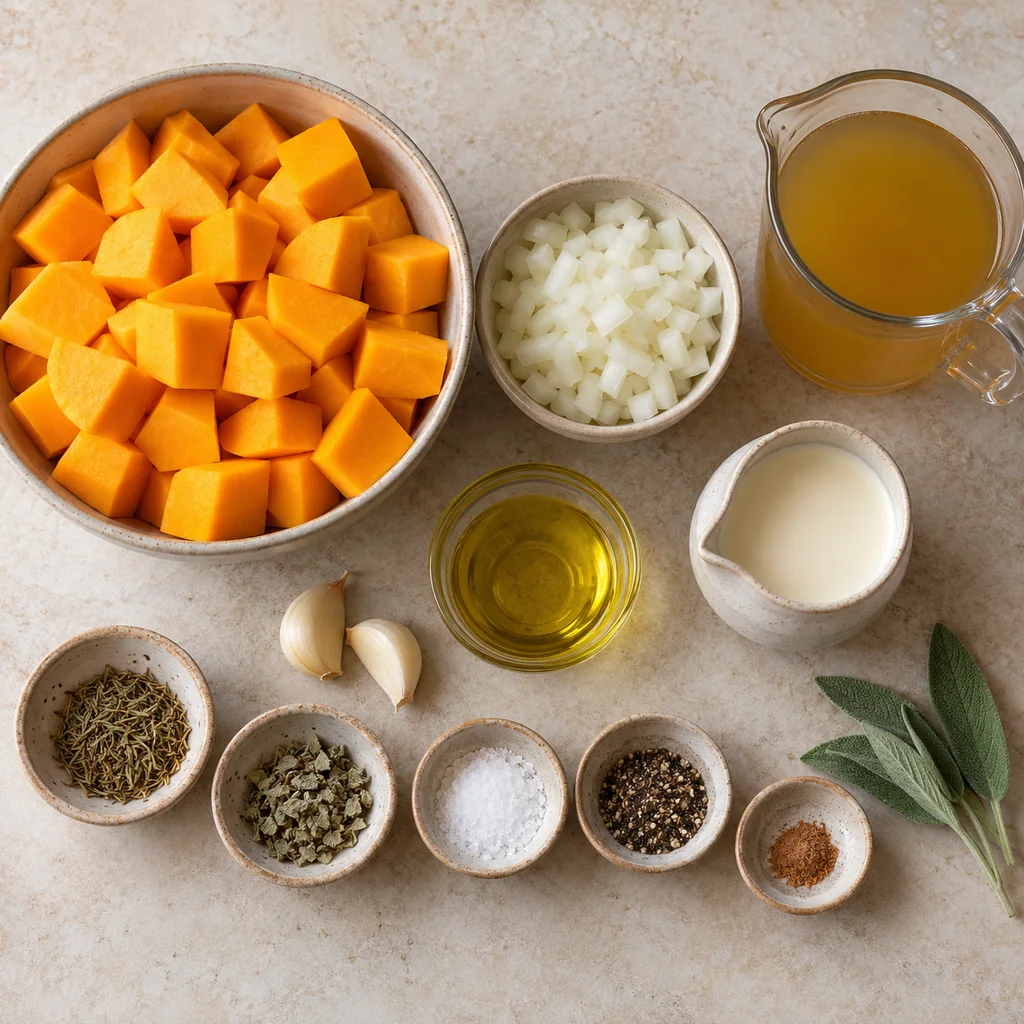
- 1 medium butternut squash, peeled, seeded, and cut into evenly sized cubes
- 1 medium onion, chopped
- 2 tablespoons olive oil, divided
- 2 garlic cloves, minced
- 4 cups vegetable broth
- 1/2 cup heavy cream or unsweetened coconut milk
- 1 teaspoon dried thyme, or 1 tablespoon fresh thyme leaves
- 1 teaspoon dried sage, or 1 tablespoon chopped fresh sage
- Salt and freshly ground black pepper, to taste
- A pinch of ground nutmeg, optional
- Fresh sage leaves for garnish, optional
Use half the olive oil for the squash and the other half for the pot. Cut the squash into roughly one-inch cubes so they roast at a similar rate. Coconut milk adds a gentle coconut note; heavy cream lets the herbs stand out.
Step-by-Step Instructions
Step 1: Roast the Butternut Squash
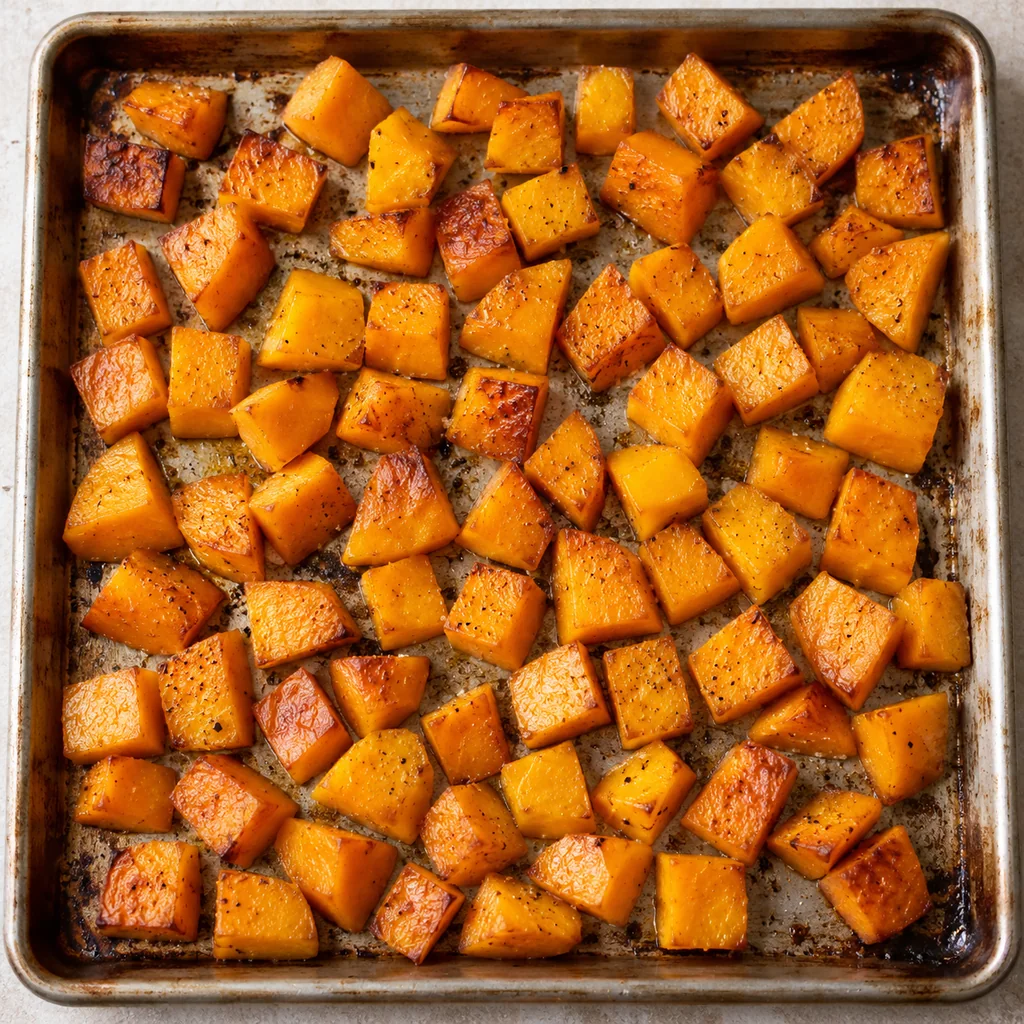
Heat the oven to 400°F (200°C). Toss the squash cubes with 1 tablespoon of olive oil, a pinch of salt, and black pepper. Spread them in a single layer on a baking sheet, leaving space around the cubes. Roast for 25 to 30 minutes, turning once halfway through, until a fork slides easily through a cube and several edges are golden. If your cubes are larger, allow a few extra minutes and judge by tenderness instead of the clock.
Step 2: Sauté the Aromatics
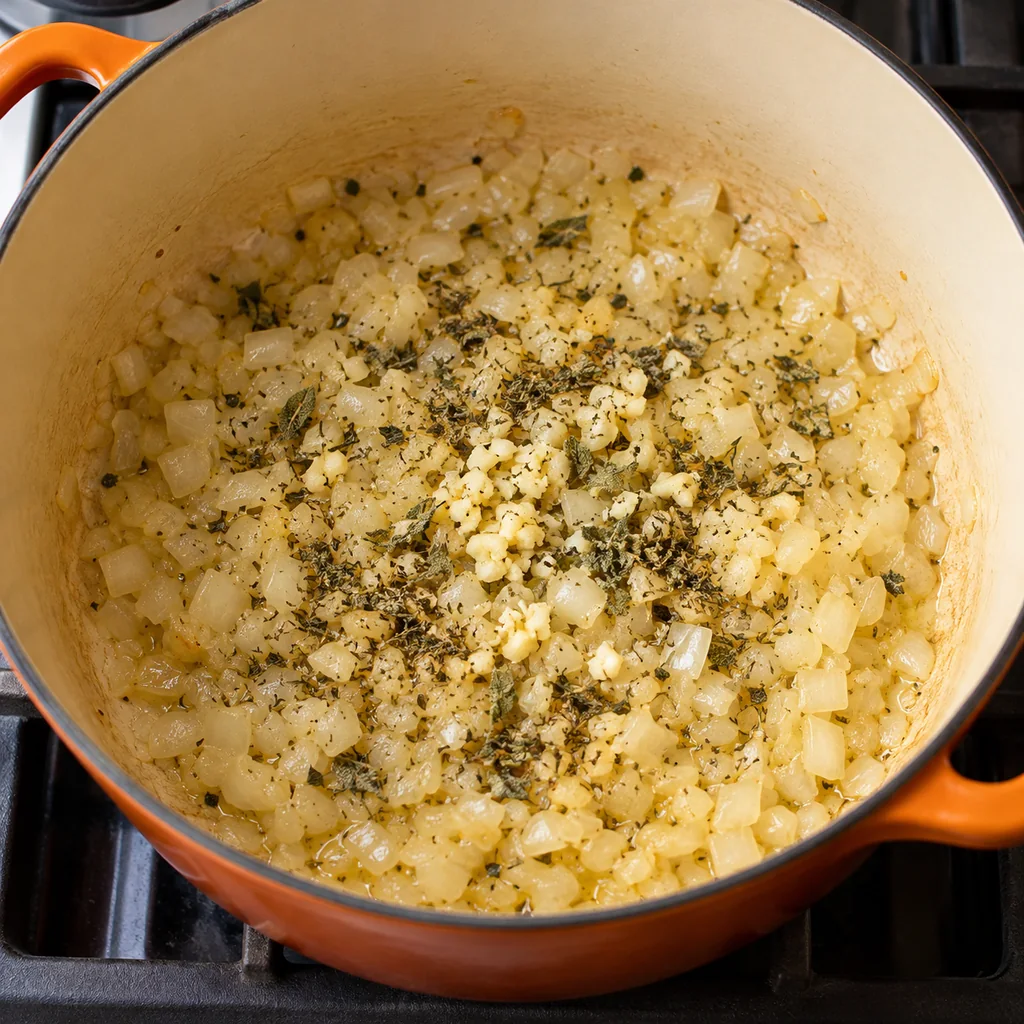
Set a large, heavy pot over medium heat and add the remaining 1 tablespoon of olive oil. Add the chopped onion and cook for 5 to 7 minutes, stirring occasionally, until translucent and soft but not browned. Stir in the garlic, thyme, and sage and cook for about 1 minute, just until fragrant. Keep the heat moderate: garlic can turn bitter if it darkens before the broth is added. If the pot looks dry while the onion softens, lower the heat and stir rather than pouring in more oil.
Step 3: Simmer the Soup
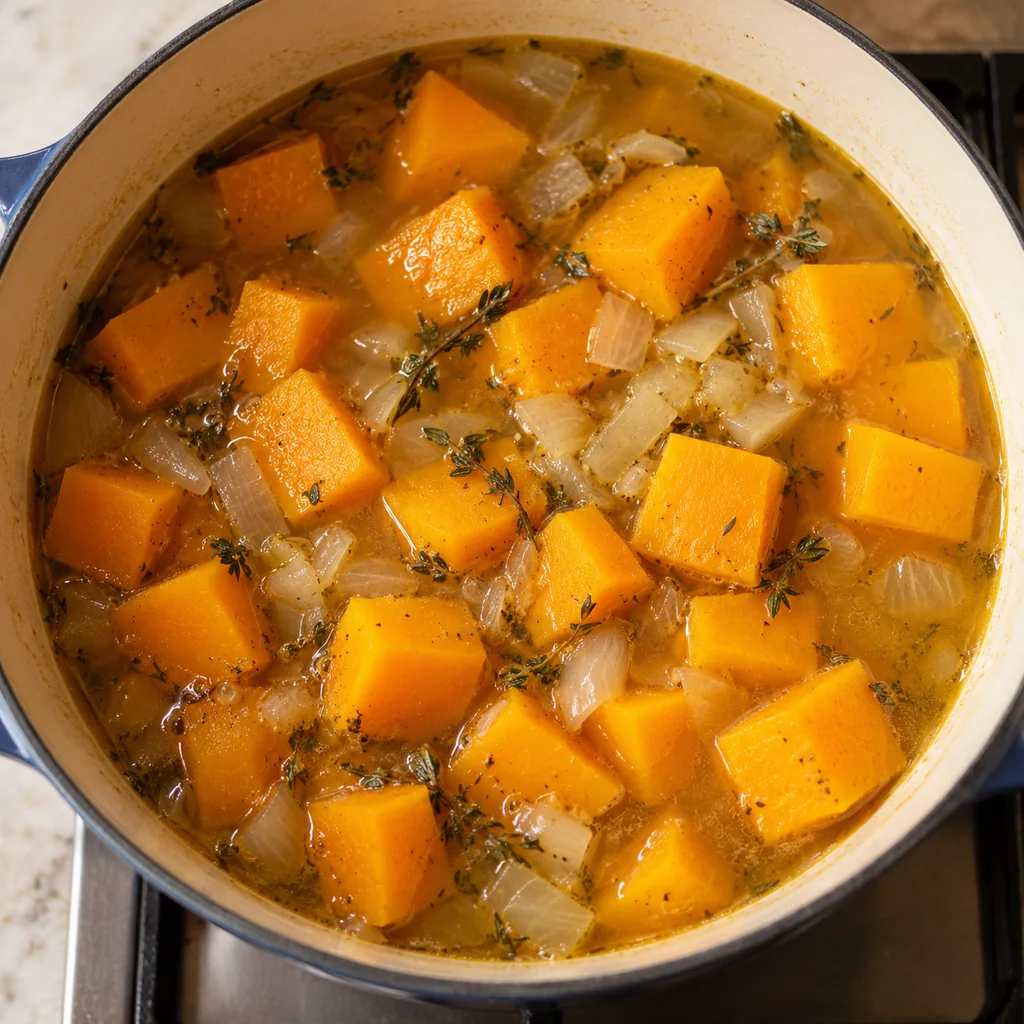
Tip the roasted squash into the pot with the softened onion mixture. Pour in the vegetable broth and stir, scraping any flavorful bits from the bottom. Bring the liquid just to a boil, then reduce the heat to a gentle simmer. Cook uncovered for 10 to 15 minutes so the squash, herbs, and broth come together. Add the optional pinch of nutmeg at this stage. Avoid a vigorous boil, which would reduce the liquid too quickly.
Step 4: Blend Until Smooth
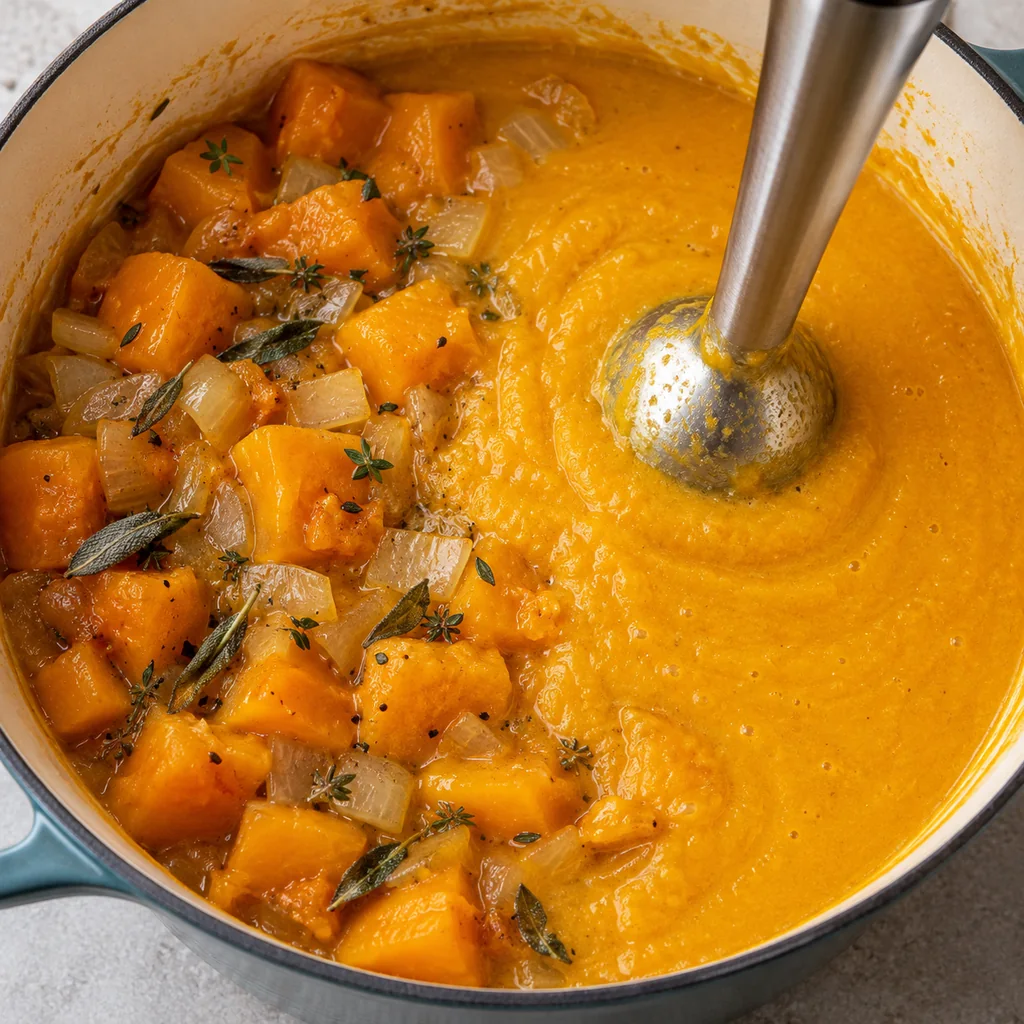
Take the pot off the heat and let the bubbling settle. Put an immersion blender below the surface before switching it on, then blend slowly, moving it through the pot until the soup is uniformly smooth. Keep the head submerged to avoid hot splashes. If you use a countertop blender instead, work in small batches, leave the lid vented as the manufacturer directs for hot liquids, and return the puree to the pot. For an especially fine texture, pass the blended soup through a sieve, though that extra step is optional.
Step 5: Add the Cream

Stir in the heavy cream or unsweetened coconut milk. Return the pot to low heat and warm the soup gently for 5 to 10 minutes, stirring now and then. Avoid a hard boil after adding cream. Taste and adjust salt and pepper only at the end, because vegetable broths vary widely in saltiness. If the soup is thicker than you like, add a small splash of broth or water and stir until it reaches a spoonable consistency. If it seems thin, let it simmer a little longer uncovered, stirring regularly.
Step 6: Serve and Garnish

Ladle the hot soup into four bowls. Add one or two fresh sage leaves to each bowl if you like, and finish with a small swirl of the cream already included in the recipe if you reserved a spoonful for serving. The soup is best pleasantly hot, when its aroma is strongest and the texture remains fluid. If it waits on the stove, keep it on very low heat and stir occasionally. For leftovers, cool promptly and refrigerate in a covered container; reheat gently, adding a little water if it has thickened.
Substitutions & Variations
For a dairy-free bowl, choose unsweetened coconut milk in place of heavy cream and check that your vegetable broth suits your needs. Fresh herbs can replace dried ones at the amounts listed; add them with the garlic so they become fragrant without scorching. If you prefer more heat, a modest pinch of red pepper flakes can go into the pot with the herbs. To make the soup even silkier, strain it after blending. Avoid adding a large amount of nutmeg: its role is a quiet background note, not a dominant flavor.
What to Serve With
A slice of crusty bread makes this a satisfying lunch, while a simple green salad keeps it light. For a larger seasonal spread, pair small bowls with balsamic Brussels sprouts with bacon or the fresh contrast of grilled halloumi salad with watermelon and mint. Both companions have distinct textures, so they work especially well beside a smooth soup. Choose the salad or bread if you want to skip the bacon.
Frequently Asked Questions
Can I make this soup ahead of time?
Yes. Cook and blend it, then cool it promptly and refrigerate in a covered container. Warm it gently on the stove before serving. If you are using heavy cream, you can stir it in while reheating for a freshly finished texture. Add fresh sage only when you serve.
Do I have to peel the squash?
For this smooth soup, peeling is the most reliable choice. The skin of butternut squash may soften during roasting but can leave flecks after blending. Peel, seed, and cube it before roasting so the finished puree has an even texture.
Why is my soup too thick?
Squash size and simmering time change how much liquid remains. Stir in a little extra warm broth or water, a few tablespoons at a time, until the soup pours easily from a ladle. Taste again afterward, since thinning can soften the seasoning.