
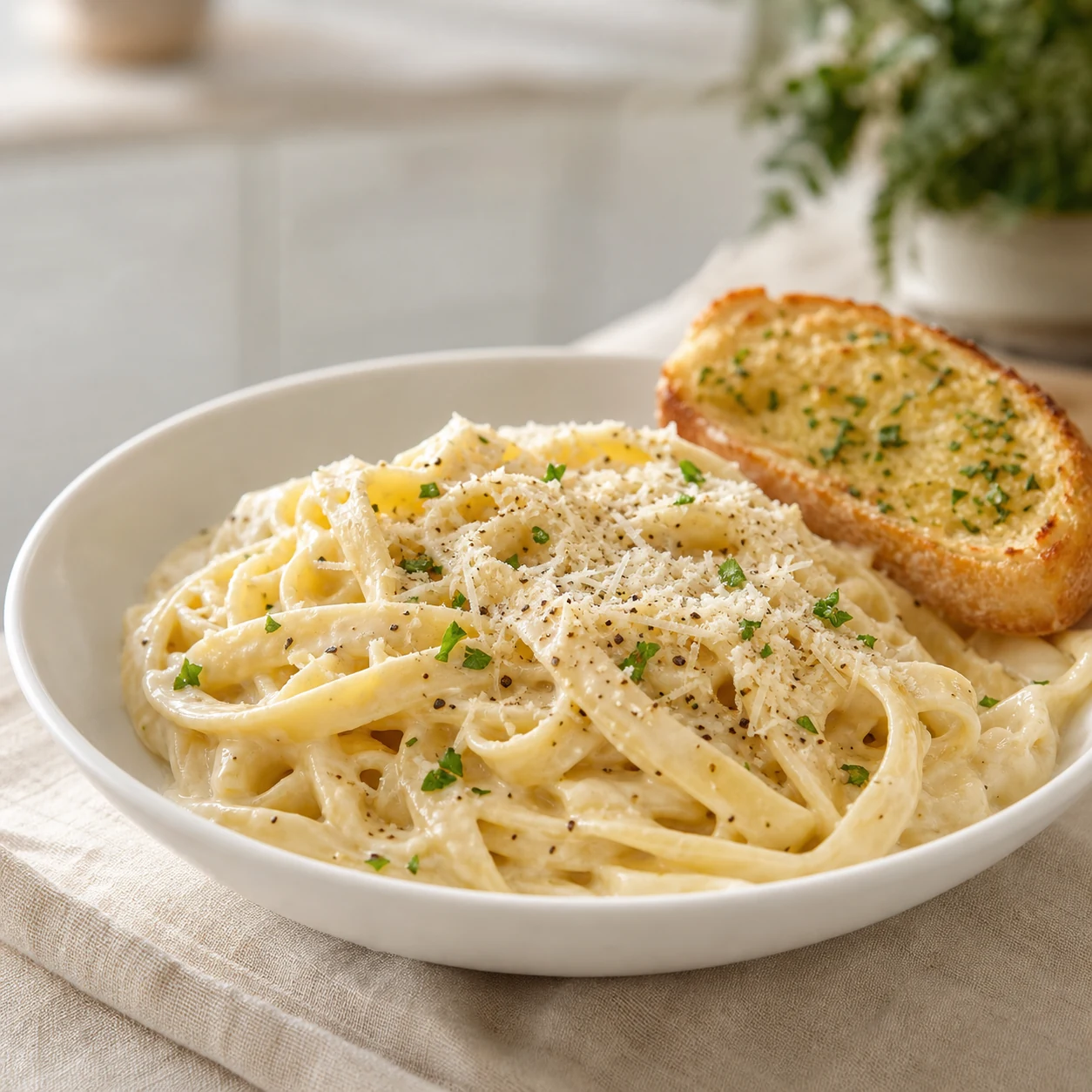
Copycat Olive Garden Fettuccine Alfredo is all about a silky cream sauce that clings to wide ribbons of pasta. The restaurant-style flavor comes from butter, cream, parmesan, garlic, and just enough pasta water to help everything turn glossy. It is rich, simple, and ready for the kind of comfort-food dinner that feels special without requiring a long prep list.
RECIPE CARD
Copycat Olive Garden Fettuccine Alfredo
Ingredients
- 12 ounces fettuccine
- 4 tablespoons unsalted butter
- 1 cup heavy cream
- 2 garlic cloves, minced
- 1 1/2 cups finely grated Parmesan cheese
- 1/2 cup reserved pasta water, plus more as needed
- Freshly cracked black pepper, to taste
- Salt, to taste
- Chopped parsley, optional
Quick Method
Condensed overview. Use Full Instructions for the complete method, timing and doneness details.
- Cook the Pasta: Boil fettuccine in salted water until al dente, reserving pasta water before draining.
- Make the Sauce: Melt butter, cook garlic briefly, then stir in heavy cream and warm gently.
- Add Cheese: Lower the heat and stir in Parmesan until the sauce is smooth.
- Toss: Add pasta and enough reserved pasta water to help the sauce coat the noodles.
- Serve: Season with black pepper, adjust salt, and finish with parsley if desired.
The secret is gentle heat. Alfredo sauce can separate when it boils too hard or when cheese is added too quickly. Keep the sauce at a low simmer, add finely grated parmesan gradually, and toss the pasta directly in the pan so the noodles absorb the sauce instead of sitting under it.
Why This Recipe Works
Fettuccine Alfredo depends on emulsion, which simply means fat, dairy, cheese, and starchy pasta water come together into one smooth sauce. Butter and cream bring richness, parmesan adds salt and depth, and pasta water loosens the sauce while helping it cling. A small amount of garlic gives the copycat version a cozy restaurant-style note.
Using freshly grated parmesan makes a big difference. Pre-shredded cheese often contains anti-caking starches that can make the sauce grainy. For another creamy pasta dinner with a weeknight-friendly feel, see this creamy garlic parmesan pasta.
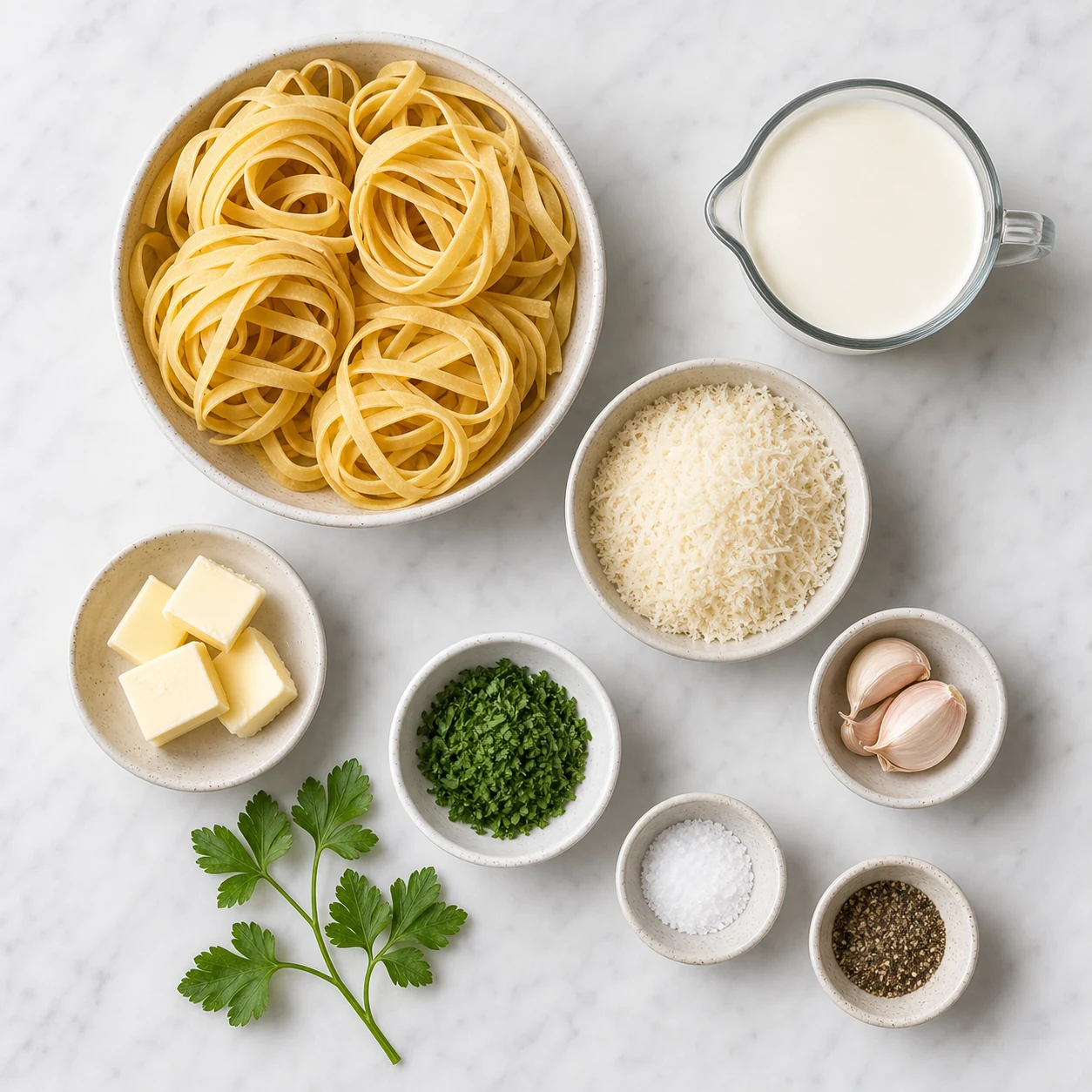
Ingredients
- Fettuccine: Wide pasta ribbons hold the creamy sauce well.
- Butter: Use unsalted butter so you can control the seasoning.
- Heavy cream: Cream gives the sauce its signature richness.
- Garlic: Fresh minced garlic adds warmth without overpowering the cheese.
- Parmesan: Finely grate it yourself for the smoothest melt.
- Pasta water: Save some before draining the noodles.
- Black pepper: Freshly cracked pepper balances the creamy sauce.
- Parsley: Optional, but it adds color and freshness.
Step-by-Step Instructions
Cook the Pasta
Bring a large pot of salted water to a boil. Add the fettuccine and cook until al dente. The pasta should still have a little bite because it will finish in the sauce. Before draining, reserve at least one cup of the starchy water.
Do not rinse the pasta after draining. The surface starch helps the Alfredo sauce cling to the noodles. If the sauce is not ready yet, toss the pasta with a very small amount of butter to keep it from sticking.
Make the Alfredo Sauce
Melt butter in a large skillet over medium-low heat. Add garlic and cook briefly until fragrant, not browned. Pour in the cream and bring it to a gentle simmer. Let it thicken slightly, then lower the heat before adding parmesan.
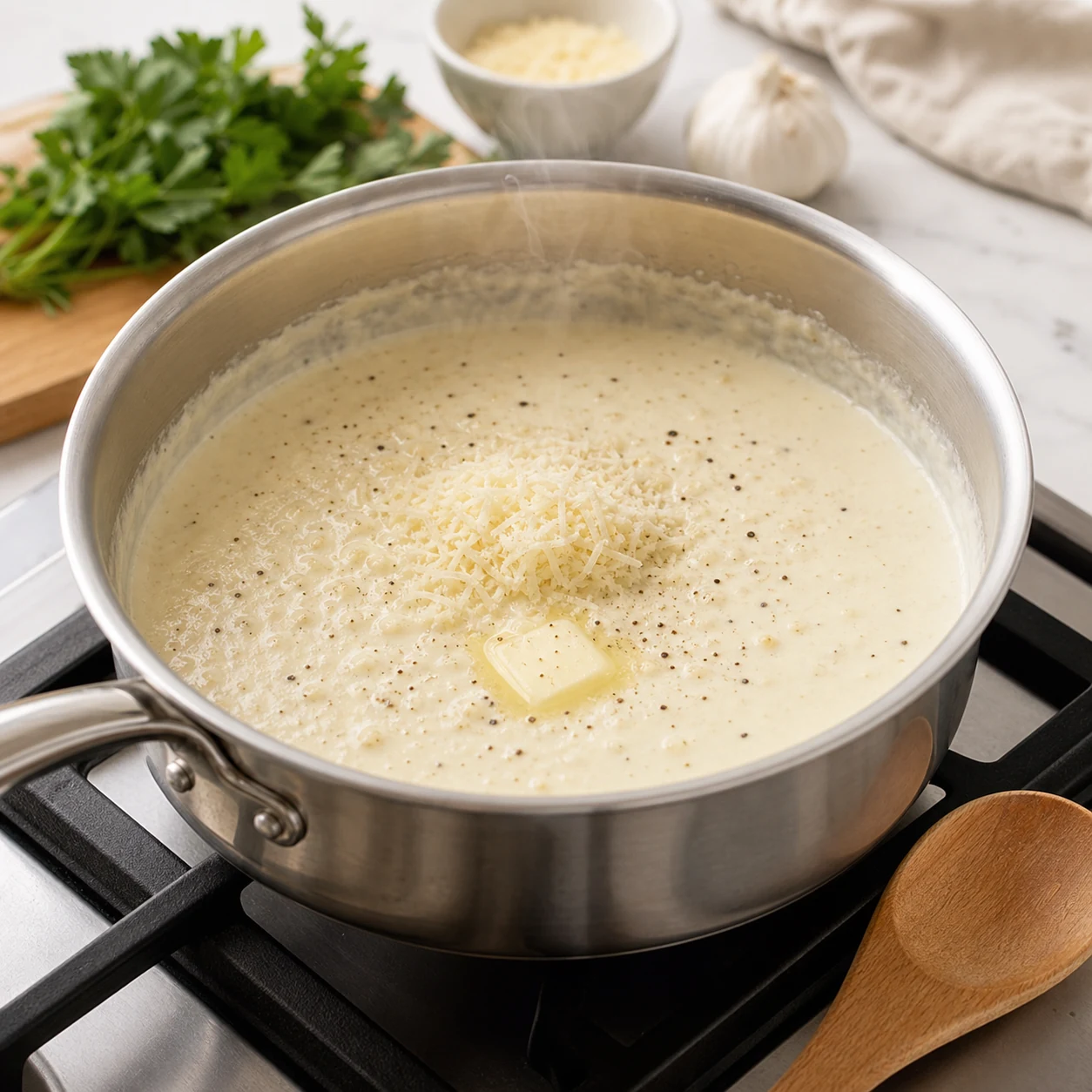
Sprinkle in the parmesan a handful at a time, stirring until smooth before adding more. If the sauce gets too thick, add a splash of reserved pasta water. The texture should be creamy and pourable, not stiff. Taste before adding salt because parmesan already brings plenty of seasoning.
Toss and Finish
Add the drained fettuccine to the skillet and toss until every strand is coated. Keep the heat low and add pasta water a little at a time until the sauce turns glossy. This final toss is what gives the dish a restaurant-style finish.
Serve immediately with extra parmesan, cracked black pepper, and parsley. Alfredo thickens as it sits, so a splash of hot pasta water or warm cream can loosen leftovers. If you like hearty pasta bakes, this chicken parmesan casserole is another comfort-food option.
Serving Ideas
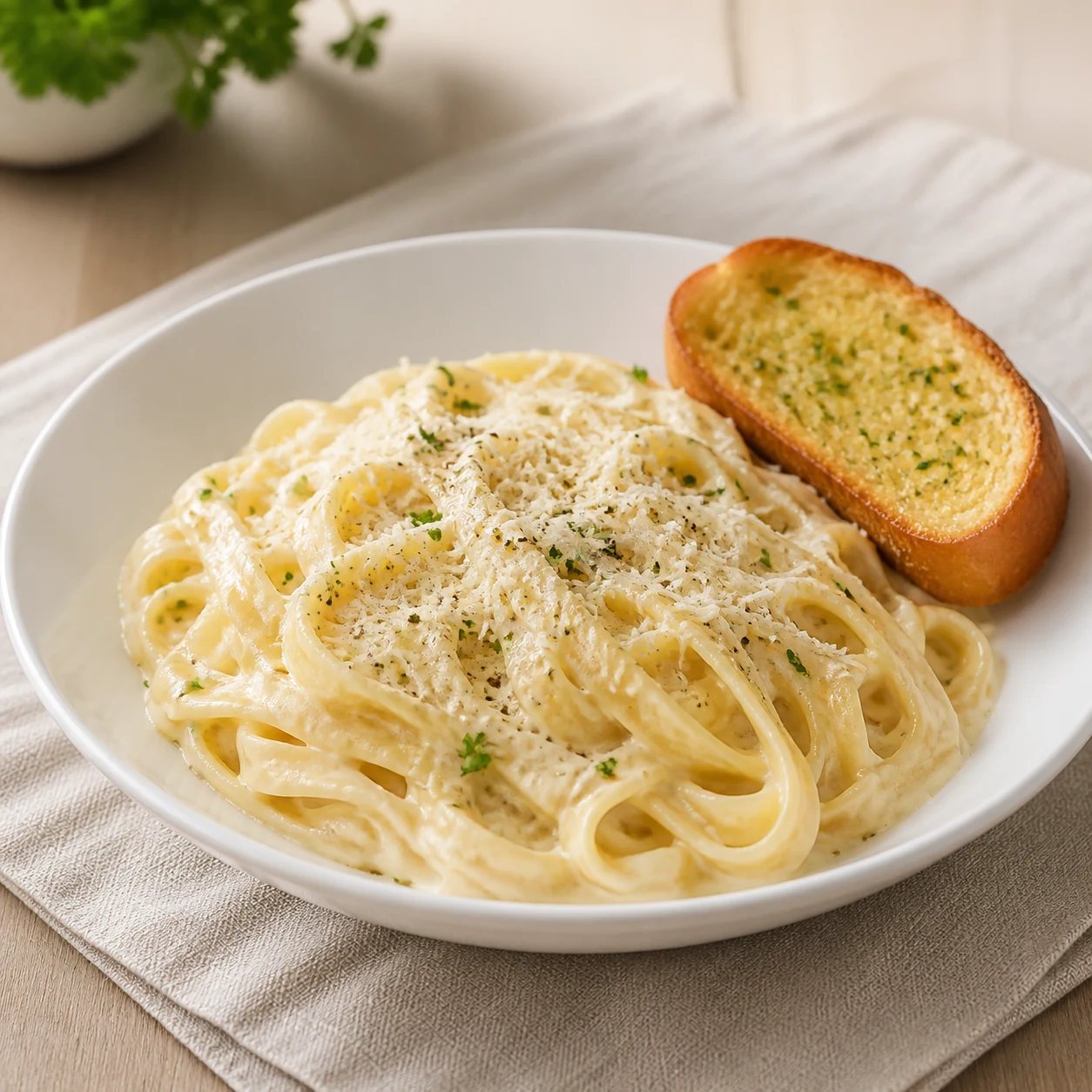
Fettuccine Alfredo pairs well with garlic bread, Caesar salad, roasted broccoli, grilled chicken, or shrimp. Keep sides crisp or lightly seasoned because the pasta is already rich. A simple green salad helps balance the creaminess.
Storage and Reheating
Store leftovers in an airtight container in the refrigerator for up to three days. Reheat gently in a skillet over low heat with a splash of milk, cream, or pasta water. Stir often and avoid high heat, which can make the sauce separate.
Freezing is not ideal because cream sauces can turn grainy after thawing. If you need to prep ahead, grate the parmesan and measure the ingredients in advance, then cook the sauce fresh. For another easy pasta night, try easy one-pot pasta.
Recipe Checklist
- Salt the pasta water generously.
- Reserve pasta water before draining.
- Use freshly grated parmesan.
- Keep the sauce at a gentle simmer.
- Add cheese gradually and stir until smooth.
- Toss the pasta in the skillet just before serving.
FAQ
Why is my Alfredo sauce grainy?
The cheese may have been added over heat that was too high, or pre-shredded parmesan may have been used. Lower the heat and use finely grated fresh parmesan.
Can I add chicken?
Yes. Grilled or pan-seared chicken works well. Slice it and place it over the finished pasta or toss it in at the end.
How do I thin Alfredo sauce?
Add reserved pasta water a tablespoon or two at a time until the sauce becomes glossy and loose enough to coat the noodles.
Can I use milk instead of cream?
Milk can work, but the sauce will be lighter and less rich. For a closer restaurant-style texture, heavy cream is the better choice.