
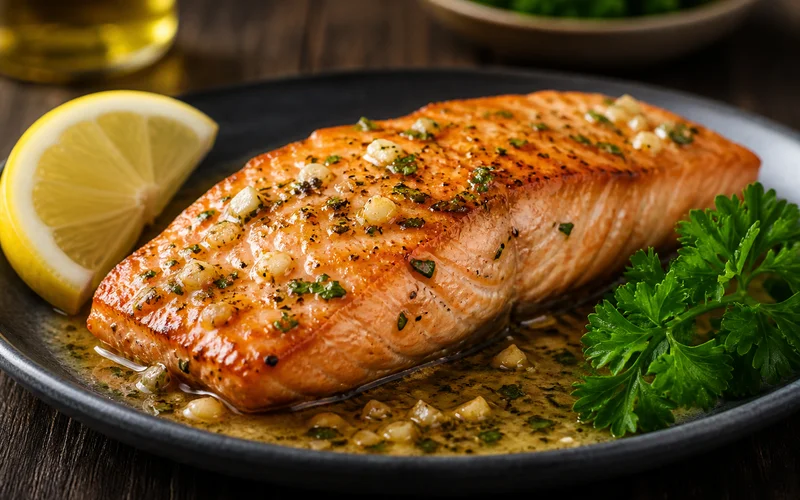
Butter garlic salmon is one of those weeknight dinners that feels far more impressive than the effort it requires. In under thirty minutes, you can turn simple salmon fillets into a restaurant-quality main course with a glossy garlic butter sauce, bright lemon, and fresh parsley. The skillet method gives you crispy skin, a tender pink center, and a pan sauce worth spooning over roasted vegetables or rice.
RECIPE CARD
Butter Garlic Salmon Recipe
Timing and serving details are shown only when they are available in the original recipe.
Ingredients
- 4 salmon fillets (about 6 ounces each): Choose fillets with even thickness so they cook at the same rate. Skin-on fillets give the crispiest results.
- Salt and freshly ground black pepper: Season both sides generously before cooking.
- 2 tablespoons olive oil: Helps prevent sticking and starts the sear.
- 4 tablespoons unsalted butter: Forms the base of the pan sauce.
- 5 cloves garlic, minced: Use fresh garlic for the best aroma; pre-minced jarred garlic works in a pinch.
- Juice of 1 lemon: About 2 to 3 tablespoons; fresh lemon tastes brighter than bottled juice.
- 2 tablespoons chopped fresh parsley: Flat-leaf or curly parsley both work.
- Lemon slices for garnish: Optional but adds color and extra tang at the table.
Quick Method
Condensed overview. Use Full Instructions for the complete method, timing and doneness details.
- Read through all seven steps before you start. Total time is about twenty-five minutes from prep to plate.
- Prepare and Season the Salmon: Rinse the salmon fillets under cold water and pat them completely dry with paper towels. Moisture is the enemy of a good sear. Season…
- Heat the Pan and Add the Salmon: Place a large nonstick skillet over medium-high heat and add the olive oil. Heat until the oil shimmers and moves easily across the pan.…
- Sear the Salmon: Cook the salmon skin-side down for 4 to 5 minutes without moving it. The skin should turn deep golden and crisp. Flip each fillet…
- Make the Garlic Butter Sauce: Reduce the heat to medium. Add the butter to the same skillet and let it melt, swirling the pan to pick up any browned…
- Add the Lemon Juice: Pour the lemon juice into the pan and simmer for about 1 minute, stirring to combine. The sauce should look glossy and slightly emulsified.…
- Return the Salmon to the Pan: Return the salmon fillets to the skillet, flesh-side up. Spoon the garlic butter sauce over each fillet, basting repeatedly so the fish absorbs the…
- Garnish and Serve: Transfer the salmon to serving plates. Sprinkle with chopped fresh parsley and garnish with lemon slices. Spoon any remaining pan sauce over the top.…
This recipe works for busy families, date-night dinners, and meal prep alike. You need one pan, a handful of pantry staples, and fresh salmon from the seafood counter or freezer. Pair the finished dish with sides from our easy summer picnic recipes collection, or round out a cozy brunch spread with a spinach and mushroom crustless quiche. For a complete dinner menu, add a light salad and finish with a perfect iced coffee at home.
Why This Butter Garlic Salmon Works
Salmon cooks quickly, which makes it ideal for skillet recipes. High heat sears the skin until crisp while the flesh stays moist. Building the garlic butter sauce in the same pan captures all the browned bits and fish flavor, so every spoonful tastes rich and balanced. Lemon juice cuts through the butter, and parsley adds freshness at the end.
Unlike baked salmon that can dry out if you lose track of time, stovetop cooking gives you visual cues. You watch the skin turn golden, feel the fillet firm up, and smell the garlic the moment it becomes fragrant. That control makes this recipe reliable even if you are still learning to cook fish.
Ingredients
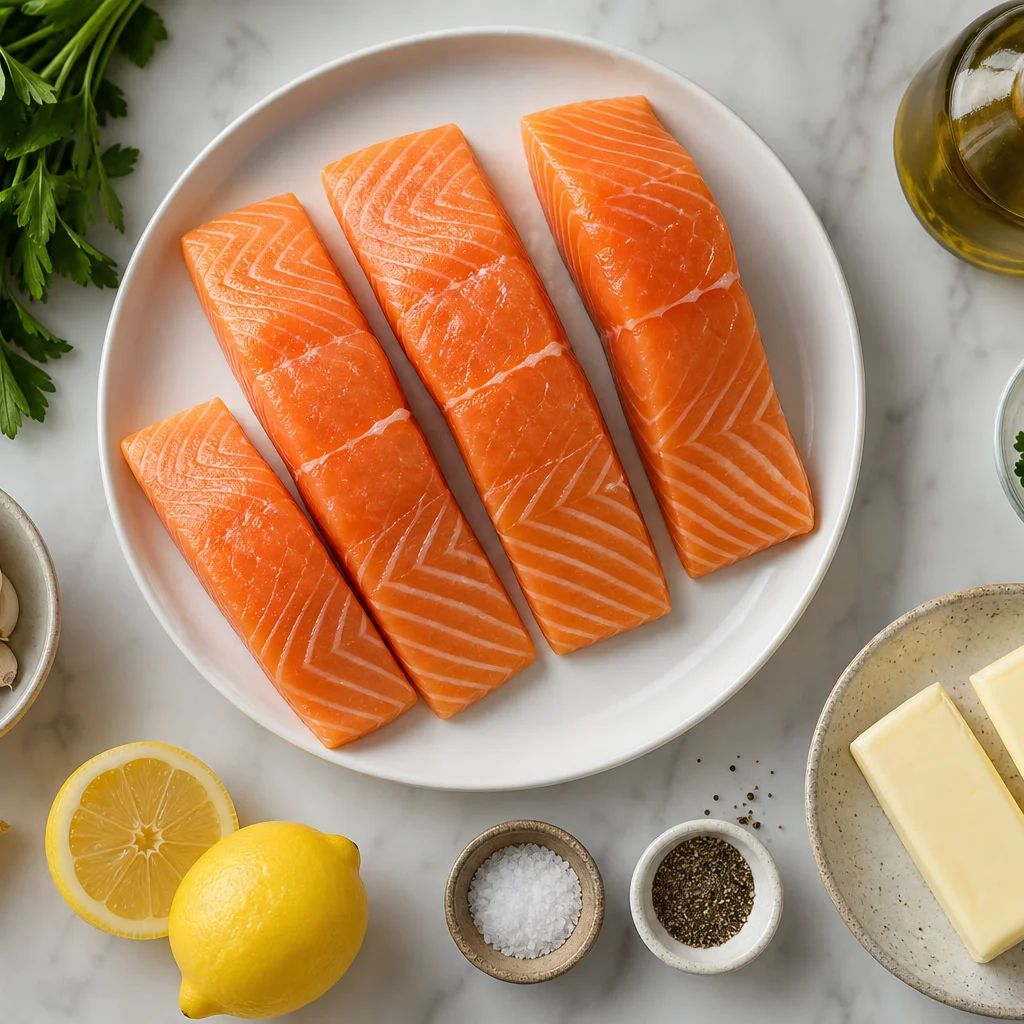
- 4 salmon fillets (about 6 ounces each): Choose fillets with even thickness so they cook at the same rate. Skin-on fillets give the crispiest results.
- Salt and freshly ground black pepper: Season both sides generously before cooking.
- 2 tablespoons olive oil: Helps prevent sticking and starts the sear.
- 4 tablespoons unsalted butter: Forms the base of the pan sauce.
- 5 cloves garlic, minced: Use fresh garlic for the best aroma; pre-minced jarred garlic works in a pinch.
- Juice of 1 lemon: About 2 to 3 tablespoons; fresh lemon tastes brighter than bottled juice.
- 2 tablespoons chopped fresh parsley: Flat-leaf or curly parsley both work.
- Lemon slices for garnish: Optional but adds color and extra tang at the table.
Pat salmon dry before seasoning. Excess moisture steams the fish instead of searing it, which makes it harder to achieve crispy skin. Let seasoned fillets rest at room temperature for ten minutes while you prep the garlic and lemon.
Equipment You Need
- Large nonstick or stainless-steel skillet (12-inch works well)
- Fish spatula or thin flexible spatula
- Paper towels
- Small bowl for minced garlic
- Measuring spoons
A heavy skillet holds heat evenly, which matters when you want consistent browning. If your pan runs hot, lower the heat slightly after the initial sear to avoid burning the garlic later.
Step-by-Step Instructions
Read through all seven steps before you start. Total time is about twenty-five minutes from prep to plate.
Step 1: Prepare and Season the Salmon
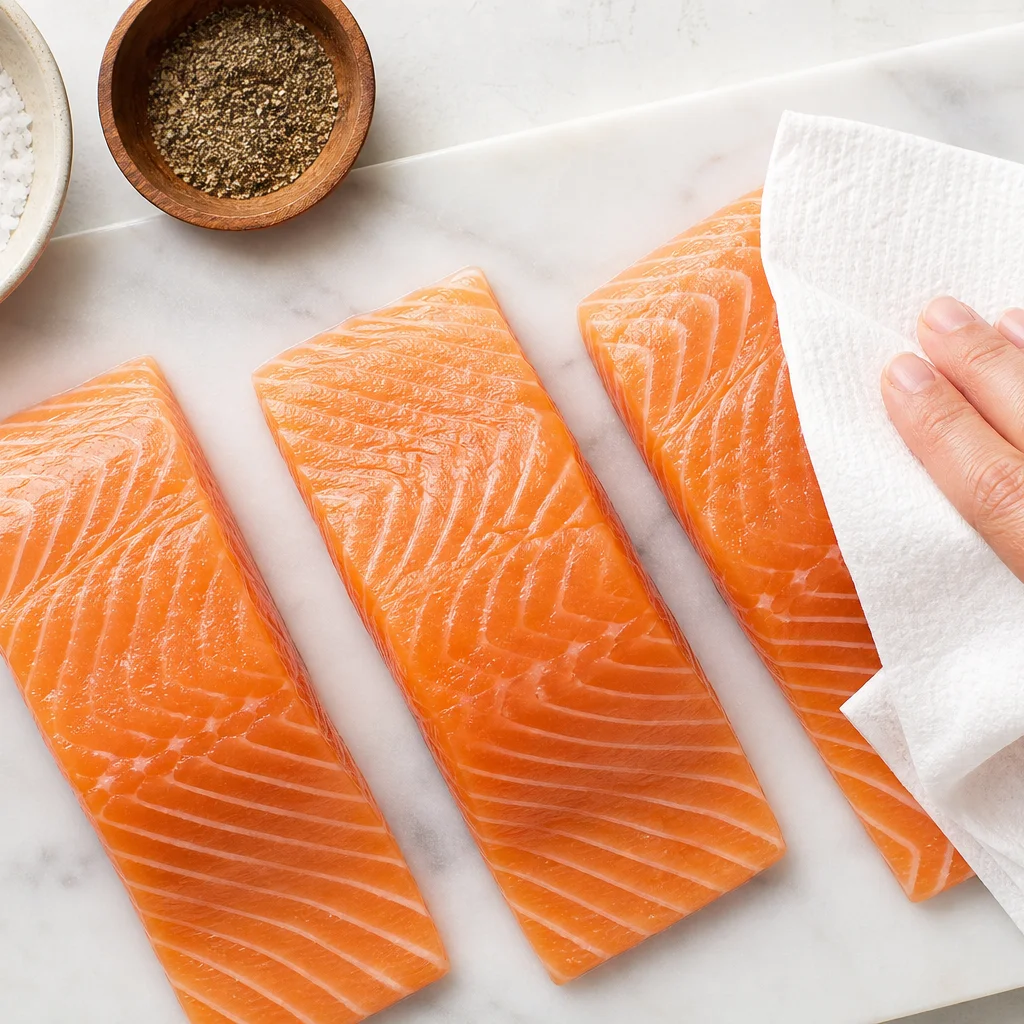
Rinse the salmon fillets under cold water and pat them completely dry with paper towels. Moisture is the enemy of a good sear. Season both sides generously with salt and freshly ground black pepper. If your fillets have thin belly sections, tuck them slightly so the fish cooks evenly.
Step 2: Heat the Pan and Add the Salmon
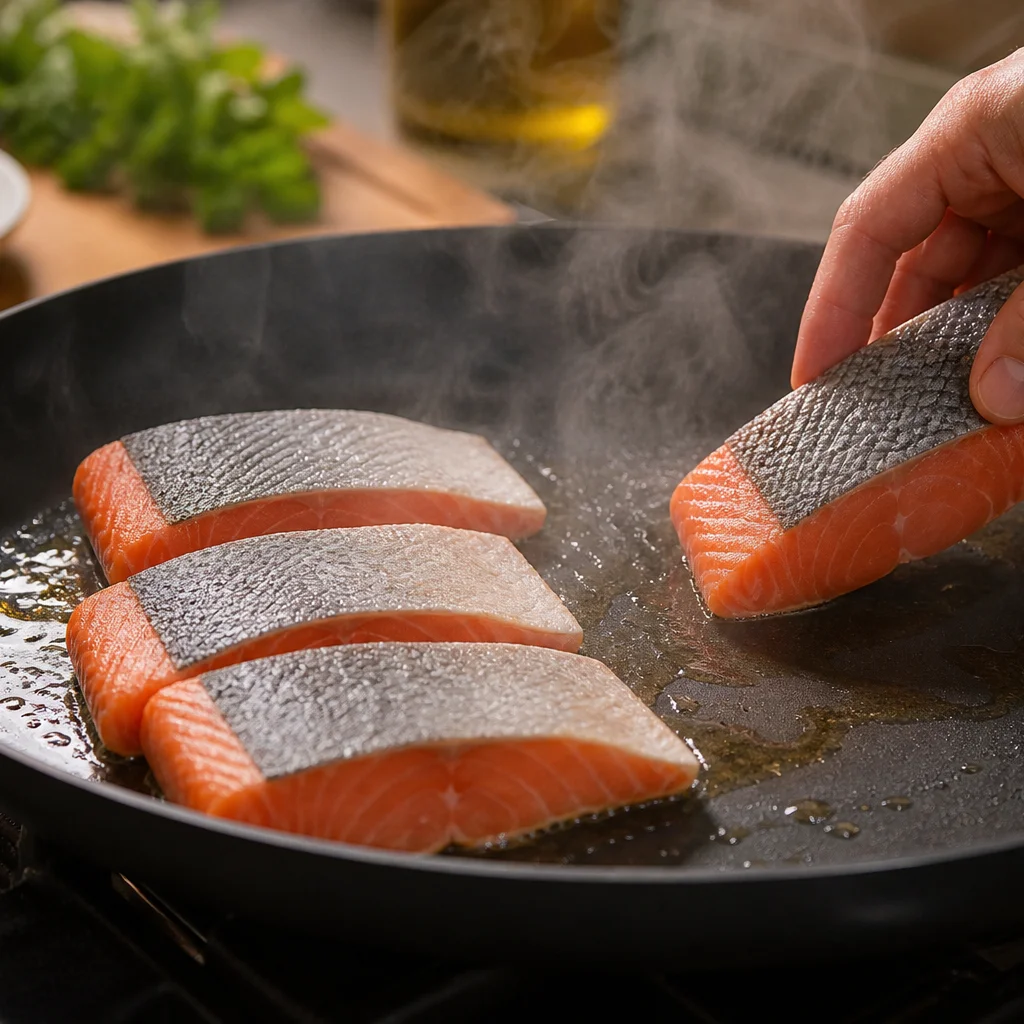
Place a large nonstick skillet over medium-high heat and add the olive oil. Heat until the oil shimmers and moves easily across the pan. Carefully lay the salmon fillets skin-side down, spacing them so they are not crowded. Press gently with a spatula for ten seconds so the skin makes full contact with the hot surface.
Step 3: Sear the Salmon
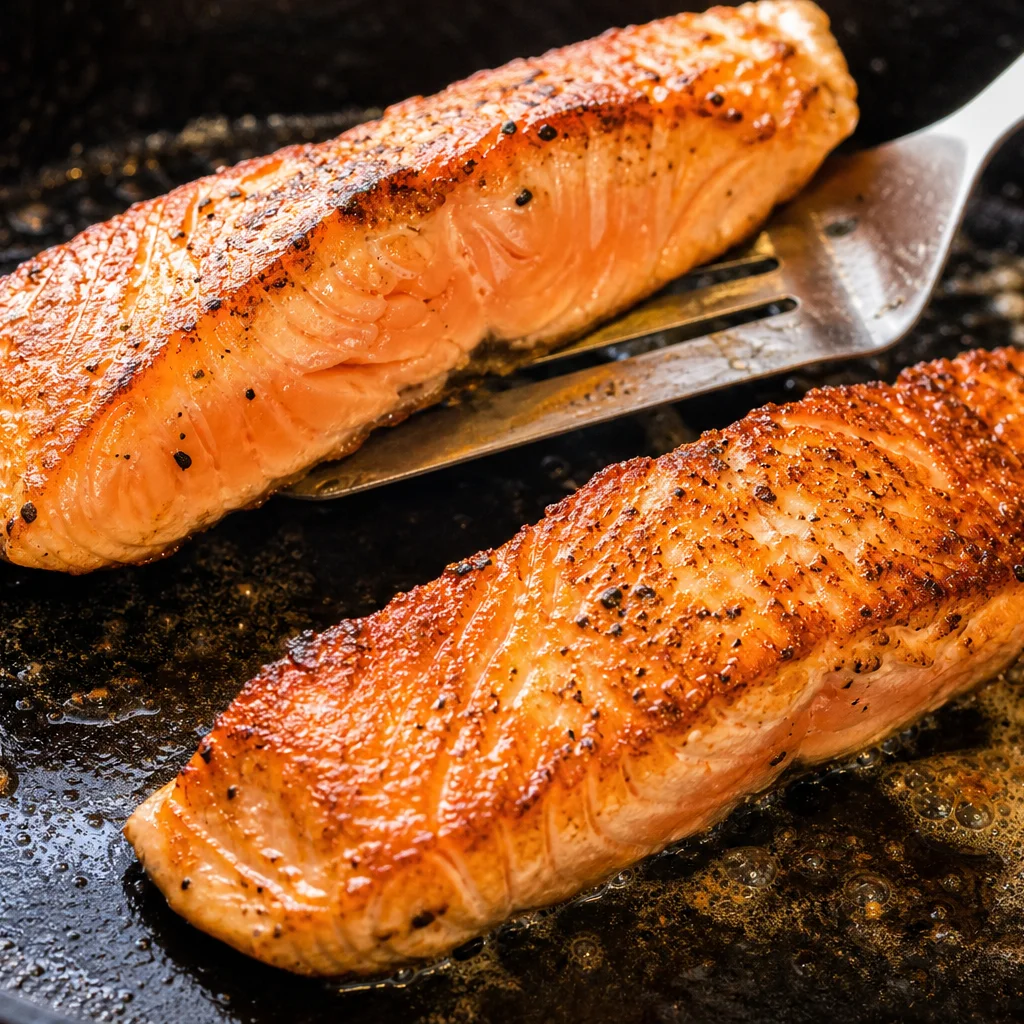
Cook the salmon skin-side down for 4 to 5 minutes without moving it. The skin should turn deep golden and crisp. Flip each fillet and cook for 2 to 3 minutes on the flesh side, depending on thickness. The center should still look slightly translucent when you press gently. Transfer the salmon to a clean plate and tent loosely with foil.
Step 4: Make the Garlic Butter Sauce
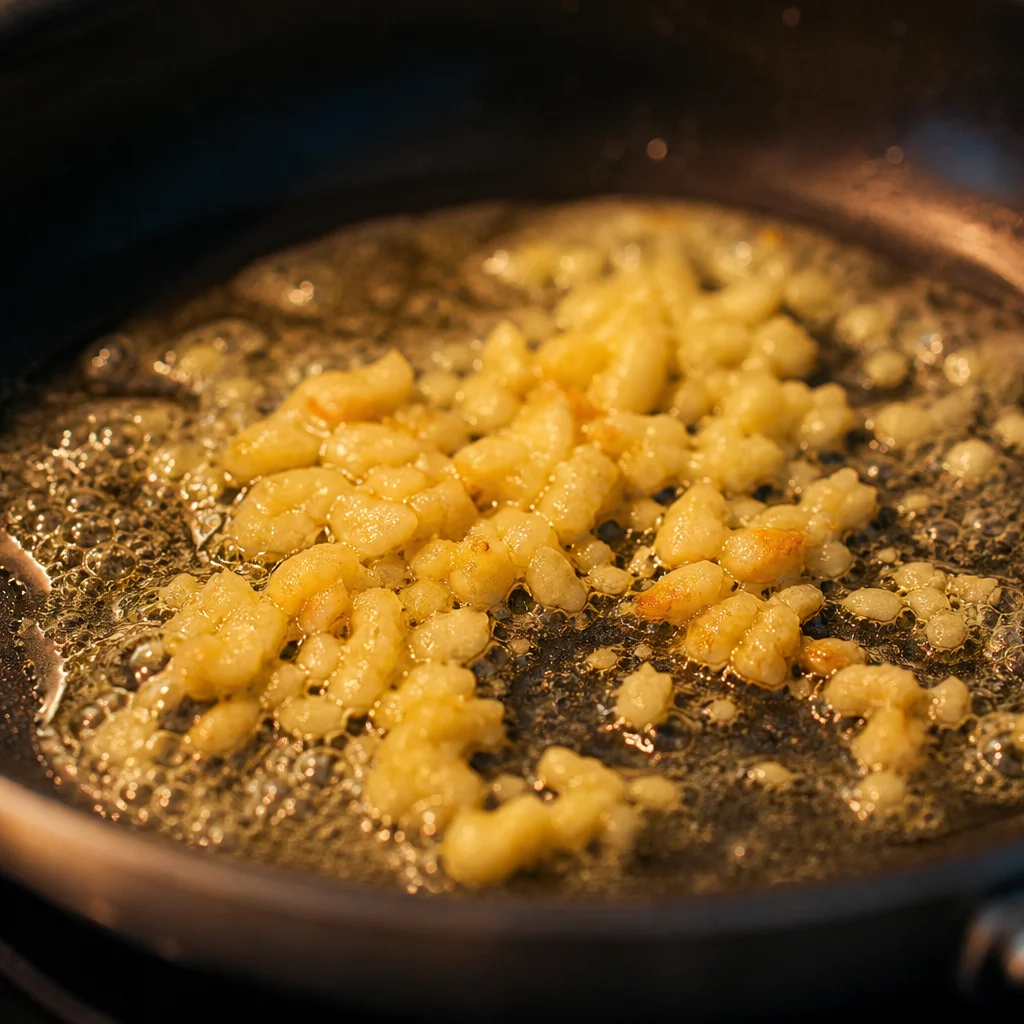
Reduce the heat to medium. Add the butter to the same skillet and let it melt, swirling the pan to pick up any browned bits from the salmon. Stir in the minced garlic and cook for about 1 minute until fragrant and lightly golden. Watch closely—garlic burns quickly and turns bitter.
Step 5: Add the Lemon Juice
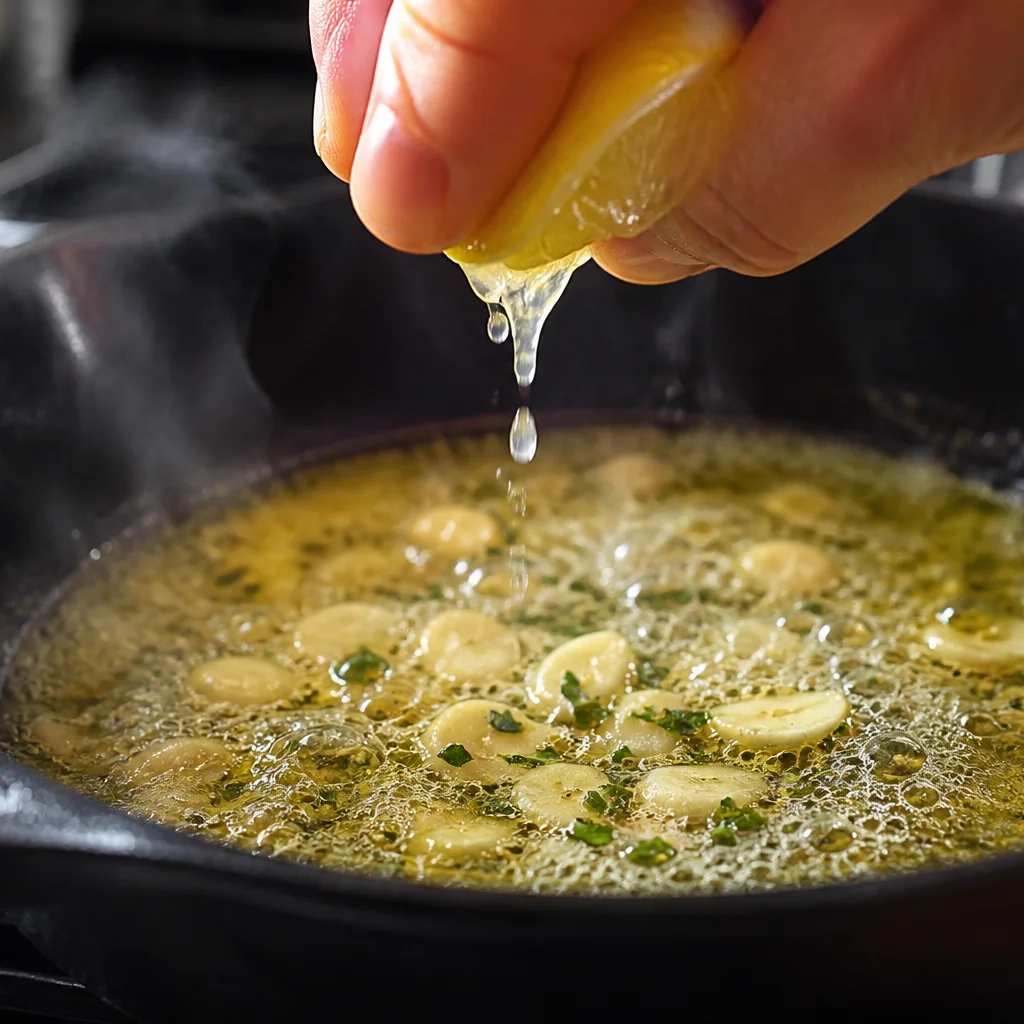
Pour the lemon juice into the pan and simmer for about 1 minute, stirring to combine. The sauce should look glossy and slightly emulsified. Taste and adjust seasoning with a pinch of salt or an extra squeeze of lemon if needed.
Step 6: Return the Salmon to the Pan
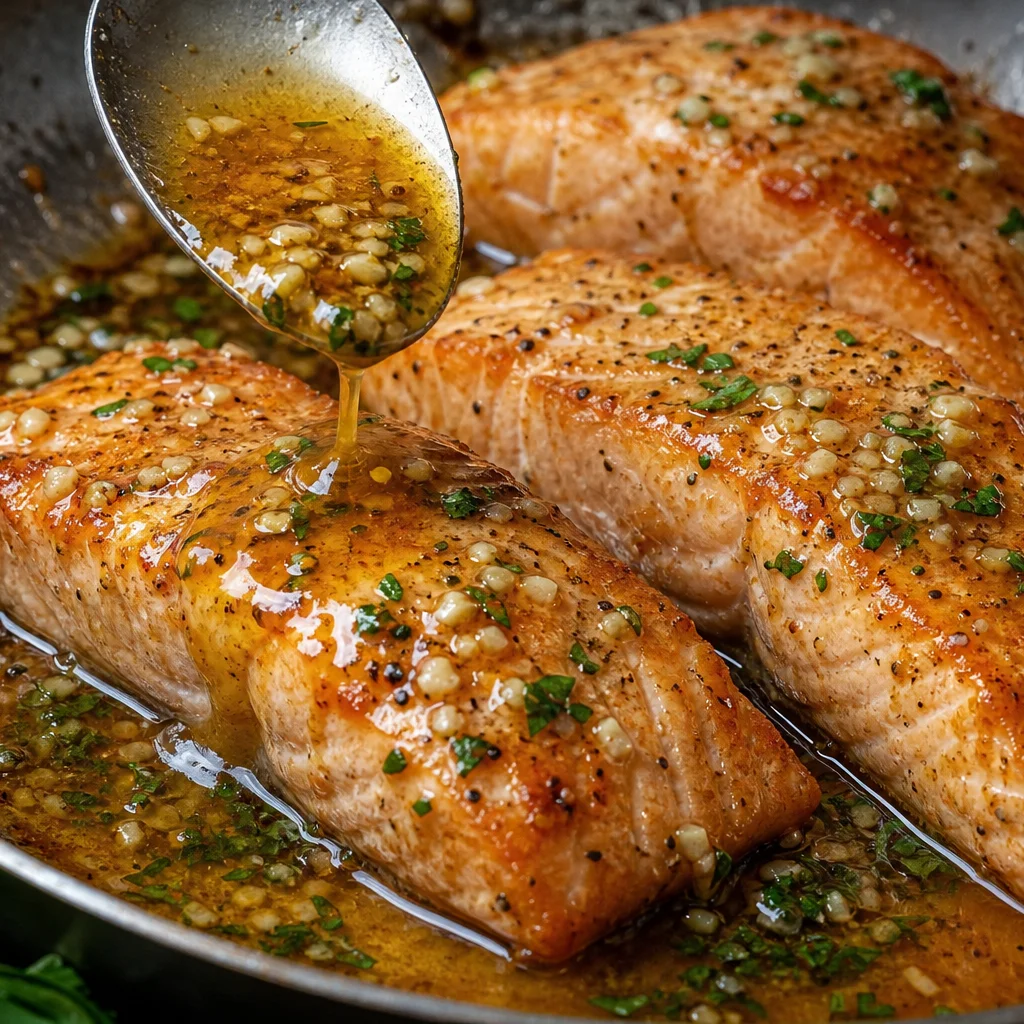
Return the salmon fillets to the skillet, flesh-side up. Spoon the garlic butter sauce over each fillet, basting repeatedly so the fish absorbs the flavor. Heat through for 1 to 2 minutes until the salmon reaches your preferred doneness.
Step 7: Garnish and Serve
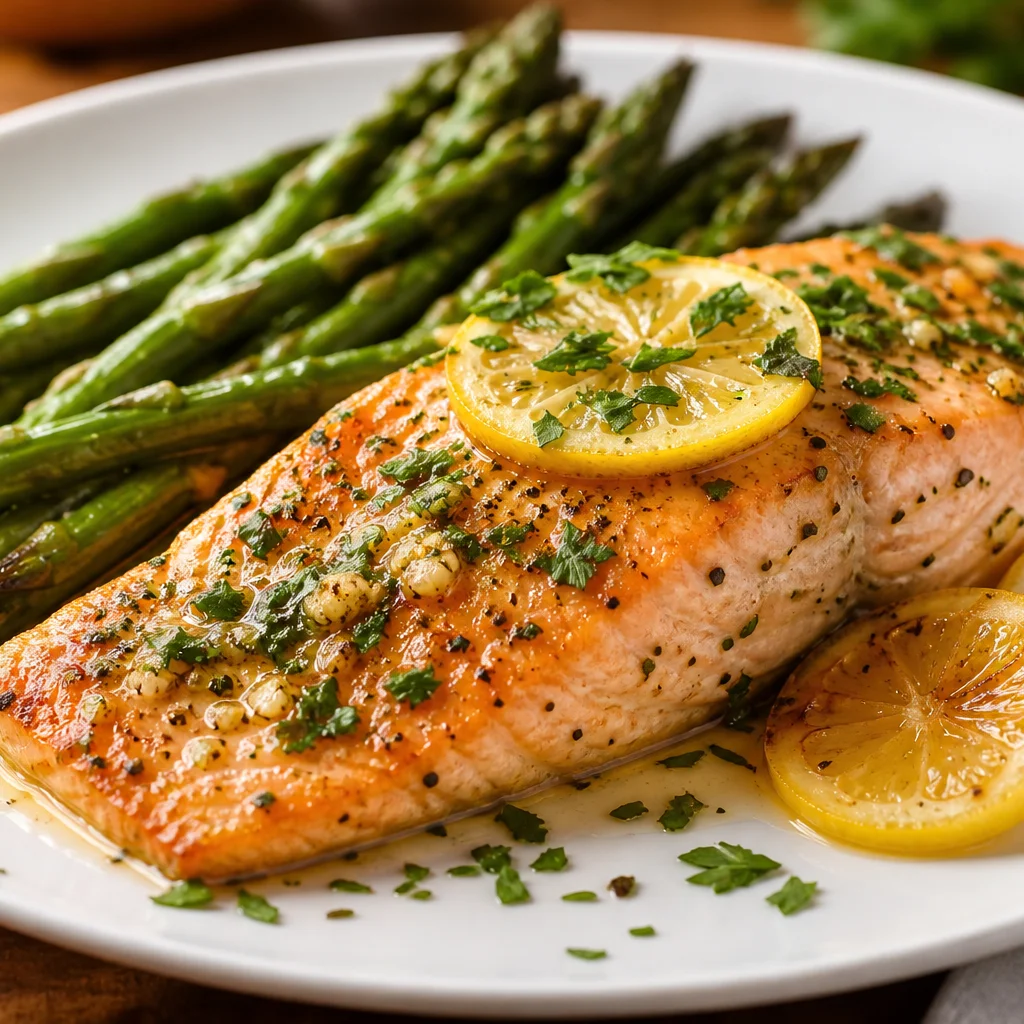
Transfer the salmon to serving plates. Sprinkle with chopped fresh parsley and garnish with lemon slices. Spoon any remaining pan sauce over the top. Serve immediately with roasted asparagus, mashed potatoes, rice pilaf, or a simple green salad.
Pro Tips for Perfect Results
- Room-temperature fish: Cold salmon drops pan temperature and steams instead of searing. Rest fillets ten minutes before cooking.
- Do not flip too early: The skin releases naturally when it is crisp. If it sticks, give it another thirty seconds.
- Butter temperature: Add butter after removing the salmon so the milk solids brown without overcooking the fish.
- Spice variation: Add a pinch of red pepper flakes to the garlic butter for gentle heat.
- Thicker fillets: Sear skin-side down, then finish in a 375°F oven for 5 minutes if the center needs more time.
What to Serve With Butter Garlic Salmon
This dish pairs naturally with starchy sides that soak up the pan sauce. Try garlic mashed potatoes, lemon herb rice, or crusty bread for dipping. For lighter meals, serve with steamed broccoli, roasted green beans, or a cucumber tomato salad.
If you are planning a layered comfort-food menu, a slice of Mexican lasagna with tortillas makes a hearty contrast earlier in the week, while butter garlic salmon keeps the next dinner fast and fresh. The combination of rich sauce and simple sides makes this recipe a staple you can return to whenever you want an easy, elegant plate.
Storage and Reheating
Store leftover salmon in an airtight container in the refrigerator for up to 3 days. Reheat gently in a skillet over low heat with a splash of water or extra butter to revive the sauce. Avoid microwaving on high power, which can dry out the fish. Leftover salmon also works flaked over salads or stirred into pasta with a little cream and lemon.
Common Mistakes to Avoid
- Cooking cold salmon straight from the refrigerator without drying it first
- Overcrowding the pan, which lowers heat and prevents crispy skin
- Moving the fillets before the skin has browned
- Burning the garlic by keeping the heat too high after adding butter
- Overcooking until the salmon turns dry and chalky
- Skipping the rest step after searing, which causes juices to run out when you cut
Pre-Cooking Checklist
- I patted the salmon fillets dry and seasoned both sides with salt and pepper.
- My garlic is minced and lemon is juiced before I start cooking.
- The skillet is large enough to hold all fillets without crowding.
- Olive oil is heated until shimmering before the salmon goes in.
- I will not flip the salmon until the skin looks deep golden brown.
- Butter and garlic go in only after the salmon is removed from the pan.
- I have fresh parsley chopped and lemon slices ready for garnish.
- A side dish is prepped so the salmon can be served immediately.
Frequently Asked Questions
What internal temperature should salmon reach?
The FDA recommends cooking fish to 145°F, but many home cooks prefer salmon at 125°F to 130°F for a moist, medium center. At that range the flesh flakes easily but stays tender and pink inside. Use an instant-read thermometer at the thickest part of the fillet for the most accurate result.
Can I use frozen salmon for this recipe?
Yes. Thaw frozen salmon overnight in the refrigerator or under cold running water until fully defrosted. Pat dry thoroughly before seasoning. Never cook salmon from frozen in this skillet recipe—the excess moisture prevents proper searing and the timing becomes unreliable.
Should I remove the skin before cooking?
Keep the skin on for this recipe. It protects the flesh during searing and becomes deliciously crisp when cooked skin-side down first. If you prefer skinless salmon, simply slide a spatula between the flesh and skin after cooking and discard the skin before serving.
Can I make butter garlic salmon without lemon?
You can, though lemon adds brightness that balances the rich butter. Substitute a splash of white wine vinegar or a teaspoon of caper brine for similar acidity. You could also add a tablespoon of Dijon mustard whisked into the sauce for a different flavor profile.
What sides pair best with butter garlic salmon?
Roasted asparagus, sautéed spinach, rice pilaf, and garlic bread are classic pairings. For low-carb meals, try cauliflower rice or zucchini noodles tossed with a little of the pan sauce. A simple arugula salad with lemon vinaigrette also complements the rich flavors.
How long do leftovers keep?
Refrigerate cooked salmon within two hours of serving. Stored properly, leftovers stay fresh for up to three days. Reheat gently over low heat rather than microwaving on high. Flaked leftover salmon works well in salads, wraps, and pasta dishes within that window.
Chef’s note: For extra depth, add a teaspoon of honey to the garlic butter sauce along with the lemon juice. The subtle sweetness rounds out the garlic and makes the sauce cling beautifully to the fish.