
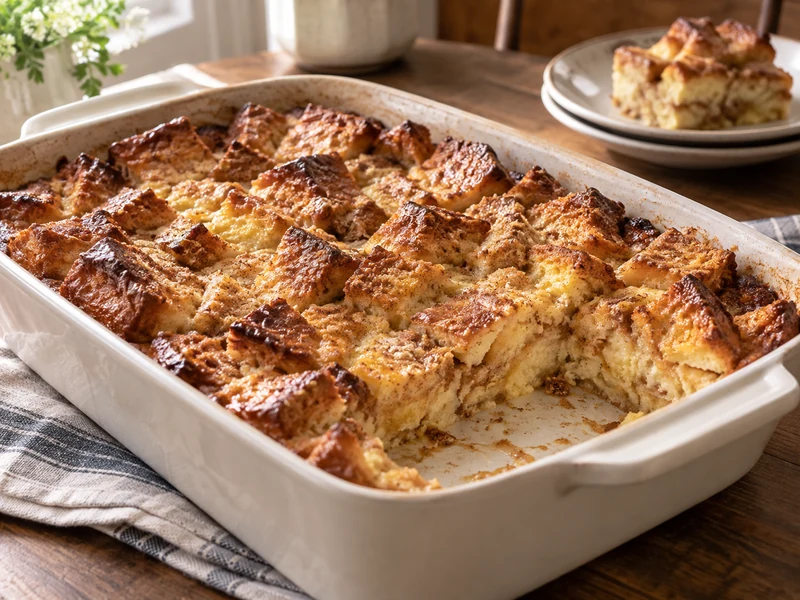
Baked French toast casserole turns a loaf of brioche or challah into a warm breakfast you can bring straight to the table. The bread absorbs a cinnamon-vanilla custard, then bakes with golden corners and a soft, spoonable middle. A simple brown-sugar crumb topping adds a little crunch, but you can leave it off for a plainer version.
RECIPE CARD
Baked French Toast Casserole
Ingredients
- 1 loaf brioche or challah, about 14–16 ounces, cut into 1-inch cubes; day-old preferred
- 6 large eggs
- 2 cups whole milk
- ½ cup heavy cream
- ⅓ cup granulated sugar
- ⅓ cup packed brown sugar for the custard
- 2 teaspoons vanilla extract
- 1 teaspoon ground cinnamon for the custard
- ¼ teaspoon salt
- Optional topping: ¼ cup packed brown sugar
- Optional topping: ¼ cup all-purpose flour
- Optional topping: ½ teaspoon ground cinnamon
- Optional topping: 3 tablespoons cold butter, cubed
Quick Method
Condensed overview. Use Full Instructions for the complete method, timing and doneness details.
- Prepare the Bread and Dish: Grease a 9×13-inch baking dish. Cut brioche or challah into 1-inch cubes and spread evenly in the dish.
- Whisk and Pour the Custard: Whisk eggs, milk, cream, both custard sugars, vanilla, 1 teaspoon cinnamon, and salt. Pour evenly over the bread and press dry cubes gently into…
- Cover and Chill: Cover tightly and refrigerate for at least 2 hours or overnight until the bread has absorbed most visible custard.
- Add the Optional Crumb Topping: If using the topping, mix ¼ cup brown sugar, flour, and ½ teaspoon cinnamon. Cut in cold butter to form crumbs and scatter over…
- Bake Until Set and Rest: Bake uncovered at 350°F (175°C) for 45–50 minutes, until golden and set in the center. Rest for 10 minutes before serving warm.
Most of the work happens ahead of time. Assemble the dish, refrigerate it for at least 2 hours, and bake it when everyone is ready for breakfast. A 9×13-inch pan makes about 12 portions, which is useful for a family gathering or a relaxed holiday morning. Allow 20 minutes of hands-on prep, 45–50 minutes in the oven, and a 10-minute rest before serving.
Why You’ll Love It
- The custard can soak into the bread overnight, making the morning easier.
- Day-old brioche or challah develops a tender middle with crisp edges.
- One baking dish serves a crowd without cooking individual slices.
Ingredients
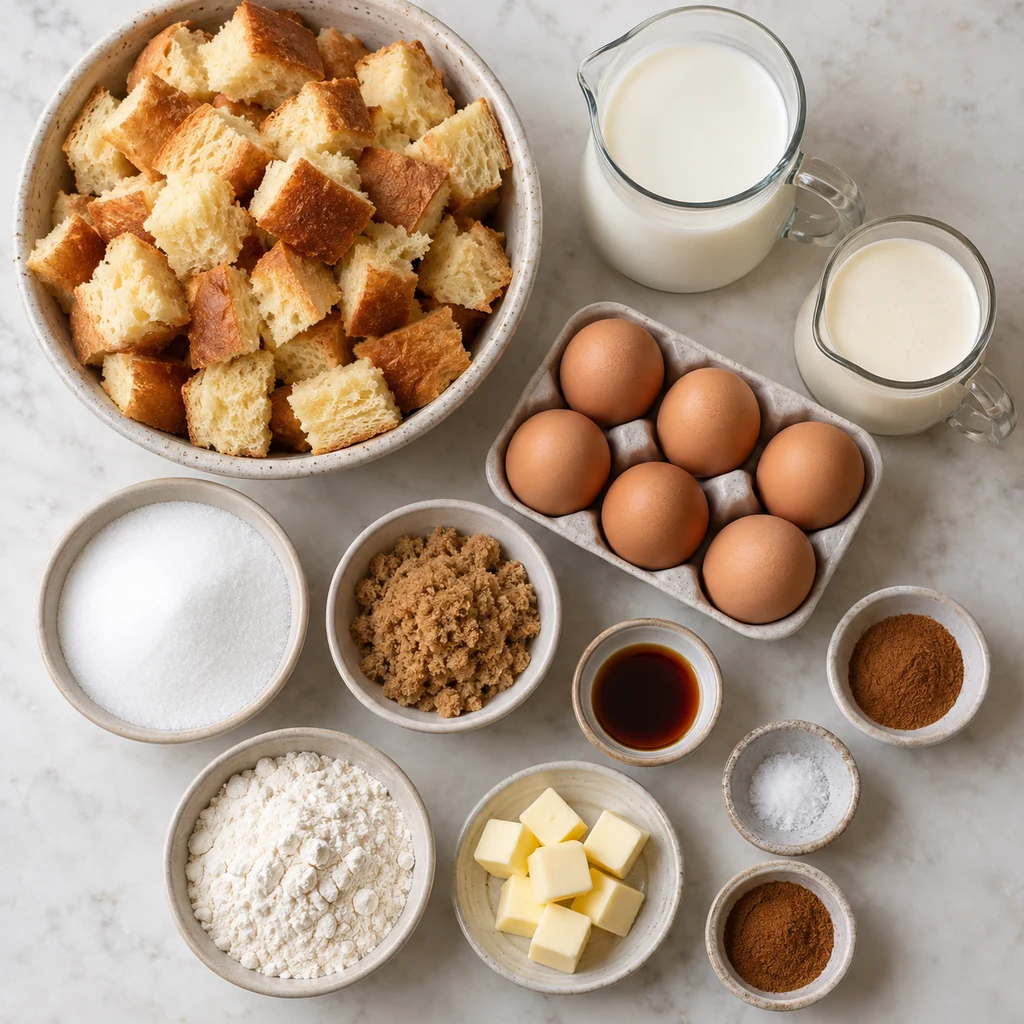
- 1 loaf brioche or challah, about 14–16 ounces, cut into 1-inch cubes; day-old preferred
- 6 large eggs
- 2 cups whole milk
- ½ cup heavy cream
- ⅓ cup granulated sugar
- ⅓ cup packed brown sugar for the custard
- 2 teaspoons vanilla extract
- 1 teaspoon ground cinnamon for the custard
- ¼ teaspoon salt
- Optional topping: ¼ cup packed brown sugar
- Optional topping: ¼ cup all-purpose flour
- Optional topping: ½ teaspoon ground cinnamon
- Optional topping: 3 tablespoons cold butter, cubed
Use a soft, enriched loaf rather than very thin sandwich bread. Day-old bread holds its shape after soaking; if yours is fresh, spread the cubes on a tray for an hour or so to dry the cut surfaces. Measure the custard’s brown sugar separately from the topping’s brown sugar so the topping ingredients remain optional. The eggs, milk, and cream should be whisked together thoroughly to avoid patches of cooked egg.
Step-by-Step Instructions
1. Prepare the Bread and Dish
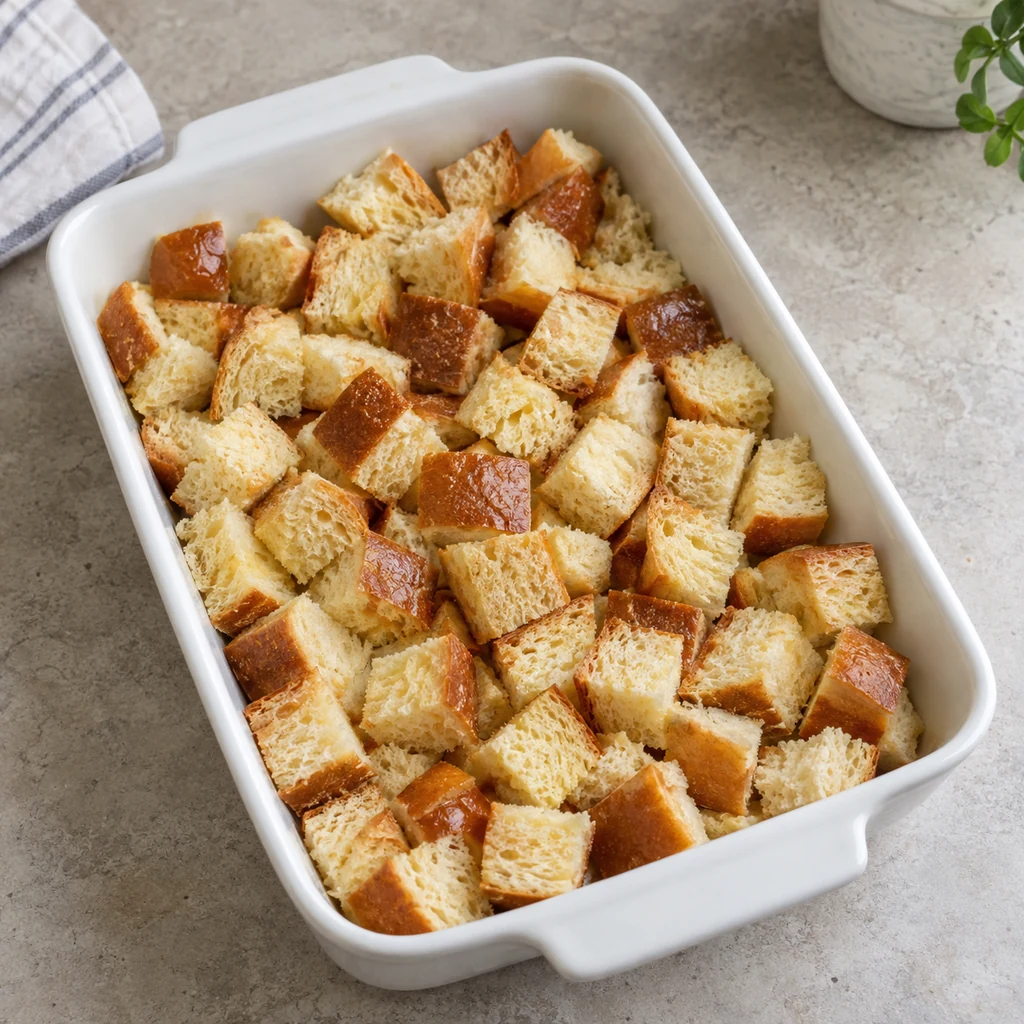
Lightly grease a 9×13-inch baking dish. Cut the loaf into roughly 1-inch cubes, keeping a few crust pieces for texture, and spread them evenly in the dish. An even layer helps every portion receive custard. The bread should fill the pan generously without being packed down; small gaps allow the liquid to flow through. If a loaf is unusually large, do not force every cube into the pan, because a crowded casserole may stay dry on top and under-soaked below.
2. Whisk and Pour the Custard
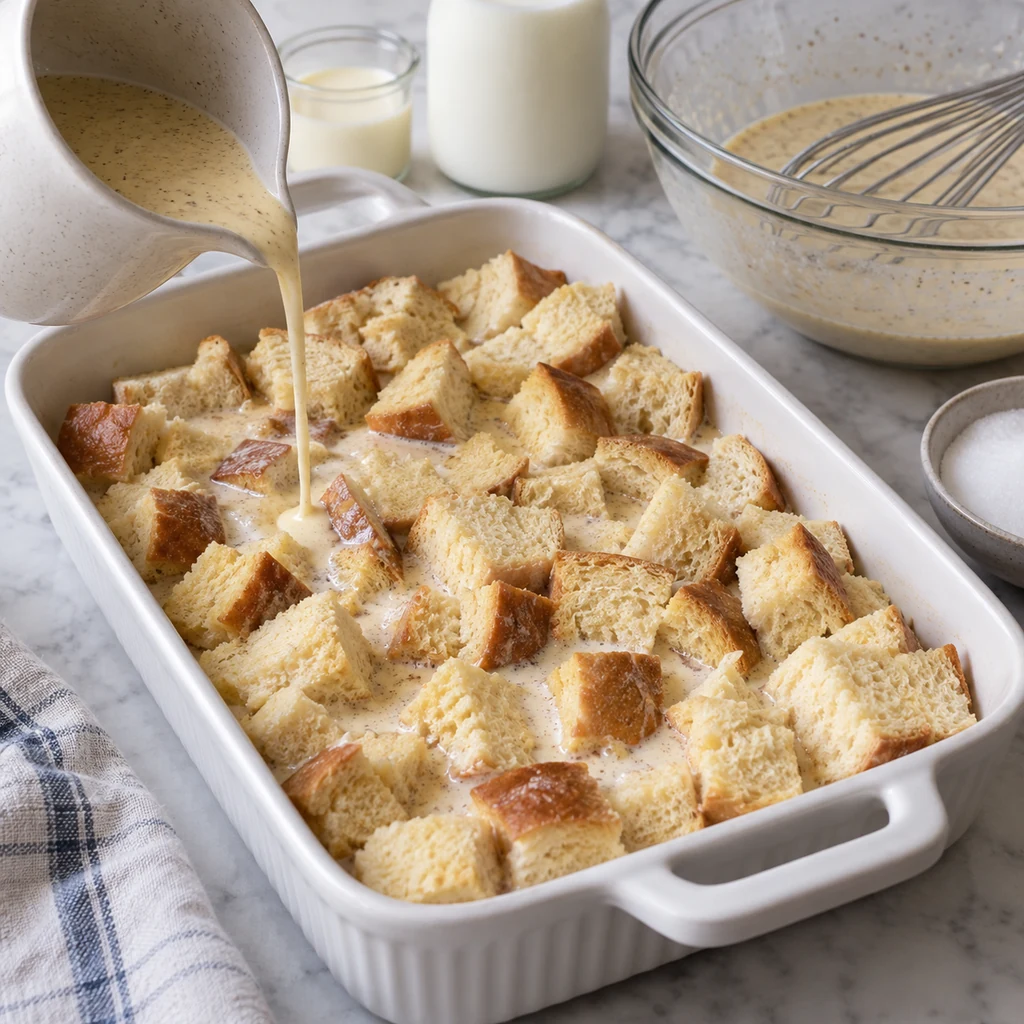
In a large bowl, whisk the 6 eggs until the yolks and whites are blended. Whisk in the whole milk, heavy cream, granulated sugar, ⅓ cup brown sugar, vanilla, 1 teaspoon cinnamon, and salt until the sugar begins to dissolve. Pour slowly across the bread rather than concentrating the liquid in one spot. Gently press any dry cubes into the custard with a spoon. The top should look moist, and a little liquid may remain visible between the pieces at this stage.
3. Cover and Chill
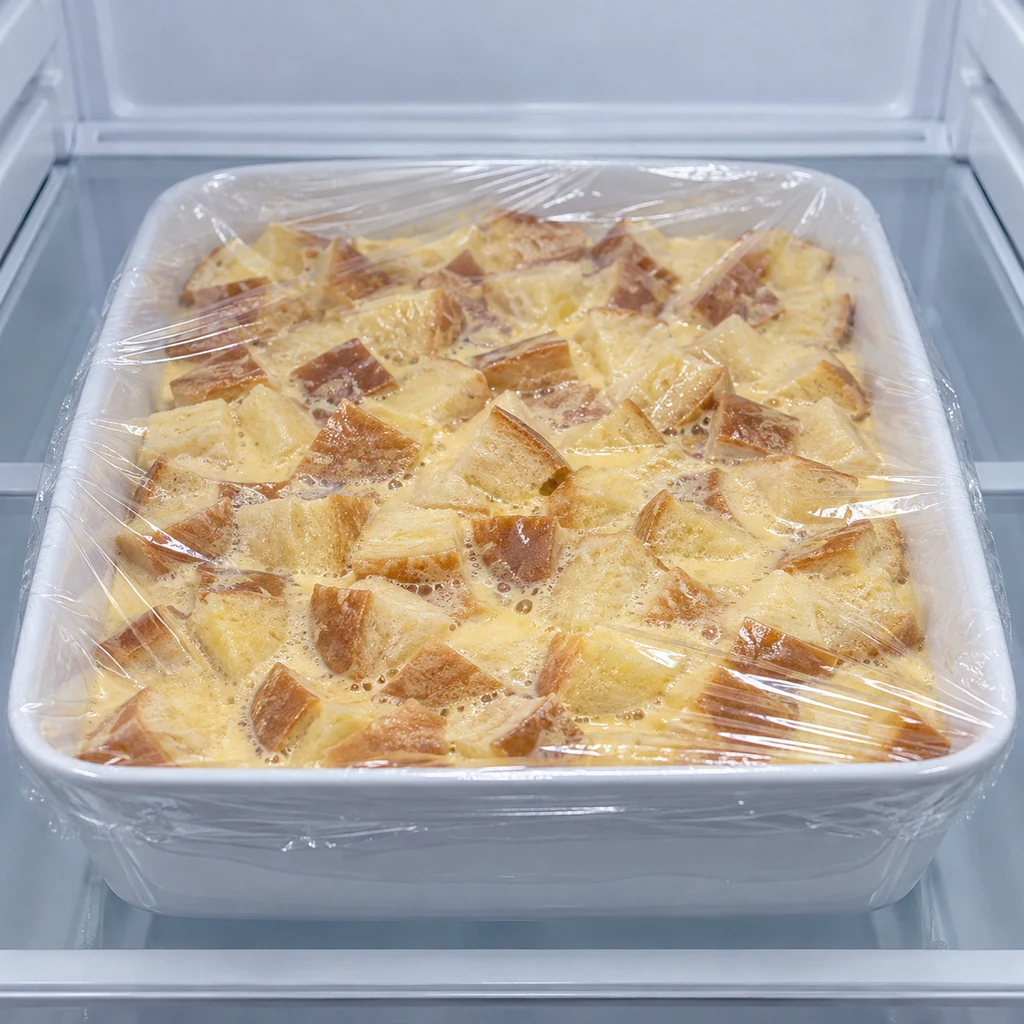
Cover the dish tightly and refrigerate for at least 2 hours, or up to overnight. This pause gives the custard time to reach the center of the bread cubes, so the finished casserole is soft rather than dry inside. When you uncover it, the top pieces should feel damp and most visible liquid should have been absorbed. If a corner looks dry, press it down gently before adding the topping. Keep the unbaked egg-and-dairy mixture refrigerated throughout the soaking period.
4. Add the Optional Crumb Topping
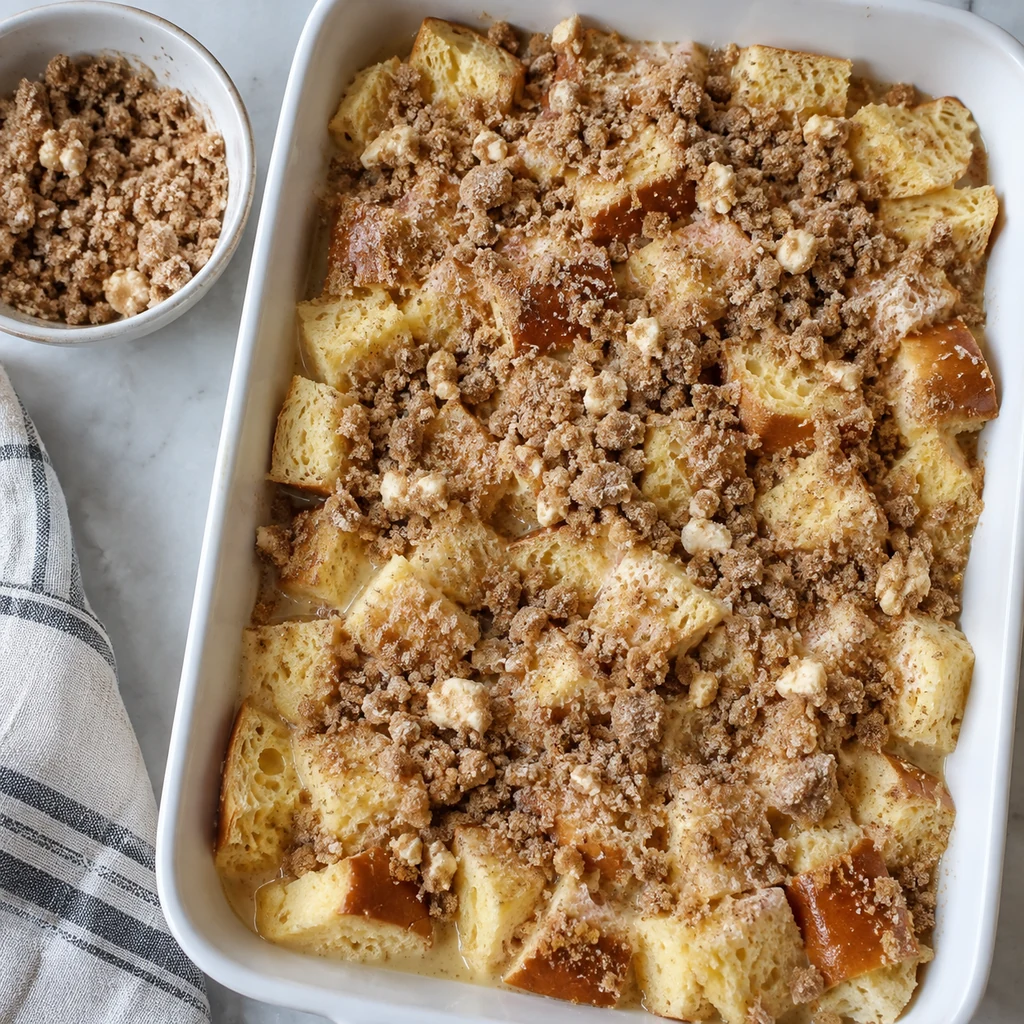
For the topping, stir ¼ cup brown sugar, flour, and ½ teaspoon cinnamon together. Rub or cut in the cold butter until the mixture forms uneven pea-size crumbs. Sprinkle it across the chilled bread just before baking, reaching the edges as well as the middle. Cold butter is important here: warm butter can turn the mixture into a paste instead of separate crumbs. If you skip the topping, bake the custard-soaked bread as it is; the casserole will still develop golden peaks.
5. Bake Until Set and Rest
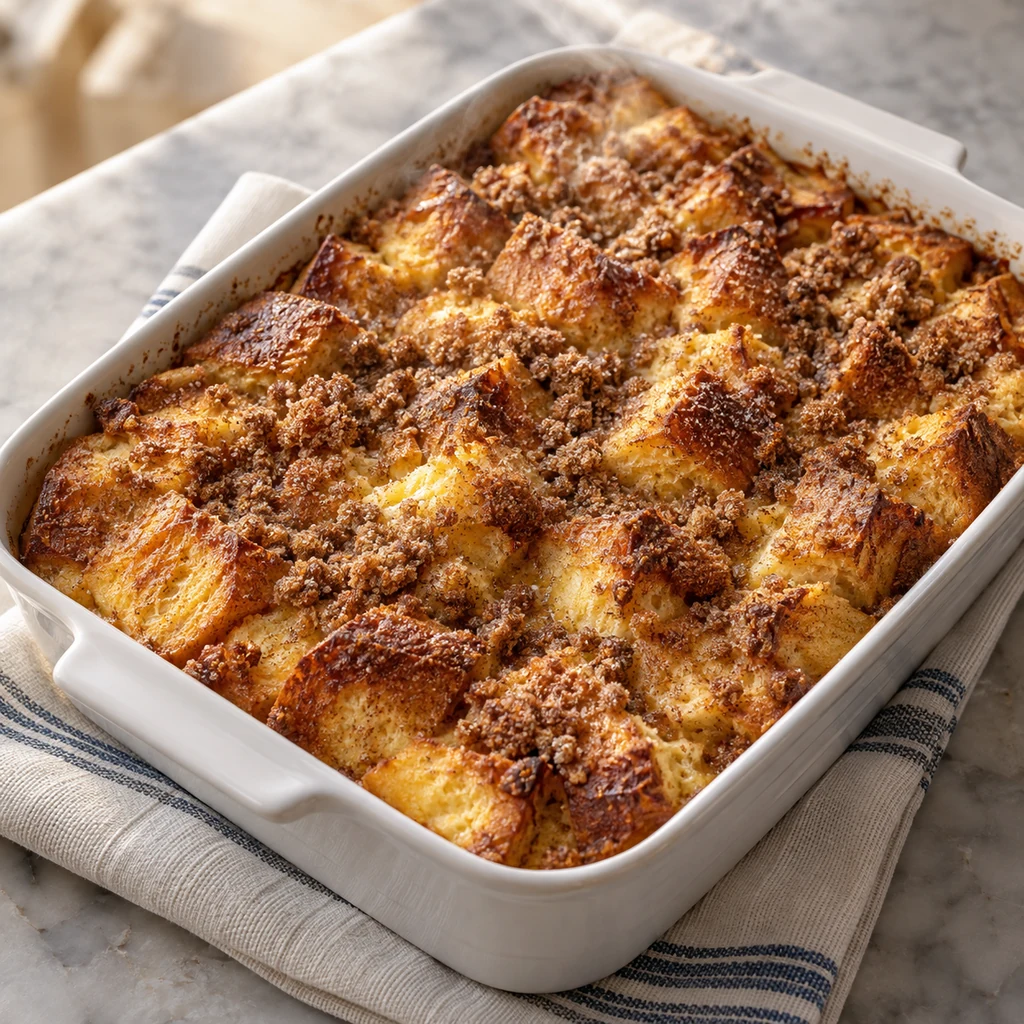
Heat the oven to 350°F (175°C). Bake the uncovered casserole on the center rack for 45–50 minutes. The top should be golden, the edges slightly crisp, and the center set rather than visibly liquid when the dish is gently nudged. If the topping browns before the middle is ready, loosely cover the pan with foil for the remaining baking time. Let the dish rest for 10 minutes after it comes out of the oven; the custard firms up and portions lift more neatly. Serve warm.
Substitutions & Variations
Challah can replace brioche in the same loaf weight. Its lighter richness gives a slightly less buttery result while still absorbing the custard well. For a less sweet casserole, omit the optional topping rather than changing the custard ratio; this keeps the soaking texture predictable. You can add a little orange zest to the custard for a citrus note, although it is an optional variation and is not pictured in the base recipe. Avoid adding large amounts of juicy fruit to the pan before baking, as extra liquid can make the center slow to set.
Overnight assembly is particularly convenient: refrigerate the covered dish after pouring on the custard, and mix the cold-butter topping the next morning. Do not put a refrigerator-cold ceramic dish directly into a hot oven if its manufacturer advises against thermal shock. Allow it to sit briefly while the oven heats, or use a suitable metal baking pan.
What to Serve With
Bring the casserole to the table with maple syrup on the side so each person can choose how sweet to make their portion. Fresh berries, sliced fruit, or a spoonful of warm berry compote add contrast to the rich custard. For a fuller brunch, pair it with a savory egg dish or a simple fruit salad. A light dusting of powdered sugar can look festive, but the crumb topping already provides sweetness, so a heavy coating is unnecessary.
Frequently Asked Questions
Can I assemble this the night before?
Yes. Cover the custard-soaked bread and refrigerate it overnight. Keep the optional crumb mixture separate and cold, then scatter it on the casserole immediately before baking. The overnight soak is longer than the 2-hour minimum, so the total time shown for this recipe describes the shorter same-day version.
How do I know the center is done?
Look for a golden surface and a middle that appears set when you gently move the dish. A spoon inserted near the center should reveal soft bread and set custard rather than loose liquid. If the top is darkening too quickly, cover it loosely with foil and continue baking until the middle catches up.
How should I store leftovers?
Let the casserole cool, then cover and refrigerate leftover portions promptly. Enjoy them within 3 days. Reheat a portion until hot throughout in an oven or microwave; an oven helps the top regain some crispness. The topping softens in storage, but the cinnamon-vanilla flavor remains pleasant the next morning.