
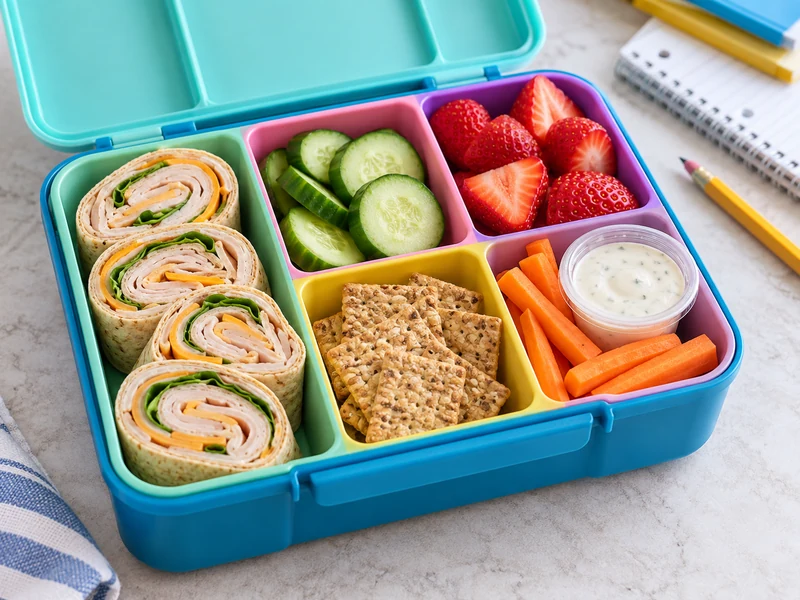
Back-to-school mornings move quickly, but a useful lunchbox does not need to be elaborate. A reliable formula is more helpful than a complicated menu: choose one satisfying main, add produce in two colors, include a familiar crunchy or creamy side, and pack water. These back-to-school lunchbox ideas use ordinary ingredients that can be prepared in small batches and rearranged through the week.
The six combinations below are starting points rather than strict recipes. Adjust portions for your child’s age, appetite, school rules, and dietary needs. Keep unfamiliar foods beside something your child already enjoys, and invite older children to choose between two fruits or vegetables. That small choice can make lunch feel personal without turning packing into a long negotiation.
Why You’ll Love It
- Easy to adapt: Each box has clear swaps for preferences, allergies, and what is already in the refrigerator.
- Balanced without fuss: The combinations pair a filling main with fruits or vegetables and practical sides.
- Made for busy mornings: Most components can be portioned the night before and packed cold.
A Simple Lunchbox Formula
Start with a protein-rich main such as turkey, egg, beans, cheese, hummus, yogurt, or sunflower seed butter. Add a whole-grain tortilla, pita, pasta, crackers, or bread for lasting energy. Fill the remaining space with a fruit and a vegetable, then add a small dip if it makes produce more appealing. This mix provides variety in color, texture, and flavor without requiring every compartment to be different every day.
Use the formula flexibly. One child may prefer a snack-style box, while another wants a wrap or quesadilla. Notice what comes home uneaten to learn which portions and textures work during a short school lunch period.
Six Back-to-School Lunchbox Ideas
1. Turkey and Cheese Pinwheel Box
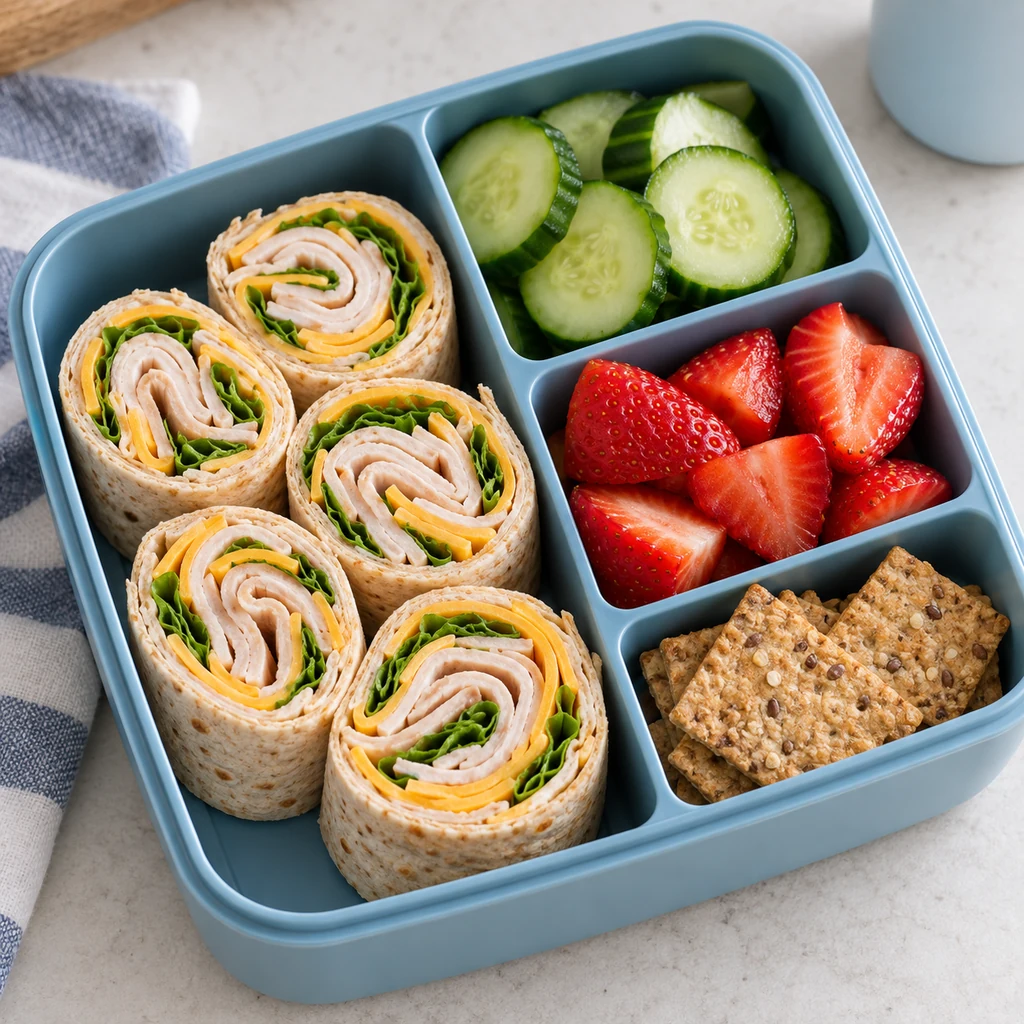
Spread a whole-wheat tortilla with a thin layer of cream cheese or mashed avocado, then add sliced turkey, cheese, and lettuce. Roll it tightly, chill it briefly, and cut it into thick pinwheels. Pack the pieces with cucumber rounds, strawberries, and whole-grain crackers. Pat washed produce dry before packing so it does not soften the tortilla or crackers.
For a meat-free version, replace turkey with mashed chickpeas or firm baked tofu slices. Read every ingredient label when the school restricts allergens. A small frozen water bottle can help keep the box chilled.
2. Hummus and Veggie Pita Box
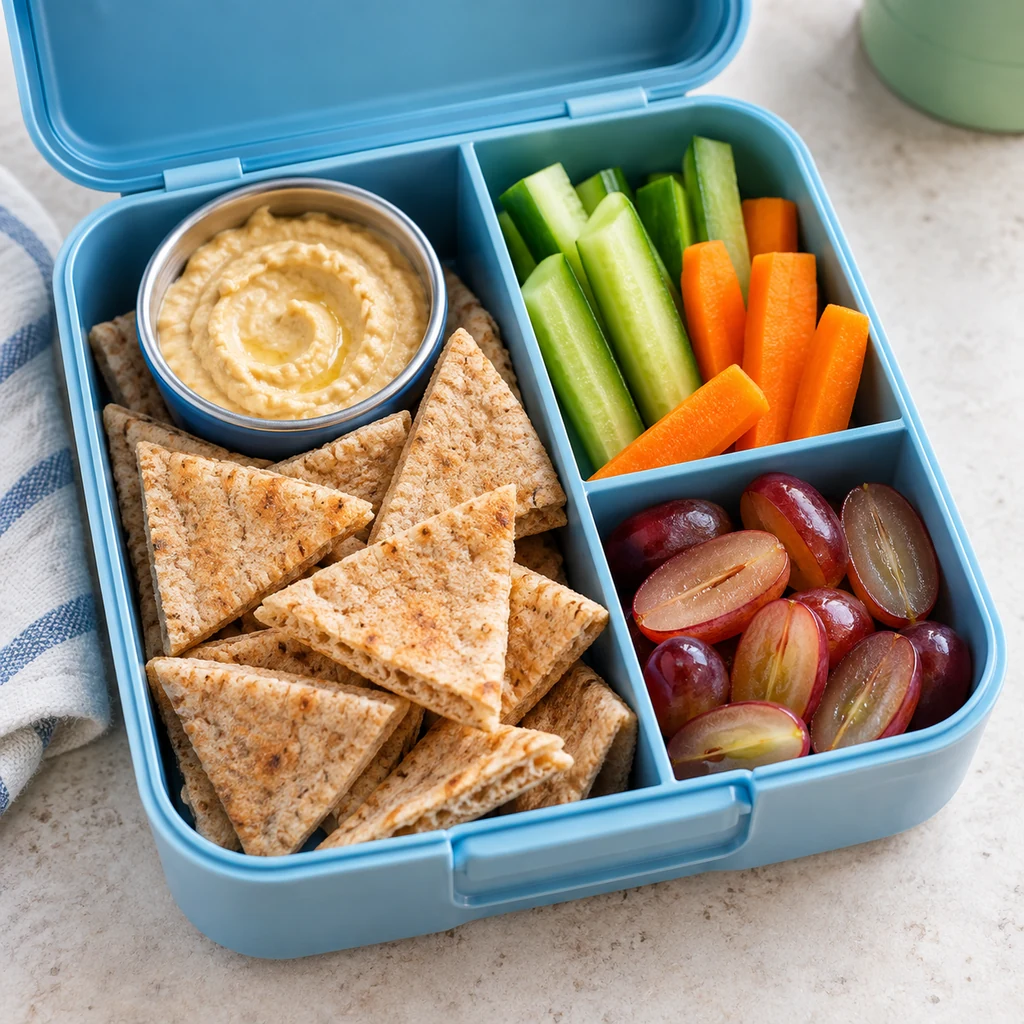
Cut a small whole-wheat pita into triangles and add a leakproof cup of hummus. Cucumber and carrot sticks can be dipped too, making the vegetables feel connected to the main. Add grapes cut lengthwise, especially for younger children. If you want a smaller homemade snack to rotate into this box, these cucumber hummus bites use the same cool, creamy pairing.
Hummus usually contains sesame, so check the school’s allergy policy and product label. If needed, use a permitted bean dip, yogurt dip, or mashed avocado. Keep the dip cold until lunch.
3. Sunflower Butter and Banana Roll-Up Box
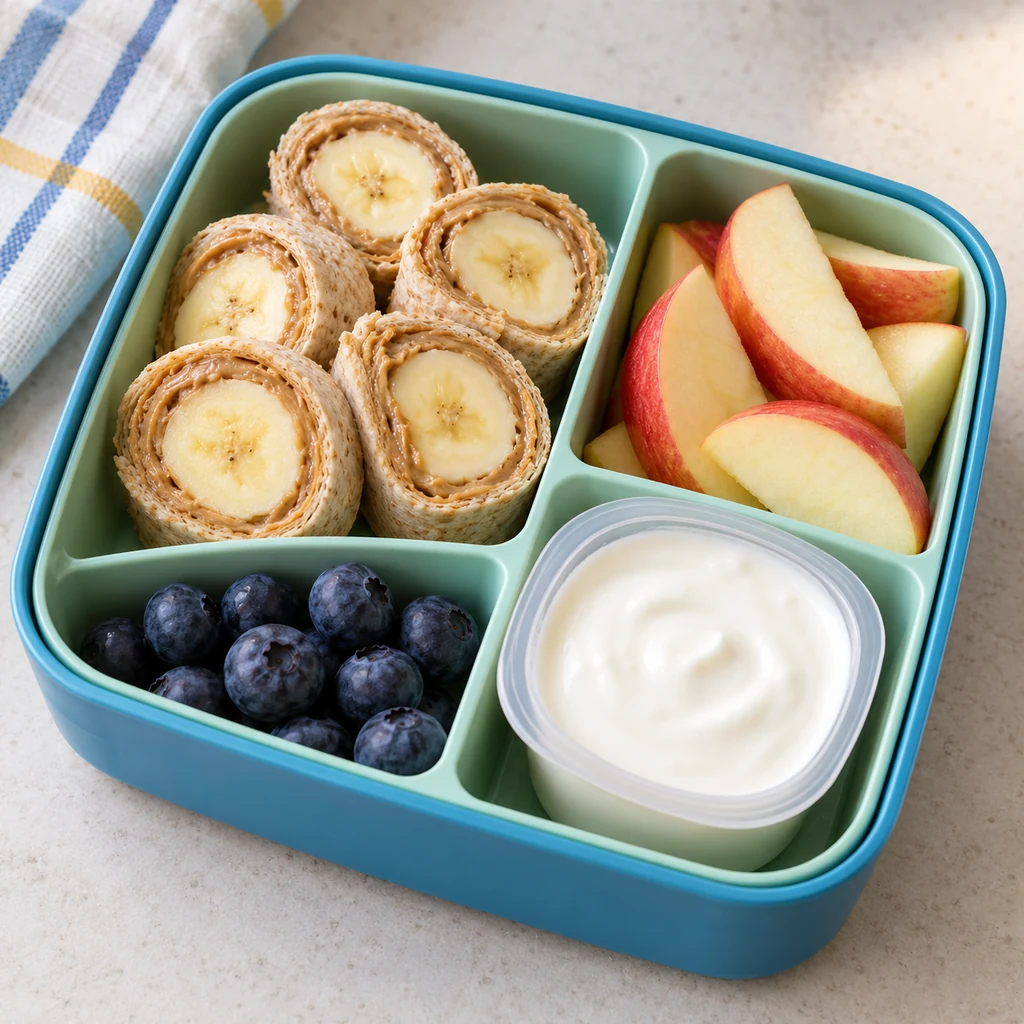
Spread sunflower seed butter over a tortilla, place a peeled banana near one edge, roll tightly, and slice into rounds. Pack with apple wedges, blueberries, and a sealed cup of plain or lightly sweetened yogurt. A quick dip in diluted lemon juice can slow browning on the apple; drain and dry the wedges before adding them.
Seed butters, tortillas, and yogurt may have cross-contact warnings, and school policies differ. Verify labels and use an approved alternative. For children who dislike mixed textures, leave the roll-up whole and separate the fruit.
4. Colorful Pasta Salad Box
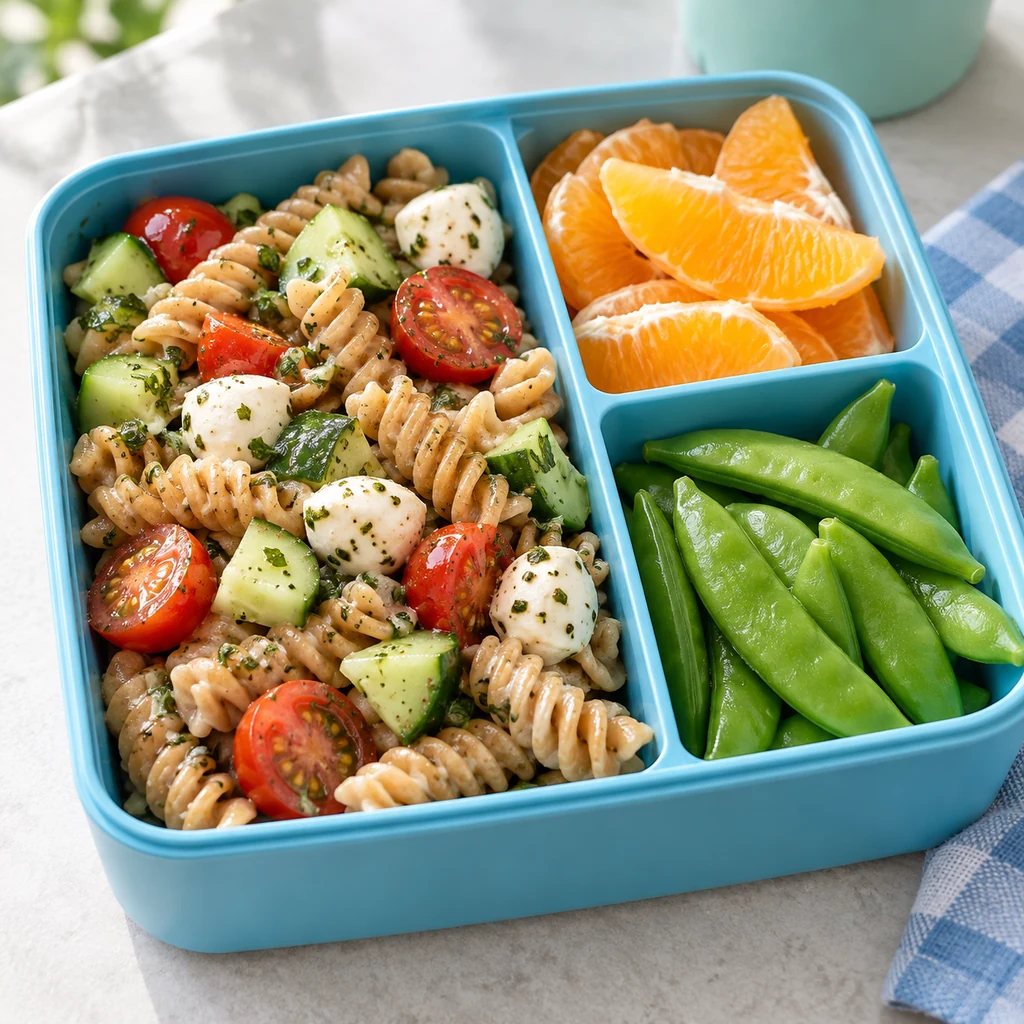
Toss cooled whole-grain pasta with diced cucumber, halved cherry tomatoes, small mozzarella pieces, herbs, and just enough olive-oil dressing to coat. Pair it with orange segments and snap peas. Cut tomatoes and snap peas into age-appropriate pieces, and avoid overfilling the container so the lid closes without crushing the food.
Chickpeas can replace mozzarella for a dairy-free variation, while cooked chicken can add more protein. Chill the pasta promptly after cooking and refrigerate the assembled box overnight.
5. DIY Egg and Cheese Snack Box
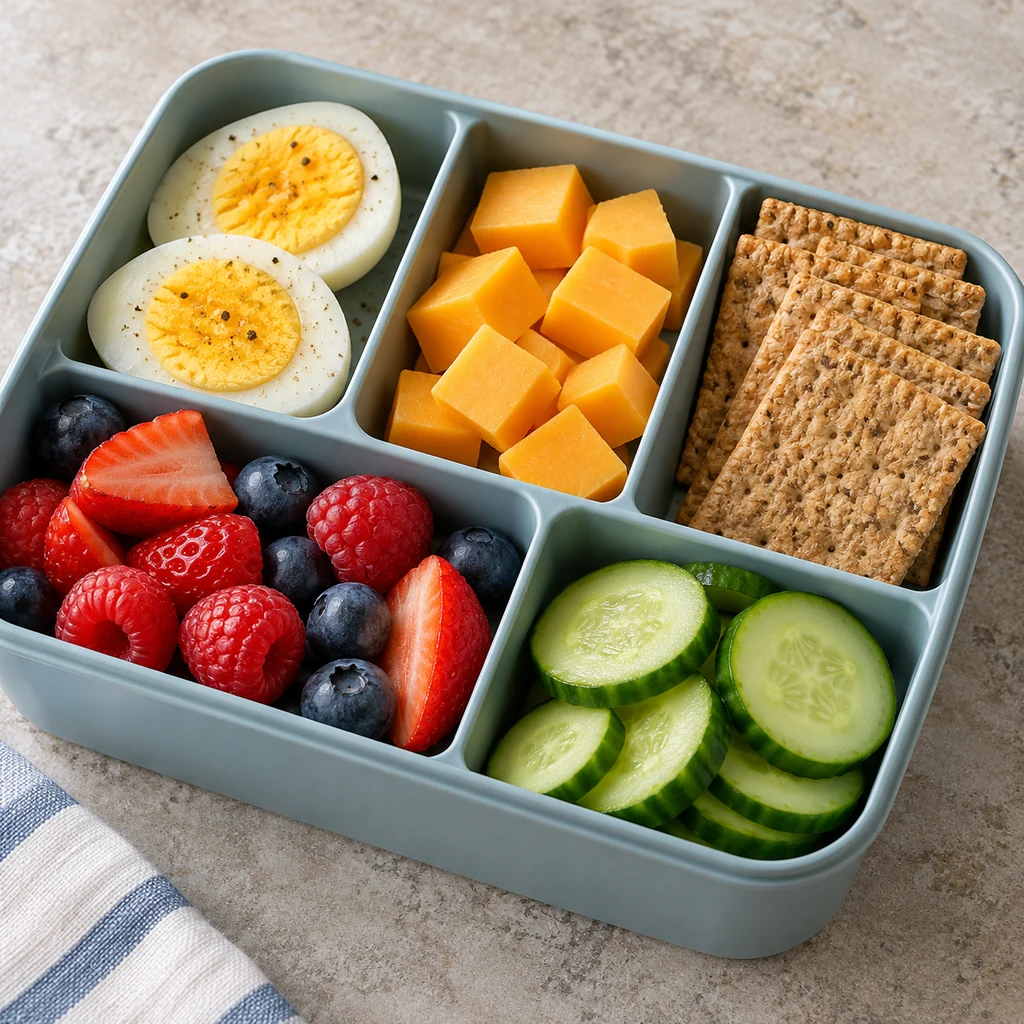
Arrange hard-boiled egg halves, cheddar cubes, whole-grain crackers, mixed berries, and cucumber rounds in separate sections. This box works well for children who prefer grazing to eating one large sandwich. Peel eggs in advance, cool them completely, and store them covered in the refrigerator until packing.
Swap the egg for roasted chickpeas or a permitted yogurt if needed. Very firm, dry crackers hold up better than delicate ones, especially if produce is juicy. For more meat-free ways to build a satisfying meal, the guide to plant-based protein sources offers practical combinations beyond a single lunchbox.
6. Bean and Corn Quesadilla Box
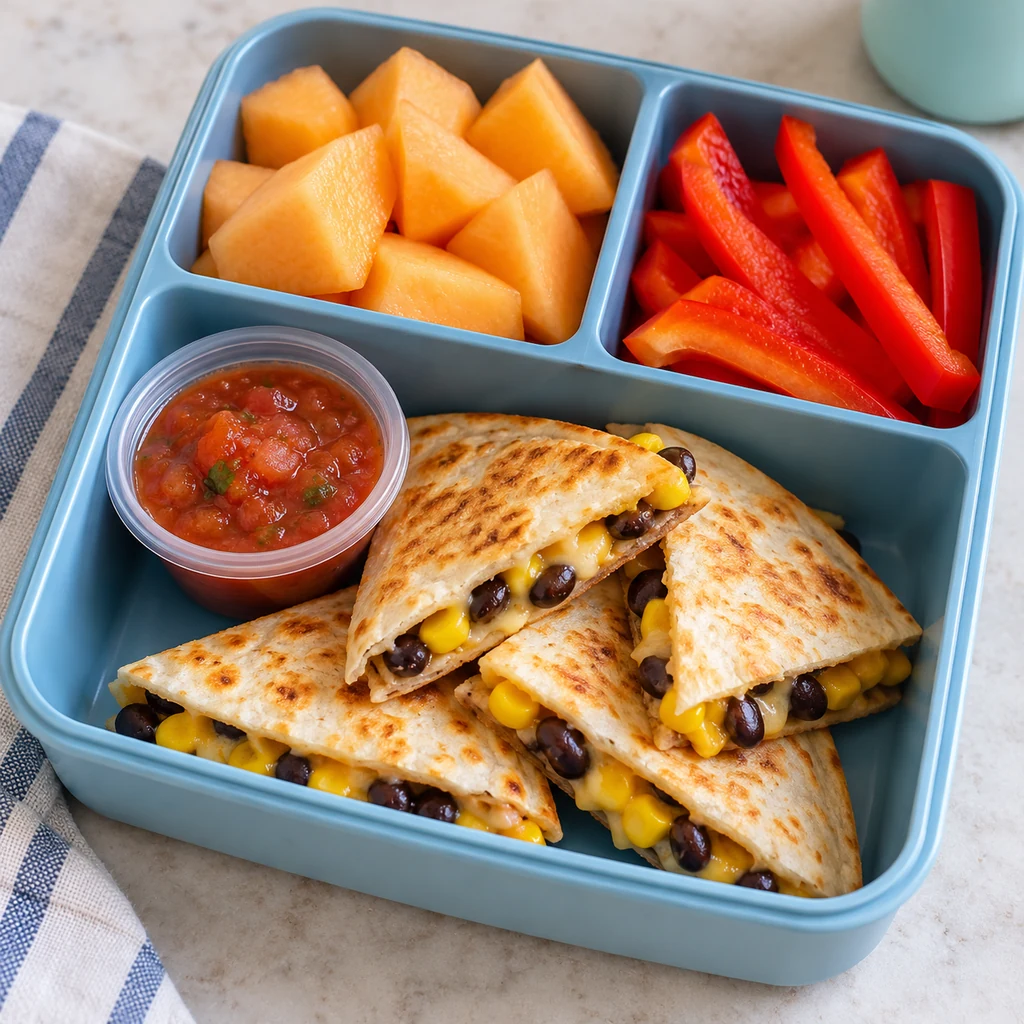
Fill a tortilla lightly with mashed black beans, corn, and shredded cheese, then cook until golden and the cheese melts. Cool it fully before cutting into wedges. Pack with a sealed salsa cup, cantaloupe pieces, and bell pepper strips. Cooling matters: warm food trapped in a closed lunchbox creates steam that softens the tortilla and can warm other items.
The quesadilla can be cooked the night before and refrigerated. For a dairy-free version, omit cheese and mash the beans well so the filling holds together. Keep salsa portions small to reduce spills.
Make-Ahead Routine and Food Safety
Choose two mains on the weekend, wash and thoroughly dry produce, and portion durable items such as crackers only when needed. Prepare pinwheels, pasta salad, eggs, or quesadillas one evening ahead rather than packing an entire week at once. Store wet foods, dips, and crunchy foods separately. A divided container helps with organization, but it does not replace refrigeration.
Use an insulated lunch bag with at least one frozen gel pack for foods that need refrigeration, and follow the school’s storage rules. Keep the lunch chilled until departure, wash hands and containers carefully, and discard perishable leftovers that have spent too long warm. The USDA recommends keeping cold foods at 40°F (4°C) or below; when in doubt, choose a shelf-stable alternative approved for the child.
Frequently Asked Questions
How can I keep lunch from getting soggy?
Cool cooked foods completely, dry produce, and keep dips or dressings in leakproof cups. Place crackers in a separate dry compartment, and avoid laying moist fruit directly against tortillas. Pack the lunch straight from the refrigerator with a frozen gel pack.
What can I pack for a picky eater?
Include at least one dependable food, then add a small portion of something less familiar without pressure. Offer two simple choices during planning, repeat new foods over time, and use the returned lunchbox as feedback about portion size rather than as a test.
Can these lunchboxes be made the night before?
Yes. Most components can be prepared and refrigerated overnight. Keep crunchy foods separate, wait to slice bananas when possible, and cool pasta or quesadillas before sealing the container. Add the frozen pack and water bottle in the morning.