
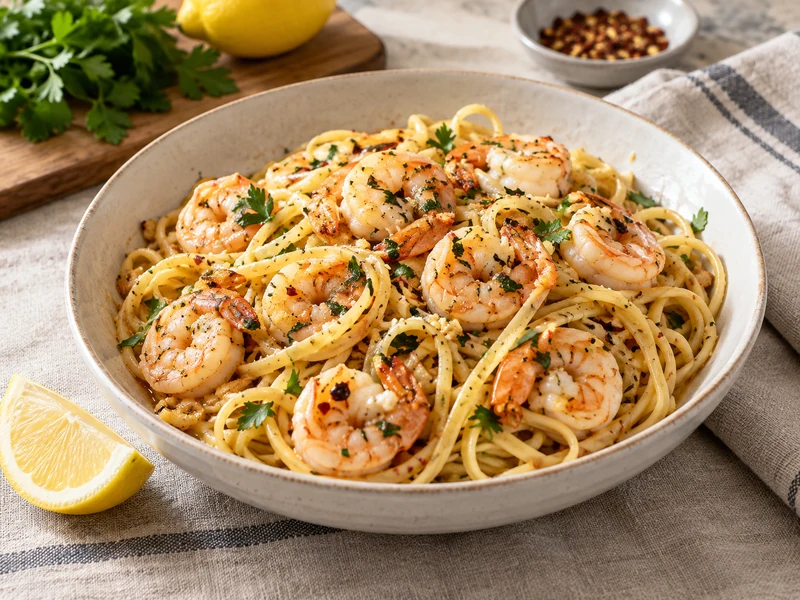
Garlic butter shrimp pasta is the kind of dinner that feels generous even when the clock is working against you. Tender shrimp, al dente linguine, fresh garlic, lemon, and parsley come together in one glossy skillet sauce. The entire recipe is ready in about 15 minutes when the ingredients are measured before the pasta water boils.
RECIPE CARD
15-Minute Garlic Butter Shrimp Pasta
Ingredients
- 8 ounces linguine or spaghetti
- 1 pound large shrimp, peeled and deveined
- 4 tablespoons unsalted butter, divided
- 4 garlic cloves, finely minced
- 1/2 teaspoon red pepper flakes, optional
- 1/2 teaspoon fine salt, plus more for the pasta water
- 1/4 teaspoon freshly ground black pepper
- 1/2 cup reserved pasta cooking water
- 1 tablespoon fresh lemon juice
- 2 tablespoons finely chopped fresh parsley
Quick Method
Condensed overview. Use Full Instructions for the complete method, timing and doneness details.
- Prepare the Shrimp and Aromatics: Bring a large pot of water to a boil. While it heats, pat the shrimp very dry with paper towels. Season them evenly with…
- Cook the Pasta Until Al Dente: Salt the boiling water and add the linguine. Cook according to the package timing until al dente, stirring during the first minute to prevent…
- Build the Garlic Butter Base: Melt 2 tablespoons butter in a wide skillet over medium heat. Add the minced garlic and optional red pepper flakes. Cook for about 30…
- Cook the Shrimp Just Until Opaque: Add the shrimp in one layer. Cook for 1 to 2 minutes on the first side, turn, and cook for about 1 minute more.…
- Emulsify the Sauce and Toss the Pasta: Lower the heat and add the drained linguine, remaining 2 tablespoons butter, lemon juice, and 1/4 cup reserved pasta water. Toss continuously for 30…
- Finish and Serve Immediately: Remove the skillet from the heat and fold in the chopped parsley. Taste one strand before adding more salt, since the pasta water already…
Speed depends on coordination rather than rushing. Start the pasta first, prepare the shrimp and aromatics while the water heats, and keep a measuring cup beside the pot for starchy cooking water. That reserved water emulsifies the butter into a light sauce that coats the noodles without cream. Watch the shrimp closely: they need only a few minutes and should be removed from direct heat as soon as they are opaque.
Why You’ll Love It
- Truly fast: Pasta and sauce cook at the same time, keeping the total time to 15 minutes.
- Bright, balanced flavor: Lemon and parsley lighten the richness of butter and garlic.
- Weeknight-friendly: The short ingredient list uses easy-to-find staples and only two cooking vessels.
Ingredients
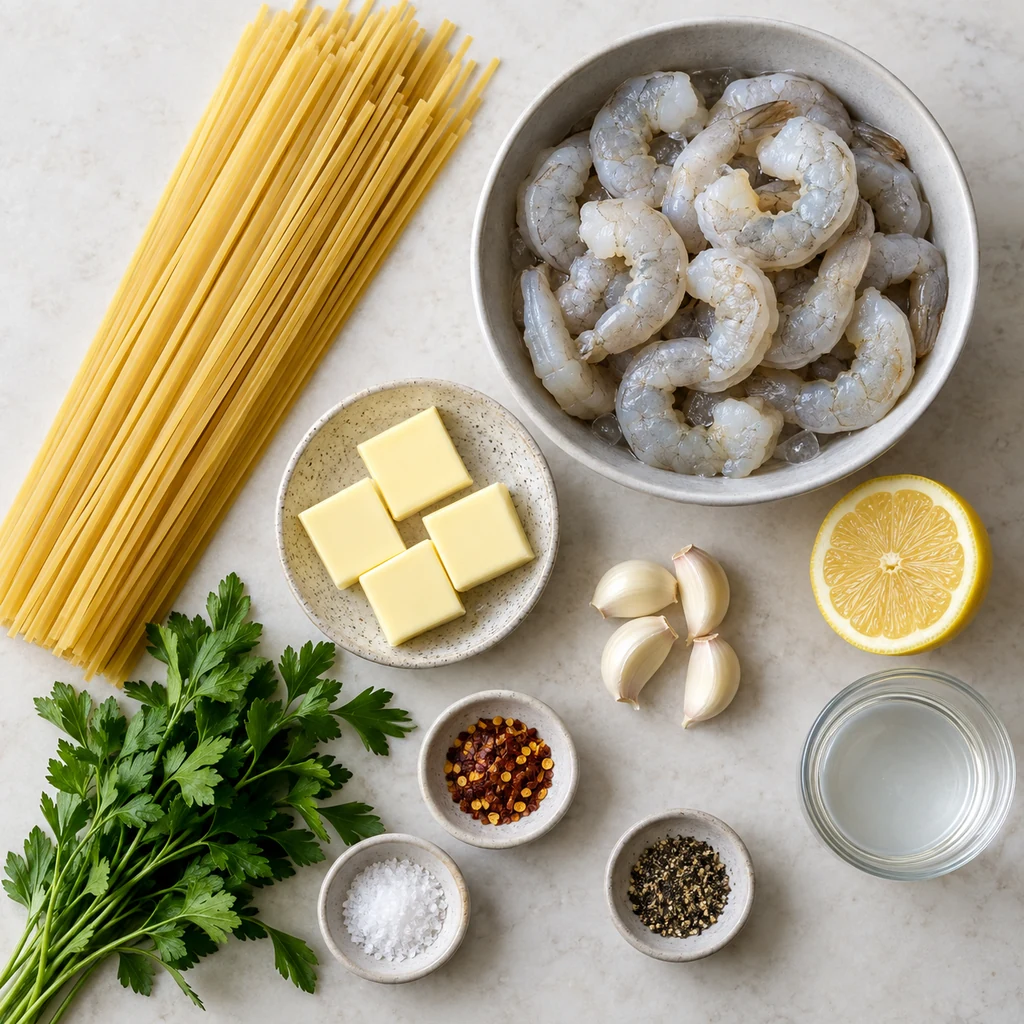
- 8 ounces linguine or spaghetti
- 1 pound large shrimp, peeled and deveined
- 4 tablespoons unsalted butter, divided
- 4 garlic cloves, finely minced
- 1/2 teaspoon red pepper flakes, optional
- 1/2 teaspoon fine salt, plus more for the pasta water
- 1/4 teaspoon freshly ground black pepper
- 1/2 cup reserved pasta cooking water
- 1 tablespoon fresh lemon juice
- 2 tablespoons finely chopped fresh parsley
Use raw shrimp that are fully thawed and patted dry. Either tail-on or tail-off shrimp work, although removing the tails makes the pasta easier to eat. Unsalted butter gives you better control over seasoning. The pasta water should taste pleasantly salted, but remember that it will also season the finished sauce.
Step-by-Step Instructions
1. Prepare the Shrimp and Aromatics
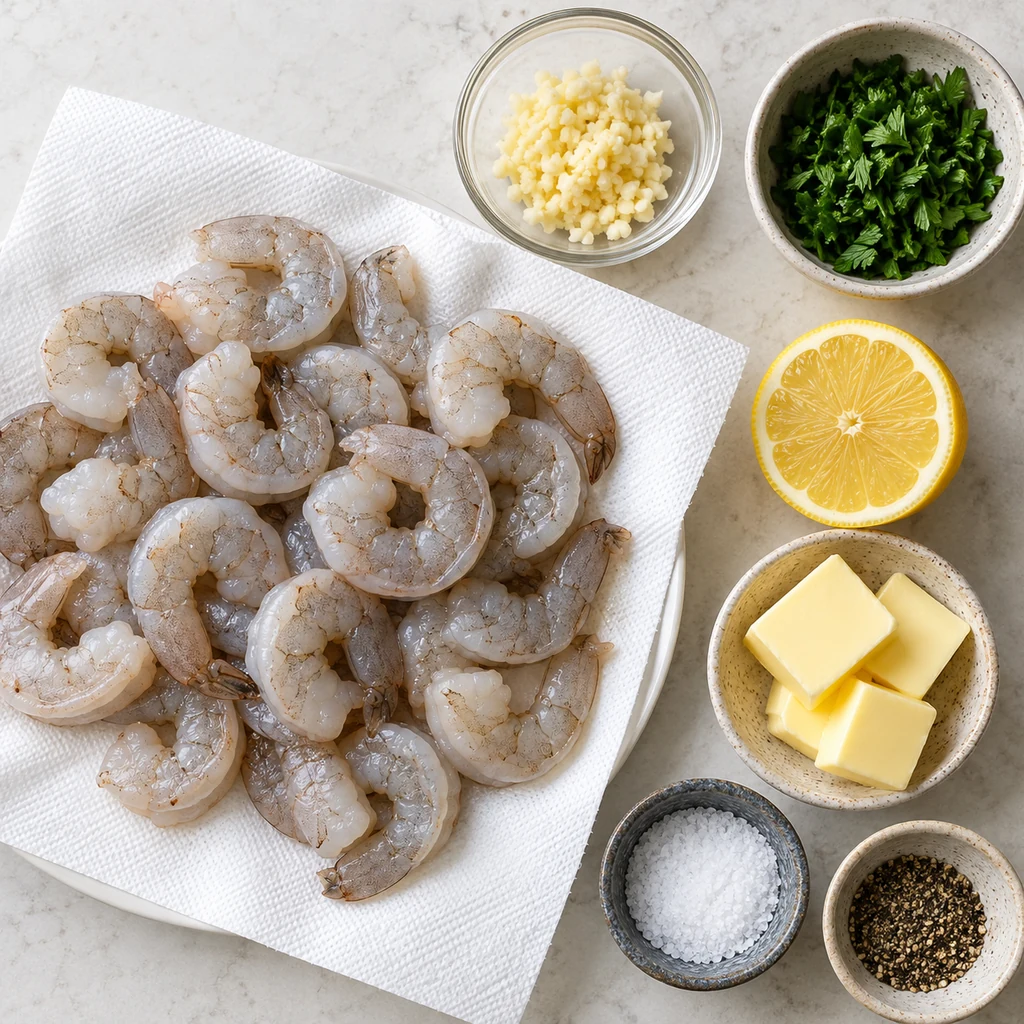
Bring a large pot of water to a boil. While it heats, pat the shrimp very dry with paper towels. Season them evenly with 1/2 teaspoon salt and 1/4 teaspoon black pepper. Mince the garlic, chop the parsley, squeeze 1 tablespoon lemon juice, and divide the butter into two equal portions. Keep everything within reach before the pasta enters the water.
2. Cook the Pasta Until Al Dente
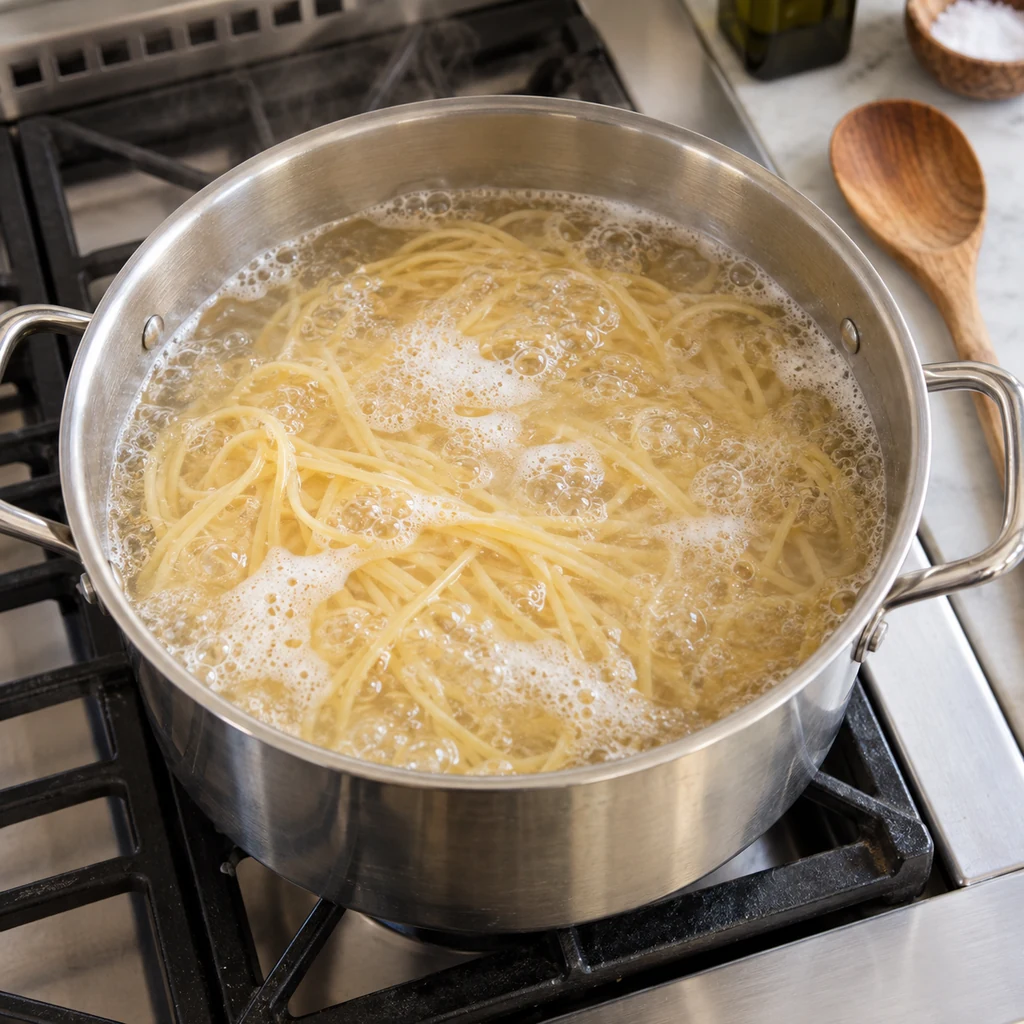
Salt the boiling water and add the linguine. Cook according to the package timing until al dente, stirring during the first minute to prevent sticking. Just before draining, scoop out 1/2 cup of the cloudy pasta water. Drain the noodles without rinsing them. Begin cooking the sauce while the pasta boils so both components finish at nearly the same time.
3. Build the Garlic Butter Base
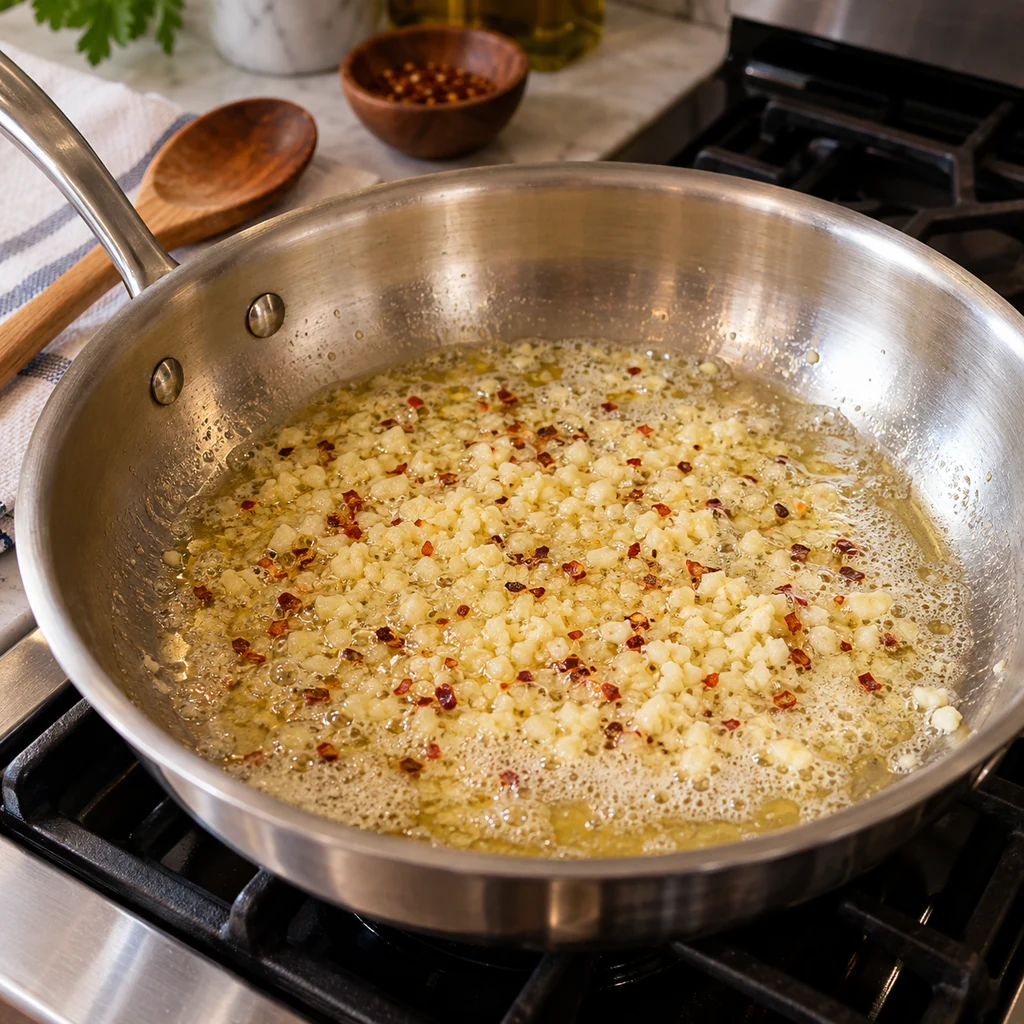
Melt 2 tablespoons butter in a wide skillet over medium heat. Add the minced garlic and optional red pepper flakes. Cook for about 30 seconds, stirring, until fragrant. The garlic should remain pale; browned garlic tastes bitter and will overpower the shrimp. If it colors too quickly, slide the skillet off the heat for a few seconds before continuing.
4. Cook the Shrimp Just Until Opaque
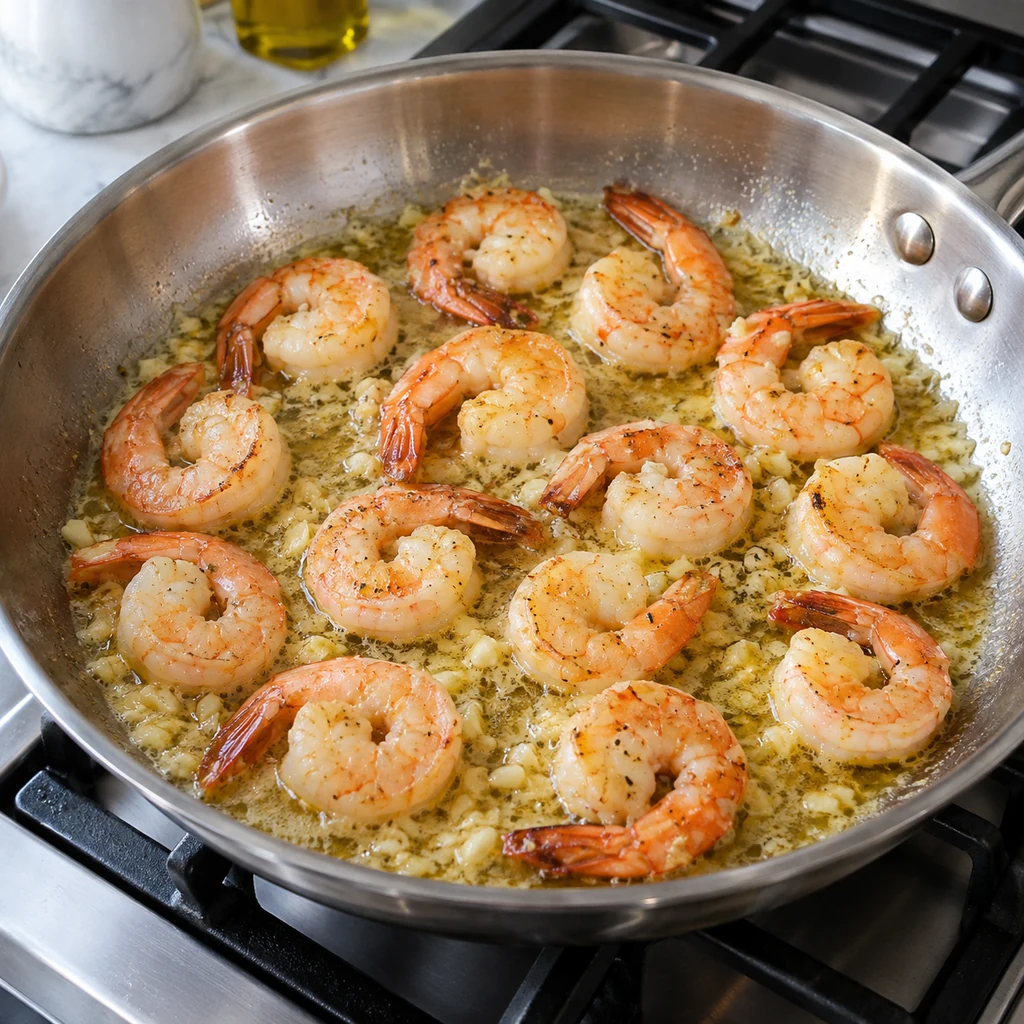
Add the shrimp in one layer. Cook for 1 to 2 minutes on the first side, turn, and cook for about 1 minute more. They are ready when pink, opaque through the centers, and curled into loose C shapes. Tightly curled O-shaped shrimp are usually overcooked. Transfer the shrimp to a clean plate immediately, leaving the garlic butter in the skillet.
5. Emulsify the Sauce and Toss the Pasta
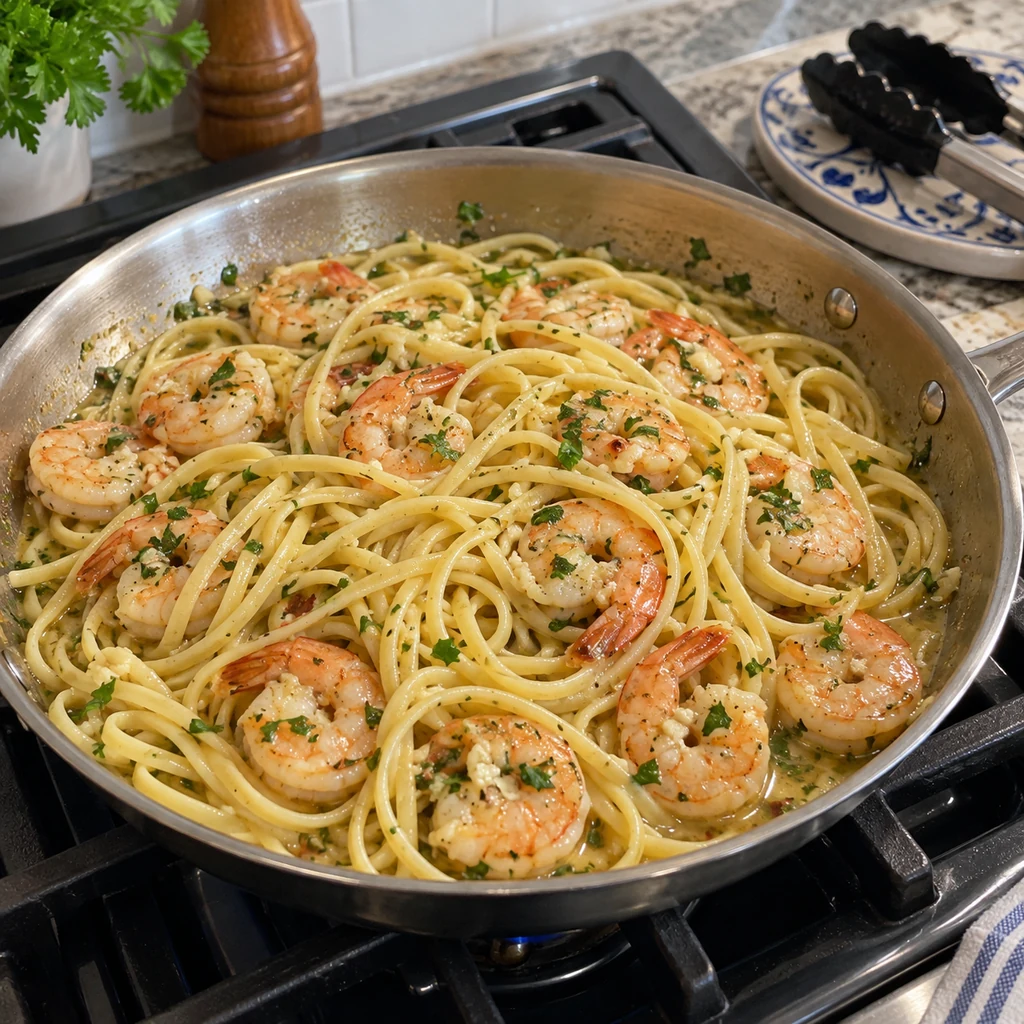
Lower the heat and add the drained linguine, remaining 2 tablespoons butter, lemon juice, and 1/4 cup reserved pasta water. Toss continuously for 30 to 60 seconds until the butter and water form a glossy sauce. Add another tablespoon or two of pasta water only if the noodles look dry. Return the shrimp and any collected juices to the skillet and toss briefly to warm through.
6. Finish and Serve Immediately
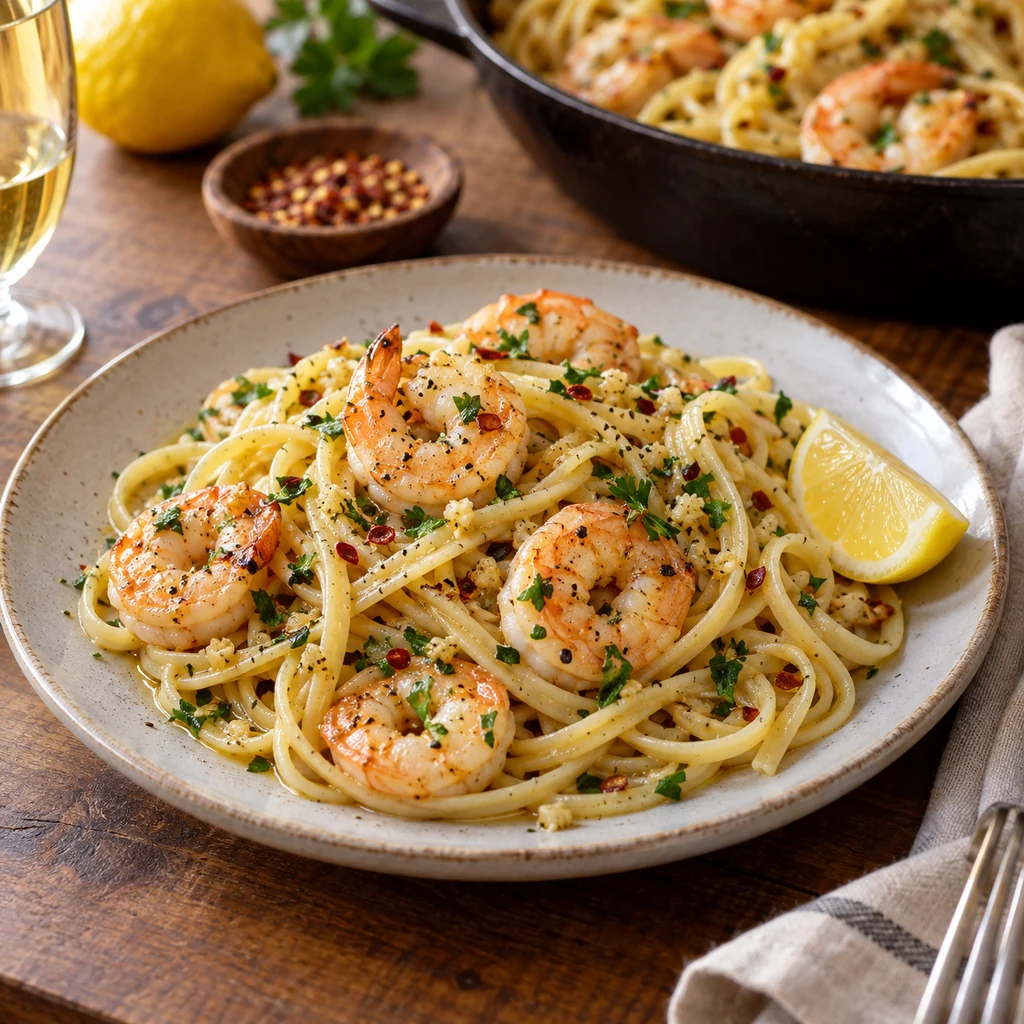
Remove the skillet from the heat and fold in the chopped parsley. Taste one strand before adding more salt, since the pasta water already carries seasoning. Add black pepper, lemon juice, or red pepper flakes as needed. Divide among four warm bowls and serve immediately. The sauce thickens as it stands, so loosen it with a spoonful of warm pasta water if necessary.
Substitutions & Variations
Spaghetti, fettuccine, or another long pasta can replace linguine; follow the package timing and reserve the same amount of water. For a dairy-free version, use a good plant-based butter designed for cooking. Small shrimp cook faster than large shrimp, so judge doneness by color and opacity rather than relying only on the clock.
Add a cup of baby spinach during the final toss, or include halved cherry tomatoes after the garlic becomes fragrant. A splash of dry white wine can replace part of the pasta water, but simmer it for a minute before returning the shrimp. Parmesan is optional rather than essential; if used, add a small amount off the heat so the lemon and shrimp remain the focus.
What to Serve With
A crisp green salad with a simple vinaigrette provides fresh contrast to the buttery pasta. Roasted asparagus, steamed broccoli, sautéed zucchini, or blistered green beans also work well without competing with the garlic and lemon. Warm crusty bread is useful for gathering the sauce left in the bowl.
For casual hosting, pair the pasta with a tomato-cucumber salad and sparkling water with lemon. Keep side dishes simple because the entrée cooks quickly and is best served at once. If guests are delayed, prepare the ingredients in advance but wait to boil the pasta and cook the shrimp until everyone is ready to eat.
Frequently Asked Questions
How do I keep shrimp from turning rubbery?
Pat them dry, cook them in a single layer, and remove them from the skillet as soon as they are opaque. Returning them only for the final toss prevents prolonged heat from tightening their texture.
Why should I reserve pasta water?
Pasta water contains starch that helps melted butter and lemon juice combine into a cohesive sauce. Add it gradually; too much will make the dish watery, while too little can leave the noodles greasy or dry.
Can I store and reheat leftovers?
Refrigerate leftovers promptly in a covered container and use within two days. Reheat gently in a skillet with a splash of water. Avoid high heat, which can overcook the shrimp and cause the butter sauce to separate.