
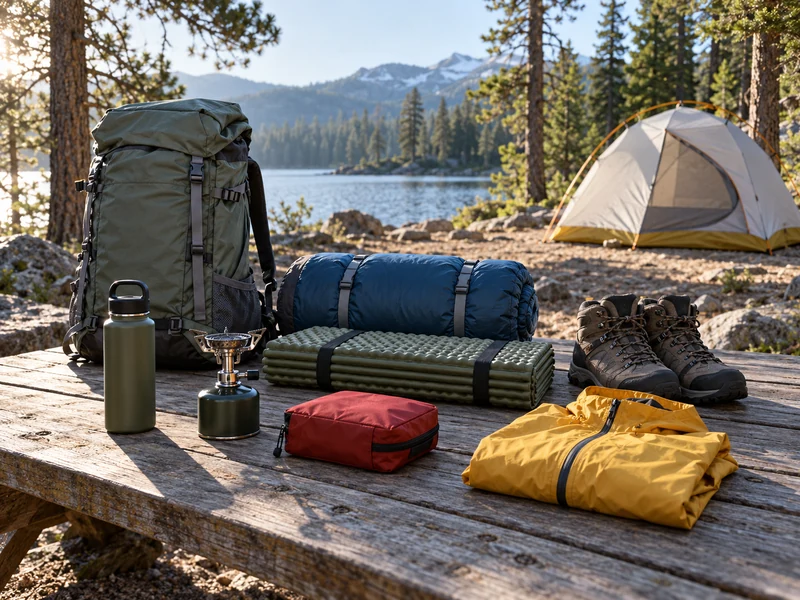
A camping checklist is most useful when it reflects the trip you are actually taking. A mild weekend at a serviced campground calls for different gear than a cold night at a remote site. Start with the reservation details, expected weather, water access, fire rules, and the distance between your vehicle and campsite; then pack from the categories below.
This guide covers eight groups of gear so you can check essentials without dragging every item in your garage outdoors. Mark shared equipment with the person carrying it, test unfamiliar items at home, and leave time for a final check before departure. Adjust quantities for your group and the length of the trip.
Why This Checklist Helps
- It groups equipment by the job it needs to do at camp.
- It separates true essentials from comfort items you can skip.
- It prompts a final weather, water, and campsite rules check.
The Camping Gear Checklist
1. Shelter and Sleeping Gear
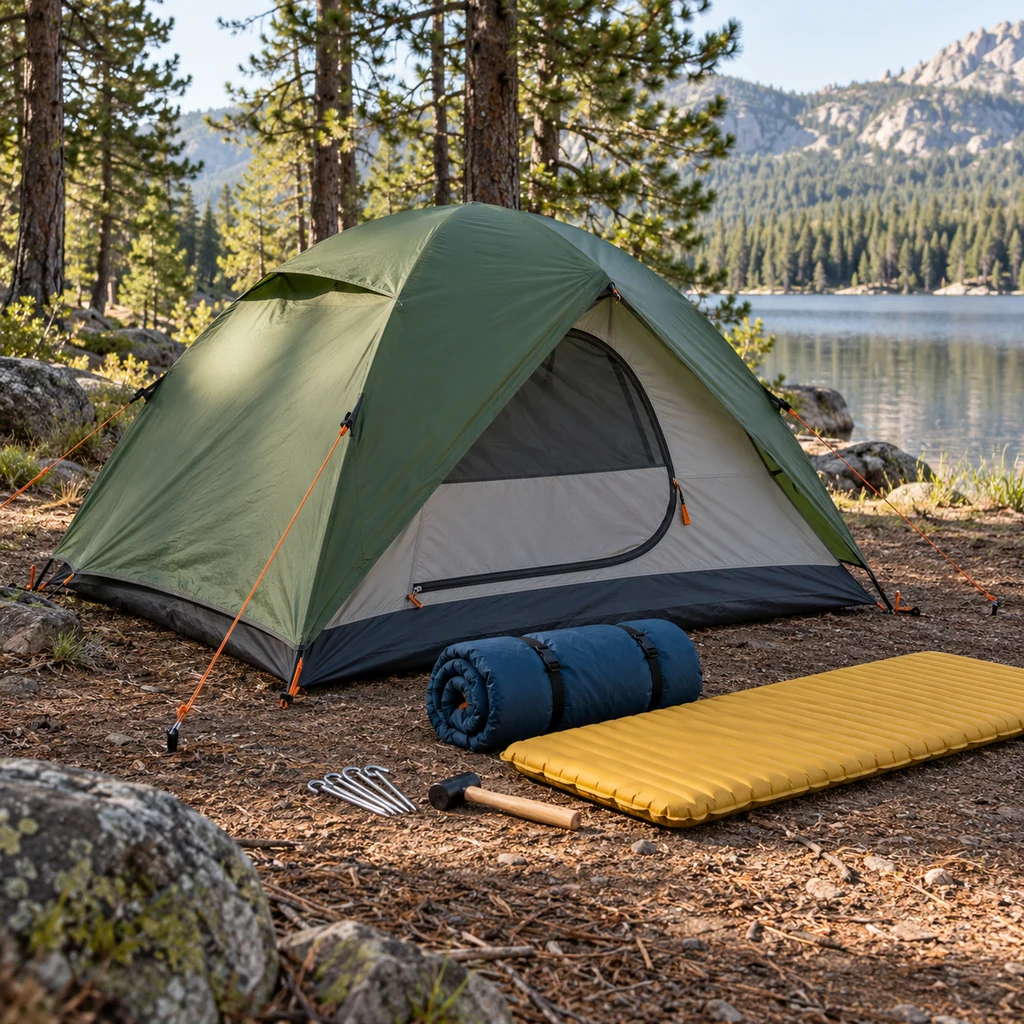
Pack a tent sized for your group, its poles, stakes, guylines, and rainfly. Add a footprint if the tent calls for one. Bring a sleeping bag or quilt rated for the expected low temperature, an insulated sleeping pad, and a pillow if it helps you sleep. A mallet can make staking easier at established campgrounds. Pitch the tent once at home: missing poles and damaged zippers are much easier to solve before travel.
- Tent body, poles, stakes, guylines, rainfly, optional footprint
- Sleep bag or quilt, insulated pad, pillow
- Repair patch, mallet if needed
2. Cooking and Eating Gear
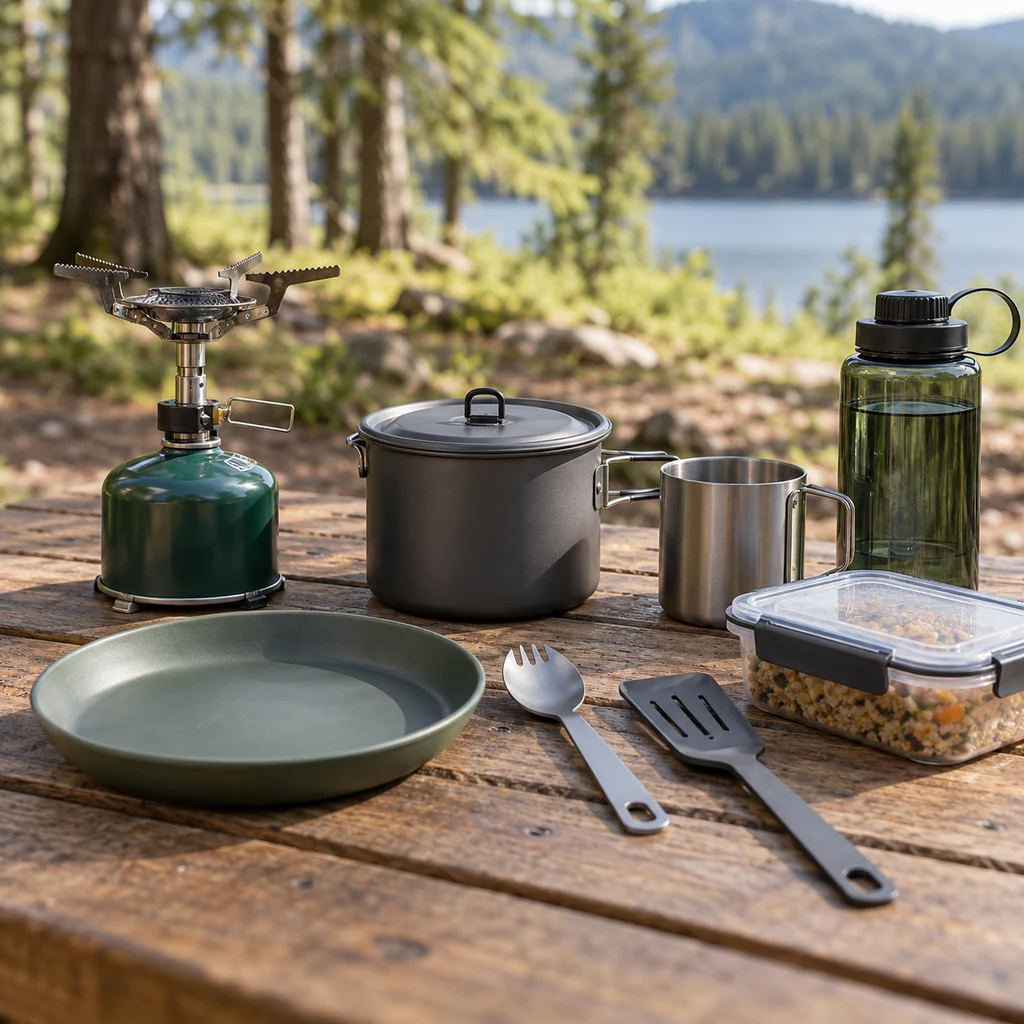
Choose a camp stove and the correct fuel for that model, then test ignition before leaving. Pack a pot or pan, a spoon or spatula, reusable plates and cups, a cutting board if your meals need one, and food storage containers. A cooler is useful for perishable food, but it needs enough ice and a plan to keep food cold. Bring drinking water or a dependable treatment method if the campsite has no potable supply. Cook only where permitted, and follow local fire restrictions.
- Stove, compatible fuel, lighter, pot or pan
- Utensils, plates, cups, containers, dishwashing kit
- Cooler and ice where needed; water containers or treatment
3. Clothing and Footwear
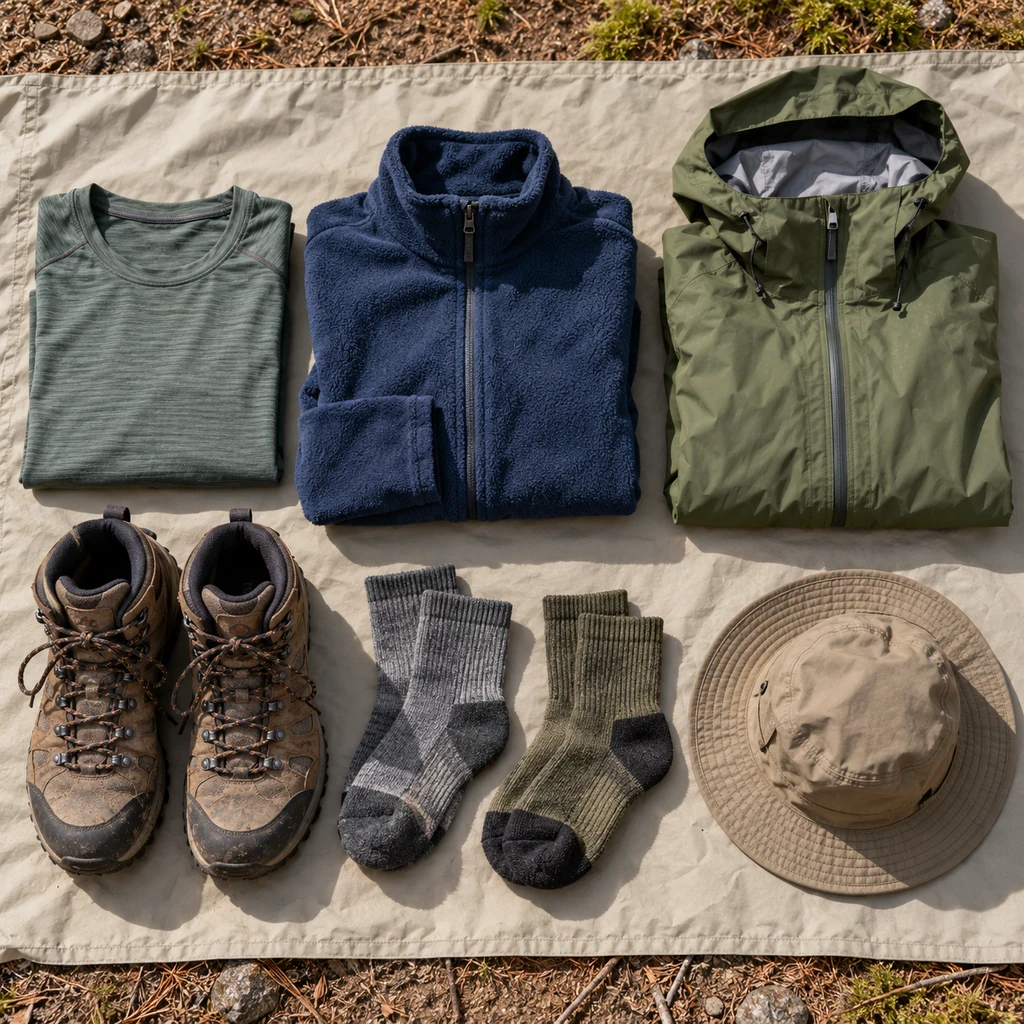
Start with breathable base layers and add a warm midlayer and weatherproof outer layer to match the forecast. Comfortable, broken-in hiking shoes or boots matter more than a brand-new pair. Include spare socks, sleep clothes, and a dry set sealed in a bag. A hat, sun protection, gloves, or rain pants may be necessary depending on the season. Pack camp shoes only if you will use them; they are a comfort item for many short trips.
- Base layer, insulating layer, rain protection
- Footwear, spare socks, dry sleep clothes
- Hat and seasonal sun or cold-weather accessories
4. Safety and Navigation Gear
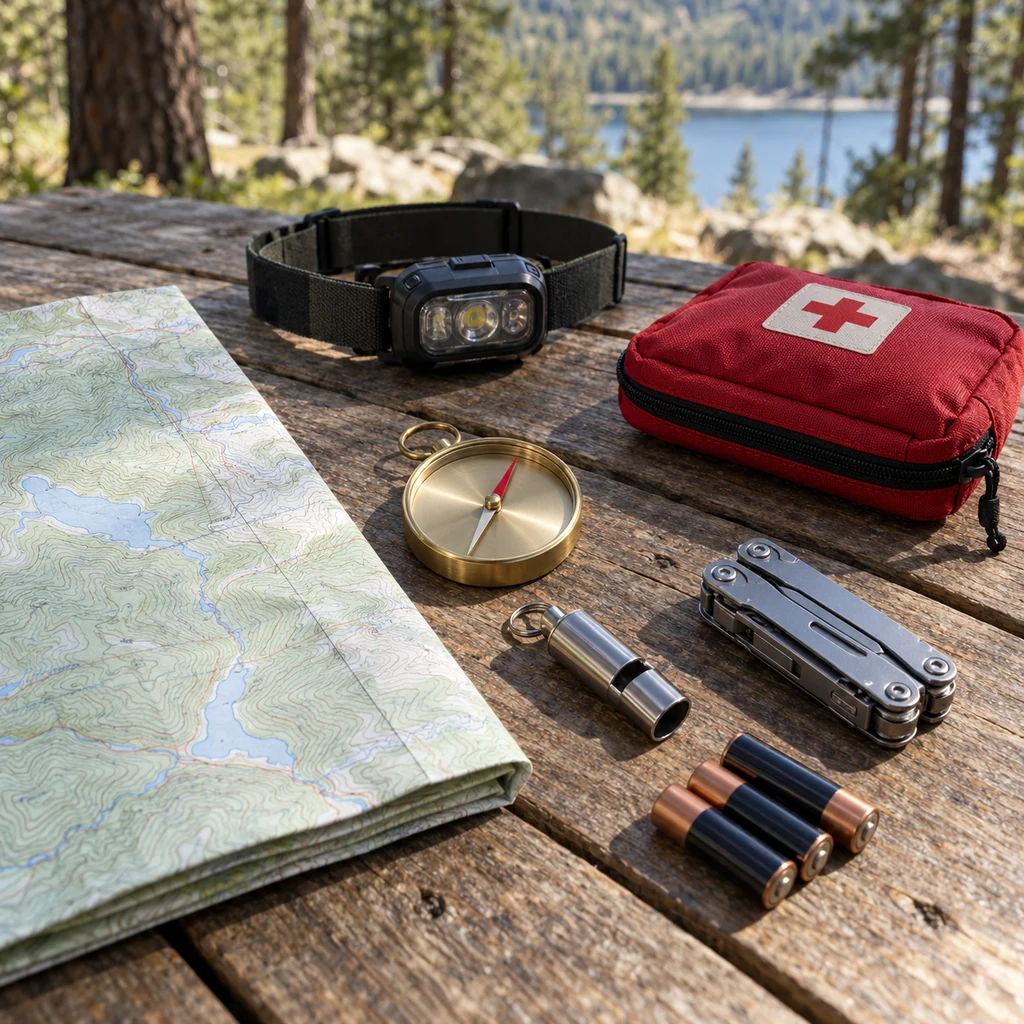
Save an offline map before you lose reception and carry a paper map and compass if the route requires them. Each person should be able to find a light after dark; pack headlamps and spare batteries or a charging plan. A first-aid kit should contain supplies you know how to use, plus personal medication. Add a whistle, identification, and a small multitool where allowed. Tell someone your route and expected return time when heading beyond a developed campground.
- Offline map, paper map and compass as appropriate
- Headlamps, spare power, first-aid kit, medications
- Whistle, identification, multitool
5. Hygiene and Personal Care
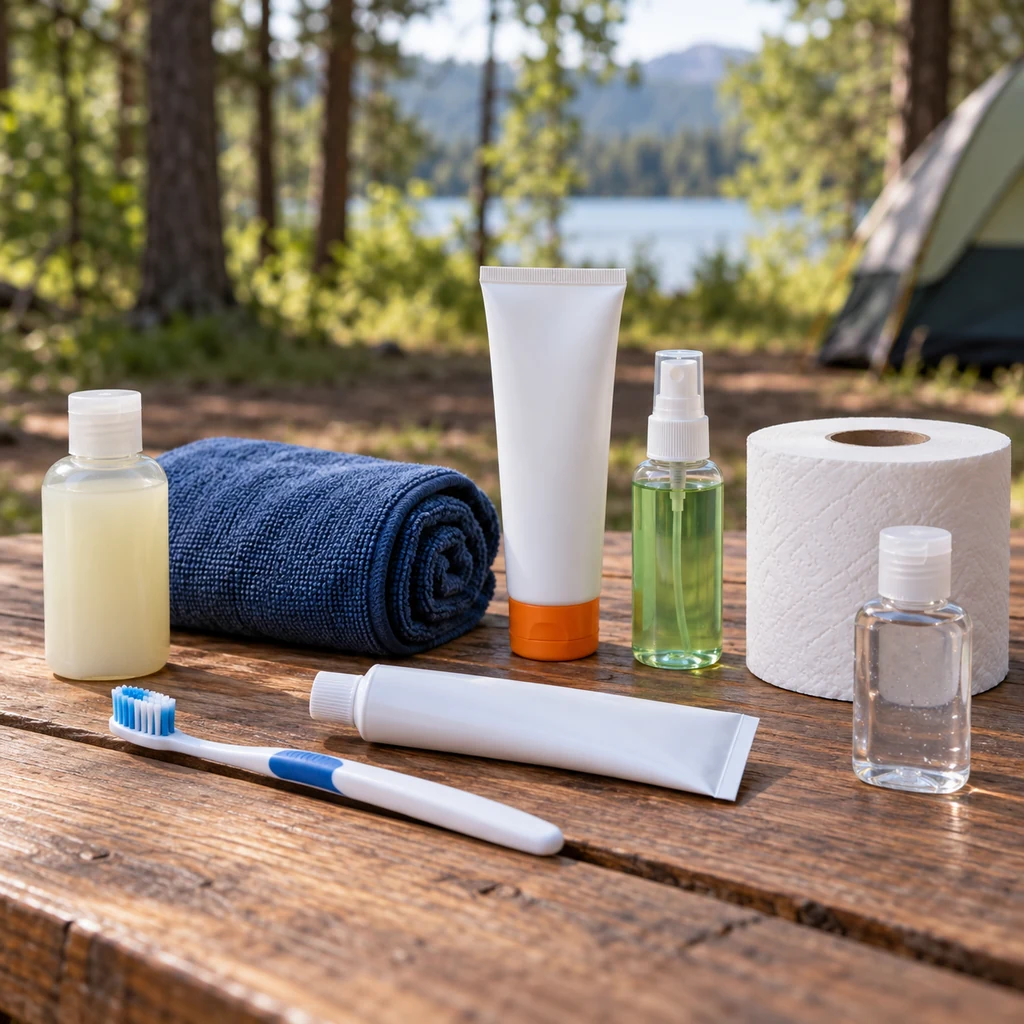
Bring a toothbrush, toothpaste, quick-dry towel, soap, hand sanitizer, toilet paper, sunscreen, insect repellent, and any personal care products your group uses. Check whether the campground has toilets, sinks, and showers. Where facilities are absent, follow the land manager’s current waste guidance and carry out used hygiene products. “Biodegradable” soap still belongs away from streams and lakes; use a suitable wash area and dispose of wastewater according to local rules.
- Toothbrush, toothpaste, soap, towel
- Toilet supplies, hand sanitizer, personal products
- Sunscreen and insect repellent
6. Comfort and Camp Extras
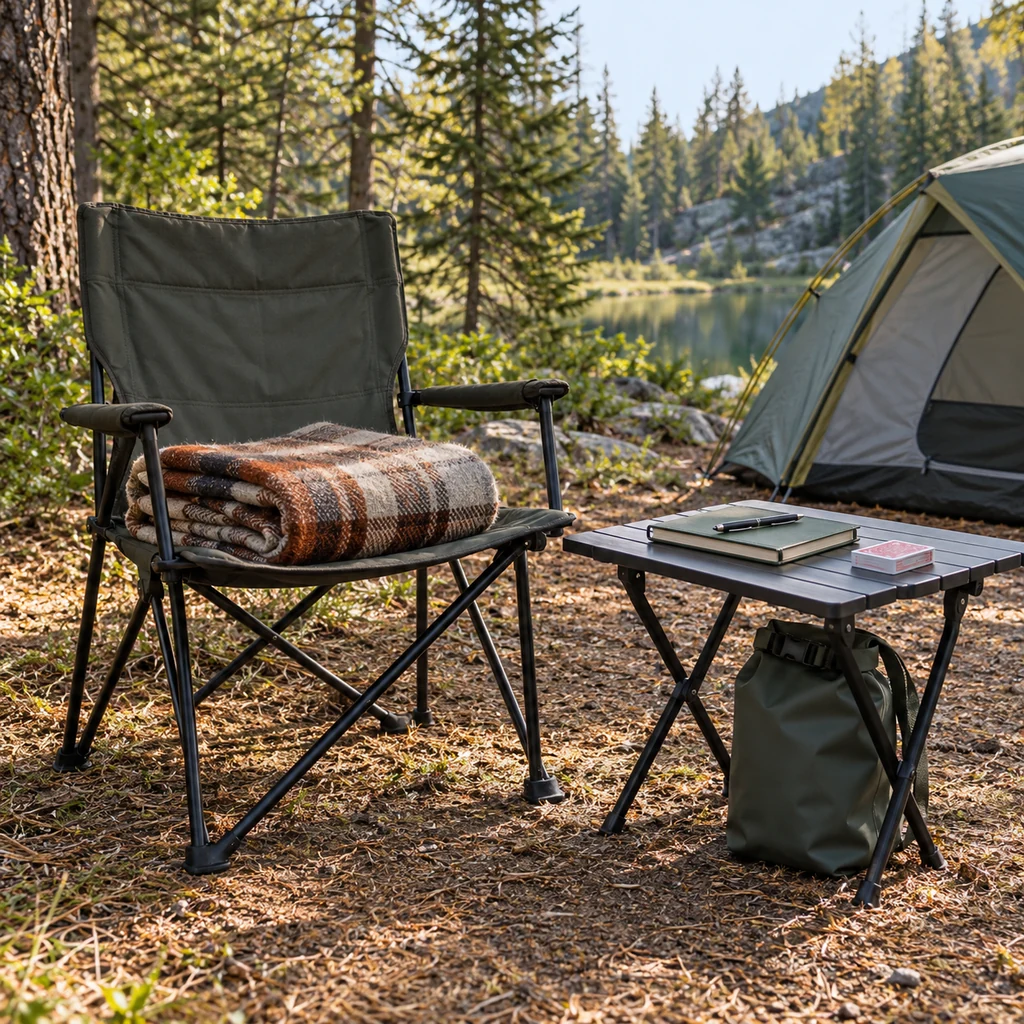
A folding chair, camp blanket, book, cards, or notebook can make downtime pleasant, especially on longer stays. A dry bag protects items you do not want damp. A camera or small power bank may be worthwhile if you expect to use them. Check campground rules before bringing a hammock or speaker, and keep noise considerate. These extras should be the first things removed if weight, space, or a long walk to camp becomes a problem.
- Chair or blanket, quiet entertainment
- Dry bag, power bank if needed
- Optional hammock only where permitted
7. Food and Snacks
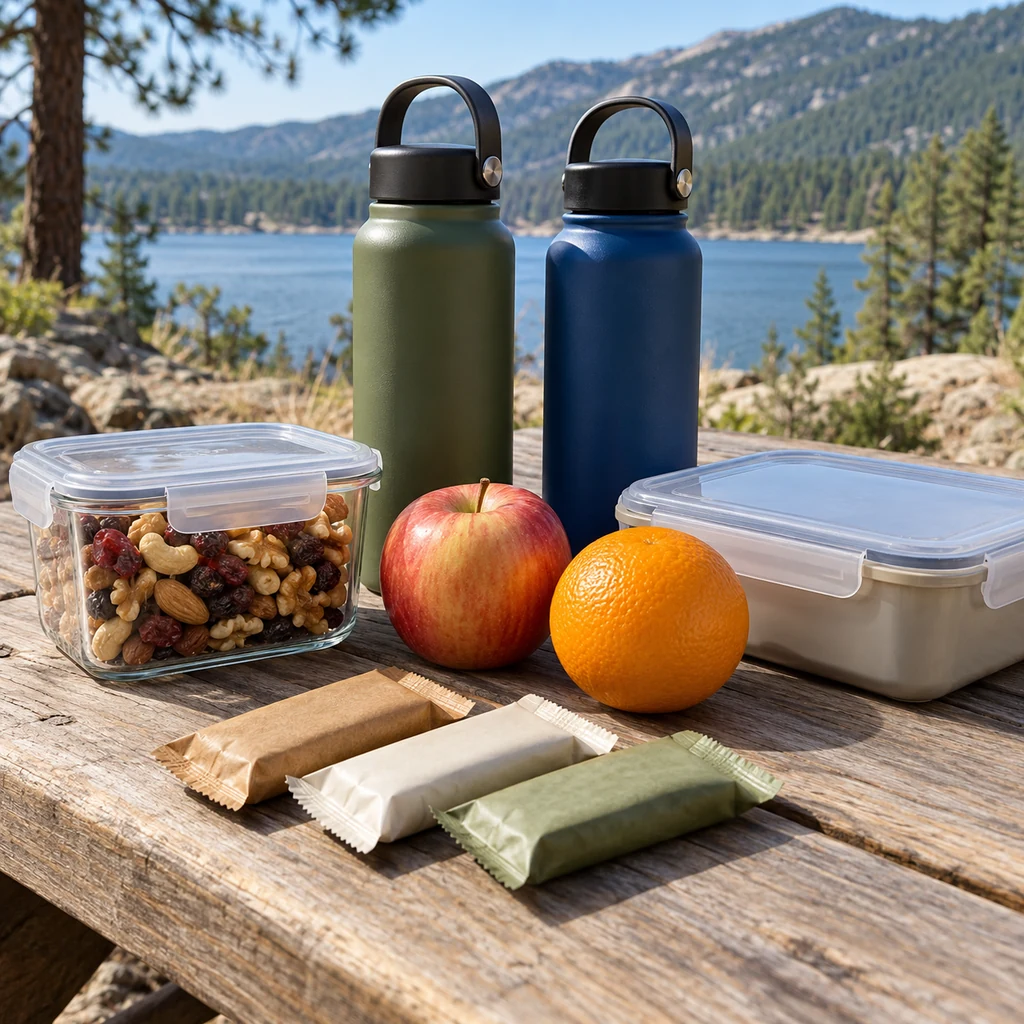
Write a simple meal plan for each day, then count portions for everyone in your group. Shelf-stable meals, oats, nuts, dried fruit, and sturdy fresh produce travel well. Add coffee or tea, basic seasonings, and a few snacks for the journey home. Store food according to campground wildlife guidance; never leave it open at the tent. Keep perishable foods properly chilled and bring enough safe water for drinking, cooking, and washing.
- Meals by day, snacks, drinks, seasonings
- Sealed food containers and wildlife-safe storage
- Safe water and a plan for perishable food
8. Trash and Leave-No-Trace Supplies
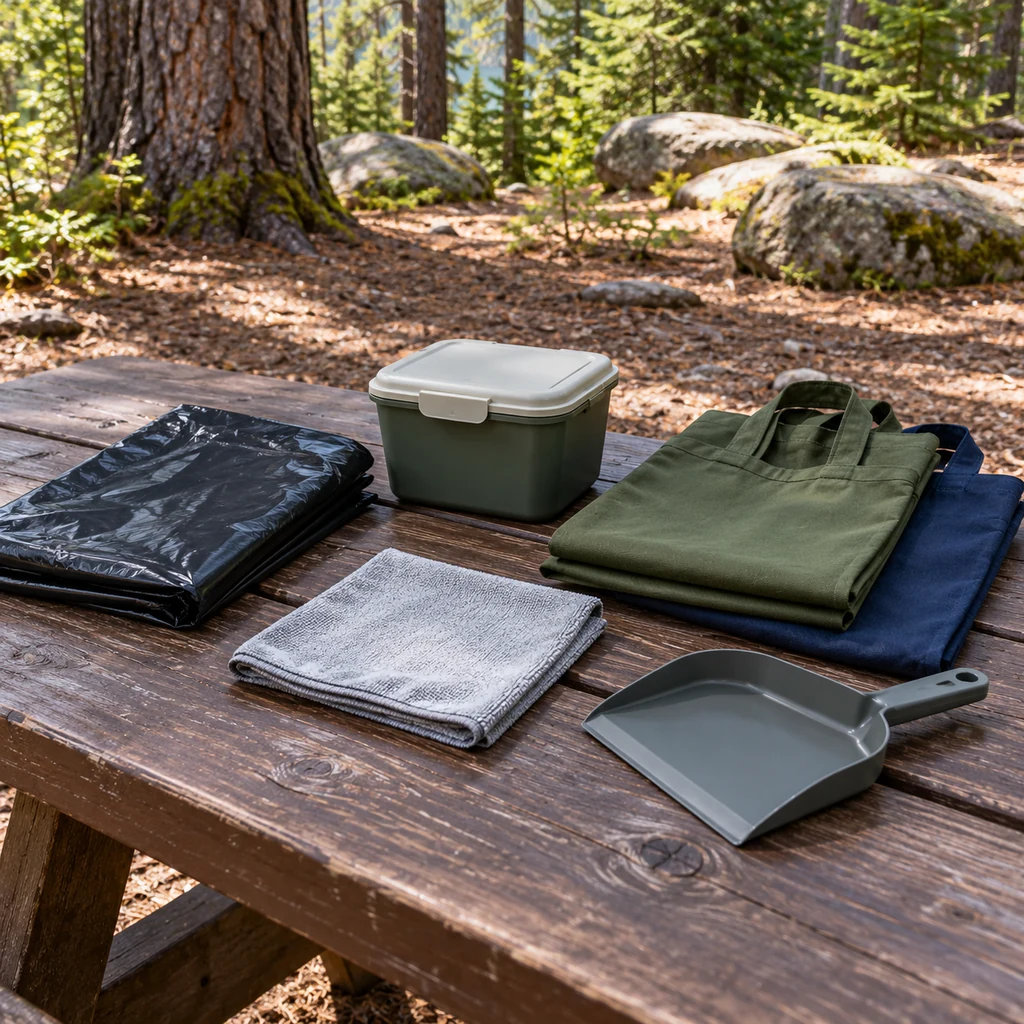
Bring durable trash bags and a separate container for recyclables if your destination accepts them. A small bag for food scraps helps keep your camp tidy and limits wildlife attraction. Check the site’s disposal options before you arrive; plan to take everything home when bins are unavailable. Leave natural objects where they are, use established campsites and paths, and clean up small scraps before departure. A final walk around the pitch often catches overlooked tent pegs and food wrappers.
- Strong trash bags and reusable containers
- Food-scrap container and cleanup cloth
- Final campsite sweep before leaving
Pack the Night Before
Lay the eight groups out together and check each item against this list. Confirm the weather forecast, campsite access, water source, fire rules, and any permit or reservation. Put the tent, light, rainwear, and first-aid kit where you can reach them quickly. For meal inspiration, consider grilled chicken salad with avocado for a cooler-supported first-night dinner or browse whole-wheat banana muffins for an easy packed breakfast. Adapt both to your food storage conditions.
Frequently Asked Questions
What should a first-time camper pack first?
Prioritize shelter, a sleep system suited to the forecast, safe water, weather layers, lighting, food, and essential personal supplies. Add comfort gear once those are covered.
Do I need every item on this list?
No. Use the list as a menu. A serviced campground may provide water and toilets, while a remote location requires more self-sufficiency. Confirm what your site actually offers.
When should I check my gear?
Test tents, stoves, lights, and sleeping pads several days before leaving. Recheck the forecast and site rules shortly before departure, then make a final packed-item check.