
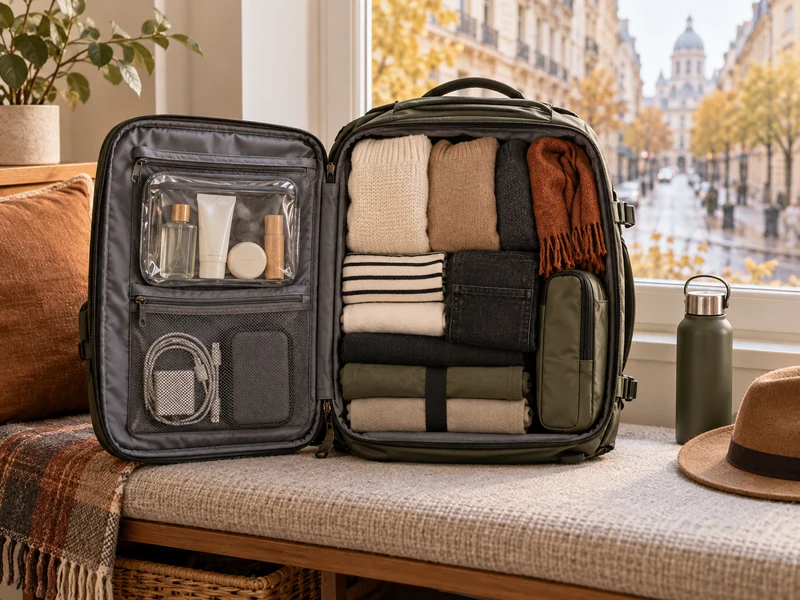
A four-day fall city trip can fit in one personal-item bag when every piece has a job. This plan uses a soft backpack measuring about 16 × 10 × 8 inches when packed, a three-top, two-bottom, two-layer clothing capsule, and four loading zones that keep airport essentials accessible.
That example size is not a universal allowance. Personal-item limits can change by airline, fare, route, cabin, and aircraft. Confirm the current size and weight rules on your airline’s website before packing, then measure the filled bag—not its empty product dimensions.
The 4-Day Plan at a Glance
| Decision | Example used here | Final check |
|---|---|---|
| Bag | Soft backpack, about 16 × 10 × 8 inches packed | Must meet your airline’s current limit |
| Clothing formula | 3 tops + 2 bottoms + 2 layers | Every top works with both bottoms |
| Shoes | Wear one comfortable pair | Already tested for a full walking day |
| Laundry | No full wash required | One optional sink-wash item only |
| Organization | Clothing, back panel, side, and top-access zones | Bag closes without forced compression |
Before You Pack: Verify the Rules
Open your booking and confirm three separate details: the maximum personal-item dimensions, any weight cap, and whether your fare includes another cabin bag. Measure to the widest points, including a stuffed front pocket, side bottle pocket, handle, and wheel housing if present. A soft bag only helps when it fits the airline’s sizer without forcing or folding prohibited structure.
Security and dangerous-goods rules also depend on your departure, transit, destination, and airline. For U.S. screening, the familiar carry-on liquids limit generally uses containers of 3.4 ounces or 100 milliliters or less inside one quart-size bag, with separate provisions for medically necessary liquids. Spare lithium batteries and power banks belong in the cabin, protected from damage and short circuit; if a bag is gate-checked, remove them and keep them with you. Always recheck the current official rules for your itinerary.
What to Wear on Travel Day
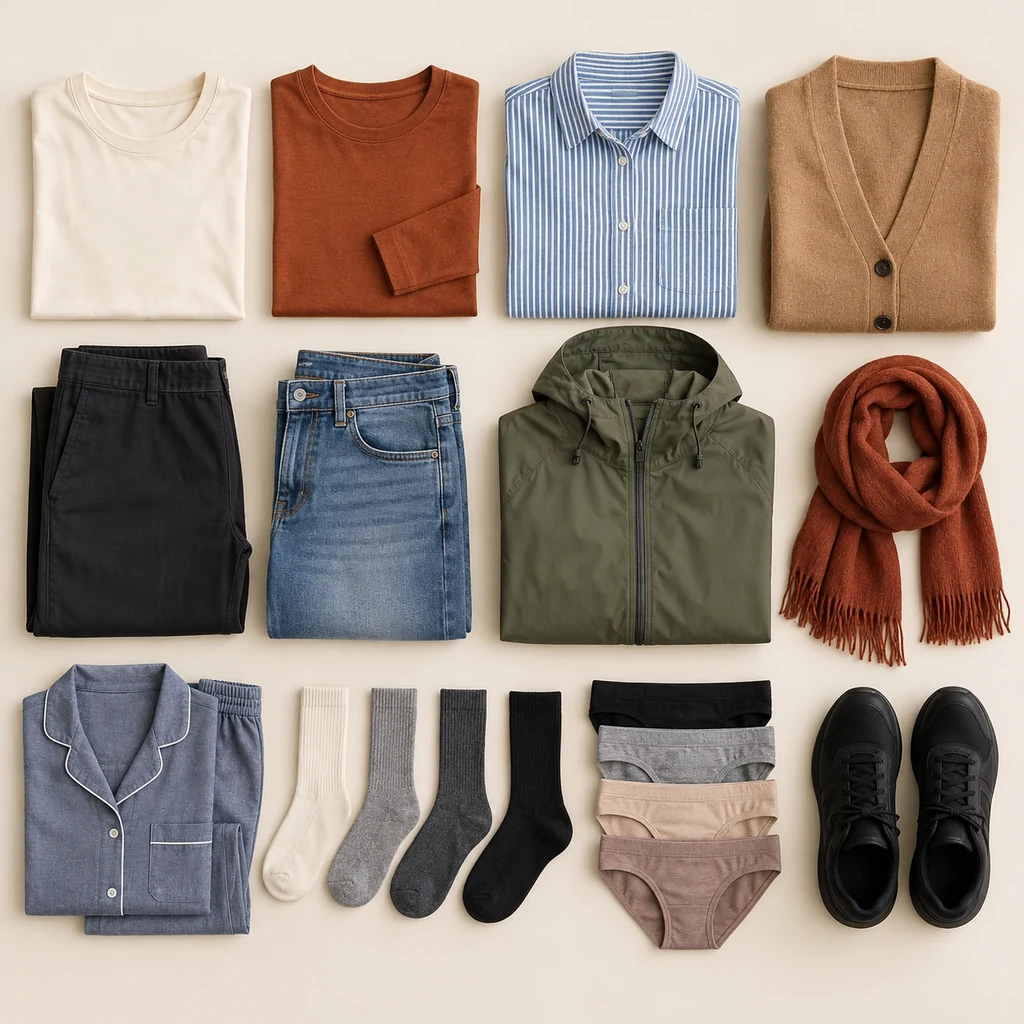
- Cream T-shirt
- Medium-wash straight-leg jeans
- Camel cardigan
- Lightweight olive rain shell
- Comfortable black walking shoes
- One pair of socks and underwear
- Rust scarf if the forecast calls for it
Wear the bulkiest useful layers, but keep the outfit comfortable enough for security, transit, and a long walk after arrival. Do not wear a heavy coat merely to save bag space if the destination will be mild.
The Exact 3-2-2 Capsule
| Category | Wear | Pack |
|---|---|---|
| 3 tops | Cream tee | Rust long-sleeve top; blue striped shirt |
| 2 bottoms | Medium-wash jeans | Dark straight-leg pants |
| 2 layers | Camel cardigan; olive rain shell | None |
| Basics | 1 underwear; 1 sock pair | Sleep set; 4 underwear; 4 sock pairs |
| Accessories | Black walking shoes; optional scarf | Foldable tote |
The extra underwear and socks provide one spare set without adding much volume. If you prefer a second shoe, remove a clothing piece first; a bulky spare pair can consume an entire packing zone.
Four Outfit Formulas
- Travel day: cream tee + jeans + cardigan + rain shell.
- Day two: striped shirt + dark pants + cardigan.
- Day three: rust top + jeans + rain shell.
- Day four: cream tee or striped shirt + dark pants + cardigan.
Rewearing is intentional. Air pieces overnight and spot-clean only when the care label allows. The rust, camel, olive, cream, denim, and charcoal palette keeps every combination coherent without requiring a “just in case” outfit.
How to Pack the Personal Item
Step 1 — Check Weather and the Real Itinerary
Review the hourly forecast for departure and destination, then list the trip’s actual activities: travel, walking, dinner, museum, meeting, or rain. Pack for those events rather than an imaginary emergency wardrobe. If one venue needs a dress code, make that requirement part of the capsule instead of adding a separate outfit.
Step 2 — Choose and Measure the Bag
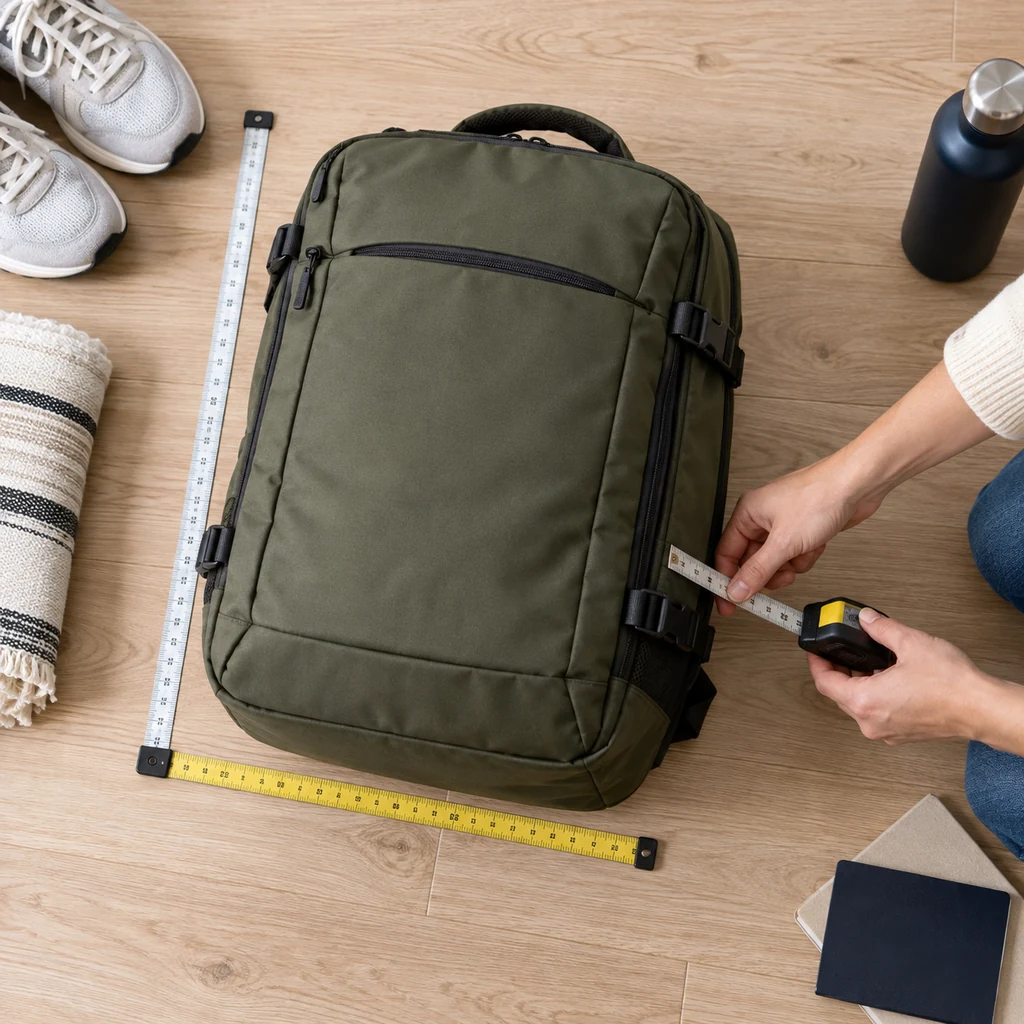
Choose a lightweight, soft-sided bag that is smaller than your airline’s published maximum before it is filled. Pack it loosely once, close every zipper, and measure height, width, and depth at the widest points. Repeat after final packing because a sweater or front-pocket charger can add unexpected depth.
A bag marketed as “personal item size” is not proof that it qualifies for every airline. Save a screenshot of the current allowance with your trip notes and leave a little margin rather than aiming for the exact maximum.
Step 3 — Build the 3-2-2 Capsule
Lay out three tops, two bottoms, and two layers. Remove any top that fails to work with both bottoms. Keep one walking shoe, one scarf, and one compact sleep set. If the forecast is colder, swap the tee for a thin base layer instead of adding a fourth top.
Step 4 — Assign Every Piece to a Day
Photograph the four outfit combinations on your phone. This quick test catches duplicate pieces and missing layers before they enter the bag. It also reduces decision-making during the trip.
If you are still choosing a destination, these weekend trips that feel like a vacation can help you match a compact wardrobe to the pace of the itinerary.
Step 5 — Reduce Toiletries Without Guessing
Take only the amount needed for four days, using leak-resistant travel containers. Label them at home; never rely on color or smell to identify a decanted product. Put the clear liquids pouch where it can be removed without unpacking clothes, and keep medications and essential health items accessible.
Do not transfer prescription medicine into an unidentified container merely to save space. Keep essential medication in cabin baggage, bring the amount needed plus a reasonable delay buffer, and confirm documentation and import rules for every destination.
Step 6 — Load Four Packing Zones
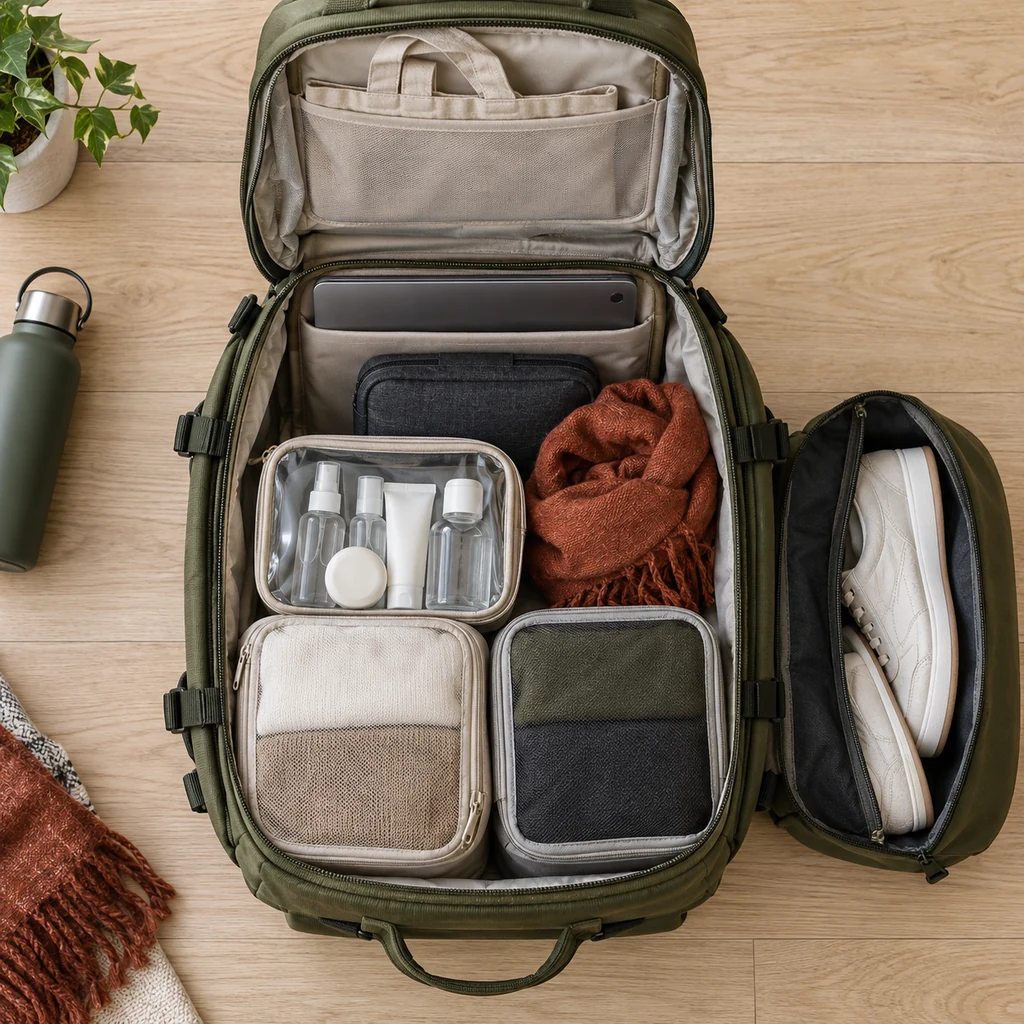
- Clothing zone: place two slim cubes or folded bundles at the bottom.
- Back-panel zone: keep a tablet or small laptop flat against the padded back, with the tech pouch in front.
- Side zone: use a shoe compartment only if you truly need a second pair; otherwise fill it with soft clothing.
- Top-access zone: place the clear liquids pouch, medication pouch, scarf, and one small snack near the opening.
Fill dead space with socks, but do not scatter tiny items through every pocket. One location per category makes repacking faster and helps you notice when something is missing.
Step 7 — Keep Technology Safe and Accessible
Use one compact cable, one wall charger, and the smallest suitable power bank. Protect battery terminals from contact with coins, keys, or other metal. Do not pack a damaged, swollen, or recalled battery. Keep spare batteries and power banks accessible in the cabin and verify your carrier’s current watt-hour and quantity limits.
Download tickets and maps for offline use, but keep a backup method of accessing essential booking details. A trip with weak reception may benefit from the planning approach in this guide to remote weekend getaways.
Step 8 — Close, Measure, Weigh, and Walk-Test
Close the zippers without sitting on the bag or straining the seams. Measure all three dimensions again and weigh it if the airline publishes a weight limit. Wear it for ten minutes, climb stairs, sit down, and remove the liquids pouch and identification without emptying the main compartment.
If the bag is too deep, remove an item rather than tightening external straps until the contents become rigid. For the budget side of planning, use these last-minute travel cost tips before paying for a larger baggage allowance.
The Final Packing Checklist
- Two packed tops and one packed bottom
- One compact sleep set
- Four underwear pieces and four pairs of socks
- Foldable tote and optional scarf
- Clear liquids pouch and non-liquid toiletries pouch
- Medication and health essentials
- Phone, charging cable, wall plug, and compliant power bank
- Wallet, identification, tickets, and accommodation details
- Empty reusable water bottle to fill after screening where permitted
- One small snack allowed by the relevant border and security rules
What to Remove First If the Bag Is Too Full
- The second pair of shoes.
- Duplicate toiletries available at the accommodation.
- The bulkiest “just in case” garment.
- Extra technology and duplicate charging cables.
- A fourth outfit that does not add a new function.
Do not remove medication, identification, required travel documents, weather protection, or a safe charging setup merely to make the bag look minimal.
Frequently Asked Questions
Is 16 × 10 × 8 inches accepted by every airline?
No. It is only the example used for this packing plan. Airline limits can vary by fare, route, cabin, and aircraft, so verify the current allowance for your booking.
Should I roll or fold clothes?
Use the method that produces a flat, stable bundle. Rolling works for tees and soft pants; folding is often better for a button-up shirt and structured trousers. The final bag depth matters more than the technique.
Can a power bank go in the personal item?
Generally, power banks and spare lithium batteries belong in cabin baggage, protected from damage and short circuit, subject to airline limits. Remove them if the bag is gate-checked and confirm current rules with the airline and relevant authority.
What happens if the weather changes?
Swap one item before departure: use a thin base layer for colder weather or remove the cardigan for warmer weather. Avoid adding an entirely separate capsule.
Do I need packing cubes?
No. Two slim cubes can create useful zones, but flat folded bundles work too. Avoid rigid organizers that consume space or force the bag beyond its allowed depth.
Where should medication go?
Keep essential medication accessible in cabin baggage, ideally in clearly identified packaging, with any documentation required by the destination. Do not place critical medicine in a bag that may be checked without first removing it.