

A useful morning does not have to begin before sunrise or follow a perfect checklist. The aim is to make the first part of your day a little easier to navigate. These five habits are options to test, not rules that guarantee more output. Your work hours, caregiving, health and natural sleep pattern all shape what is realistic. Try one change for a week, notice whether it helps, and keep the parts that fit.
If concentration problems are persistent or seriously affect daily life, look beyond a morning routine and speak with a qualified professional. For broader ideas, see our practical goal-setting guide and everyday mindfulness ideas.
Five Morning Habits to Try
1. Keep a Wake Time That Protects Sleep

Choose a wake time that suits your obligations and leaves enough time for sleep. “Earlier” is not automatically better: getting up at 5 a.m. after a short night may leave you less able to focus. The CDC recommends at least seven hours of sleep for adults aged 18 to 60 and notes that sleep needs vary across ages. If you work shifts, aim for a repeatable sleep window that fits your schedule rather than someone else’s clock.
Put your alarm where you can hear it, then open the curtains or step into daylight when practical. A calm first few minutes can help you orient yourself before messages and tasks arrive. If you want a gentler morning, prepare one small thing the night before, such as clothes or a bag. Protecting sleep matters more than winning a contest against the snooze button.
2. Make Water and Breakfast Easy to Reach

Keep a glass or bottle of water nearby and drink when you are thirsty. If breakfast helps you feel ready, choose something you enjoy and can prepare without rushing: fruit and yogurt, oats, eggs, toast or leftovers are all ordinary options. You do not need a special drink to “jump-start” metabolism, and skipping breakfast does not automatically ruin the day. People differ in appetite and timing.
For a make-ahead idea, our berry and Greek yogurt parfait can be assembled quickly. Keep perishable ingredients chilled until serving. The practical goal is to reduce one avoidable morning decision, not to chase a promised concentration boost from a particular food.
3. Pause Before Opening the Inbox

Before opening email or social feeds, take a minute to notice your surroundings and the pace of your breathing. You can sit in a chair, look out the window, or simply place both feet on the floor. If a guided practice appeals to you, the NHS offers a simple breathing exercise that can be done in a comfortable position. Keep breathing natural and stop if you feel uncomfortable.
This pause is a way to decide what deserves attention first; it is not a test of calmness or a treatment for anxiety. If mornings are crowded, a few quiet breaths while a kettle heats may be enough. Essential messages can still be checked when your circumstances require them.
4. Add a Little Movement That Suits You

A short walk, gentle stretch or a few minutes of movement at home may help you feel more settled before sitting down to work. Start with something comfortable for your ability and the time available. The NIH notes that even small periods of light activity can benefit health; that does not mean morning exercise is required for productivity.
If you already have a movement routine at another time of day, keep it. A few steps to the kitchen or a gentle shoulder roll can be the morning version. Stop if an activity causes pain or dizziness, and ask a health professional for individual guidance if you have a condition that limits activity.
5. Choose One Clear Priority
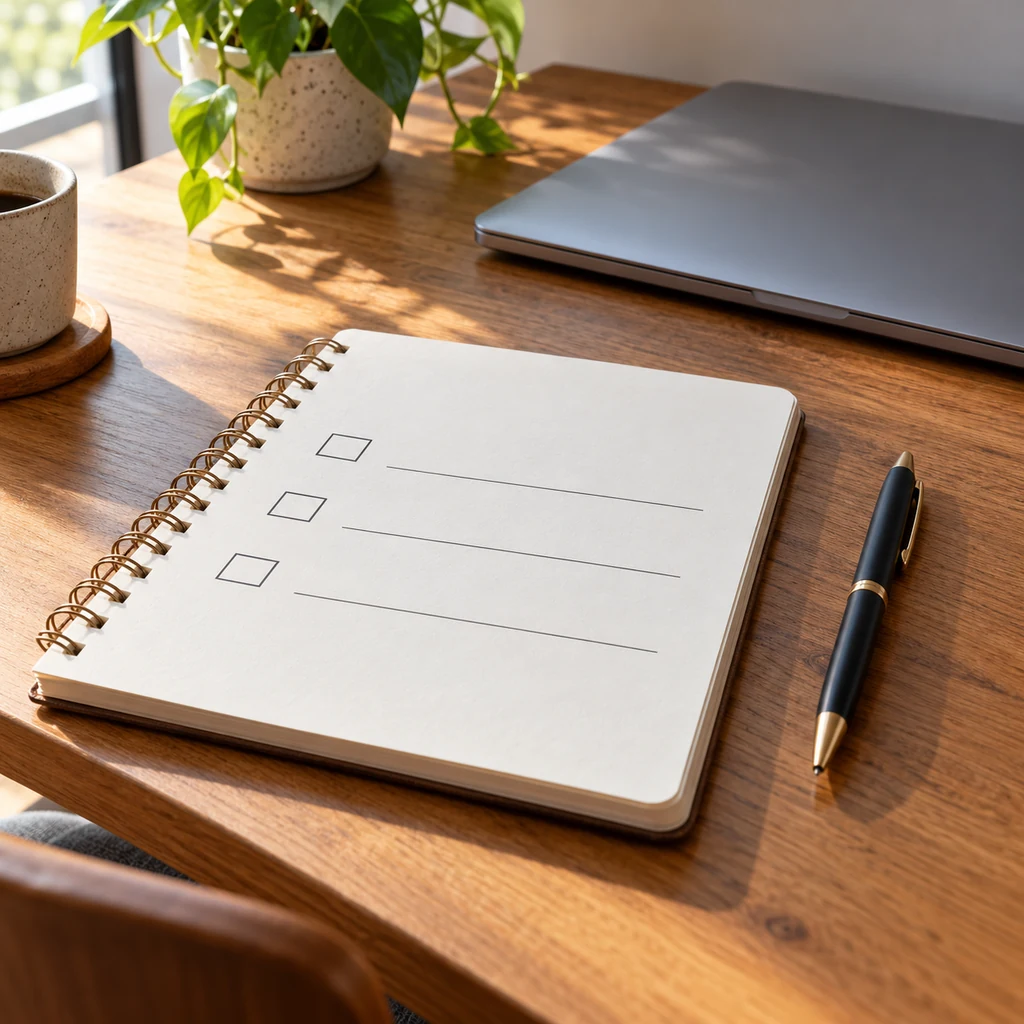
Look at the day ahead and write one task you most want to move forward. Make it specific enough to start, such as “outline the first section” instead of “finish the project.” Add one or two smaller tasks if helpful, but leave space for unexpected work. Research published by the American Psychological Association found benefits of specific goals in sustained-attention tasks; a written morning list is a practical experiment, not a guaranteed productivity formula.
Put the first action where you will see it, then begin with a manageable block of time. If a more urgent responsibility arrives, revise the list without treating that as failure. At the end of the day, note what moved forward and what needs a new plan. The best morning habit is one that supports your actual day and leaves room for rest.