

A calm evening does not have to be elaborate. Simple evening relaxation begins with a few deliberate cues that tell your mind the demanding part of the day is ending. Instead of waiting until you feel perfectly peaceful, create a short sequence you can repeat even on busy nights: close the workday, soften the environment, release a little tension, and give your thoughts somewhere to land.
The routine below is flexible, so choose the steps that fit your home, energy, and schedule. Ten intentional minutes can be more useful than an ambitious hour you rarely complete. Think of this as a gentle framework rather than another task to perform perfectly, and adjust any movement or breathing practice to feel comfortable for you.
Why You’ll Love It
- It is realistic: each step is simple enough for an ordinary weeknight.
- It is flexible: you can use the full routine or select two or three calming cues.
- It supports consistency: repeating the same sequence makes it easier to shift out of daytime mode.
Create a Clear Transition from Work to Rest
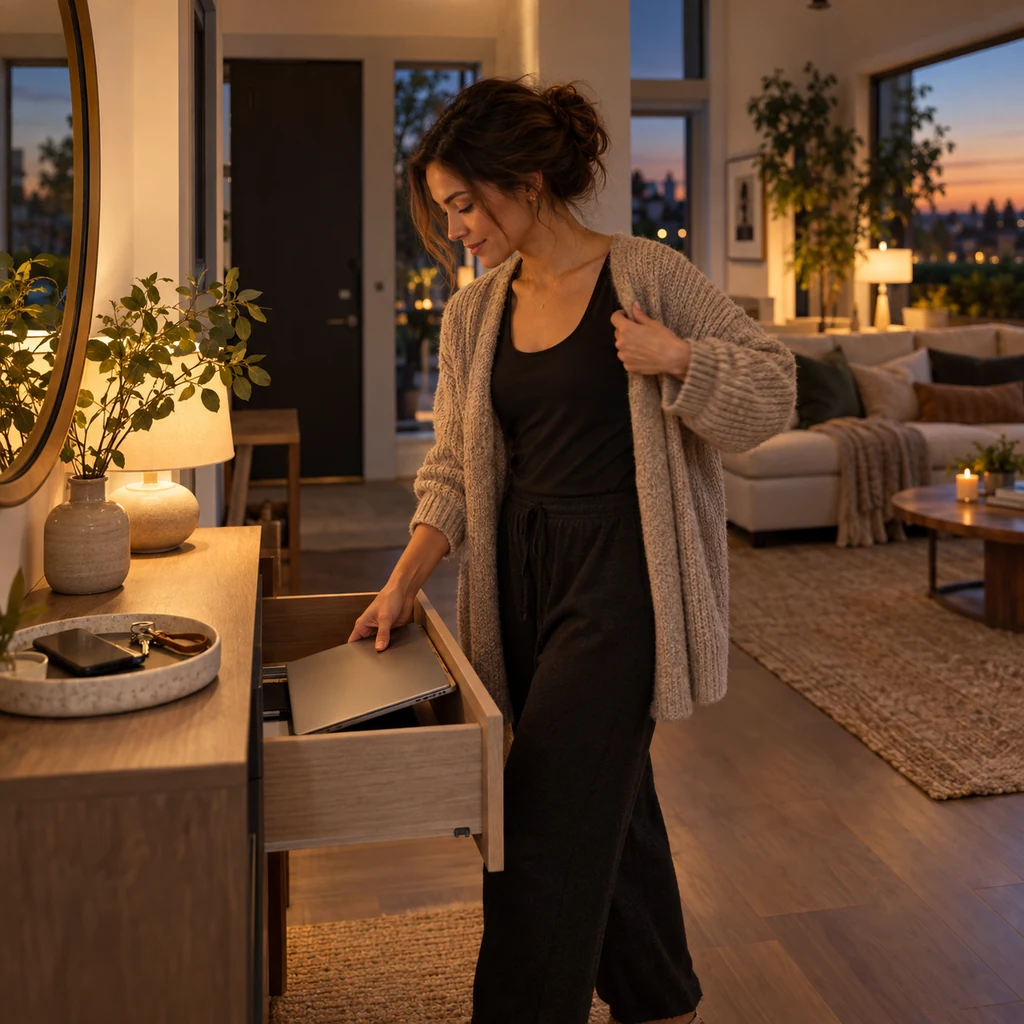
Start by giving the workday a definite ending. Close tabs, write down the first task for tomorrow, and put your laptop, paperwork, or uniform out of sight. A two-minute “shutdown note” prevents you from relying on memory later. Record anything unfinished, choose when you will revisit it, and then leave it on the page.
If you work from home, changing location helps. Move from the desk to a different chair, wash your hands, or take a brief walk around the block. These modest actions form a bridge between roles. For more ideas that also prepare the next day without extending work into the night, see these evening habits for tomorrow’s productivity.
Lower the Light and Set Screen Boundaries
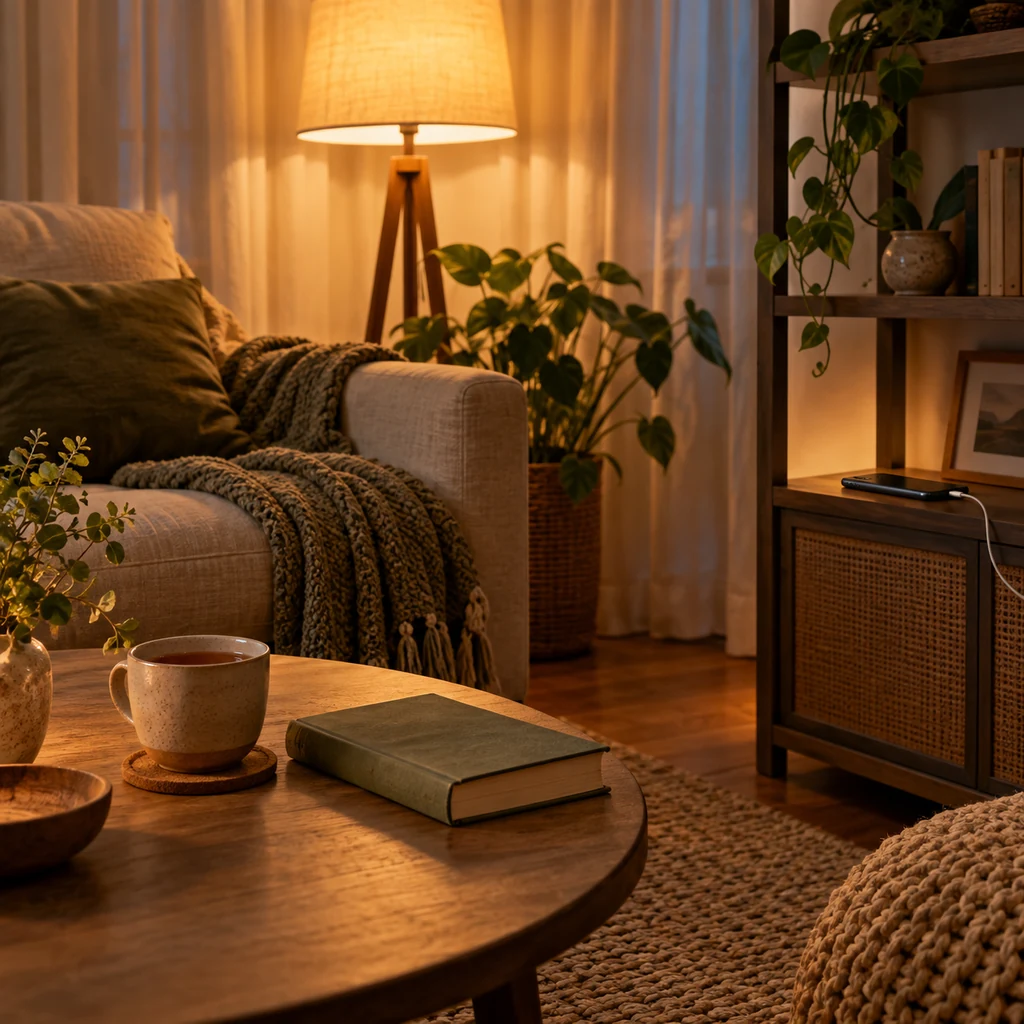
Your surroundings can make slowing down feel more natural. Turn off harsh overhead lights and use a warm lamp where you read or sit. Clear one small surface rather than trying to tidy the whole home. A less visually busy corner can become your dependable place for the final part of the evening.
Decide where your phone will rest and when you will stop checking it. You might charge it across the room, enable a do-not-disturb schedule, or set a final check-in time. If a complete screen-free hour is unrealistic, begin with fifteen minutes. Replace automatic scrolling with something specific—one chapter of a book, quiet music, a puzzle, or a brief conversation.
Release Physical Tension Gently
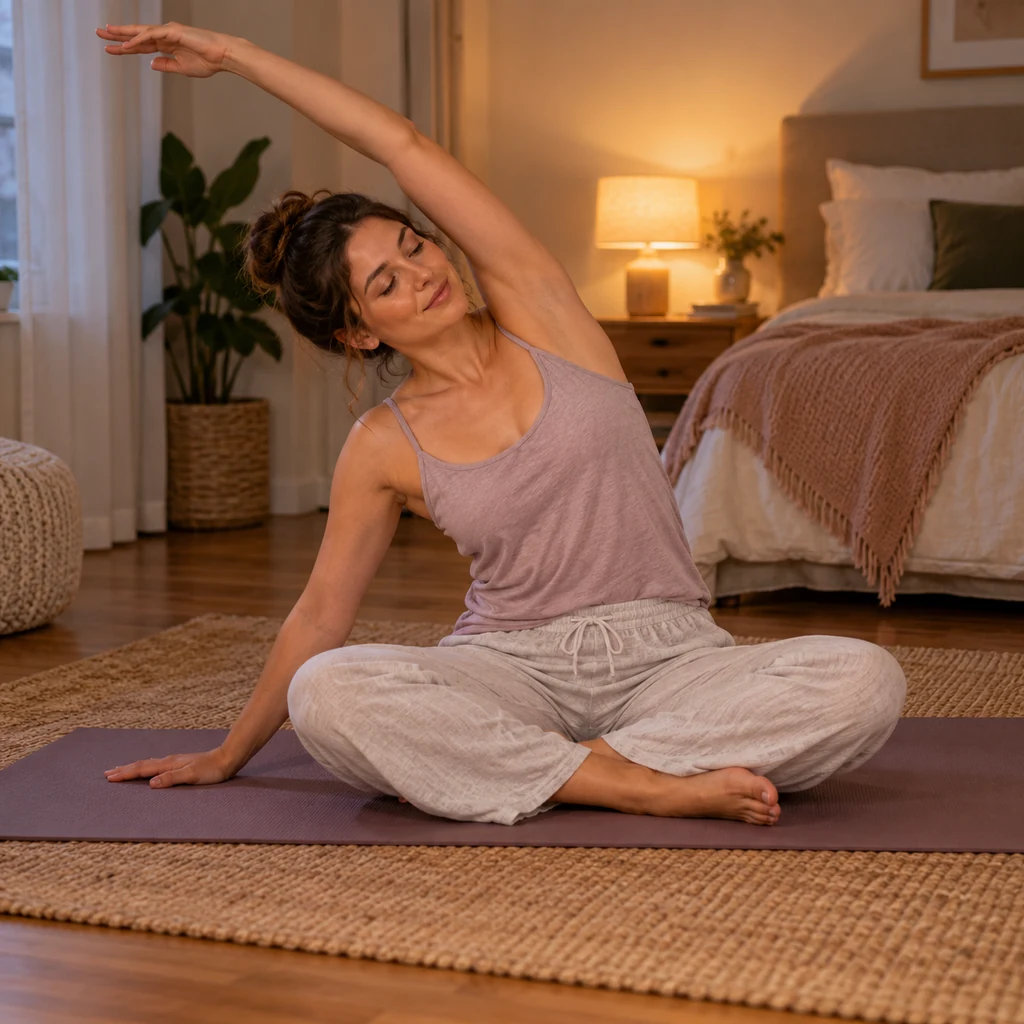
You do not need a workout to reconnect with your body. Sit or stand comfortably, let your shoulders drop, and make a few slow neck and shoulder movements within an easy range. Stretch your hands after typing, circle your ankles, or take an unhurried walk through your home. Keep the effort mild and stop if anything feels sharp, dizzy, or painful.
Try linking movement to an existing cue. Stretch while the kettle warms, after brushing your teeth, or when you turn on the evening lamp. Pairing the action with something that already happens reduces the need to remember it. On nights when you want a longer guided sequence, this 10-minute evening yoga routine offers a simple option; adapt or skip poses as needed.
Slow Your Breathing
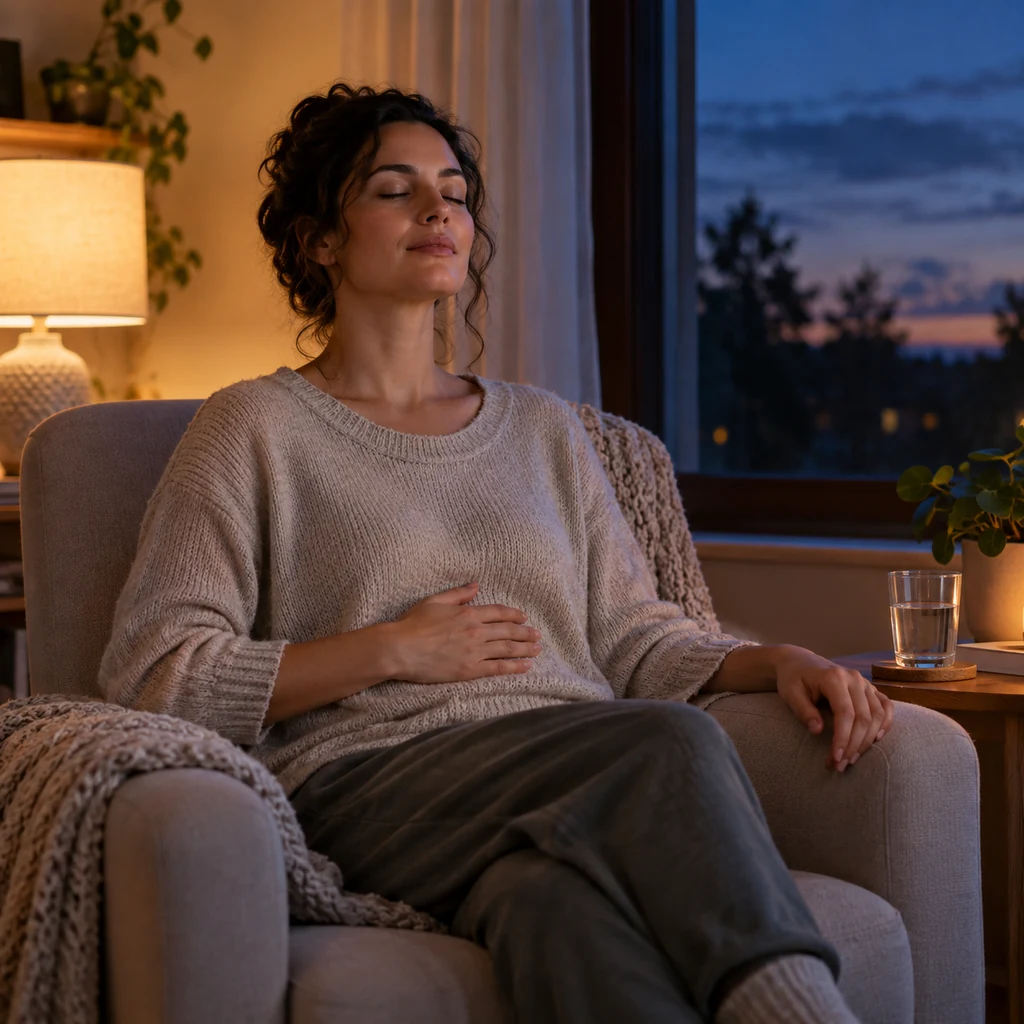
Breathing practice should feel comfortable, not like a test. Sit with support and inhale naturally through your nose if that is easy for you. Let the exhale become slightly longer without forcing it. For example, breathe in for a comfortable count of three and out for four, repeating for five gentle rounds.
If counting creates pressure, simply notice the sensation of air moving or the rise and fall beneath your hand. Thoughts will still appear; the practice is to return your attention without judging yourself. Stop and resume normal breathing if you feel light-headed or uncomfortable. Even one minute can serve as a pause between stimulation and the rest of your night.
Clear Mental Clutter
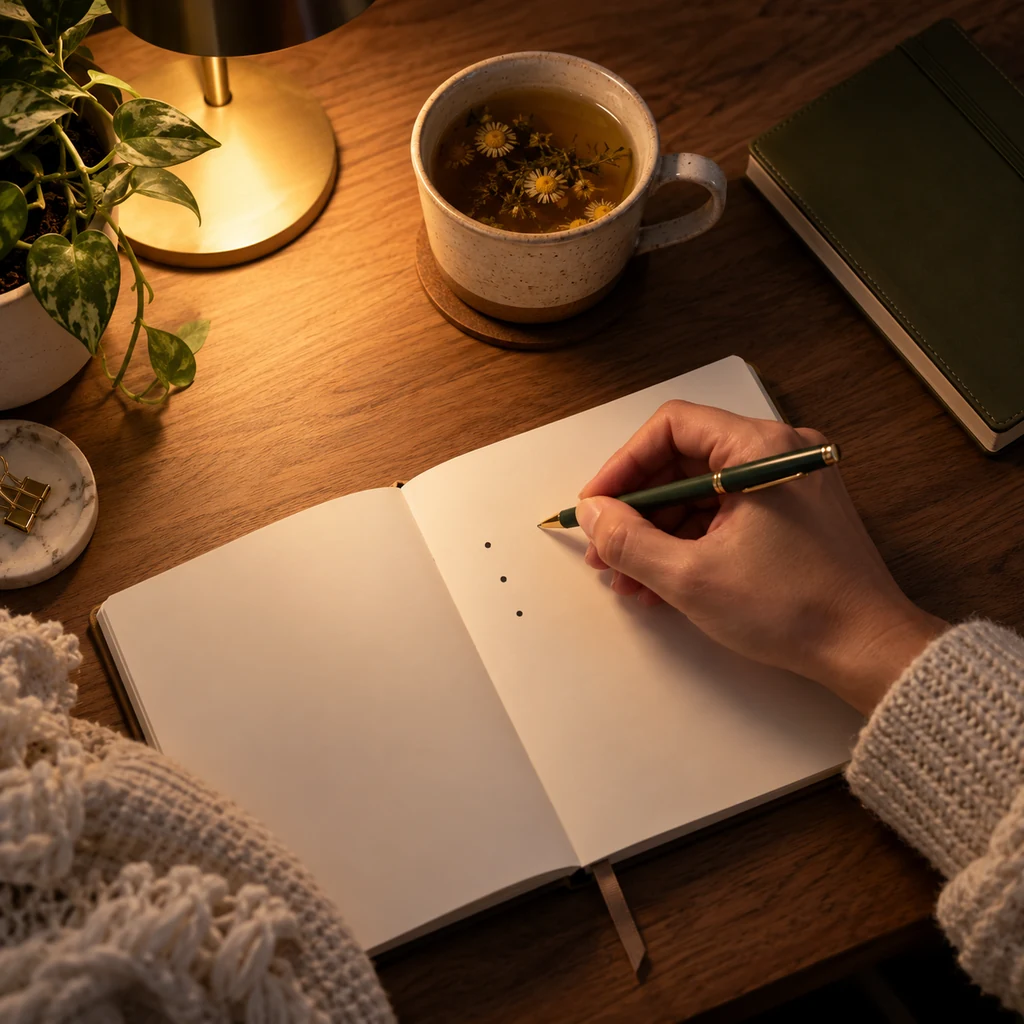
Use a notebook to empty your mental inbox. Divide a page into three quick prompts: what is still on my mind, what can wait until tomorrow, and what went well today? Write fragments rather than polished sentences. The goal is to capture thoughts, not analyze every one of them.
Keep this step brief—three to five minutes is enough. End by choosing one small priority for the morning, then close the notebook. If you enjoy a warm drink, choose a caffeine-free option that suits you; check ingredients and possible medication interactions when relevant. The drink is a comforting cue, not a treatment. For an even shorter sequence, explore these five-minute night rituals.
Build a Repeatable Bedtime Cue
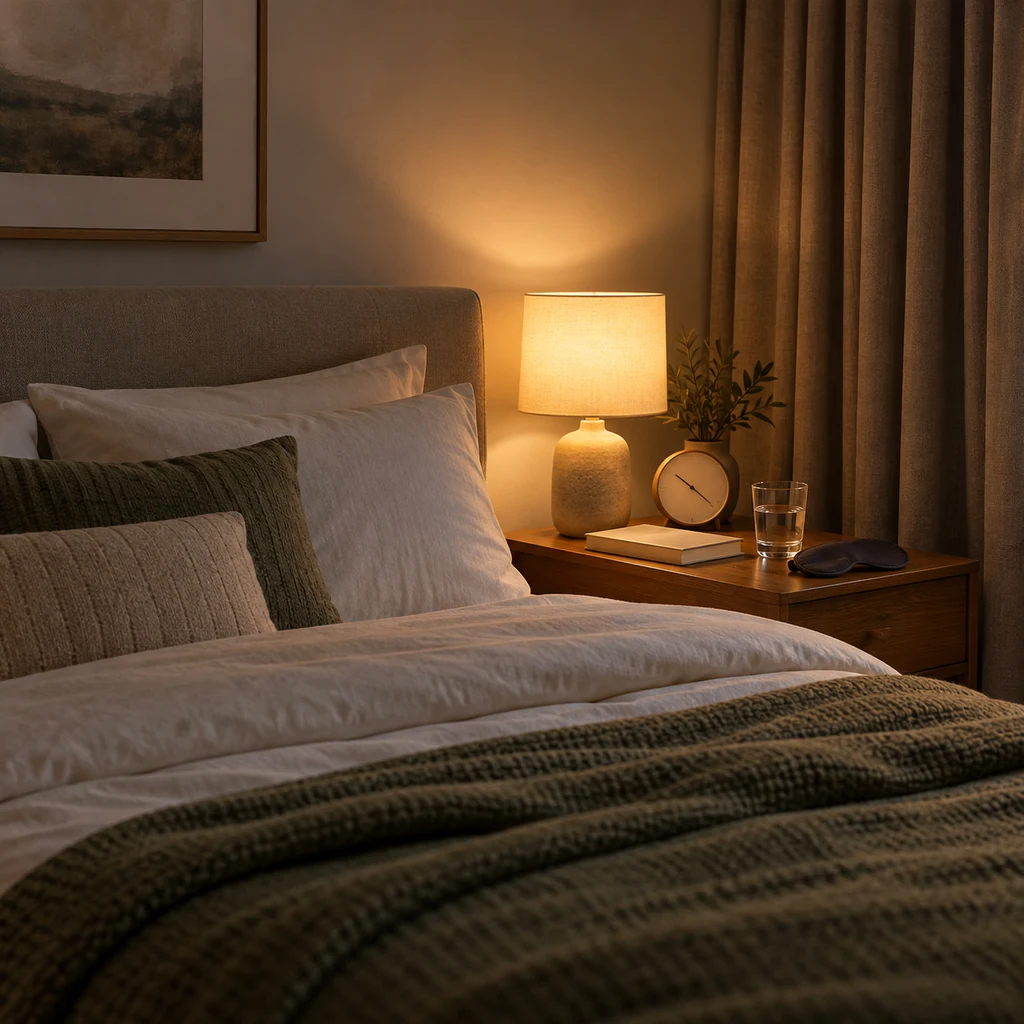
Finish with the same low-effort action most nights. Fill a glass of water, set out tomorrow’s clothes, read two pages, or turn on the same quiet playlist. Choose one cue that fits your real life and keep the necessary items visible. Consistency matters more than creating an ideal atmosphere.
Set a “begin winding down” reminder instead of only an alarm for bedtime. Start fifteen minutes earlier than usual for one week, then notice what helped and what felt unnecessary. Keep the useful pieces and remove friction. If you miss a night, return the next evening without trying to compensate. A sustainable routine is one you can restart easily.
Frequently Asked Questions
How long should an evening relaxation routine take?
Begin with 10 to 15 minutes. A short routine you repeat is usually more practical than a long sequence that feels difficult to maintain. Add time only when it feels genuinely helpful.
What if I still feel mentally busy afterward?
That does not mean the routine failed. Write down the thought, identify whether it needs action tomorrow, and return to one neutral cue such as quiet reading or natural breathing. Persistent sleep or anxiety concerns deserve guidance from a qualified health professional.
Do I need to follow every step in order?
No. Choose a reliable opening cue, one calming middle activity, and a final bedtime cue. Keep that small sequence for several nights before deciding what to change.