
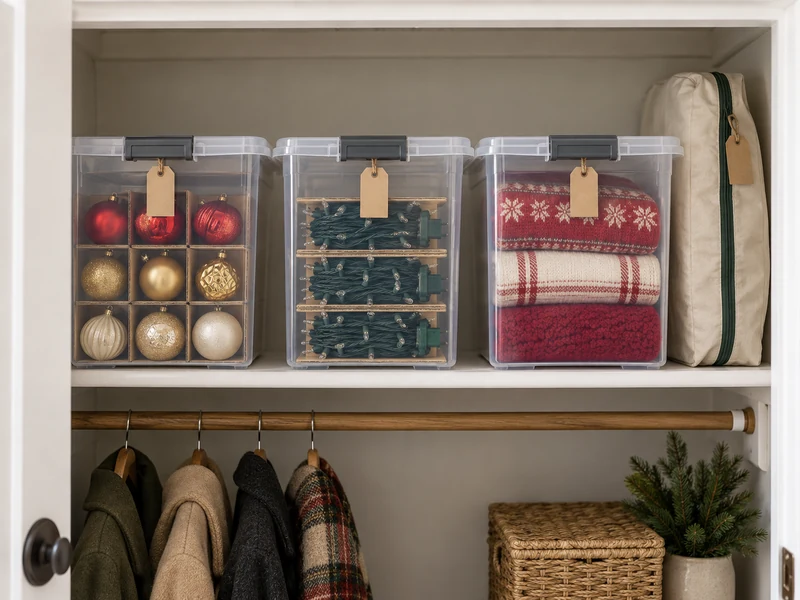
Christmas decoration storage in a small apartment works best when every container has one job. Instead of one oversized “holiday” tote that is difficult to lift and impossible to search, this three-bin system separates fragile ornaments, lights and hardware, and soft decor. A wreath and bulky textiles use the narrow vertical and under-bed spaces that bins cannot use efficiently.
The goal is not to buy more organizers. Measure the space you already have, choose the smallest number of matching containers that fit it, and pack each category so next season’s setup begins without untangling, crushing, or emptying the whole closet.
The 3-Bin Holiday Storage System
- Bin 1: fragile and small ornaments in divided, cushioned cells.
- Bin 2: lights and tree hardware on separate reels, with plugs secured.
- Bin 3: soft decor such as stockings, garland, tree skirt, and pillow covers.
Store the wreath vertically in a slim bag and move bulky washable textiles to a low-profile under-bed bag if the shelf is shallow. This keeps the system flexible without creating a fourth hard bin.
Measure Before You Buy a Bin
Measure shelf width, depth, and the clear height above the shelf. Subtract about one inch from each dimension so lids and latches can move without scraping. Also measure the closet opening; a bin that fits the shelf may not turn through a narrow door.
Choose medium containers you can lift safely when full. Three bins of the same footprint stack and align better than assorted shapes. Clear sides help with identification, but a simple exterior inventory card is still useful because items in the center may be hidden.
Bin 1: Protect Ornaments With Removable Dividers
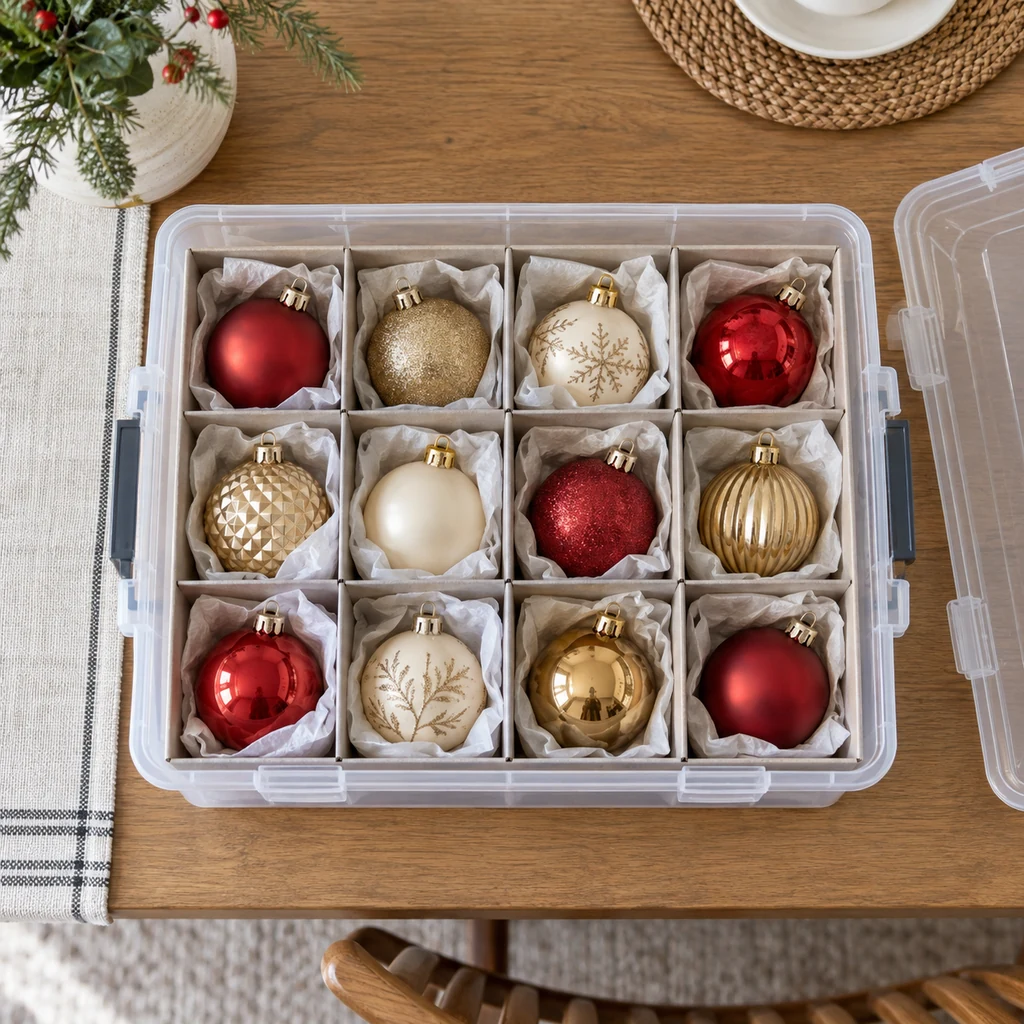
Build a removable grid from corrugated cardboard or use an ornament tray sized to the bin. Put the heaviest, least delicate pieces on the bottom. Wrap sentimental or glass ornaments individually with acid-free tissue, then place one ornament per cell. Do not force oversized pieces into small compartments.
Fill empty movement space with crumpled tissue rather than overpacking the entire bin. Place hooks in a small closed pouch so they cannot scratch finishes. Photograph the completed layer before adding a second removable tray; the photo becomes a quick packing map next year.
Bin 2: Wind Each Light Strand on Its Own Reel
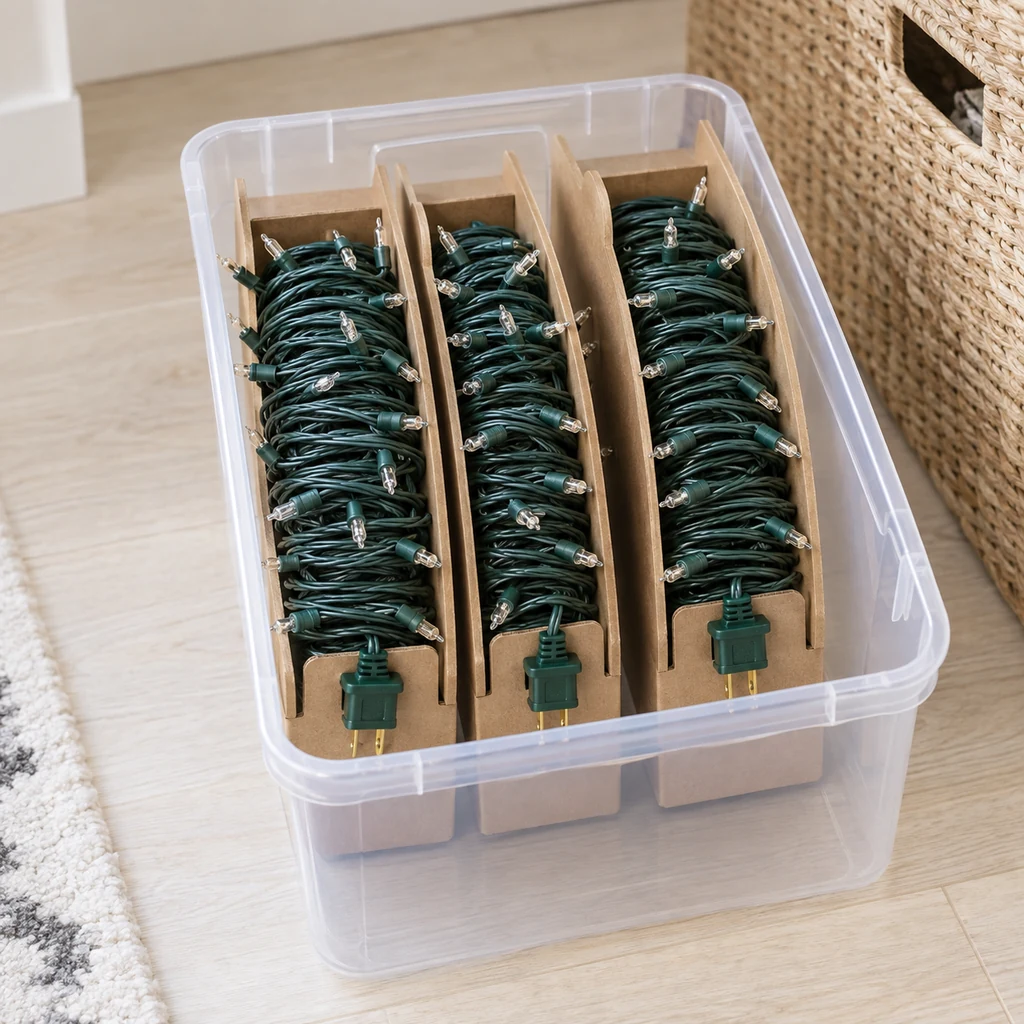
Test every strand before storage and unplug it. Cut sturdy cardboard into rectangles that fit upright inside the bin. Add a notch at each short end, secure the first plug in one notch, wind the cord in even rows, and secure the final end in the opposite notch. Never wrap so tightly that the wire bends sharply.
Keep spare bulbs, fuses, extension cords, ornament hooks, and the tree stand hardware in separate zip pouches. Label the pouches by function instead of mixing loose parts at the bottom. Batteries should come out of battery-powered decor before storage to reduce leakage risk.
Bin 3: Compress Soft Decor Without Creasing It
Wash or spot-clean washable stockings, pillow covers, and the tree skirt according to their care labels, then let everything dry completely. Fold textiles to the bin’s width and place the heaviest pieces at the bottom. Loose ribbon should be wound around flat cards instead of folded into sharp creases.
Avoid vacuum-compressing structured stockings, velvet ribbon, faux greenery, or anything with glued embellishments. Compression can permanently flatten pile and bend decorations. Reserve vacuum bags for plain washable blankets only.
Store the Wreath and Bulky Textiles Vertically
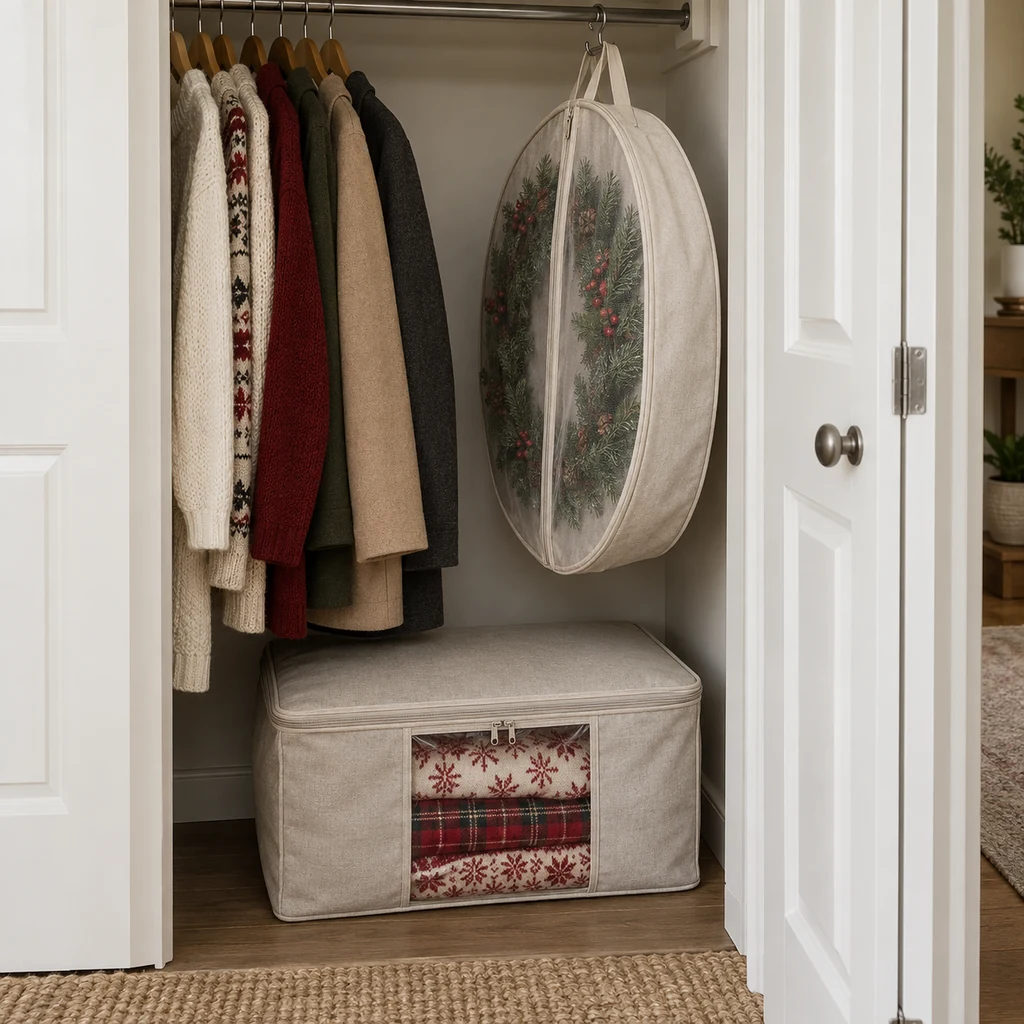
Place a fully dry wreath in a breathable or zippered wreath bag and hang it from a strong rail hook rated for the load. Make sure it does not crush everyday coats or prevent the closet door from closing. If hanging is not possible, store it upright beside the bins with a rigid support so it cannot slump.
Use a zippered under-bed bag for holiday pillow covers and lightweight throws. Slide in a simple inventory card facing the clear window. Do not place fragile ornaments or candles under the bed where the container may be pushed or warmed by a nearby vent.
Pack in Reverse Decorating Order
The first items you need next year should be easiest to reach. If lights go on the tree before ornaments, place the light bin at the shelf edge or on top of the stack. Put the soft-decor bin behind or below it. Within each bin, pack late-stage finishing pieces at the bottom and first-use pieces at the top.
This same “zones plus retrieval order” approach also works for small-closet gift wrap storage. If the entry is your only available storage area, preserve the walking and door-clearance rules from the small-entryway Christmas decor guide.
Create a One-Minute Inventory
Number the bins 1 through 3 and keep a matching note on your phone. List only major groups—“red ornaments, brass bells, tree topper”—rather than every object. Add one photo of each open bin. If you donate or replace something, update the note immediately instead of waiting until January.
Moisture, Heat, and Safety Checks
- Store only fully dry decor to prevent odor and mildew.
- Keep bins away from radiators, water heaters, and direct sun.
- Do not store candles, food, or leaking batteries with textiles.
- Place heavier bins below shoulder height whenever possible.
- Do not overload a shelf; follow its rated capacity and use secure brackets.
- Keep breakable decor away from children and pets.
Frequently Asked Questions
Are clear bins better than opaque bins?
Clear bins make quick identification easier, but either works if the container seals well and the inventory is accurate. Opaque bins can better protect light-sensitive textiles in bright storage areas.
Can I store glass ornaments in egg cartons?
Only very small, lightweight ornaments fit safely. Most egg cartons are too shallow for larger balls and do not protect protruding caps. A properly sized divider grid is more adaptable.
Should I store the Christmas tree in the original box?
Use the original box only while it remains sturdy and dry. Once it tears or collapses, a fitted tree bag is easier to carry and protects branches better.
How do I stop stored decorations from smelling musty?
Clean and dry every item, avoid damp storage areas, and leave breathable materials around wreaths and textiles. Do not use strongly scented products that can transfer odor or stain fabrics.
Small-space storage succeeds when retrieval is part of the plan. Three focused bins, one vertical wreath solution, and a short inventory protect the decorations while giving the closet back to everyday life.