
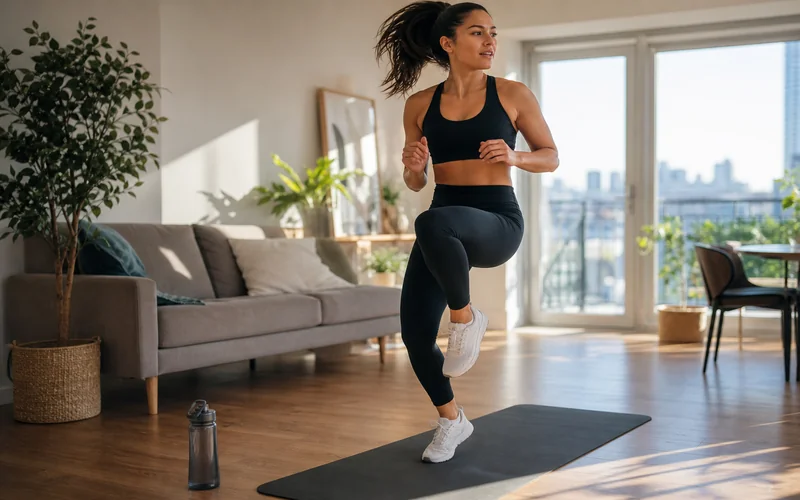
Between back-to-back meetings, school drop-offs, and summer errands, carving out an hour for the gym can feel impossible. The good news: you do not need a treadmill, a class schedule, or a perfect block of free time to raise your heart rate. These simple at-home cardio workouts are built for real life—short sessions you can finish in a living room, hallway, or bedroom before the day runs away from you.
As of June 2026, more Americans are stacking movement into small windows instead of skipping workouts entirely. Whether you have ten minutes before breakfast or a focused half-hour after work, the moves below deliver steady cardiovascular benefits without equipment. Pair them with a consistent routine—like the habit-building tips in our guide to 5 Reasons to Work Out in the Morning—and you will notice better energy, mood, and endurance within weeks.
Why At-Home Cardio Works for Busy Schedules
Cardio training strengthens your heart and lungs, supports healthy blood pressure, and helps manage stress—benefits that matter whether you are chasing kids around the house or closing out a long workweek. At-home sessions remove commute time, membership fees, and the friction of getting out the door.
Research-backed guidelines from the American Heart Association recommend at least 150 minutes of moderate aerobic activity per week. That sounds like a lot until you break it into five 30-minute sessions—or ten quick 15-minute bursts spread across busy days. No-equipment cardio makes that math realistic.
What You Need Before You Start
- Clear floor space roughly the size of a yoga mat
- Supportive athletic shoes or bare feet on a non-slip surface
- A water bottle within reach
- Optional: a timer on your phone
If you are brand new to movement, start with our 10-Minute Full Body Stretch for Beginners to warm up joints before jumping into higher-intensity intervals.
How to Structure a Quick Cardio Session
Think in rounds, not marathons. A practical template for busy schedules:
- Warm-up (2 minutes): March in place, arm circles, gentle side steps
- Work interval (20–25 minutes): Rotate through 3–4 moves below, 30–45 seconds each
- Rest (15–20 seconds): Between moves or rounds as needed
- Cool-down (2–3 minutes): Slow walking and deep breathing
Repeat two to three rounds depending on your window. For even shorter days, try stacking two moves back-to-back—the approach we outline in 10-Minute Home Workouts That Burn.
6 Simple At-Home Cardio Moves (No Equipment)
Each exercise below elevates heart rate, uses large muscle groups, and fits in a small space. Modify intensity by slowing the pace, shortening work intervals, or dropping high-impact variations.
1. Jumping Jacks: A Full-Body Cardio Blast
Watch the three phases below: feet together, jump wide with arms up, then snap back to center. That is one rep.
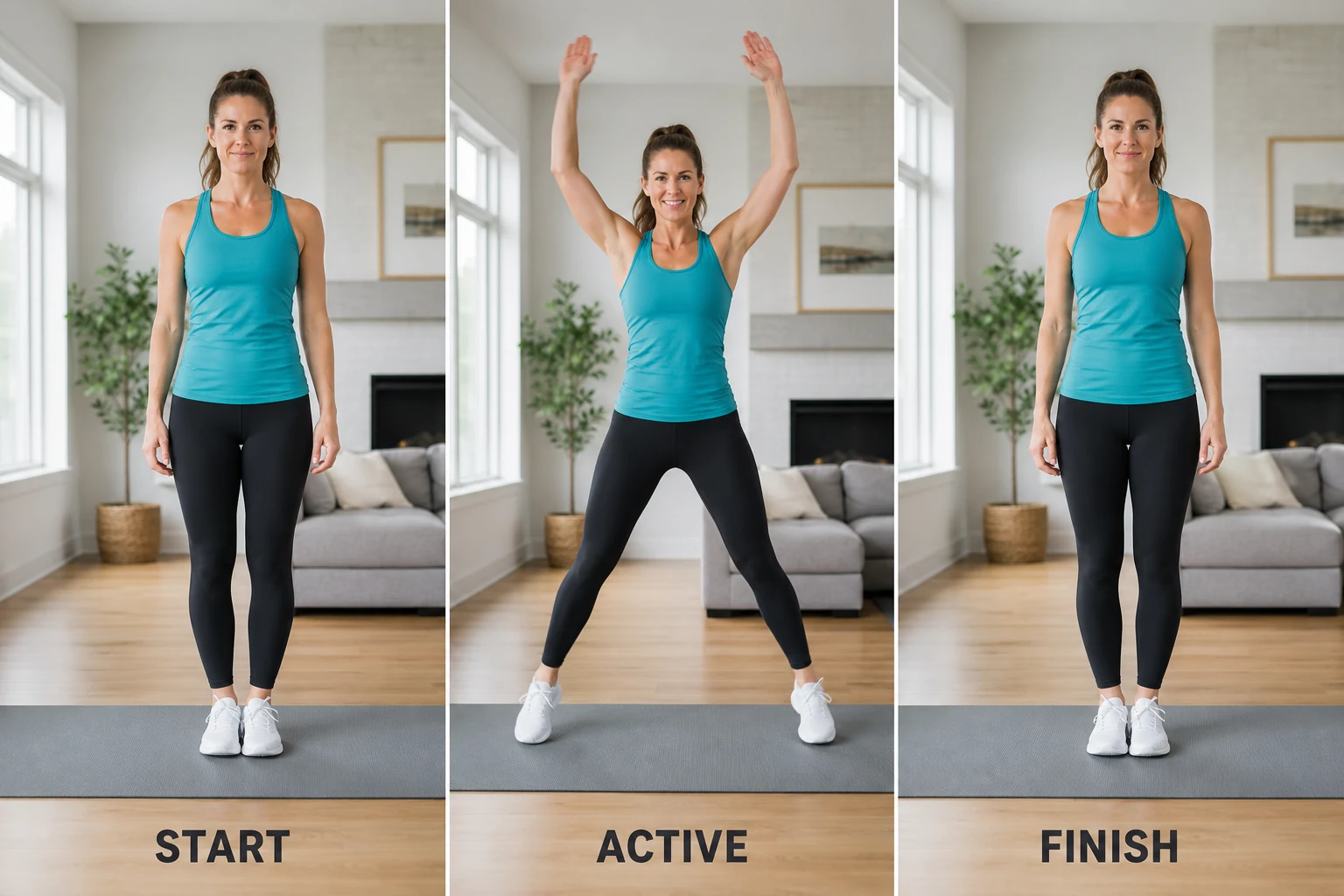
Why it works: Jumping jacks engage the legs, core, and shoulders while driving heart rate up within seconds. They also improve coordination and serve as an excellent warm-up or active recovery between harder moves.
How to do it:
- Stand with feet together and arms at your sides
- Jump your feet out wide while raising arms overhead
- Jump back to the starting position
- Work for 30–45 seconds, rest 15 seconds, and repeat
Low-impact option: Step one foot out at a time instead of jumping.
2. High Knees: Get Your Heart Pumping
Think sprinting in place: lift each knee to hip height while pumping your arms. Alternate legs as fast as you can control.
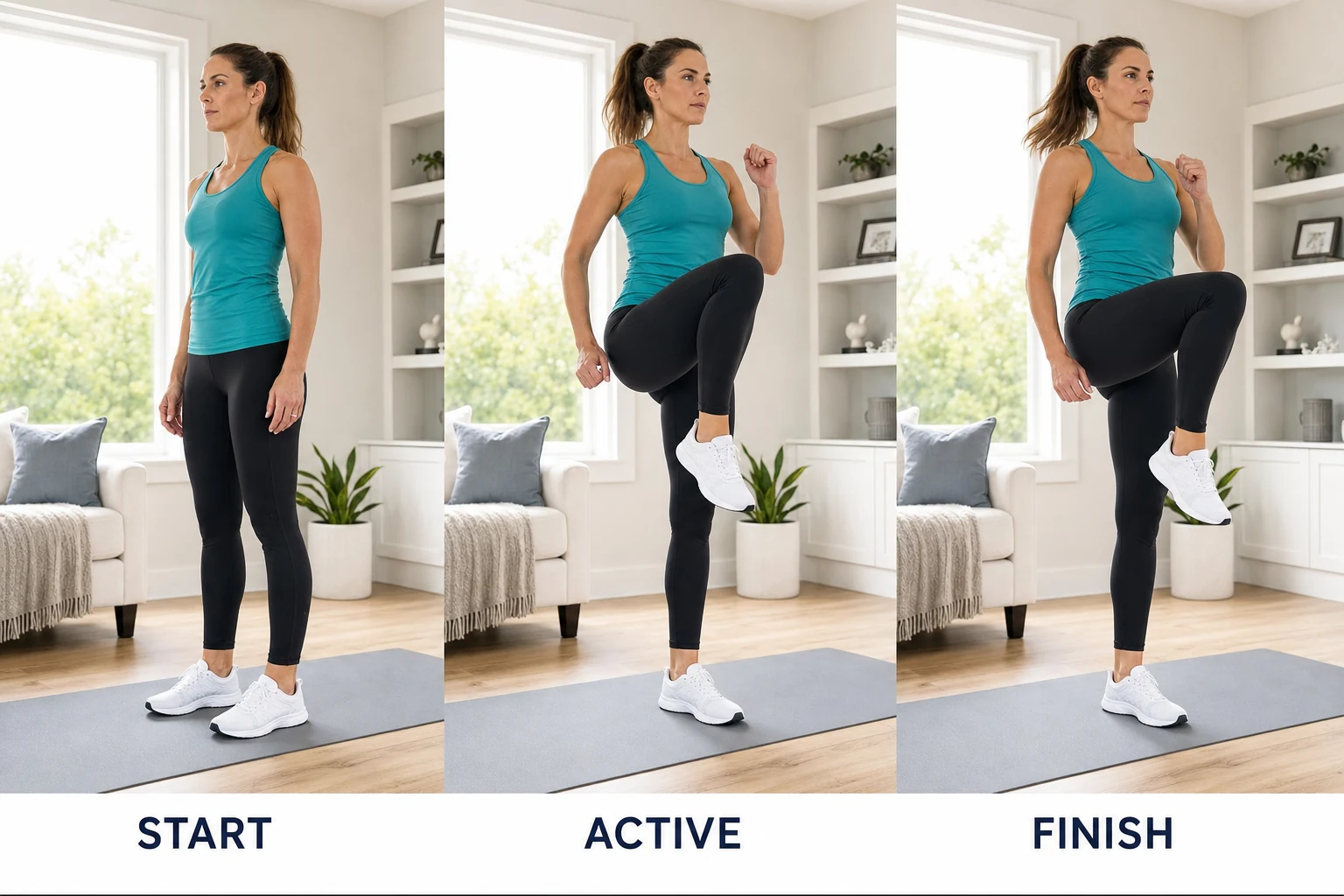
Why it works: This move targets the lower body while challenging cardiovascular endurance and core stability. Quick foot turnover also sharpens coordination.
How to do it:
- Stand tall, feet hip-width apart
- Drive one knee toward your chest, then quickly switch legs
- Pump your arms as if sprinting
- Keep your core braced and land softly on the balls of your feet
- Perform 30–45 seconds, rest 15–20 seconds
3. Mountain Climbers: Cardio Plus Core Strength
Hold a strong plank, then pull one knee toward your chest and switch fast—like running horizontally across the floor.
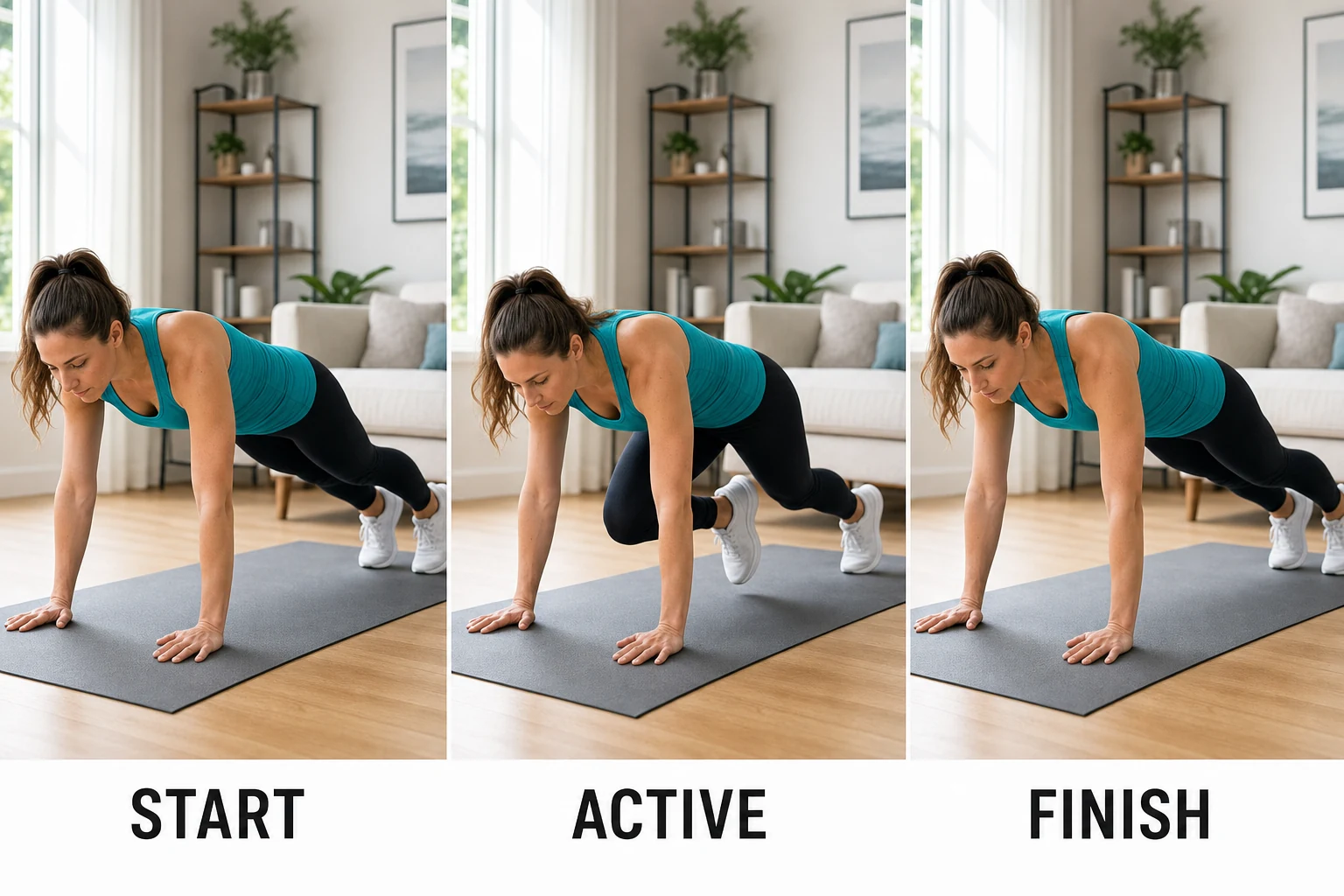
Why it works: Alternating knee drives fire the core, shoulders, and hip flexors while keeping heart rate elevated. They are a smart choice when you want maximum return per minute.
How to do it:
- Start in a high plank—wrists under shoulders, body in one straight line
- Drive one knee toward your chest, then switch legs quickly
- Keep hips level and avoid bouncing
- Continue 30–45 seconds, rest 15 seconds
After leg-heavy intervals, balance your week with 5 Simple Core Workout Routines for deeper abdominal and back support.
4. Burpees: Full-Body Power Move
One burpee flows stand → squat → plank → jump. Move steadily at first; add speed only when form stays clean.
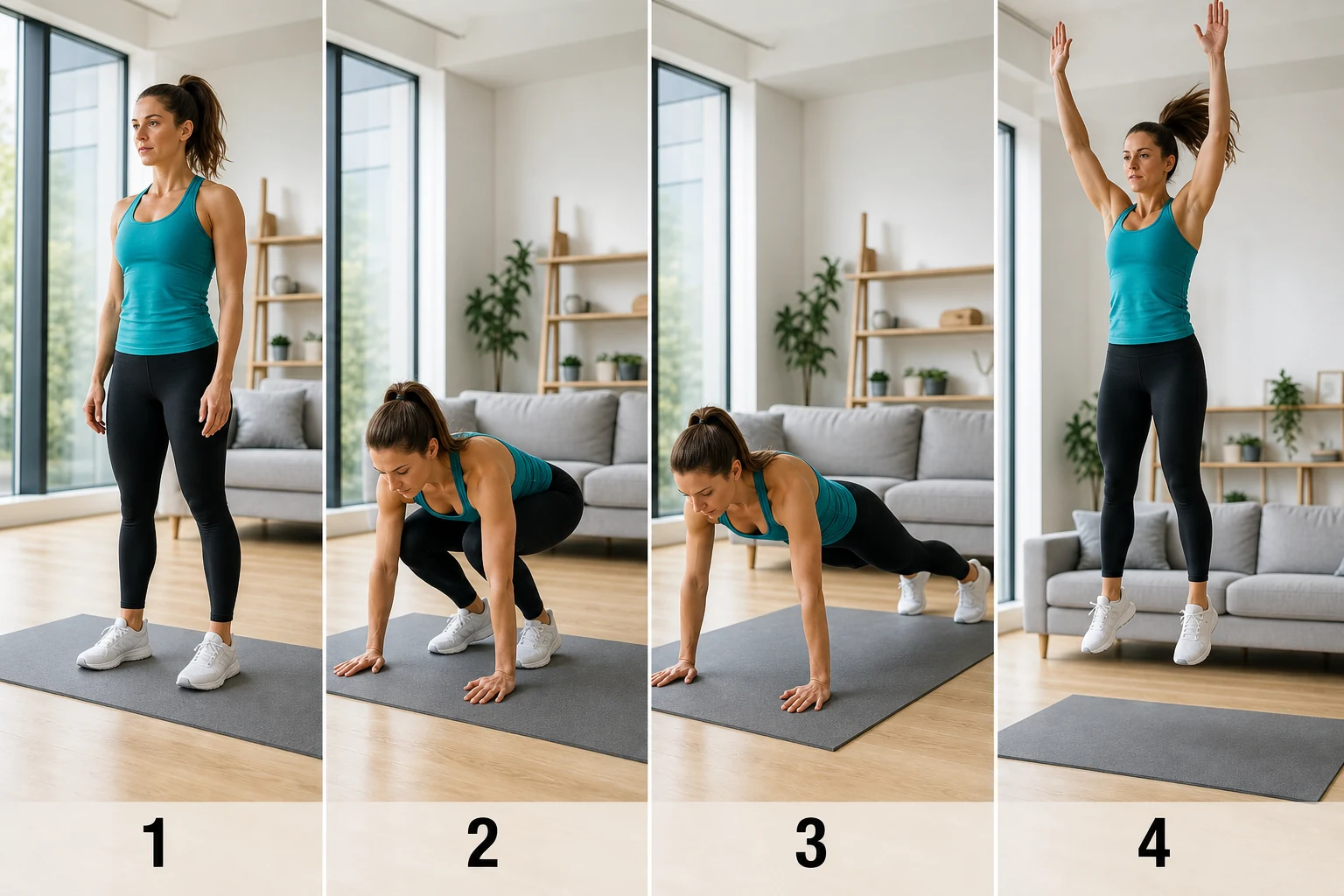
Why it works: Burpees recruit legs, core, chest, and arms while spiking heart rate. They are ideal when you want a short, high-output session.
How to do it:
- Stand with feet shoulder-width apart
- Squat down and place hands on the floor
- Jump or step feet back to a plank
- Optional: add one controlled push-up
- Jump or step feet forward, then stand and reach overhead
- Work 20–30 seconds if new to burpees; build toward 45 seconds
Beginner modification: Step back and forward instead of jumping, and skip the push-up.
5. Skater Jumps: Agility and Balance
Leap side to side like a speed skater—land softly on one foot while the other leg sweeps behind for balance.
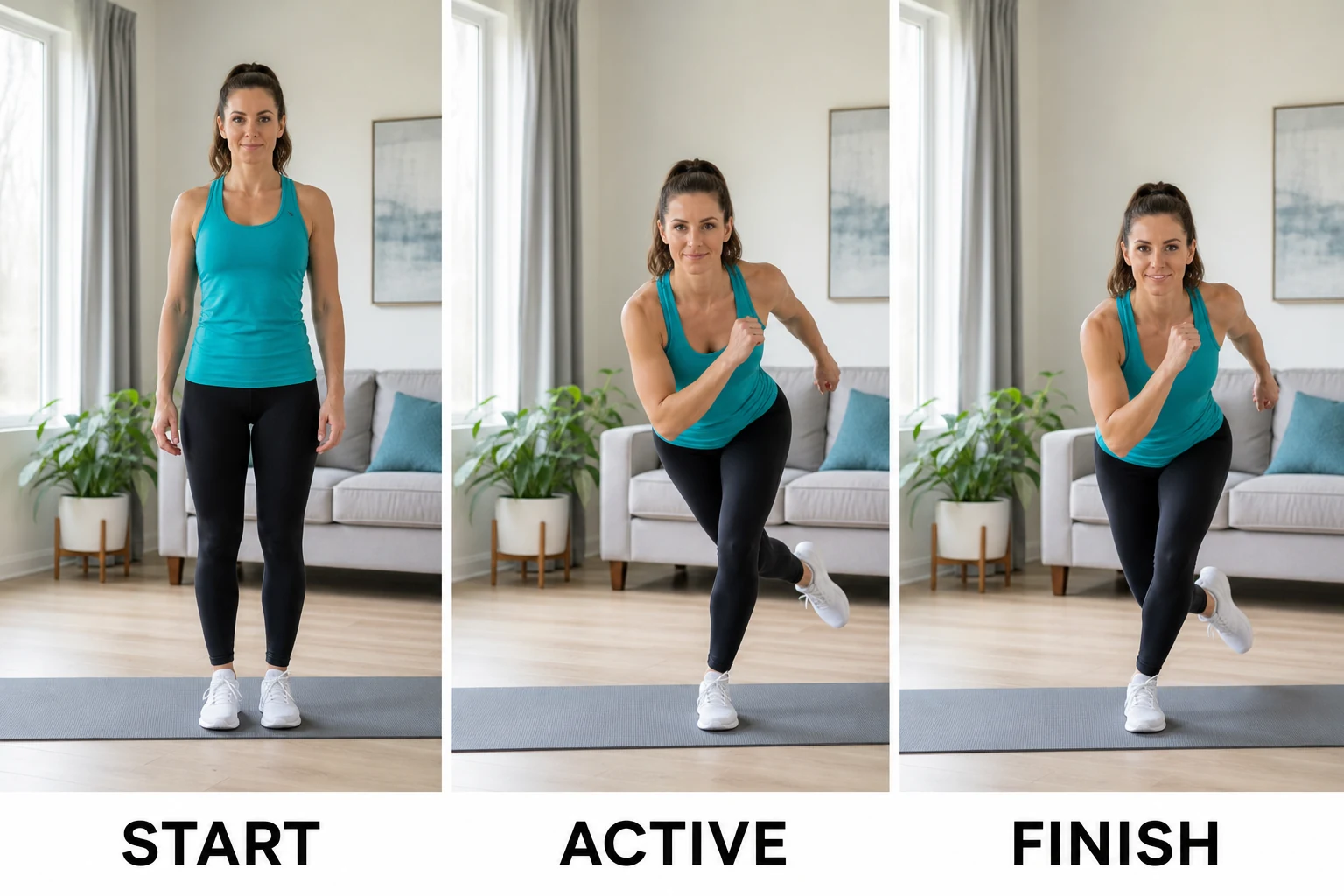
Why it works: Lateral hops strengthen stabilizing muscles around the knees and hips while keeping heart rate high. The skating motion also breaks monotony during home workouts.
How to do it:
- Stand with feet hip-width apart
- Leap sideways, landing on one foot with the opposite leg sweeping behind
- Immediately leap to the other side
- Swing arms naturally for momentum
- Continue 30–45 seconds, rest 15–20 seconds
6. Shadow Boxing: Burn Calories and Relieve Stress
Keep your guard up, rotate through your core as you throw punches, then snap back to guard between reps.
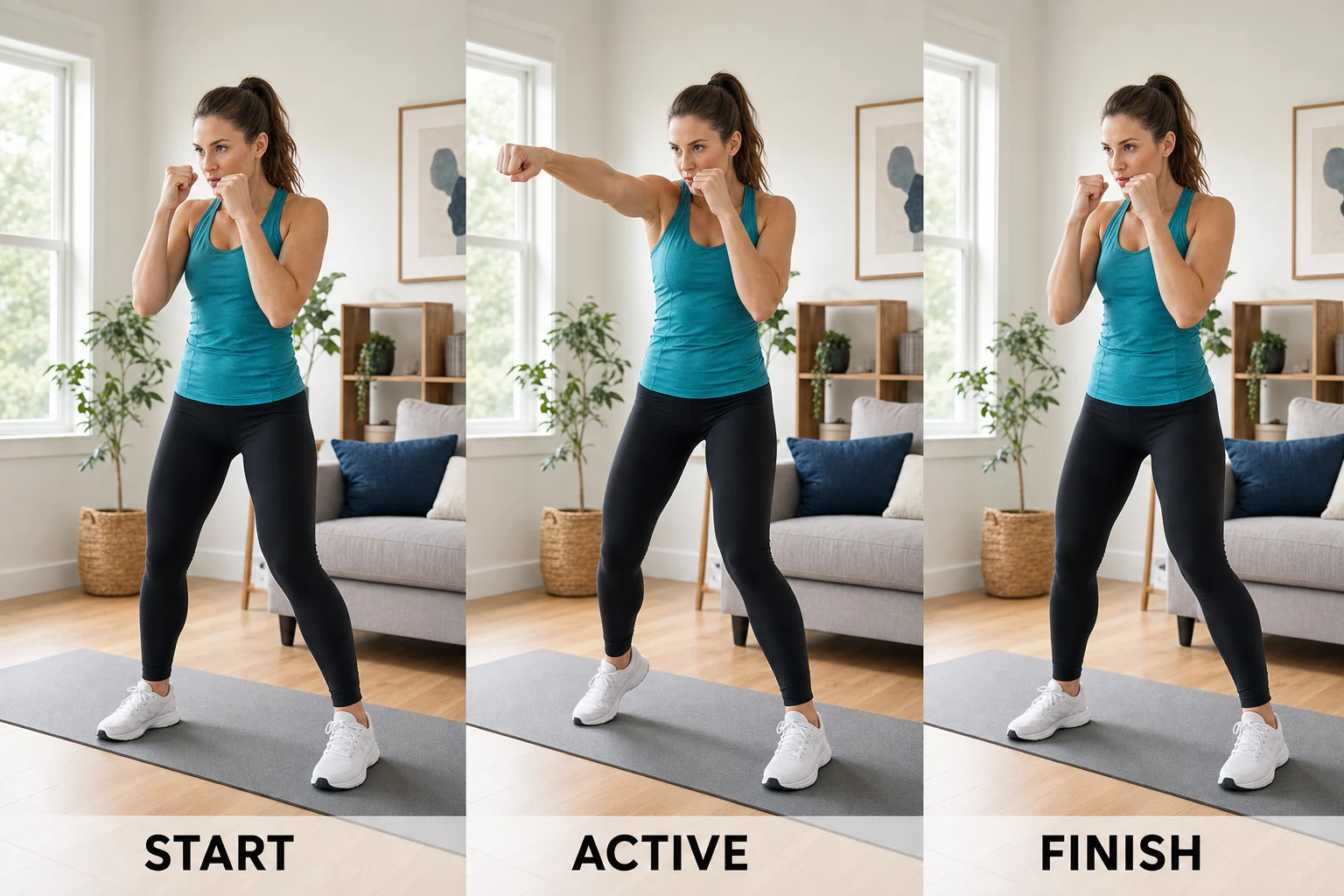
Why it works: Fast punches engage the core, shoulders, and legs while improving coordination. Many people also find the rhythmic movement mentally refreshing after a stressful day.
How to do it:
- Stand with feet hip-width apart, knees slightly bent
- Keep hands near your face in a light guard position
- Alternate jabs, crosses, and uppercuts at a steady pace
- Engage your core with every punch
- Continue 30–45 seconds, rest 15 seconds
Sample Workouts by Time Available
Match the plan to your calendar—not the other way around.
10-Minute Express Session
Round 1: Jumping jacks (40 sec) → rest (20 sec) → high knees (40 sec) → rest (20 sec) → mountain climbers (40 sec). Repeat once.
20-Minute Balanced Session
Complete three rounds: jumping jacks, skater jumps, burpees (modified if needed), shadow boxing. Rest 30 seconds between rounds.
30-Minute Endurance Builder
Alternate 3-minute work blocks with 1-minute active recovery (marching in place). Cycle through all six moves twice. Finish with gentle stretching.
For more variety when schedules shift week to week, bookmark 5 Easy At-Home Workouts for Busy People—another resource designed around the same no-excuses mindset.
Tips to Stay Consistent When Life Gets Loud
Short workouts only work if you actually do them. These habits help:
- Schedule it like a meeting: Block 15 minutes on your calendar three to five days a week
- Prep your space the night before: Roll out a mat, lay out shoes, charge your phone
- Track streaks, not perfection: Five minutes beats zero on chaotic days
- Pair cardio with something enjoyable: A favorite playlist or podcast makes time fly
- Progress gradually: Add five seconds per interval each week instead of jumping to hour-long sessions
Consistency matters more than intensity spikes. A moderate routine you repeat beats an ambitious plan you abandon by Thursday.
Frequently Asked Questions
Can I get a good cardio workout at home without equipment?
Yes. Bodyweight moves like jumping jacks, high knees, mountain climbers, and burpees elevate heart rate effectively. The key is working at a pace that feels challenging but sustainable—roughly a 7 out of 10 effort for most intervals.
How long should an at-home cardio session last for busy schedules?
Ten to thirty minutes is enough when intensity stays moderate to high. Research supports breaking weekly aerobic goals into shorter bouts, so two 15-minute sessions on a packed day still count toward your total.
How often should I do at-home cardio each week?
Aim for three to five sessions weekly, alternating harder and easier days. Include at least one rest or gentle stretching day to let muscles recover—especially if you add strength work alongside cardio.
Are jumping exercises safe on apartment floors?
Low-impact modifications—step jacks, marching high knees, step-back burpees—reduce noise and joint stress. Place a folded yoga mat on carpet or use a dedicated workout mat to soften landings.
Should I do cardio before or after strength training?
Either order works. If building strength is the priority, lift first while muscles are fresh and finish with a short cardio burst. If heart health or calorie burn is the main goal, start with cardio.
What should I eat before a quick morning cardio session?
For sessions under 30 minutes, many people do fine with water alone. If you feel lightheaded, try half a banana or a few crackers 20–30 minutes beforehand. Hydrate afterward and eat a balanced breakfast with protein and fiber.
Final Thoughts: Cardio That Fits Real Life
You do not need a gym membership, fancy machines, or a wide-open afternoon to improve cardiovascular fitness. These at-home cardio workouts for busy schedules prove that small, consistent efforts compound. Pick two or three favorite moves, set a timer, and show up—even when the day is messy.
Start with one ten-minute session this week. Add a day. Then another. By the end of June 2026, you may look back and realize the busiest season of your year was also the season you finally made fitness stick—no commute required.