
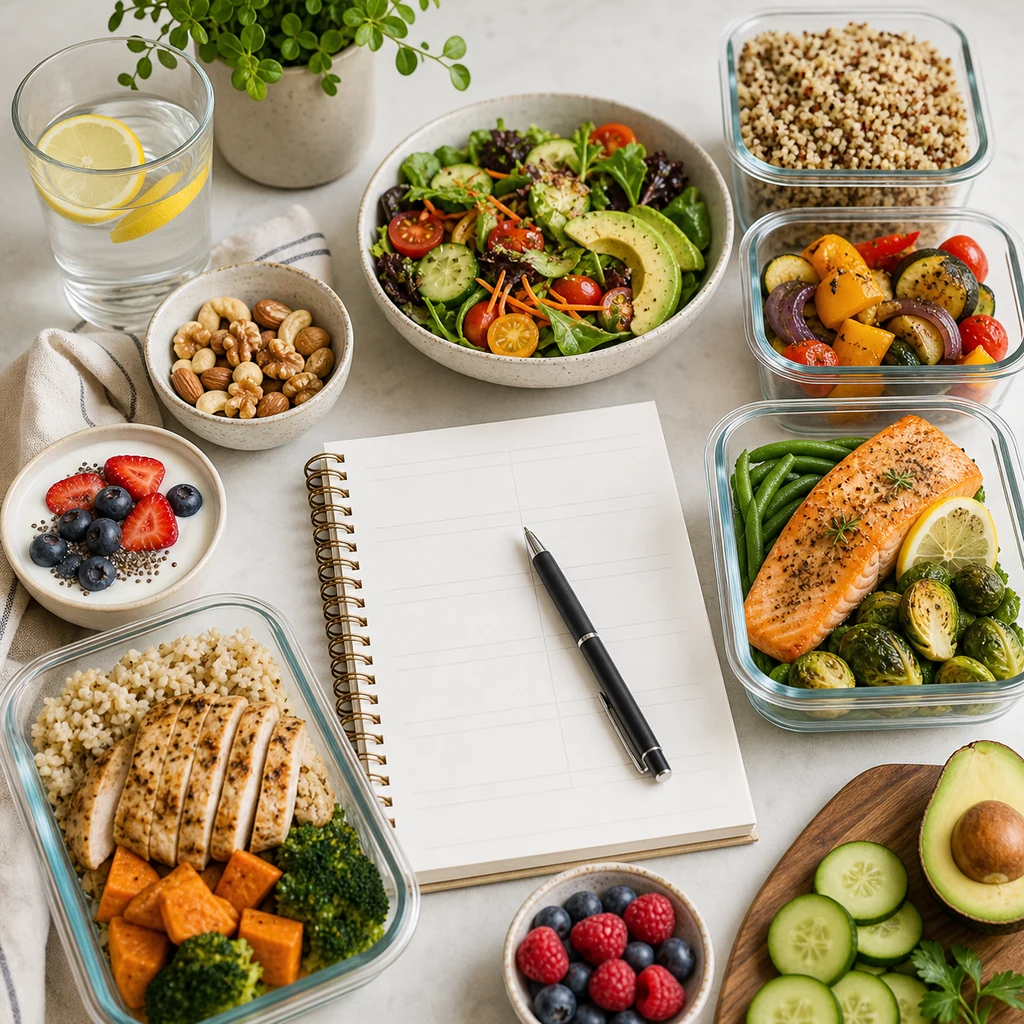
14 Day Clean Eating Meal Plan is designed for readers who want two weeks of simple, balanced meals without turning food into a strict set of rules. The plan focuses on familiar whole-food meals: vegetables, fruit, whole grains, beans, eggs, yogurt, fish, poultry, nuts, seeds, and healthy fats. It avoids extreme promises and keeps the goal practical: make daily meals easier to choose, shop for, and prepare.
This is general meal-planning information, not medical advice or a treatment plan. Anyone managing a medical condition, pregnancy, disordered eating history, food allergies, or a prescribed diet should use a clinician or registered dietitian for personal guidance.
What Clean Eating Means in This Plan
Clean eating can mean different things online, so this plan uses a grounded definition: choose mostly minimally processed foods, build balanced plates, drink water more often than sweet drinks, and keep meals realistic enough to repeat. It does not require perfection, expensive specialty products, or cutting out entire food groups unless a person has a personal medical reason to do so.
The structure lines up with the basic balanced-plate approach used by public nutrition resources such as CDC healthy eating guidance also points toward vegetables, fruits, whole grains, lean proteins, and water as everyday habits.
How to Use the 14-Day Plan
Use the plan as a framework, not a test. If a meal does not fit your budget, schedule, culture, or appetite, swap it for a similar option. A chicken salad can become a chickpea salad, salmon can become tofu or beans, and quinoa can become brown rice or sweet potato.
Portion Guidance Without Counting
A simple plate works for most meals: fill about half the plate with vegetables or fruit, add a palm-sized portion of protein, include a whole grain or starchy vegetable, and finish with a small amount of fat such as olive oil, avocado, nuts, or seeds. Portions can be adjusted for hunger, activity level, and personal needs.
How to Handle Swaps
Keep swaps in the same category when possible. Replace one protein with another protein, one whole grain with another whole grain, and one vegetable with another vegetable. This keeps the plan balanced while still flexible.
Simple Grocery List
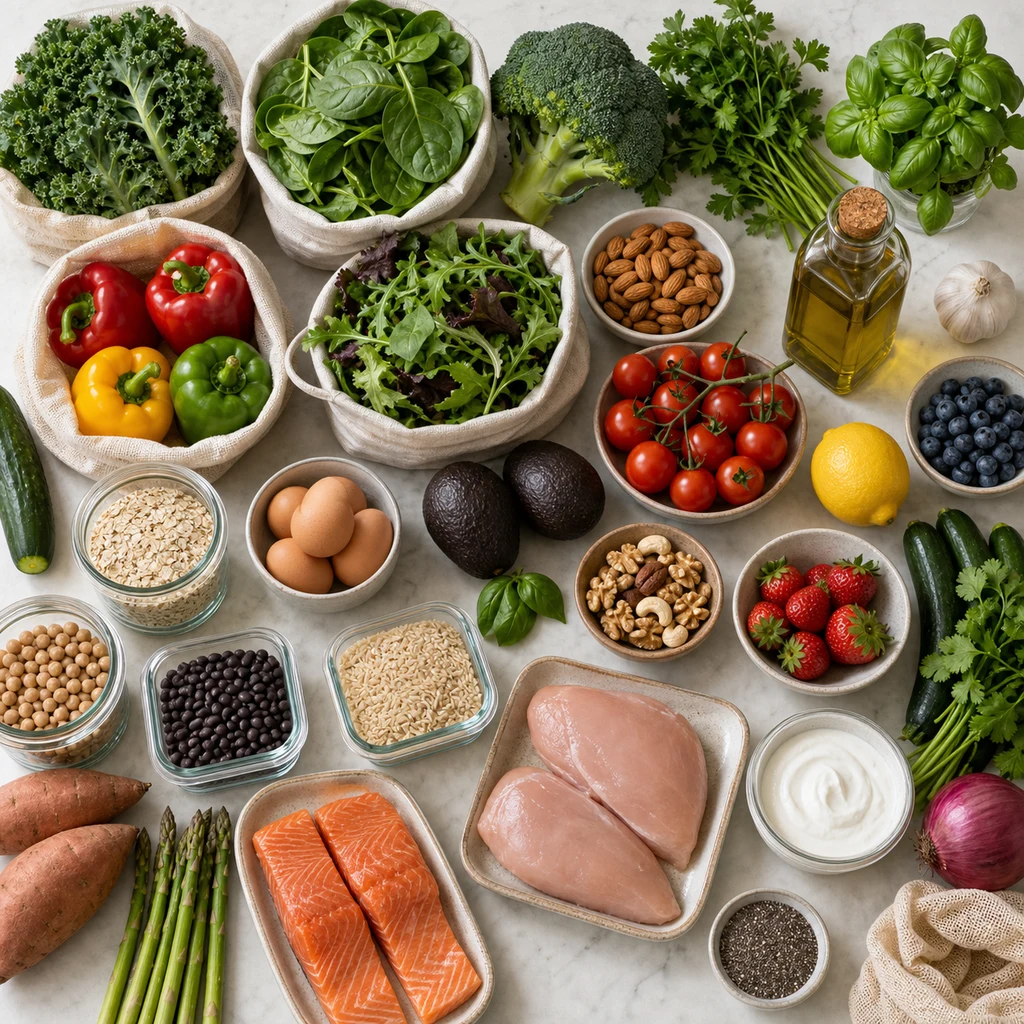
Shopping is easier when ingredients repeat across several meals. This list covers the plan without requiring a different set of groceries every day.
- Produce: spinach, kale, broccoli, cucumbers, carrots, bell peppers, tomatoes, sweet potatoes, avocados, berries, apples, bananas, pears, lemons, and fresh herbs.
- Proteins: eggs, Greek yogurt, cottage cheese, chicken breast, turkey, salmon, tuna, shrimp, cod, chickpeas, black beans, lentils, tofu, and hummus.
- Whole grains and starches: oats, quinoa, brown rice, whole-grain tortillas, whole-grain bread, and potatoes.
- Fats and flavor: olive oil, nuts, seeds, almond butter, tahini, vinegar, spices, garlic, mustard, and low-sugar sauces.
Budget-Friendly Shopping Notes
Clean eating does not have to mean buying every item fresh, organic, or specialty. Frozen vegetables, frozen berries, canned beans, canned tuna, oats, brown rice, lentils, eggs, and seasonal produce can keep the plan practical. Rinse canned beans if you want a milder flavor and less salty liquid in bowls or soups.
Buy ingredients that can work in more than one meal. Spinach can go into smoothies, egg scrambles, salads, wraps, and grain bowls. Greek yogurt can work for breakfast, dips, and snack bowls. Roasted sweet potatoes can show up at dinner, in lunch bowls, or beside eggs.
Meal Prep Before Day One
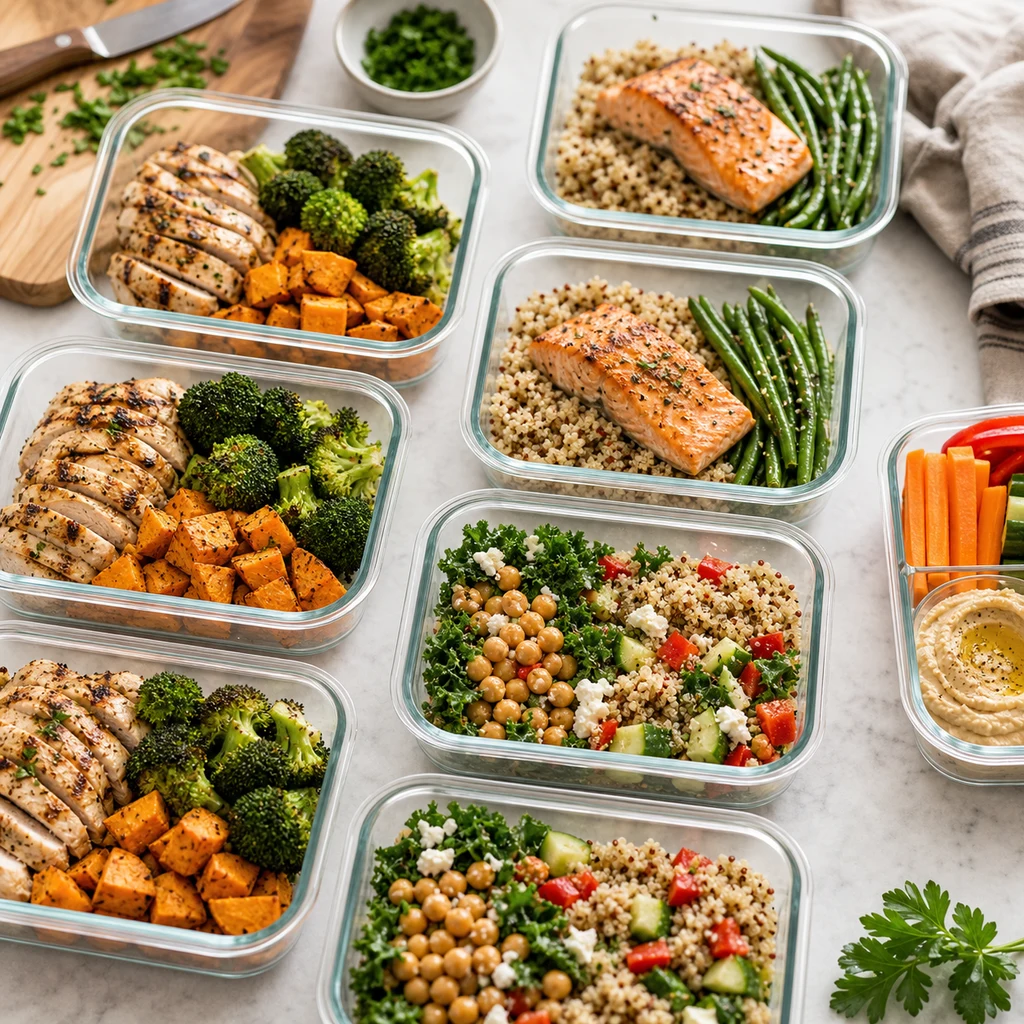
Prep does not need to take over the weekend. Aim for 60 to 90 minutes. Cook one or two grains, roast a tray of vegetables, wash and dry greens, boil a few eggs, portion snack vegetables, and make one simple dressing.
Do not fully assemble every salad at once. Store greens, wet toppings, dressing, and crunchy ingredients separately so meals still taste fresh on day three or four. Cooked proteins and grains should be cooled promptly and stored in covered containers.
Prep Once, Use Many Ways
The easiest way to avoid boredom is to prep plain building blocks rather than fully finished meals. A tray of roasted broccoli, peppers, and sweet potatoes can become a salmon dinner, a chicken bowl, or a side for eggs. Quinoa can become a lunch bowl one day and a warm dinner base the next.
Keep at least one quick backup meal available. Eggs with spinach, tuna over greens, Greek yogurt with fruit, or a bean-and-rice bowl can save the plan on a busy night without needing takeout or a complicated recipe.
Week One Meal Plan
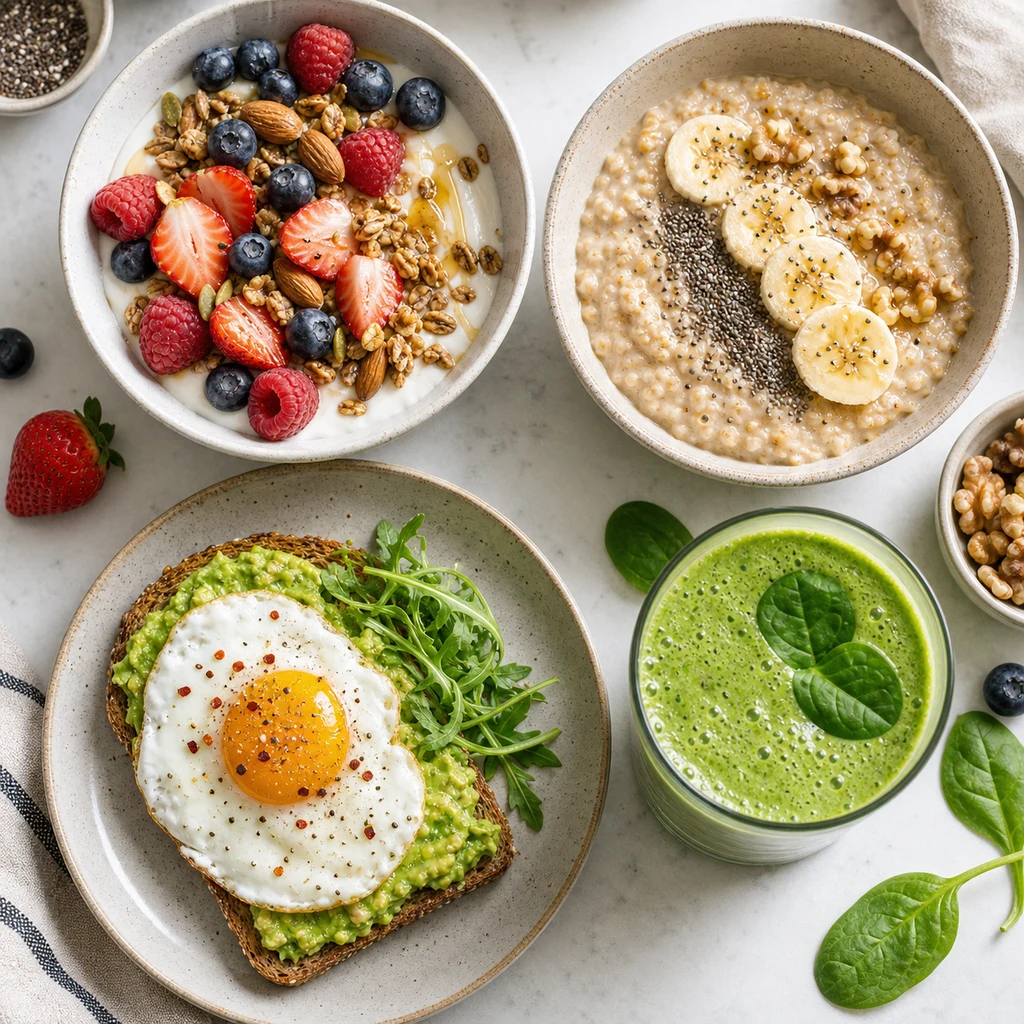
Days 1 to 3
- Day 1: avocado toast with egg and berries; almonds with an apple; grilled chicken salad with spinach and tomatoes; carrots with hummus; baked salmon with quinoa and broccoli.
- Day 2: Greek yogurt with berries and oats; celery with almond butter; turkey avocado wrap; boiled egg; shrimp stir-fry with brown rice and mixed vegetables.
- Day 3: oatmeal with chia and banana; walnuts with a pear; quinoa bowl with roasted chickpeas, kale, cucumber, and tahini; cucumber with yogurt dip; grilled chicken with sweet potato and spinach.
Days 4 to 7
- Day 4: green smoothie with spinach, mango, yogurt, and ground flax; rice cake with peanut butter; tuna salad over greens; berries; turkey meatballs with roasted vegetables.
- Day 5: scrambled eggs with spinach and tomatoes; apple with cottage cheese; lentil soup with side salad; carrots and hummus; cod with potatoes and green beans.
- Day 6: overnight oats with berries; boiled egg with fruit; chicken quinoa bowl; nuts and cucumber slices; turkey lettuce wraps with brown rice.
- Day 7: yogurt bowl with banana and seeds; hummus with bell peppers; salmon salad with avocado; pear with almonds; vegetable chili with beans and a side of greens.
Week Two Meal Plan
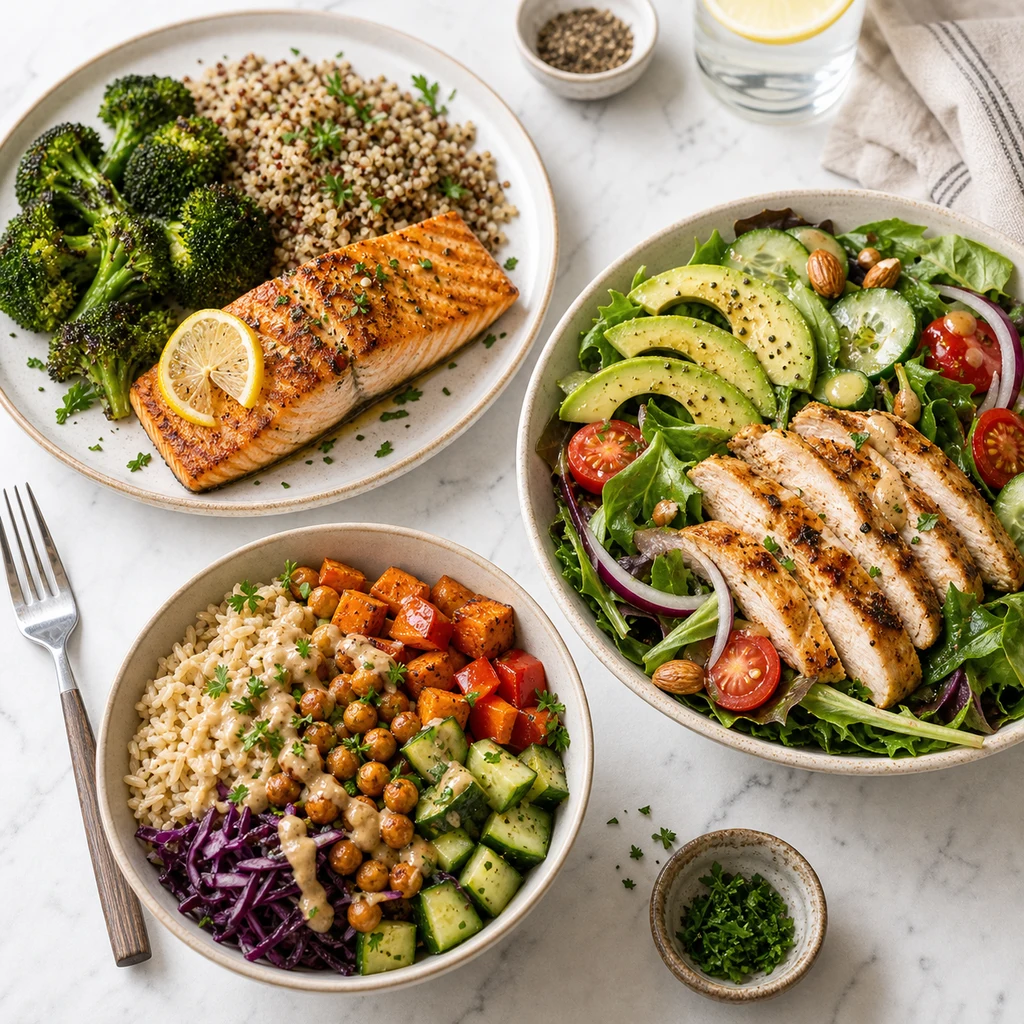
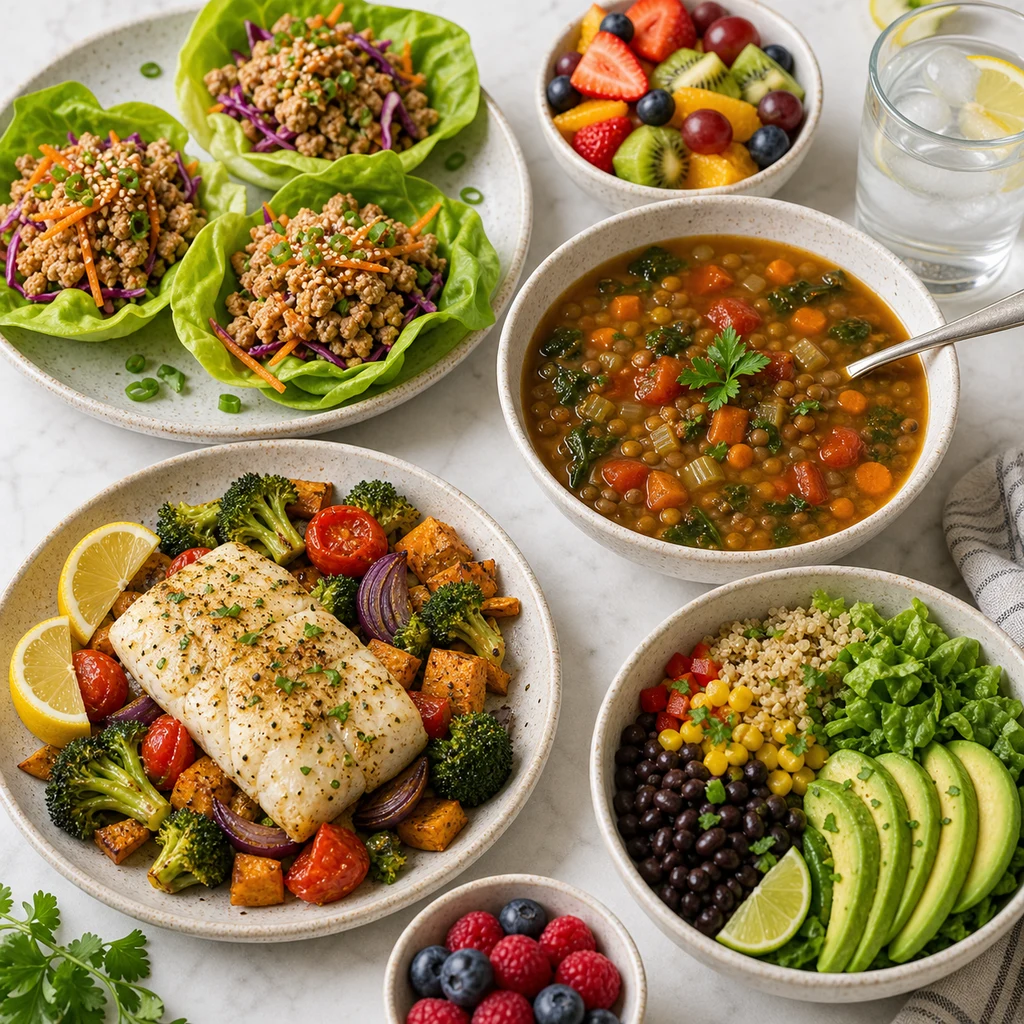
Days 8 to 10
- Day 8: oatmeal with berries and walnuts; carrots with hummus; chicken vegetable soup; Greek yogurt; baked cod with quinoa and asparagus.
- Day 9: avocado egg toast; apple with almond butter; chickpea cucumber bowl; boiled egg; turkey burger bowl with sweet potato and salad.
- Day 10: smoothie with spinach, banana, yogurt, and oats; nuts with berries; tuna avocado lettuce cups; cucumber with hummus; shrimp quinoa bowl with roasted peppers.
Days 11 to 14
- Day 11: Greek yogurt parfait; pear with walnuts; grilled chicken wrap with greens; cottage cheese with tomatoes; lentil stew with roasted vegetables.
- Day 12: eggs with mushrooms and spinach; fruit with nuts; salmon grain bowl; vegetables with hummus; tofu or chicken stir-fry with brown rice.
- Day 13: overnight oats with chia; boiled egg and berries; turkey lettuce wraps; apple with peanut butter; bean chili with avocado and salad.
- Day 14: smoothie bowl with berries and seeds; cucumbers with yogurt dip; chicken salad over greens; nuts with fruit; baked salmon or chickpeas with roasted sweet potato and broccoli.
Snacks and Hydration
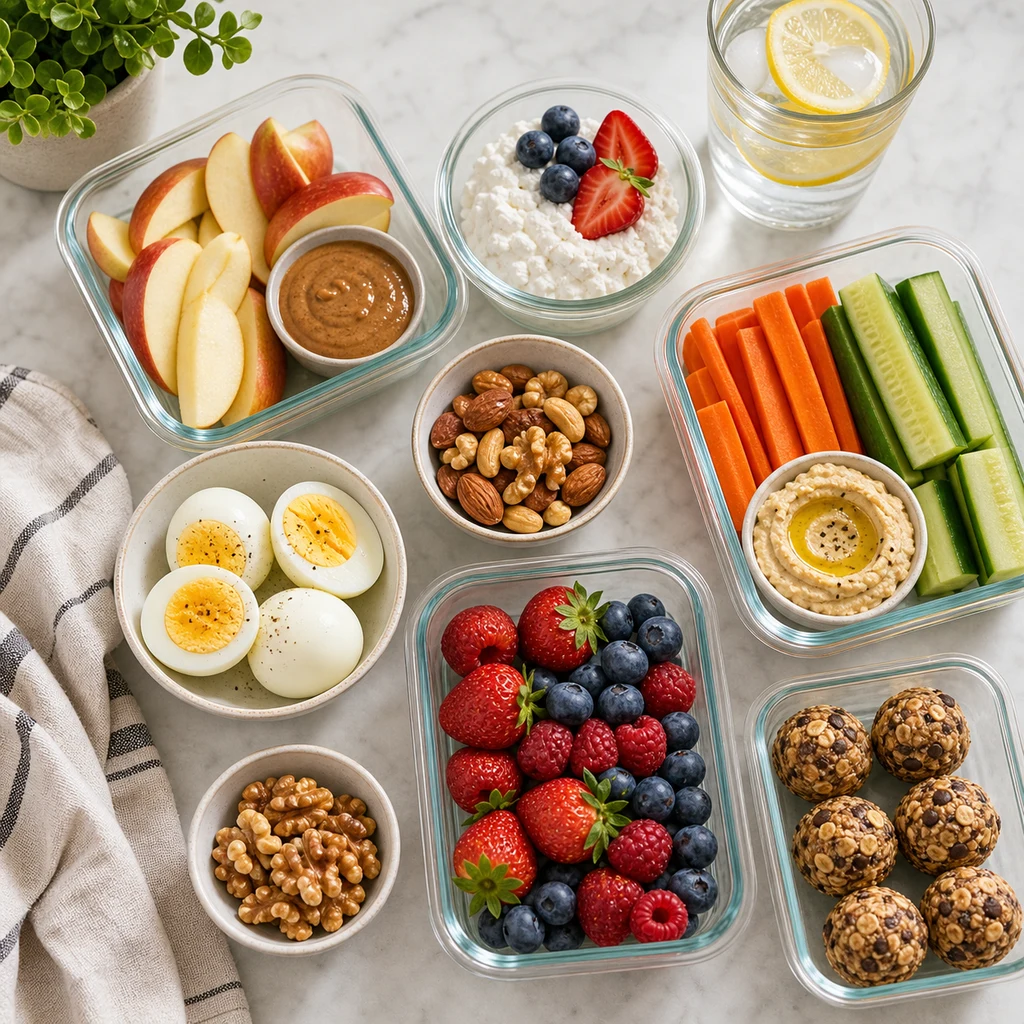
Snacks are optional. Use them when they prevent arriving at the next meal overly hungry. Good combinations include fruit with nuts, vegetables with hummus, yogurt with berries, boiled eggs with fruit, or cottage cheese with tomatoes.
For drinks, water should be the default most of the time. Unsweetened tea, coffee, and sparkling water can fit too. Sweet drinks can add a lot without making meals more satisfying, so keep them occasional rather than automatic.
How to Adjust the Plan
If the plan feels too light, add more whole grains, beans, potatoes, avocado, olive oil, or protein at meals. If it feels too heavy, reduce added fats slightly and add more non-starchy vegetables. Hunger is useful feedback, not a failure.
Vegetarian readers can use beans, lentils, tofu, tempeh, eggs, Greek yogurt, cottage cheese, and nuts as protein anchors. Gluten-free readers can choose rice, quinoa, potatoes, certified gluten-free oats, and corn tortillas where needed.
When Life Interrupts the Plan
Missing a meal on the plan does not mean starting over. Move the skipped meal to another day, repeat an easy favorite, or use leftovers. A realistic meal plan should absorb normal schedule changes. The point is to make the next meal easier, not to create a pass-fail system.
If eating out, look for the same structure: vegetables, protein, a grain or starchy side, and a sauce or fat you can control. A rice bowl, salad with protein, grilled fish plate, soup with beans, or egg-based breakfast can fit the plan without matching it perfectly.
Food Safety and Storage
Meal prep only helps if the food stays safe and pleasant to eat. Refrigerate cooked food in shallow containers once it has cooled enough to store, keep dressings separate from greens, and use refrigerated cooked proteins within a few days. If food smells off, looks slimy, or has been held too long, discard it.
When packing meals, keep cold foods cold and hot foods hot. A small insulated lunch bag and ice pack can make a real difference if food will be away from the refrigerator for several hours.
More Healthy Meal Ideas
For recipes that fit the same practical style, try healthy chicken salad with apples, zesty lime shrimp and avocado salad, frozen Greek yogurt covered blueberries, and more ideas in Health & Fitness.
Keep the Plan Flexible
A useful 14-day clean eating meal plan should reduce decision fatigue, not create stress. Repeat meals you like, swap foods you dislike, and keep a few backup options in the pantry. The best version is the one that helps you eat balanced meals consistently while still fitting real life.