
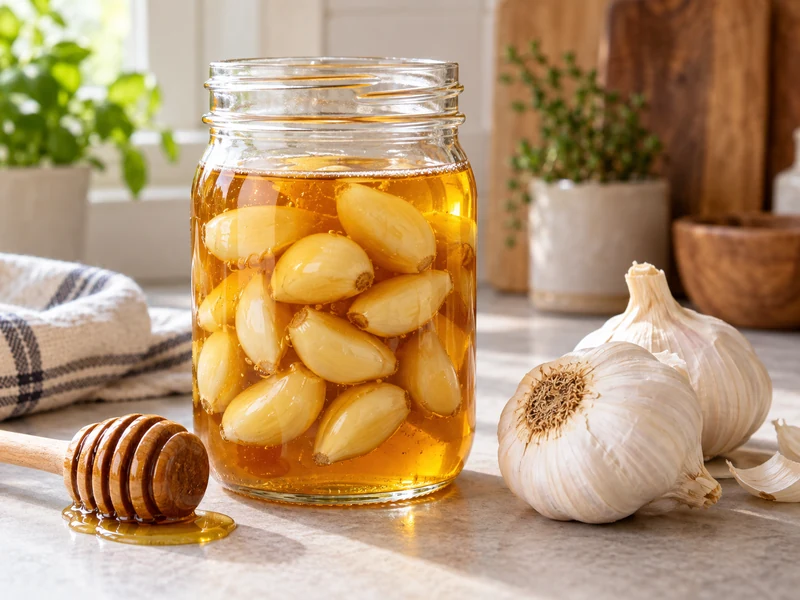
Fermented garlic honey is a two-ingredient culinary condiment with a bold sweet-savory flavor. As peeled garlic rests in honey, moisture from the cloves loosens the honey and small bubbles may develop. The finished mixture can be spooned into dressings, brushed over roasted vegetables, or used as a glaze. It should not be presented as a medicine or a substitute for professional care.
RECIPE CARD
How to Make Fermented Garlic Honey
Ingredients
- 1 cup peeled fresh garlic cloves, about 5 ounces or 140 grams
- 1 cup pure liquid honey, about 12 ounces or 340 grams, plus more if needed to coat the cloves
Quick Method
Condensed overview. Use Full Instructions for the complete method, timing and doneness details.
- Clean the Jar and Prepare the Garlic: Wash the jar, lid, spoon, and work surface with hot soapy water, rinse well, and allow everything to dry. Peel the garlic, trim the…
- Combine the Garlic and Honey: Place the garlic in the dry jar, pour in the honey, stir to coat every clove, release air pockets, and leave at least 1…
- Turn and Vent the Jar Daily: Keep the jar on a plate away from direct sunlight at 65–75°F or 18–24°C. Once or twice daily, tighten the lid briefly, gently turn…
- Observe the Seven-Day Fermentation: Monitor the jar daily for seven days. Small bubbles and thinner honey may develop. Discard the batch without tasting if you see fuzzy mold,…
- Refrigerate and Serve Safely: After seven days, tighten and date the jar, refrigerate it, keep the garlic coated with honey, and use only a clean dry spoon. Use…
This method treats garlic honey as a refrigerated homemade ferment, not a shelf-stable preserve. The jar spends only seven days at cool room temperature before moving to the refrigerator. Clean equipment, completely coated garlic, daily monitoring, and careful handling matter. Honey must never be given to a child younger than 12 months.
Why You’ll Love It
- Only two ingredients: Fresh garlic and pure honey create a complex condiment without specialized equipment.
- Deep, versatile flavor: The garlic mellows while the honey becomes thinner and pleasantly savory.
- Easy to monitor: A small clear jar makes daily turning, venting, and visual checks simple.
Ingredients
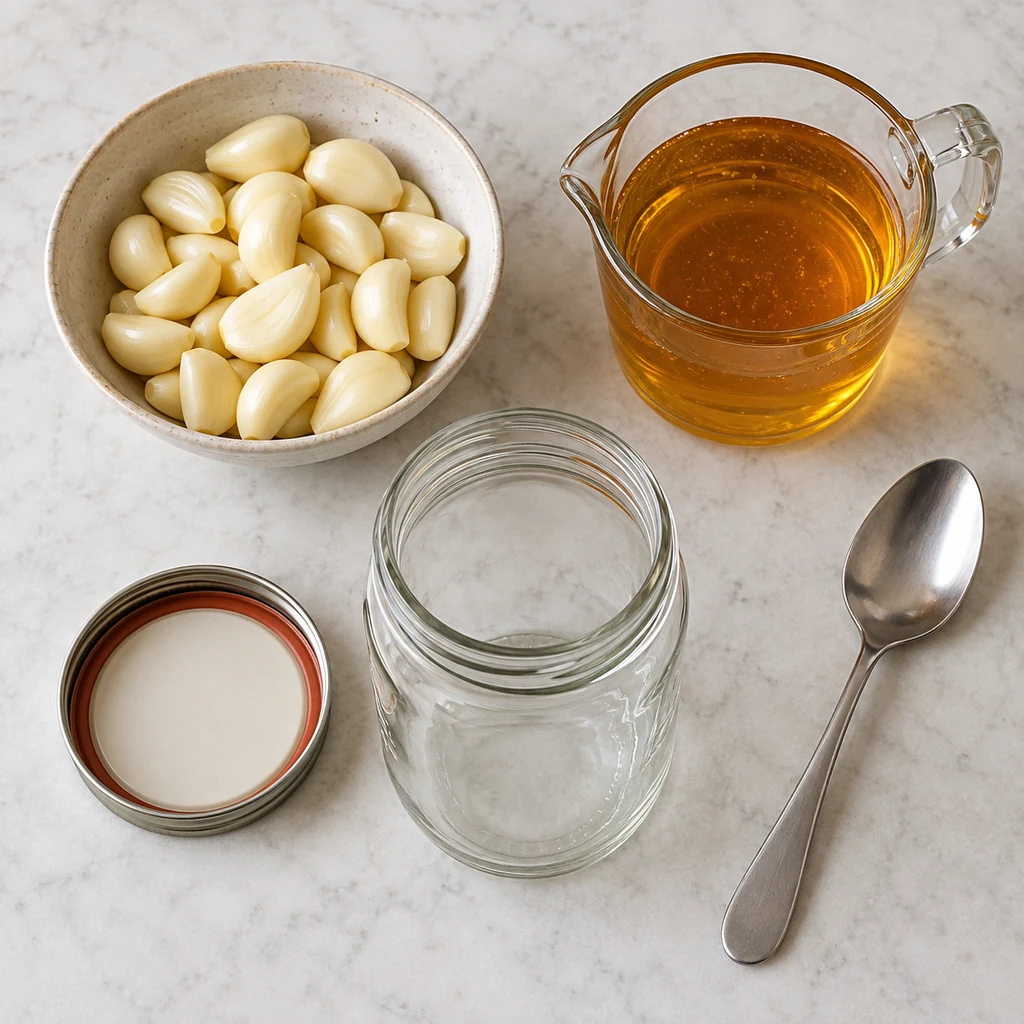
- 1 cup peeled fresh garlic cloves, about 5 ounces or 140 grams
- 1 cup pure liquid honey, about 12 ounces or 340 grams, plus more if needed to coat the cloves
Use firm, unblemished garlic with no mold, soft spots, or green decay. A commercially packaged pure honey is suitable; raw honey is optional rather than a safety requirement. Choose a clean one-pint glass jar with enough room for the mixture to expand. Do not add water, oil, fresh herbs, or other ingredients because they change the recipe’s moisture and safety profile.
Step-by-Step Instructions
1. Clean the Jar and Prepare the Garlic
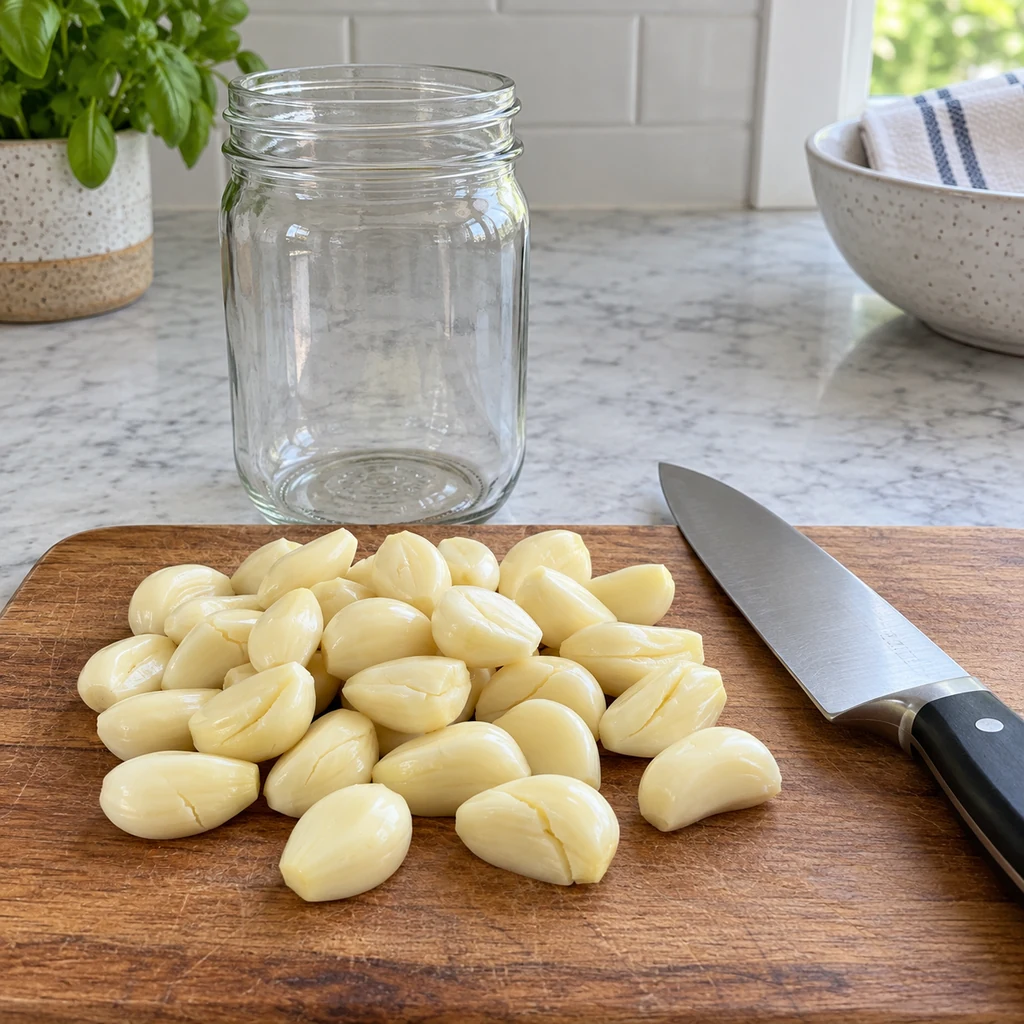
Wash the jar, lid, spoon, and work surface with hot soapy water, rinse well, and allow everything to dry. Peel the garlic without rinsing the cloves after peeling; excess water is not wanted in the jar. Trim away the hard root ends and discard any bruised or questionable cloves. Lightly crush each clove once with the flat side of a knife so its surface opens without turning into paste.
2. Combine the Garlic and Honey
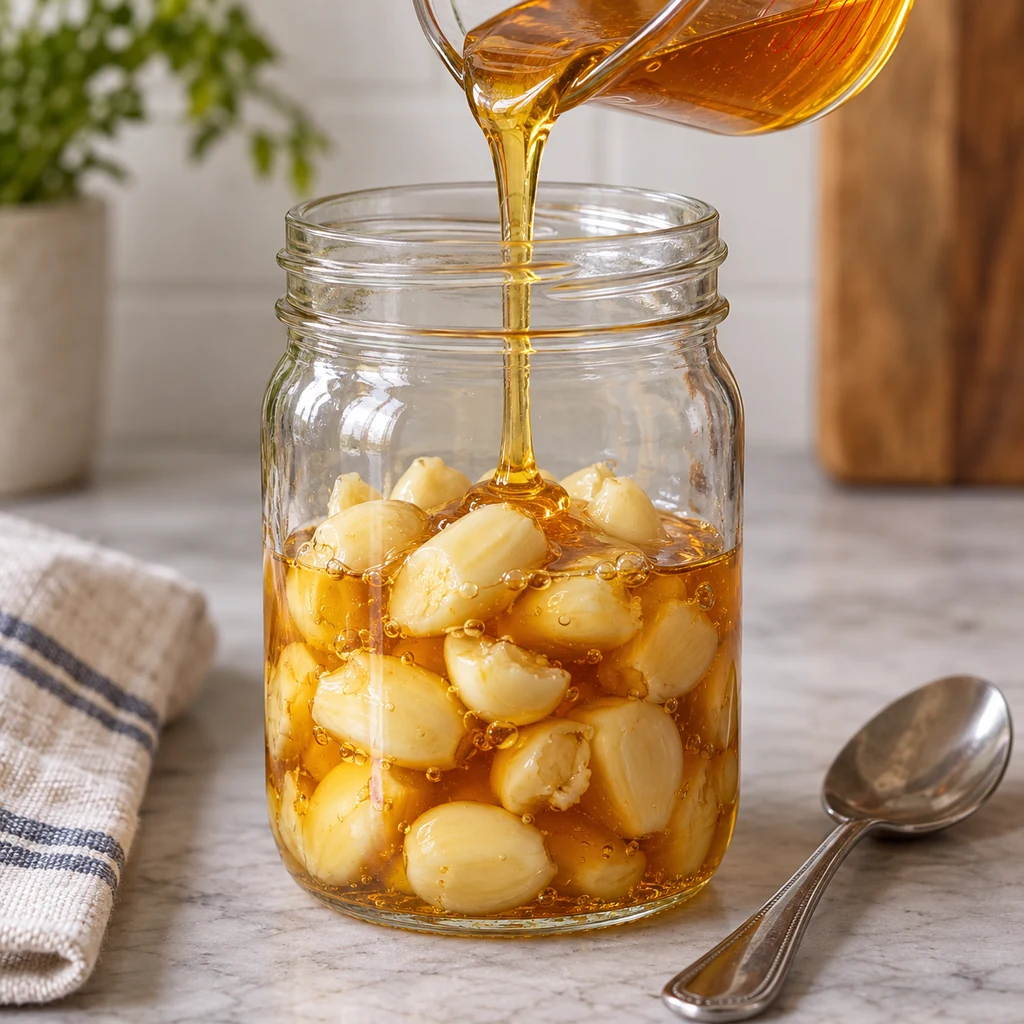
Place the prepared garlic in the dry jar. Pour in the honey slowly, stirring with the clean spoon so every clove is thoroughly coated and obvious air pockets escape. Leave at least 1 inch of headspace. Add a little more honey if dry garlic remains exposed. Wipe the rim clean, then fit the lid loosely enough that gas can escape; do not tighten an actively fermenting jar into a sealed pressure vessel.
3. Turn and Vent the Jar Daily
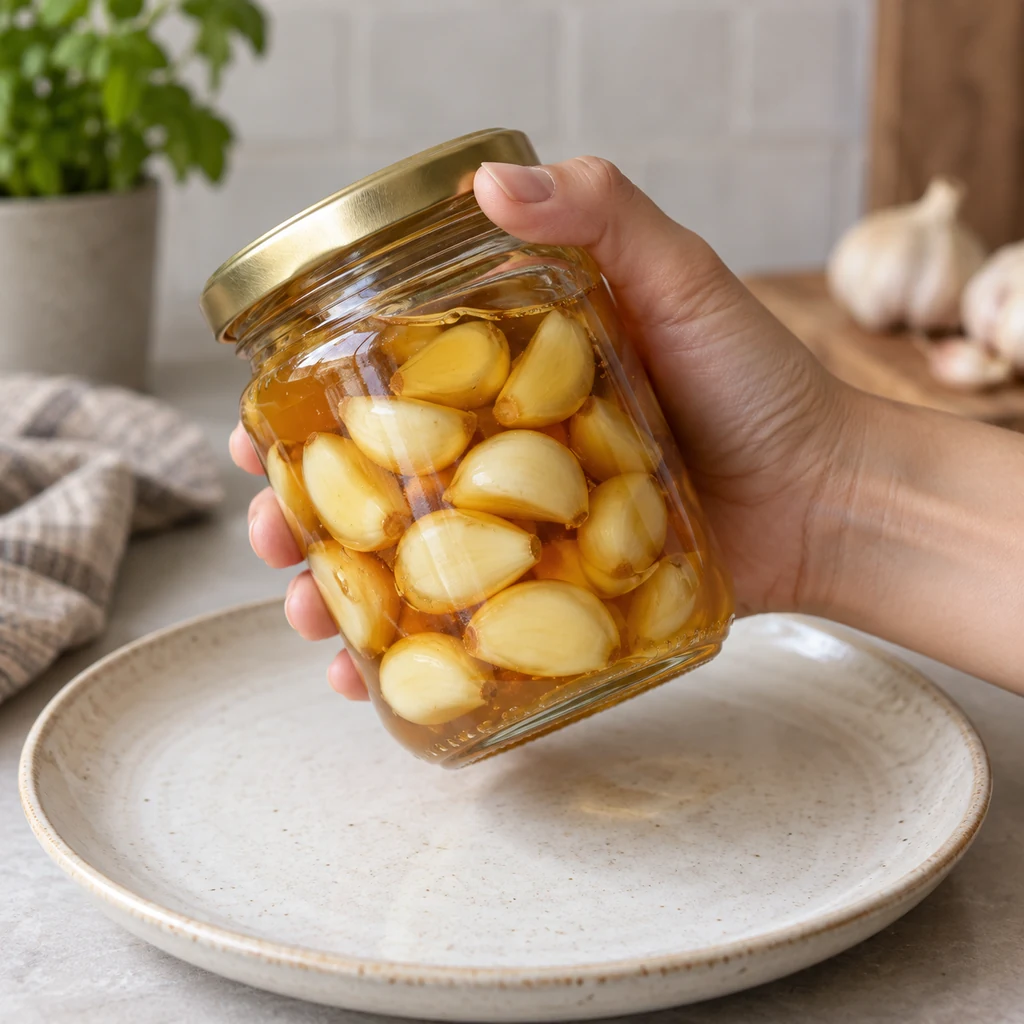
Set the jar on a plate away from direct sunlight at a cool room temperature, ideally 65–75°F or 18–24°C. Once or twice each day, tighten the lid temporarily, gently turn the jar so floating cloves become recoated, return it upright, and loosen the lid again. Open it carefully over the plate to release pressure. Use only a clean, dry utensil if stirring is necessary.
4. Observe the Seven-Day Fermentation
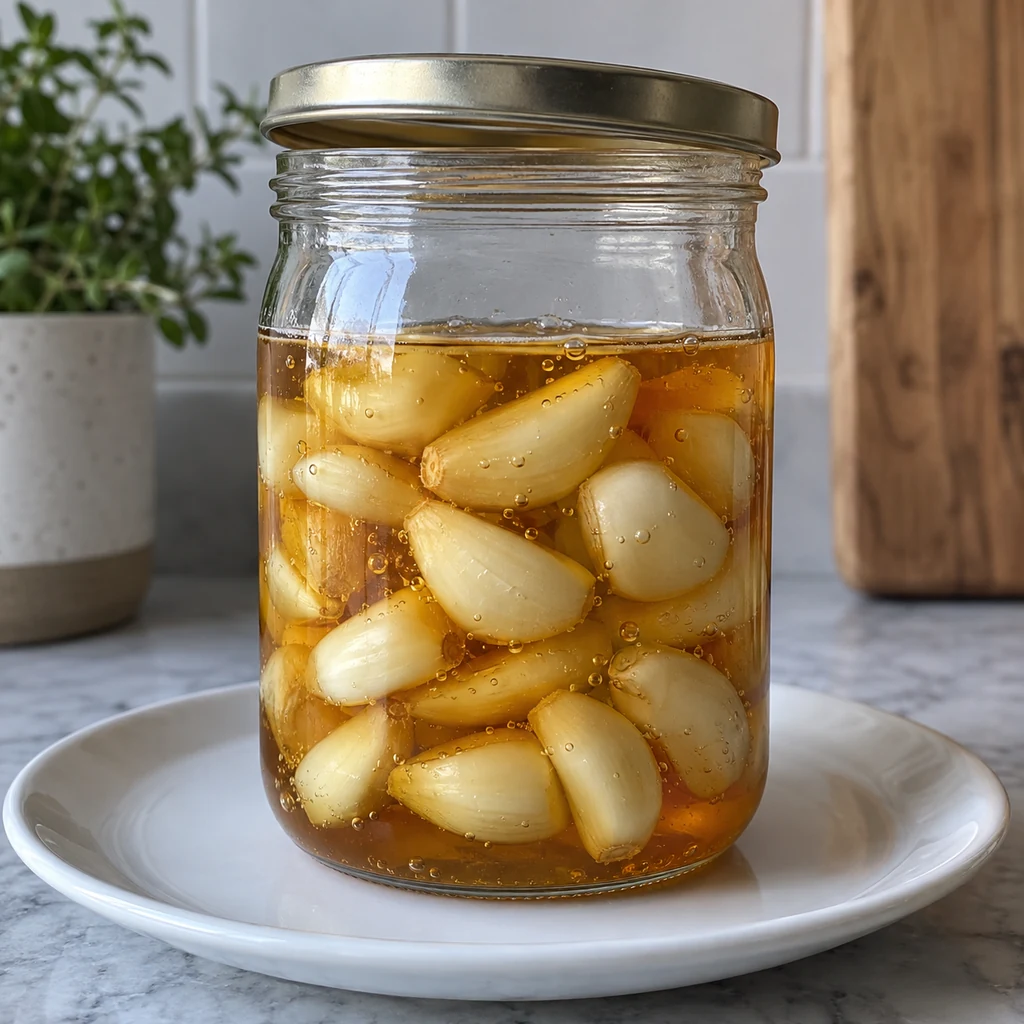
During the seven-day room-temperature period, the honey may become more fluid and small bubbles may appear. Those changes can be normal, but bubbles alone do not prove safety. Check the jar every day. Discard the entire batch without tasting if you see fuzzy mold, colored growth, unexpected slime, leakage, or a rotten or otherwise objectionable odor. When uncertain, throw it away rather than attempting to rescue it.
5. Refrigerate and Serve Safely
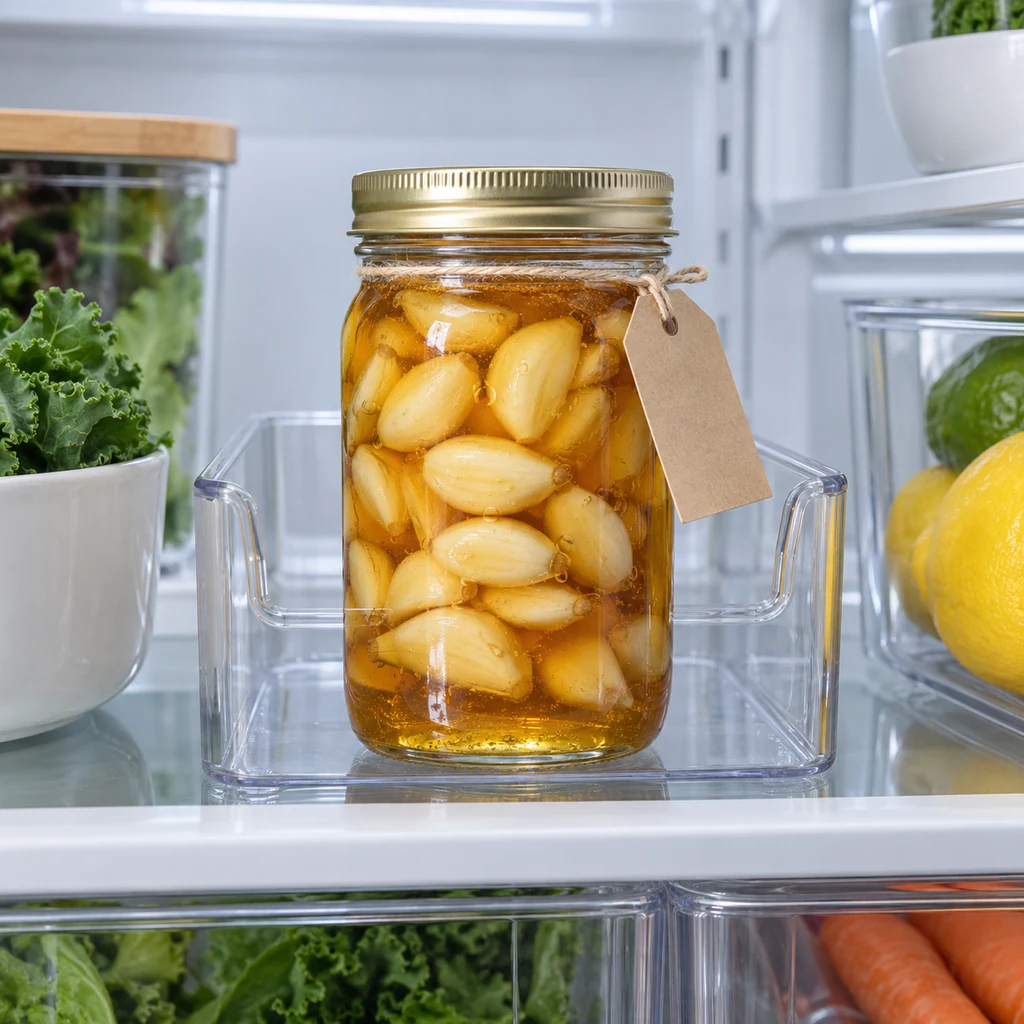
After seven days, tighten the lid, label the jar with the preparation date, and refrigerate it. Keep the garlic coated with honey and always use a clean, dry spoon. Refrigeration slows fermentation, so the flavor can continue to mellow. For this home method, use the refrigerated batch within three months and discard it sooner if its appearance, aroma, or container pressure becomes concerning.
Substitutions & Variations
This recipe is intentionally narrow because adding moist ingredients changes the environment in the jar. Do not add lemon slices, chilies, herbs, or oil during fermentation. For flavor variations, mix those ingredients into a small portion only when serving. Crystallized honey can be made pourable by standing the closed honey container in warm—not hot—water before measuring. Avoid heating the finished ferment, which changes its fresh garlic flavor.
If you prefer not to perform a room-temperature fermentation, combine the same ingredients and refrigerate immediately. The flavor will develop more slowly and the mixture should still be handled as a refrigerated condiment. Do not use either method for home canning or long-term pantry storage.
What to Serve With
Whisk a teaspoon of the honey into vinaigrette, or combine it with mustard for a glaze on roasted carrots, squash, or Brussels sprouts. A small drizzle can balance salty cheese, grain bowls, or cooked chicken. Minced fermented garlic is potent, so begin with a small amount and taste before adding more.
Never double-dip a tasting spoon into the jar. Transfer the amount you need to a separate dish, then return the jar promptly to the refrigerator. This protects the remaining batch from moisture and contamination.
Food Safety Notes
Honey can contain Clostridium botulinum spores and must never be served to infants under 12 months. Homemade fermentation cannot be judged safe by smell, bubbles, or appearance alone. This conservative method limits room-temperature time and requires refrigeration; it does not make the product shelf stable. People who are pregnant, older, immunocompromised, or otherwise at higher risk from foodborne illness should ask a qualified healthcare professional whether homemade fermented foods are appropriate for them.
Frequently Asked Questions
Is fermented garlic honey a proven cold or immunity remedy?
No. Garlic and honey are foods, and this recipe is presented as a condiment. It should not be used to diagnose, prevent, or treat an illness. Seek medical guidance for persistent symptoms, breathing difficulty, allergic reactions, or other health concerns.
Why is my garlic floating?
Fresh garlic often floats in honey. Gently turning the closed jar once or twice daily recoats the cloves. Return the jar upright and loosen the lid afterward. Do not add water or improvise with an object that is not intended for food contact.
Can I keep the jar in the pantry after seven days?
No. This recipe has not been validated as a shelf-stable preservation process. Refrigerate it after the seven-day fermentation and keep it refrigerated. If the jar shows mold, leakage, abnormal pressure, or an objectionable odor, discard the batch without tasting.