
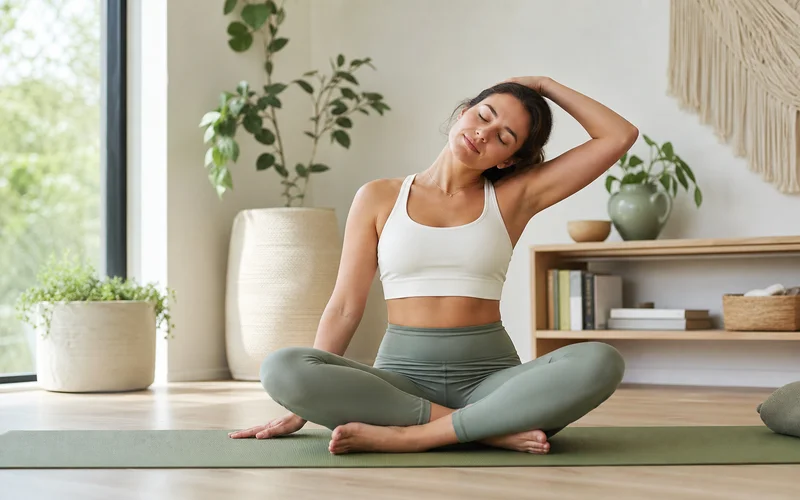
Waking up with a stiff neck or aching shoulders can set the wrong tone for your entire day. If you spend long hours at a desk, drive frequently, or carry stress in your upper body, you are not alone — shoulder and neck tension is one of the most common complaints among American adults. The good news is that you do not always need medication or expensive bodywork to find relief. A short sequence of gentle yoga moves can release tight muscles, improve circulation, and restore comfortable movement within minutes.
These seven yoga poses target the muscles that support your head, neck, and shoulders. They are accessible for beginners, require no special equipment, and can be practiced at home, in the office, or anywhere you have a few feet of floor space. Move slowly, breathe deeply, and listen to your body. If a pose causes sharp pain, ease out of it and try a gentler variation.
Why Your Shoulders and Neck Hold So Much Tension
Modern life stacks pressure on the upper body in ways our bodies were not designed to handle. Hours of screen time pull the head forward, shortening the muscles at the back of the neck and overworking the shoulders. Stress triggers unconscious clenching — you may not even notice your shoulders creeping toward your ears until pain sets in.
Dehydration, poor sleep posture, and lack of movement also contribute. When muscles stay contracted for long periods, they lose flexibility and blood flow decreases. That dull, aching sensation you feel at the end of a workday is often the result of sustained tension rather than a single injury. Understanding this pattern is the first step toward lasting relief.
Staying hydrated throughout the day supports muscle elasticity and helps flush metabolic waste from tight tissues. Pairing regular movement breaks with targeted stretches — like those in our 5-minute morning stretch routine for a pain-free day — can prevent tension from building in the first place.
How Gentle Yoga Eases Upper-Body Pain
Yoga works on multiple levels to address neck and shoulder discomfort. Slow, controlled movements increase blood flow to tight areas, delivering oxygen and nutrients that support muscle recovery. Deep breathing activates the parasympathetic nervous system, which helps your body shift out of fight-or-flight mode and release unconscious gripping.
Unlike aggressive stretching, yoga emphasizes alignment and awareness. You learn to notice where you hold tension and how to let it go. Over time, this body awareness carries into daily life — you catch yourself hunching sooner and correct your posture before pain develops.
For a complementary approach, try pairing these poses with the calming stretches in our guide to 7 relaxing evening stretches to unwind before bed. Morning and evening routines together create a full cycle of release and recovery.
Warm-Up and Restorative Poses
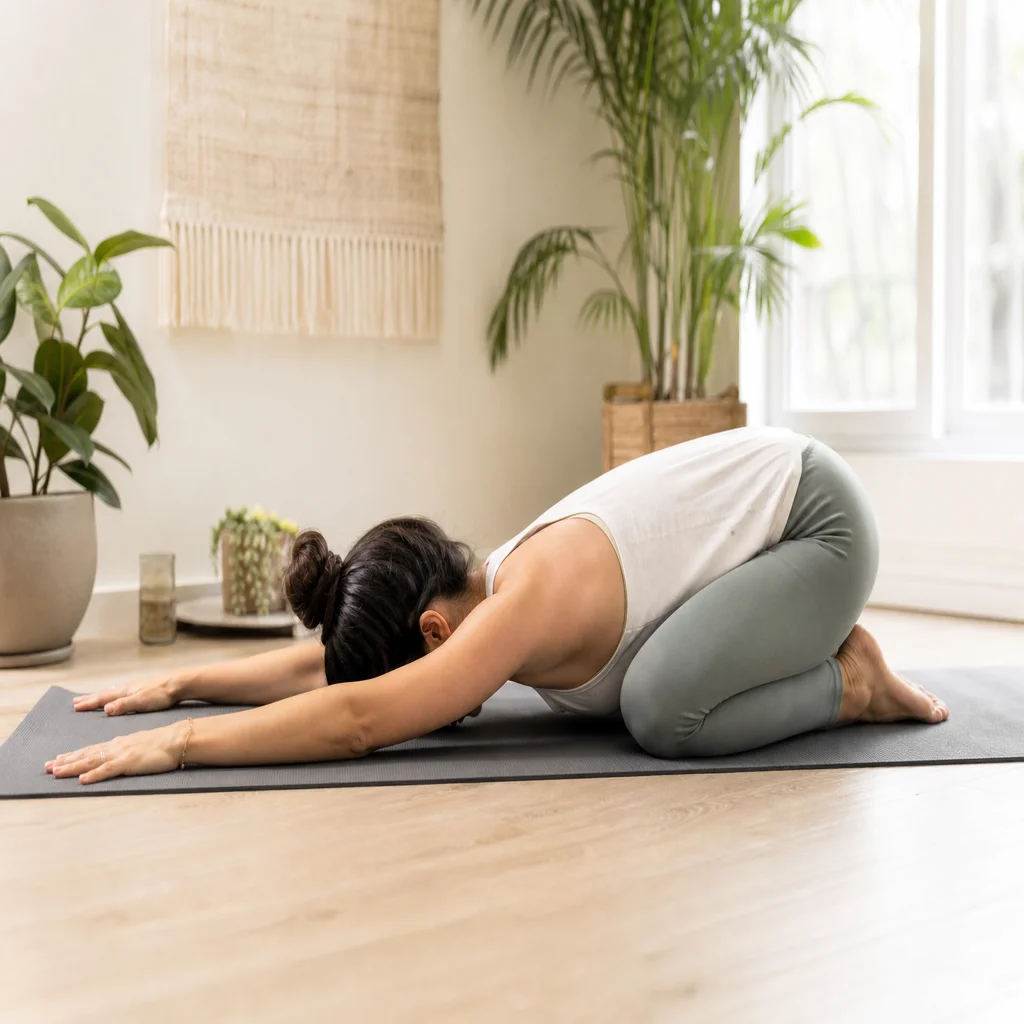
Child’s Pose With Side Stretch
Child’s pose is one of the most effective starting points for neck tension relief. Begin on your hands and knees, then sit your hips back toward your heels and extend your arms forward on the mat. Let your forehead rest on the floor and breathe deeply for one to two minutes, allowing your neck to release forward and your shoulders to drop away from your ears.
For a deeper stretch, walk your hands to the right and place your left hand on top of your right. Breathe into the left side of your body as it lengthens. Hold for five to eight breaths, then repeat on the opposite side. This lateral stretch targets the muscles along the side of the neck and the intercostal muscles between the ribs — areas that often tighten when you sit with poor posture.
Upward Facing Plank Pose
Also called reverse plank, this pose opens the front of the shoulders and chest while strengthening the muscles that support good posture. Sit on the floor with your legs extended in front of you and your hands flat on the ground beside your hips, fingers pointing toward your feet.
On an exhale, press through your hands and feet to lift your hips and torso off the floor. Keep your shoulders drawn down and away from your ears, and let your neck release gently as you gaze behind you. Hold for three to five breaths, then lower with control. If this feels too intense, bend your knees and lift into a reverse tabletop position instead.
Forward Fold Releases for the Neck
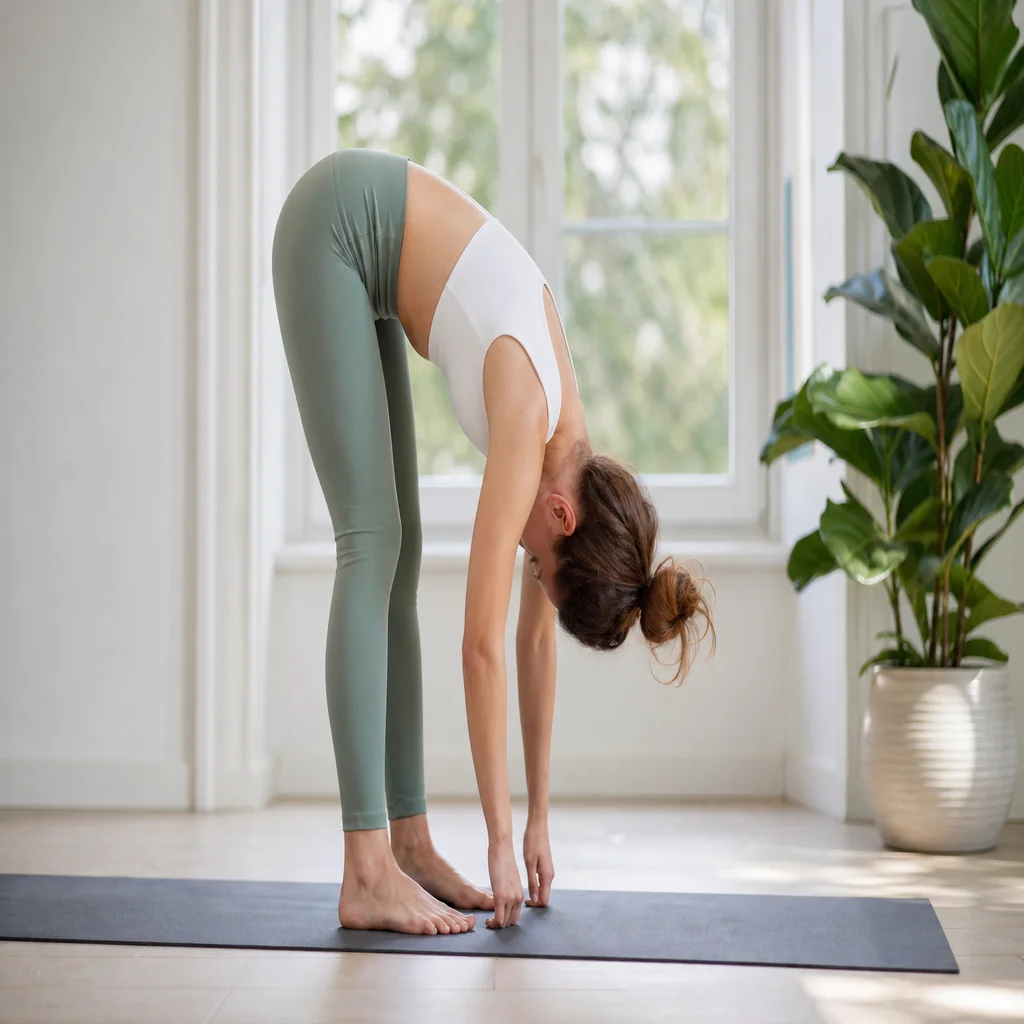
Ragdoll Pose
Ragdoll pose is a simple standing forward fold that lets gravity do the work of releasing neck and shoulder tension. Stand with your feet hip-width apart, bend your knees slightly, and fold forward from the hips. Let your torso rest on your thighs and allow your arms to dangle toward the floor.
Grab opposite elbows with your hands and close your eyes. With each exhale, imagine your neck lengthening toward the ground and your shoulders opening away from your spine. You can gently turn your head from side to side for an even deeper release. Stay here for one to three minutes, breathing slowly. This pose is safe to practice multiple times throughout the day whenever tension builds.
Shoulder-Opening Postures
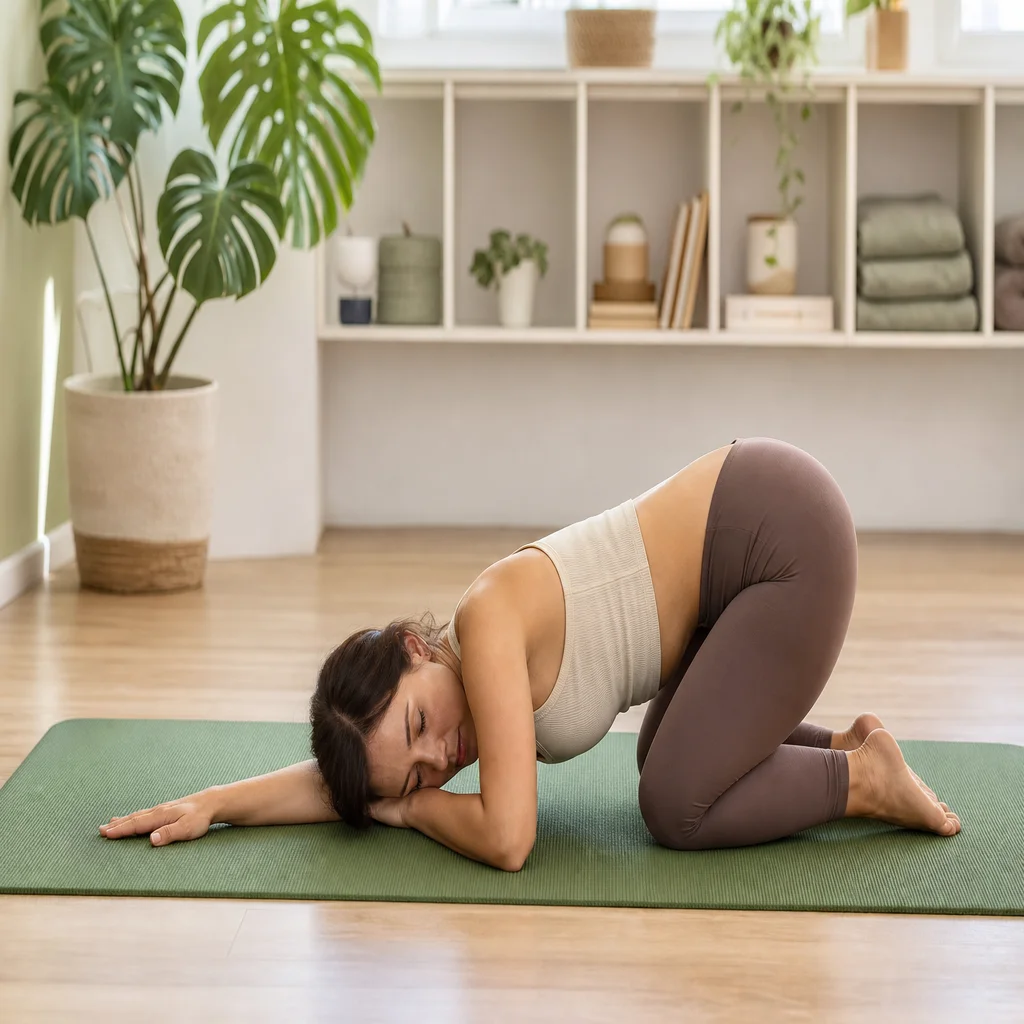
Threading the Needle Pose
This pose is widely regarded as one of the best yoga postures for shoulder and upper-back discomfort. Start on your hands and knees in a tabletop position. On an inhale, reach your right arm up toward the ceiling, opening your chest. On an exhale, thread your right arm underneath your left arm, lowering your right shoulder and right ear toward the mat.
Rest your right cheek on the floor or a folded blanket if needed. Your left hand can stay planted for support, or you can walk it forward for a deeper stretch. Hold for five to eight breaths, then return to tabletop and repeat on the other side. If the full expression feels too intense, keep your hips higher and only lower your shoulder as far as comfortable.
Swaying Palm Tree Pose
This gentle standing pose loosens the thoracic spine and creates space through the side body. Begin in mountain pose with your feet together or hip-width apart. Interlace your fingers and raise your arms overhead, palms facing the sky or the ground depending on your shoulder mobility.
Breathe deeply as you lean to one side, keeping your hips stable and your core engaged. Lower your shoulders away from your ears and lengthen through the top of your head. Hold for three to five breaths, return to center, and repeat on the opposite side. The swaying motion mimics a palm tree in a breeze — steady at the base, fluid at the top.
Chest and Spine Openers
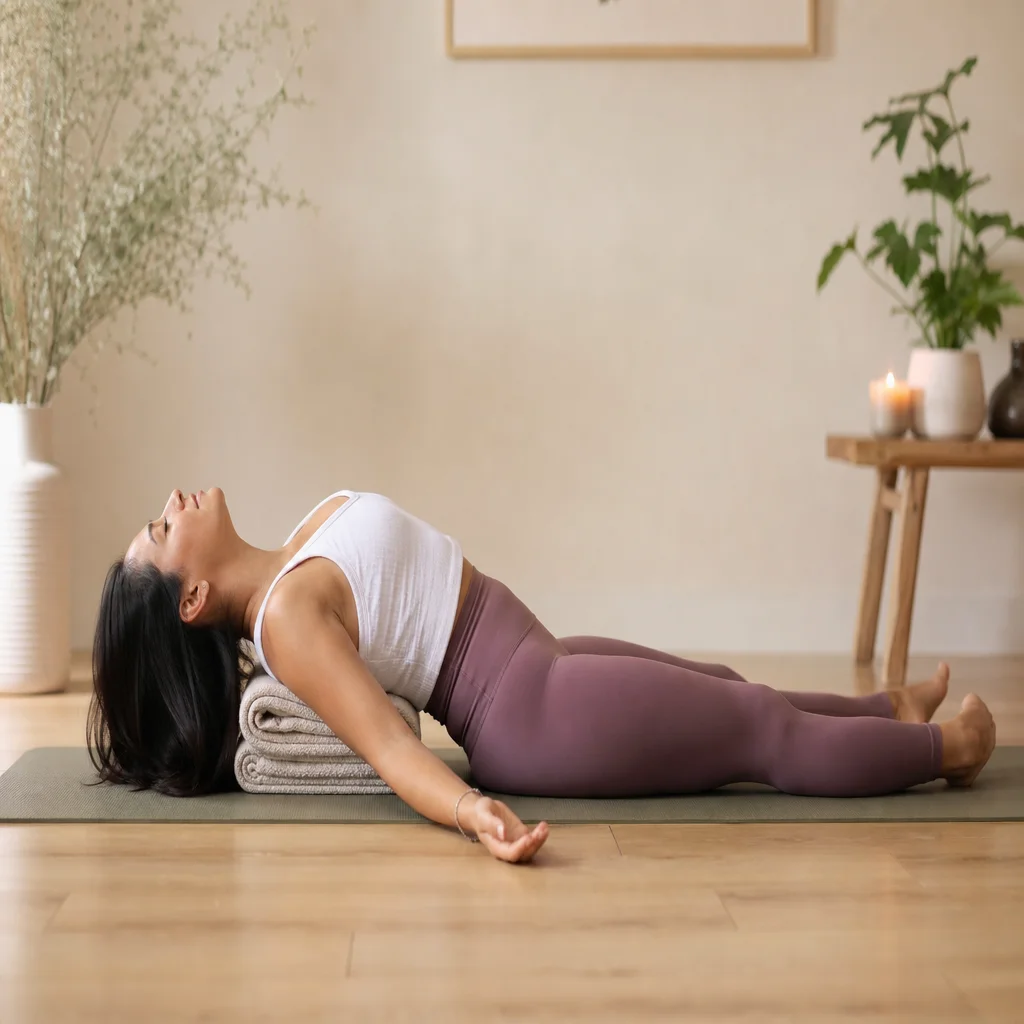
Supported Fish Pose
Fish pose opens the chest and counteracts the forward-head posture that contributes to neck pain. You do not need yoga blocks or a bolster — a rolled-up yoga mat with a blanket works perfectly. Place the roll on the floor and sit just below one end. Lie back so your spine follows the length of the roll, with the roll positioned along your mid-back.
Drop your arms to the sides with palms facing up. You can rest your head on a pillow or gently lower it to the floor for a deeper neck release. Relax in this pose for three to five minutes, breathing into your chest and throat. Make small adjustments until you feel supported rather than strained.
Bridge Pose With Clasped Hands
If you are familiar with bridge pose, adding clasped hands behind your back creates an extra shoulder release. Lie on your back with your knees bent and heels directly under your knees. Press through your feet to lift your hips toward the ceiling, then roll your shoulders underneath your body and clasp your hands together.
Stretch your arms toward your feet as you gently lift your chest toward your chin. Breathe deeply and hold for five to eight breaths before releasing slowly, vertebra by vertebra. This pose strengthens the glutes and hamstrings while opening the front of the shoulders — a combination that supports long-term postural health.
Build a Daily Neck and Shoulder Routine
Consistency matters more than intensity. Practicing two or three of these poses during a short break can be more effective than one long session per week. Try this simple schedule:
- Morning: Start with child’s pose and ragdoll to wake up the spine after sleep.
- Midday: Do threading the needle and swaying palm tree during a lunch break to counter desk posture.
- Evening: Finish with supported fish and bridge pose to release the day’s accumulated tension.
For a gentle morning foundation, explore our collection of gentle wake-up yoga poses to start your day calmly. Combining a morning wake-up sequence with these targeted shoulder and neck moves creates a well-rounded daily practice that takes less than fifteen minutes total.
Remember to drink water before and after your practice. Hydrated muscles respond better to stretching and recover faster. If you cannot attend regular massages or acupuncture, these yoga moves offer a practical, no-cost alternative you can return to whenever discomfort flares up.
Yoga Practice Checklist
Use this checklist before and during your shoulder and neck yoga session:
- Find a quiet space with enough room to move on hands and knees
- Wear comfortable clothing that does not restrict shoulder movement
- Have a yoga mat or soft surface to protect your knees and back
- Keep a folded blanket nearby for supported fish pose
- Drink water before starting your practice
- Begin with child’s pose to center your breath and body
- Move slowly — never force a stretch into sharp pain
- Hold each pose for at least five deep breaths
- Practice threading the needle on both sides equally
- End with supported fish or bridge pose for full relaxation
Frequently Asked Questions
How often should I do these yoga poses for neck pain?
For best results, practice two to three poses at least once daily. You can repeat the full sequence two to three times per week. Many people find relief by doing child’s pose and ragdoll pose during short breaks at work, then completing the full sequence in the evening.
Can beginners do these shoulder and neck yoga moves?
Yes. All seven poses in this guide are beginner-friendly and include modification options. Start with the gentler variations — such as bent-knee ragdoll or a lower threading-the-needle — and progress as your flexibility improves. Never push through sharp or shooting pain.
How long does it take to feel relief from neck and shoulder tension?
Many people notice immediate relief after a single session, especially with ragdoll pose and child’s pose. Lasting improvement typically requires one to two weeks of consistent daily practice. Chronic tension that has built over months may take longer to fully resolve.
Should I do yoga before or after work for neck pain?
Both times offer benefits. Morning practice prevents tension from building during the day, while evening practice releases accumulated stress. If you can only practice once, choose the time when your pain is most noticeable — often late afternoon or before bed.
Can yoga replace medical treatment for neck pain?
Yoga is a supportive wellness practice, not a substitute for medical care. If you experience persistent pain, numbness, tingling, or pain following an injury, consult a healthcare provider before starting any new exercise routine. Yoga works best as a complement to professional treatment.
What props do I need for these yoga poses?
No special props are required. A yoga mat provides cushioning for floor poses. For supported fish pose, a rolled yoga mat with a blanket or a bath towel works well. A pillow under your head in fish pose can make the stretch more comfortable for beginners.
With regular practice, these seven yoga moves can transform how your neck and shoulders feel throughout the day. Move gently, breathe deeply, and give your upper body the attention it deserves. Relief is closer than you think — sometimes all it takes is a few mindful minutes on the mat.