
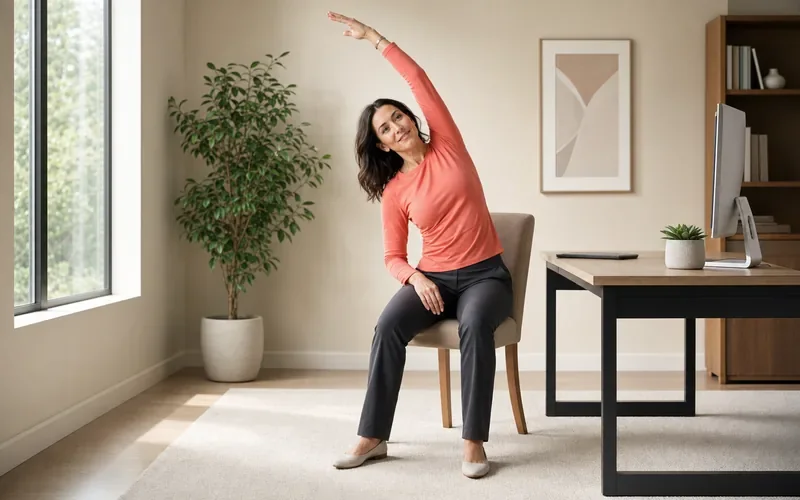
These seated side bend stretches create a brief office break for the sides of the torso, shoulders, and upper back. The routine uses a stable chair and comfortable breathing.
5-Minute Seated Side Bend Stretches
- Total time: 5 minutes
- Position: Seated in a stable chair
- Equipment: None
- Intensity: Mild tension, never pain
- Best time: After a short walk or warm-up
This routine provides general mobility information. It cannot diagnose or treat rib, spine, shoulder, or nerve problems. Avoid side bending after a recent injury or surgery unless a clinician has approved it.
Set Up at Your Desk
- Move away from drawers and sharp corners.
- Use a chair without wheels when possible.
- Place both feet fully on the floor.
- Sit evenly on both sitting bones.
- Relax the shoulders away from the ears.
The Five-Minute Side Bend Routine
- Breathing reset, 1 minute: Rest hands on the lower ribs. Inhale gently into both sides, then exhale without slumping for six breaths.
- Low-arm reach, 1 minute: Slide the right hand toward the floor while staying seated evenly. Return and alternate sides for eight slow repetitions.
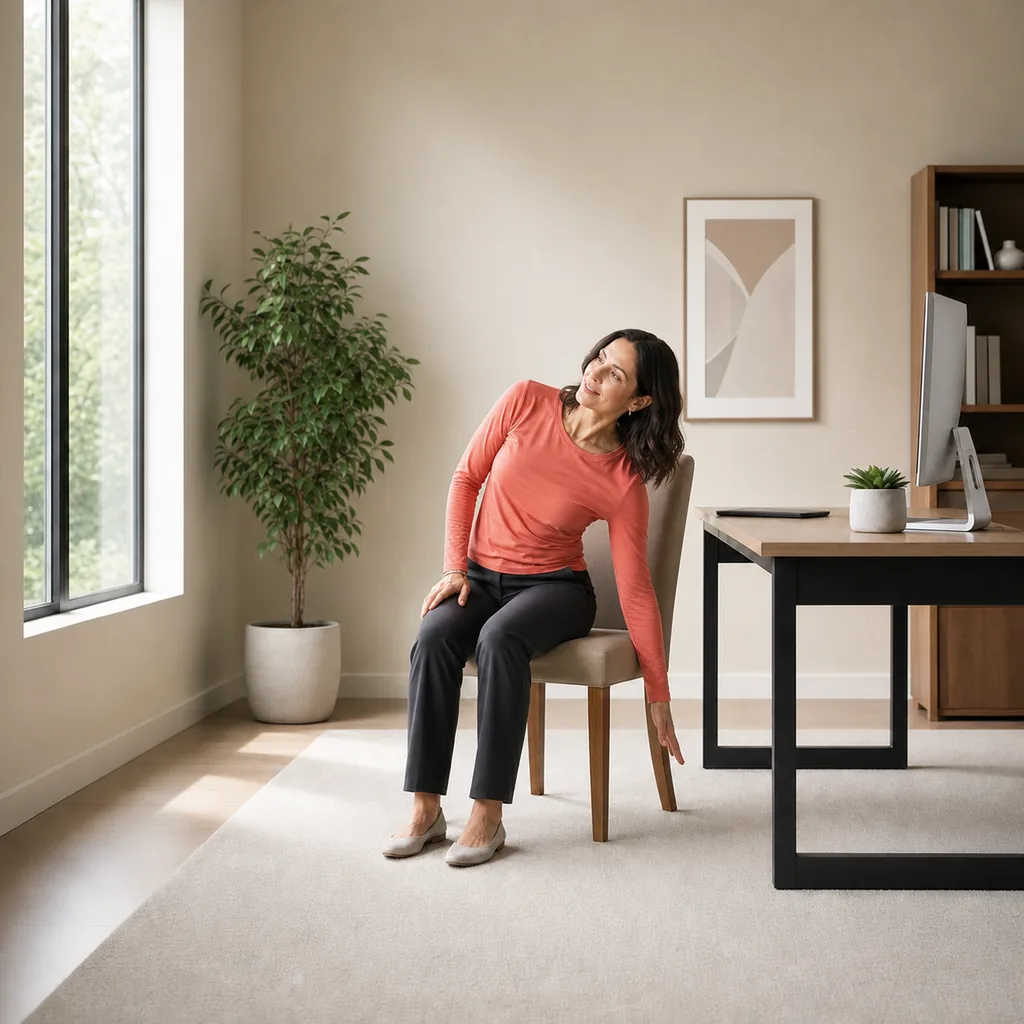
Low-arm reach. - Overhead side bend, 1 minute: Raise the right arm comfortably. Lean left without twisting, hold 15 seconds, then repeat on the other side.
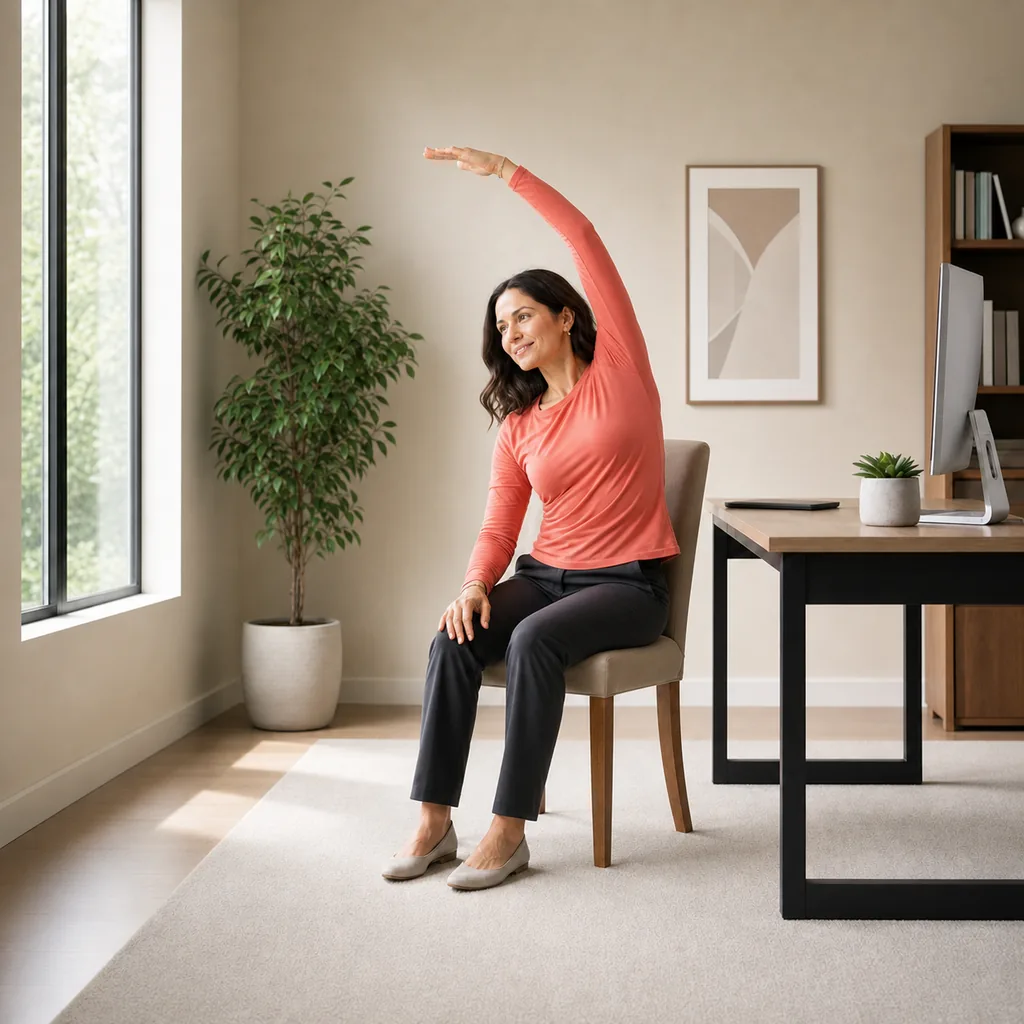
Overhead side bend. - Diagonal reach, 1 minute: Reach one arm upward and slightly forward. Hold 15 seconds per side, then repeat once.
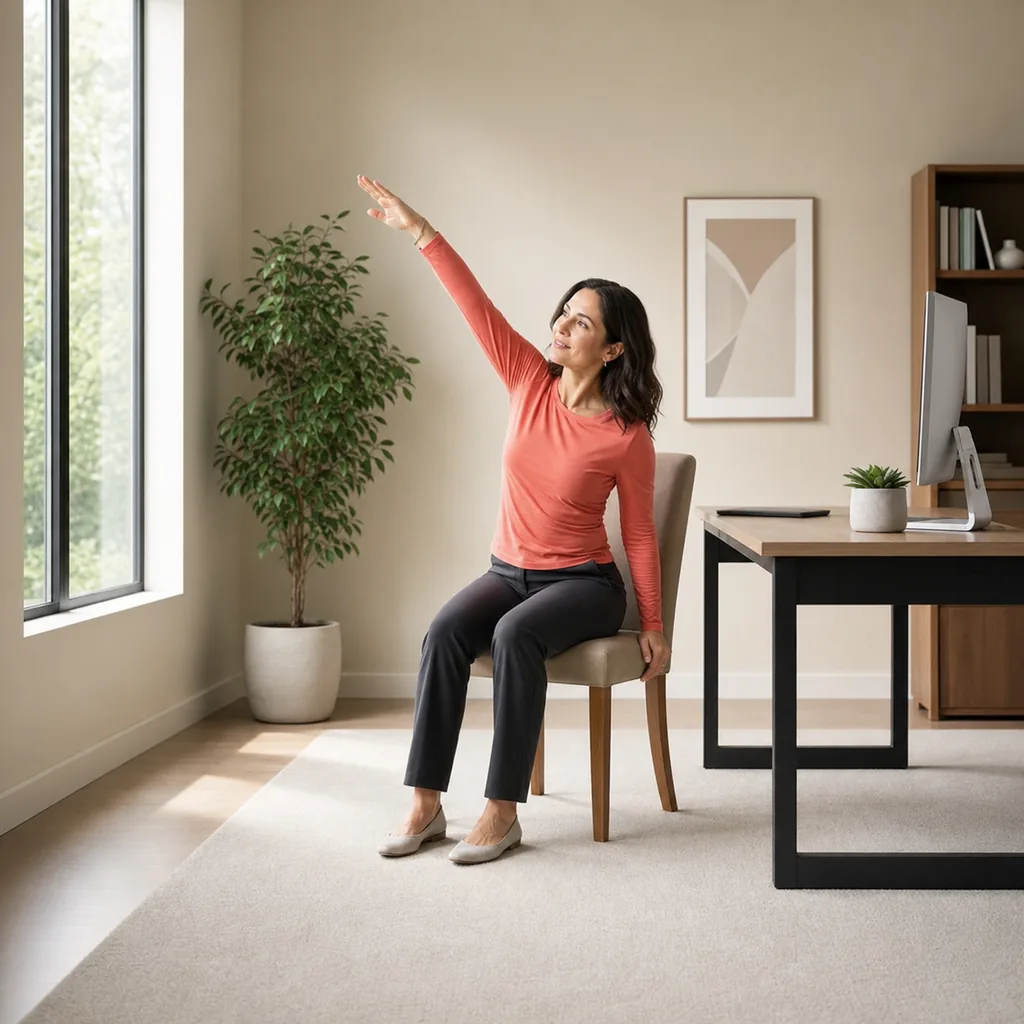
Diagonal reach. - Centered reset, 1 minute: Lower both arms. Complete five shoulder rolls, then take five relaxed breaths with the spine tall.
Form Cues and Modifications
- Lengthen upward before leaning sideways.
- Keep both hips heavy on the chair.
- Face the chest forward rather than rotating.
- Keep the arm lower if the shoulder pinches.
- Use a smaller range when the back feels compressed.
Pair this break with our seated spinal twist, wall stretches for rounded shoulders, or upper-back exercises.
Workday Guidance
Mayo Clinic recommends breaking up prolonged desk time with stretches and other activity. Its desk stretch guidance supports brief movement breaks during the workday.
A side bend should feel spacious, not forceful. It does not correct workstation height, screen placement, or chair support, so adjust those separately when discomfort repeatedly returns.
Breathing Through the Stretch
Inhale before moving, then exhale as you enter a small side bend. Continue breathing into the open side of the ribs without trying to create an exaggerated expansion.
Return to center on an inhale and pause briefly. Slower transitions help you notice whether the chair, shoulder, or lower back is becoming uncomfortable.
Safety Checklist
- The chair remains stable.
- Both feet stay supported.
- Breathing remains smooth.
- No bouncing or forceful pulling occurs.
- Symptoms settle after returning to center.
Stop for sharp pain, numbness, tingling, dizziness, chest discomfort, or shortness of breath. Seek professional assessment when pain follows trauma, wakes you at night, or progressively worsens.
Frequently Asked Questions
Should I hold the desk?
You may lightly hold the chair seat for stability, but do not pull hard. Keep the movement controlled by the torso.
Can I repeat this every hour?
Yes, if the routine remains comfortable. Also change position, stand, or walk when your health and workplace allow it.