
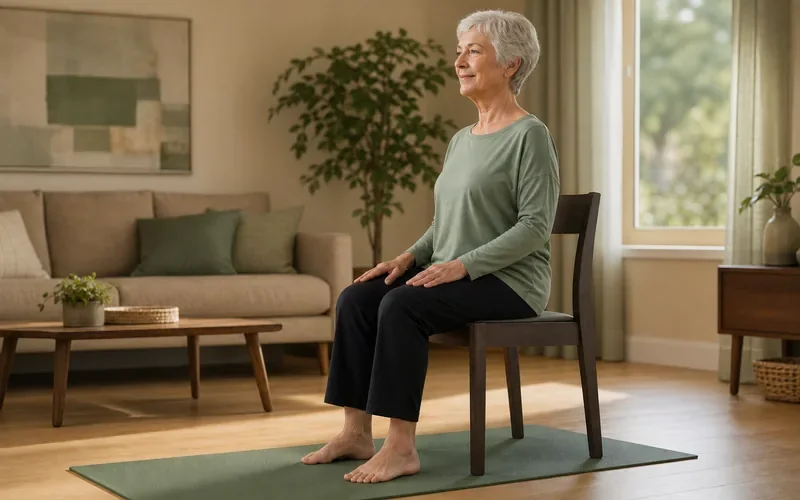
These seated foot arch exercises give seniors a supported five-minute routine for gentle foot control. A stable chair keeps the focus on slow toe, arch, and heel movements.
5-Minute Seated Foot Arch Exercises
- Total time: 5 minutes
- Position: Seated upright
- Equipment: Stable chair and small towel
- Intensity: Gentle, pain-free effort
- Footwear: Barefoot only on a safe surface
This routine is general exercise information, not treatment for neuropathy, fractures, severe arthritis, or a collapsing arch. Ask a clinician or podiatrist about new pain, swelling, wounds, or sudden foot changes.
Safe Setup
- Choose a solid chair without wheels.
- Place both feet flat and hip-width apart.
- Keep knees near 90 degrees.
- Use a nonslip floor or exercise mat.
- Keep the ankles comfortably aligned.
The Five-Minute Foot Arch Routine
- Toe lifts, 1 minute: Keep heels down. Lift all toes, spread them gently, then lower. Complete 12 slow repetitions.
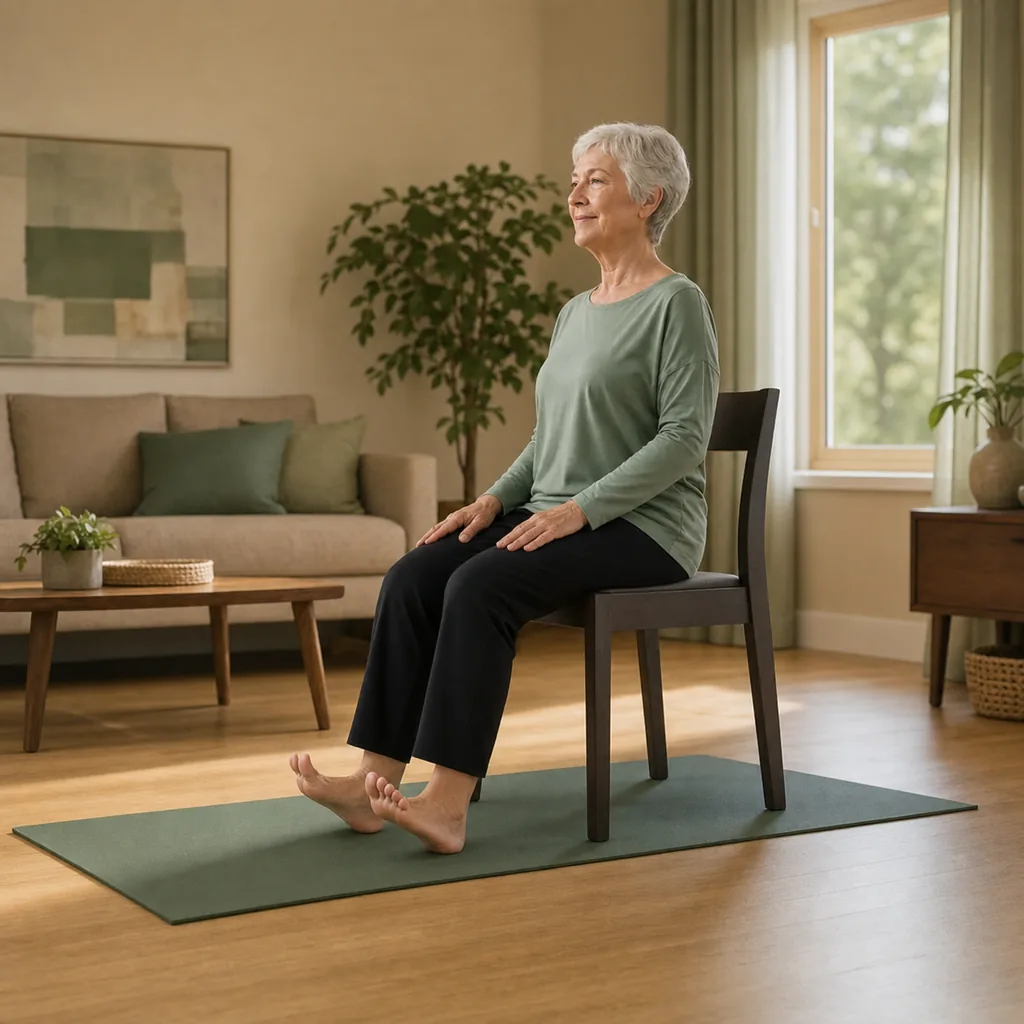
Seated toe lifts. - Short-foot holds, 1 minute: Without curling the toes, gently draw the ball of each foot toward its heel. Hold 3 seconds for 10 repetitions.
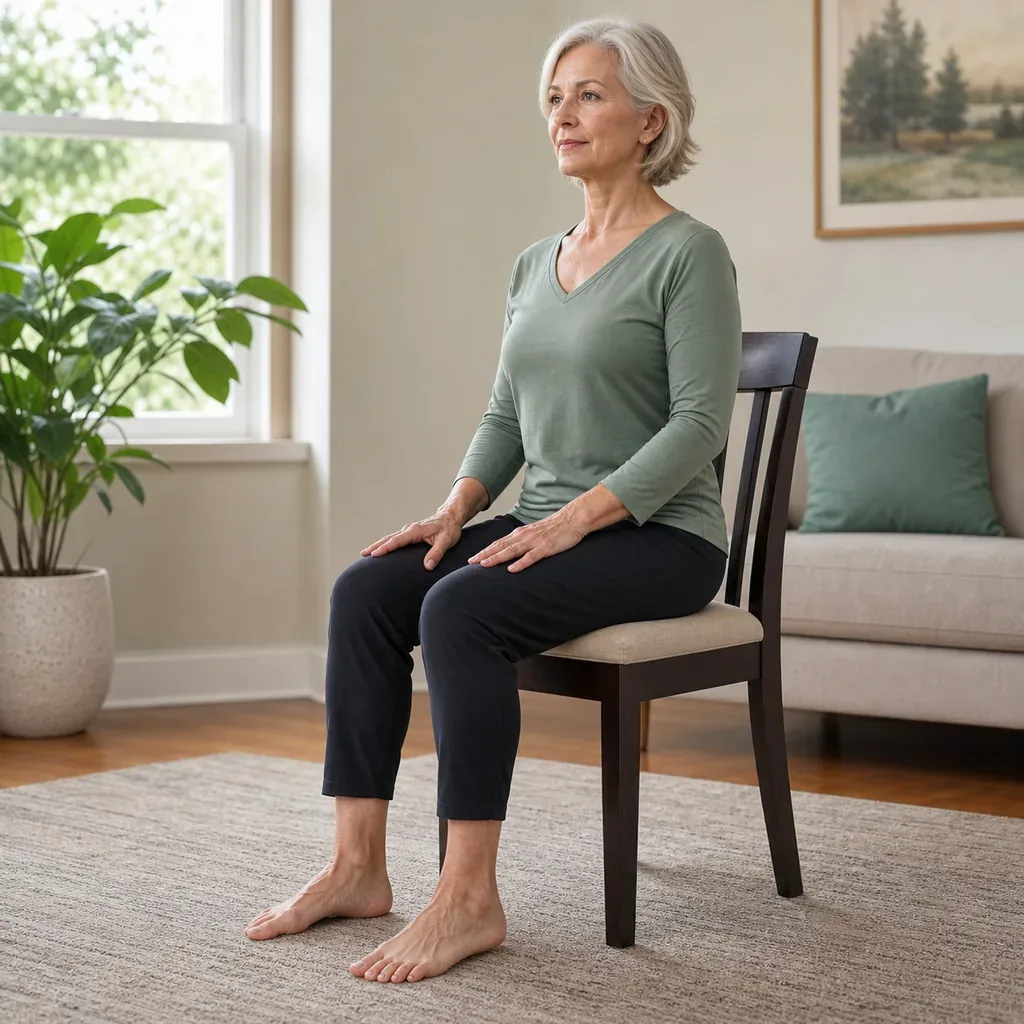
Short-foot arch hold. - Big-toe control, 1 minute: Keep four smaller toes down while lifting the big toes. Switch, lifting the smaller toes while big toes stay down.
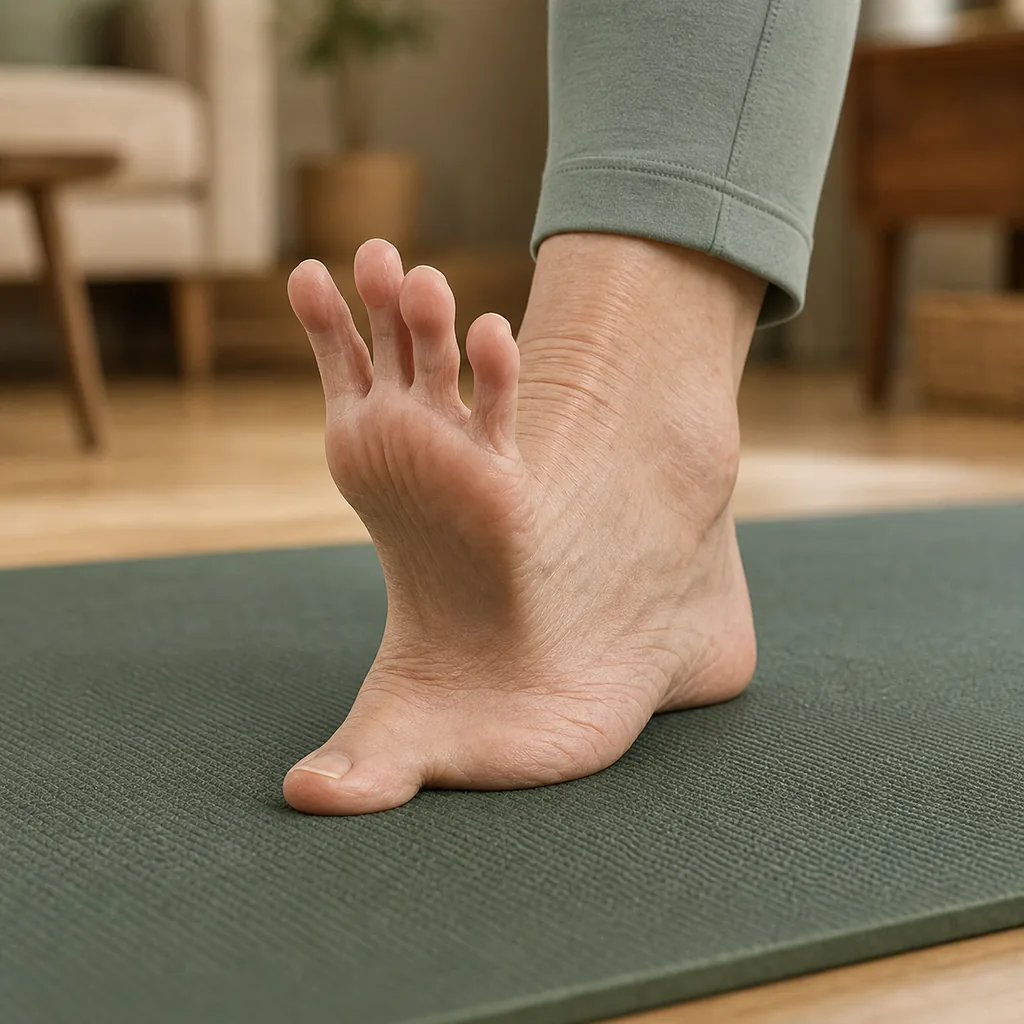
Big-toe control detail. - Towel pulls, 1 minute: Place a towel under one foot. Use the toes to draw it inward slowly, then switch feet after 30 seconds.
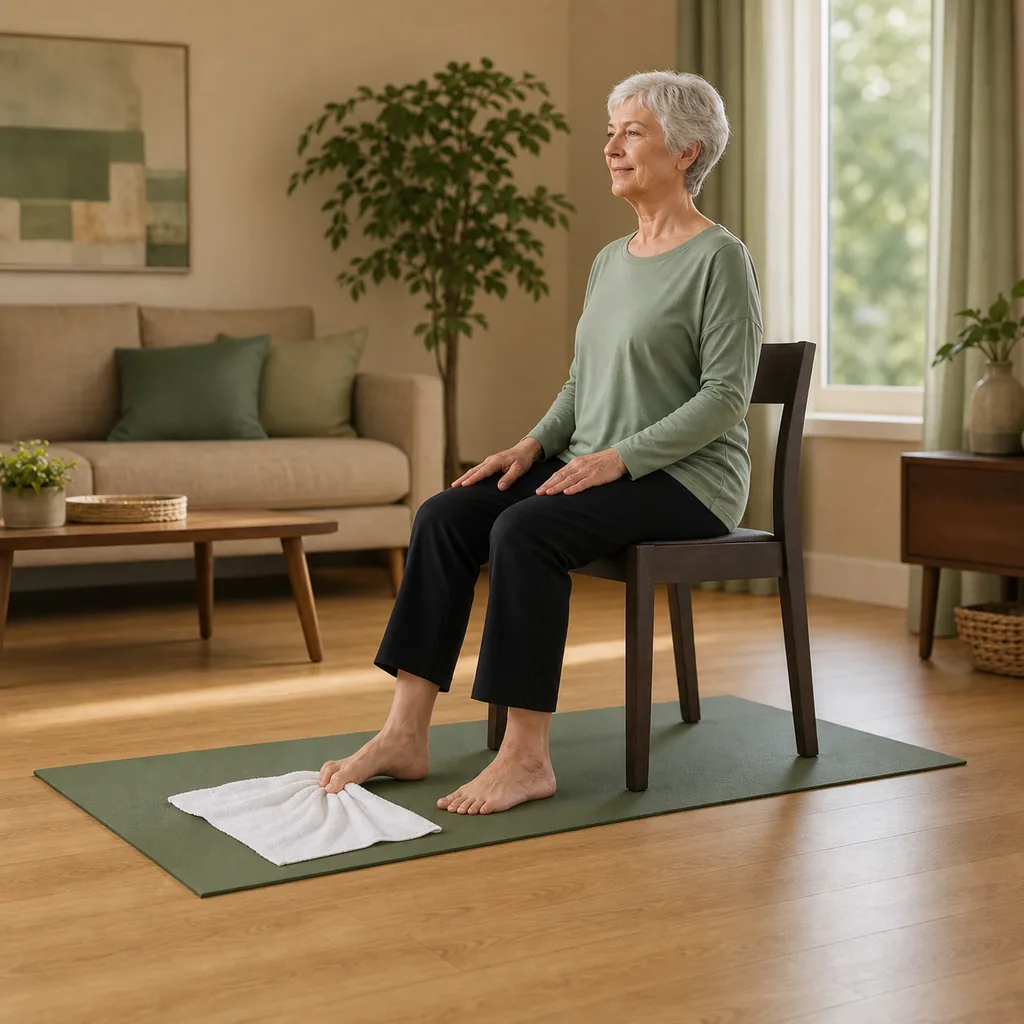
Towel pull position. - Heel raises, 1 minute: Keep toes and forefeet down. Lift both heels, pause 2 seconds, and lower for 15 controlled repetitions.
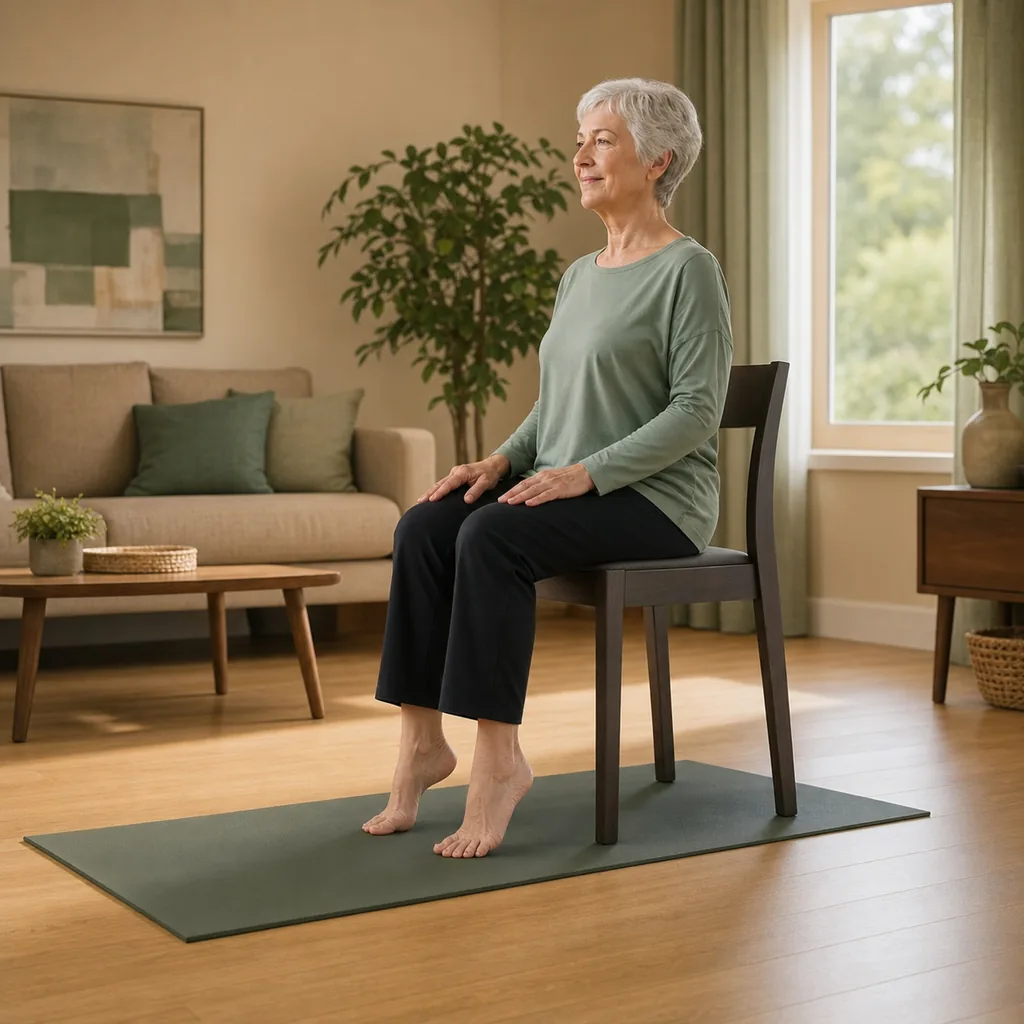
Seated heel raises.
Form Cues and Modifications
- Use only a small arch lift.
- Keep toes long during short-foot holds.
- Reduce repetitions if cramping begins.
- Skip barefoot work with open skin or reduced sensation.
- Stop if pain becomes sharp or persistent.
Continue gently with our foot and ankle stretches, seated calf stretches, or broader seated stretching routine.
Why the Chair Matters
A supported position reduces balance demands while you practice controlled foot movement. NHS strength guidance recommends a solid, stable chair without wheels for chair-based exercise.
Review the chair and progression advice in the NHS strength exercise guidance. Individual rehabilitation instructions should always take priority.
Progress Without Straining
First improve control, not force. When ten repetitions feel smooth for several sessions, add two repetitions or one extra second to each hold, but not both together.
Foot muscles may fatigue quickly. Rest fully between exercises and keep the ankle centered instead of rolling toward the inner or outer edge.
Safety Checklist
- The chair and floor do not slide.
- Breathing remains relaxed.
- Movement stays slow and controlled.
- No numbness, dizziness, or sharp pain appears.
- Feet look normal after the routine.
Stop and seek medical advice for a hot, red, swollen foot; an unhealed wound; sudden inability to bear weight; or worsening numbness. People with diabetes or circulation problems should ask their care team about barefoot exercise.
Frequently Asked Questions
Should the toes curl during an arch lift?
No. Aim to shorten the foot subtly while the toes remain relaxed. Curling usually means the effort is too strong.
How often can seniors repeat it?
Begin two or three days weekly if comfortable. A clinician can recommend a different schedule for a diagnosed foot condition.