

This morning bed yoga sequence uses supported, gentle movements for tight hip flexors before standing. A firm mattress and unhurried breathing keep the ten-minute routine controlled.
10-Minute Morning Bed Yoga Hip Flexors Routine
- Total time: 10 minutes
- Surface: Firm, stable mattress
- Equipment: Pillow or folded towel
- Intensity: Gentle and pain-free
- Goal: Comfortable morning mobility
This routine is general wellness information, not treatment for hip arthritis, a labral injury, nerve symptoms, or persistent back pain. Move slowly after waking and sit before standing if you feel lightheaded.
Before You Begin
- Clear blankets away from the feet.
- Stay away from the mattress edge.
- Use a pillow under the head if needed.
- Keep every position easy to exit.
- Skip any pose that causes pinching.
The 10-Minute Bed Yoga Sequence
- Breathing and pelvic tilts, 2 minutes: Lie on your back with knees bent. Take five breaths, then gently tip the pelvis forward and back for ten repetitions.

Small pelvic tilt. - Single-knee hug, 2 minutes: Draw one thigh toward the chest while the opposite foot remains down. Hold 30 seconds, switch, and repeat once.
- Supported leg lengthen, 2 minutes: Hug the right knee while slowly sliding the left heel forward. Pause before the lower back arches. Switch sides every 30 seconds.
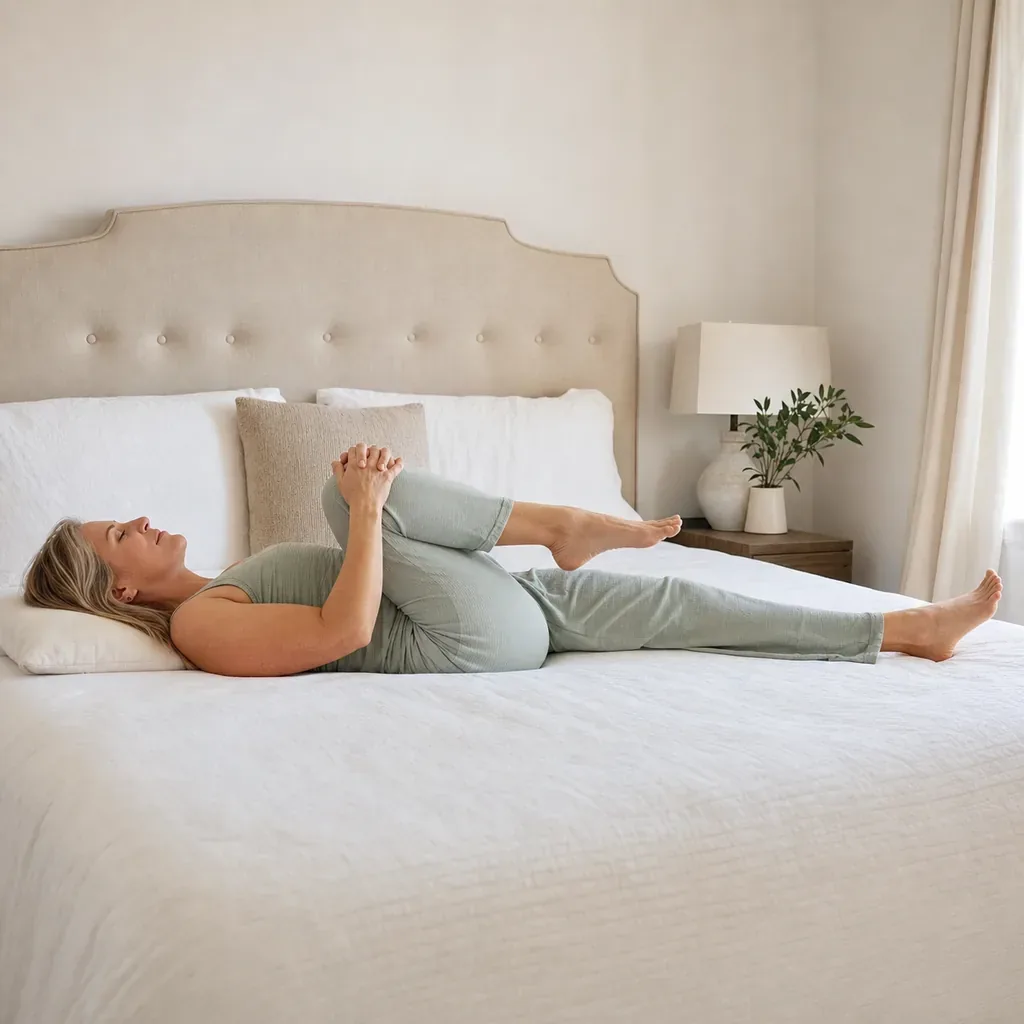
Supported leg lengthen. - Side-lying thigh reach, 2 minutes: Lie on one side. Bend the top knee and move it slightly behind the hip without forcing the foot toward the seat. Switch after 1 minute.

Side-lying thigh reach. - Bridge preparation, 2 minutes: Return to your back. Press feet down, gently lift the pelvis for 3 seconds, and lower. Complete eight repetitions, then rest.

Bridge preparation.
Form Cues and Modifications
- Keep the lower ribs relaxed.
- Use a small range on a soft mattress.
- Hold behind the thigh, not over the kneecap.
- Skip side-lying work after recent hip surgery.
- Stop before the lower back arches strongly.
Continue with our bed yoga for lower-back stiffness, desk stretches for tight hips, or hip mobility routine.
Morning Safety
The National Institute on Aging advises slow, mindful movement and listening to your body during exercise. Review its exercise safety guidance before starting a new routine.
- Move from lying to sitting gradually.
- Pause if dizziness appears.
- Keep breathing throughout each hold.
- Do not force a deep hip stretch.
- Use prescribed mobility aids when standing.
After the Sequence
Roll to one side before sitting up if that transition is comfortable. Sit at the edge of the bed for 30 seconds, place both feet down, and check for dizziness before standing.
Morning stiffness that eases with gentle movement can still deserve assessment when it repeatedly limits walking, sleep, dressing, or other daily activities.
Stop for sharp groin pain, leg weakness, numbness, loss of bladder or bowel control, chest pain, or severe dizziness. Seek medical advice for persistent symptoms or pain following a fall.
Frequently Asked Questions
Is a soft mattress suitable?
A very soft mattress may make alignment difficult. Use smaller movements or move to a firm exercise surface if getting down and up is safe.
Should I feel the stretch in my back?
No. Reduce the range if the lower back arches or feels compressed. The sensation should remain mild around the front of the hip.