
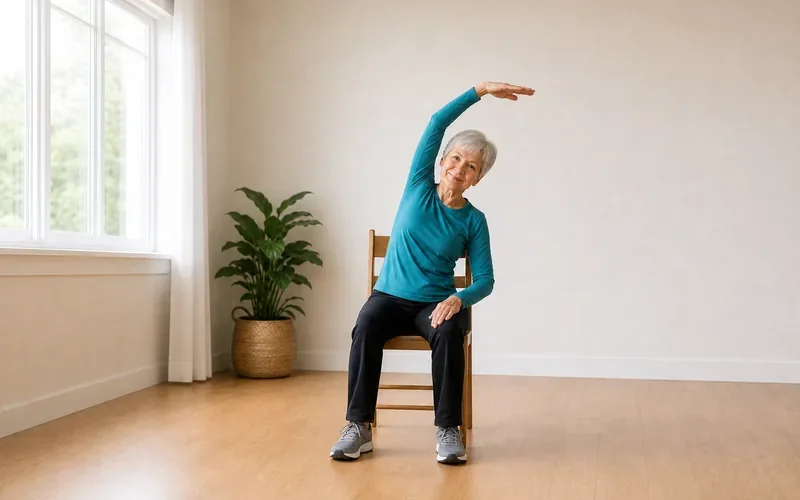
This supported 10-minute routine gently moves the neck, shoulders, torso, hips, hamstrings, and ankles while you remain seated on a stable chair.
Seated Stretching Exercises for Seniors: 10-Minute Plan
Choose a solid armless chair without wheels and place it on a level surface. Wear supportive shoes, keep water nearby, and use a comfortable range that never feels sharp or forced.
- Total time: 10 minutes
- Equipment: sturdy armless chair
- Effort: gentle
- Format: six movements
The Six-Movement Seated Sequence
-
Neck Turns — 1 Minute
Sit tall with shoulders down. Turn the head right without lifting the chin, return to center, then turn left. Complete five controlled turns per side.
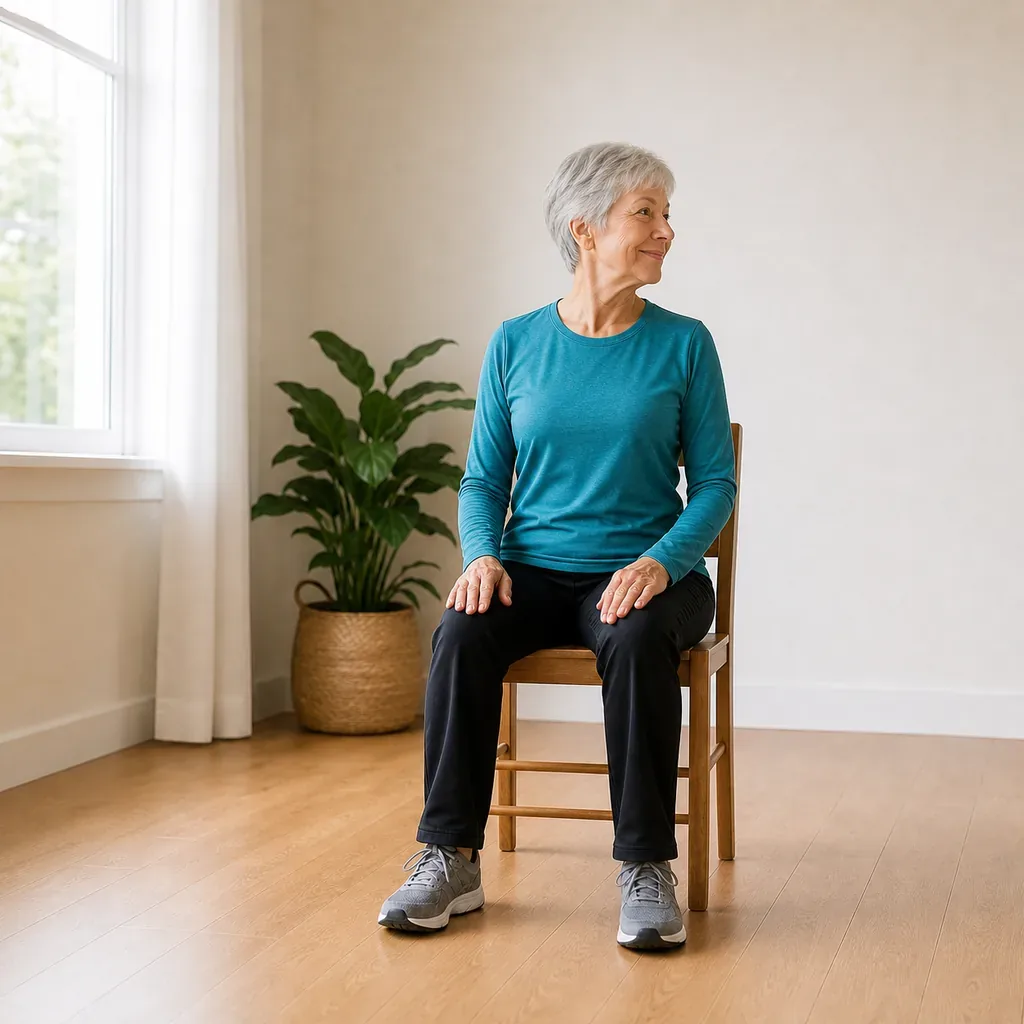
Gentle seated neck turn. -
Shoulder Rolls — 1 Minute
Let the arms hang comfortably. Lift both shoulders gently, roll them back and down, then repeat eight times. Reverse direction for eight slow circles.

Controlled shoulder roll. -
Overhead Side Reaches — 2 Minutes
Keep both feet flat and hips grounded. Raise one arm overhead, lean gently away, hold 20 seconds, and switch sides. Repeat twice per side.
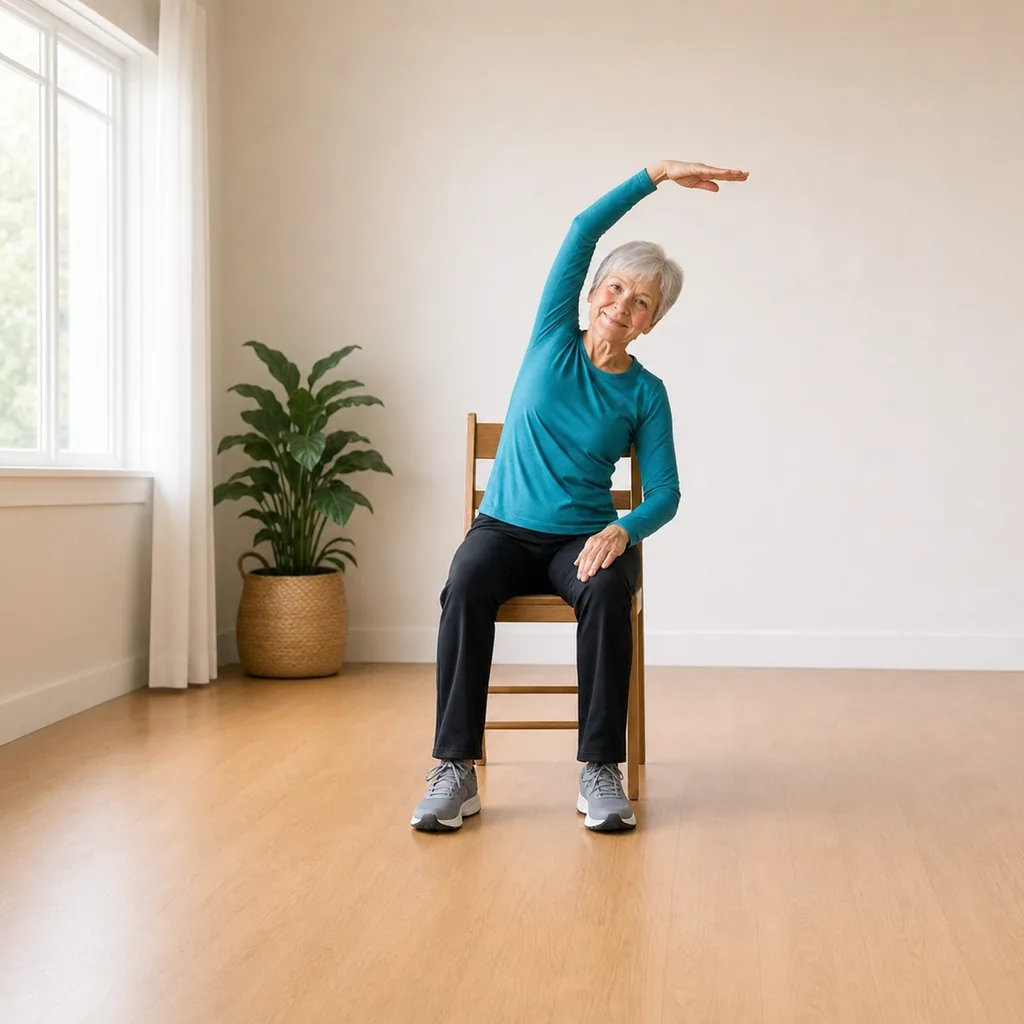
Supported overhead side reach. -
Seated Chest Opener — 90 Seconds
Hold the chair sides behind the hips. Draw the shoulders gently back without arching the lower back. Hold 20 seconds, rest, and repeat three times.
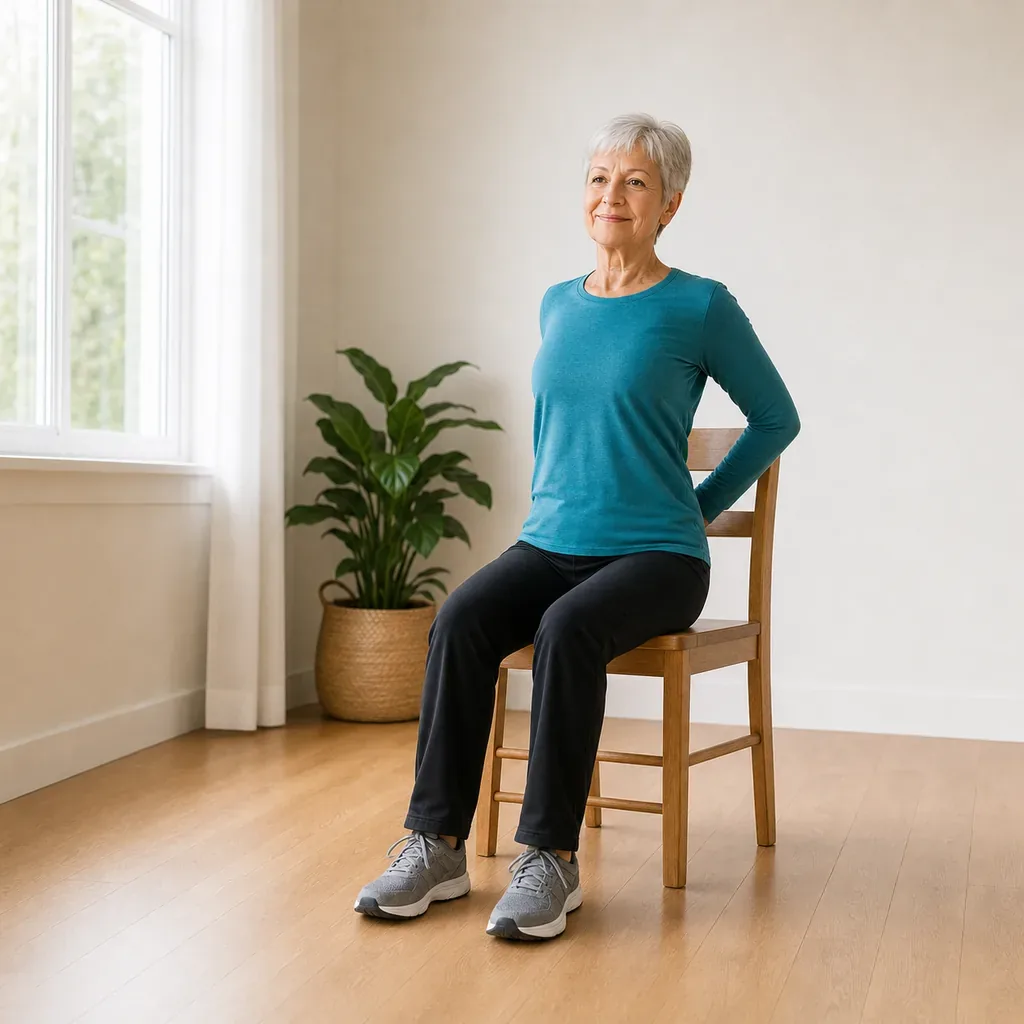
Seated chest opener. -
Seated Hamstring Stretch — 2½ Minutes
Extend one leg with heel down and toes up. Hinge slightly from the hips, hold 25 seconds, return upright, and repeat before switching legs.
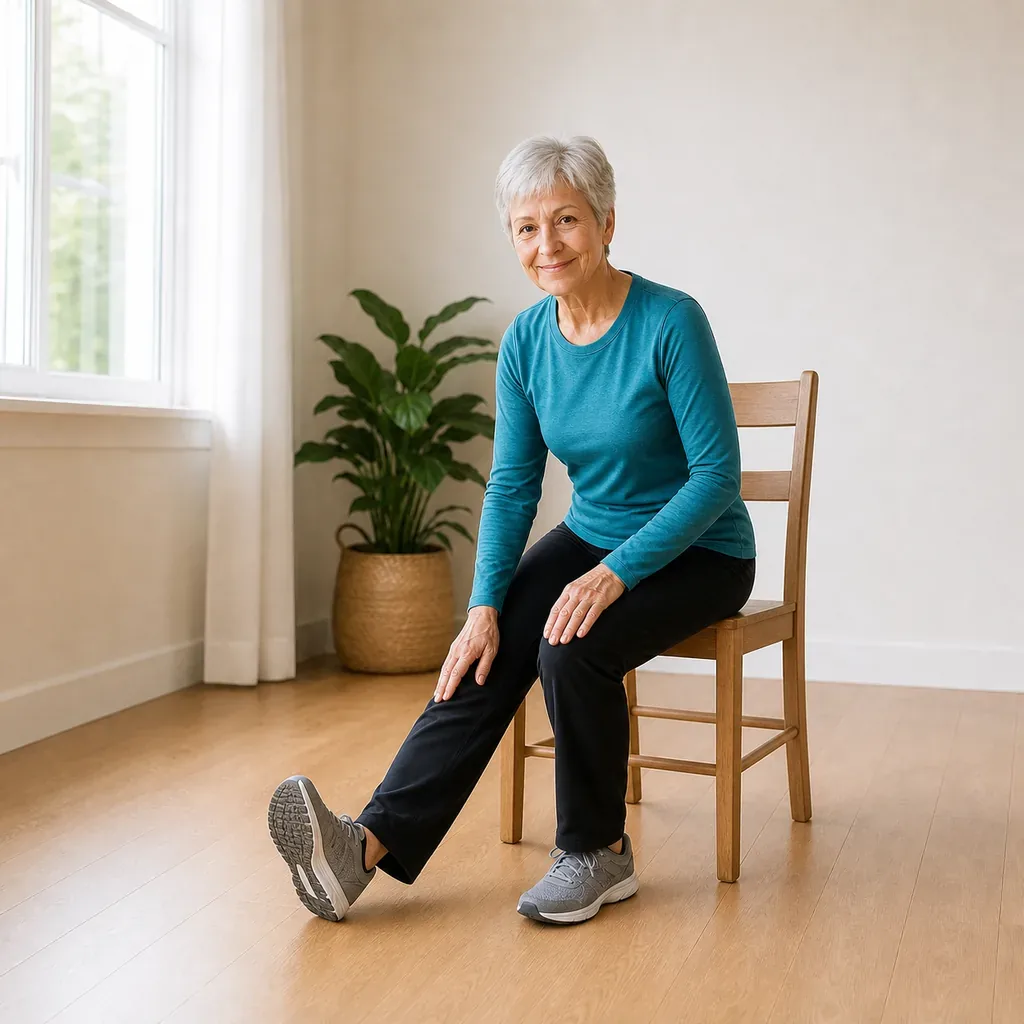
Supported hamstring stretch. -
Ankle Circles — 2 Minutes
Lift one foot slightly. Draw eight slow circles in each direction, lower the foot, and repeat with the other ankle while the thigh remains supported.
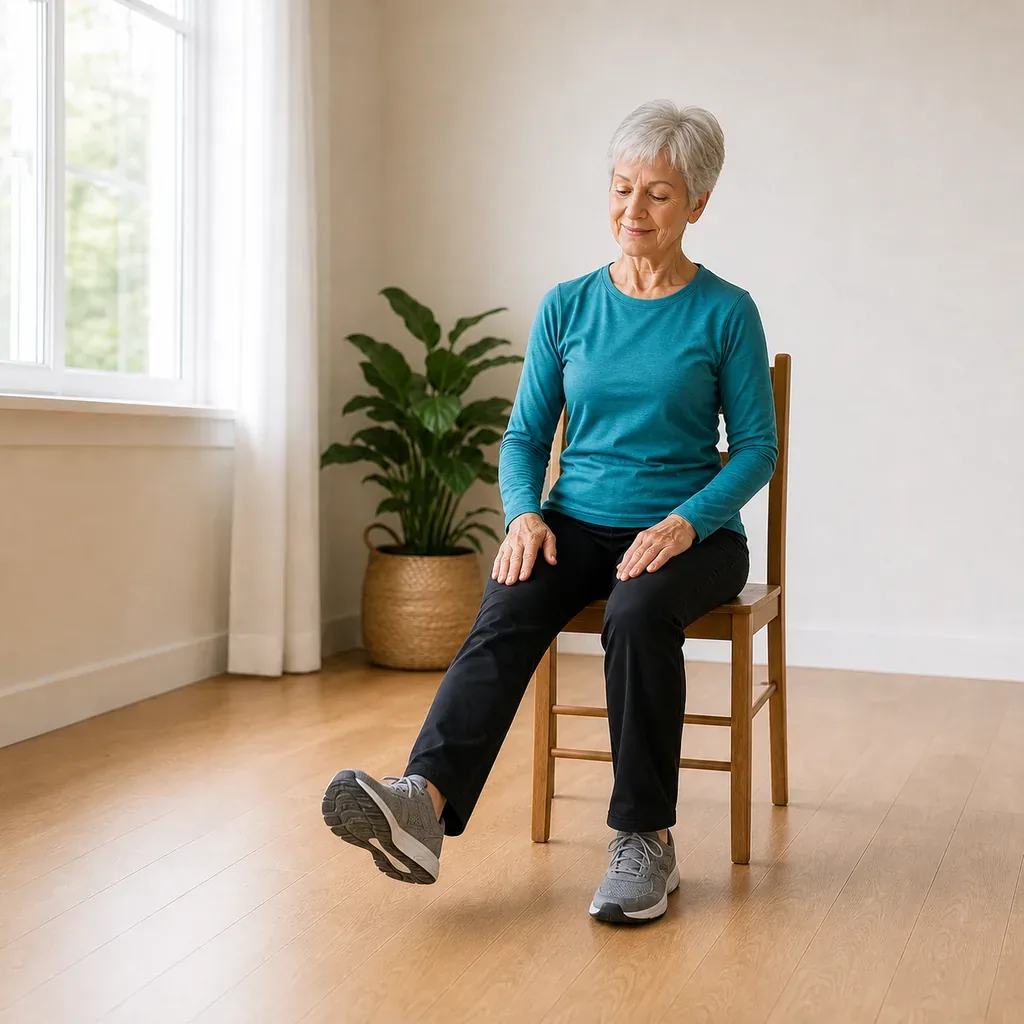
Gentle ankle circles.
Safety and Modifications
The NHS sitting-exercise guide recommends a stable chair without wheels, feet flat on the floor, comfortable clothing, and gradual increases in repetitions.
- Stop for sharp pain, dizziness, chest pain, unusual breathlessness, numbness, or new weakness.
- Keep one hand on the chair when changing leg position.
- Use a smaller range when a joint feels pinched.
- Ask a clinician for guidance after surgery, a fall, or a major symptom change.
Continue with seated chair exercises, seated core exercises, or gentle foot and ankle stretches.
Progress at a Comfortable Pace
Start with one round when returning after inactivity. Over several sessions, add repetitions only when breathing stays easy and no movement increases symptoms. A smaller range with steady control is more useful than a deeper stretch that causes guarding.
After the routine, place both feet down and pause before standing. Use the chair back or a nearby counter for support, especially after ankle circles. If you feel lightheaded, remain seated until the sensation settles completely.
Frequently Asked Questions
Should a stretch feel painful?
No. Mild pulling can be comfortable, but pain, tingling, numbness, or joint pinching means you should reduce the range or stop.
Can this routine be done daily?
Some people tolerate gentle daily movement. Begin with two or three sessions weekly and adjust according to comfort, recovery, and professional advice.
This routine provides general fitness information and is not medical treatment or rehabilitation.