
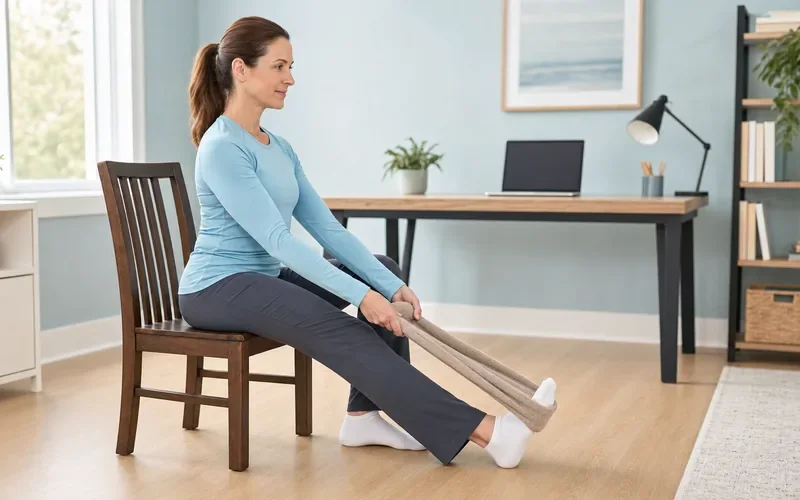
These seated calf stretches give desk workers a five-minute lower-leg break without standing. A towel provides gentle assistance while the chair keeps both hips supported.
5-Minute Seated Calf Stretches Desk Routine
- Total time: 5 minutes
- Position: Seated in a stable chair
- Equipment: Bath towel or yoga strap
- Intensity: Mild tension, never pain
- Footwear: Shoes optional
This routine is general mobility information, not treatment for a blood clot, nerve problem, injury, or circulation condition. Do not stretch a newly swollen, red, hot, or injured calf.
Move after a brief warm-up rather than forcing a cold muscle. The goal is a comfortable calf sensation while the ankle moves, not reaching a particular foot angle.
Set Up Safely
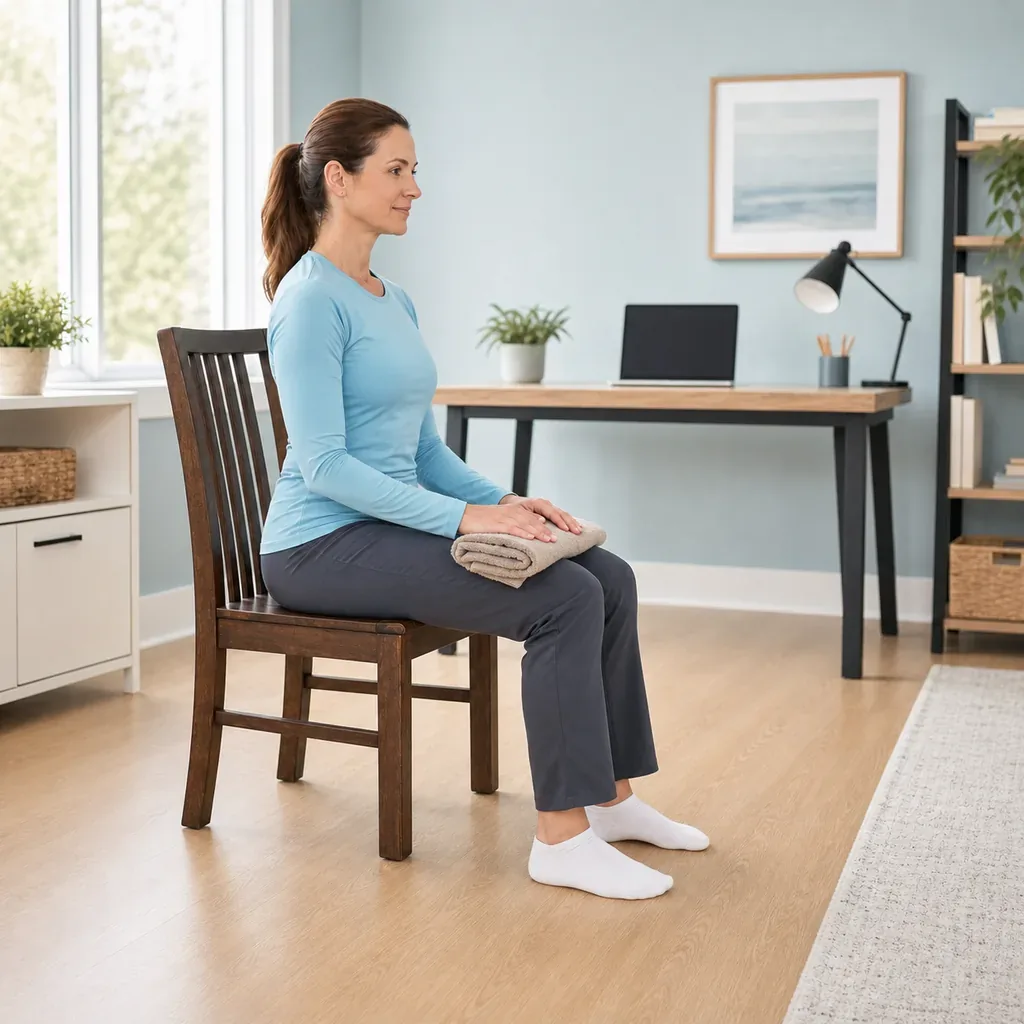
- Choose a sturdy chair without wheels.
- Sit back with both hips evenly supported.
- Keep the working heel on the floor or supported ahead.
- Hold one towel end in each hand.
- Keep the knee comfortable rather than forcefully locked.
The Five-Minute Seated Calf Routine
- Ankle warm-up, 1 minute: Keep both heels down. Lift the toes, lower them, then lift both heels. Alternate slowly for 15 controlled rounds.
- Straight-knee towel stretch, 1 minute: Extend the right leg with the heel supported. Loop the towel around the forefoot and gently draw the toes toward you for 20 seconds. Release, repeat, then switch legs.
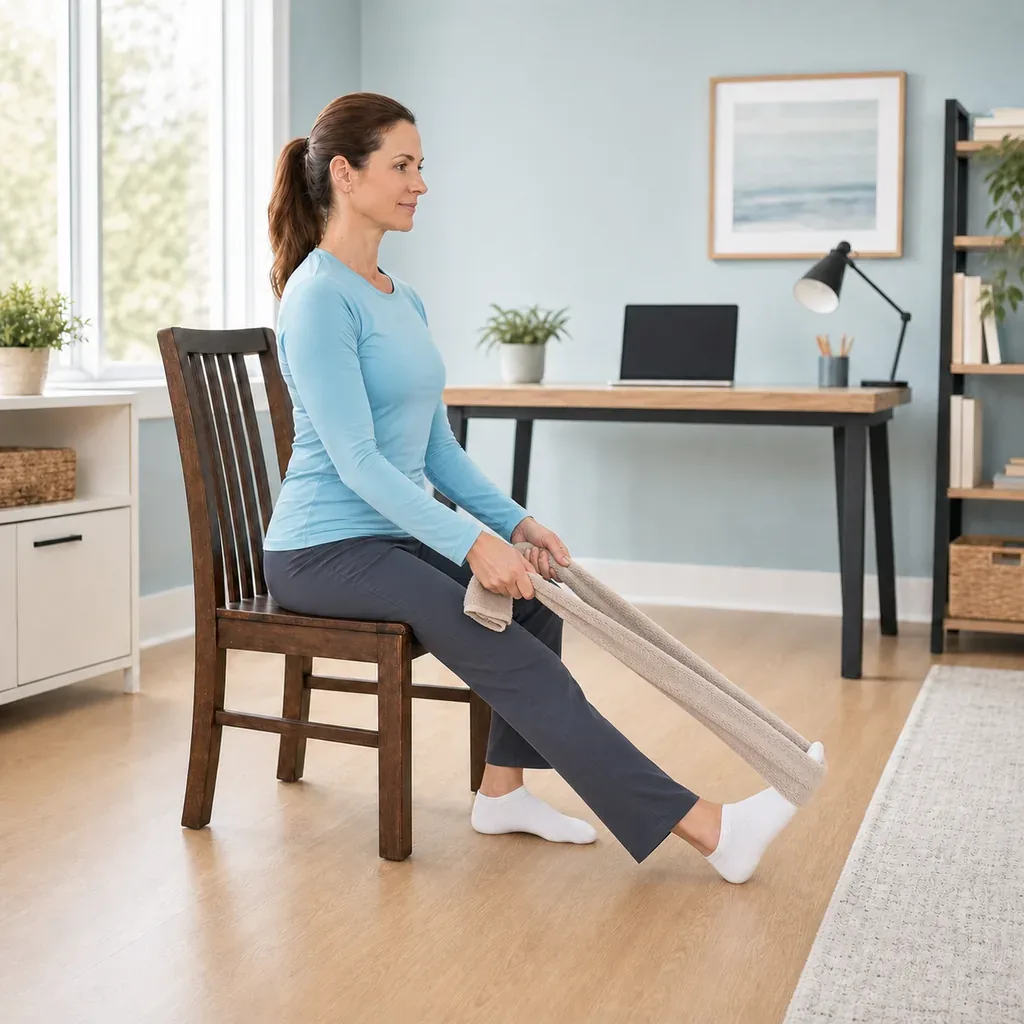
Straight-knee towel stretch. - Bent-knee towel stretch, 1 minute: Bend the right knee slightly while keeping the heel supported. Gently pull the forefoot back for 20 seconds. Repeat, then switch legs.
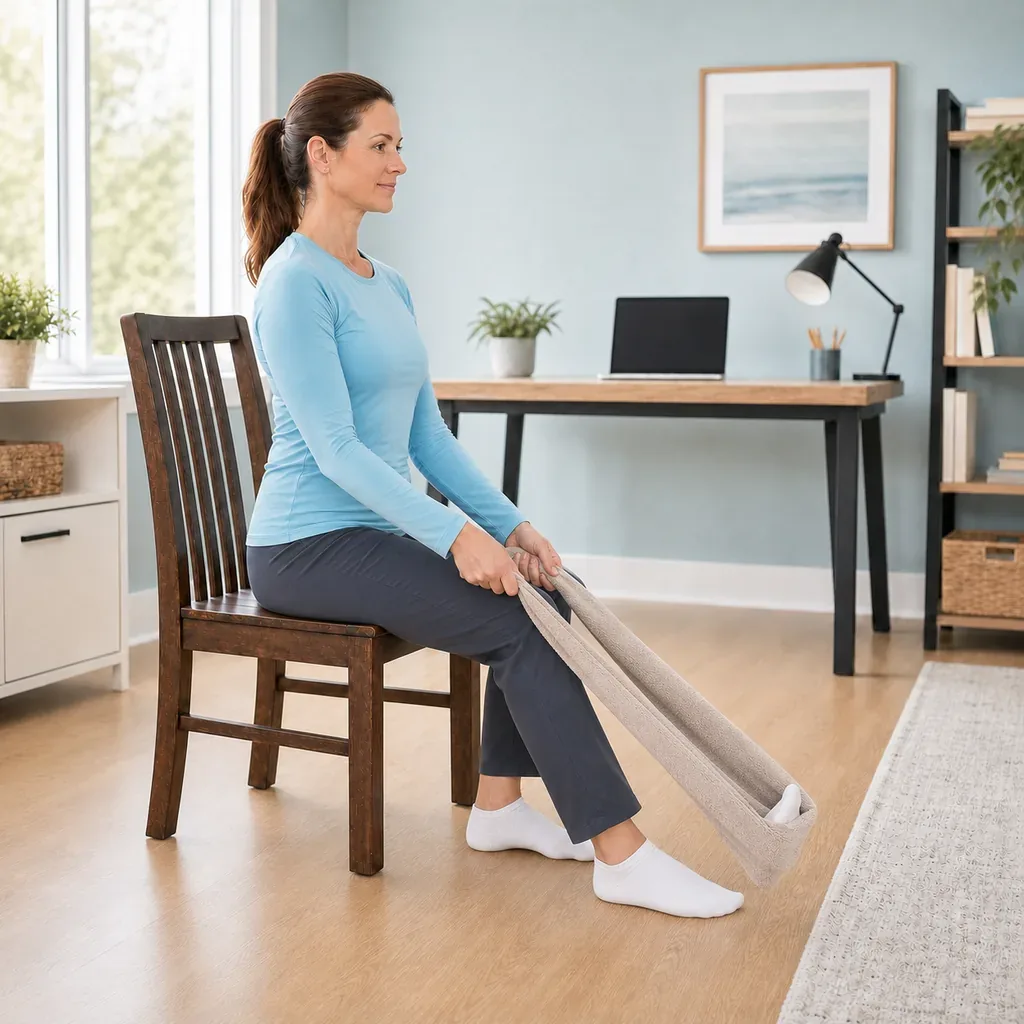
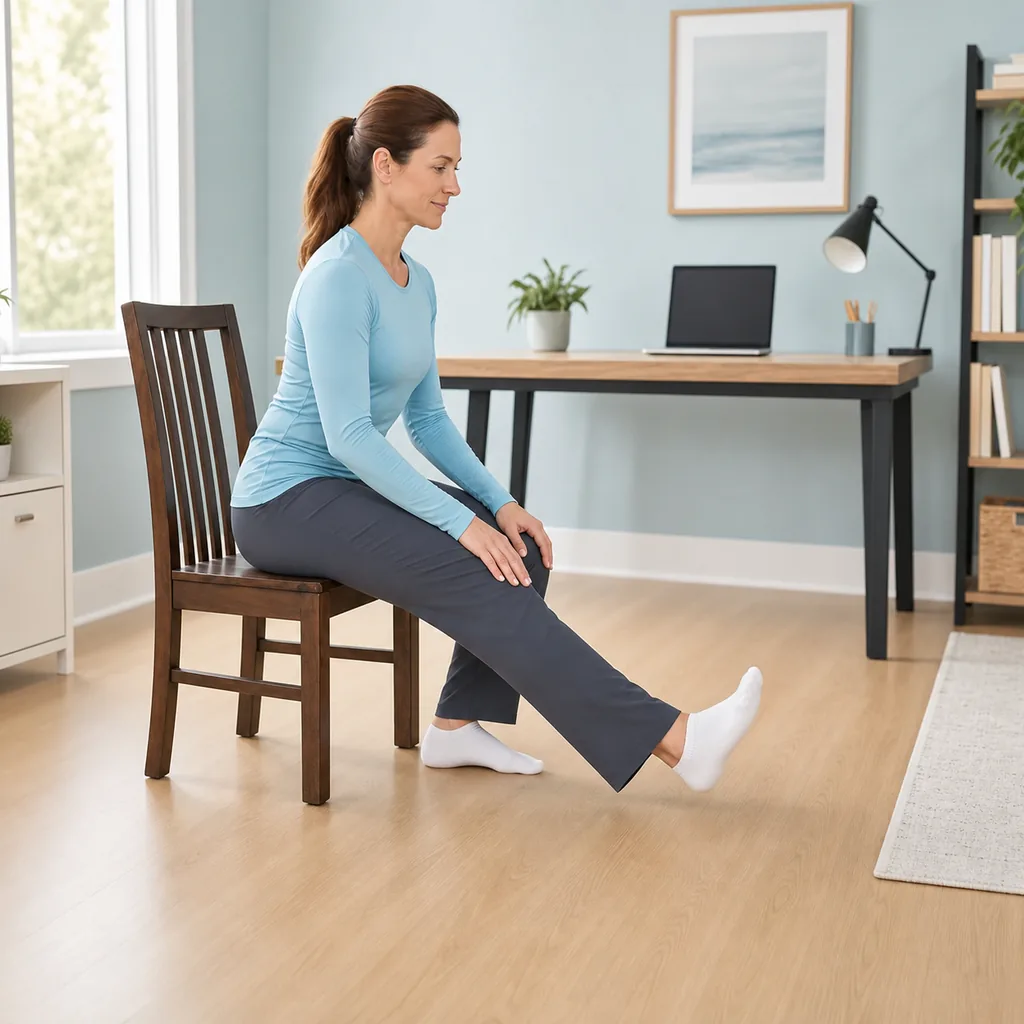
Bent-knee towel stretch. - Heel reach, 1 minute: Slide one heel forward, keep toes lifted, and hinge from the hips slightly. Hold 20 seconds, reset, and change sides.
Seated heel reach. - Reset, 1 minute: Place both feet flat. Complete ten slow ankle pumps, then rest for three easy breaths.
Form Cues and Modifications
- Keep the towel across the ball of the foot, not the toes.
- Use light arm pressure instead of pulling hard.
- Keep the spine long during the small hinge.
- Shorten the knee angle if the hamstring dominates.
- Release immediately if tingling or cramping appears.
Build a broader workday break with our seated leg exercises, foot and ankle stretches, or five-minute desk stretches.
What Each Position Changes
- A straighter knee emphasizes the larger upper calf muscle.
- A slightly bent knee shifts the sensation lower in the calf.
- Ankle pumps add movement between longer holds.
- The towel controls range without requiring a forward reach.
Worcestershire Acute Hospitals includes a seated towel-assisted calf position in its physiotherapy stretching guidance. Follow individualized clinical instructions when they differ.
Safety Checklist
- The chair remains stable.
- Stretching feels mild and localized.
- No bouncing or forceful pulling occurs.
- Breathing stays relaxed.
- Symptoms do not worsen afterward.
Stop and seek urgent medical advice for sudden one-sided calf swelling, warmth, redness, unexplained tenderness, chest pain, or shortness of breath. Ask a clinician before stretching after surgery, immobilization, or a recent lower-leg injury.
Frequently Asked Questions
How strong should the stretch feel?
Use mild, steady tension that allows normal breathing. Pain, burning, numbness, or a sharp pulling sensation means the range is too strong.
Can I repeat it during the workday?
Yes, if every position remains comfortable. Brief walking breaks may also help when your mobility and workplace allow them.