
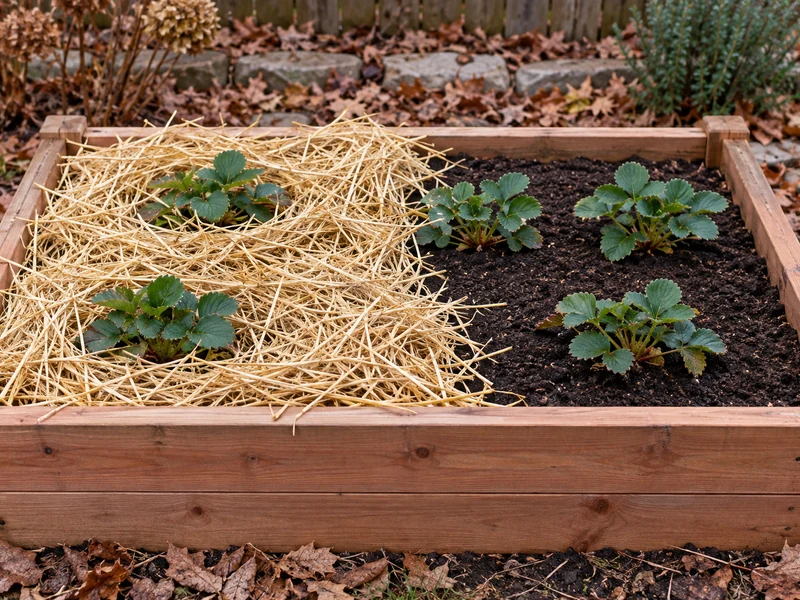
A blanket of straw can help strawberry plants survive a cold winter, but the timing matters as much as the material. Cover a bed while it is still actively growing and you can interfere with hardening; leave it covered after new leaves appear and you can hold back spring growth. This guide shows what to look for, how to lay the straw loosely, and when to uncover the crowns.
Quick answer: In a cold-winter climate, wait until the plants have experienced several hard frosts and are no longer actively growing. Spread clean, seed-free straw in a loose layer about 3 to 4 inches deep over the bed. In spring, check beneath it regularly and move most straw off the crowns as soon as fresh leaves begin to grow. Local timing and recommended depth vary by climate, so follow your regional extension service if its advice differs.
What You’ll Need
- Clean, seed-free straw (not hay)
- Garden gloves and a small hand rake
- A ruler for checking the loose layer
- Optional: lightweight boards or other simple edge weights in a windy spot
Straw is the dry stem of a harvested grain. Hay often contains grass and weed seeds, which is why it is a poor substitute. Avoid a wet, compact mat of grass clippings. You want an airy cover that can be lifted and moved in spring.
How to Winterize a Strawberry Bed
The six images below are photorealistic visual guides to the seasonal checkpoints. They illustrate the method rather than document one plant tracked through the year; your own bed may look different by region and variety.
Step 1: Check the Bed Before You Cover It
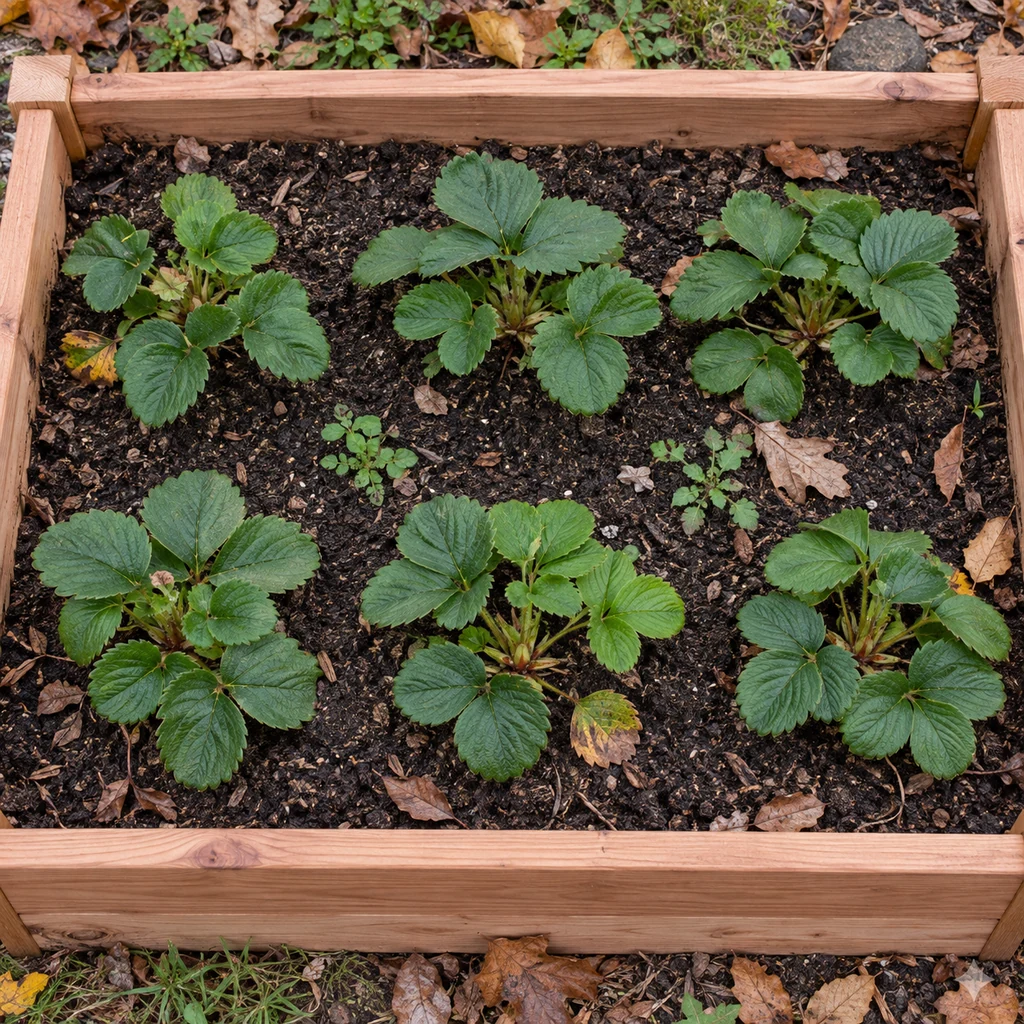
Look across the entire planting before reaching for the straw. Identify the strawberry crowns—the compact centers where leaves emerge at soil level—and note any weeds or fallen debris between plants. Leave healthy leaves in place. A bed does not have to look perfectly tidy, but thick weeds and rotting debris should not disappear under the winter cover.
Step 2: Clear Weeds and Loose Debris
Pull weeds by hand and lift away fallen leaves or badly decayed material sitting on the bed. Do not bury the crowns with extra soil or prune away sound green foliage just to make the bed look neat. If the soil is very dry, water normally before the ground freezes; do not soak a muddy bed simply to apply mulch.
Step 3: Wait for the Right Cold-Weather Cue
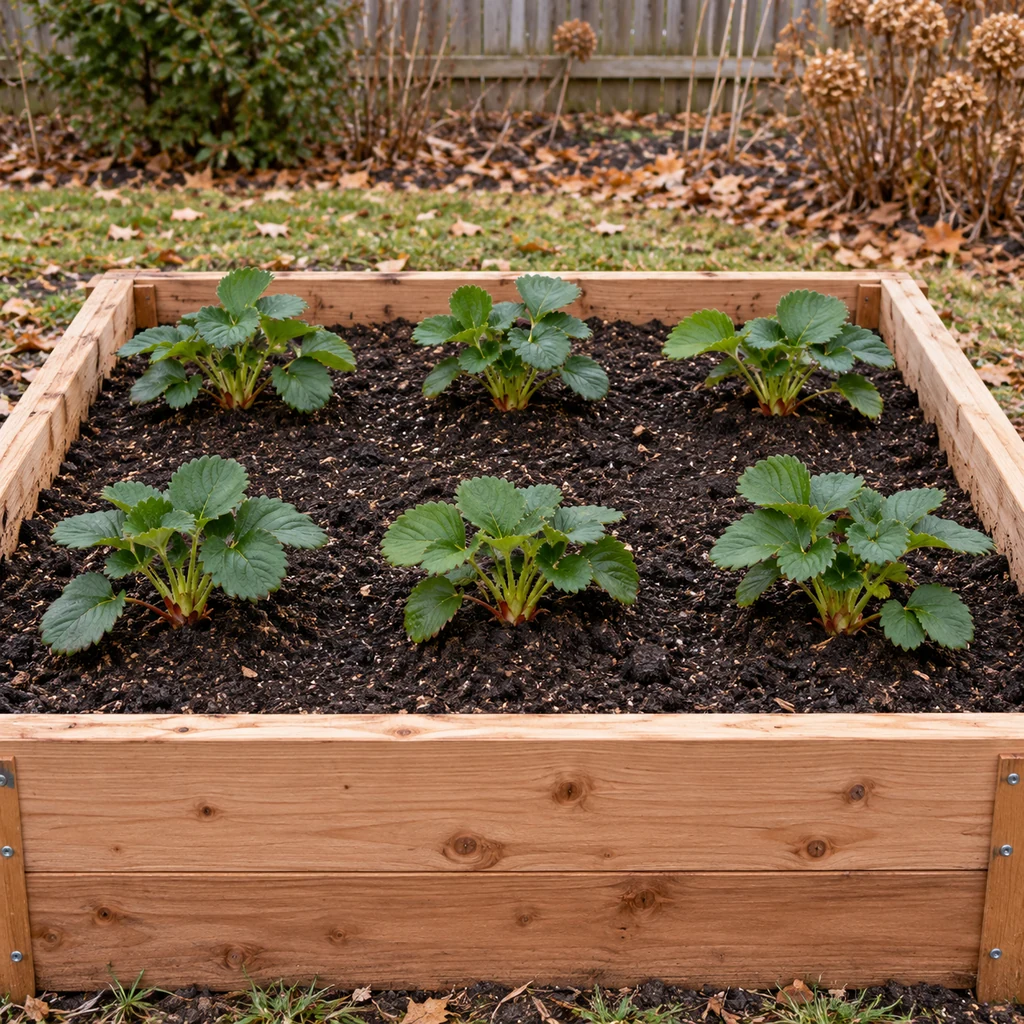
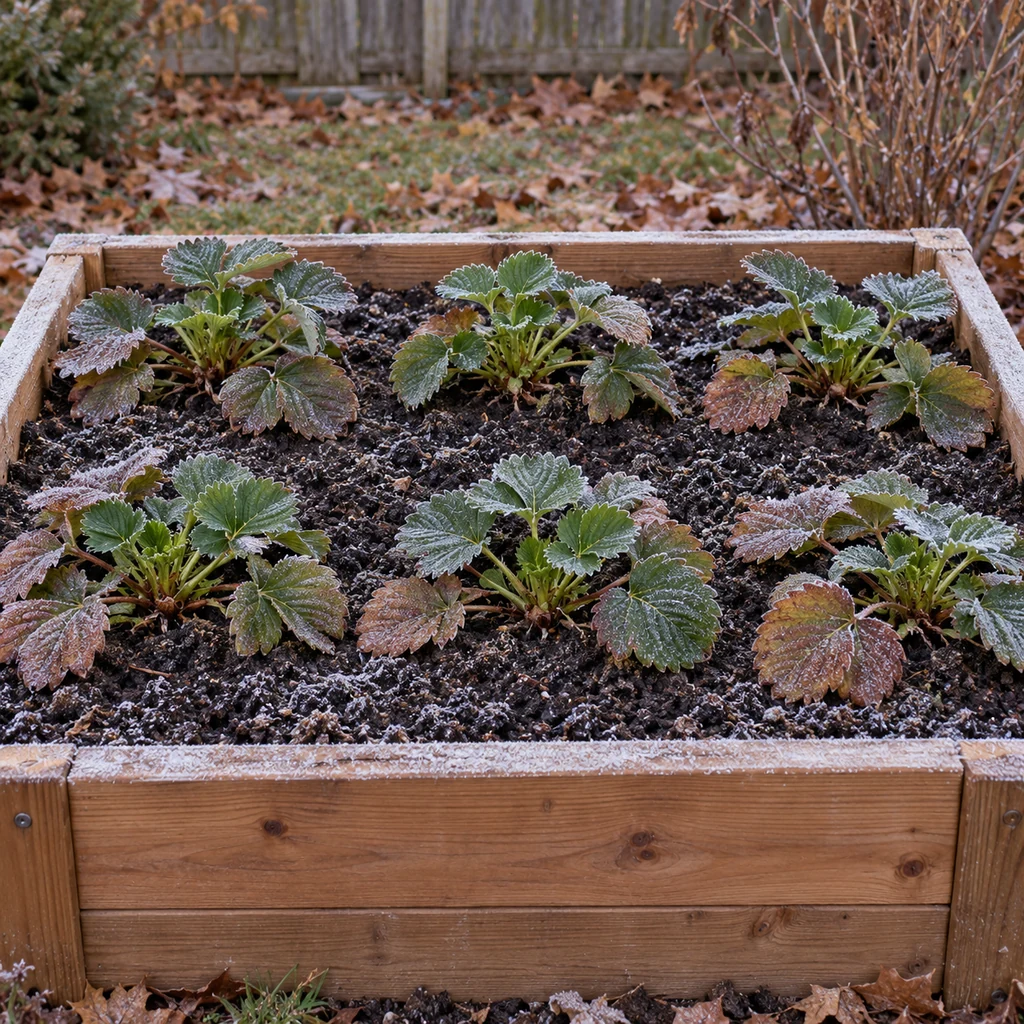
Do not treat the first chilly night as the signal. Let the plants acclimate through several hard frosts; in many cold regions, their older foliage begins to look flatter or bronzed while the centers remain alive. Regional advice ranges from late autumn to early winter because the weather, not a universal calendar date, determines readiness. If your area rarely freezes, a thick winter blanket may be unnecessary.
Step 4: Choose Clean, Loose Straw
Use straw that feels dry and separates easily into stems. Shake out any compacted bundles before spreading them. Skip hay with seed heads and any material that has turned moldy or soggy in storage. A small bed uses less straw than you might expect, so add it gradually rather than dumping an entire bale onto the plants.
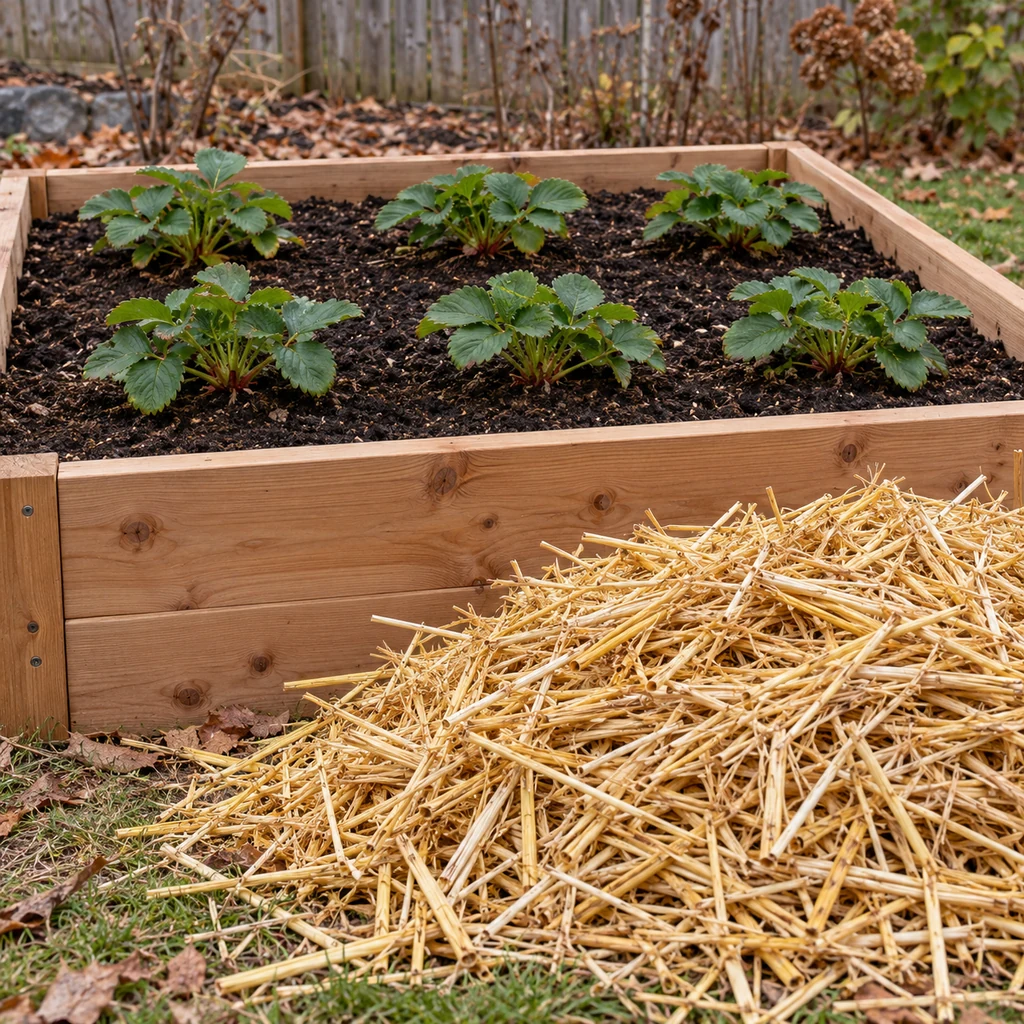
Step 5: Lay an Airy Blanket Over the Whole Bed
Fluff the straw over the rows, including the centers of the plants, to a loose depth of roughly 3 to 4 inches. This is a winter cover, so the crowns may be hidden for now; the key is that the material is not packed down. Check depth with a ruler at several spots. In a windy location, lightly secure the edges without pressing a heavy board over the plants. A loose layer helps buffer the freeze-thaw cycles that can heave crowns out of the soil.
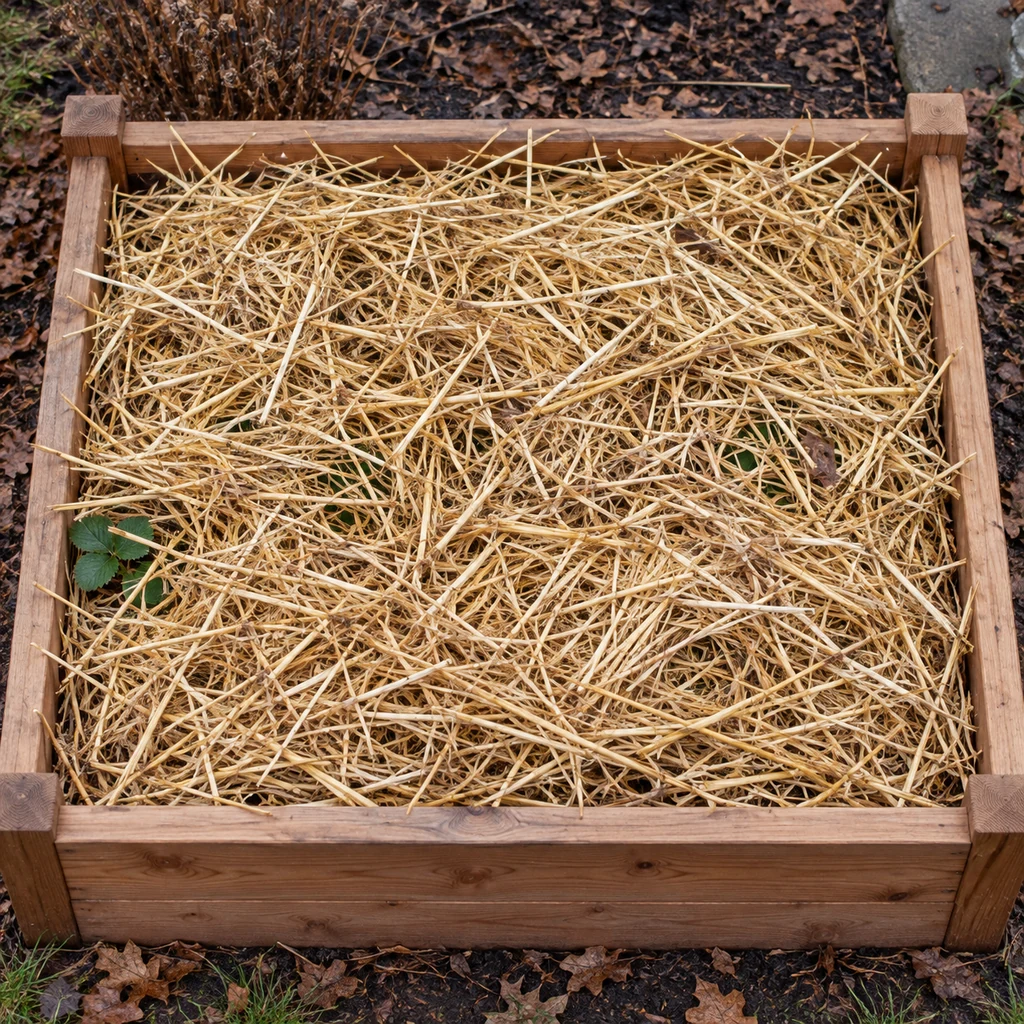
Step 6: Uncover New Growth in Spring
As the weather begins to warm, lift a small section of straw every few days and look for fresh pale-green leaves. When growth starts, gently pull most straw off the crowns and place it between the rows. Do not wait until tender leaves are long and yellow from lack of light. Keep some clean straw on the soil between plants to reduce splash and keep future fruit off bare ground. If a late frost threatens after uncovering, protect emerging blossoms according to your local extension guidance.
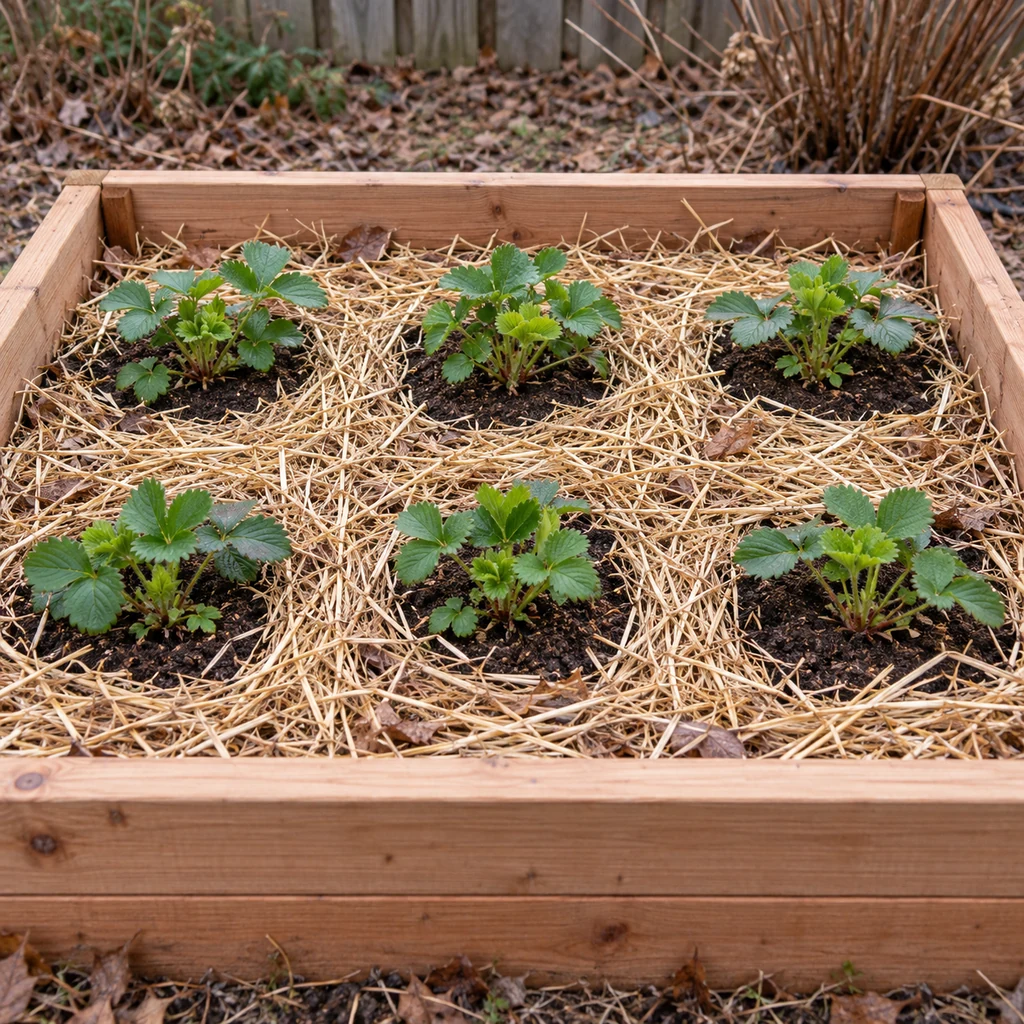
The Timing in One Glance
- Before winter: Clear weeds and loose debris while the crowns remain at soil level.
- After several hard frosts: Apply a loose straw cover if your region needs winter protection.
- During winter: Check that wind has not stripped the bed or packed the cover into a wet mat.
- At first spring growth: Move straw off crowns, then watch for late frosts around flower buds.
Common Mistakes to Avoid
Covering too early. Warm, actively growing plants need time to harden. If the first frost is followed by weeks of mild weather, wait for the sustained cold pattern recommended in your region.
Using hay or heavy clippings. Hay can bring weed seeds; compact clippings can form a wet layer that is hard for leaves to grow through.
Leaving the spring cover in place too long. The goal changes with the season. Cover the crowns through winter, then uncover them when new growth begins. The spring mulch belongs mainly on the soil between plants.
Assuming every garden needs the same depth. University extension recommendations vary with winter severity and local growing conditions. The 3-to-4-inch loose layer here is a practical cold-climate starting point, not a rule for warm regions or container plants.
Frequently Asked Questions
Can I use leaves instead of straw?
Some local guides allow loose shredded leaves, while others warn that whole or heavy leaves can mat over strawberry plants. Clean straw is the simpler choice for this method. If you use leaves, follow local guidance and keep the cover loose.
Should I leave the crowns exposed in winter?
For a cold-climate winter straw cover, no: the loose straw goes across the plants and crowns. Exposing the crowns is the spring step, once you see fresh growth. Do not confuse winter protection with the lighter growing-season mulch that stays mainly between plants.
Does the same method work for containers?
Potted strawberries lose heat differently from plants rooted in the ground. Move containers to a protected location and follow local advice for insulating the pot itself; a little straw over the leaves alone may not protect the roots.
Keep the Rest of the Garden Ready
Winter care is different for each plant. If you’re also managing frost-sensitive ornamentals, see our guide to digging and storing dahlia tubers for winter. The strawberry bed can stay rooted in place; its simple seasonal task is a timely, breathable cover followed by a careful spring reveal.