
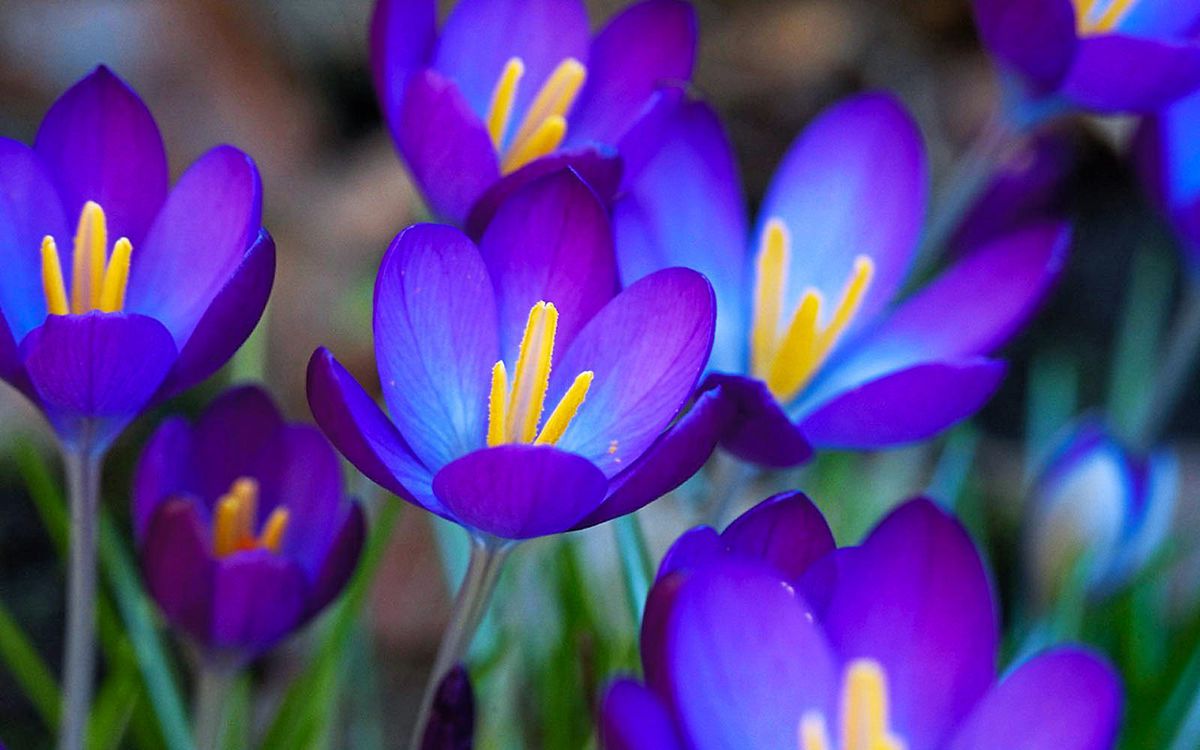
Purple flowers can make a garden feel calm, rich, romantic, or dramatic depending on the shade you choose. Soft lavender and violet flowers create a gentle cottage-garden mood, while deep plum, royal purple, and blue-purple blooms add depth and contrast. This guide brings together useful purple flowers names, common names, growing notes, and design tips so you can choose plants that actually fit your garden.
The original idea behind this page was simple: a list of beautiful purple flowers with both botanical and common names. This updated guide keeps that idea, but makes it easier to use. Instead of only reading a long list, you can now compare flower types by height, bloom shape, garden use, and where they make the most sense in a border, container, cutting garden, or pollinator planting.
How To Use This Purple Flowers Names Guide
For each plant, the botanical name is useful because it helps you search nurseries, seed packets, and plant tags more accurately. The common name is easier to remember, but common names can vary by region. If you are buying a specific variety, use the cultivar name too, especially for clematis, salvia, aster, geranium, and roses.
When choosing purple flowers, think about more than color. A garden looks stronger when you mix several flower shapes:
- Spikes: salvia, liatris, lavender, foxglove, lobelia.
- Globes: allium and chives.
- Daisy shapes: aster, echinacea, knautia.
- Bells: campanula and clematis.
- Soft fillers: verbena bonariensis, geranium, viola.
- Climbers: clematis vines for trellises, fences, and arches.
Best Purple Flowers Names For Garden Borders
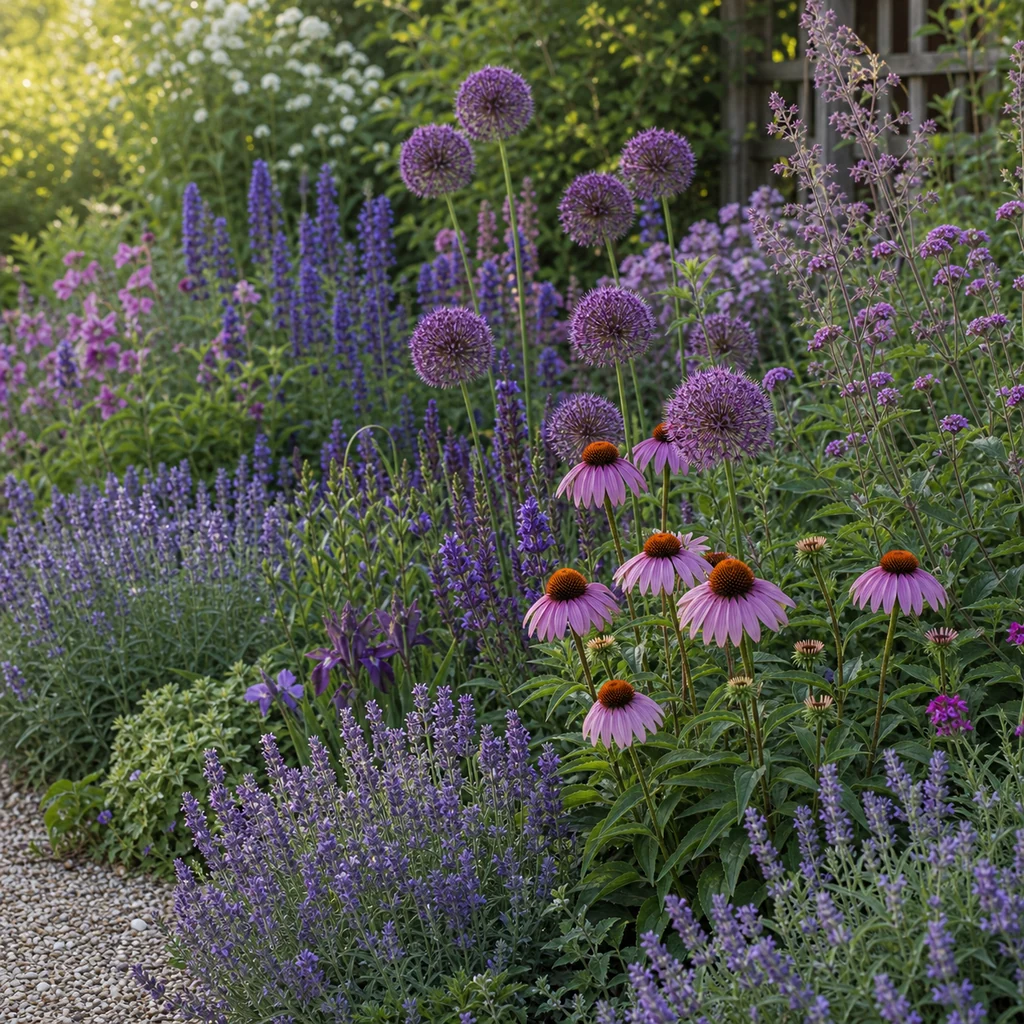
These purple flowers work especially well in mixed beds and perennial borders. Use taller plants toward the back, medium plants through the middle, and lower plants along the edge.
| Botanical Name | Common Name | Best Garden Use |
|---|---|---|
| Aster amellus ‘King George’ | Italian aster | Late-season border color and pollinator planting. |
| Salvia ‘Purple Rain’ | Purple salvia | Spiky vertical color in sunny borders. |
| Echinacea purpurea | Purple coneflower | Sunny borders, pollinators, and naturalistic planting. |
| Liatris spicata ‘Kobold’ | Blazing star | Upright purple spikes for summer structure. |
| Verbena bonariensis | Tall verbena | Airy purple flowers that weave through borders. |
| Geranium ‘Ann Folkard’ | Hardy geranium | Soft spreading color around shrubs and perennials. |
| Knautia macedonica | Macedonian scabious | Loose, meadow-style purple-red flowers. |
| Campanula ‘Superba’ | Bellflower | Bell-shaped blooms for cottage borders. |
Purple Flowers For Containers And Small Gardens
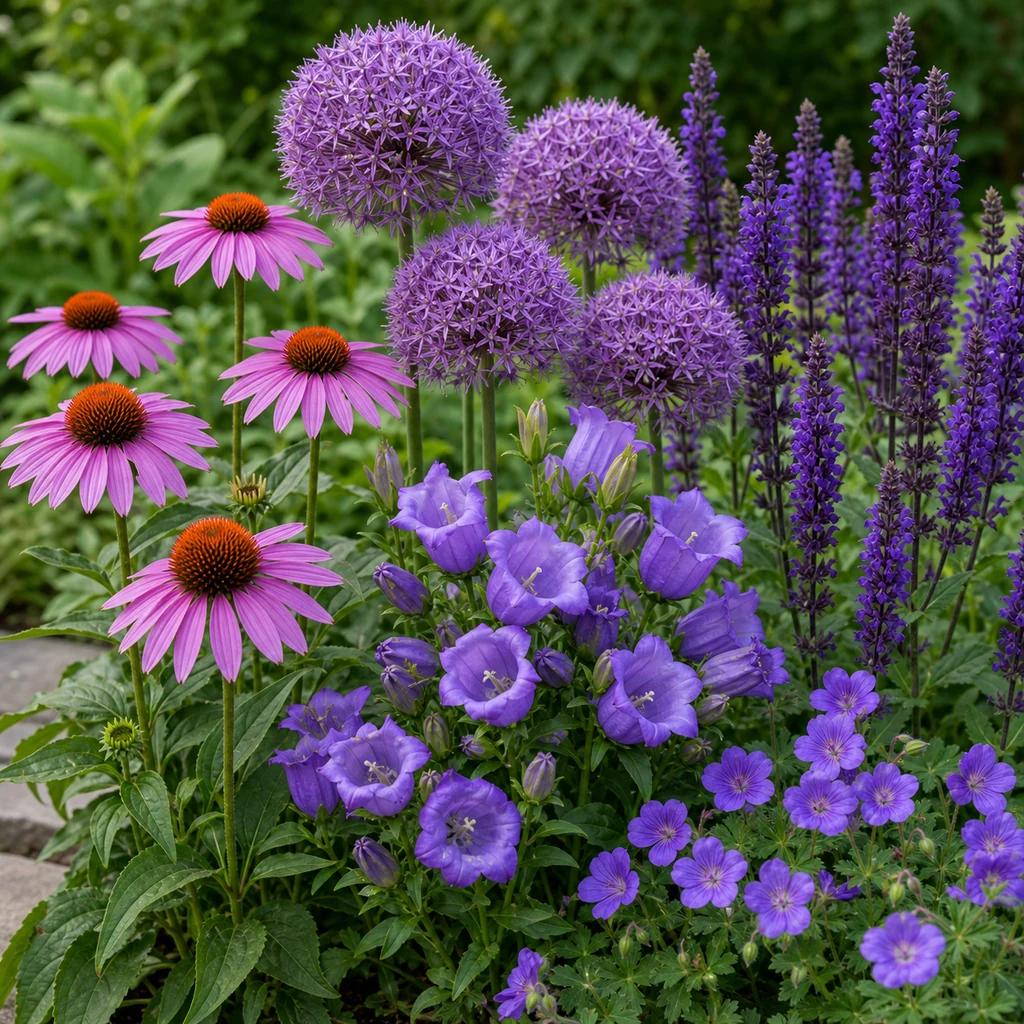
In containers, compact growth and long bloom time matter more than dramatic height. Choose plants that stay tidy, tolerate regular watering, and do not need a huge root run. Mix one upright plant, one mounding plant, and one trailing plant for a fuller container.
| Botanical Name | Common Name | Container Tip |
|---|---|---|
| Viola cornuta ‘Purple Showers’ | Horned violet | Great for cool-season pots and edging. |
| Viola labradorica ‘Purpurea’ | Labrador violet | Useful for low purple foliage and small blooms. |
| Liriope muscari | Lilyturf | Good grassy foliage and purple flower spikes. |
| Tradescantia ‘Purple Dome’ | Spiderwort | Soft, informal purple flowers for mixed planters. |
| Campanula ‘Brantwood’ | Bellflower | Works well near the front of pots or small borders. |
Purple Flowering Vines And Shrubs
Not every purple flower needs to sit in the flower border. Vines and shrubs are useful when you want height, privacy, structure, or a flowering focal point.
Clematis
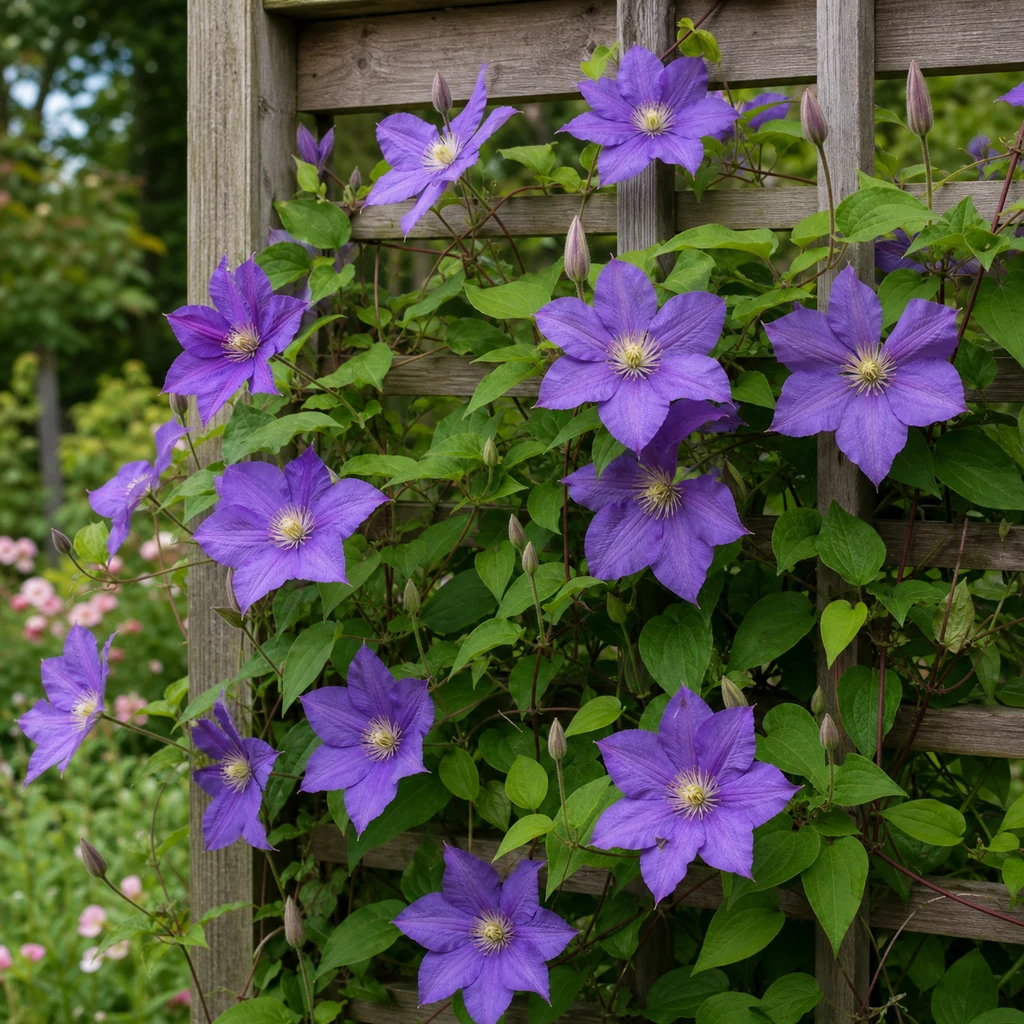
Clematis ‘The President’, Clematis ‘Jackmanii’, and purple clematis cultivars are classic choices for trellises, arches, fences, and obelisks. They add vertical color without taking up much ground space. Most clematis like their tops in sun and their root zone kept cool with mulch or nearby planting.
Tibouchina
Tibouchina urvilleana, often called princess flower, is grown for intense purple flowers and velvety foliage. It is best suited to warm climates or container culture where it can be protected from cold.
Purple Roses
Rose ‘Cardinal de Richelieu’ is an old garden rose known for rich purple-crimson color. Purple roses often look best with silver foliage, soft pinks, pale yellow, and creamy white flowers nearby.
Purple Bulbs And Architectural Flowers
Bulbs and bulb-like plants are excellent when you want strong shapes. Use them to break up softer perennials and add structure.
| Botanical Name | Common Name | Why Grow It |
|---|---|---|
| Allium christophii | Star of Persia allium | Large purple globe flowers with architectural impact. |
| Allium schoenoprasum | Chives | Edible herb with pretty purple flower heads. |
| Gladiolus byzantinus | Byzantine gladiolus | Magenta-purple spikes for sunny borders. |
| Digitalis purpurea | Foxglove | Tall cottage-garden spires, useful in partial shade. |
Safety note: foxglove is toxic if eaten. North Carolina Extension lists Digitalis purpurea as a poisonous plant, so grow it away from children, pets, and edible garden areas.
Purple Flowers For Pollinators
Many purple flowers are excellent for bees, butterflies, and other pollinators. Coneflower, salvia, liatris, verbena, alliums, chives, and asters are especially useful because they provide nectar or pollen and tend to be easy for pollinators to find.
For a stronger pollinator planting, choose several bloom times. Alliums and chives can help in late spring. Salvia, echinacea, and liatris carry summer color. Asters extend the season into late summer and fall.
Purple Flower Color Combination Tips
Purple is versatile, but it changes mood depending on the colors around it. A border with only deep purple can feel heavy. A border with purple, pale yellow, white, and silver can feel softer and brighter.
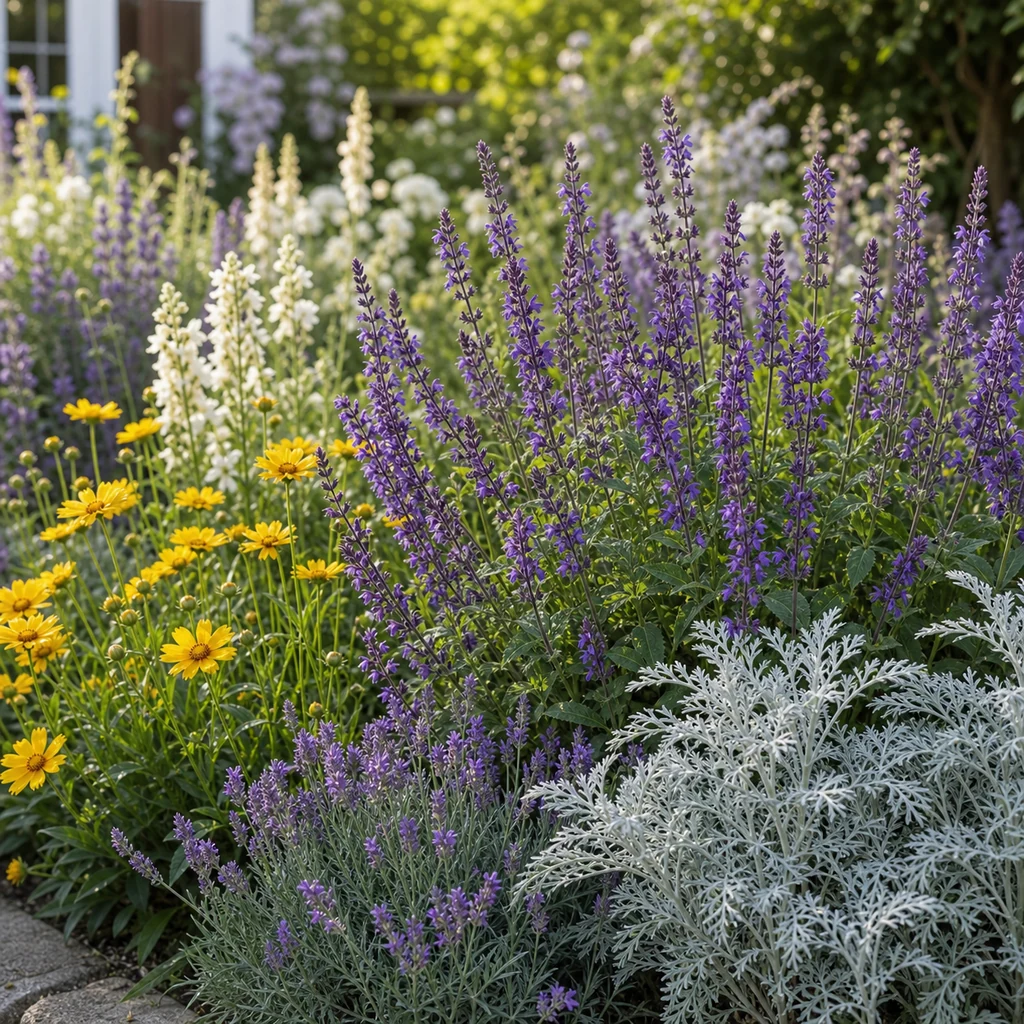
- Purple and pale yellow: fresh, bright, and classic without feeling harsh.
- Purple and white: clean, elegant, and easy to repeat through a border.
- Purple and silver foliage: refined, cool-toned, and especially good in sunny gardens.
- Purple and orange: bold and energetic; best used with restraint.
- Purple and pink: romantic and soft, especially with roses and cottage flowers.
- Purple and deep red: dramatic, but add pale yellow, cream, or blue to keep it from feeling too dark.
How To Choose The Right Purple Flowers
Before buying plants, match the flower to the site. A beautiful plant in the wrong place will disappoint you faster than an ordinary plant in the right place.
- For full sun: salvia, echinacea, liatris, allium, verbena, knautia, and many asters.
- For partial shade: foxglove, violas, some campanulas, hardy geraniums, and clematis roots with sunny tops.
- For height: verbena bonariensis, foxglove, clematis, alliums, and some salvias.
- For edging: violas, liriope, hardy geranium, and compact campanula.
- For cutting: asters, coneflowers, salvia, liatris, alliums, and some roses.
- For low maintenance: coneflower, salvia, allium, liriope, and hardy geranium are good starting points.
Purple Flowers Care Checklist
- Check sun requirements before planting.
- Group plants by similar water needs.
- Mix several flower shapes instead of using only one type.
- Use pale yellow, white, silver, or soft green to balance deep purple.
- Deadhead repeat bloomers such as salvia and some geraniums.
- Stake tall plants before wind or rain bends them.
- Leave some seed heads if you want more wildlife value.
- Research toxicity before planting foxglove or other poisonous ornamentals near children or pets.
Helpful Expert Sources
For plant-specific growing details, the RHS salvia growing guide, RHS clematis growing guide, and NC State Extension foxglove profile are useful references. You can also browse more related ideas in the Garden Plants section, including the updated Plant Development Tips and Delphinium Flowers guides.
Frequently Asked Questions
What are some easy purple flowers to grow?
Salvia, coneflower, allium, chives, hardy geranium, liatris, and verbena bonariensis are good options for many sunny gardens. Choose based on your climate and soil.
What purple flowers bloom for a long time?
Salvia, verbena bonariensis, hardy geraniums, and some violas can bloom for a long period, especially when watered well and deadheaded when needed.
What purple flowers are good for pollinators?
Coneflower, salvia, liatris, alliums, chives, asters, and verbena are useful pollinator plants because they provide nectar or pollen and are easy for insects to locate.
What colors look best with purple flowers?
Pale yellow, white, silver foliage, soft pink, and fresh green are reliable choices. Orange and deep red can also work, but they create a much bolder look.
Are purple foxgloves safe to grow?
Foxgloves are beautiful but toxic if eaten. Grow them as ornamental plants only and avoid placing them where children, pets, or grazing animals may chew the foliage or flowers.
Final Thoughts
Purple flowers are more useful when you choose them by shape, height, bloom time, and garden role instead of color alone. Combine spikes, globes, bells, daisies, and airy fillers, then repeat purple in a few places so the border feels intentional.
Start with a few reliable plants such as salvia, coneflower, allium, hardy geranium, verbena, and clematis. Then add more unusual purple flowers once you know which shapes and shades look best in your garden.