
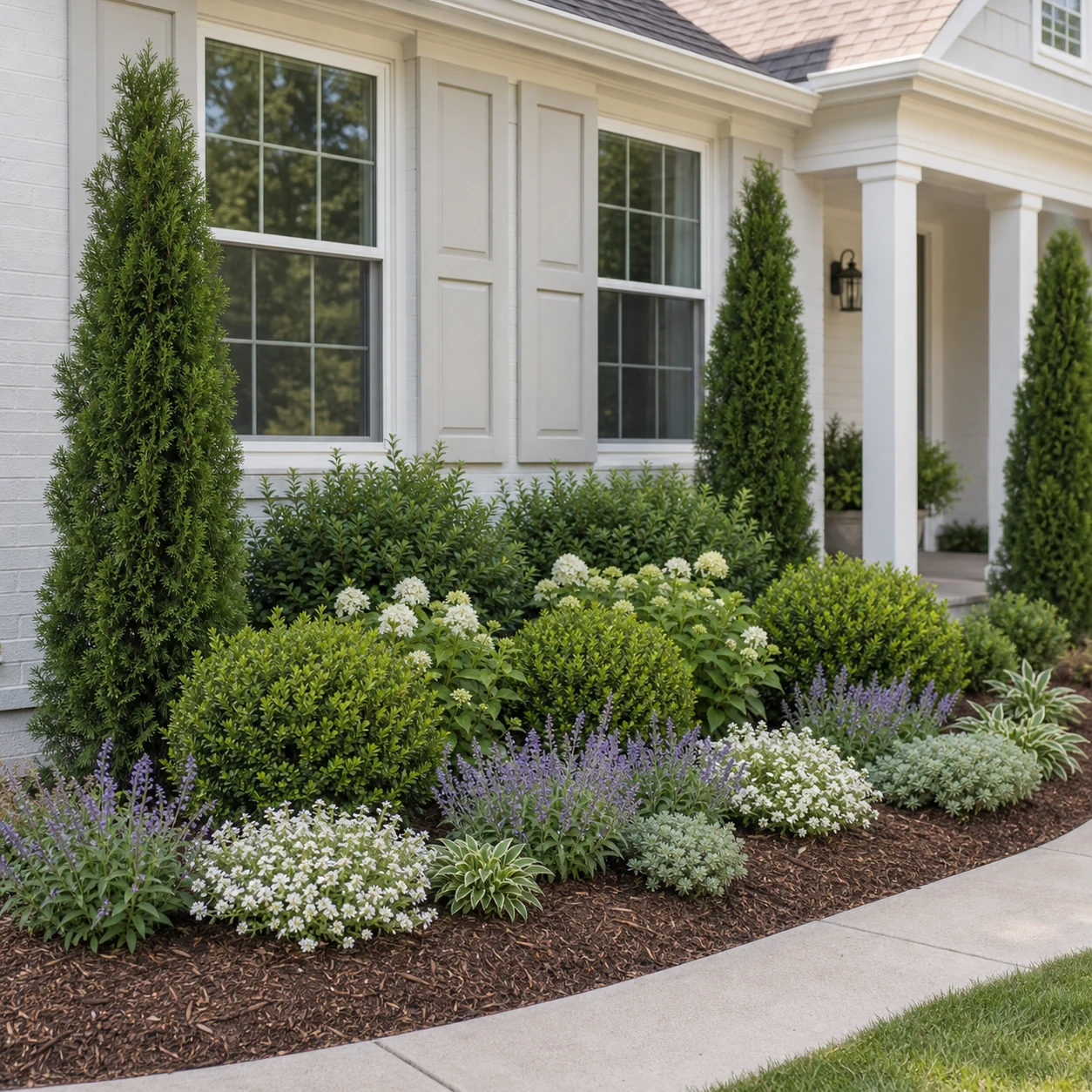
Front yard foundation plants do more than fill the space under windows. The right mix can soften the house, frame the entry, guide the walkway, and make the front yard feel finished without turning maintenance into a weekly chore.
The easiest way to plan the bed is in layers: taller evergreen anchors, medium shrubs, low perennials, groundcovers, and a clean edge. This guide keeps the plant choices flexible because sun, soil, water, winter cold, and local pests change from yard to yard. Use the plant types as a planning framework, then match exact varieties to your region.
Start with the Shape of the House
Good foundation planting starts by looking at the house, not the nursery aisle. Notice the windows, porch, downspouts, walkway, siding color, and roofline. Plants should support those features instead of hiding them.
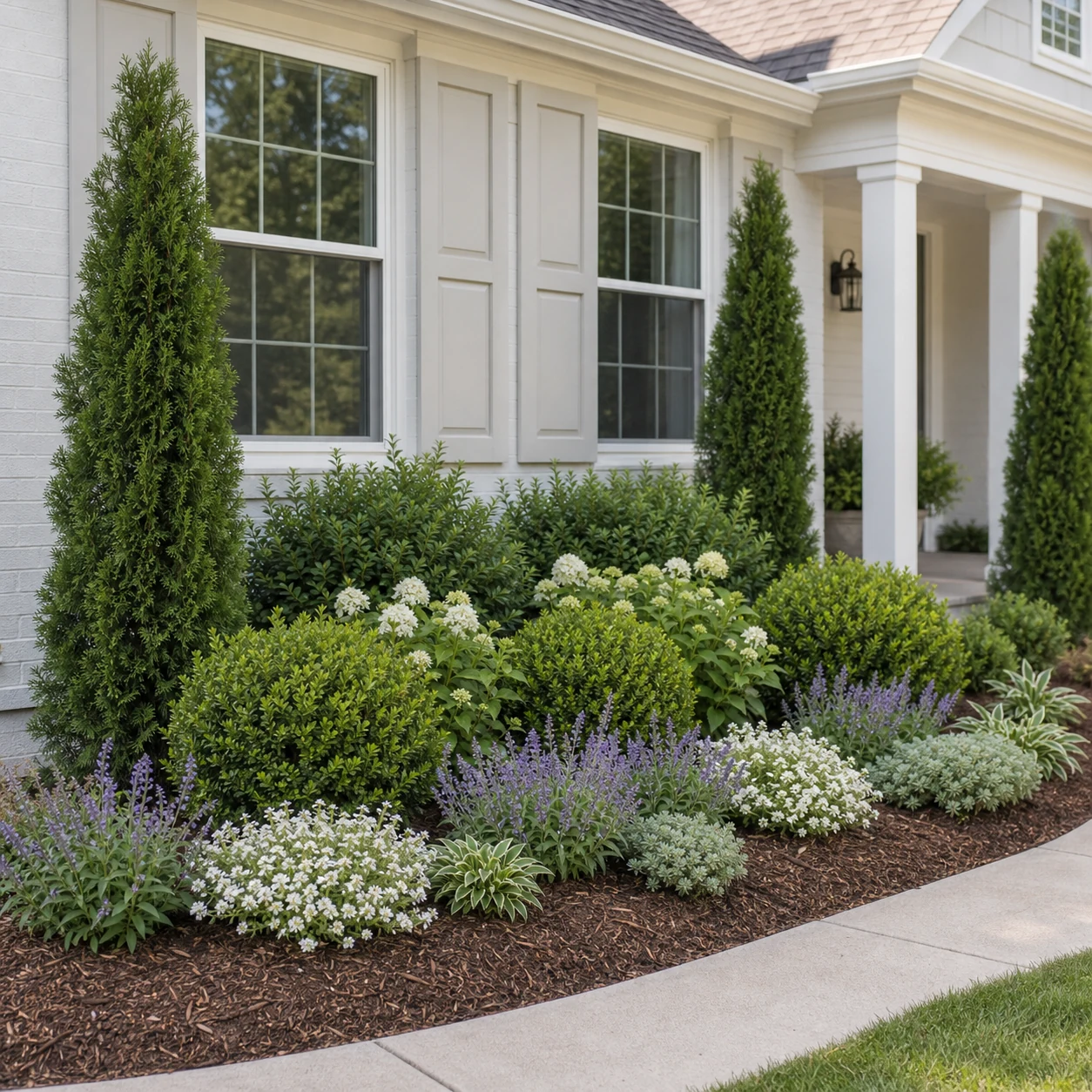
- Tall anchors: use them near corners, porch edges, or blank wall sections.
- Medium shrubs: place them under windows only if they stay below the sill.
- Low perennials: use them at the front edge for color and softness.
- Groundcovers: fill gaps and reduce bare mulch.
- Clear spacing: leave room for mature width, airflow, and easy maintenance.
Use a Three-Layer Planting Plan
A simple three-layer plan prevents the bed from looking flat. Put the tallest plants in the back, medium plants in the middle, and low plants at the front. Repeat a few shapes instead of adding one of everything.
Back layer: structure
The back layer gives the front yard year-round shape. Compact evergreens, upright shrubs, or small ornamental shrubs can work here. Keep them away from siding and windows so they do not trap moisture or block light.
Middle layer: fullness
The middle layer makes the bed feel generous. Rounded shrubs, compact hydrangea-type plants, dwarf evergreens, or repeatable foliage plants can bridge the tall anchors and the low edge.
Front layer: softness
The front edge should stay low enough to keep the bed tidy from the sidewalk. Perennials, ornamental grasses, low herbs, groundcovers, and small flowering plants can soften the line between mulch and lawn.
Frame the Front Entry
The front entry is the most important focal point. Use plants to guide the eye toward the door, not away from it. A pair of upright shrubs, repeated low flowers, and a clean walkway edge can make the entrance feel calm and welcoming.
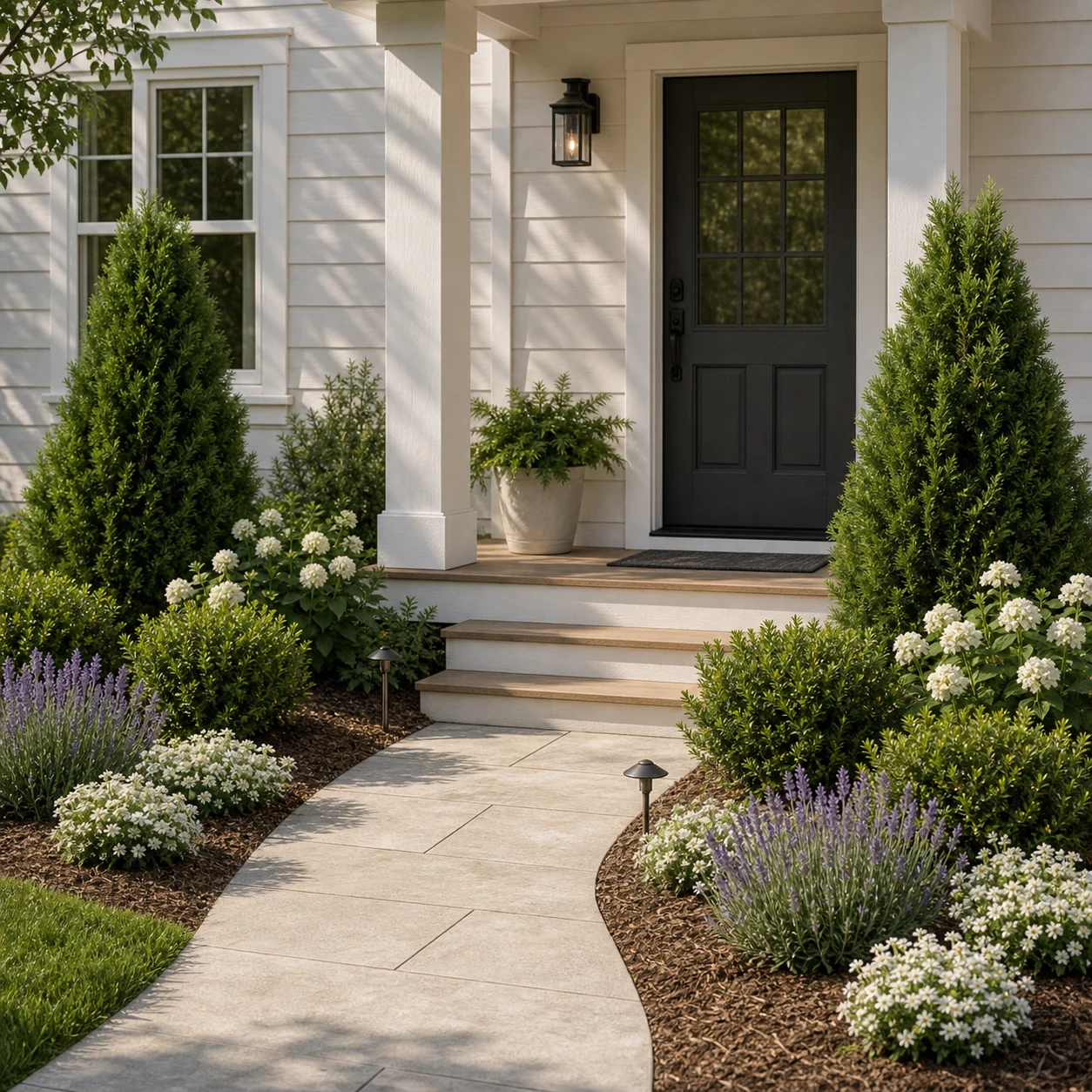
- Keep plants out of the walking path.
- Use symmetry near the door if the house is formal.
- Use repeated informal groups if the house is cottage, ranch, or casual.
- Leave room for porch steps, railings, lights, and house numbers.
- Avoid thorny or floppy plants right beside the walkway.
Keep Window Plants Below the Sill
Plants under windows should look full without swallowing the window. Check mature height before planting. If a shrub needs constant pruning to stay below the sill, it is probably the wrong plant for that spot.
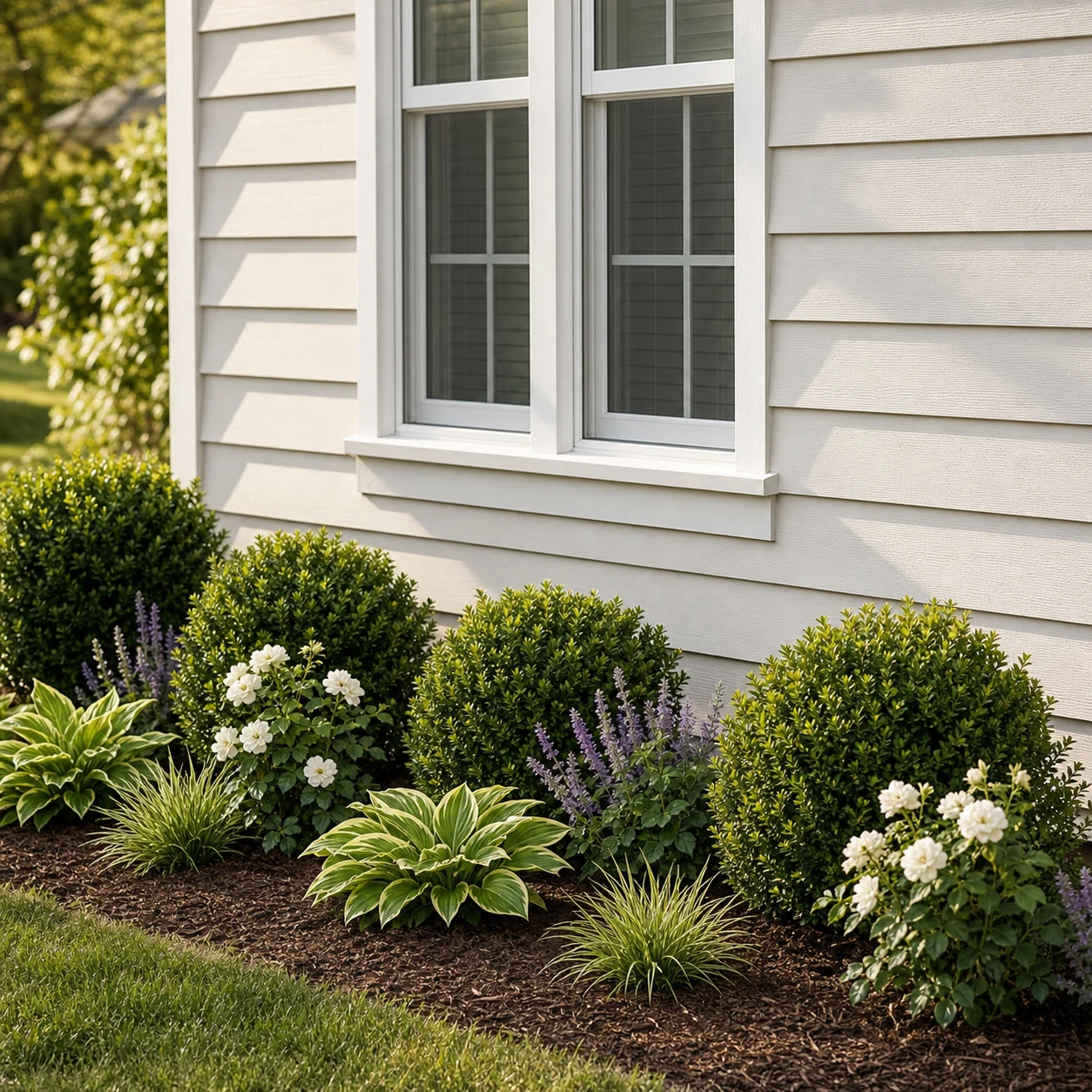
Good window-zone choices
Look for compact shrubs, mounding perennials, low grasses, and tidy foliage plants. In sunny areas, drought-tolerant perennials and compact evergreens may work well. In shadier spots, textured foliage often looks better than forcing sun-loving flowers.
If part of the bed gets strong shade, this guide to shade garden plants for hot summer yards can help you think through foliage and bloom options.
Choose Plants by Light and Water
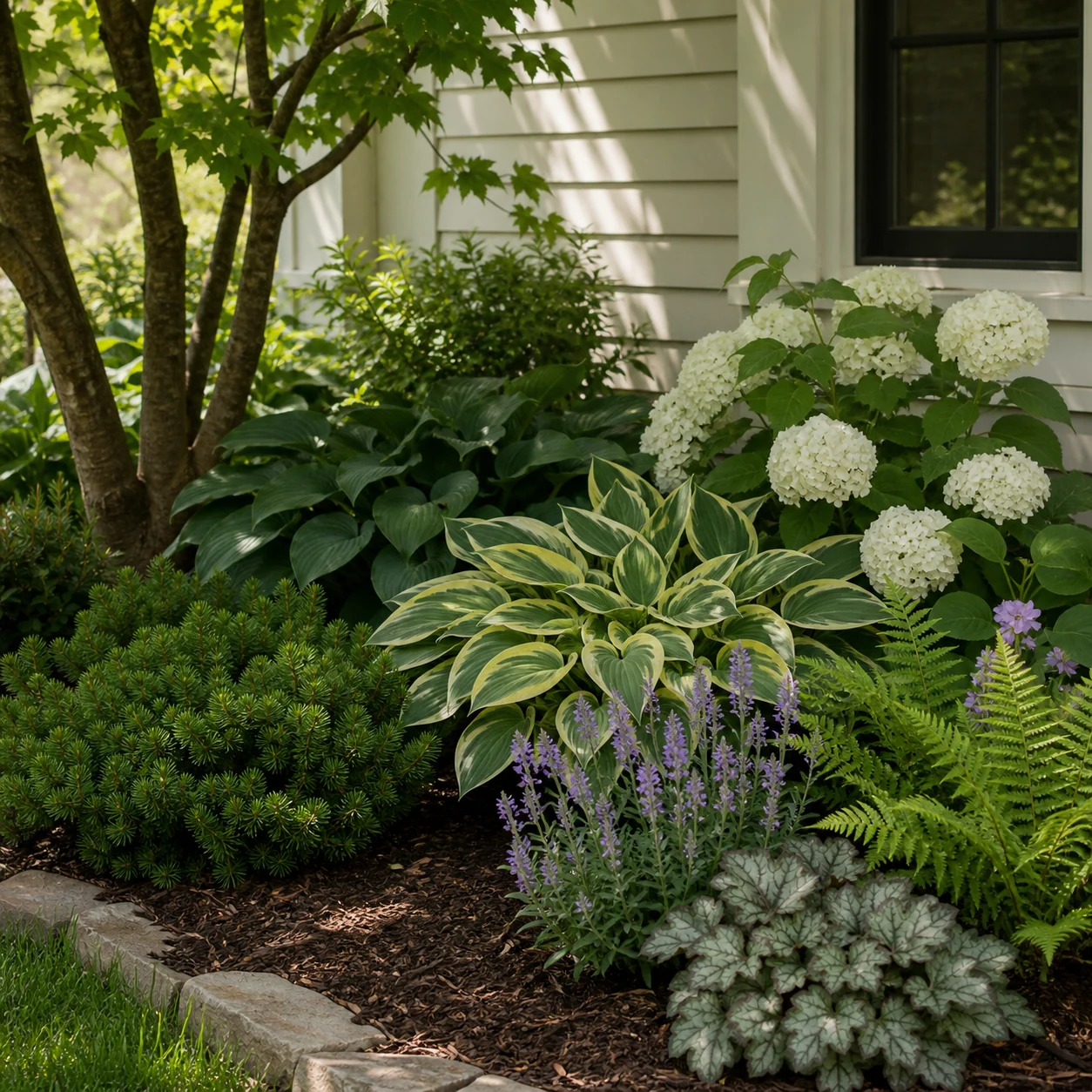
The front of a house often has mixed conditions. One corner may bake in afternoon sun while another sits in shade from a tree or porch roof. Before choosing plants, watch the bed for a day and note morning sun, afternoon sun, reflected heat, and sprinkler coverage.
- Full sun areas: use plants that handle heat and dry edges.
- Part shade areas: mix compact shrubs with textured foliage.
- Dry eaves: choose tough plants or plan consistent watering.
- Wet downspout areas: improve drainage before planting.
- Reflected heat: avoid delicate plants against hot walls or pavement.
Repeat Fewer Plants for a Cleaner Look
A common beginner mistake is buying one plant from every display. Foundation beds usually look better with repetition. Pick a small palette and repeat it along the house so the front yard feels connected.
Simple plant palette formula
- One upright evergreen or structural shrub.
- One rounded medium shrub.
- One low flowering perennial.
- One foliage plant for texture.
- One groundcover or edging plant.
This formula works for modern, cottage, traditional, and casual homes because the shapes do most of the work. You can change the exact plants and colors to match your climate and style.
Finish with Mulch, Edging, and Spacing
Even beautiful plants can look messy if the edge is unclear. A clean bed line, fresh mulch, and visible spacing make young plants look intentional while they grow in.
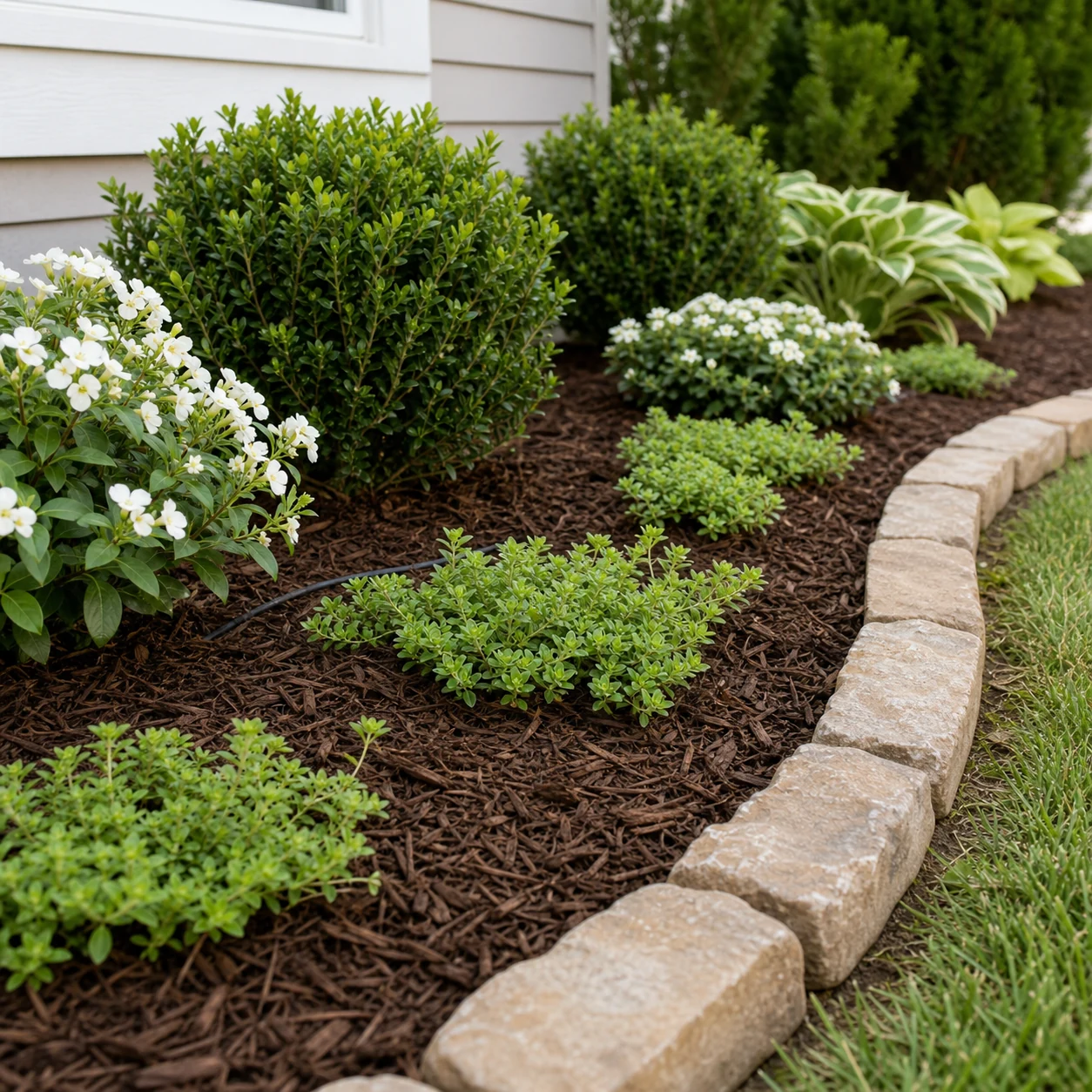
- Keep mulch a few inches away from stems and siding.
- Use a smooth curve instead of tiny wiggles.
- Leave access to hose bibs, vents, meters, and downspouts.
- Group plants in odd numbers for a natural look.
- Check mature width before planting close to walkways.
Plan for Maintenance Before You Plant
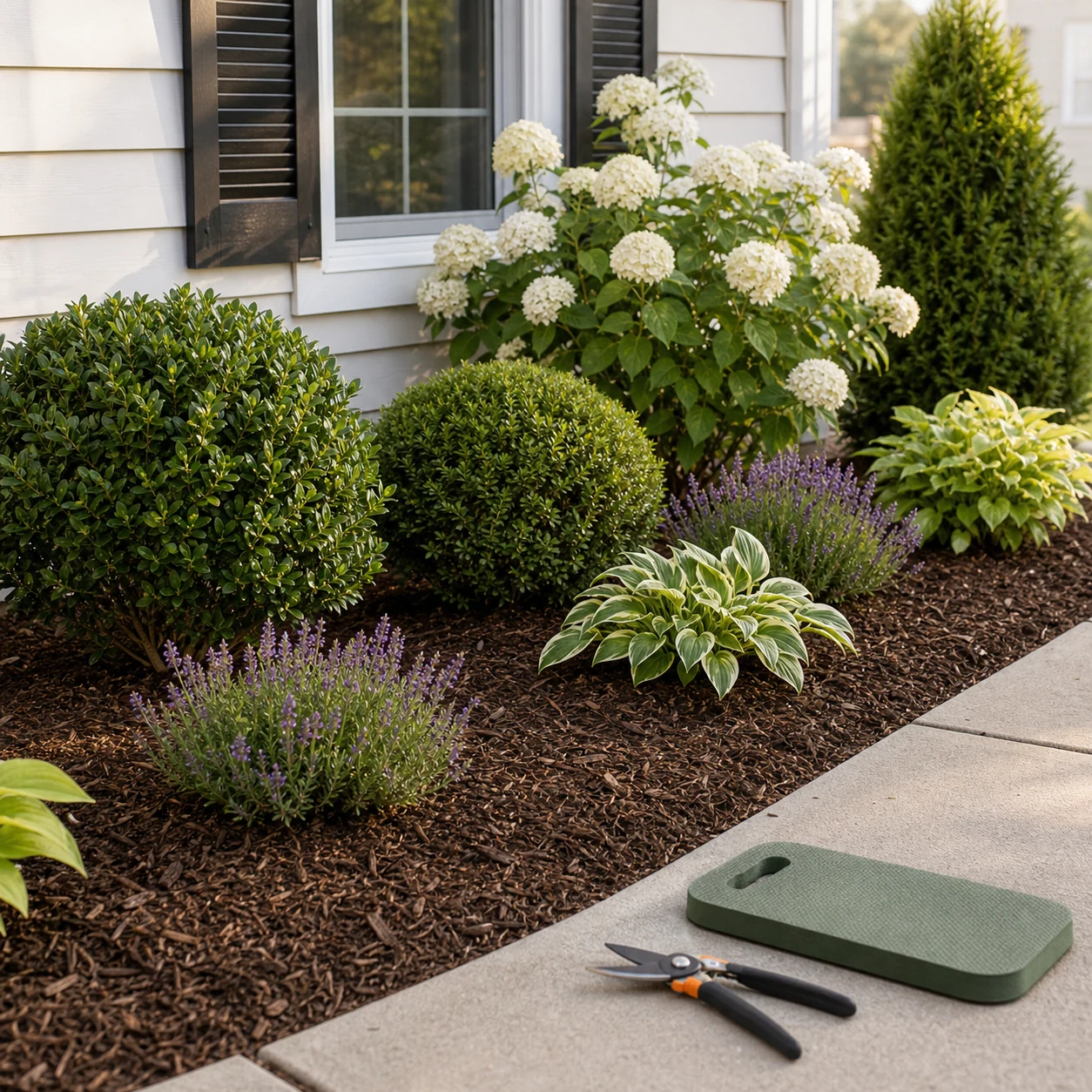
The best front yard foundation plants are the ones you can maintain. A bed that needs constant pruning, daily watering, or frequent replacement will become frustrating quickly. Choose plants that fit your time, tools, and climate.
Low-maintenance checks
- Can the shrub keep its shape with light pruning?
- Will the plant outgrow the window or walkway?
- Does the bed have enough water access?
- Can you reach the siding and windows for cleaning?
- Will the plant still look decent outside peak bloom?
For more easy plant planning, see 7 low-maintenance garden plants and the broader garden planting guide.
Foundation Planting FAQ
How far should foundation plants be from the house?
Leave enough space for mature growth, airflow, and maintenance access. Exact spacing depends on the plant, but avoid planting shrubs tight against siding, vents, or windows.
What plants look best in front of a house?
A mix of evergreen structure, rounded shrubs, low perennials, and groundcovers usually works well. The best exact plants depend on your light, soil, water, and climate.
Should foundation plants be symmetrical?
They can be, especially near a formal entry. Casual homes often look better with balanced groups instead of perfect mirror-image planting.
How do I make a foundation bed look full right away?
Use mulch, edging, repeated low plants, and a few medium shrubs. Do not overcrowd the bed just to make it look full on day one, because plants need room to mature.