
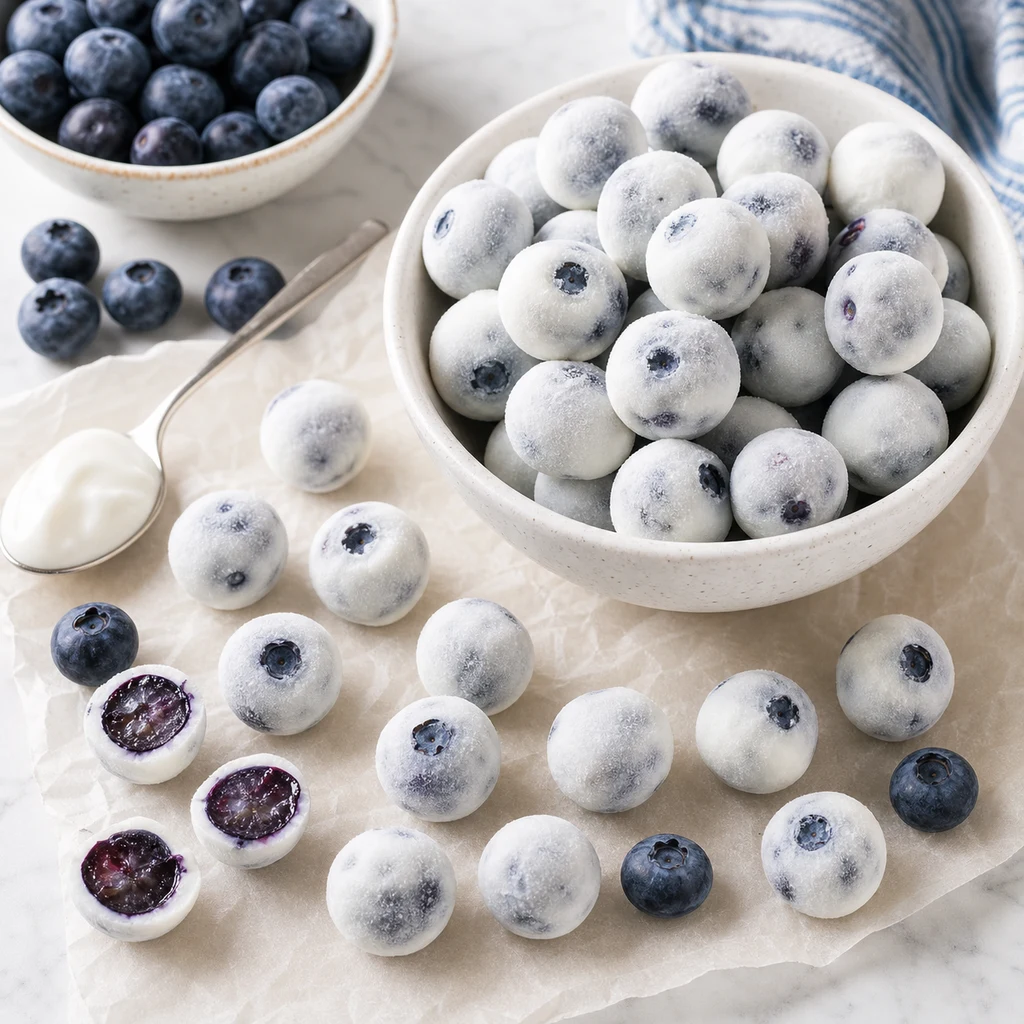
Frozen Greek Yogurt-Covered Blueberries are a simple freezer snack with a creamy shell, a cold blueberry center, and just enough sweetness to feel like a treat. They are easy to make, but a few small details matter if you want the berries to freeze separately instead of becoming one icy yogurt cluster.
RECIPE CARD
Frozen Greek Yogurt-Covered Blueberries
Timing and serving details are shown only when they are available in the original recipe.
Ingredients
- 1 cup fresh blueberries, rinsed and dried very well
- 3/4 cup plain or vanilla Greek yogurt
- 1 to 2 teaspoons honey or maple syrup, optional
- 1/4 teaspoon vanilla extract, optional
- Parchment paper
- A rimmed baking sheet or freezer-safe tray
- A freezer-safe airtight container for storage
Quick Method
Condensed overview. Use Full Instructions for the complete method, timing and doneness details.
- Choosing the Right Yogurt: Thick Greek yogurt works better than a loose regular yogurt because it clings to the berries. Plain yogurt gives you the most control over…
This version keeps the method clean and practical: use dry berries, thick yogurt, a parchment-lined tray, and a short single-layer freeze before moving everything into a container. The result is a snack you can grab by the handful, sprinkle over breakfast bowls, or keep tucked in the freezer for warm afternoons.
Why This Frozen Snack Works
Blueberries freeze quickly because they are small, and Greek yogurt gives them a creamy coating without needing a complicated dessert base. The contrast is the best part: the yogurt firms up outside while the fruit stays bright and cold inside.
The method also solves the usual problem with yogurt-covered fruit. If the berries are wet, the yogurt slips off. If they are crowded on the tray, they freeze together. Drying the berries and spacing them out makes the finished bites easier to store and serve.
Ingredients
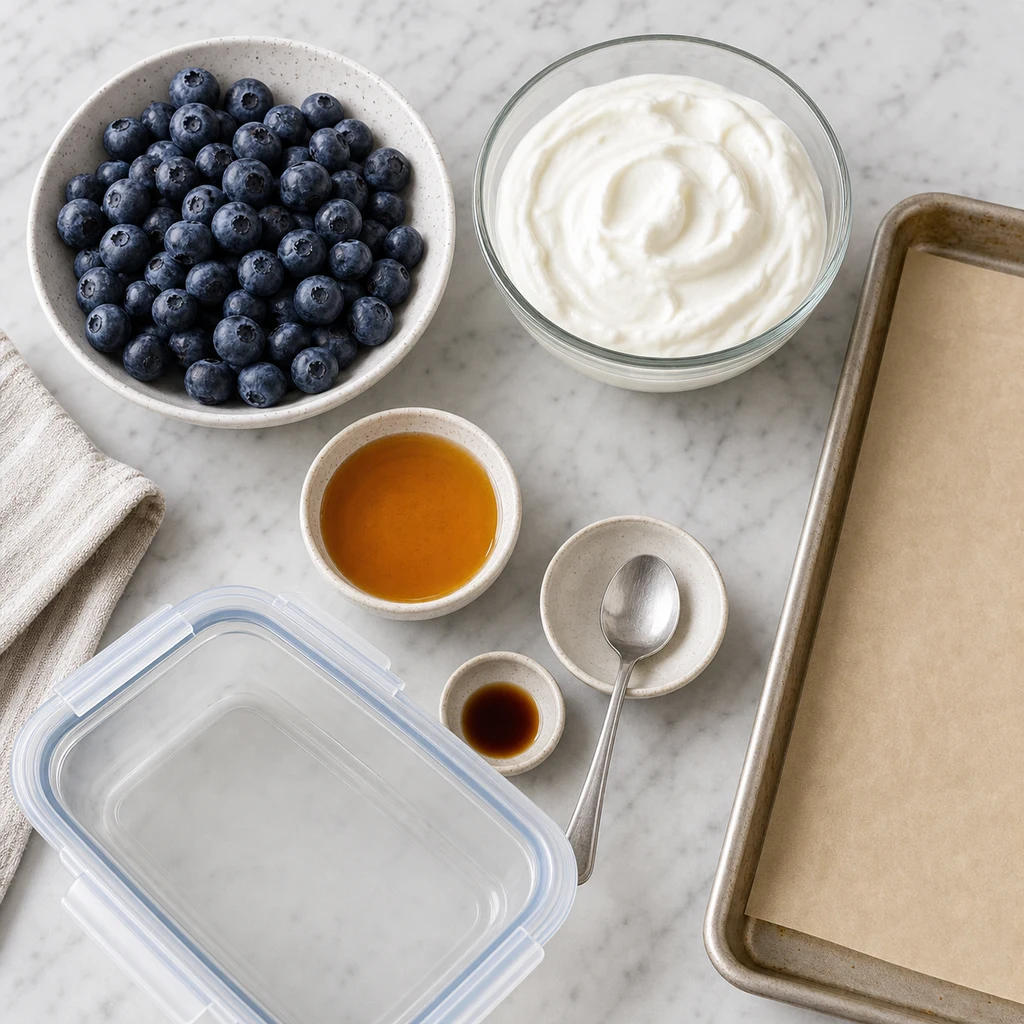
- 1 cup fresh blueberries, rinsed and dried very well
- 3/4 cup plain or vanilla Greek yogurt
- 1 to 2 teaspoons honey or maple syrup, optional
- 1/4 teaspoon vanilla extract, optional
- Parchment paper
- A rimmed baking sheet or freezer-safe tray
- A freezer-safe airtight container for storage
Choosing the Right Yogurt
Thick Greek yogurt works better than a loose regular yogurt because it clings to the berries. Plain yogurt gives you the most control over sweetness, while vanilla yogurt makes the snack taste more dessert-like. If the yogurt looks watery on top, stir it well or drain off the excess liquid before coating the berries.
Step 1: Prepare the Yogurt Mixture
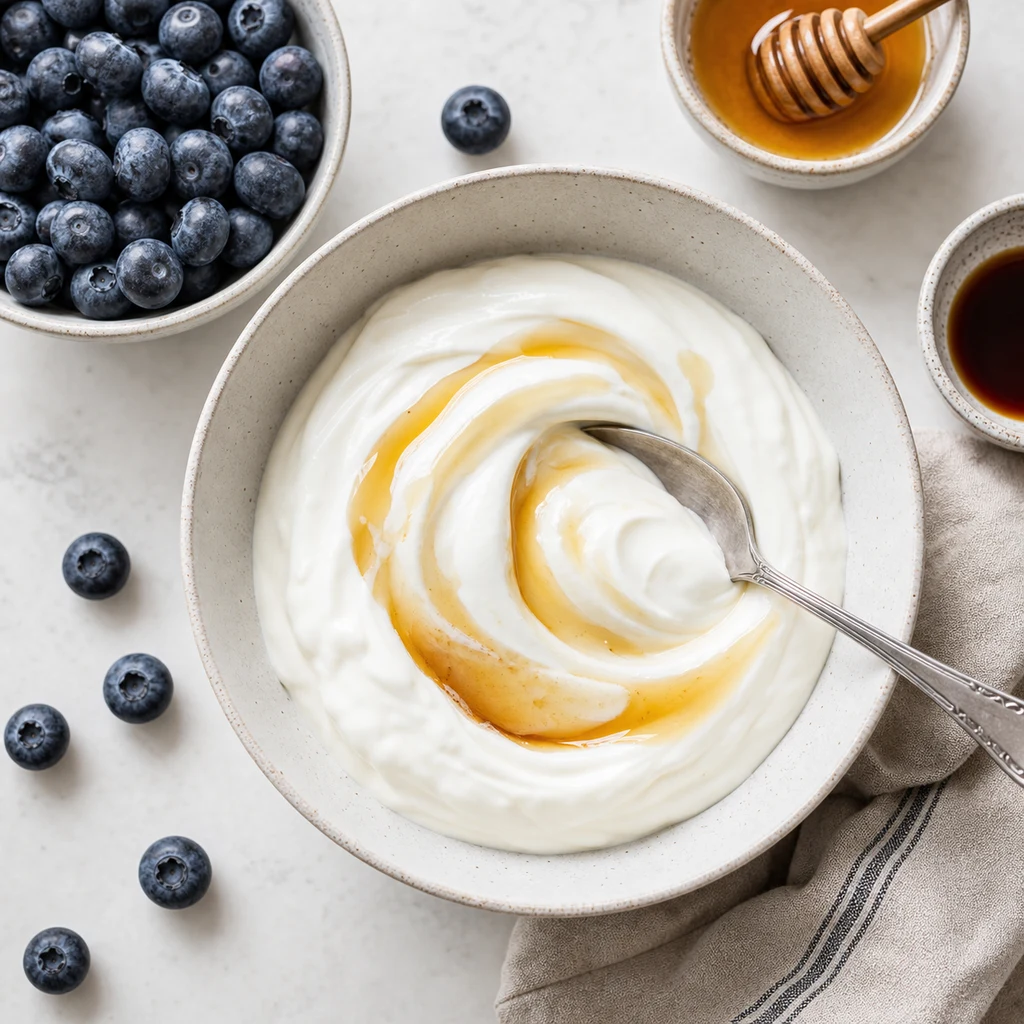
Stir the Greek yogurt with honey or maple syrup if you want a sweeter coating. Add vanilla if using plain yogurt and you want a softer dessert flavor. The mixture should be smooth and thick enough to coat the back of a spoon.
Do not thin the yogurt with milk. It may look easier to dip at first, but it will run off the berries and freeze into flat patches on the parchment.
Step 2: Coat the Blueberries
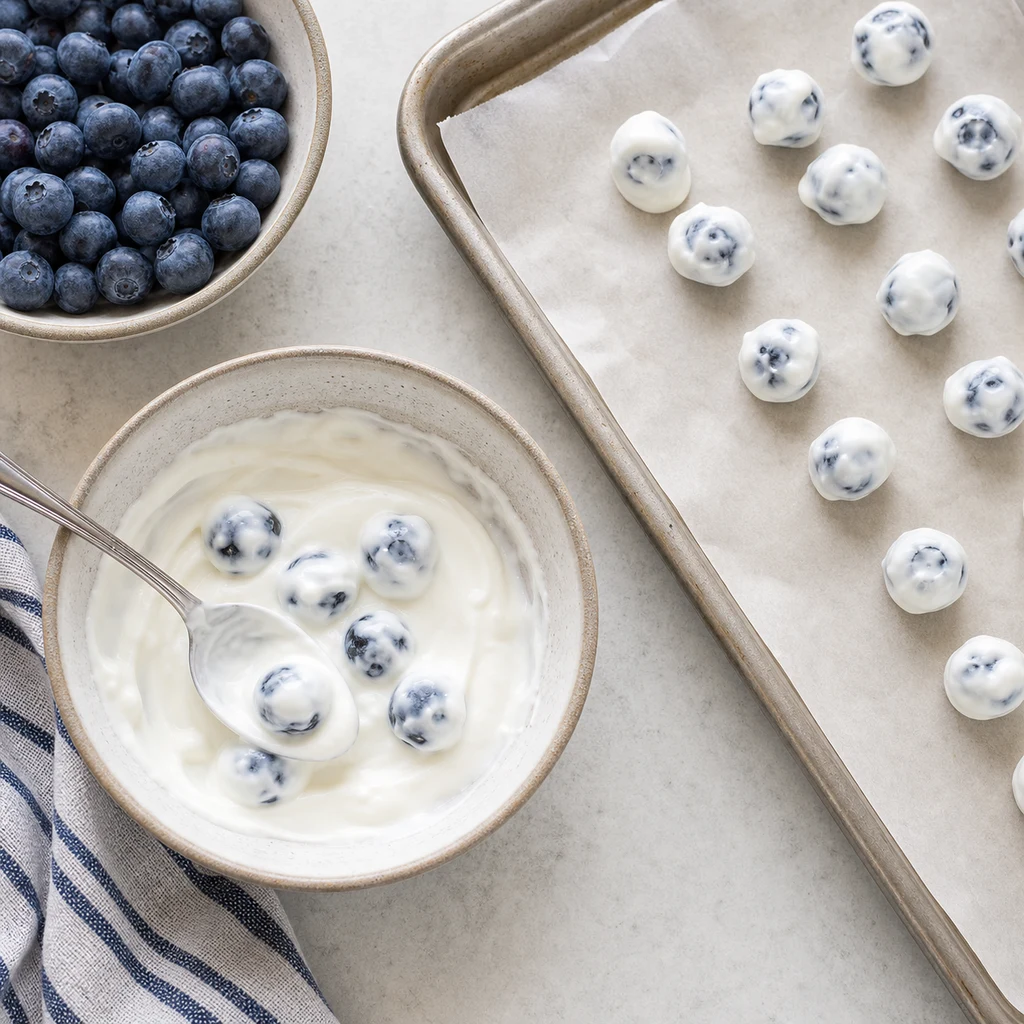
Pat the blueberries dry with a clean towel. This is the step that keeps the coating from sliding away. Add a few berries to the yogurt at a time, lift them out with a fork or spoon, and let the extra yogurt drip back into the bowl.
Place each coated berry on a parchment-lined tray. Leave a little space between them. They do not need to look perfect, but spacing makes a big difference once the tray goes into the freezer.
Step 3: Freeze the Blueberries
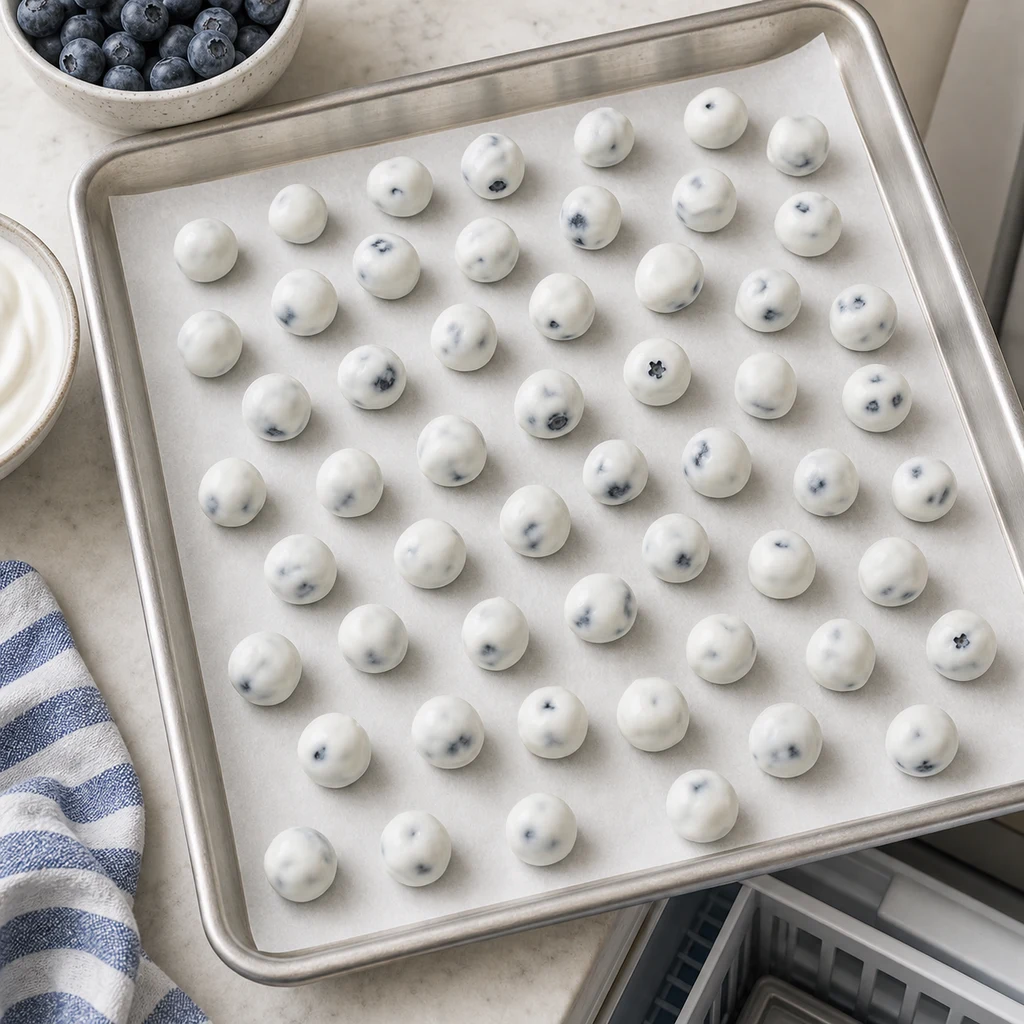
Freeze the tray until the yogurt coating feels firm, usually 1 to 2 hours depending on the freezer and the thickness of the coating. The berries should lift cleanly from the parchment when they are ready.
If the tray is crowded or tilted, the yogurt can run and connect the berries. Use a flat spot in the freezer and keep the berries in a single layer for the first freeze.
Step 4: Store and Serve
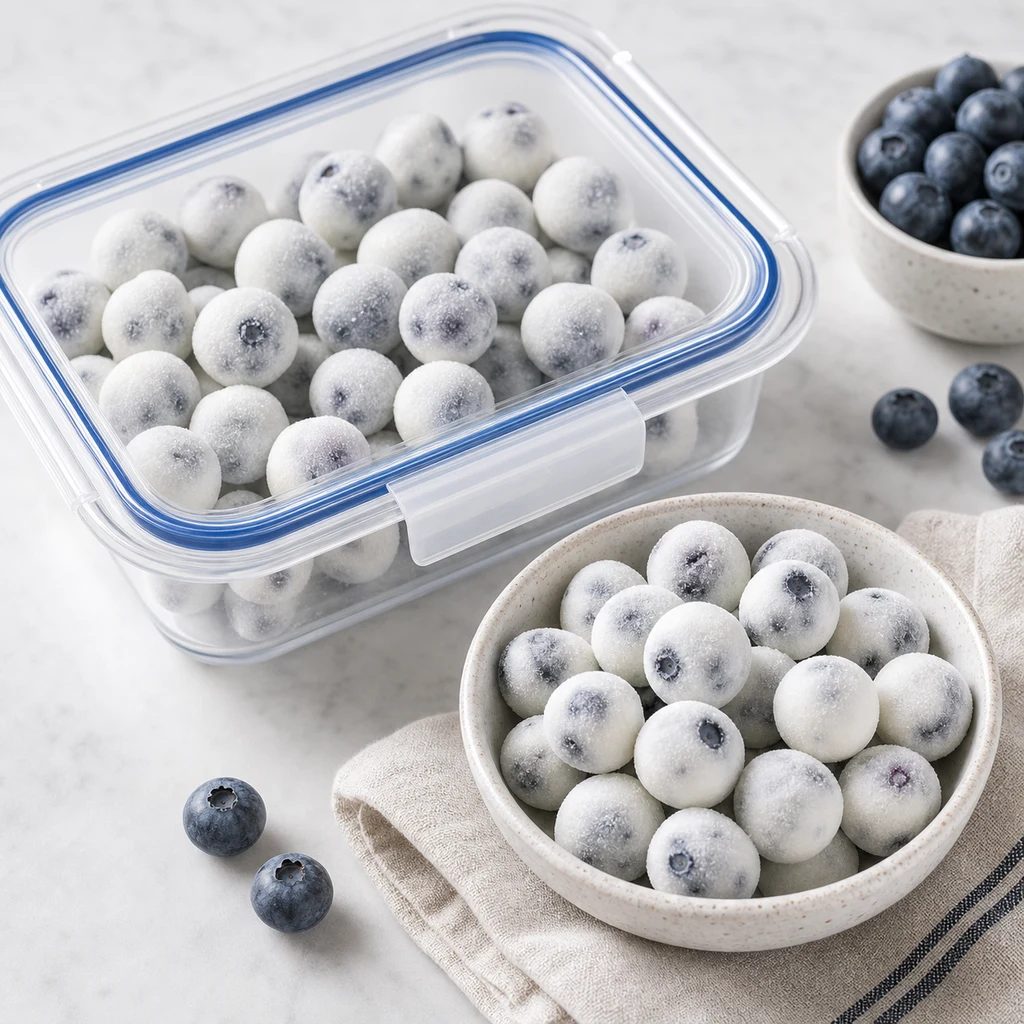
Once the berries are firm, transfer them to an airtight container or freezer bag. If you made a large batch, add a small piece of parchment between layers to reduce sticking. Keep them frozen until serving.
These bites taste best straight from the freezer after sitting at room temperature for just a minute or two. They soften quickly, especially in a warm kitchen, so serve small portions and return the rest to the freezer.
For the cleanest texture, use the batch within 2 to 3 weeks. They can last longer in the freezer, but the yogurt coating may pick up more frost over time. A shallow container is easier than a deep one because the berries are less likely to crush or stick together while you scoop them.
Serving Ideas
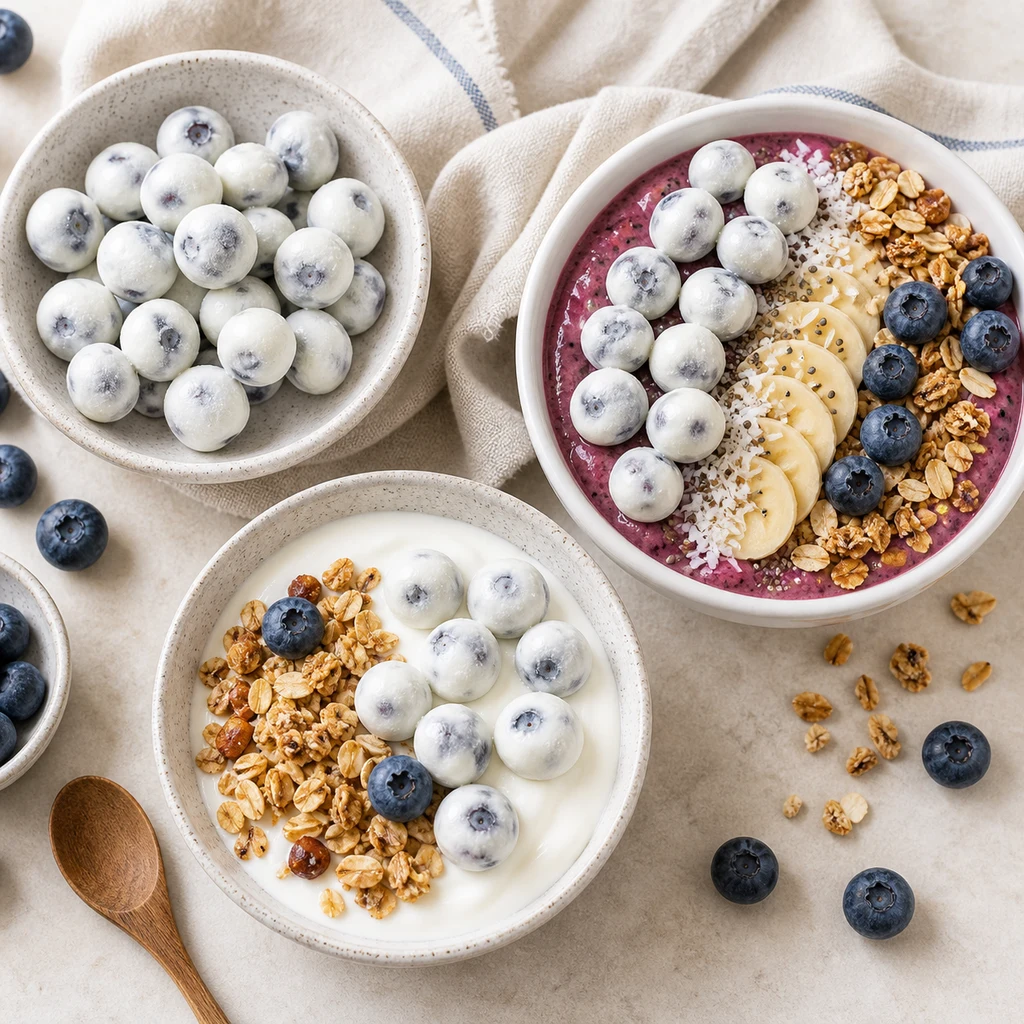
Frozen Greek Yogurt-Covered Blueberries are good on their own, but they also work as a topping. Add a few to a smoothie bowl, scatter them over plain yogurt, or serve them with granola for a cold, creamy crunch. They can also be tucked into lunch boxes with an ice pack, though they will soften as they thaw.
For kids or anyone sensitive to very cold foods, let the berries sit for a minute before eating. The center can be quite firm right out of the freezer.
Flavor Variations
For a brighter flavor, stir a little lemon zest into the yogurt. For a dessert-style version, use vanilla Greek yogurt and a tiny drizzle of honey. For a richer finish, sprinkle the coated berries lightly with crushed freeze-dried strawberries, coconut, or finely chopped granola before freezing.
Chocolate can work too, but keep it light. A thin drizzle of melted dark chocolate after the berries are frozen adds flavor without turning the snack into a heavy candy bite.
You can also make a mixed berry tray, but choose fruit pieces that are close in size. Small strawberries should be halved or quartered, while raspberries need a gentle touch because they break more easily. Blueberries remain the easiest option because they hold their shape and freeze into neat bite-size pieces.
Troubleshooting
If the yogurt slides off, the blueberries were probably still damp or the yogurt was too thin. Dry the fruit more carefully next time and choose a thicker Greek yogurt. If the berries stick together, freeze them farther apart on the tray before transferring them to a container.
If the coating tastes too tart, use vanilla yogurt or stir in a little sweetener before dipping. If the finished bites look frosty after storage, they are still usable, but the texture is best within the first couple of weeks.
More Easy Snack Ideas
For more simple food ideas, try Spinach Tomato Quesadilla with Pesto, Creamy Avocado and Spinach Pasta, 14 Day Clean Eating Meal Plan, or browse the Food & Drink section for more snack and meal ideas.
Keep the batch small the first time you make them. Once you know how sweet you like the yogurt and how thick you prefer the coating, it is easy to double the recipe and keep a container ready in the freezer.