
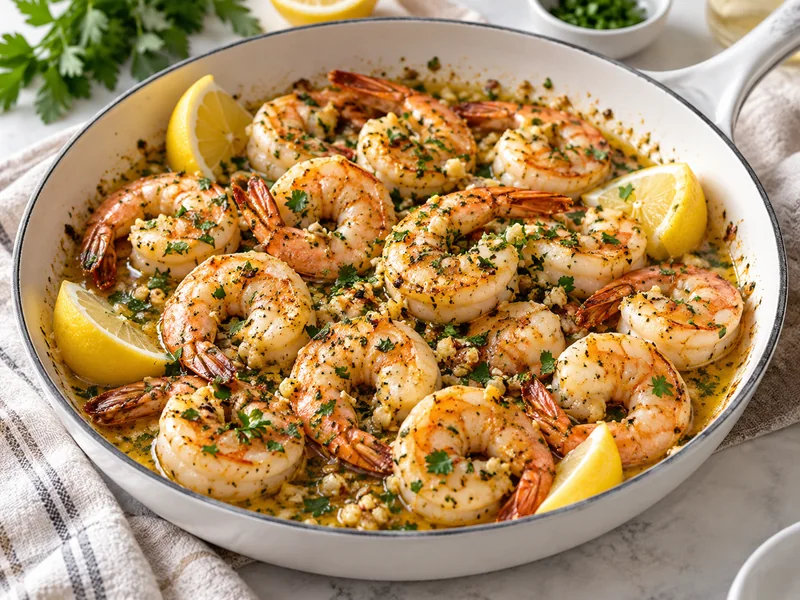
Easy garlic butter shrimp turns a short ingredient list into a fast skillet dinner with a glossy, lemony sauce. Large shrimp cook in minutes, while fresh garlic, butter, lemon juice, and parsley create plenty of flavor without a long marinade. The result is tender seafood with lightly browned edges and a sauce worth spooning over rice, pasta, or bread.
RECIPE CARD
Easy Garlic Butter Shrimp
Ingredients
- 1 pound large shrimp, peeled and deveined, tails optional
- 1/2 teaspoon fine salt
- 1/4 teaspoon freshly ground black pepper
- 1 tablespoon olive oil
- 4 tablespoons unsalted butter, divided
- 4 garlic cloves, finely minced
- 2 tablespoons fresh lemon juice
- 2 tablespoons chopped fresh parsley
- 1/4 teaspoon red pepper flakes, optional
Quick Method
Condensed overview. Use Full Instructions for the complete method, timing and doneness details.
- Dry and season the shrimp: Pat the shrimp completely dry, then season both sides with salt and black pepper.
- Gently sauté the garlic: Heat olive oil and 2 tablespoons butter over medium heat. Cook garlic and optional red pepper flakes for 30 to 45 seconds, stirring until…
- Sear the shrimp: Arrange shrimp in one layer. Cook the first side for about 2 minutes, turn, and cook for 1 to 2 minutes more until nearly…
- Finish the lemon butter sauce: Reduce heat to low, add the remaining butter and lemon juice, and toss for 30 to 60 seconds. Remove from the heat when the…
- Add parsley and serve: Fold in chopped parsley, taste for seasoning, and serve immediately with the garlic butter sauce and lemon wedges.
This recipe makes four servings and takes about 18 minutes from start to finish. The important details are drying the shrimp well, using a wide skillet, and removing the pan from the heat as soon as the shrimp are opaque. Have every ingredient measured before cooking because the process moves quickly.
Why You’ll Love It
- Fast enough for a weeknight: Preparation takes 10 minutes and the skillet work takes about 8 minutes.
- Simple, balanced flavor: Rich butter and garlic are sharpened with fresh lemon juice and parsley.
- Easy to serve: Pair the shrimp with rice, pasta, vegetables, or crusty bread for a complete meal.
Ingredients
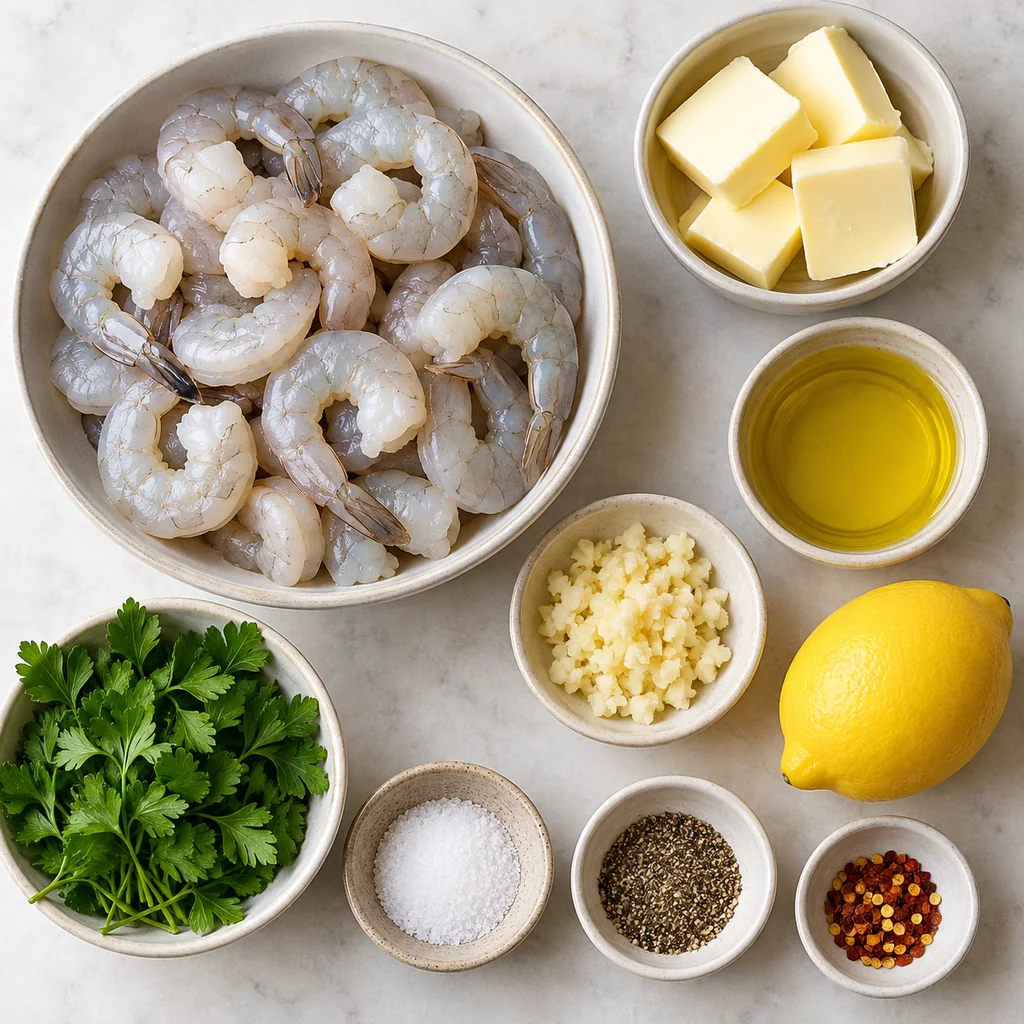
- 1 pound large shrimp, peeled and deveined, tails optional
- 1/2 teaspoon fine salt
- 1/4 teaspoon freshly ground black pepper
- 1 tablespoon olive oil
- 4 tablespoons unsalted butter, divided
- 4 garlic cloves, finely minced
- 2 tablespoons fresh lemon juice
- 2 tablespoons chopped fresh parsley
- 1/4 teaspoon red pepper flakes, optional
Choose large shrimp, usually labeled 26/30 count, so they are easy to sear without overcooking. Fresh or frozen shrimp both work; thaw frozen shrimp completely in the refrigerator, then drain them well. Unsalted butter gives you control over seasoning, while olive oil raises the cooking tolerance of the first butter addition. Fresh lemon juice tastes cleaner than bottled juice in this short sauce.
Step-by-Step Instructions
1. Dry and season the shrimp
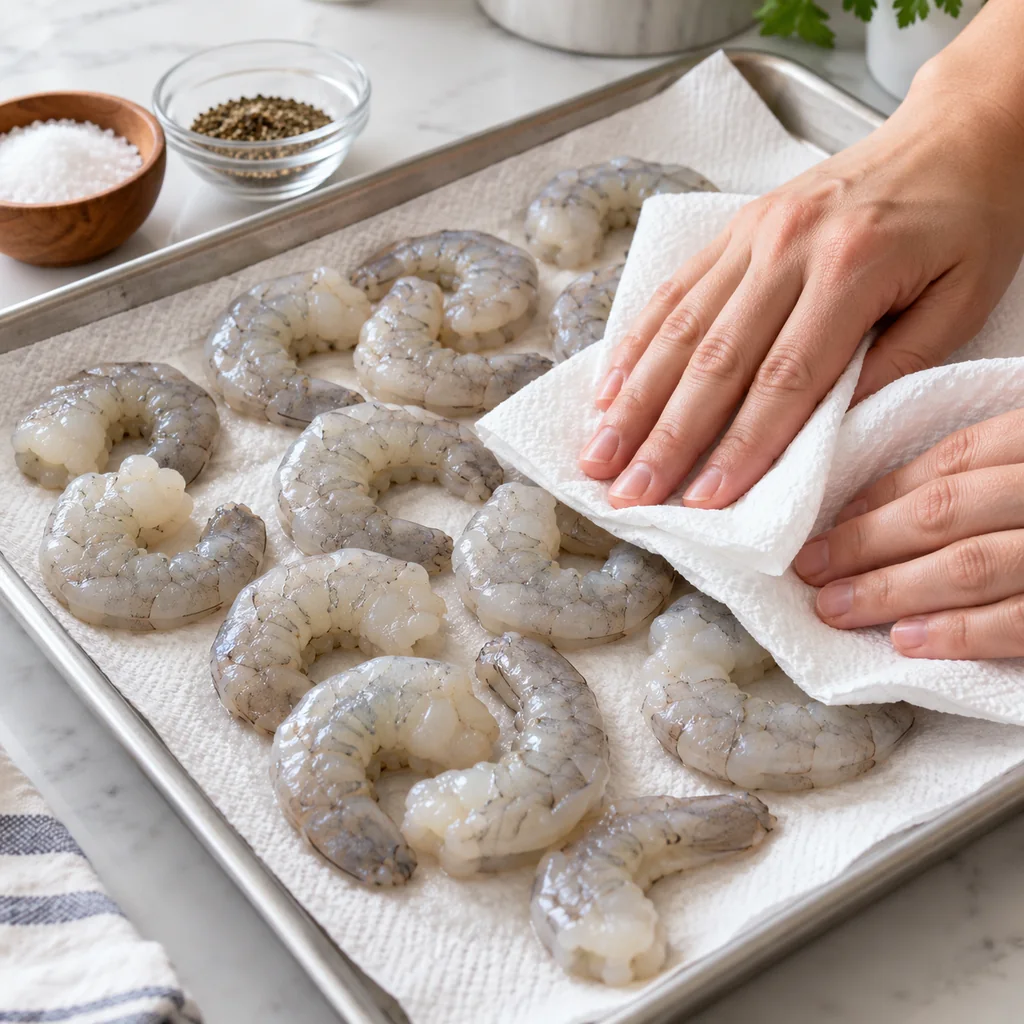
Spread the shrimp on a paper-towel-lined tray and blot the tops thoroughly. Remove any remaining shell or dark vein. Season both sides with the salt and black pepper. Keep the shrimp refrigerated if you are not cooking immediately, but let the measured butter, garlic, lemon, and parsley sit beside the stove. A dry surface is the difference between light browning and a watery skillet.
2. Gently sauté the garlic
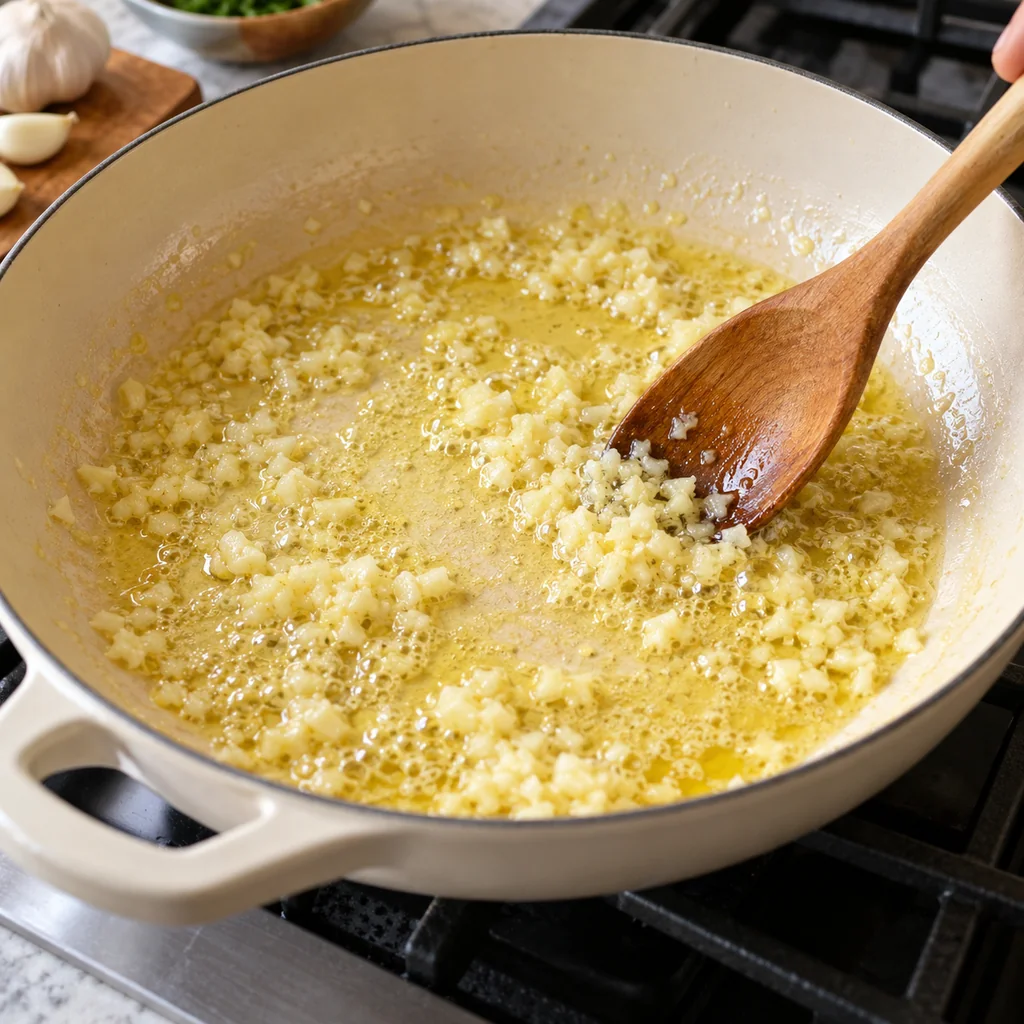
Heat a wide 12-inch skillet over medium heat. Add the olive oil and 2 tablespoons of the butter. When the butter melts and begins to foam, add the garlic and optional red pepper flakes. Stir constantly for 30 to 45 seconds, just until fragrant. Do not wait for deep color. If the garlic starts browning, lower the heat immediately because it continues cooking after the shrimp enter the pan.
3. Sear the shrimp in one layer
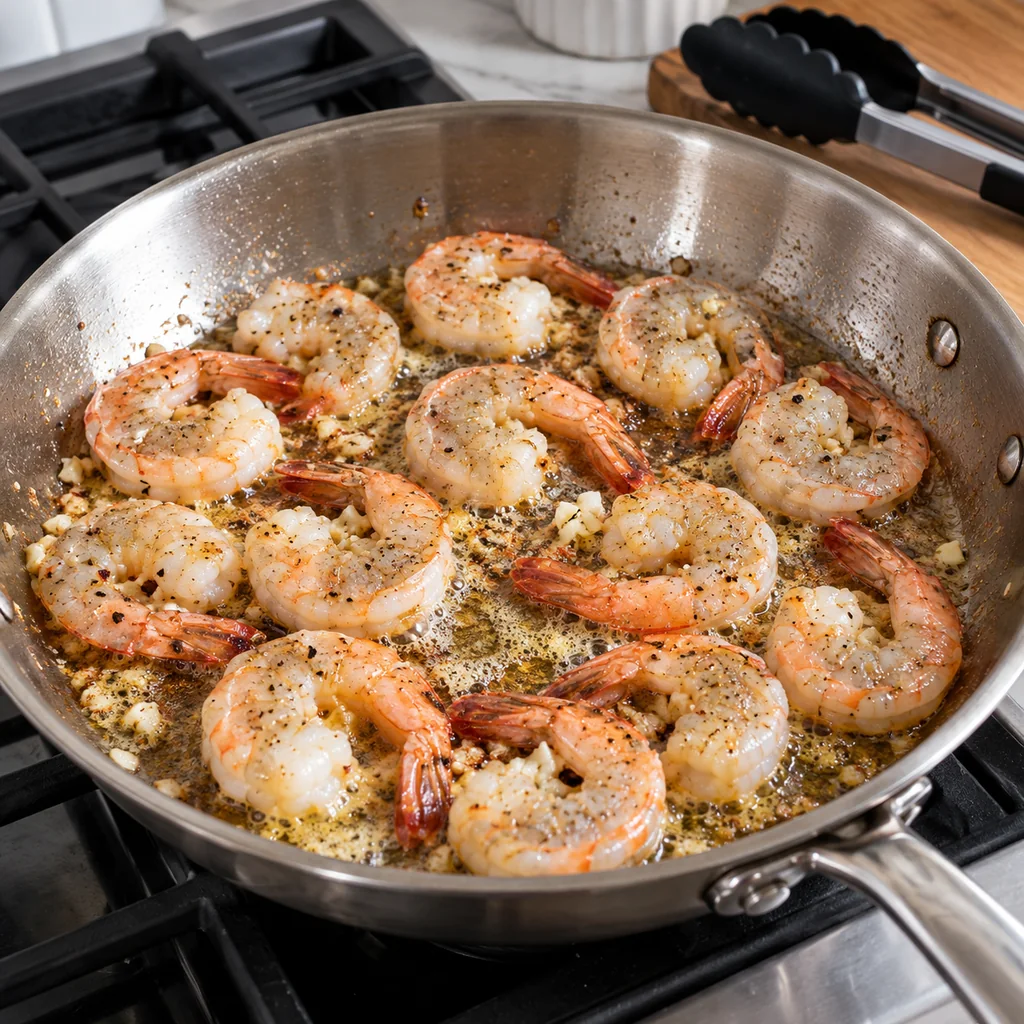
Add the shrimp in one layer, leaving a little room between them. Cook without moving for about 2 minutes, until the undersides are pink and lightly golden. Turn each shrimp with tongs and cook the second side for 1 to 2 minutes. Work in two batches if your skillet is crowded. Overlapping shrimp release moisture and steam, which prevents browning and makes their texture less springy.
4. Finish the lemon butter sauce
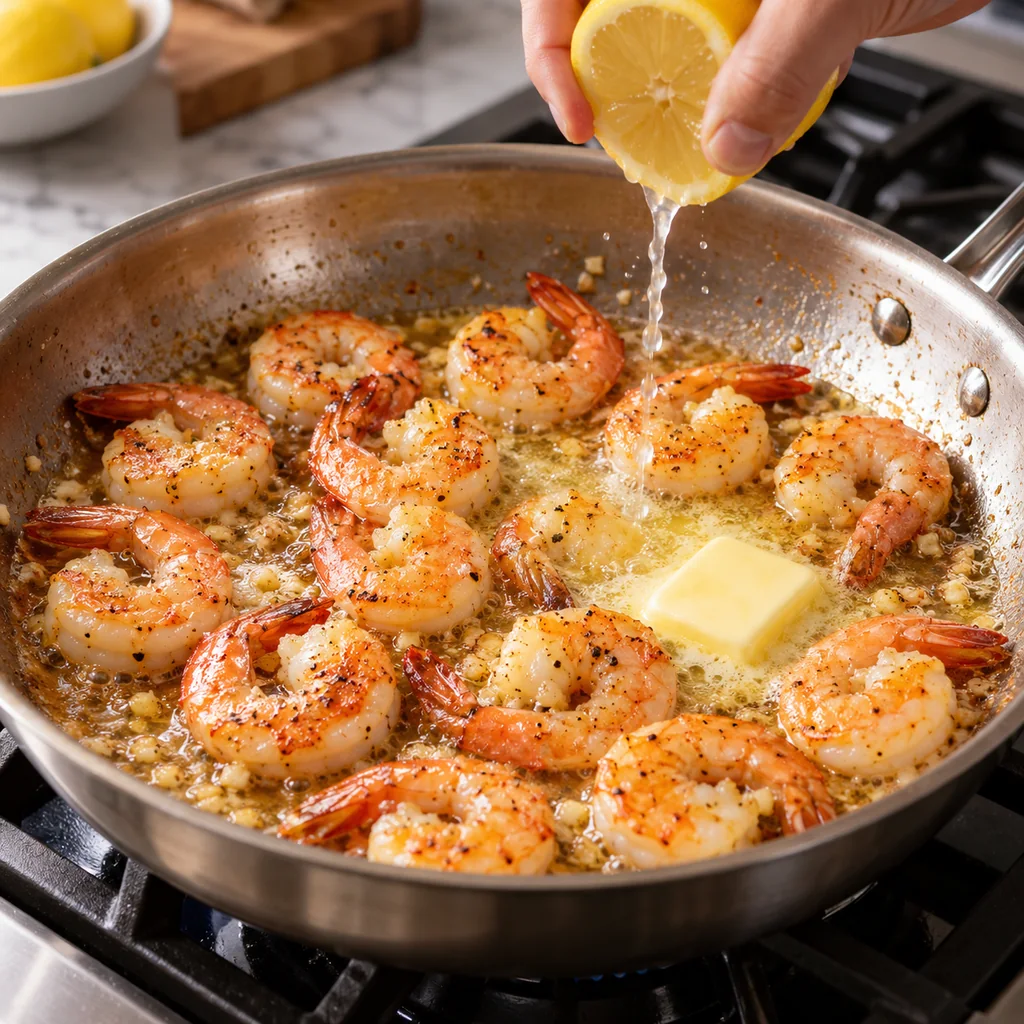
Reduce the heat to low when the shrimp are almost opaque. Add the remaining 2 tablespoons butter and the lemon juice. Toss gently for 30 to 60 seconds as the butter melts into the garlic and pan juices. Remove the skillet from the heat when the shrimp form loose C shapes and the thickest parts are opaque. Tightly curled O-shaped shrimp are usually overcooked.
5. Add parsley and serve immediately
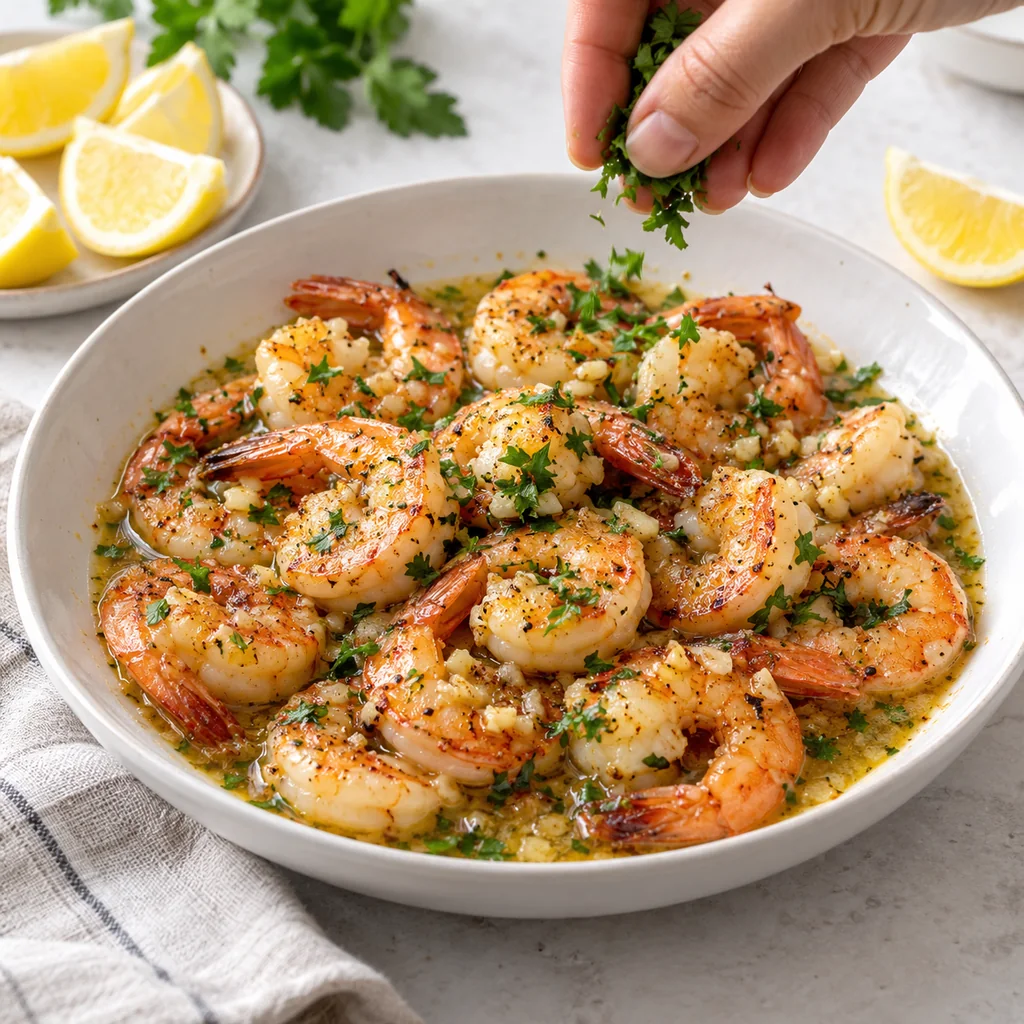
Fold in the parsley and taste the sauce before adding more salt, since the seasoned shrimp have already flavored it. Transfer the shrimp and every spoonful of garlic butter to a warm serving bowl. Serve immediately with lemon wedges. For a vegetable-forward pairing, try our zucchini noodles with garlic shrimp.
How to Keep Shrimp Tender
Shrimp continue cooking briefly after leaving the burner, so take the skillet off the heat just before they appear fully firm. Size matters more than an exact clock: smaller shrimp may need only a minute per side, while jumbo shrimp may need an extra minute. Look for opaque flesh, pink edges, and a relaxed C shape. An instant-read thermometer inserted into a large shrimp should reach 145°F (63°C).
Use a skillet broad enough to hold the shrimp in one layer and preheat it before adding them. A pan that is too cool or crowded collects liquid, dilutes the butter, and extends the cooking time. If doubling the recipe, cook the shrimp in batches, return them all to the skillet, and then finish the sauce. Do not double the lemon juice immediately; taste first and add only what the larger batch needs.
Serving and Storage
Spoon the shrimp over steamed rice, couscous, or pasta so the starch absorbs the sauce. Roasted asparagus, broccoli, or green beans provide a crisp contrast. Warm crusty bread also works when you want a simple appetizer-style meal. For a heartier one-pan variation, see our one-pot garlic butter shrimp pasta.
Refrigerate leftovers in a sealed container within two hours and use them within 2 days. Reheat gently in a covered skillet over low heat with a teaspoon of water, stopping as soon as the shrimp are hot. High microwave heat can make them rubbery. Freezing the finished dish is not recommended because previously frozen shrimp can lose texture and the butter sauce may separate.
Frequently Asked Questions
Can I use frozen shrimp?
Yes. Thaw them overnight in the refrigerator or place the sealed shrimp in a bowl of cold water until flexible. Drain and pat them very dry before seasoning. Never thaw seafood on the counter or use hot water, which can warm the outer layer into the food-safety danger zone.
Can I make this recipe without butter?
You can replace the butter with additional olive oil, although the sauce will taste lighter and less creamy. Use about 3 tablespoons olive oil total and keep the heat moderate so the garlic does not burn. A dairy-free butter alternative also works if it is suitable for sautéing.
How do I know when shrimp are done?
The flesh should turn opaque from edge to center, the exterior should be pink, and each shrimp should curl into a loose C. For an exact check, the internal temperature should reach 145°F (63°C). Remove them promptly; tightly curled shrimp with a firm, dry texture have cooked too long.