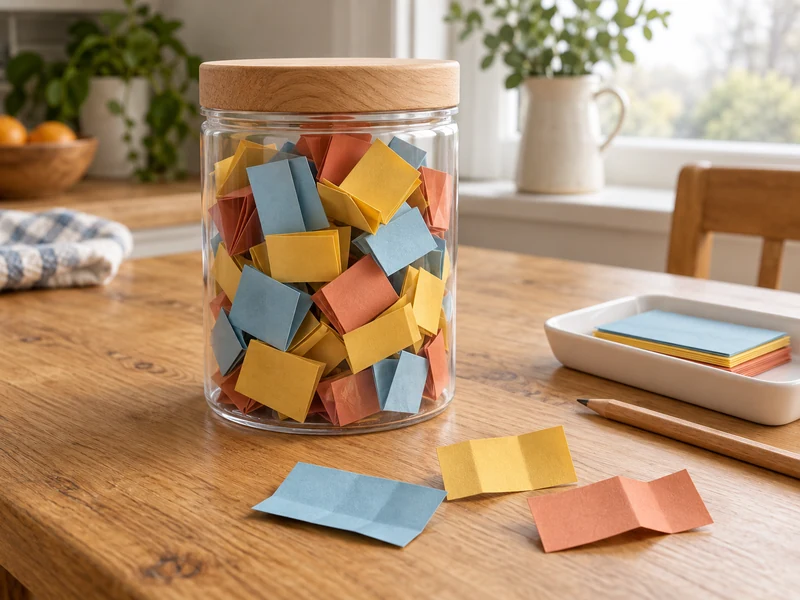
When rain cancels the outdoor plan, a ready-to-use activity jar can turn “What can I do?” into a small choice a child can make. This version uses three paper colors so you can pick the amount of time you actually have: blue for about 5 minutes, yellow for about 15, and terracotta for about 30. Write the 24 prompts below on slips, fold them, and let your child draw from the color that fits the day. Every idea is screen-free and can be adapted to supplies already in your home.
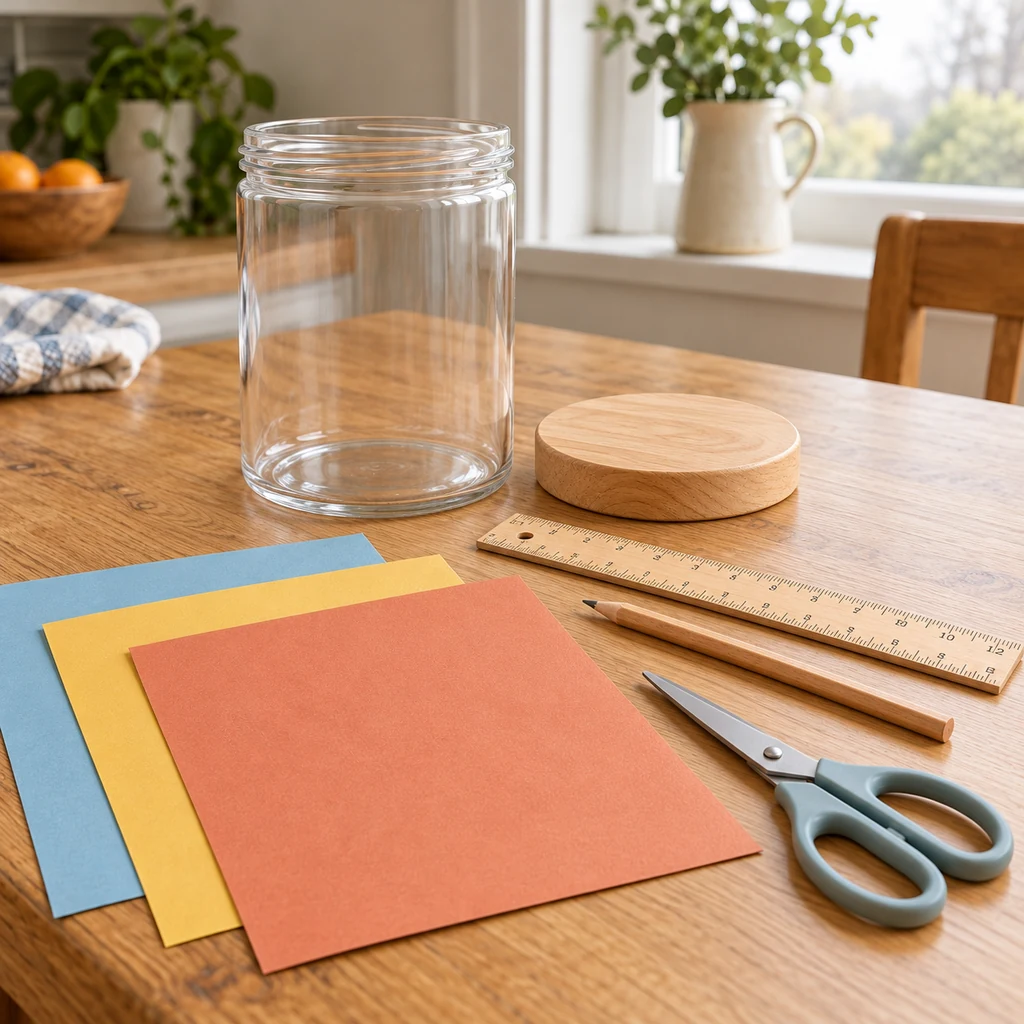
What You Need
- A clean, wide-mouth container with a lid; choose a shatter-resistant container or sturdy box for younger children
- Three colors of paper, a pencil or marker, a ruler, and scissors
- About 20 minutes to prepare the slips; the activities themselves use ordinary paper, drawing tools, books, toys, or household objects
Set up with an adult. An adult should handle scissors for children who are not ready to cut safely. Check each prompt against the child’s age, abilities, and the space available before it goes into the jar. Keep small loose pieces away from children who may put them in their mouths.
Make the Three-Color Activity Jar
Step 1: Choose a Container and Three Paper Colors
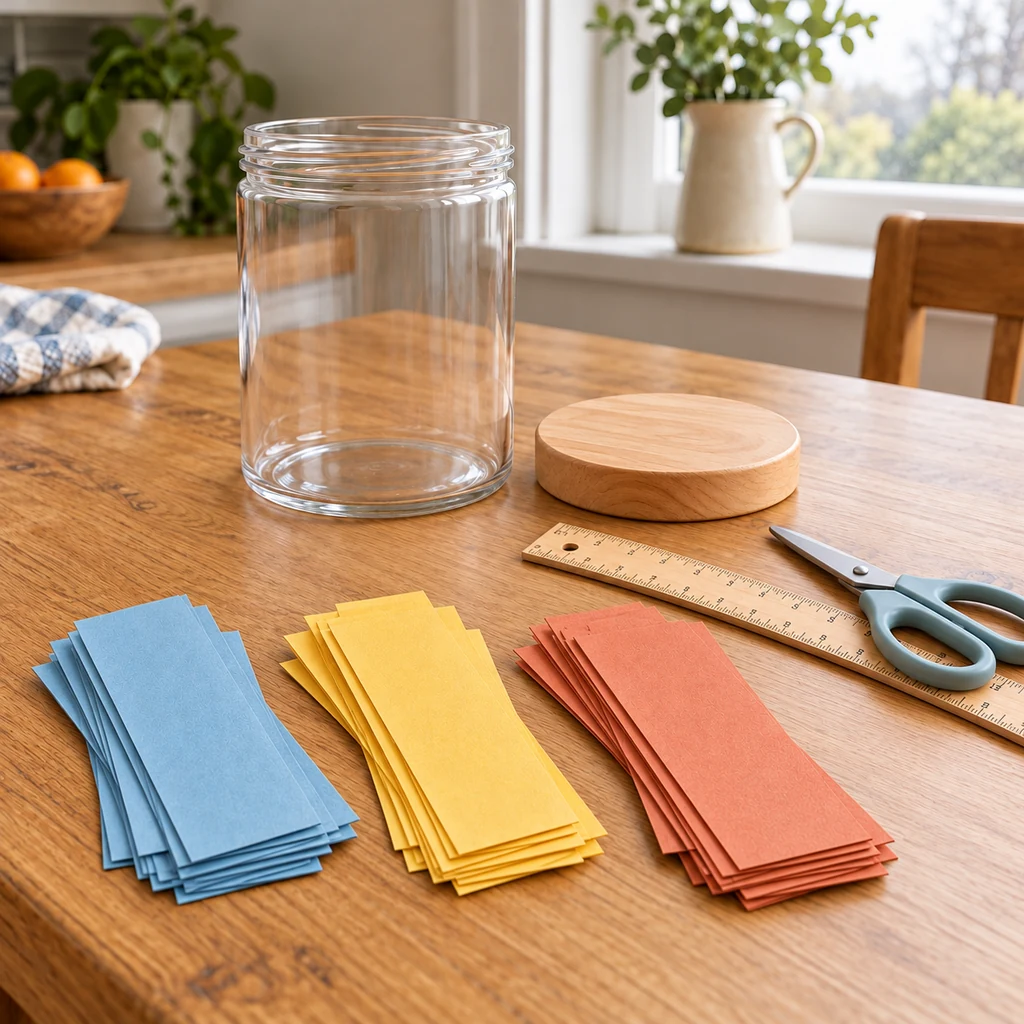
Wash and dry the container, then set the lid aside. Choose blue for quick 5-minute activities, yellow for 15-minute projects, and terracotta for longer 30-minute play. You can use any three colors as long as you keep a simple color key nearby. A clear jar makes the choices visible; a box works just as well if you prefer an unbreakable option.
Step 2: Cut Eight Slips in Each Color
Cut the sheets into 24 similarly sized rectangles: eight blue, eight yellow, and eight terracotta. Aim for slips wide enough to write one short instruction and small enough to fold into the container. Separate the colors into piles before writing; that makes it easier to check that each time group has eight ideas.
Step 3: Write One Specific Activity on Each Slip
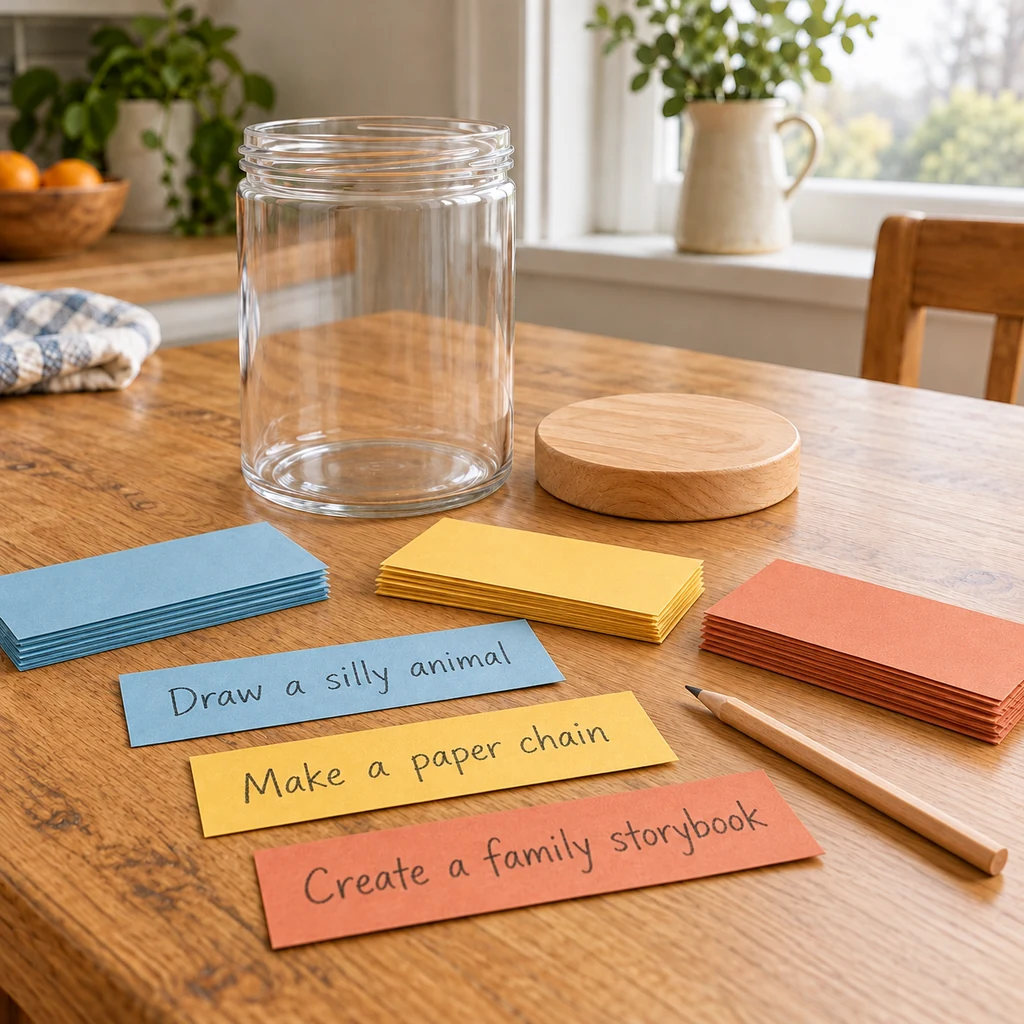
Copy one prompt from the matching color list below onto each slip. Make the instruction concrete enough that a child can begin without asking what it means: “Draw a silly animal using three shapes” works better than “Be creative.” If a prompt needs something you do not have, replace it before folding the slip. The pictured blue, yellow, and terracotta examples correspond to a quick drawing, a medium paper chain, and a longer family storybook.
Step 4: Fold the Slips and Fill the Jar
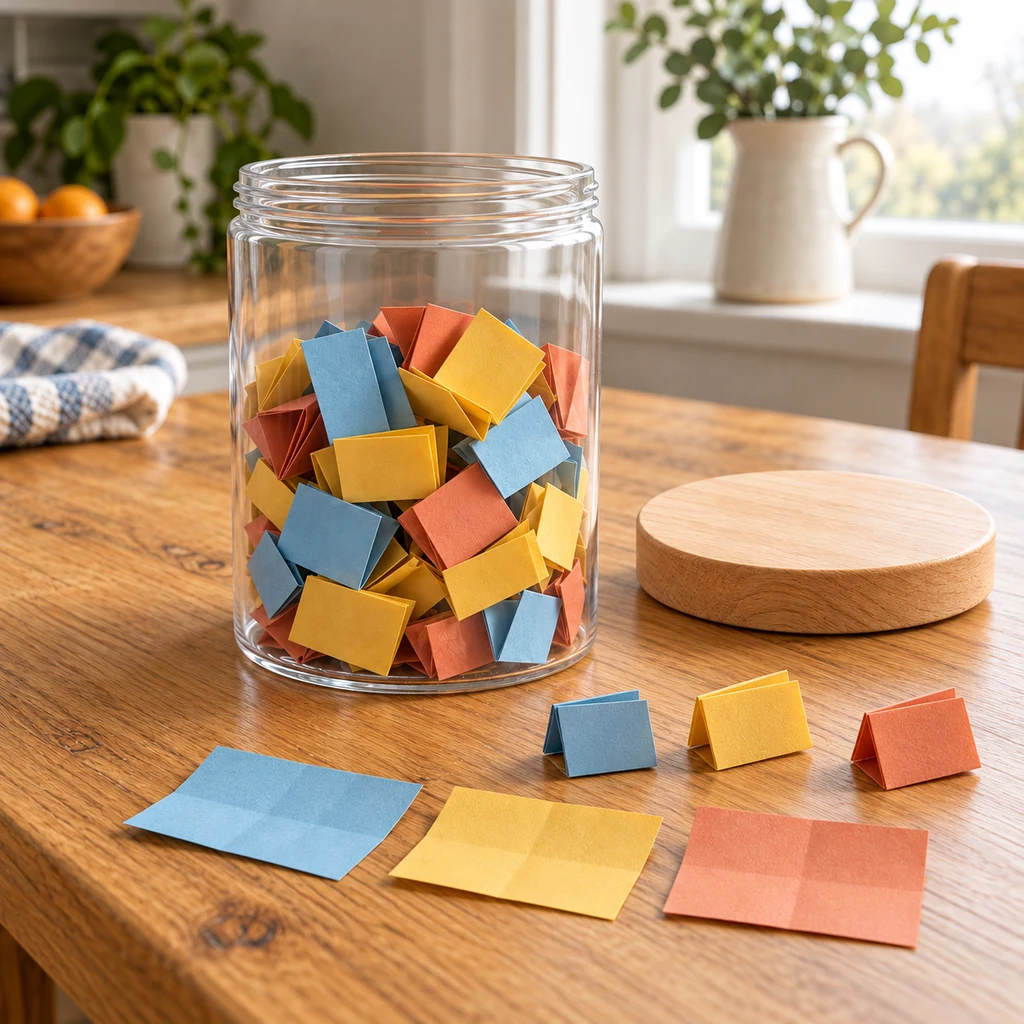
Fold every slip once or twice so the words are hidden, then mix the colors in the container and close the lid. At playtime, choose a color first, then draw a slip of that color. If the activity is unsafe, impractical, or simply a poor fit that day, put it aside and choose another. Return reusable prompts to the jar after play, and swap out any that no longer interest your child.
24 Screen-Free Prompts to Put in the Jar
These are starting points for children roughly 5 and up with an adult nearby. A younger child can join with simpler instructions and age-appropriate materials. The time labels are approximate; stop or continue when it feels right.
Blue Slips: About 5 Minutes
- Draw a silly animal using three basic shapes.
- Find one soft, one round, and one blue object in the room.
- Toss three rolled-up socks into a laundry basket from a safe line.
- Tell a tiny story starring three objects you can see.
- Make a paper airplane and test it in a clear, open space.
- Build the tallest stable tower you can with your own blocks or cups.
- Invent a four-beat clapping pattern and teach it to someone.
- Choose a book and describe its cover before reading the first page.
Yellow Slips: About 15 Minutes
- Make a paper chain with strips, tape, and adult help with cutting.
- Design a postcard on paper for someone you know.
- Draw a map of an imaginary island and name three places on it.
- Arrange a toy parade from smallest to largest and give it a name.
- Build a tabletop maze with books or blocks and guide a toy through it.
- Make a paper puppet and give it a two-line introduction.
- Sort five books by a rule you invent, then explain your rule.
- Draw the view from a window using only three colors.
Terracotta Slips: About 30 Minutes
- Create a four-page family storybook with a cover and an ending.
- Build a small cardboard town from clean boxes and draw its roads.
- Invent a paper board game with a start, a finish, and three rules.
- Set up a floor-level obstacle route with cushions; keep it clear of stairs and climbing.
- Make a mini museum of favorite objects and draw a label for each.
- Put on a two-character puppet show with paper puppets.
- Design a new room for a toy using a box and scrap paper.
- Create a rainy-day weather journal page with a sky sketch and three observations.
Keep the Jar Useful After the First Rainy Day
Choose the time group before the child draws. That small constraint avoids pulling a half-hour project five minutes before dinner. Keep a pencil and a few spare slips nearby so you can replace an idea that uses missing supplies or feels too easy. If a child prefers to make their own prompt, invite them to write one with you and check it before it joins the jar.
The finished jar is a simple system you can refresh as interests change: a visible choice, a realistic time limit, and an activity your household can actually start.