
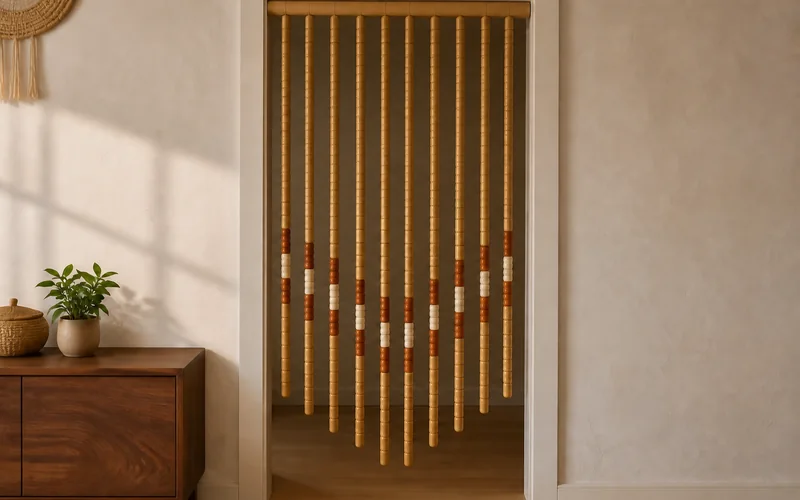
This DIY bamboo beaded curtain turns a plain doorway into a warm architectural feature without blocking light. Honey-toned bamboo, matte terracotta, and soft cream create a graphic pattern that feels collected rather than costume-like.
Project Plan
The finished rail is 30 inches wide with ten working strands spaced 3 inches on center. The outer strands finish near 60 inches and the center pair near 72 inches, creating the gentle V shown in every finished view. Allow about four hours, excluding shopping time.
Materials and Tools

- One 30-inch bamboo or hardwood rail, approximately 1 1/4 inches thick
- About 620 natural bamboo barrel beads
- 70 matte terracotta beads and 40 warm-cream beads in the same size
- 2 mm braided cotton cord
- Two mounting screws with anchors suited to the doorway material
- Tape measure, pencil, drill, depth stop, scissors, masking tape, and blunt tapestry needle
Bead-hole sizes vary, so test ten beads on the cord before buying the full quantity. The beads should slide without wobbling over a bulky knot.
1. Measure the Doorway and Map the Strands
Measure inside the jamb at the intended mounting height. Leave at least 2 inches of clearance on each side of the rail. Mark ten positions 3 inches on center, beginning 1 1/2 inches from the rail end.
Plan the lengths in mirrored pairs: 60, 63, 66, 69, and 72 inches. Add 12 inches to every cord before cutting. Prepare two additional cords as knot testers and future replacements.
2. Drill the Bamboo Rail
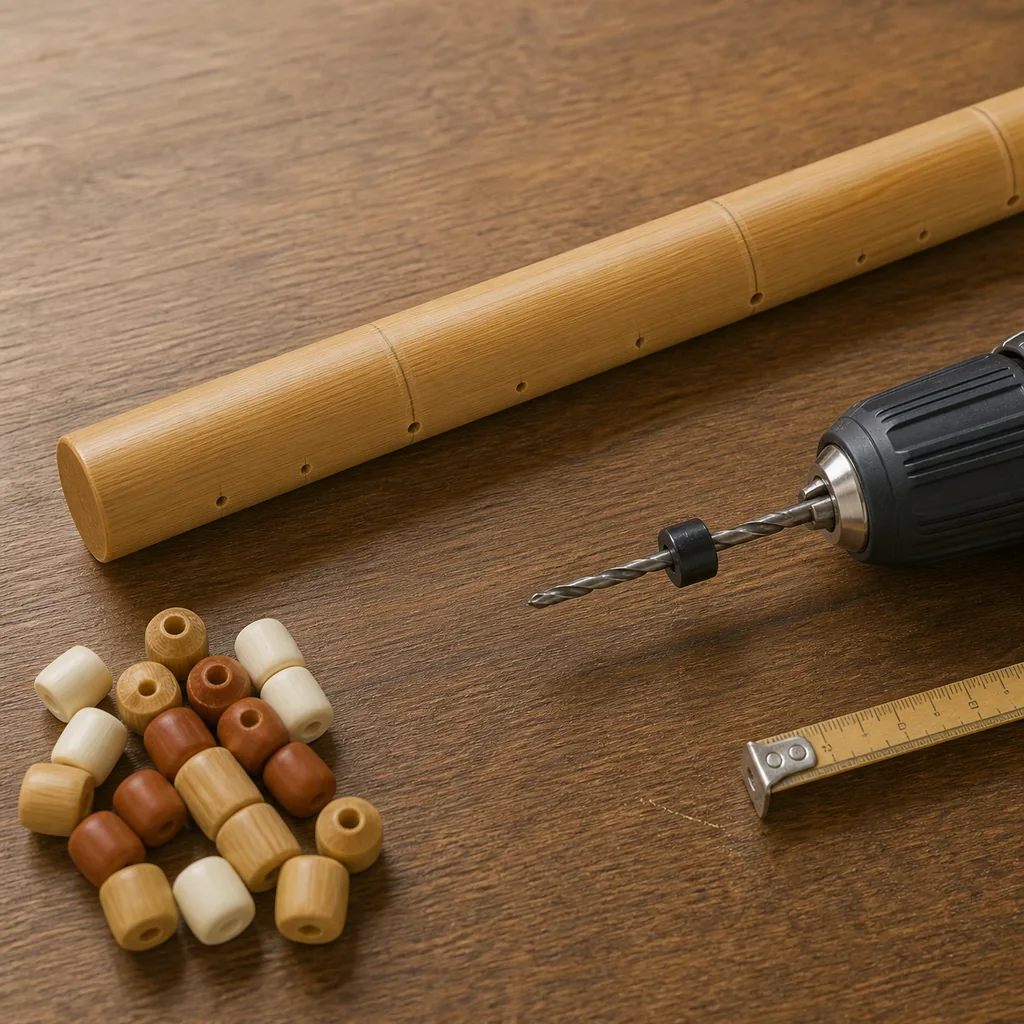
Clamp the rail on scrap wood with its underside facing up. Fit a bit just wider than the cord, set a depth stop, and drill slowly at each mark. Sand away splinters so the cotton cannot snag. Drill mounting holes near both ends separately from the cord positions.
3. Lay Out the Geometric Pattern
Arrange the ten cords side by side on the table. Mark a horizontal guide where the accent section should begin. Move each terracotta block slightly lower toward the center, then place a short cream block inside it. Mirror every change across the center line before threading.
4. String and Secure the Beads
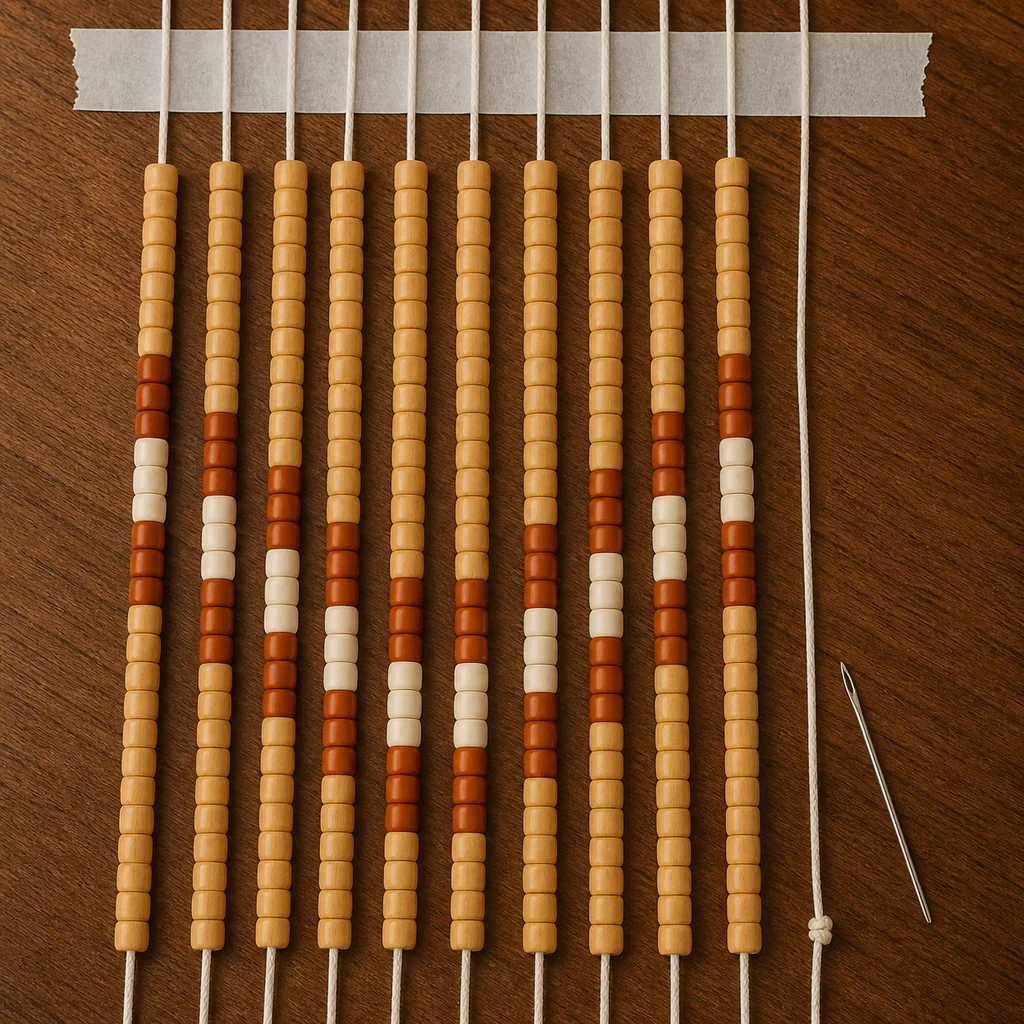
Tape the cord ends to stop beads from escaping. Thread natural bamboo beads to the first guide, add the terracotta and cream sequence, then return to bamboo. Leave 3 inches bare at the top and bottom. Tie a compact double stopper knot beneath the final bead.
Feed each top tail through its rail hole and knot it above the rail. Do not trim yet; the extra cord is needed for leveling.
5. Mount, Level, and Finish
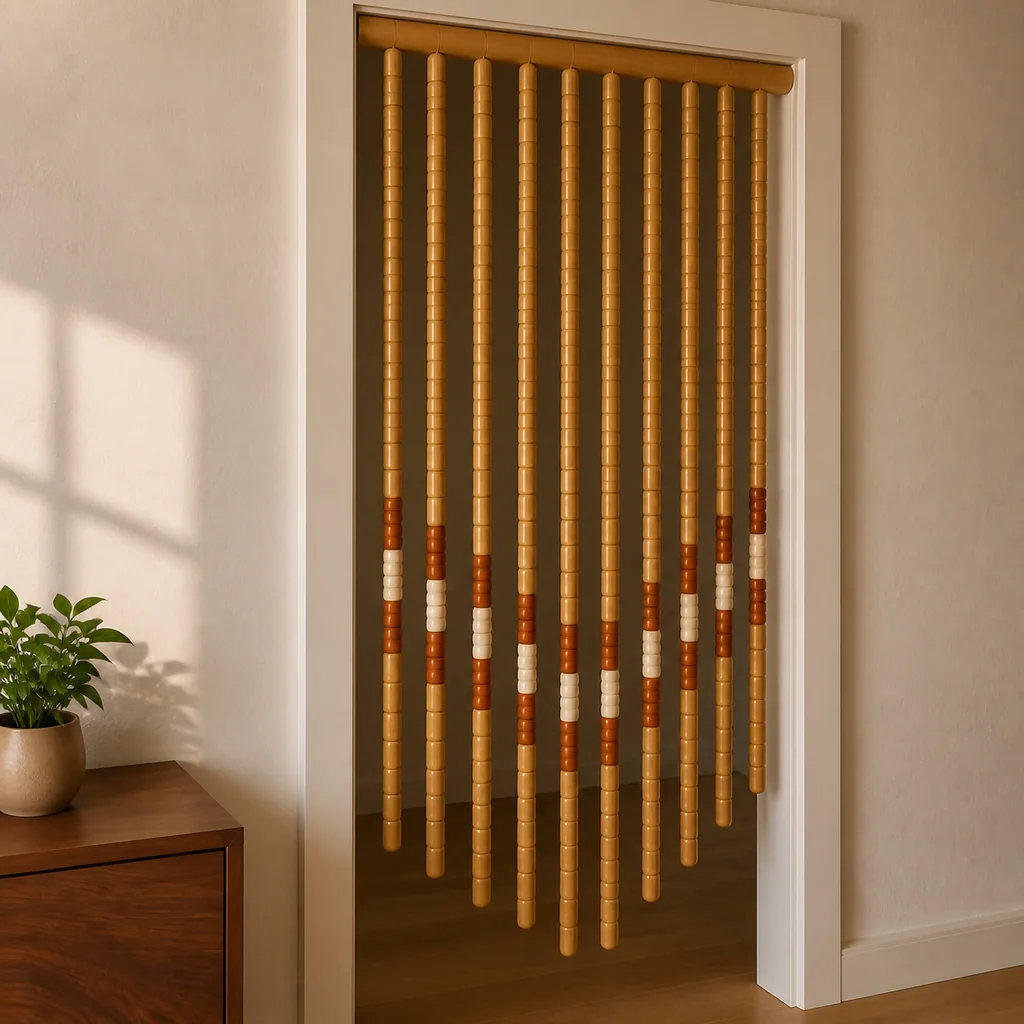
Fasten the rail into solid framing whenever possible; otherwise use anchors rated for the combined rail-and-bead weight. Step back and adjust the top knots until the accent blocks form one balanced shape. Tighten each knot, add a small dot of clear flexible glue, and trim the tails after it cures.
Safety, Care, and Troubleshooting
- Keep long hanging cords away from cribs, children’s play areas, and unsupervised pets.
- Do not install the curtain across a required exit or anywhere it may catch on a flame.
- Dust with a microfiber cloth; avoid soaking bamboo beads.
- If a strand twists, let it hang overnight before adjusting its top knot.
- If the pattern slopes, correct the top tails rather than adding mismatched beads at the bottom.
For more tactile wall projects, see the opalescent moon phase hanging, Neo Deco sunburst mirror, and stiffened lace doily bowl.
Final Check
Before calling the project finished, confirm that the rail is rigid, every knot is tight, all ten strands swing independently, and the terracotta-and-cream blocks mirror each other. Those checks give the curtain its clean, intentional look.