
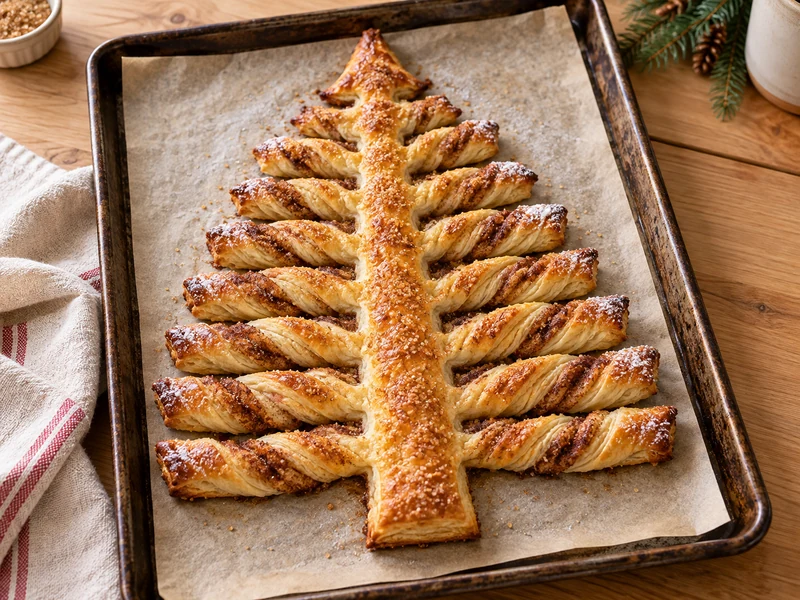
This cinnamon sugar puff pastry Christmas tree turns two store-bought pastry sheets into a pull-apart holiday centerpiece. Each branch twists away from a solid center, so guests can tear off a crisp, cinnamon-striped piece without cutting the whole pastry at the table.
RECIPE CARD
Cinnamon Sugar Puff Pastry Christmas Tree
Ingredients
- 1 package frozen puff pastry, 17.3 ounces (490 g), containing 2 sheets, thawed but still cold
- 3 tablespoons (42 g) unsalted butter, softened but not melted
- 1/3 cup (71 g) packed light brown sugar
- 1 1/2 teaspoons ground cinnamon
- 1/8 teaspoon fine salt
- 1 large egg
- 1 teaspoon water
- 1 tablespoon coarse sparkling sugar, optional
- 1 tablespoon confectioners' sugar for a light finish, optional
Quick Method
Condensed overview. Use Full Instructions for the complete method, timing and doneness details.
- Mix and spread the filling: Heat the oven to 400°F (200°C). Mix the softened butter, brown sugar, cinnamon, and salt into a paste. Roll each cold pastry sheet to…
- Cut the tree outline: Cut the chilled pastry stack into a broad triangle with a centered rectangular trunk about 2 inches wide and 2 inches long. Move the…
- Cut the branches: Preserve a 2-inch-wide vertical center. Cut horizontal 1-inch branch strips from both outer edges toward, but not through, that center, keeping the two sides…
- Twist and egg-wash: Twist each long branch twice away from the center and each short upper branch once. Beat the egg with the water, brush a thin…
- Bake and cool: Bake on the middle rack for 18 to 22 minutes, rotating once if needed, until the branches are crisp and the center is deep…
The shaping looks detailed, but the method is simple: spread a thin filling, stack the pastry, cut one tree outline, slice the branches, and twist. Keeping the dough cold and the filling thin prevents the two problems that spoil this design most often—blurred layers and melted sugar leaking across the pan.
Why This Puff Pastry Tree Works
A 2-inch-wide uncut center acts like the trunk of the finished pastry. It keeps every branch attached while leaving enough room for the dough to puff. The branch cuts are spaced about 1 inch apart, producing sturdy strips that can take two twists without tearing.
Softened butter binds the brown sugar and cinnamon into a spreadable paste. That paste stays between the pastry sheets more reliably than melted butter, which can run toward the edges before the tree reaches the oven. A brief chill after stacking firms the layers again for cleaner cuts.
Ingredients
- 1 package frozen puff pastry, 17.3 ounces (490 g), containing 2 sheets, thawed but still cold
- 3 tablespoons (42 g) unsalted butter, softened but not melted
- 1/3 cup (71 g) packed light brown sugar
- 1 1/2 teaspoons ground cinnamon
- 1/8 teaspoon fine salt
- 1 large egg
- 1 teaspoon water
- 1 tablespoon coarse sparkling sugar, optional
- 1 tablespoon confectioners’ sugar for a light finish, optional
Pastry note: Package sizes and sheet dimensions vary. The method needs two sheets of equal size. Roll each one gently to approximately 10 by 14 inches if necessary, without crushing the edges. If your package gives a different oven temperature or handling direction, follow the package instructions and use the color and texture cues below to judge doneness.
Step-by-Step Instructions
Step 1: Mix and Spread the Cinnamon Filling
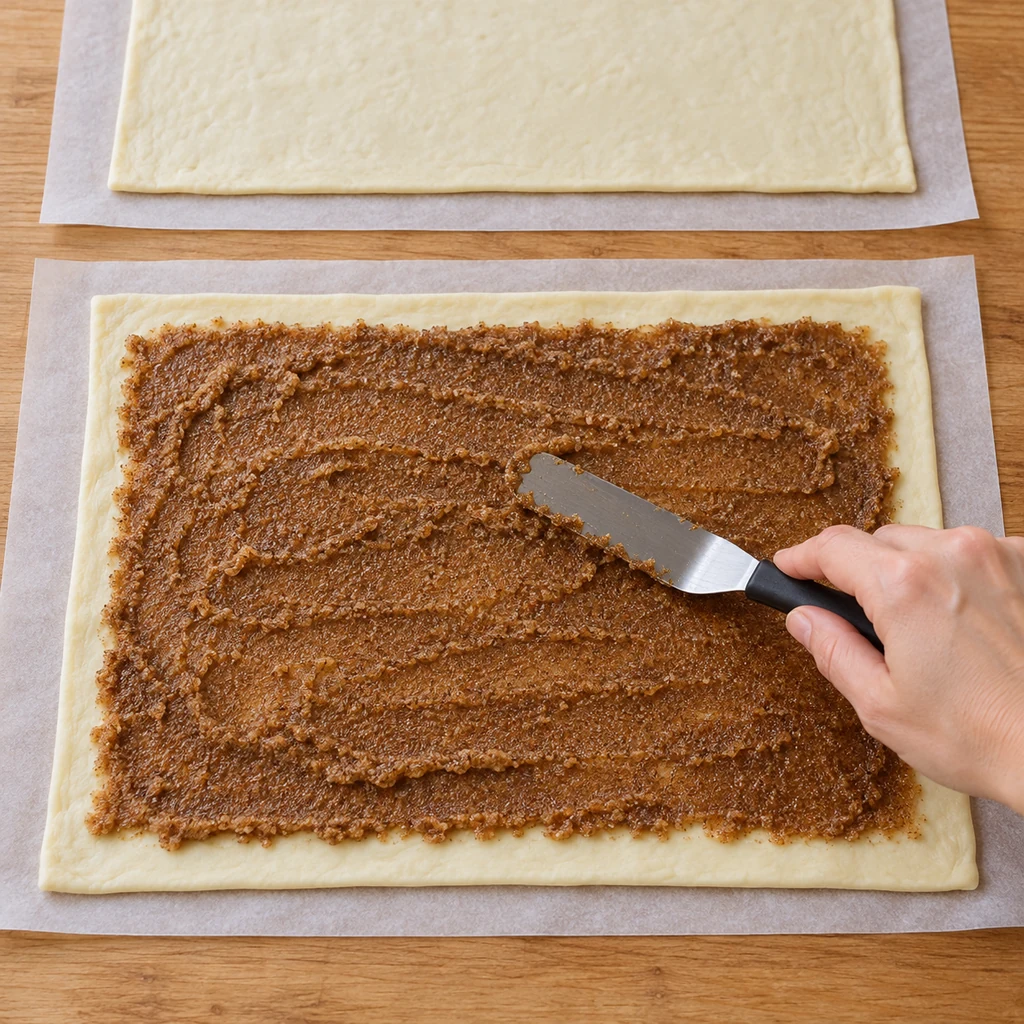
Heat the oven to 400°F (200°C). Line a large rimmed baking sheet with parchment. In a small bowl, mash the softened butter, brown sugar, cinnamon, and salt until the mixture forms a uniform paste with no dry pockets.
Unfold the first cold pastry sheet on a separate piece of parchment. Gently roll it to about 10 by 14 inches, keeping the thickness even. Spread the cinnamon mixture from the center outward, stopping 1/2 inch from every edge. A thin coat is enough; mounds of filling will squeeze out when the branches are twisted.
Roll the second pastry sheet to the same dimensions. Place it directly over the filled sheet and align the edges. Press the surface lightly with your palms—just enough to remove large air pockets, not enough to flatten the laminated dough. Slide the stacked pastry into the refrigerator for 10 minutes.
Step 2: Cut a Clean Christmas Tree Shape
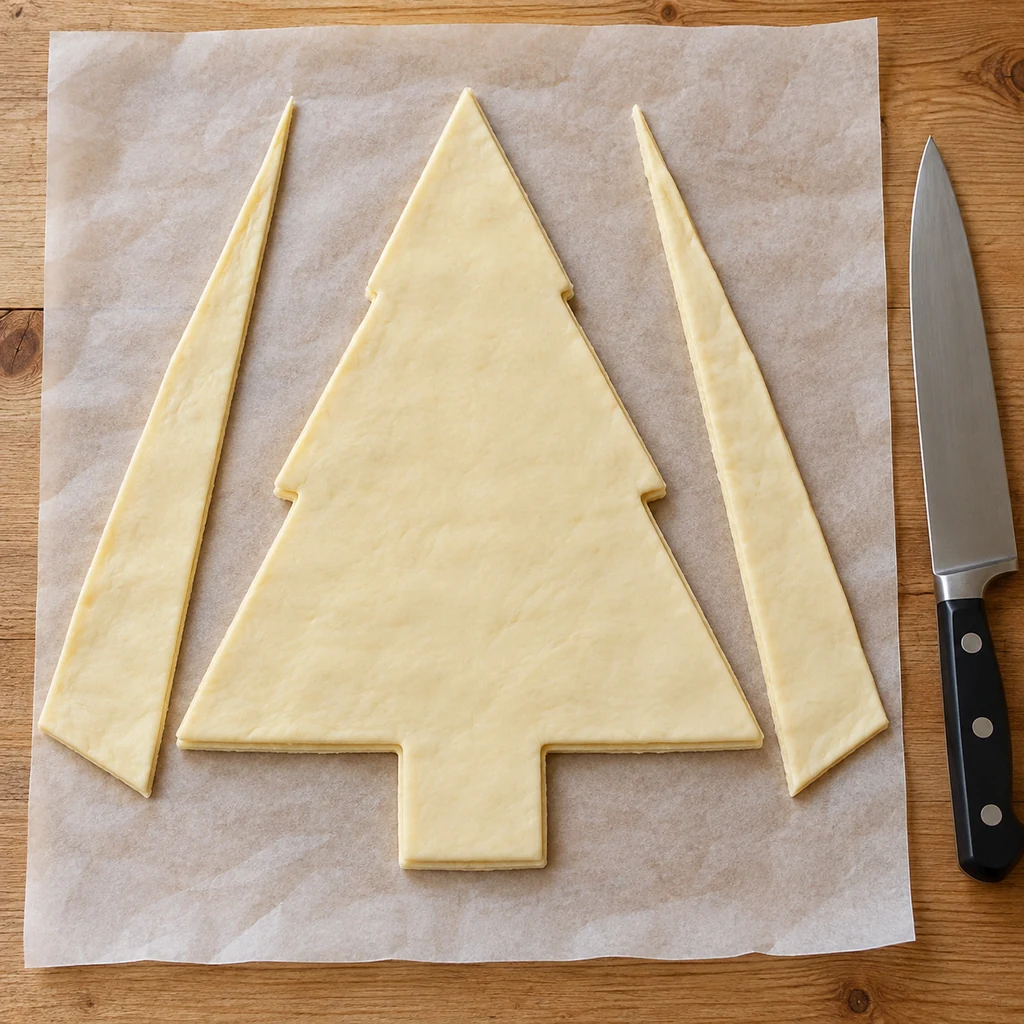
Transfer the chilled stack, still on its parchment, to the work surface. Mark the top center, then cut diagonally from that point to the two lower corners to form a broad triangle. At the bottom center, leave a rectangle about 2 inches wide and 2 inches long for the trunk; trim away the pastry on both sides of it.
Use a sharp knife or pizza wheel and press straight down through both layers. Avoid dragging a dull blade back and forth because sealed or compressed edges cannot expand as freely. Move the two long side scraps away before cutting branches, so they do not get mistaken for part of the tree.
Do not discard the scraps. Cut them into narrower strips, twist them, brush with the remaining egg wash, and bake them on a second pan. Because they are smaller than the tree, begin checking them after about 12 minutes.
Step 3: Mark the Center and Cut Even Branches
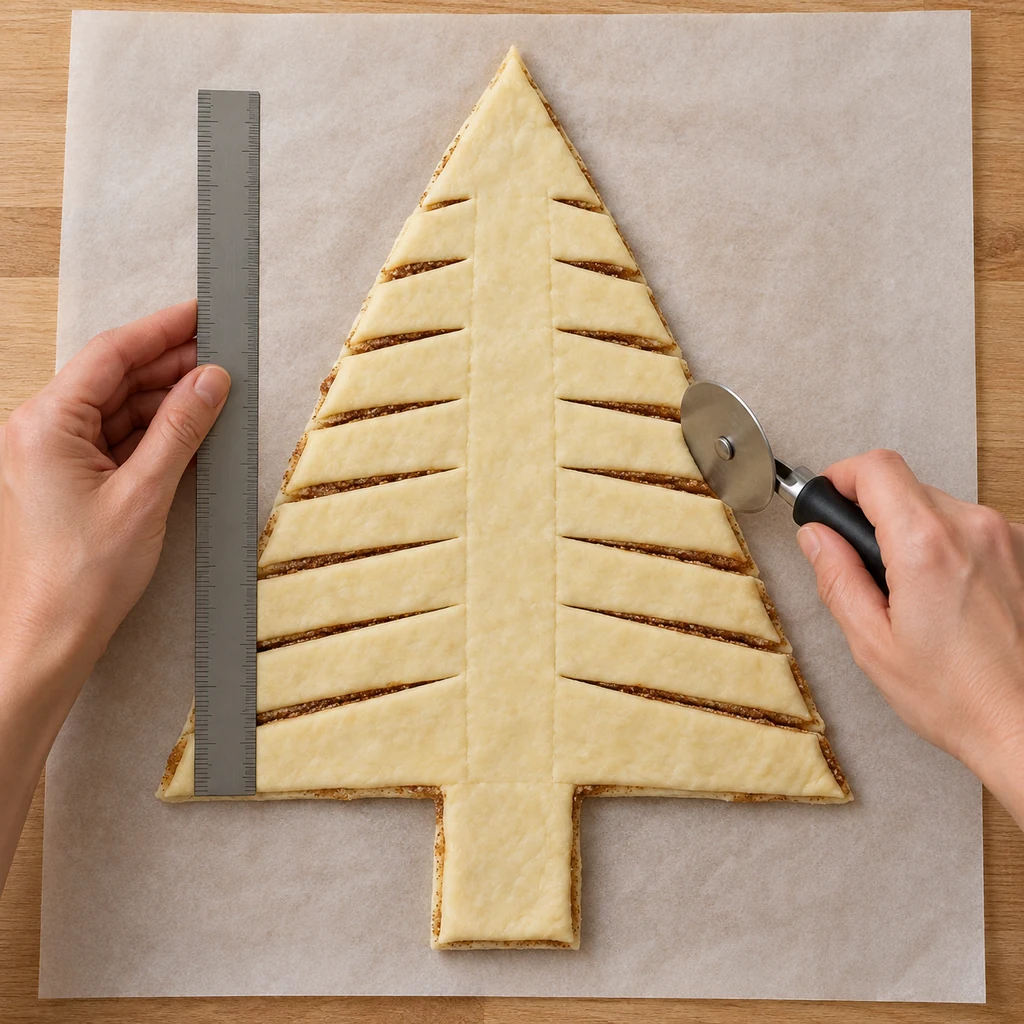
Imagine—or lightly score—two vertical guide lines that create a 2-inch-wide center from the point of the tree to the trunk. This center must remain uncut.
Starting near the base, cut horizontal strips about 1 inch apart from the left edge toward the center guide. Repeat on the right side at the same heights. The lowest branches will be long; each pair becomes shorter as you move toward the top. Leave the top 1 1/2 to 2 inches as one intact point instead of forcing tiny strips that would burn.
Count the branch pairs before twisting. The exact number can vary with sheet size, but the left and right sides should match. If the dough becomes soft or sticky, slide the entire parchment onto the baking sheet and refrigerate it for 10 minutes before continuing.
Step 4: Twist, Egg-Wash, and Add Sugar
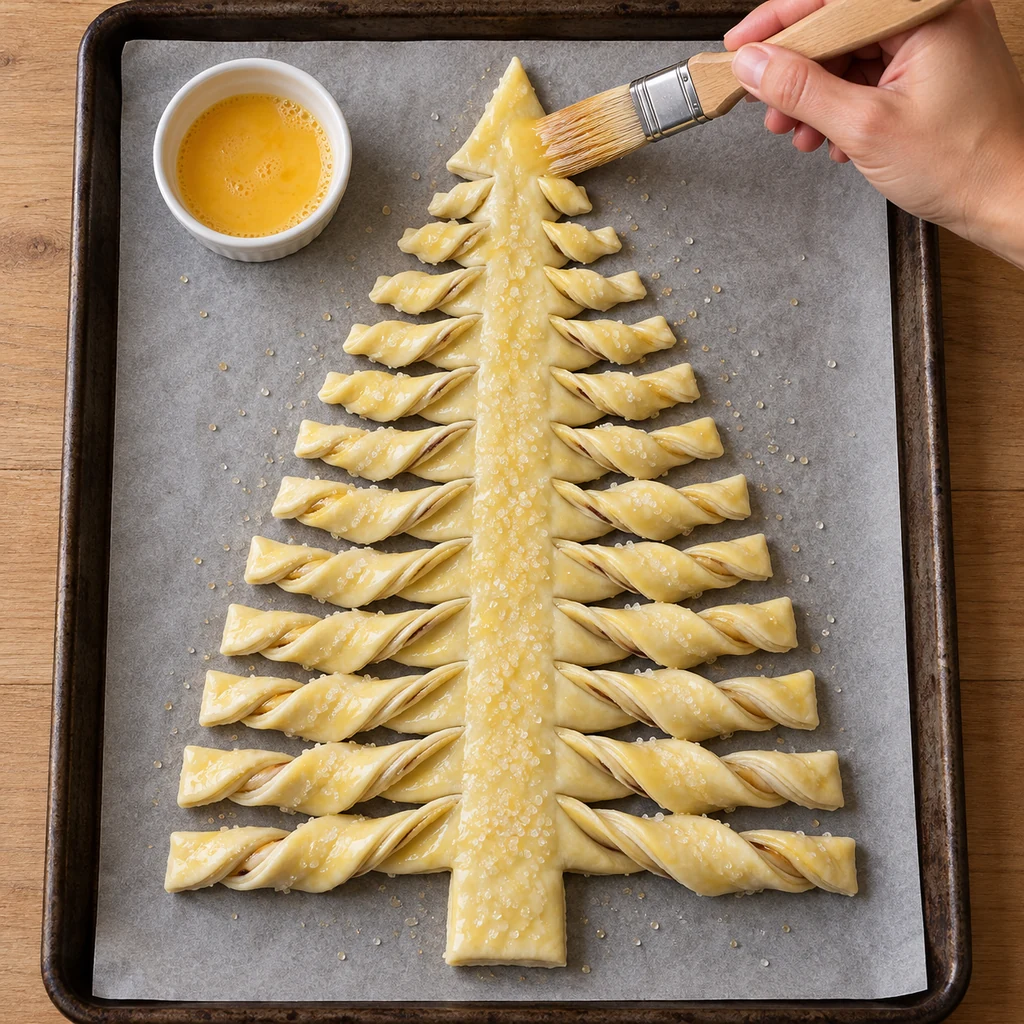
Move the parchment and tree onto the prepared baking sheet. Beginning with a bottom branch, lift the strip gently and rotate it twice away from the center. Set the tip back on the parchment. Repeat with the matching branch on the opposite side, then work upward. One turn is enough for the shortest upper branches.
Keep the first twist close to the center but do not tug. If a branch starts to tear, stop twisting and press the layers together at the weak point. Straighten the trunk and adjust the branch tips so the tree looks balanced.
Beat the egg with 1 teaspoon water. Brush a thin layer over all exposed pastry, including the center and trunk, while avoiding puddles along the cut edges. Sprinkle with coarse sugar if using. Chill the shaped tree for 10 minutes if it no longer feels cool and firm.
Step 5: Bake Until the Center Is Crisp and Deeply Golden
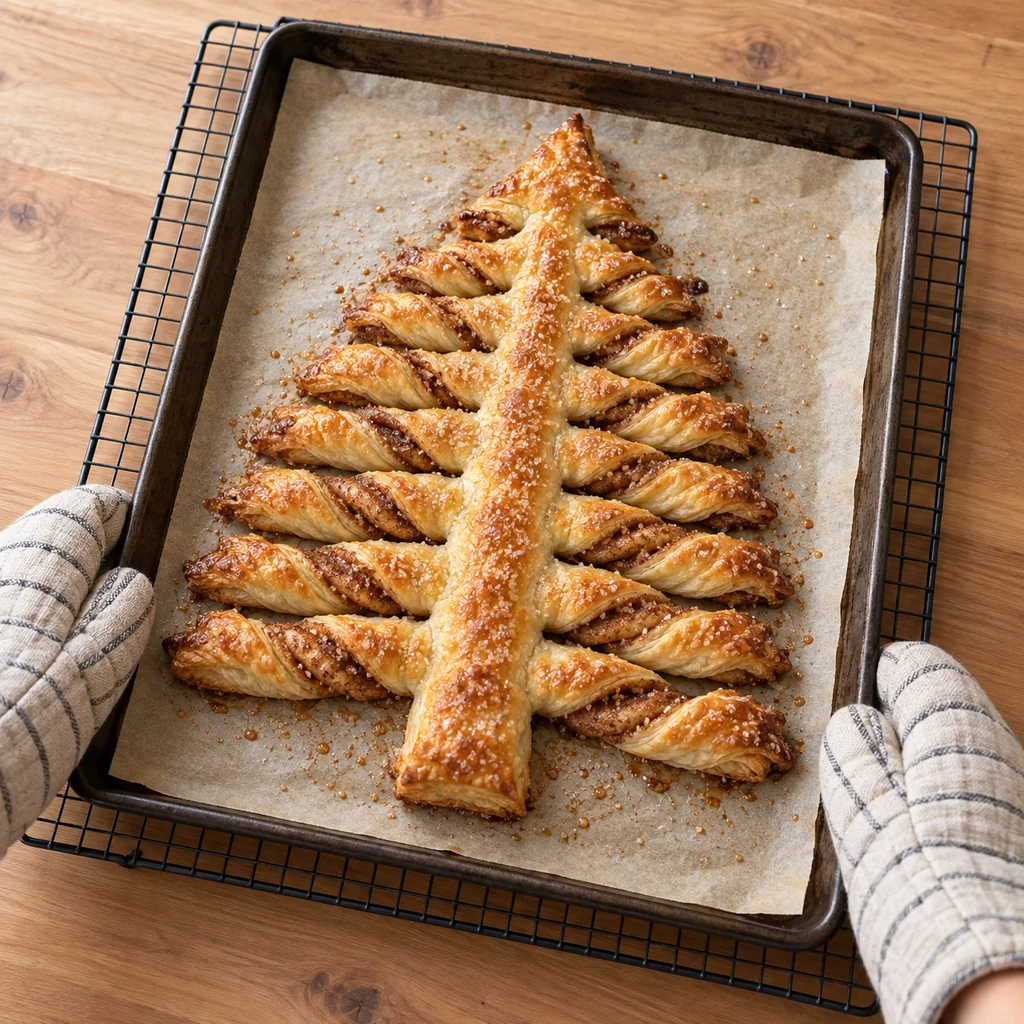
Bake on the middle rack for 18 to 22 minutes. Rotate the pan once after about 12 minutes if your oven browns unevenly. The tree is ready when the branches are puffed and crisp, the center is deep golden rather than pale, and the underside lifts cleanly from the parchment.
If the branch tips darken before the center is ready, cover only the tips loosely with small strips of foil and continue baking. Do not remove the tree while the center still looks wet or compressed; the thickest area needs the full bake.
Set the baking sheet on a wire rack and cool for 10 minutes. Add only a very light dusting of confectioners’ sugar, if desired. Serve warm or at room temperature by pulling branches away from the center.
How to Keep Puff Pastry Cold but Flexible
Properly thawed pastry should unfold without cracking but still feel cool. If it splits along a fold, let it rest for another 3 to 5 minutes before gently pressing the seam together. If it becomes floppy, shiny, or difficult to lift, it is too warm; refrigerate it on parchment for 10 to 15 minutes.
Work away from the preheating oven and avoid pouring hot or melted butter over the dough. Cold fat between the pastry layers creates steam in the oven, which separates those layers. Warm, compressed dough tends to bake flatter and leak more butter.
Troubleshooting the Shape
The Filling Leaked Onto the Pan
The butter may have been melted, the filling may have been too thick, or the shaped tree may have warmed before baking. Use softened butter, preserve the 1/2-inch border, and chill the assembled pastry whenever it feels soft. A small amount of caramelized sugar at the branch seams is normal.
The Branches Tore at the Center
The cuts probably came too close to the spine, or the strips were pulled while twisting. Keep a full 2-inch center intact and support each branch near its base. Two relaxed rotations are enough for the long lower branches.
The Center Is Pale but the Tips Are Brown
The middle is much thicker than the tips and may need several extra minutes. Shield the tips loosely with foil and continue baking until the center is firm and deep golden. A dark metal pan may brown the underside faster, so start checking at 18 minutes.
The Tree Spread Out of Shape
Very warm pastry can relax before its structure sets. After shaping, refrigerate the tray for 10 minutes while the oven finishes heating. Also check that the oven is fully preheated before the pan goes in.
Make-Ahead and Storage
You can assemble and shape the unbaked tree up to 8 hours ahead. Cover the tray loosely without pressing plastic onto the twists, then refrigerate. Add the egg wash and coarse sugar immediately before baking.
The pastry has its best crisp texture on the day it is baked. Store cooled leftovers in an airtight container at room temperature for up to 1 day, or refrigerate for up to 3 days. Reheat uncovered on a parchment-lined pan at 325°F (165°C) for 5 to 8 minutes. A microwave will soften the layers rather than restore their crispness.
Simple Variations
- Orange cinnamon: Rub 1 teaspoon finely grated orange zest into the brown sugar before mixing the filling.
- Cardamom cinnamon: Replace 1/2 teaspoon of the cinnamon with ground cardamom for a warmer floral note.
- Nutty finish: Sprinkle 2 tablespoons finely chopped pecans over the filling. Keep the pieces very small so they do not puncture the pastry.
- Vanilla sugar: Add 1/2 teaspoon vanilla extract to the butter mixture and omit the optional confectioners’ sugar.
For another sliceable holiday bake, try these cranberry orange shortbread cookies. The cranberry brie bites offer a savory puff-pastry option, while this small-batch apple crumble is useful when you need a smaller dessert.
Frequently Asked Questions
Can I use one puff pastry sheet?
This filled pull-apart design needs two equal sheets. A single sheet can be cut into a tree shape, but it will not create the striped twists shown here.
Can I use granulated sugar instead of brown sugar?
Yes. Granulated sugar gives a slightly drier, crisper filling and a lighter caramel flavor. Use the same volume and keep the butter amount unchanged.
Why should the center remain 2 inches wide?
A narrow center can tear when the long lower branches are twisted. The wider spine supports the entire tree and creates a substantial baked section that keeps the silhouette recognizable.
How do I move the shaped tree without stretching it?
Shape it directly on parchment. Lift the parchment—not the pastry—onto the baking sheet. If the sheet has become soft, chill it before transferring.
Can children help shape the branches?
Children can twist the cold pre-cut branches with supervision. An adult should handle the knife or pizza wheel, raw egg wash, hot oven, and baking sheet.