
The first time I planted peonies, I thought they would behave like every other perennial in the border. I dug a generous hole, tucked the roots in a little too deep, and waited for a huge floral show the next spring. What I got instead was a healthy-looking plant with very little bloom. That one small mistake taught me the most important lesson about how to plant peonies: these classic garden favorites are easy to grow, but they are surprisingly particular about depth and location.
Once you get those basics right, peonies are wonderfully rewarding. They can live for decades, return each spring with bigger clumps, and bring that lush, romantic cottage-garden look so many people love. If you want to plant peonies once and enjoy them for years, this guide will walk you through the process clearly.
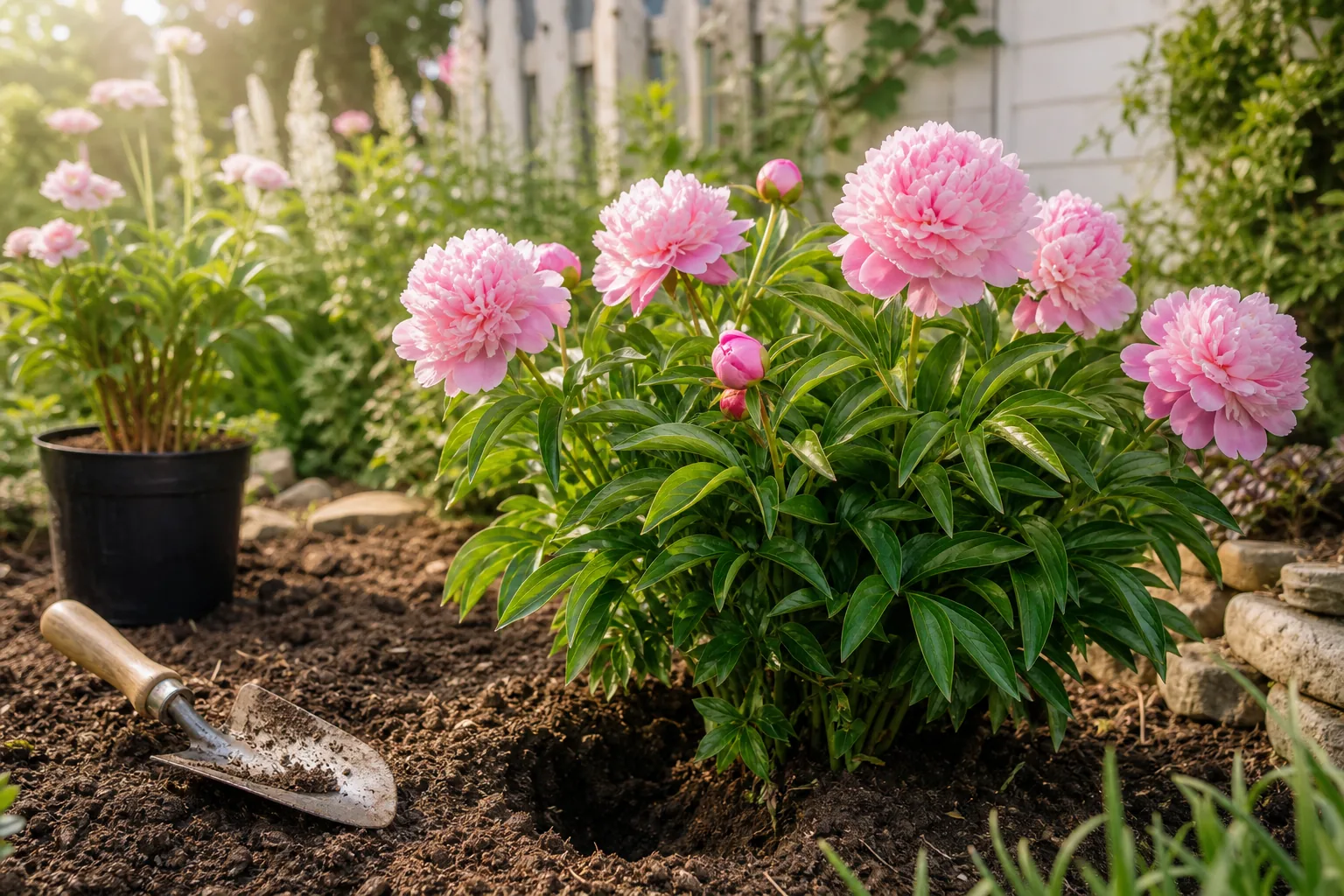
Why Peonies Are Worth the Wait
Peonies are not the kind of plant that gives instant gratification in the same way annual flowers do. They settle in slowly, build strength over time, and then reward patience with large, luxurious blooms that look almost unreal when they open. That long-game quality is part of their appeal. A well-placed peony can stay happy for decades.
They are also easier to live with than many gardeners expect. Peonies are cold-hardy, long-lived, and not especially needy once established. The biggest challenge is not ongoing maintenance. It is simply planting them correctly at the beginning.
Best Time and Best Place to Plant Peonies
The best time to plant most herbaceous peonies is early fall. This gives the roots time to settle in before winter and helps the plant wake up stronger in spring. If you plant in spring, peonies can still survive, but they often establish more slowly.
Choose a site with:
- At least 6 hours of sun, with full sun preferred in cooler climates
- Rich, well-drained soil
- Enough air flow to help foliage stay healthy
- Room to mature without crowding shrubs or thirsty tree roots
Avoid soggy spots. Peonies dislike wet feet, and heavy winter moisture can cause problems. If your soil is dense or slow-draining, mix in compost before planting and consider a gently raised bed area.
What You Need Before You Start
Before you plant, gather your materials so the job feels smooth rather than chaotic:
- Bare-root peony or nursery-grown peony
- Garden spade or trowel
- Compost or well-rotted organic matter
- Watering can or hose
- Mulch for winter protection after planting
If you are planning a larger perennial border, it can also help to think ahead about spacing and future maintenance. A peony may look small when planted, but a mature clump wants breathing room.
How to Plant Peonies Step by Step
Step 1: Prepare the Soil
Start by loosening the soil well. Work compost or organic matter into the planting area to improve texture and drainage. Peonies appreciate fertile soil, but they do not want a heavy, soggy pocket around their roots.
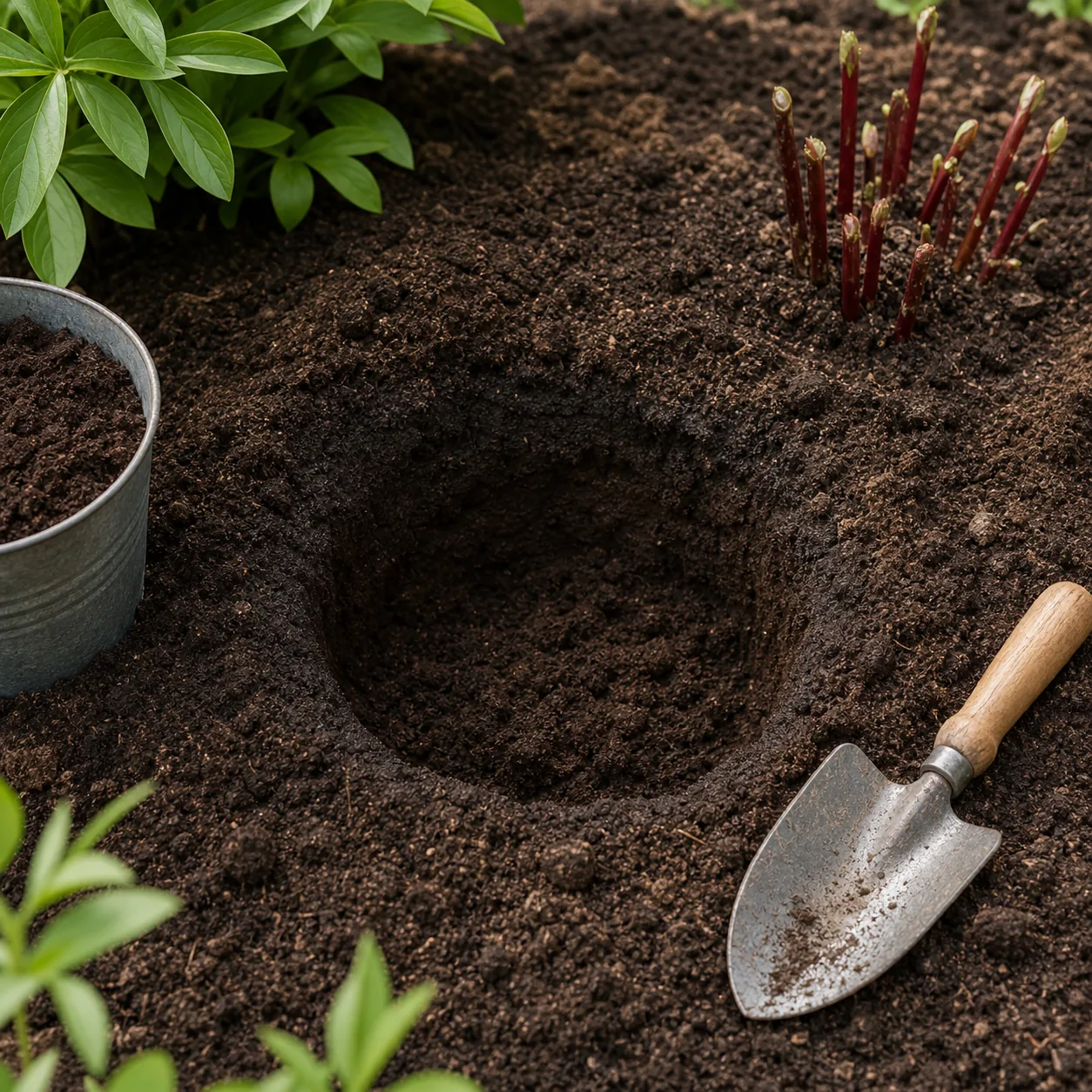
Dig a hole wide enough for the root system to sit comfortably without bending or forcing it. If your soil is poor, improving the wider planting zone matters more than creating one tiny rich pocket.
Step 2: Position the Peony Root Correctly
This is the step that matters most. Place the bare-root peony so the pink or reddish ?eyes? sit only about 1 to 2 inches below the soil surface. If they go much deeper, the plant may grow leaves but bloom poorly.
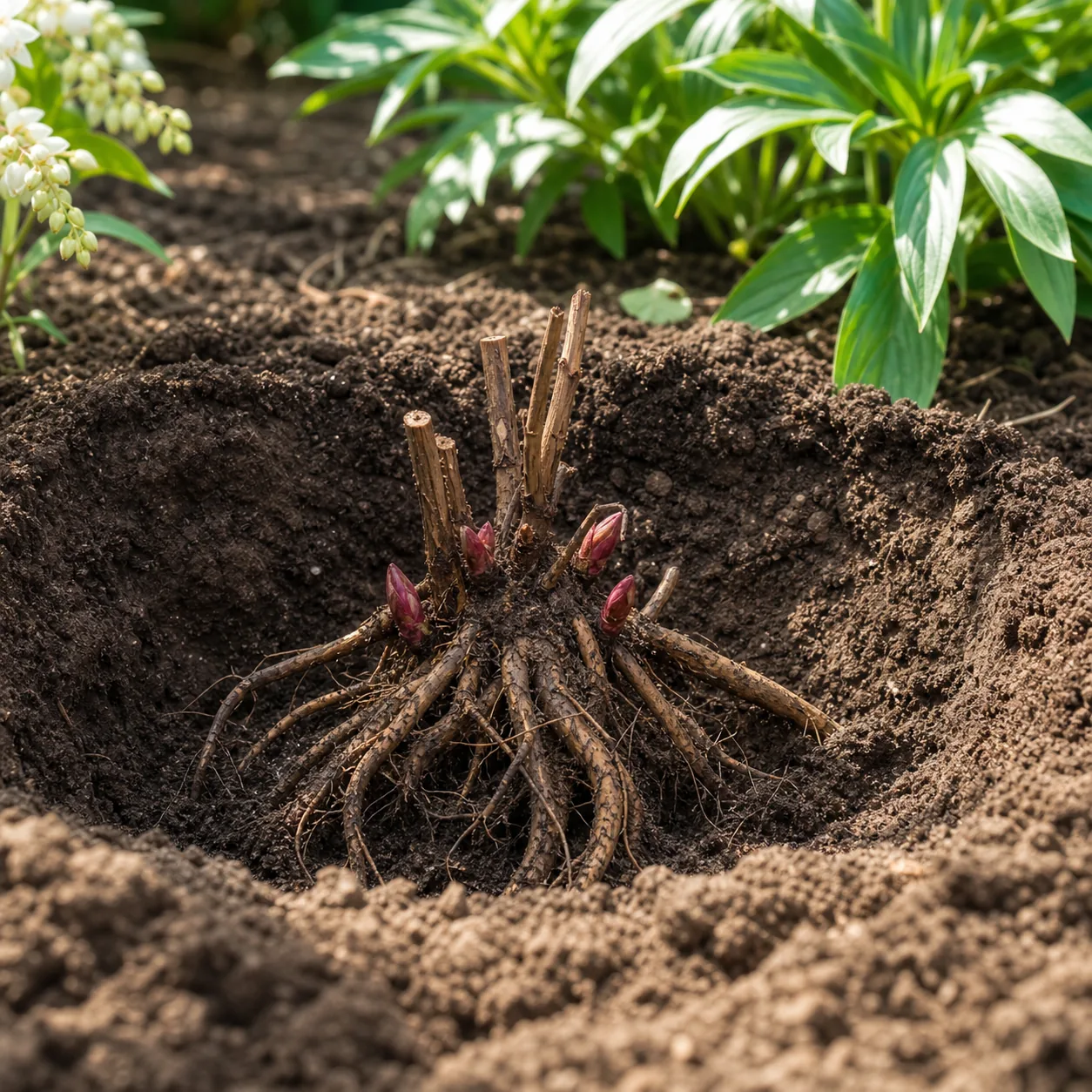
That shallow planting depth feels almost wrong the first time you do it, especially if you are used to burying roots more deeply. But peonies really do prefer to stay close to the surface.
Step 3: Backfill and Water Thoroughly
Once the root is in place, backfill gently with soil and firm it lightly to remove air pockets. Water deeply right after planting so the soil settles around the roots.
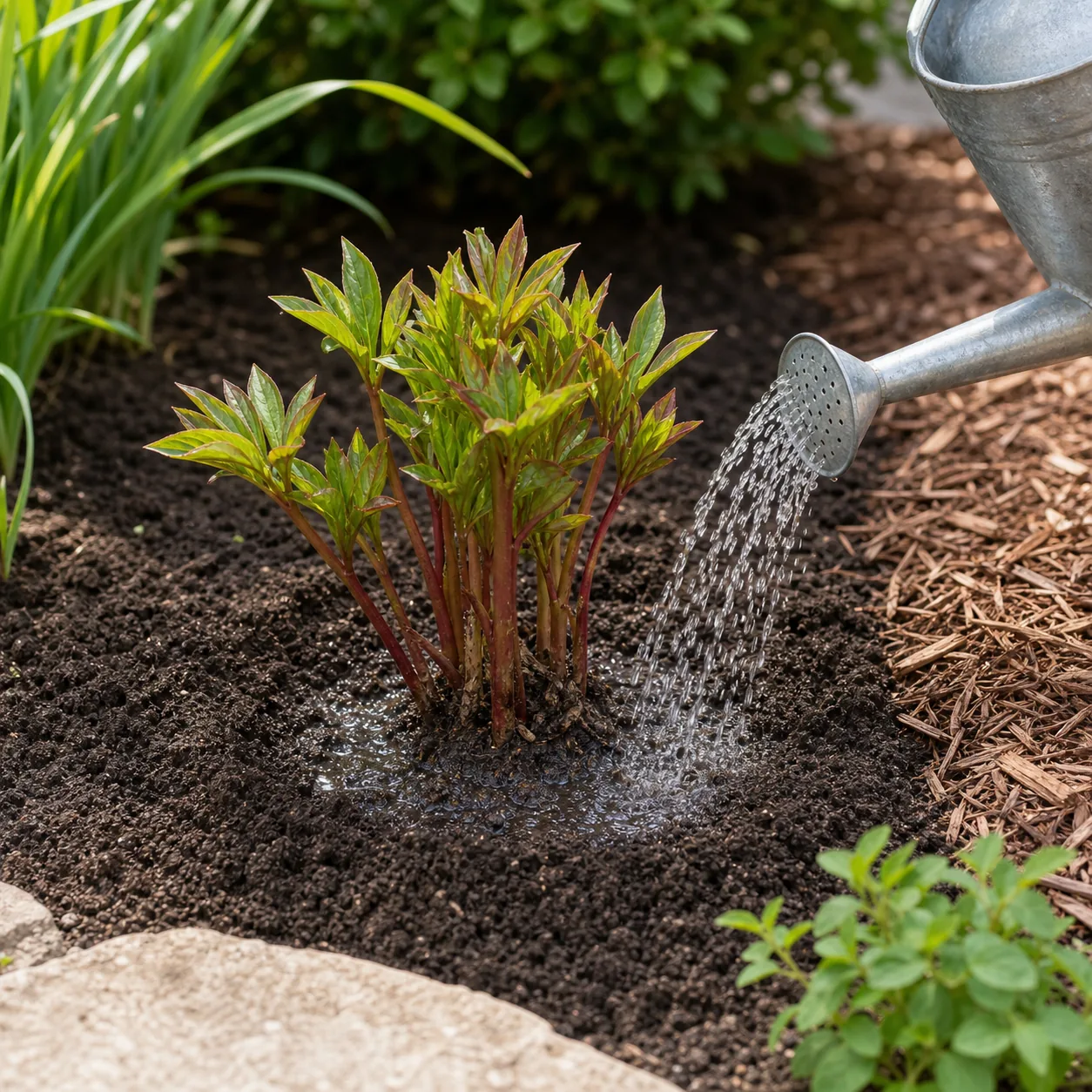
For the first season, keep the soil evenly moist but never waterlogged. The goal is steady establishment, not constant soaking.
Step 4: Mulch Lightly, Then Remove in Spring
In colder climates, a light mulch after the first frost can help protect newly planted roots through winter. Keep it light, not heavy. In spring, pull that mulch back so the crown is not buried too deeply as growth begins.
This is another easy place to go wrong. Gardeners sometimes do everything right, then accidentally smother the crown under thick mulch year after year.
How to Care for Peonies After Planting
Peonies do not need constant fussing, but a few habits make a big difference:
- Water during dry spells, especially in the first year
- Deadhead spent blooms to keep the plant tidy
- Use support rings if your variety produces heavy flowers
- Feed lightly if your soil is poor, but avoid too much nitrogen
- Leave them in place rather than moving them often
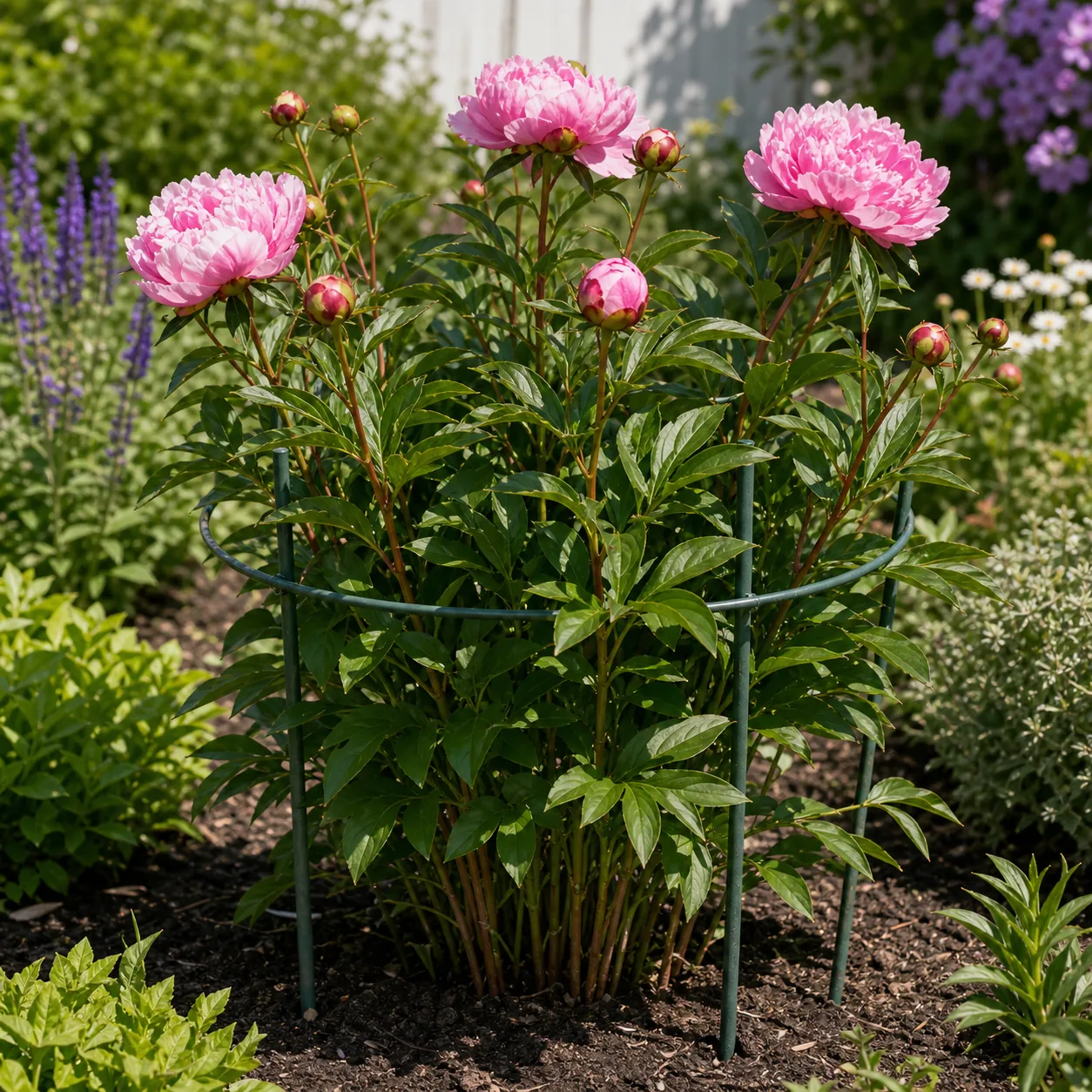
That support step matters more than many people expect. A rainstorm can flatten large double flowers quickly, especially in older clumps with big heads.
Common Mistakes When Planting Peonies
- Planting too deep: the number one cause of weak flowering
- Choosing too much shade: foliage may survive, but blooms can disappoint
- Planting in soggy soil: roots need drainage
- Crowding the plant: peonies want airflow and space
- Moving them too often: they prefer to settle and stay put
Peonies are one of those plants that reward calm, confident restraint. Give them a good home, resist the urge to overmanage them, and let time do some of the work.
Frequently Asked Questions
How deep should I plant peony eyes?
Keep the eyes about 1 to 2 inches below the soil surface. Deeper planting is one of the biggest reasons peonies fail to bloom well.
Do peonies need full sun?
Yes, they do best with at least 6 hours of sun. In many gardens, more sun means stronger flowering.
Can I plant peonies in spring?
You can, but early fall is usually better for root establishment. Spring planting may delay strong performance.
When will newly planted peonies bloom?
Some bloom lightly quite soon, but many need time to settle in. A little patience is normal with peonies.
Final Thoughts
Learning how to plant peonies is mostly about getting a few key decisions right: choose a sunny spot, improve the soil, plant the eyes shallowly, and do not bury the crown under thick mulch. The rest is patience.
If you are building a classic perennial border, peonies are one of the best long-term investments you can make. And if you are planning the rest of your planting scheme, you might also enjoy reading How To Divide Perennials for another useful garden skill.