
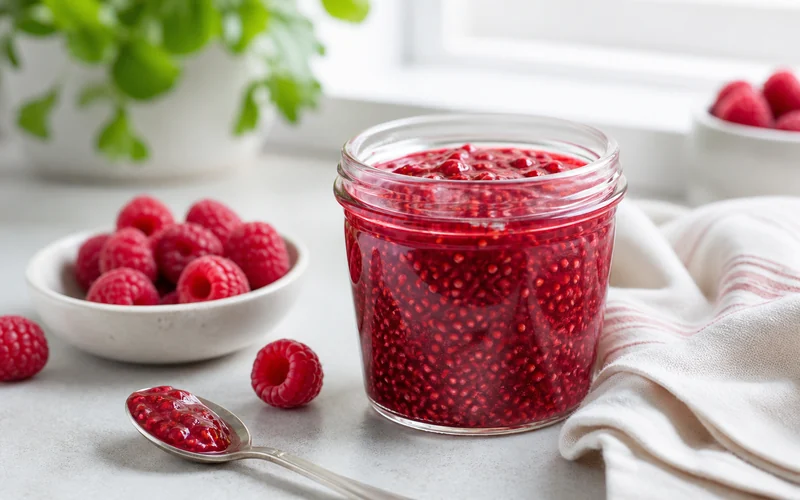
Raspberry freezer jam is the kind of small kitchen project that gives you fresh berry flavor without a long canning session. It is bright, spoonable, and easy to keep in the refrigerator or freezer for quick breakfasts, snacks, and simple desserts.
RECIPE CARD
Raspberry Freezer Jam
Ingredients
- 4 cups raspberries, fresh or thawed frozen
- 1/3 to 1/2 cup sugar, depending on berry tartness
- 2 tablespoons fresh lemon juice
- 2 tablespoons chia seeds
- Pinch of fine salt, optional
Quick Method
Condensed overview. Use Full Instructions for the complete method, timing and doneness details.
- Prepare the Jars: Wash small glass jars and lids in hot soapy water, rinse well, and let them dry.
- Simmer the Berries: Add raspberries, sugar, lemon juice, and salt to a saucepan. Warm over medium heat, stirring often, until softened, then mash gently.
- Thicken with Chia Seeds: Reduce the heat, stir in the chia seeds, and simmer for 5 to 8 minutes, stirring frequently, until glossy and slightly thickened.
- Cool and Fill: Cool until warm, spoon into jars with headspace for freezing, seal, label, and refrigerate or freeze.
This guide focuses on a small batch made for cold storage, not shelf-stable preserving. That matters because freezer jam is about fresh flavor and low effort: cook the berries briefly, balance the sweetness, let the jam thicken, and store it safely in clean jars.
Why Raspberry Freezer Jam Works So Well
Raspberries break down quickly, taste vivid even after a short simmer, and naturally bring a pleasant tartness. That makes them ideal for a freezer jam that does not need heavy cooking. A little lemon brightens the fruit, while chia seeds help the mixture thicken without a boxed pectin routine.
- Fresh flavor: Short cooking keeps the berry taste lively.
- Small batch friendly: You can make enough for a few jars without a full preserving day.
- Flexible sweetness: Start modestly, then adjust after tasting.
- Easy storage: Keep one jar in the fridge and freeze the rest.
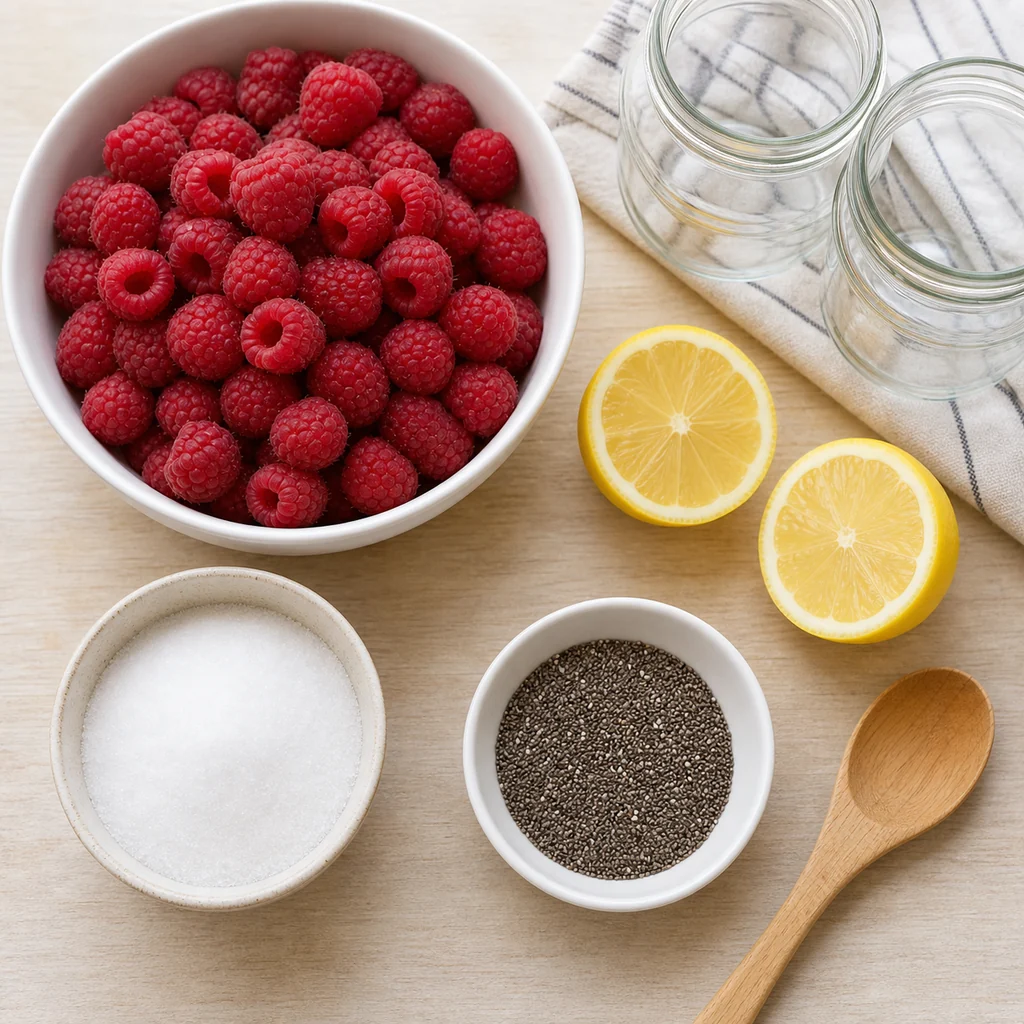
Ingredients for a Small Batch
Use ripe raspberries with good color and aroma. Frozen raspberries also work, but thaw them first and include the juices so the flavor stays balanced.
- 4 cups raspberries, fresh or thawed frozen
- 1/3 to 1/2 cup sugar, depending on berry tartness
- 2 tablespoons fresh lemon juice
- 2 tablespoons chia seeds
- Pinch of fine salt, optional
If you prefer a smoother jam, mash the berries well before cooking. For a rustic texture, leave some berries partly whole.
How to Make Raspberry Freezer Jam
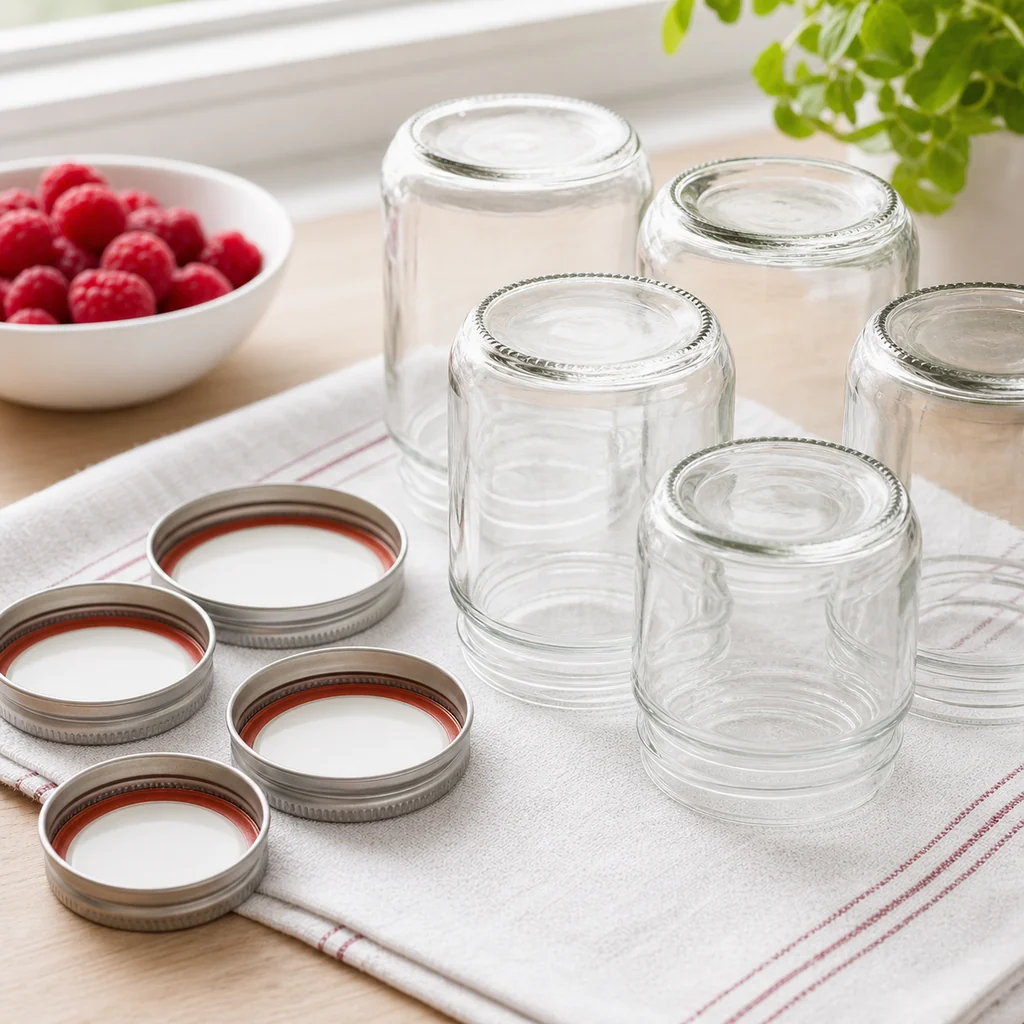
1. Prep the jars
Wash small glass jars and lids in hot soapy water, rinse well, and let them dry. Because this jam is stored cold, you do not need a water-bath canning setup, but clean containers still matter.
2. Simmer the berries
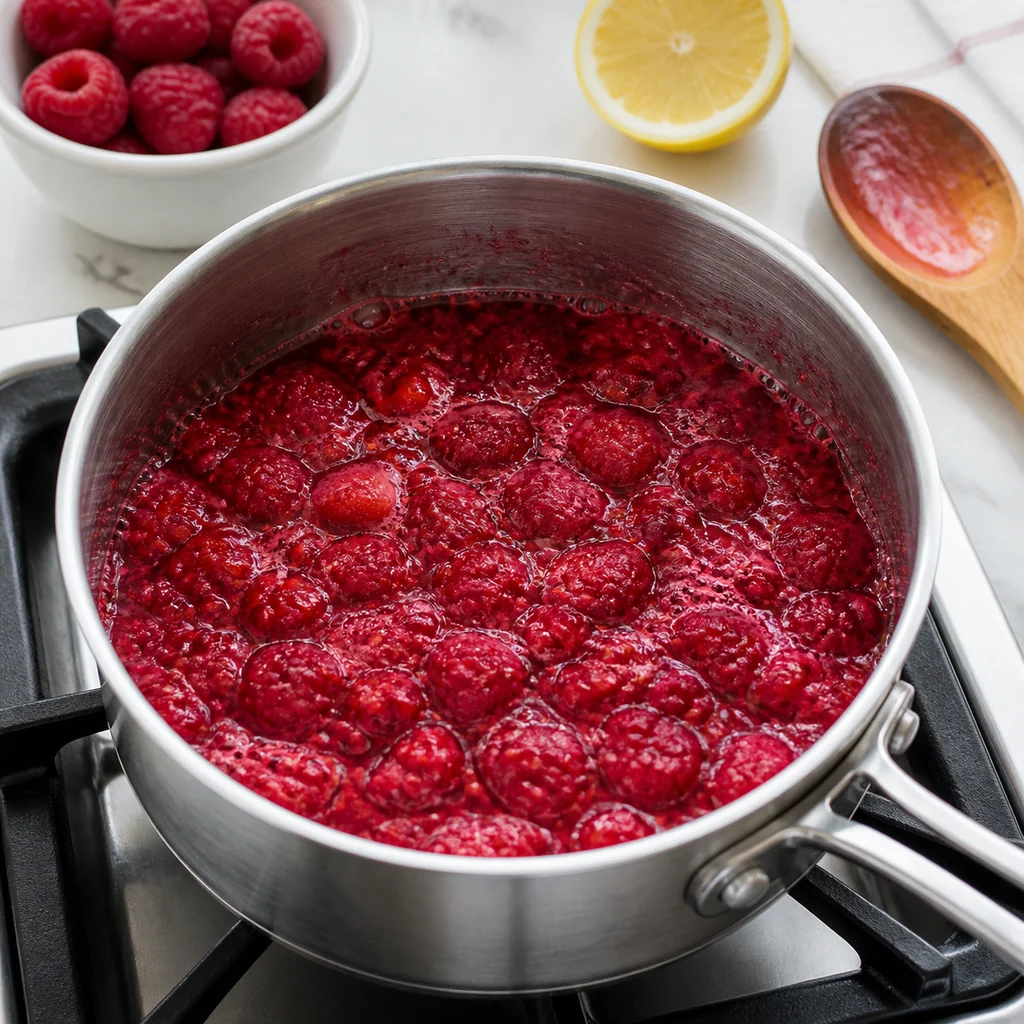
Add raspberries, sugar, lemon juice, and salt to a saucepan. Warm over medium heat, stirring often, until the berries release their juice and soften. Mash gently with a spoon or potato masher.
3. Thicken with chia seeds
Reduce the heat and stir in the chia seeds. Simmer for 5 to 8 minutes, stirring frequently, until the mixture looks glossy and slightly thicker. It will continue to set as it cools.
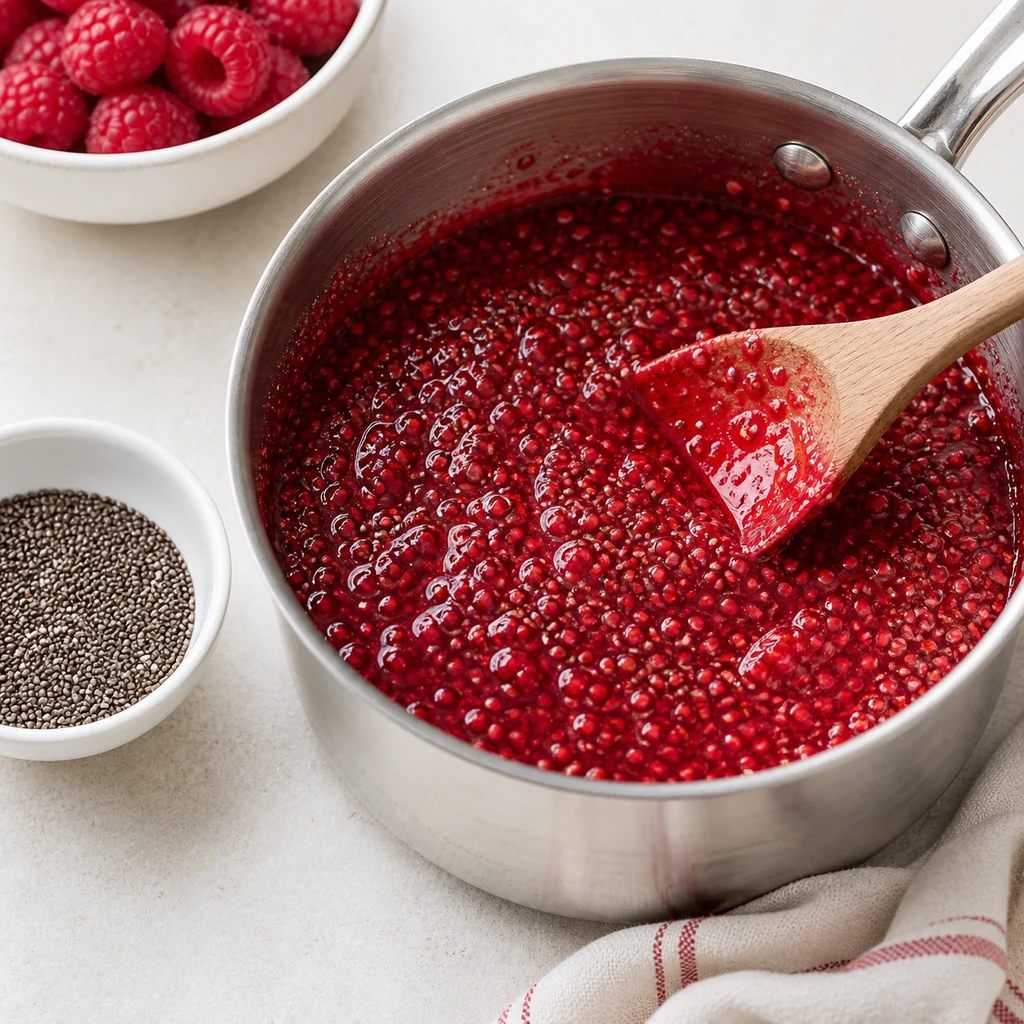
4. Cool before filling
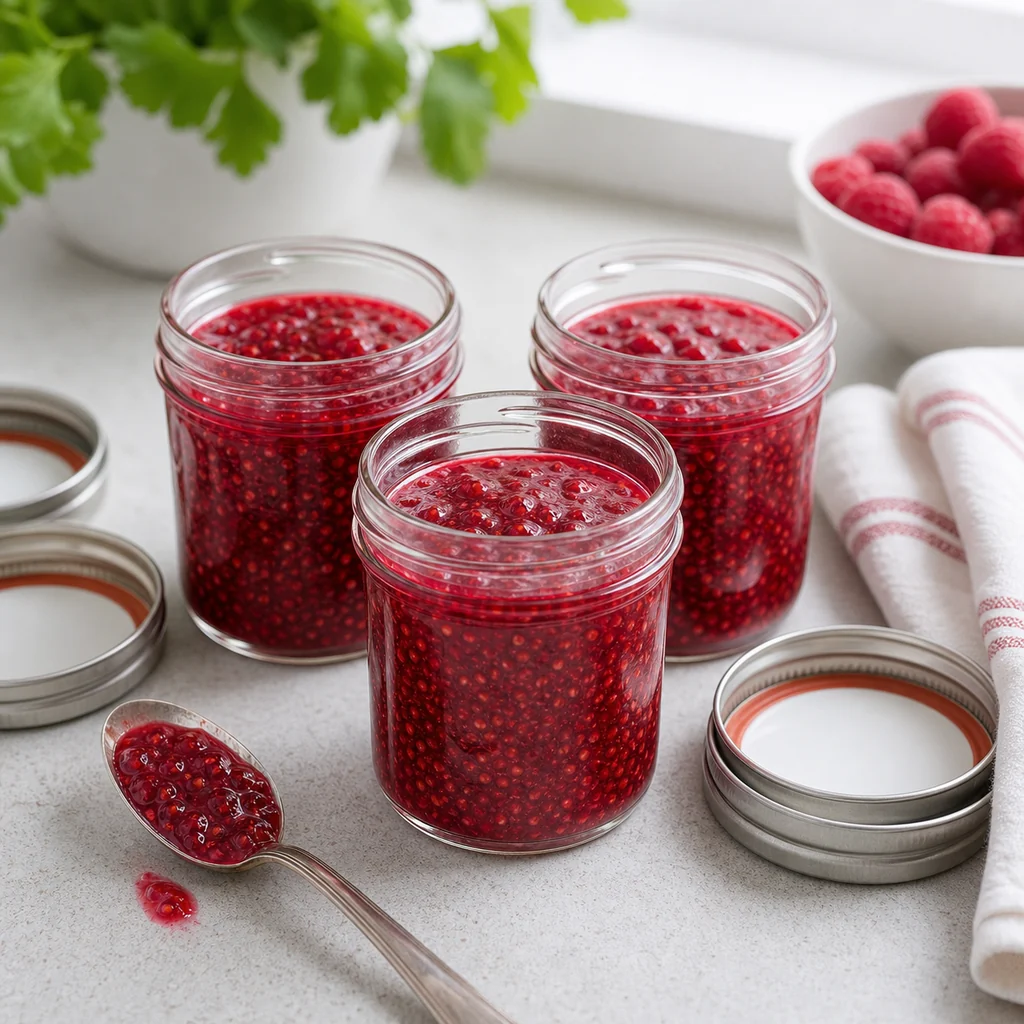
Let the jam cool until warm, not hot. Spoon it into jars, leaving a little space at the top if you plan to freeze it. Seal, label with the date, and chill.
Texture and Sweetness Tips
Raspberries vary a lot. Taste the jam near the end of cooking and adjust carefully, because cold jam tastes slightly less sweet than warm jam.
- Too tart: Stir in 1 tablespoon sugar at a time and simmer for another minute.
- Too loose: Add 1 teaspoon chia seeds, simmer briefly, then cool and check again.
- Too thick: Stir in a splash of water or lemon juice while warm.
- Too seedy: Press half the cooked berry mixture through a fine sieve, then combine it with the rest.
Storage and Freezer Safety
This is not a shelf-stable jam. Store it in the refrigerator for up to about 1 week, or freeze it for longer storage. Use freezer-safe jars or containers, leave headspace for expansion, and thaw frozen jam in the refrigerator.
Always use a clean spoon when serving. If the jam smells off, shows mold, or changes texture in an unusual way, discard it.
Best Ways to Use It
Raspberry freezer jam is useful beyond toast. Spoon it over yogurt, swirl it into oatmeal, add it to pancakes, layer it into a simple parfait, or use it as a filling for thumbprint cookies.
- Spread it on warm biscuits or whole-grain toast.
- Pair it with plain Greek yogurt and granola.
- Use a thin layer in lunchbox sandwiches.
- Spoon it over vanilla pudding or rice pudding.
- Stir a small amount into a smoothie bowl for berry flavor.
For more fruit-forward ideas, browse Blackberry Vanilla Jam Recipe, Fig Jam with Honey Recipe, and Healthy Snacks.
Common Mistakes to Avoid
Using wet berries without adjusting
If the raspberries are very juicy or thawed from frozen, simmer the mixture a little longer before adding extra thickener. This keeps the flavor from turning flat.
Freezing jars too full
Jam expands as it freezes. Leave space at the top of each container so the lid stays secure and the jar is not stressed.
Treating freezer jam like canned jam
Freezer jam belongs in cold storage. Do not store it in the pantry unless you are following a tested canning recipe designed for shelf-stable preserving.
Quick Recipe Checklist
- Mash 4 cups raspberries with sugar and lemon juice.
- Simmer until juicy and softened.
- Stir in chia seeds and cook until lightly thickened.
- Cool, jar, label, and refrigerate or freeze.
- Use clean spoons and keep the jam cold.
Raspberry Freezer Jam FAQ
Can I make this with frozen raspberries?
Yes. Thaw them first and include the juices. If the mixture looks watery, simmer a little longer before cooling.
Does this need pectin?
No. Chia seeds help thicken the jam. The texture is softer and more spoonable than a firm pectin-set jam.
Can I reduce the sugar?
Yes, within reason. Sugar affects flavor and texture, so reduce gradually and taste as you go. Very tart berries may need the higher amount.
Can this jam sit at room temperature?
No. Keep raspberry freezer jam refrigerated or frozen. It is not meant for pantry storage.