
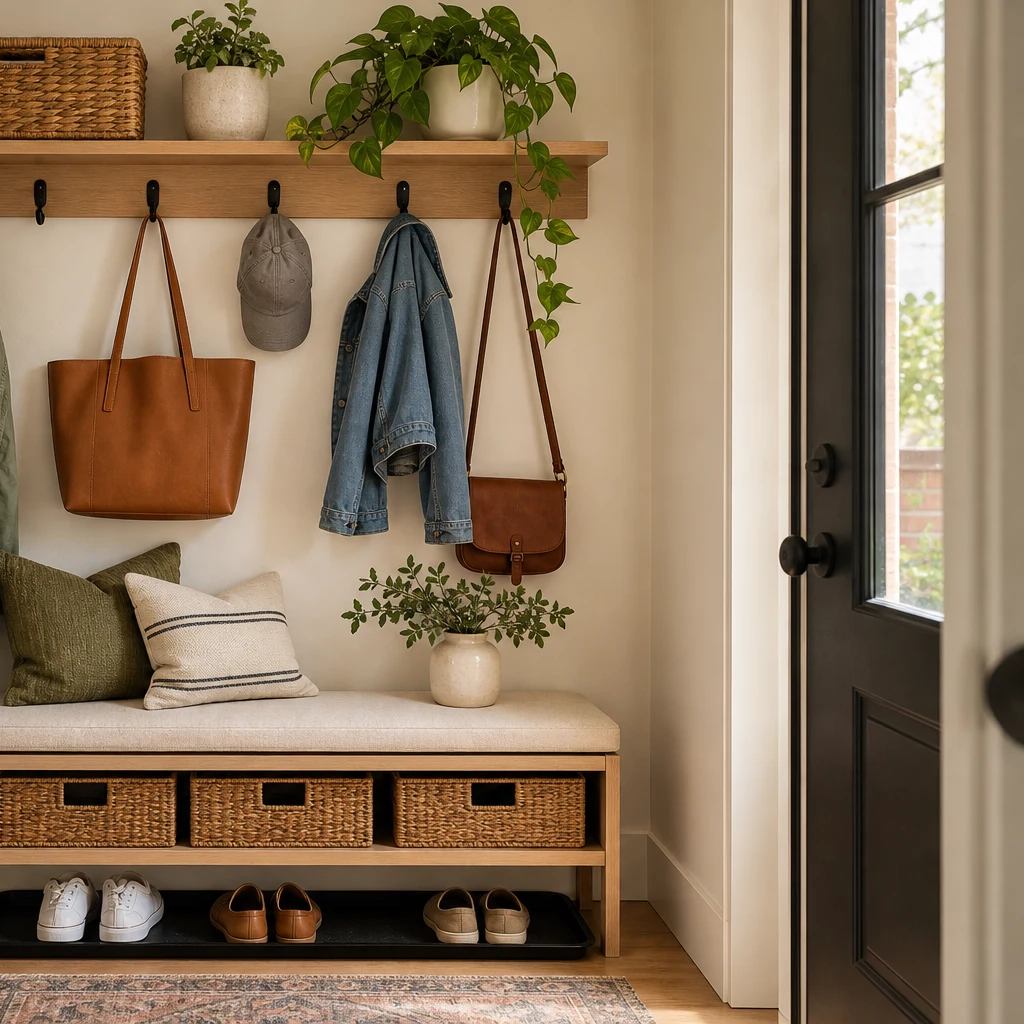
A small entryway can become messy faster than almost any other spot in the home. Shoes land by the door, keys disappear under mail, bags hang from chairs, and the first few feet of the house start to feel stressful. The fix is not always a bigger foyer. It is a smarter drop zone.
These small entryway drop zone ideas are built for real homes: apartments, rentals, narrow hallways, side doors, and front doors that open straight into the living room. Each section below pairs a practical organizing move with a visual example, so the article feels less like a generic checklist and more like a room-by-room plan you can copy.
Simple formula: give keys and mail one landing surface, give bags and jackets one vertical zone, give shoes one low zone, and give awkward extras one hidden basket. Once those jobs are handled, the entryway starts working like a tiny command center instead of a clutter magnet.
1. Build the Drop Zone Around Four Daily Habits
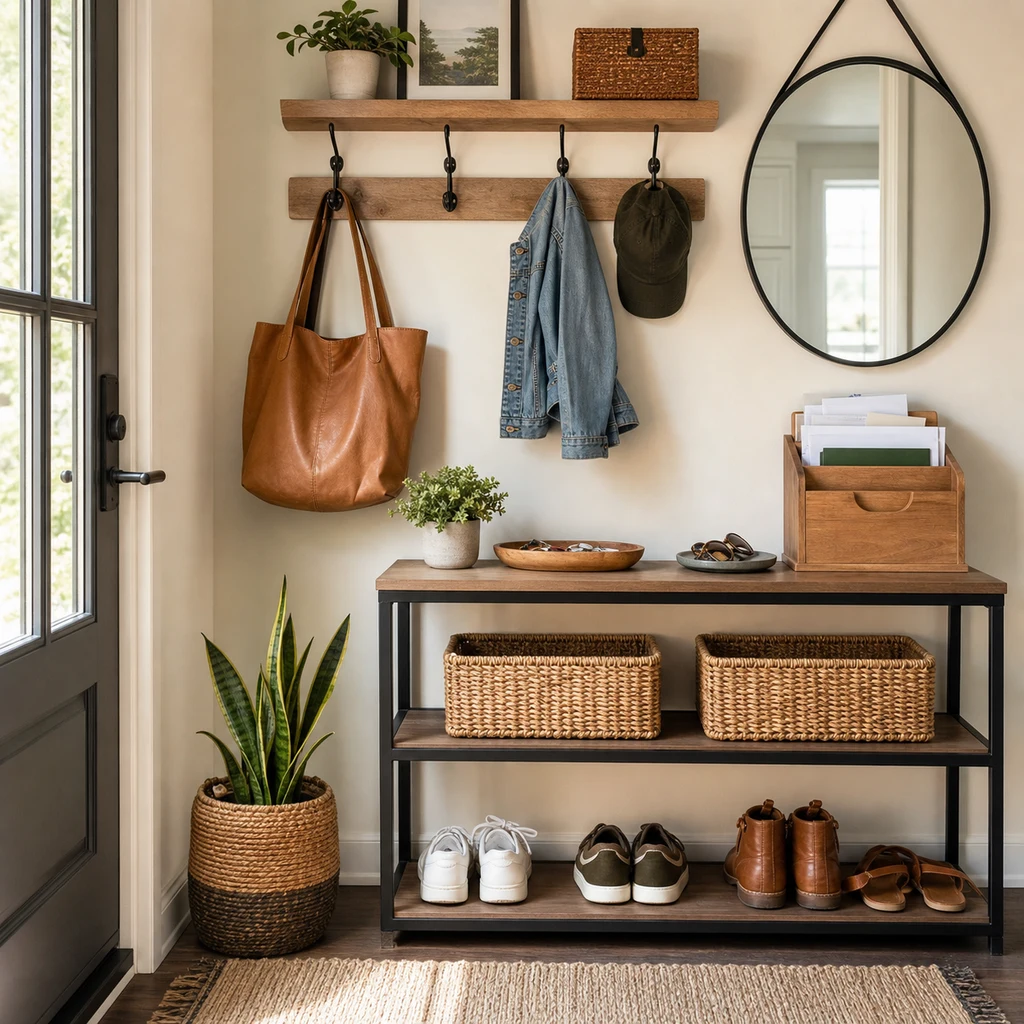
A good drop zone follows the way you already use the door. Most clutter happens during transitions: coming home with keys, mail, shoes, jackets, bags, sunglasses, packages, and random pocket items. If those items do not have a clear first stop, they spread across the closest chair, table, or floor space.
Start with the four zones you need most: a landing surface for small items, hooks for grab-and-go gear, a shoe solution, and one basket for items that are useful but not pretty. This keeps the system simple enough to maintain on busy days.
2. Reset the Entry Before You Buy Anything
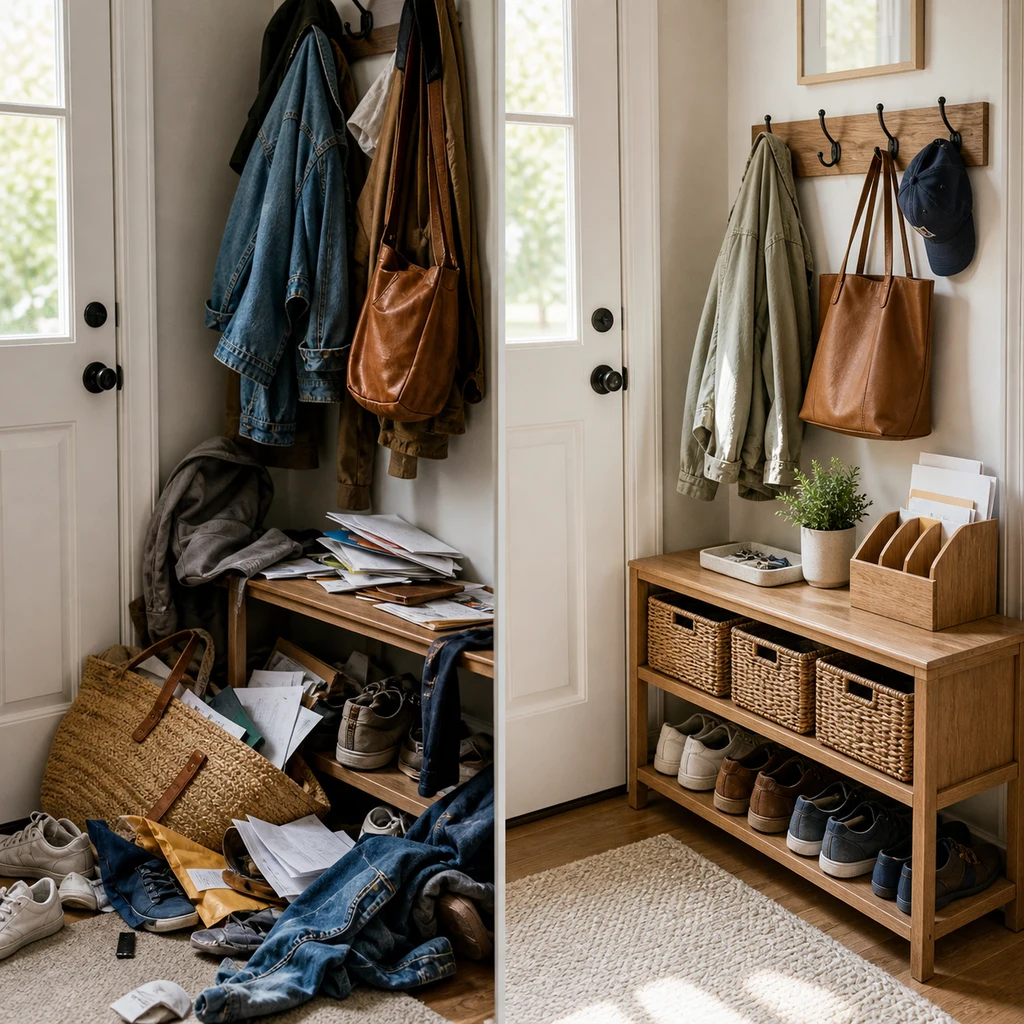
Before buying a bench, cabinet, or new baskets, clear the entryway completely. Remove shoes, bags, mail, umbrellas, jackets, decor, returns, and small objects. Sweep the floor, wipe the wall or console, and look at the empty space with fresh eyes.
Sort everything into four groups: daily items, occasional items, seasonal items, and items that belong somewhere else. Daily items deserve prime space. Occasional and seasonal items can live nearby but should not crowd the doorway. Anything unrelated to leaving or entering the home should move out of the entry.
3. Use Vertical Storage in a Narrow Entryway
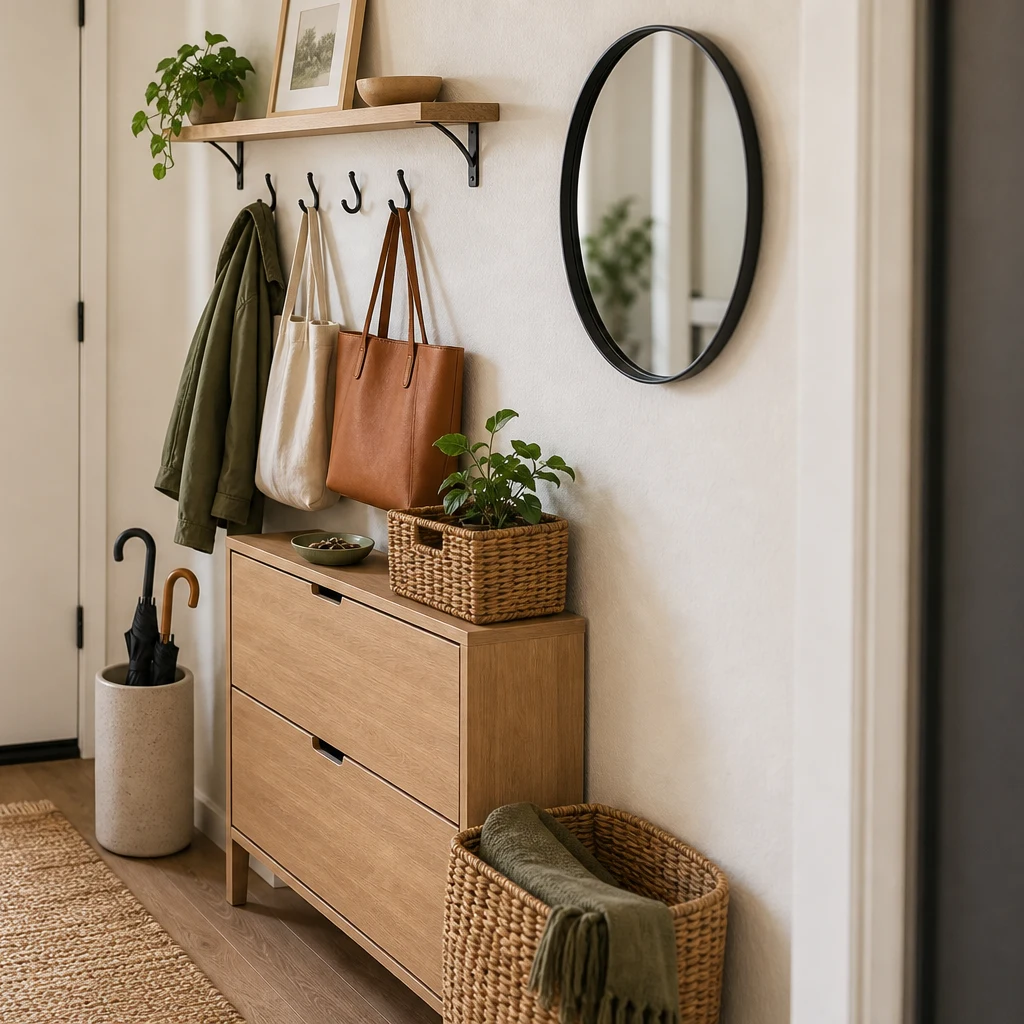
Small entryways usually lack floor space, so the wall has to work harder. Hooks are easier than hangers because they are quick to use. Add a shallow shelf above the hooks for baskets, hats, or a small plant, and use a mirror to make the area feel brighter.
In a narrow hallway, choose furniture by depth first. A slim shoe cabinet, shallow console, wall shelf, or umbrella stand can add function without blocking movement. The walking path should stay obvious from the moment the door opens.
4. Create a Command Station for Keys, Mail, and Pocket Items
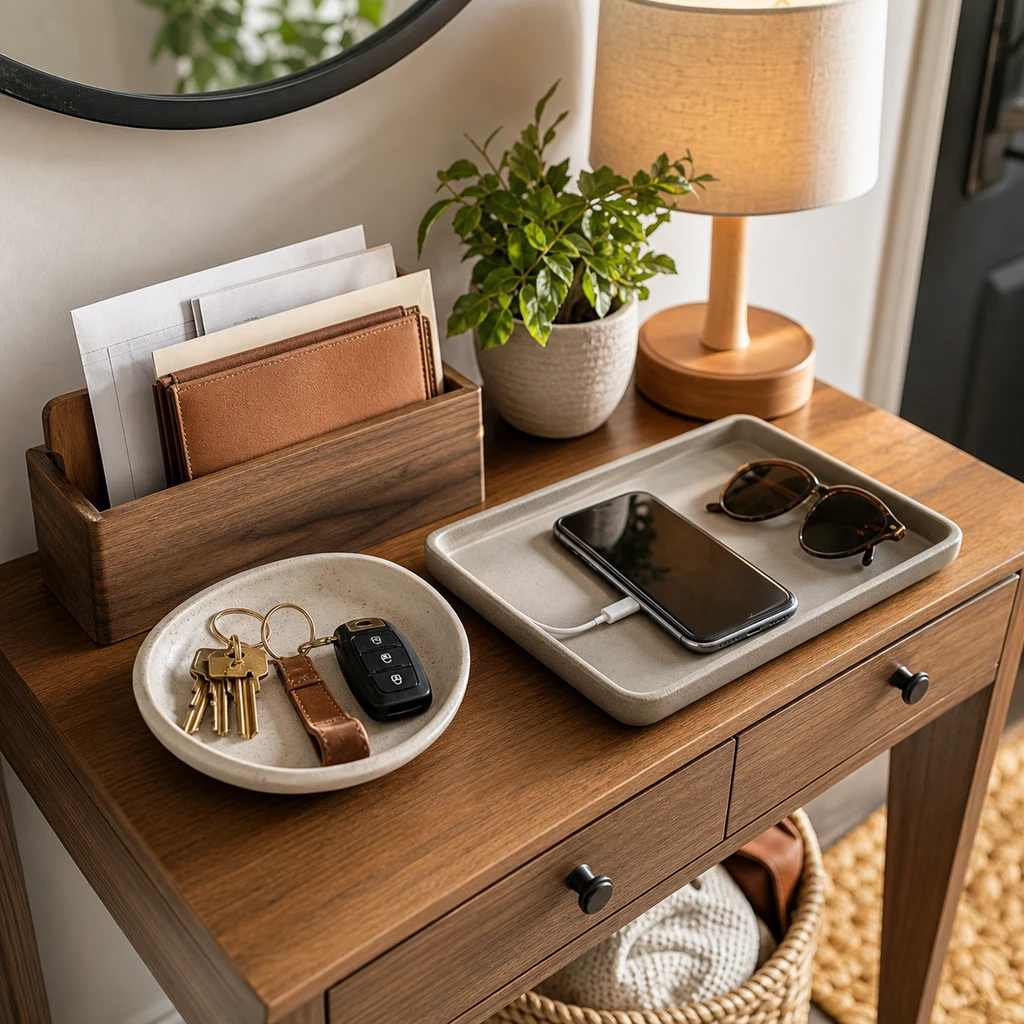
The smallest items often create the most frustration. Keys, earbuds, wallets, sunglasses, receipts, and mail need a controlled landing spot. Use one tray for pocket items, one sorter for mail, and one small dish or hook for keys. Keep this zone small on purpose so it cannot collect weeks of clutter.
For mail, separate action items from paper that can be recycled immediately. A two-slot sorter is enough for most homes: one slot for documents that need attention, one slot for items to file. Everything else should be handled before it reaches the pile stage.
5. Control Shoes Without Covering the Floor
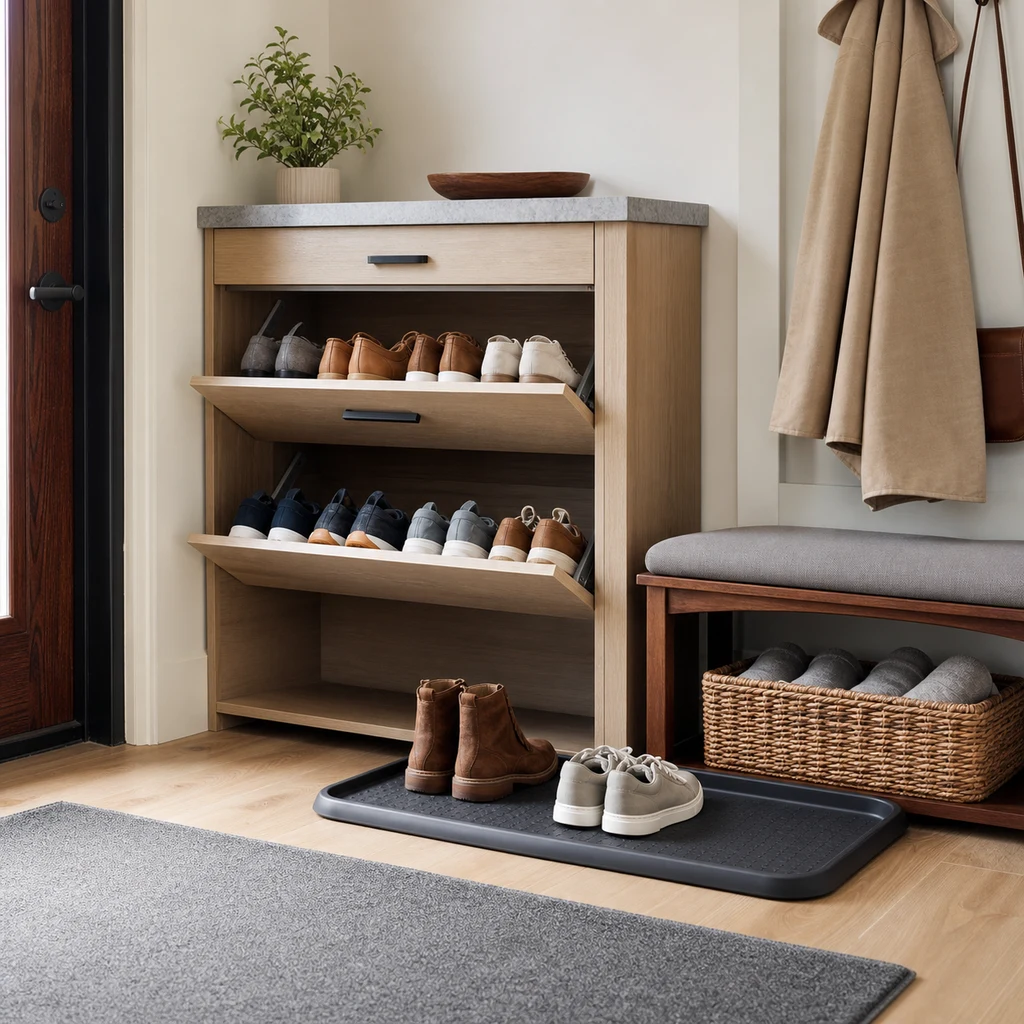
Shoes can overwhelm a small entry quickly. Limit the door area to the pairs worn most often. A shoe tray works well for wet or muddy days, while a slim shoe cabinet hides visual clutter. Open racks are easier for families, but they look tidier when each person has a clear row or section.
If shoes keep piling up, the issue is usually quantity rather than storage. Keep one or two daily pairs per person near the door and move the rest to bedroom closets. That single rule can make a small entry feel twice as open.
6. Add a Storage Bench Only When It Solves a Real Problem
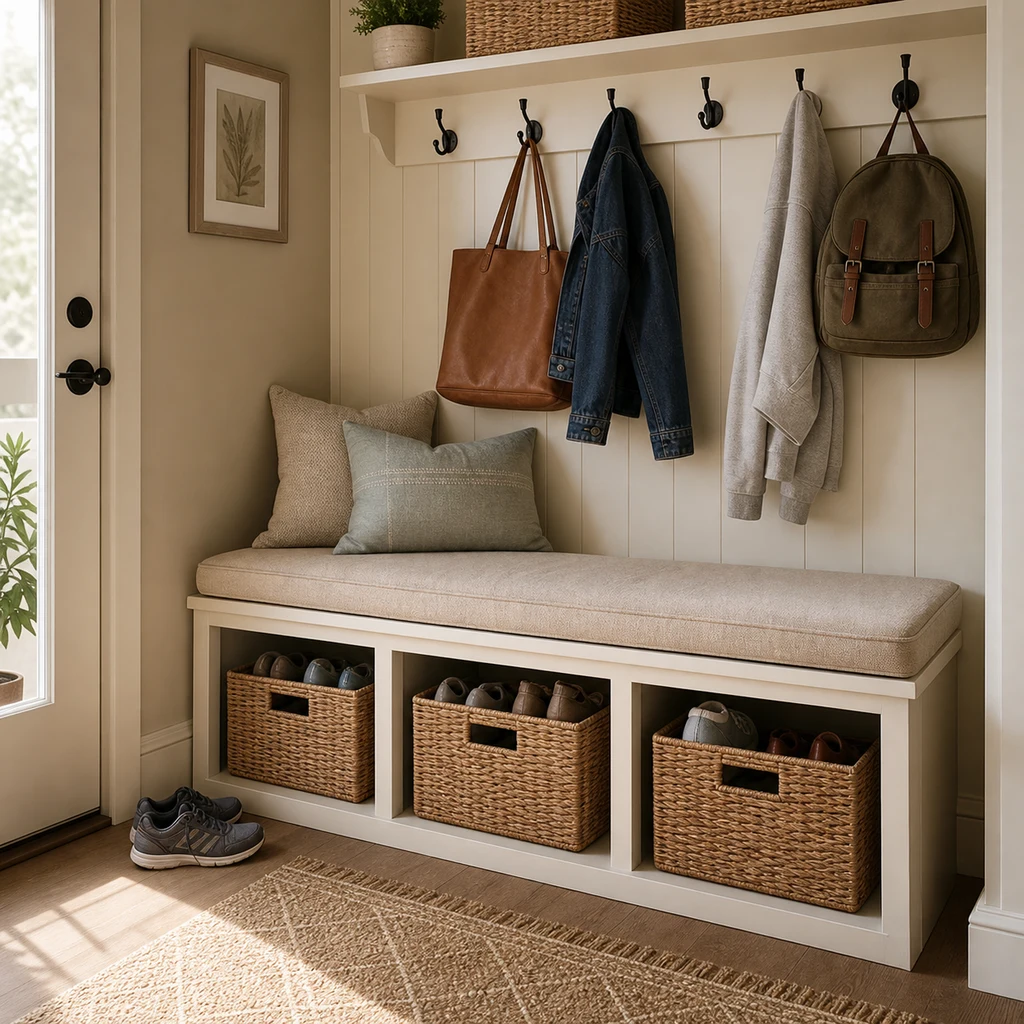
A bench is useful if you sit to put on shoes, help children, or need hidden storage. In a tiny hallway, a bench can also become an obstacle. Choose a narrow bench with shelves underneath, a storage ottoman that opens, or a wall-mounted fold-down seat if floor space is tight.
If you cannot fit a bench, use a small stool that tucks under a console or skip seating completely. A functional entryway does not need every popular mudroom feature. It needs the features that solve your actual daily friction.
7. Choose Renter-Friendly Pieces That Can Move Later
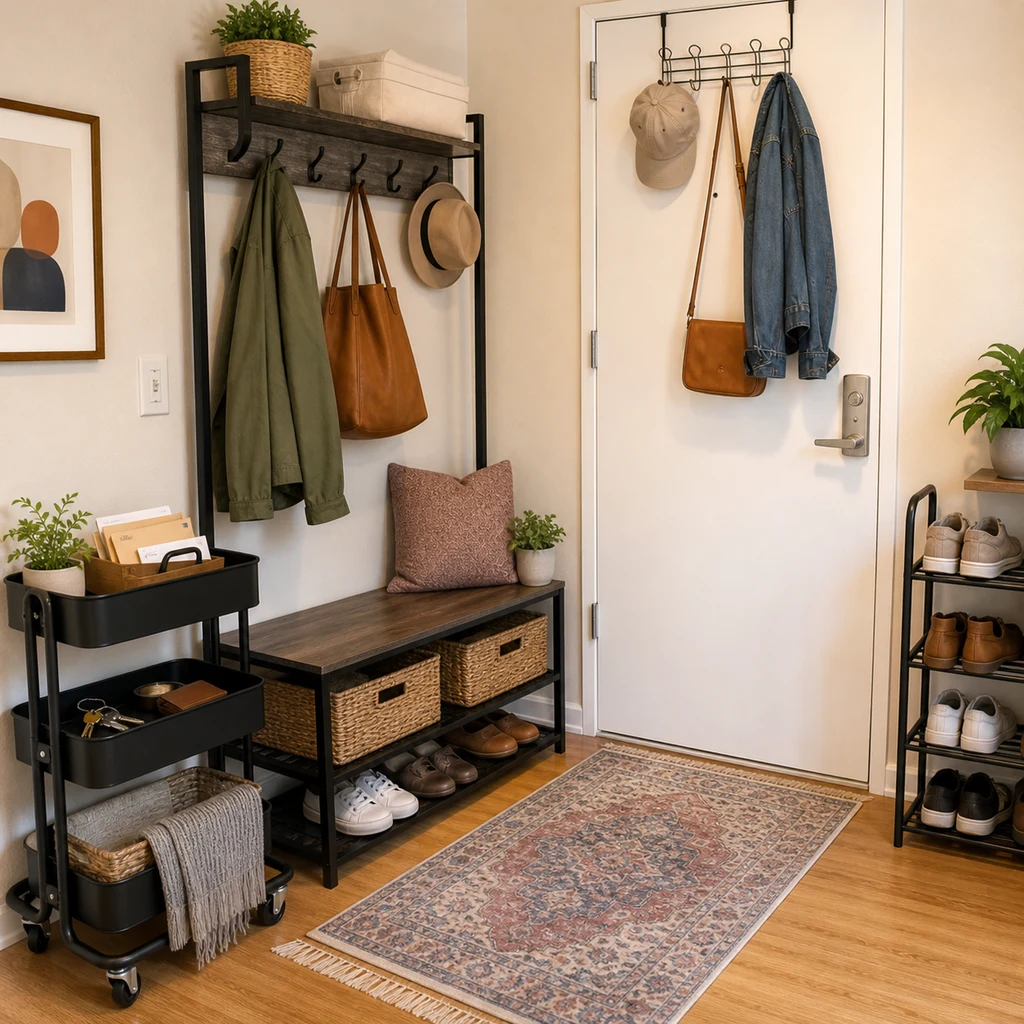
If you cannot drill into the wall, you still have options. Use a slim freestanding hall tree, over-the-door hooks, adhesive hooks for light items, a narrow rolling cart, or a cabinet that stands on the floor. A washable runner can visually define the entry without permanent changes.
For renters, the best pieces are flexible. A small console, baskets, hooks, and a mirror are easier to reuse than a custom built-in. Choose storage that fits your current entry but can also work in a bedroom, laundry room, or closet later.
8. Give Each Family Member a Clear Spot
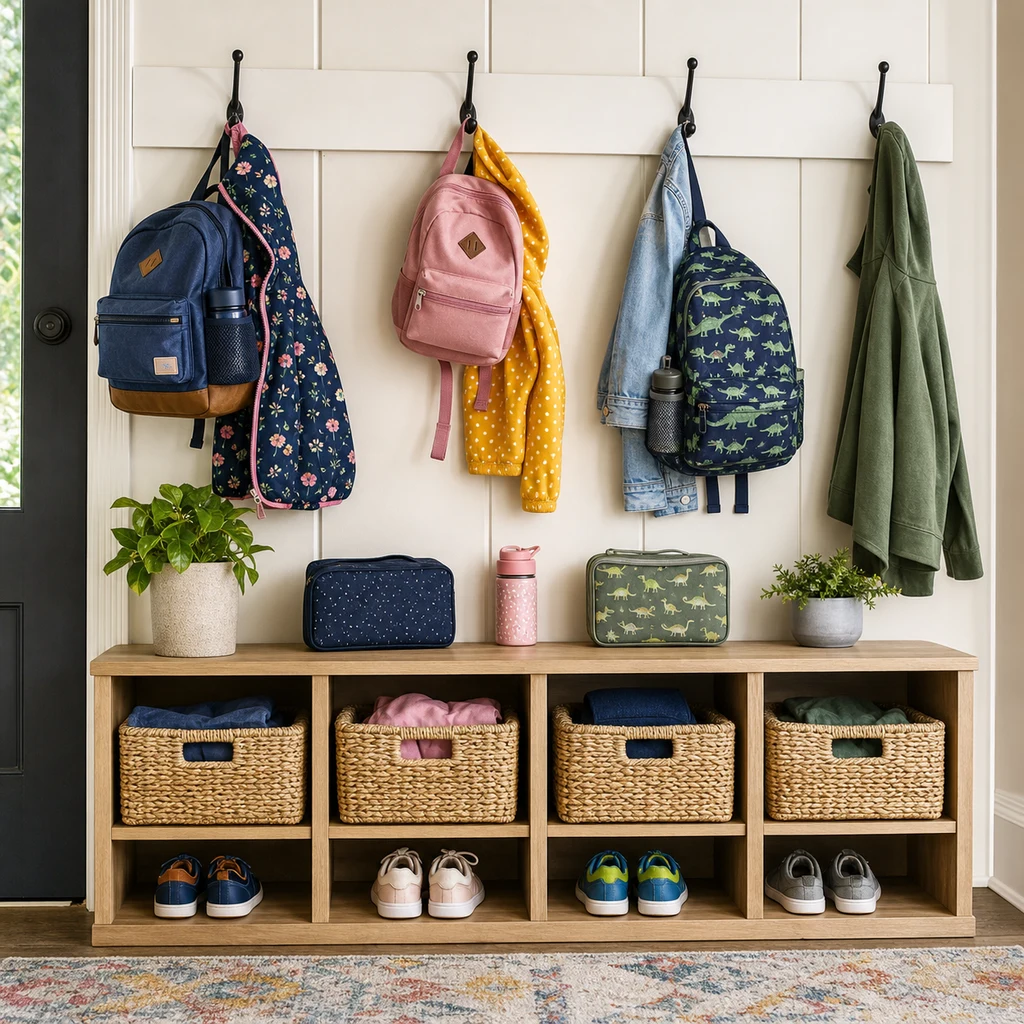
Family entries get messy when everyone shares one vague pile. Give each person a hook, basket, shelf, or cubby. Children need lower hooks they can reach without help. Adults can use higher hooks for coats and bags.
The goal is not perfection. It is quick recognition. When everyone can see their own landing spot, backpacks, jackets, sports items, and shoes are more likely to return to the right place at the end of the day.
9. Use Baskets for Awkward Extras
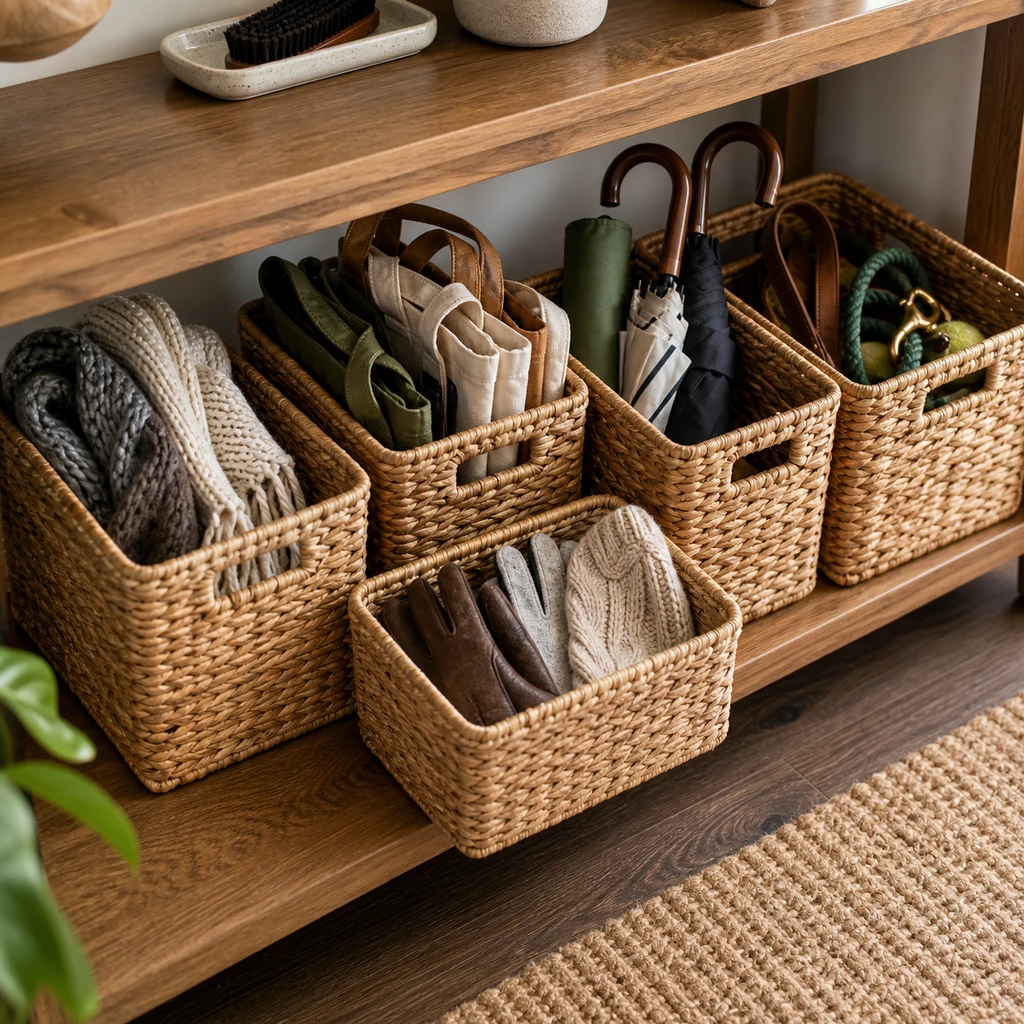
Baskets are helpful for items that do not stack neatly: gloves, scarves, pet leashes, reusable shopping bags, umbrellas, and sports extras. Choose baskets that fit the shelf or bench instead of buying pretty ones first and hoping they work.
One basket for each category is usually better than one large mixed basket. Mixed baskets become hidden clutter. Category baskets make it easier to find what you need and easier to reset the space at night.
10. Keep the Look Calm, Not Busy
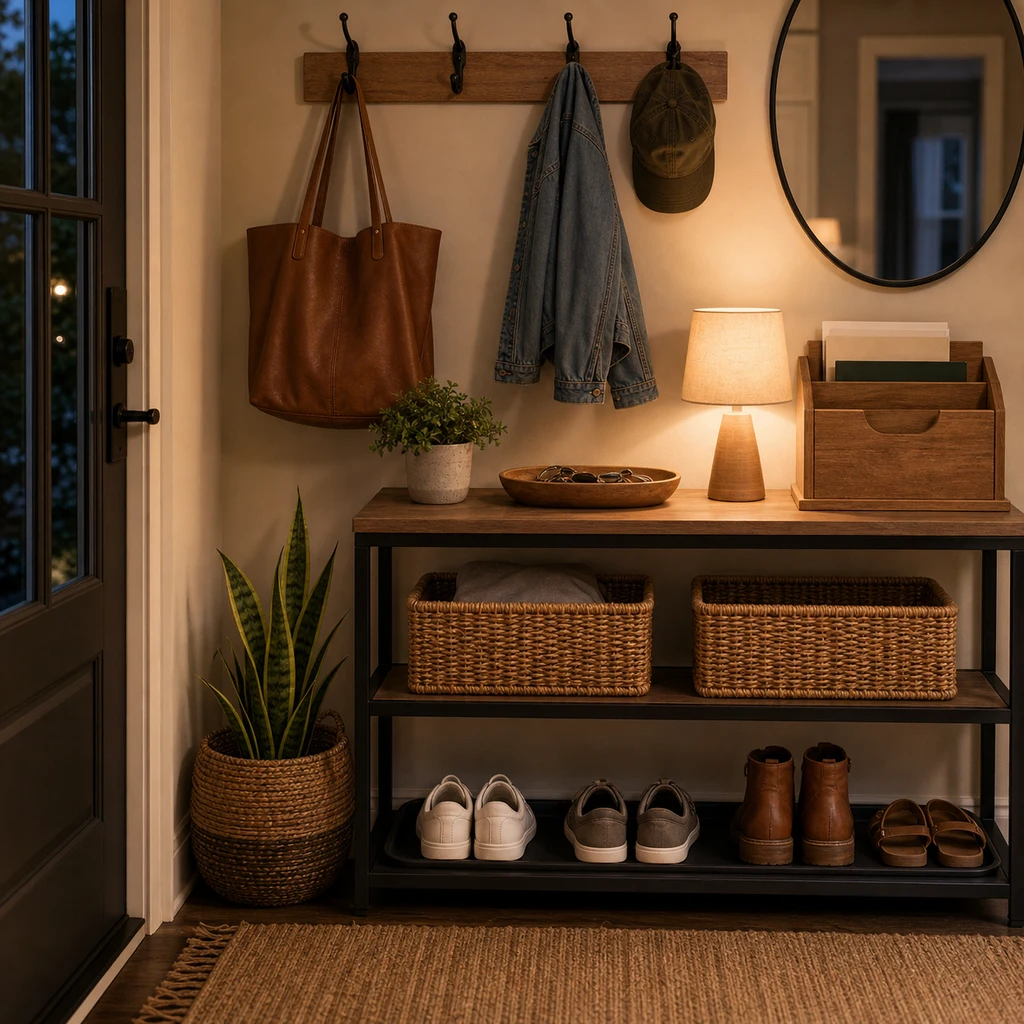
Because the entryway is the first thing you see, visual noise matters. Use fewer colors, repeat one material, and keep most storage closed or semi-hidden. Natural baskets, light wood, black metal hooks, and one soft accent color are enough for a polished look.
Decor should support the system, not fight it. A mirror is useful. A plant can soften the space. A small rug catches dirt. Too many frames, signs, and decorative objects can make the drop zone harder to use.
11. Define a Drop Zone Even When You Have No Foyer
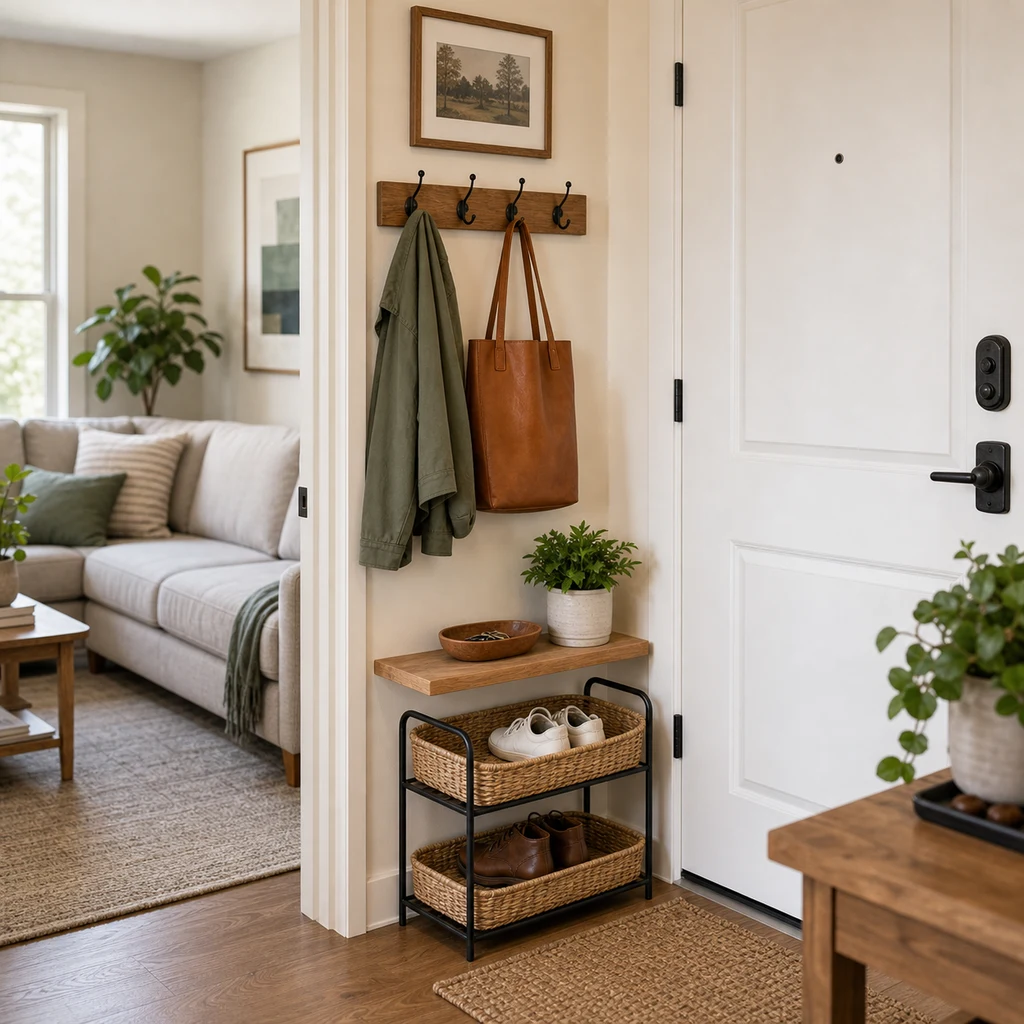
If the front door opens directly into a living room, define the entry with one compact wall. Use two or three hooks, a tiny floating shelf or narrow cart, a small basket for shoes, and a washable mat. This creates a mental boundary without needing a separate hallway.
Keep the materials connected to the living room so the drop zone does not look like an afterthought. Matching wood tones, basket textures, or hardware colors will make the functional area feel intentional.
Small Entryway Drop Zone Checklist
- One tray or dish for keys and pocket items
- One mail sorter or folder
- Hooks for daily bags and jackets
- A shoe tray, rack, or slim cabinet
- A basket for seasonal extras
- A mirror or light source to brighten the area
- A washable rug or runner if dirt gets tracked inside
Common Mistakes to Avoid
- Buying storage before sorting: you may end up storing items that should leave the entryway.
- Using furniture that is too deep: shallow storage is usually better for small entries.
- Adding too many hooks: every hook can become a pile if there is no limit.
- Keeping all shoes by the door: store only daily pairs in the entry.
- Forgetting mail: paper clutter needs its own tiny system.
Related Organization Ideas
If you are organizing more than the entryway, these ideas pair well with easy tips to declutter your home, simple decluttering tips for a tidy home, and under sink storage hacks. For a softer first impression, you may also like home coffee bar ideas and more Home Organization inspiration.
Final Thoughts
A small entryway does not need to hold everything. It needs to hold the right things in the right places. Start with the daily clutter that causes the most friction, then build a simple drop zone around it. With hooks, a tray, a shoe solution, and a few baskets, even a narrow doorway can feel calm, useful, and easy to reset.