

A tiny apartment works best when every choice supports the way you actually live. Before buying a storage unit or painting a wall, measure the room, note where doors swing, and watch how you move between the bed, kitchen, and seating area. A comfortable route through the apartment matters more than a photo-perfect layout.
These six ideas bring together furniture, storage, light, and personal style. You can try many of them with what you already own. Start with the one spot that causes daily friction, then adjust the arrangement for a week before spending money. Small spaces can be colorful, layered, and individual; they do not need to follow a strict minimalist rule.
Six Decor Moves for a Tiny Apartment
1. Choose Furniture That Earns Its Footprint
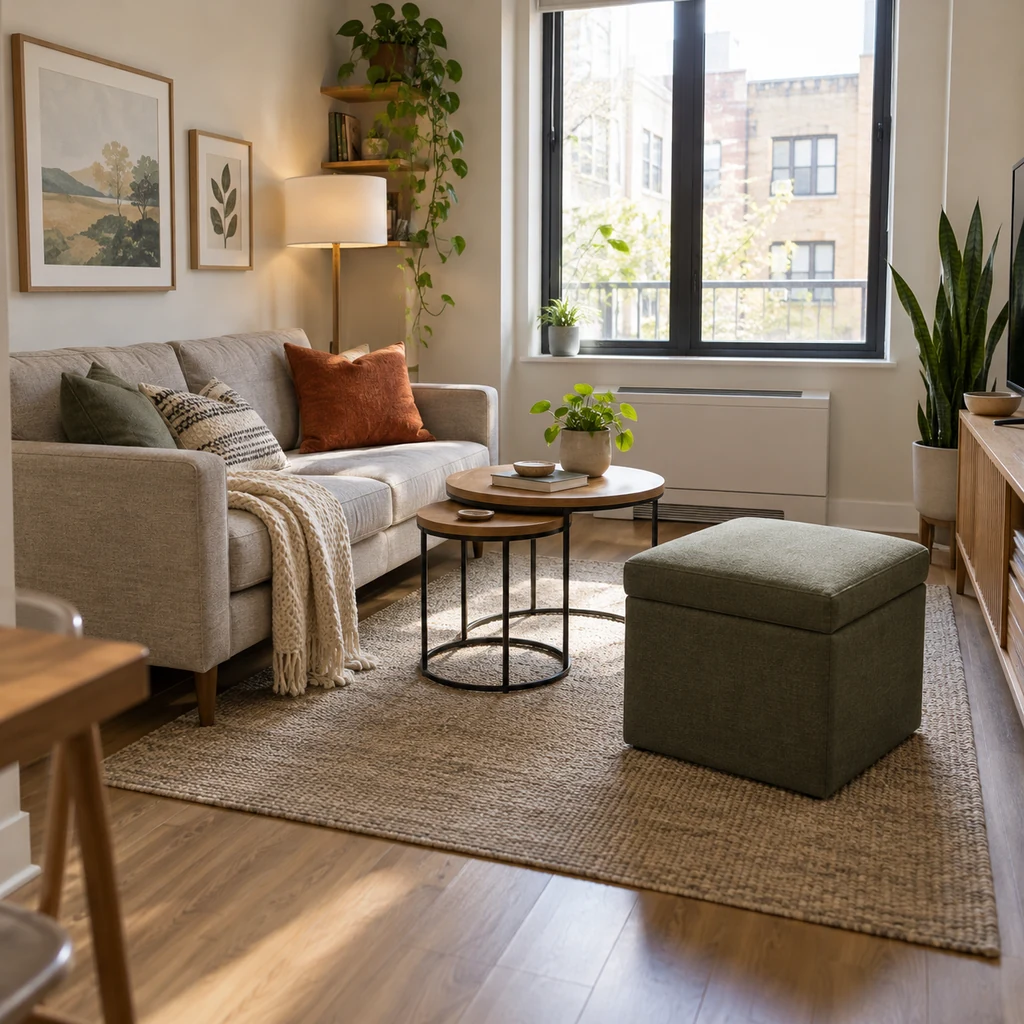
Look for pieces that handle two real tasks, not features you might never use. A storage ottoman can hold spare blankets and serve as a footrest; nesting tables can separate when guests arrive and tuck together afterward. A compact dining table that also works as a desk may be more useful than two cramped surfaces. Measure the furniture in both open and closed positions, including space for chairs and drawers. Mark its outline on the floor with removable tape to see whether the walkway still feels natural. If you already own a coffee table, try moving it beside the sofa before replacing it. The best small-space furniture is sized for the room and for your routine.
2. Use Wall Height Without Crowding the Floor

A tall bookcase, a narrow entry rack, or a few shelves can free a crowded floor. Put everyday items at a comfortable reach, heavier objects low down, and infrequently used things higher. Leave some open space so the wall does not become a solid block of storage. In a rental, check your lease before drilling; freestanding furniture can be an alternative. Secure tall units to the wall according to their instructions, especially where children or pets might pull on them. A hook rail near the door can catch bags and jackets without requiring a second cabinet. If you want low-cost projects, see our small-space DIY storage ideas.
3. Work with Light, Color, and One Well-Placed Mirror

Start by keeping the window as clear as your privacy needs allow. A lighter curtain, a low piece of furniture under the sill, or a lamp in a dark corner can change how the room feels. A mirror on a side wall may bounce daylight toward the interior; position it to reflect a pleasant view rather than a cluttered shelf. Mount it securely and avoid a spot where it sends a harsh beam into your eyes. Pale walls can feel airy, but dark or saturated colors can be beautiful in a small apartment too. Try one repeated color across textiles or frames to connect the space. Lighting and a consistent palette often do more than painting everything white.
4. Define Zones While Keeping Paths Clear

In a studio, the same room may need to support sleep, work, and relaxation. A rug can mark the seating area while a small table defines a dining or work spot. Turn a sofa or open shelf to suggest a boundary without building a wall. Check the view from each seat and keep the main route to the bathroom and kitchen unobstructed. If a rug catches feet or a chair cannot pull out, the zone needs more room. You can also create a transition with a lamp or a change in wall art rather than adding furniture. Try shifting existing pieces first; a small layout change may solve the problem without another purchase.
5. Give Belongings a Practical Home

Storage works when you can put things away in seconds. Group items by how often you use them: everyday clothes and cleaning supplies within easy reach, seasonal items in higher or deeper spots. Before buying bins, empty one shelf and measure its width, depth, and height. Choose containers you can lift comfortably, and avoid stacking them where they could fall. Under-bed space is useful for soft items if there is enough clearance and ventilation. Leave a little spare room so the system still works after laundry day. For a fuller walkthrough, use our small closet organization guide. The goal is easy access, not hiding every possession.
6. Add Personality with Pieces You Want to See

Make room for objects you enjoy instead of limiting yourself to neutral decor. One piece of art, a favorite throw, or a plant suited to your available light can give a corner character. Repeat a color or material two or three times if you want the room to feel connected. Keep tabletops usable by giving decorative objects a defined area, such as a tray or shelf. Rotate seasonal items rather than displaying everything at once. A small apartment does not require miniature accessories: a single larger artwork may feel calmer than many tiny frames. Put comfort first, and keep whatever makes the place recognizably yours.
Start with a Floor Plan You Can Live With
Sketch the room with the dimensions of the largest furniture pieces, doors, windows, and outlets. Decide which daily action is hardest now: reaching a closet, pulling out a chair, or finding a place for shoes. Make one change, live with it for several days, and notice whether it helps. Spend on a new piece only when it solves a specific problem that moving or editing your existing furniture cannot. A small home feels more generous when its arrangement supports your habits.
Frequently Asked Questions
Must I use pale colors in a tiny apartment?
No. Pale colors can reflect light, while darker colors can make a cozy or dramatic room. Choose a palette you enjoy and test it in your actual daylight.
What should I organize first?
Begin with the surface or pathway that interrupts your day most often. Clear it, assign a place to what belongs there, and measure before buying storage.
Do I need a sofa bed or wall desk?
Only if you will use its second function regularly. Check dimensions, comfort, and clearance before choosing transforming furniture.