
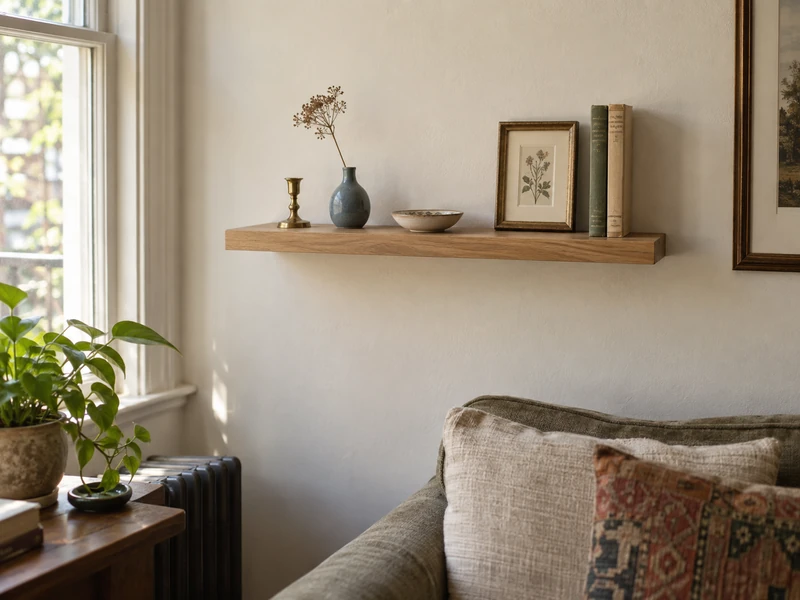
A small shelf can make a room feel personal—or make every little object look like it has nowhere else to live. This vintage trinket shelf approach keeps the character while giving each piece room to be noticed. You do not need a matching set, a shopping haul, or a perfectly symmetrical display.
Start with one safely installed shelf and objects you already own. The example below uses two secondhand books, a little botanical print, a blue bud vase, a shallow dish, and an unlit brass candlestick. The point is not to copy these exact finds. It is to understand why the arrangement feels collected instead of crowded, then apply the same decisions to your own mementos.
The Simple Shelf-Styling Formula
Give a narrow shelf one anchor, two smaller clusters, and visible empty surface. An anchor is the piece your eye notices first: perhaps a framed photo, a favorite ceramic vase, or an unusually shaped keepsake. The clusters support it without competing. Empty space is not wasted space; it is the margin that lets a collection read as intentional.
Before you begin, confirm that the shelf, fasteners, wall type, and combined object weight are compatible with the shelf manufacturer’s instructions. This is a styling guide, not a mounting plan. If the shelf moves, tilts, or lacks a known load rating, fix that problem before putting fragile objects on it. Keep breakable pieces away from the edge, particularly above seating or where children and pets can reach them.
What to Gather
- One securely installed shelf with a known weight limit
- A soft cloth for dusting
- One shallow tray or tabletop for sorting
- One framed picture, print, or other stable focal piece
- Two or three small objects with different heights and textures
- Optional: a pair of slim books or a small dish for tiny keepsakes
Use the tray as a temporary decision space, not a required purchase. A clean table works just as well. If your collection includes postcards, keys, earrings, or coins, a shallow dish keeps them from scattering and gives the shelf a useful function. Avoid setting paper near an open flame; the brass candlestick in the example is displayed unlit.
How to Style a Vintage Trinket Shelf
1. Edit the Collection Off the Shelf
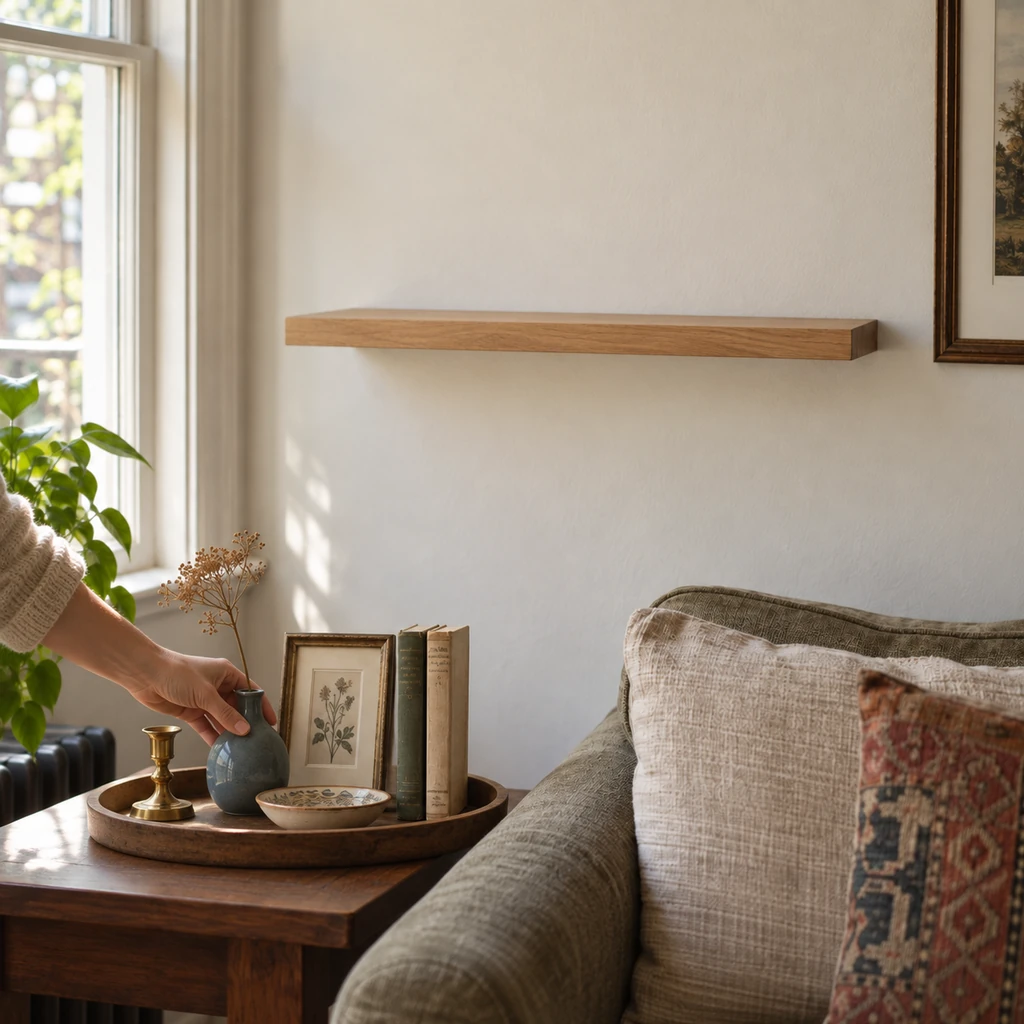
Remove everything, wipe the shelf, and put possible display pieces together on a table. Choose what you actually want to see. One object with a story usually contributes more than three anonymous fillers. If a piece is too heavy, unstable, hard to dust, or precious enough that a fall would be devastating, store it somewhere safer.
In the example, the vase, candlestick, dish, little print, and two books begin together below the empty shelf. Seeing them as a group makes repeated shapes or colors obvious. If you have many similar objects, put most away for rotation rather than forcing the whole collection into one view. Keep the display small enough that every item remains individually legible from a few steps back.
2. Place the Anchor, Then Give It a Partner
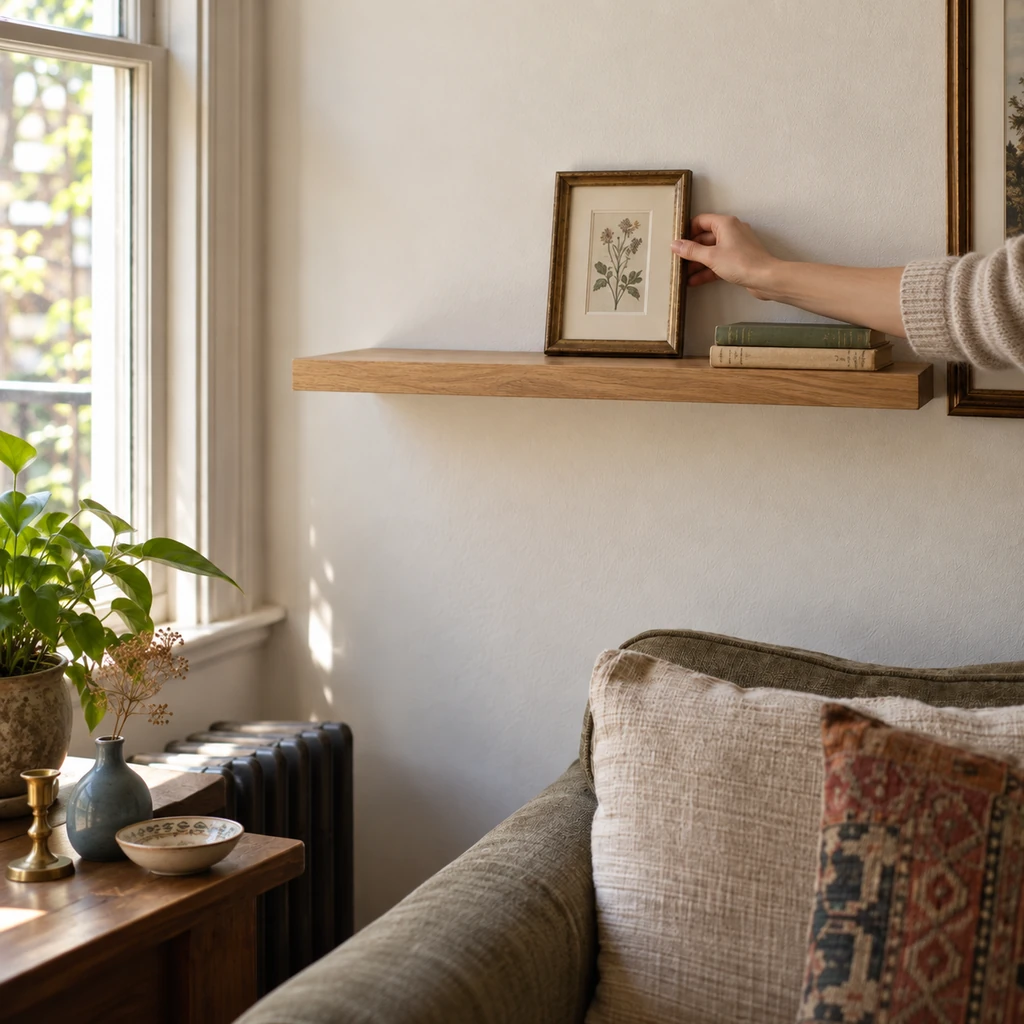
Start with a stable focal piece. Here, a small framed botanical print leans against the wall, while two slim books sit together toward one end of the shelf. The frame is not perched on the books. Both rest directly on the wood, so the display does not depend on a precarious stack. If your shelf is shallow, use a frame stand or wall hanger appropriate to the frame rather than relying on a loose lean.
Step back. Is the frame big enough to be recognized but not so big that it overwhelms the shelf? Are the books clear of the edge? Try the books flat and then upright, but only use the upright version if they stand securely or have proper support. Nothing about a pretty photo is worth a toppling object. This partial arrangement deliberately leaves the remaining objects off the shelf until the main shapes feel balanced.
3. Add Height, Texture, and Breathing Room
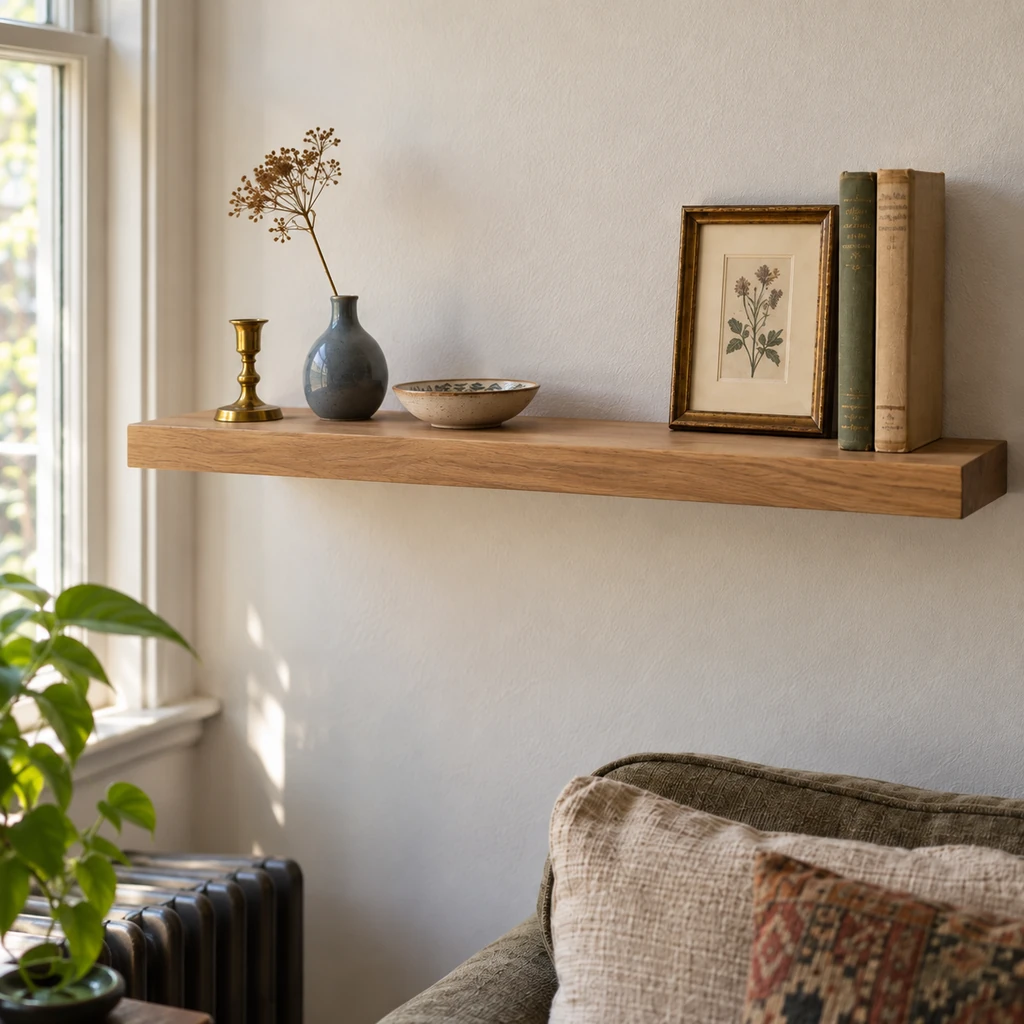
Bring in the remaining pieces one at a time. A short brass candlestick, a rounded blue vase with a single dried stem, and a low ceramic dish introduce different silhouettes without repeating the same height across the shelf. They also mix metal, glaze, paper, and wood. The colors connect, but the objects do not need to match.
Look at the spaces between things, not just the things themselves. A little gap beside the vase gives its stem a clean outline. A wider gap between the dish and the framed print stops the arrangement from becoming a continuous row of objects. In the finished view, the books stand at the far end rather than lying flat as in the previous test arrangement. That is an optional adjustment, not a hidden extra step; keep them flat if upright books are unstable on your shelf.
The Five-Minute Distance Test
Walk to the doorway and look back at the shelf. Can you identify the focal piece immediately? Do the smaller items look like deliberate companions or one long crowded line? Remove one object and compare. If the display improves, do not put that object back merely because it fits. Photographing both versions can help you notice spacing, but the decision should work in person, not only in a cropped picture.
Then inspect the shelf from the side. A frame that looks secure head-on may be barely resting against the wall. Check that no object projects beyond the front edge and that the combined weight stays within the manufacturer’s rating. This matters especially for wall shelves above a sofa or console. A beautiful display still has to survive an ordinary bump while cleaning.
Make It Personal Without Buying More
A trinket shelf is strongest when at least one item means something to the household. A flea-market dish can hold your grandmother’s thimble; a travel stone can sit in a cup rather than loose at the edge; a small framed note can replace generic art. If you do not want private words visible to visitors or photographs, frame a drawing, botanical print, or blank-backed keepsake instead.
Shopping is optional. Try changing the position of what you have, borrowing a small plate from the kitchen, or rotating a few pieces from another room. If you do buy a display object, measure the shelf depth and check the item’s base first. A tall vase with a tiny footprint can be less practical than a low, broad one, however lovely it looks in a listing photo.
Common Styling Mistakes—and Fixes
- Everything is the same height: combine a low dish, a middle-height vase, and one taller frame or stem.
- The shelf looks like a row of unrelated purchases: repeat one quiet material or color, such as aged brass or muted blue, without making every object identical.
- The tiny items disappear: group them in one stable dish rather than spreading them from end to end.
- The display feels crowded: take one item away and leave a wider uninterrupted section of shelf visible.
- Books or frames wobble: lay books flat, use appropriate supports, or wall-hang the frame. Do not rely on a delicate balancing trick.
- It is annoying to clean: reduce the number of small pieces until you can dust the shelf without dismantling a puzzle.
How to Keep It Looking Good
Dust the shelf and each object regularly using a soft cloth appropriate to its material. A shallow dish makes small pieces easy to lift as one group. Check dried botanicals for shedding and replace them when brittle. Keep water-filled vases away from paper, valuable books, and finishes that water could mark. If you use an actual candle, move it to a suitable heat-safe location before lighting it; do not light it as part of a crowded shelf arrangement.
Rotate the display when you want a different mood rather than continuously adding objects. A seasonal swap might be as simple as changing the print or replacing the dried stem. The shelf remains familiar, and the room feels refreshed without a new set of decor.
Frequently Asked Questions
How many objects belong on a small trinket shelf?
There is no universal number. Begin with one anchor and two smaller groups, then stop when each shape is clear from a few steps away. A wider shelf can hold more; a very shallow shelf may be safest with fewer pieces.
Can I display mixed eras and finishes?
Yes. A worn brass piece and a simple ceramic vase can sit comfortably together if their sizes are balanced. You do not need to make a vintage collection look as though every object came from the same decade.
What if my shelf is above a sofa?
Be more conservative. Verify the mounting and load rating, favor light and stable objects, and secure or relocate anything breakable or easily knocked loose. When in doubt, move the display to a safer wall or use a lower console.
Why This Idea Is Timely
Pinterest’s 2026 Hobbies Trend Report points to rising interest in “trinket shelf ideas” and “vintage trinket shelf.” Trend data can suggest what people want to explore; it cannot promise traffic or make a styling method useful by itself. The practical value here is a repeatable way to show meaningful objects without crowding a small space.
Source: Pinterest 2026 Hobbies Trend Report