
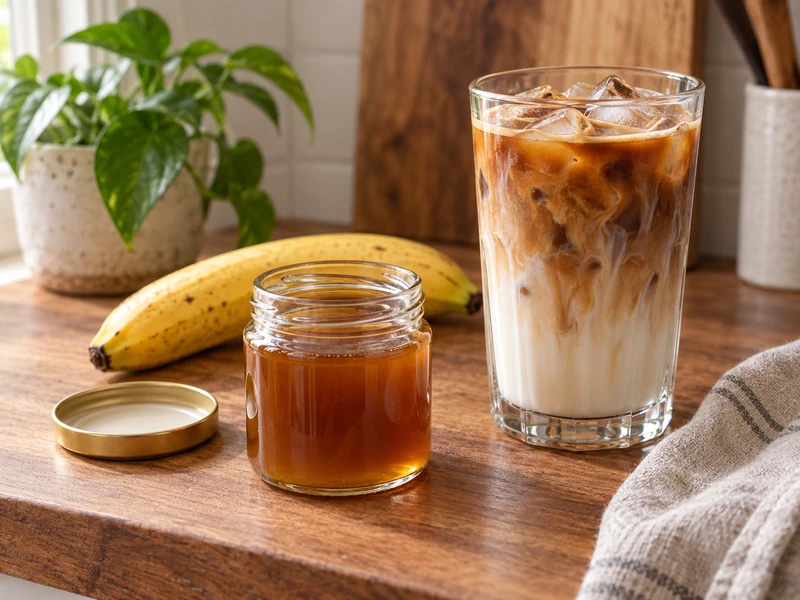
If banana bread and an iced brown sugar latte had a quieter, more useful cousin, it would be this brown sugar banana syrup for coffee. It tastes unmistakably of ripe banana, but it pours like a proper coffee syrup instead of leaving fruit pulp at the bottom of the glass.
RECIPE CARD
Brown Sugar Banana Syrup for Coffee (Smooth, Not Pulpy)
Ingredients
- 1 medium ripe banana (about 4 ounces/115 g peeled), cut into 1/2-inch rounds
- 3/4 cup (150 g) packed light brown sugar
- 3/4 cup (180 ml) water
- 1/8 teaspoon fine salt
- 1 teaspoon pure vanilla extract
- 1 teaspoon fresh lemon juice
Quick Method
Condensed overview. Use Full Instructions for the complete method, timing and doneness details.
- Combine: Place the banana, brown sugar, water, and salt in a small saucepan and stir to moisten the sugar.
- Simmer: Bring to gentle bubbles over medium heat, then reduce the heat and simmer for 10 minutes, stirring and lightly mashing the softened banana near…
- Strain: Pour the mixture through a fine-mesh strainer into a heat-safe jug. Press only lightly so banana pulp does not pass through.
- Finish and cool: Stir the vanilla and lemon juice into the warm strained syrup. Cool promptly, transfer to a clean covered jar, and refrigerate.
- Serve: For an iced latte, combine ice, milk, and espresso, pour 1 tablespoon syrup over the drink, stir thoroughly, and adjust sweetness to taste.
The method matters. Rather than blending banana into the finished syrup, you gently simmer slices with brown sugar and water, then strain them out. That gives the liquid a rounded banana aroma while keeping the texture smooth enough for iced coffee, cold brew, hot lattes, or sparkling water.
Why You’ll Love This Banana Coffee Syrup
- Smooth, not pulpy: the cooked fruit is strained rather than blended.
- Easy to measure: start with one tablespoon per drink, then adjust to taste.
- No artificial banana flavor: one ripe banana supplies the flavor.
- Balanced sweetness: salt, vanilla, and a little lemon juice keep the brown sugar from tasting flat.
- Small batch: the recipe makes about three-quarters of a cup, so it is realistic to use while fresh.
Ingredients
- 1 medium ripe banana (about 4 ounces/115 g peeled), cut into 1/2-inch rounds
- 3/4 cup (150 g) packed light brown sugar
- 3/4 cup (180 ml) water
- 1/8 teaspoon fine salt
- 1 teaspoon pure vanilla extract
- 1 teaspoon fresh lemon juice
Choose a banana that is yellow with plenty of brown speckles but is not leaking or fermented. A barely ripe banana will give the syrup less aroma, while an extremely soft black banana can make the liquid harder to strain cleanly. Light brown sugar adds a caramel note without overwhelming the fruit.
Step-by-Step Instructions
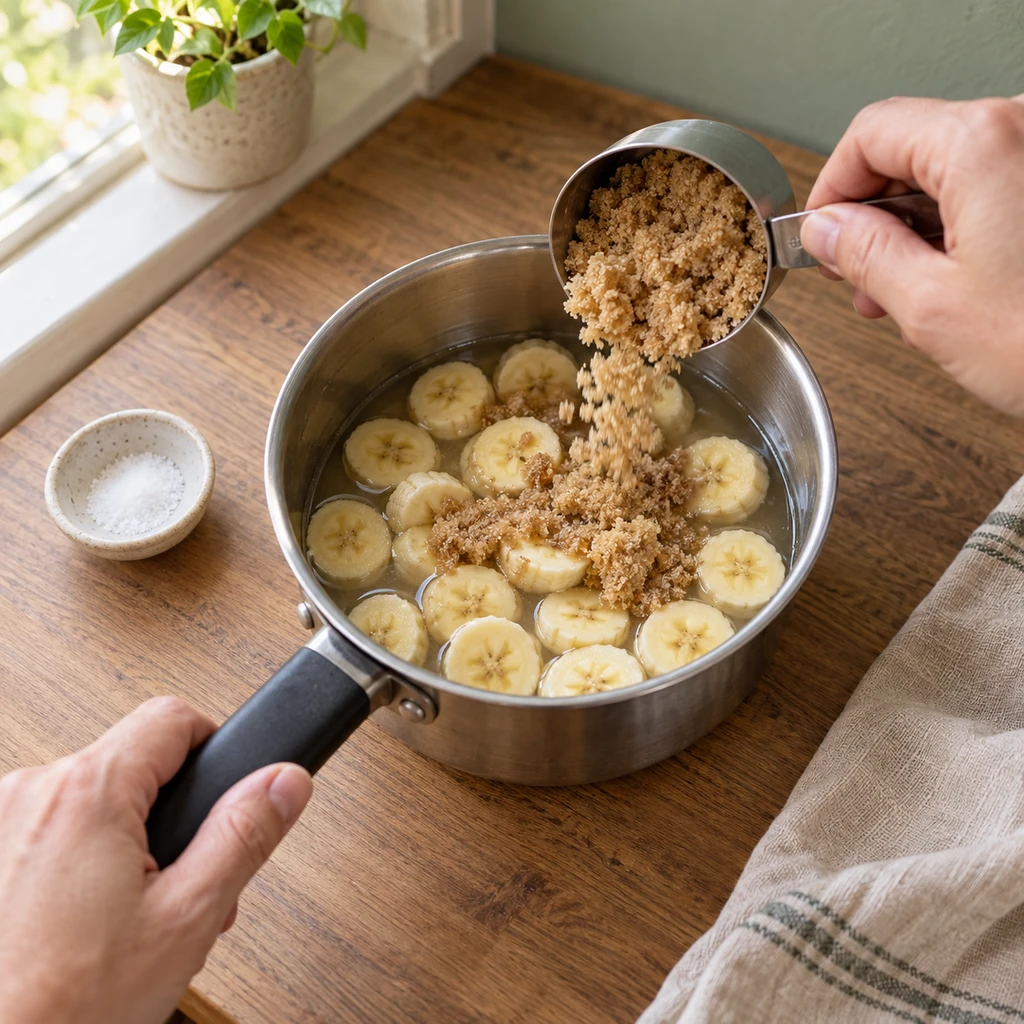
1. Combine the Banana, Sugar, Water, and Salt
Put the banana rounds in a small stainless-steel saucepan. Add the packed brown sugar, water, and salt. Stir just enough to wet the sugar; there is no need to mash the fruit yet. Starting with distinct slices makes the next stage easier to control.
2. Simmer and Gently Mash
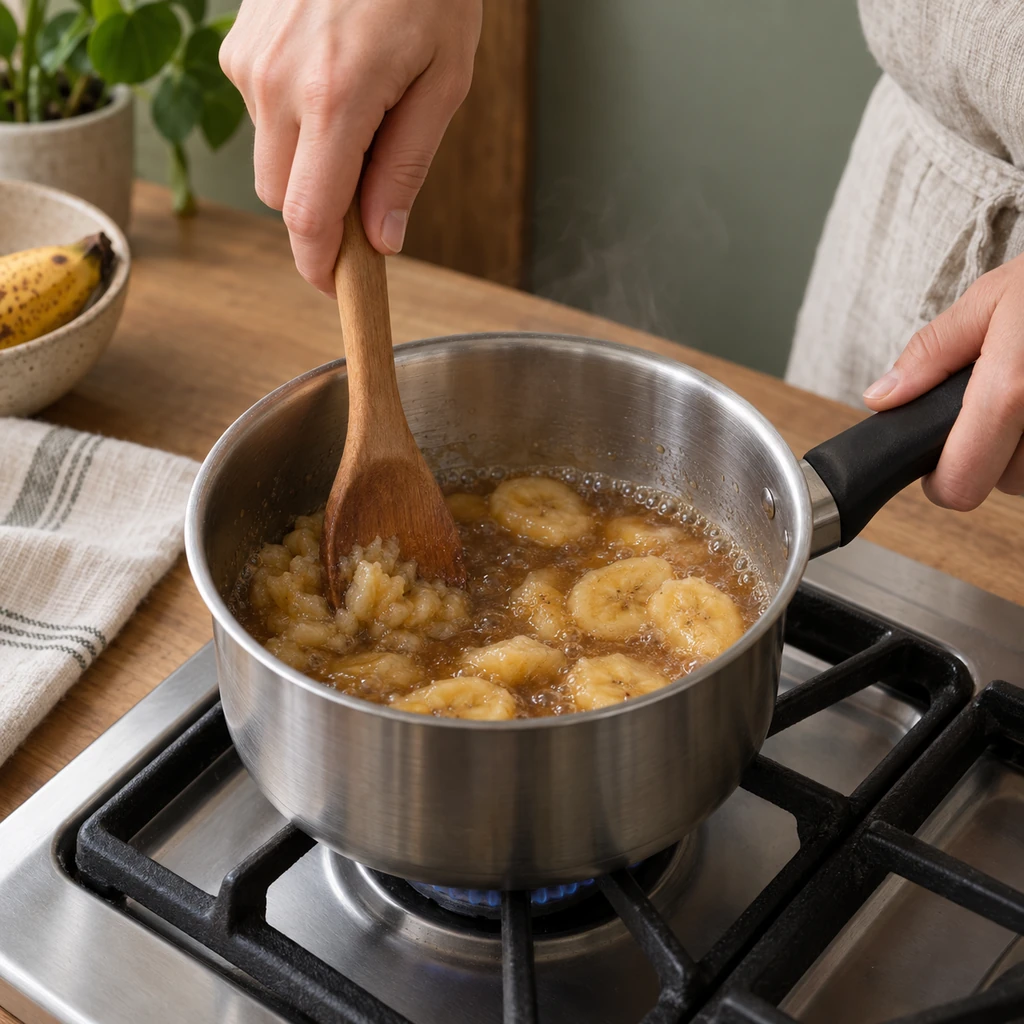
Set the pan over medium heat and stir until the sugar dissolves. When small bubbles appear, reduce the heat to maintain a gentle simmer. Cook for about 10 minutes, stirring occasionally. During the final few minutes, press the softened slices lightly with a wooden spoon. Avoid a hard boil: it evaporates water too quickly and can push the syrup toward a sticky candy-like consistency.
3. Strain Without Forcing the Pulp
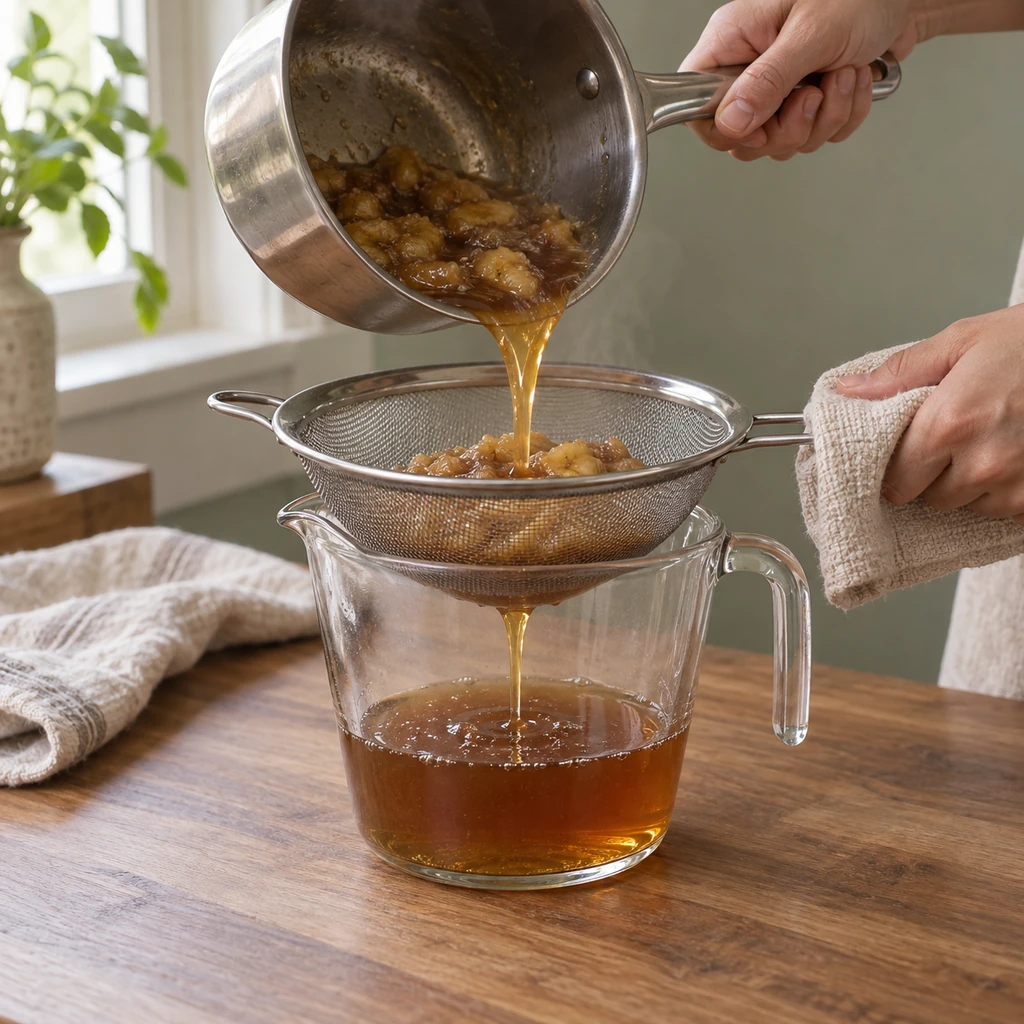
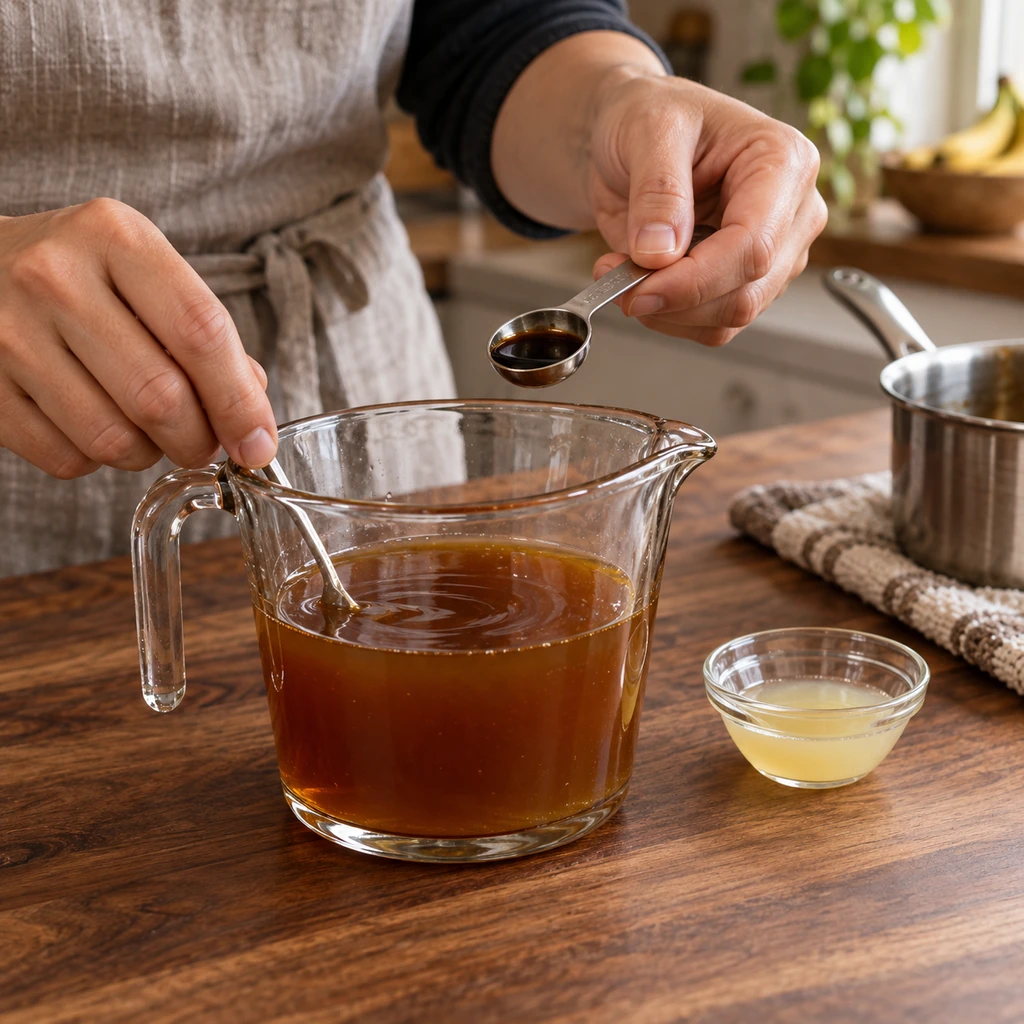
Remove the saucepan from the heat. Set a fine-mesh strainer over a heat-safe measuring jug and carefully pour in the mixture. Let gravity do most of the work. Press once or twice with the back of a spoon to release trapped syrup, but do not grind the banana through the mesh. Excessive pressing is the main reason a fruit syrup turns cloudy and pulpy.
4. Add Vanilla and Lemon, Then Cool
While the strained syrup is still warm, stir in the vanilla and lemon juice. Adding vanilla away from direct heat preserves more of its aroma. The lemon juice is here for brightness, not as a room-temperature preservative. Leave the syrup in its heat-safe jug until it stops steaming, then transfer it to a clean jar and refrigerate promptly.
5. Mix an Iced Banana Latte
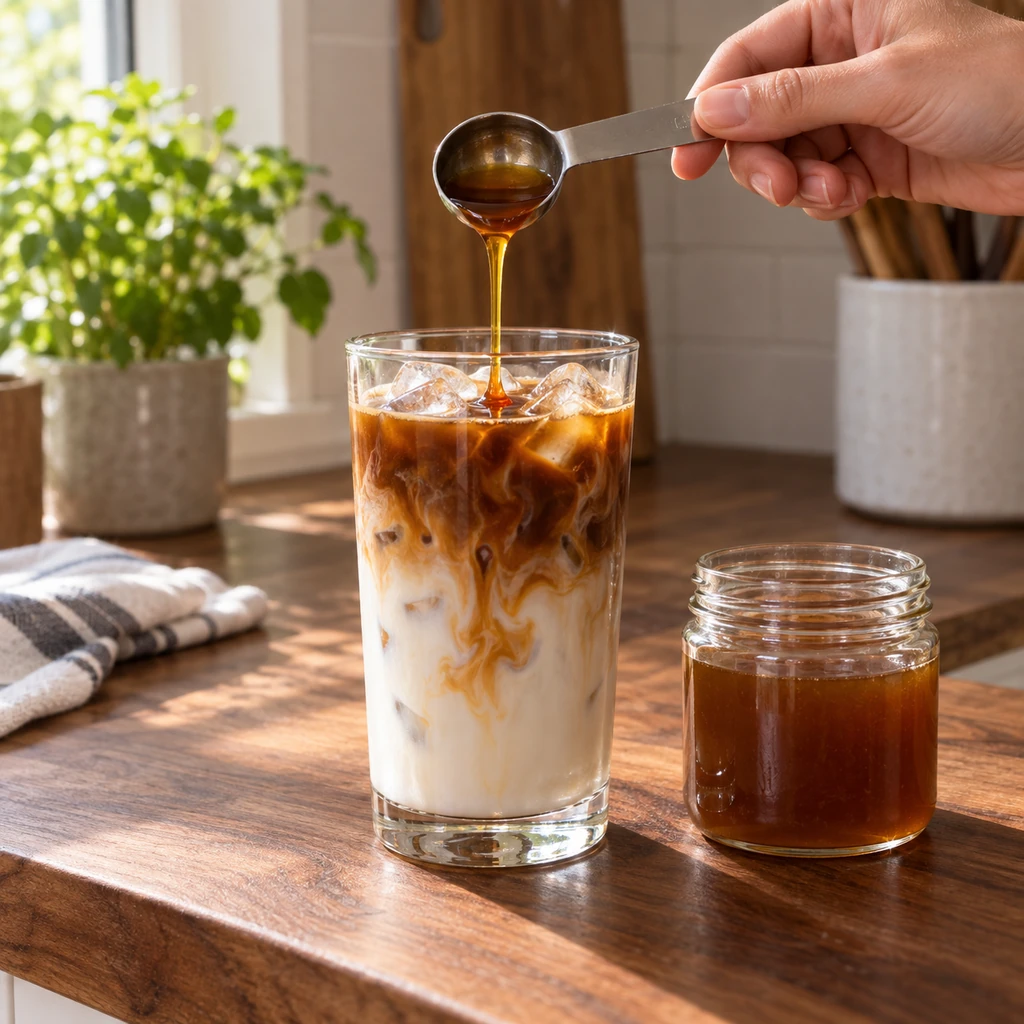
Fill a glass with ice, pour in about three-quarters of a cup of milk, and add one or two shots of espresso. Measure one tablespoon of syrup over the assembled latte, as shown, then stir thoroughly because the dense syrup will travel toward the bottom. For a sweeter café-style drink, add a second teaspoon rather than immediately doubling the amount.
How to Keep the Syrup Smooth
This is an infused fruit syrup, not a banana purée. The distinction is what makes it practical for coffee. Keep the simmer gentle, wait until the fruit softens before pressing it, and resist squeezing every last drop through the strainer. The liquid may look slightly thinner while warm and will become a little more viscous as it cools.
If your syrup becomes too thick after chilling, stir a teaspoon of hot water into the portion you plan to use. If it is thinner than you prefer, use it as-is in iced coffee; returning a fruit syrup to the stove after straining can mute the fresh banana aroma and makes over-reduction easier.
Substitutions & Variations
- Dark brown sugar: use it for a deeper molasses flavor, knowing it will make the syrup darker and less banana-forward.
- Maple accent: replace 2 tablespoons of the brown sugar with pure maple syrup. Keep the water amount unchanged.
- Cinnamon: simmer one small cinnamon stick with the banana and remove it before straining. Ground cinnamon can make the syrup look cloudy.
- Non-dairy drinks: oat milk complements the caramel notes especially well, but almond or soy milk also works.
- Less sweet coffee: use 2 teaspoons of syrup in a cold brew and add milk only after tasting.
What to Serve With
Beyond an iced latte, try a tablespoon in cold brew, a small spoonful in hot coffee, or a drizzle over plain yogurt or oatmeal. For a fizzy drink, stir two teaspoons into a glass of cold sparkling water and add ice. The syrup is concentrated, so treat it as a flavoring rather than a beverage on its own.
The strained banana pulp does not need to be wasted. Cool it promptly and spoon it over oatmeal or yogurt the same day. Because the pulp has already absorbed sugar, taste before adding any extra sweetener.
Storage and Food-Safety Notes
This recipe is not formulated or tested for canning, and sugar alone should not be treated as a safety control. Store the finished syrup in a clean, covered jar in the refrigerator. For a conservative home-kitchen approach, use it within 4 days. Discard it sooner if you notice mold, fizzing, an off odor, or other signs of spoilage. Do not leave the jar at room temperature for serving all day.
Cool the syrup promptly rather than sealing a large amount while piping hot. A shallow heat-safe jug helps heat escape faster. Labeling the jar with the preparation date prevents the familiar “When did I make this?” refrigerator mystery.
Troubleshooting
The syrup tastes weak
The banana may have been underripe, or the mixture may not have simmered long enough. Use a well-speckled banana and maintain gentle bubbles for the full cooking time. Do not compensate by blending in raw banana; that changes the texture and shortens the syrup’s practical usefulness in drinks.
The syrup is cloudy
A little haze is normal in a homemade fruit infusion. Heavy cloudiness usually means the pulp was pressed through the strainer. Let the next batch drain naturally, then press only lightly. A coffee filter is unnecessarily slow and absorbs some of the syrup.
The syrup became too thick
The simmer was probably too vigorous or too much water evaporated. Once chilled, loosen only the amount you need with a small splash of hot water. Measure rather than pouring freely so the flavor does not become diluted.
Frequently Asked Questions
Does banana syrup curdle milk?
The recipe contains only a teaspoon of lemon juice across the whole batch, so a measured spoonful generally mixes into a full glass of cold milk without trouble. Add the syrup to the milk and stir; do not pour a large amount of concentrated syrup directly into a tiny quantity of milk.
Can I blend the banana instead of straining it?
Not if you want a pourable coffee syrup. Blending makes a sweet banana purée, which is thicker, settles differently, and does not behave like this recipe in iced drinks.
Can I freeze it?
For longer storage, freeze small portions in a clean ice-cube tray, then move the frozen portions to a labeled freezer container. Thaw only what you need in the refrigerator and stir before using. The texture may be slightly less clear after freezing, but it remains useful in coffee.