
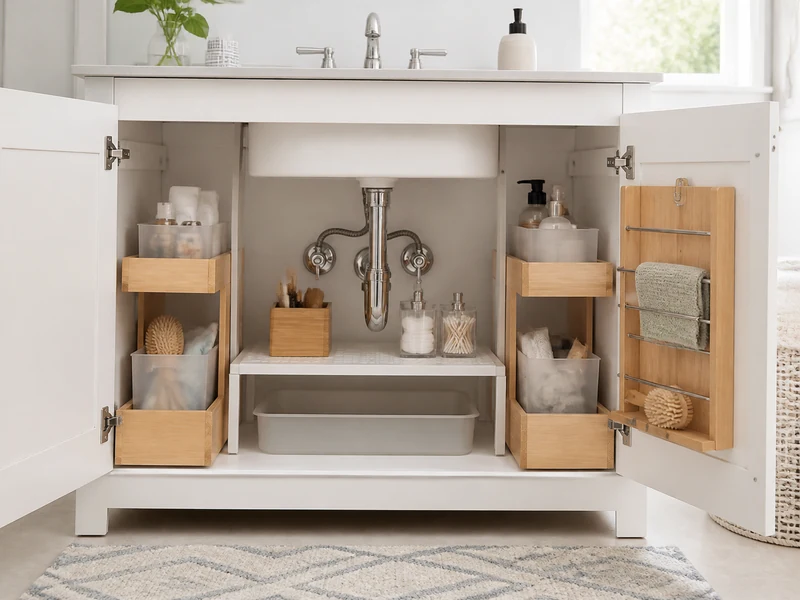
The cabinet beneath a bathroom sink is awkward by design: pipes divide the space, bottles tip over, and moisture can damage both supplies and cabinetry. Good under-sink storage is not about filling every inch. It should keep plumbing visible, contain leaks, and make daily products easy to reach without mixing incompatible or unsafe items.
This reset works for a vanity with doors or a deep open cabinet. Before buying drawers or shelves, measure around the drain trap, supply lines, shutoff valves, hinges, and door frame. Keep the valves accessible at all times. If you see active dripping, swelling, mold, corrosion, or a persistent odor, pause the organizing project and address the source first.
Supplies for a Safer Under-Sink Reset
- Measuring tape, cleaning cloth, and flashlight
- Washable lipped tray or waterproof cabinet liner
- Open handled bins or small pull-out drawers
- Optional tension rod, door caddy, and removable hooks
Choose products that fit without touching pipes and follow their mounting and load instructions. Store medicines, cosmetics affected by humidity, and anything labeled for secure or ventilated storage somewhere more appropriate. In homes with children or pets, use a proper cabinet lock and follow every product label.
Genius Under-Sink Storage Hacks for Bathrooms
1. Empty, Inspect, and Measure Around the Plumbing
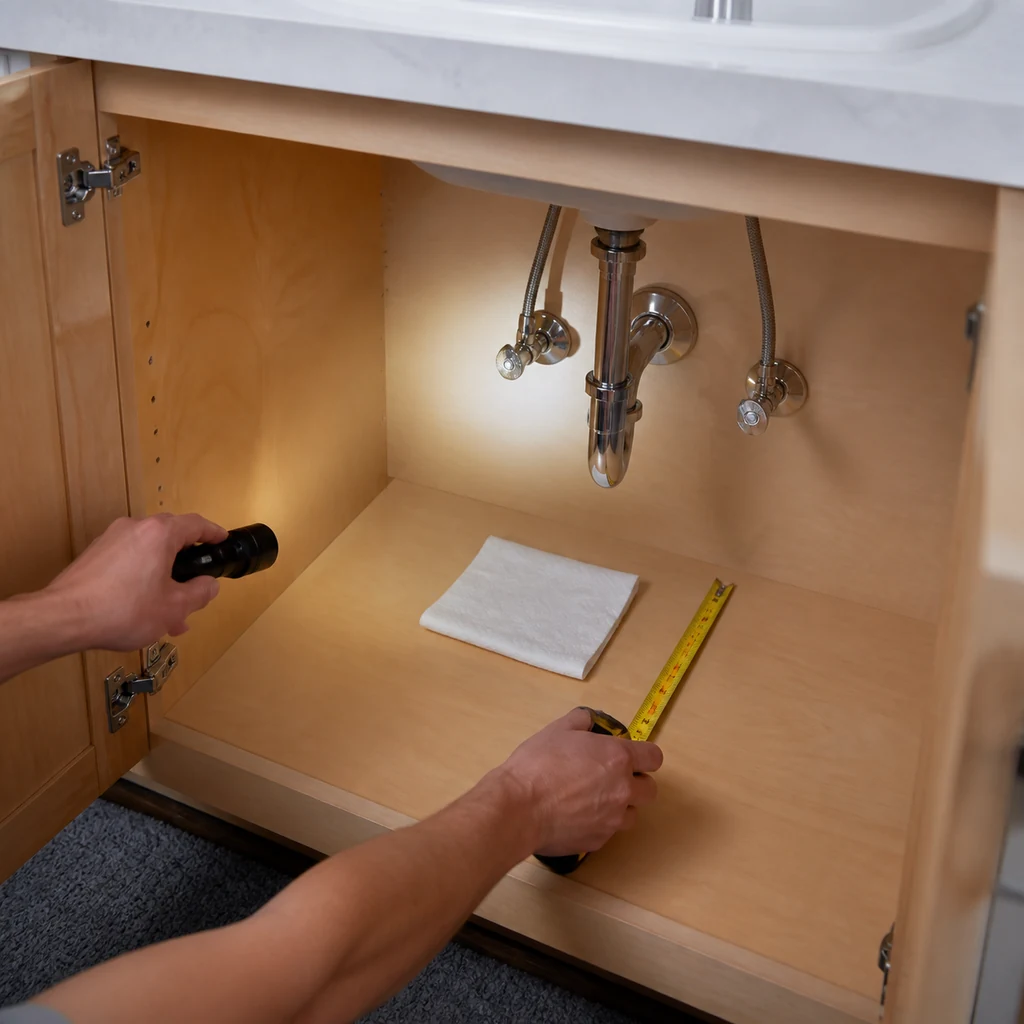
Remove every item and discard empty or unusable products according to local guidance. Wipe the cabinet, then use a flashlight to inspect pipe joints, valves, and the floor. Place dry paper beneath suspicious areas for a short period to reveal moisture. Measure separate rectangles on each side of the plumbing rather than treating the cabinet as one open box. Record the height below the basin because tall organizers often fail there.
2. Install a Washable Leak-Catching Base
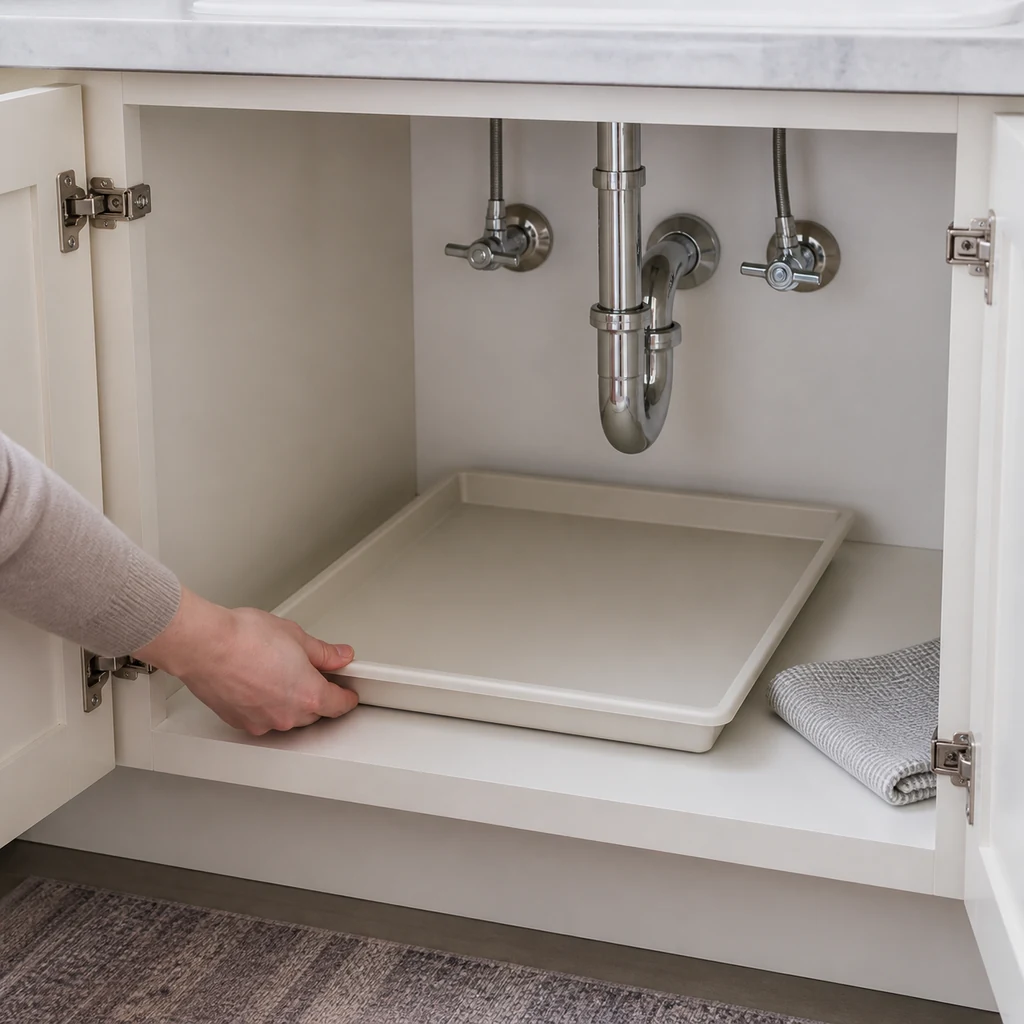
Protect the cabinet floor with a removable waterproof liner or shallow lipped tray that fits around no permanent plumbing. A tray will not repair a leak, but it can contain a small spill long enough for you to notice it. Choose a light color so drips are visible and remove the liner periodically to inspect underneath. Never seal damp particleboard beneath an adhesive covering; it must dry and any damage must be evaluated first.
3. Build Two Pull-Out Zones Beside the Pipes
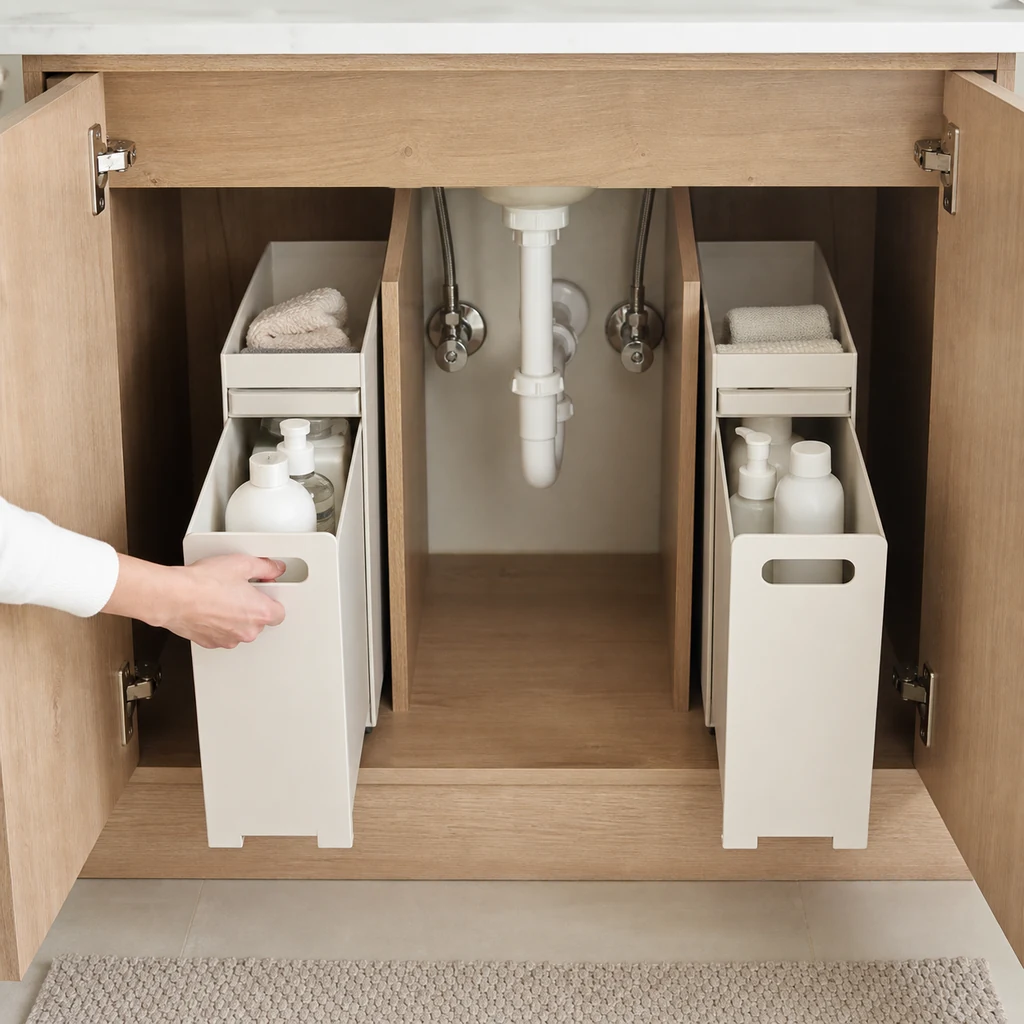
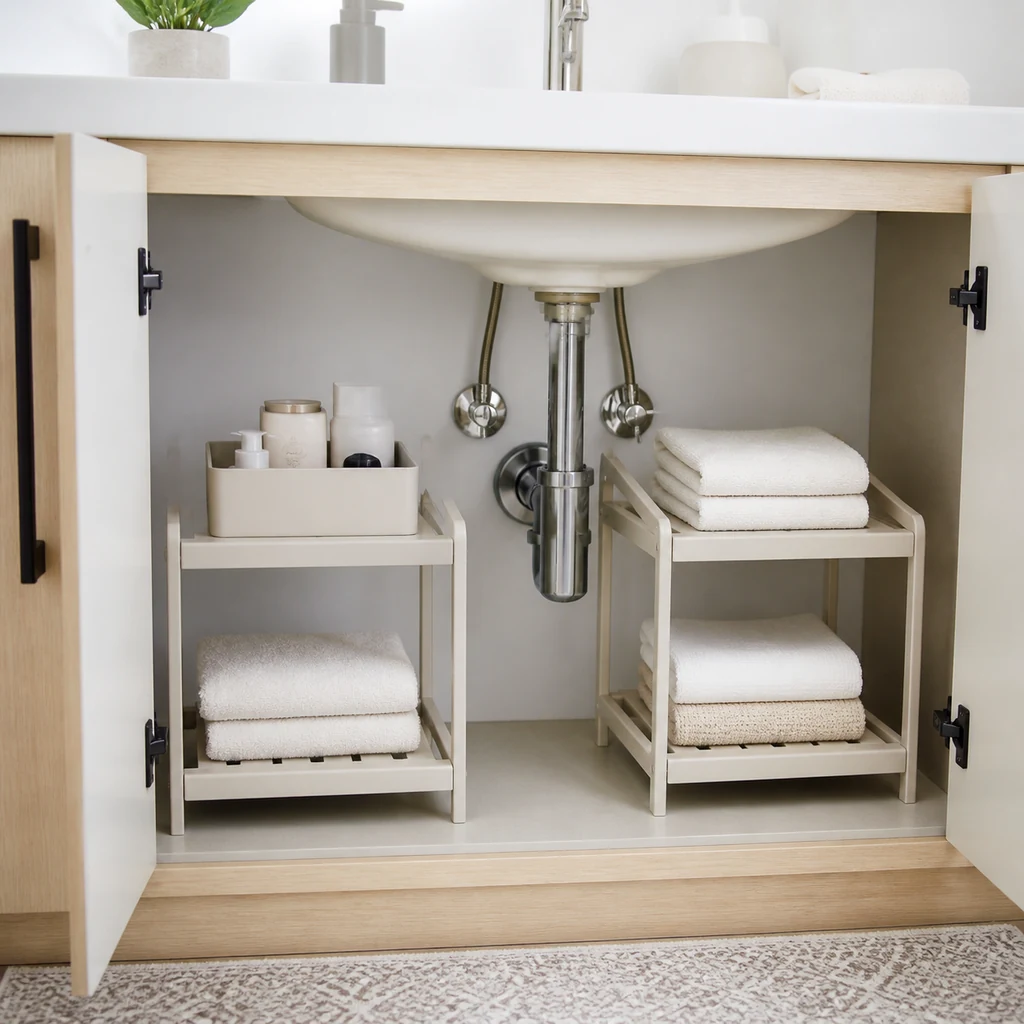
Place narrow handled bins or freestanding drawers on the left and right sides of the drain trap. One can hold daily hair care or skin care; the other can hold extra soap, unopened toiletries, or cleaning cloths. Keep products upright and avoid stacking containers behind the pipes. Pull-out zones let you reach the back without kneeling and rummaging, while the open center preserves a clear view of the plumbing.
4. Add Vertical Storage That Adjusts Around Pipes
A U-shaped shelf, modular riser, or two independent stacking drawers can use height without crossing the center pipe area. Measure the widest plumbing point and leave comfortable service clearance. Put lightweight backups above and daily items below. Do not wedge an organizer against flexible supply lines, the drain trap, or shutoff handles. Freestanding pieces are often easier for renters because they can be removed instantly during a plumbing repair.
5. Use the Door for Lightweight Daily Essentials
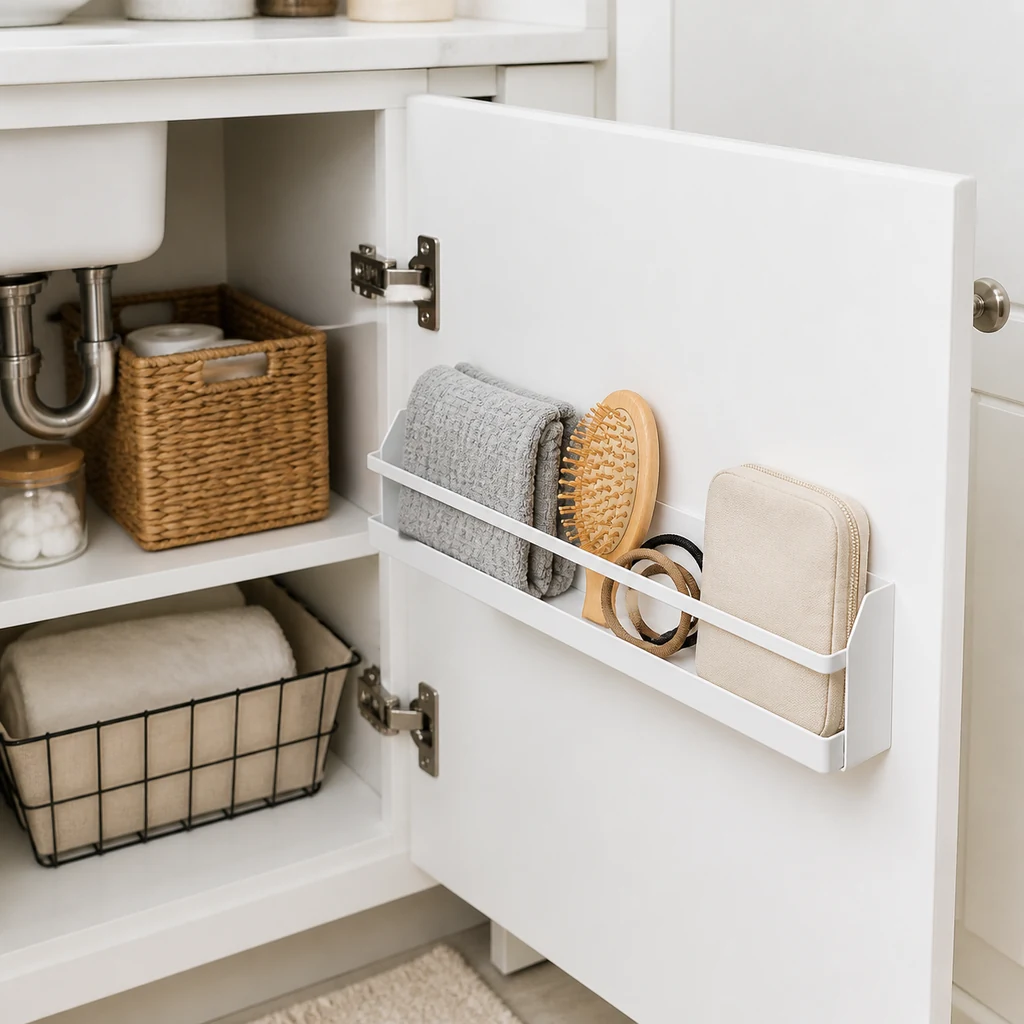
A shallow over-the-door caddy or securely mounted bins can hold washcloths, brushes, hair ties, or a small daily-care pouch. Check hinge clearance and make sure the door closes without striking interior drawers. Avoid loading the door with heavy bottles or glass containers. If a removable hook repeatedly falls in a humid bathroom, stop using it rather than trusting it with breakable or sharp objects.
6. Corral Bottles Upright and Create a Refill Boundary
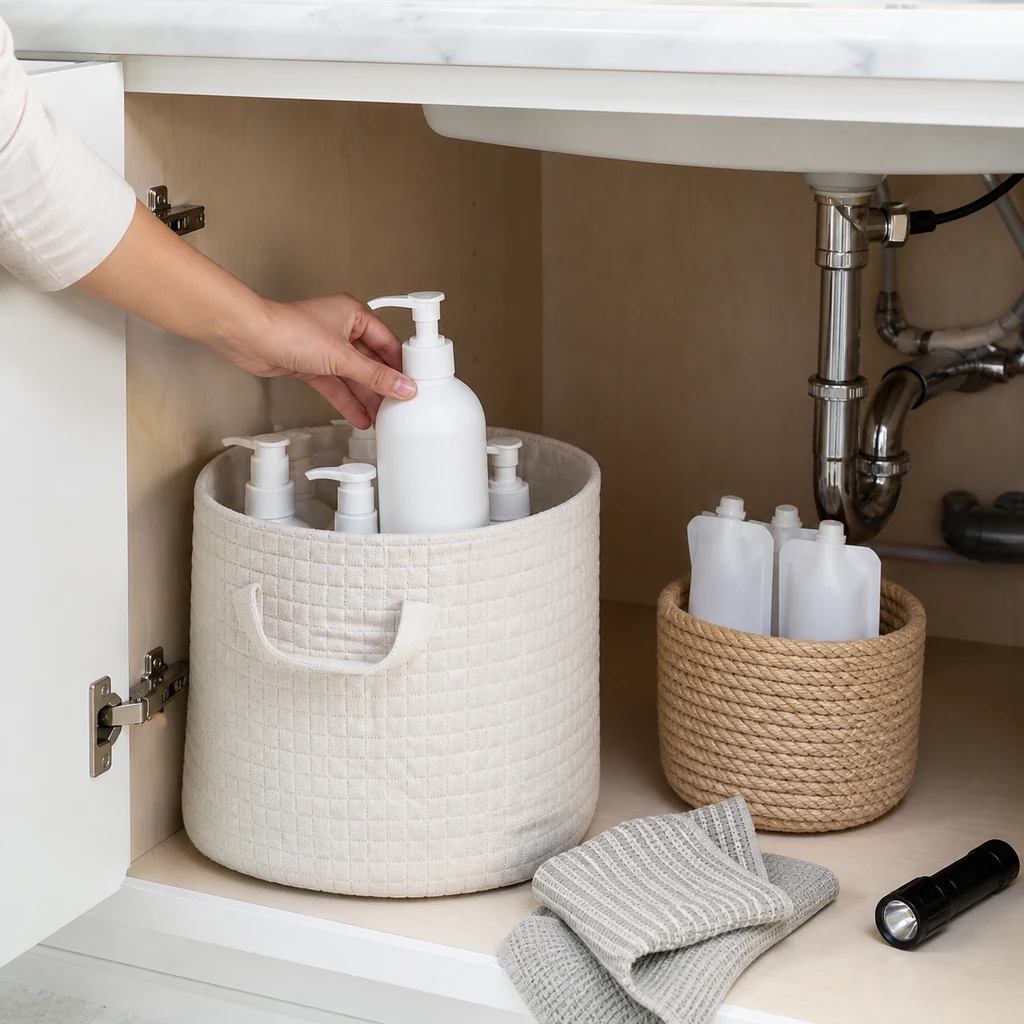
Group upright bottles in a washable handled bin so leaks stay contained and labels remain visible to the household. Keep one small backstock bin for unopened refills; when it is full, stop buying extras. Follow storage directions on cleaners and never combine products in unmarked containers. Items that should not be stored together must remain separated according to their labels. Finish by placing a clean cloth and flashlight where they can be grabbed quickly.
Substitutions & Variations
Test the layout with clean shoe boxes before investing in drawers. A baking tray can temporarily contain toiletries, while repurposed handled baskets can create pull-out zones. Use a freestanding tension rod only for very light spray bottles and only when it cannot press on plumbing or damage cabinet walls. For a pedestal sink, use a slim rolling cart or lidded basket nearby rather than forcing storage around exposed pipes. In a shared bathroom, assign one labeled bin per person and keep cleaning products in a separate locked zone. In a humid bathroom, choose open plastic bins over fabric baskets so they can be washed, dried, and inspected quickly.
What Should Not Go Under a Bathroom Sink
Avoid storing medication, vitamins, spare toilet paper without protection from leaks, heat-sensitive cosmetics, open electrical tools, food, or anything that requires dry temperature-controlled conditions. Keep hazardous products secured exactly as directed on their labels and out of reach of children and pets. Do not use this cabinet to hide a leak; continued moisture can damage finishes and encourage mold.
Five-Minute Monthly Maintenance
Pull out every bin, check the tray and pipe joints, wipe dust, and confirm that valves remain accessible. Return products upright, remove empties, and move older refills forward. This quick inspection is the real storage hack: it catches small problems before the cabinet becomes crowded or damaged.
FAQ
Can I put a tension rod under the sink?
Only for lightweight items, with adequate clearance from plumbing and a secure fit that will not damage the cabinet. Never let it press on pipes or valves.
How do I organize around a large drain pipe?
Use two narrow independent zones on either side instead of one wide organizer. Keep the center open for inspection and repair access.
What is the first sign of an under-sink leak?
Look for moisture, staining, swelling, corrosion, musty odor, or water collected in the tray. Investigate promptly rather than covering the area.