
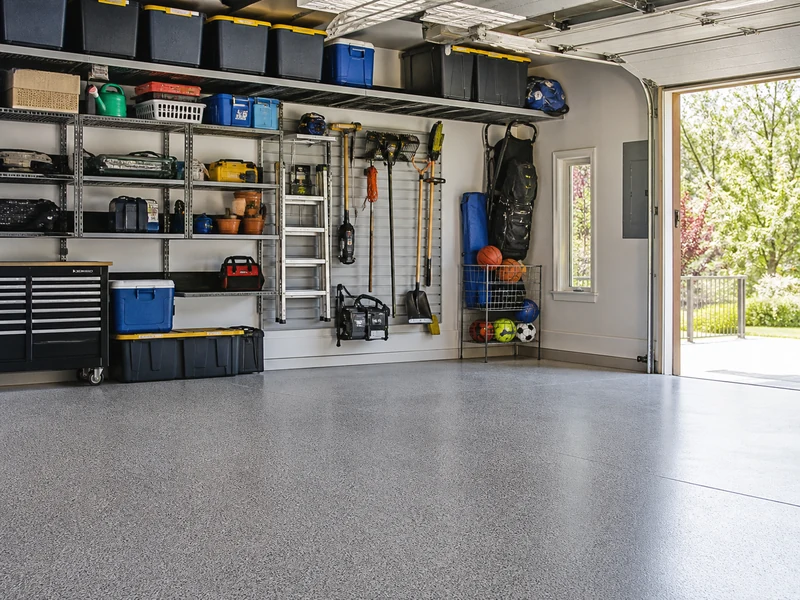
A garage can become the most expensive junk drawer in the house. It holds tools, sports gear, seasonal decor, lawn supplies, returns, paint, and anything people do not want to decide about yet. Creative garage storage is not just about adding shelves. It is about keeping the floor clear, protecting access to important systems, and making heavy or hazardous items easier to manage.
Before you buy hooks, racks, or matching bins, walk the garage like a safety inspector. Notice the garage door tracks, opener, water heater, electrical panel, outlets, windows, and the path from the car to the house. Storage should never block exits, service panels, vents, shutoffs, or equipment that needs clearance. Follow product labels and local guidance for paint, fuel, chemicals, batteries, propane, or anything flammable. Take photos of the empty walls before installing anything so you can compare clearance later.
Supplies for a Safer Garage Reset
- Tape measure, marker, stud finder, and painter’s tape
- Sturdy shelves, clear bins, and open sports baskets
- Wall hooks, track rails, pegboard, or slatwall components
- Trash, recycle, donation, and special-disposal containers
Use only storage products rated for the weight and surface involved. Heavy items belong low. Frequently used items belong at shoulder height or below. Anything used by children should be reachable without climbing. If a shelf bows, a hook twists, or a bin requires two people to lift, treat that as a warning and redesign the zone before loading more onto it.
Creative Garage Storage Solutions You Need to Try
1. Map Zones Before Buying Storage
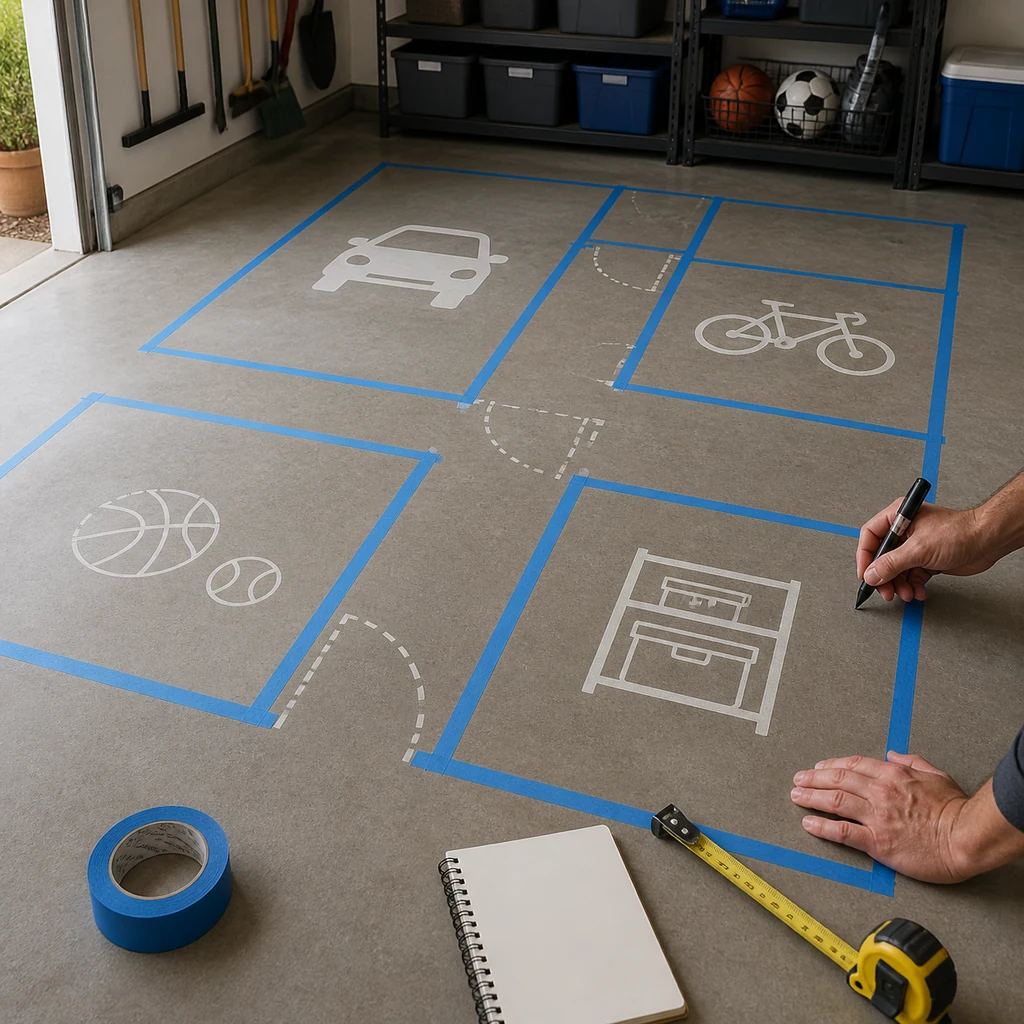
Start with painter’s tape on the floor. Mark parking clearance, door swing, walkways, and the areas that must remain accessible. Then assign broad zones: tools, lawn care, sports gear, seasonal bins, bulk household supplies, and returns. This map prevents the classic mistake of installing one huge shelf that blocks the thing you need to reach most often. Keep a small landing strip near the house door for items in transit, but do not let it become permanent storage.
2. Use Wall Tracks for Flexible Vertical Storage
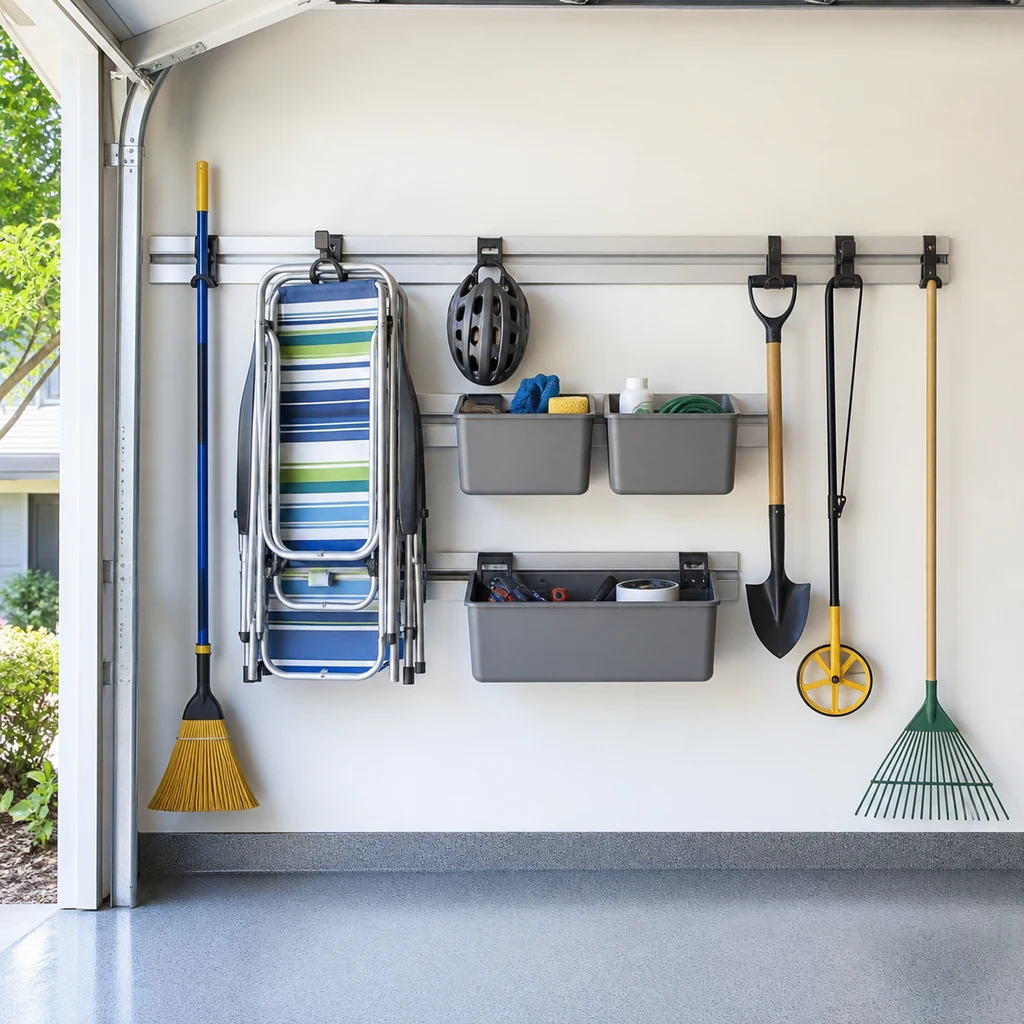
Wall tracks are useful because garage categories change with the season. Install them according to the manufacturer’s directions and into appropriate support, then start with lightweight items: brooms, small tools, helmets, folding chairs, or shallow bins. Keep the lowest hooks from becoming shin-level hazards and leave space for doors, windows, and car mirrors.
3. Build a Compact Workbench Zone
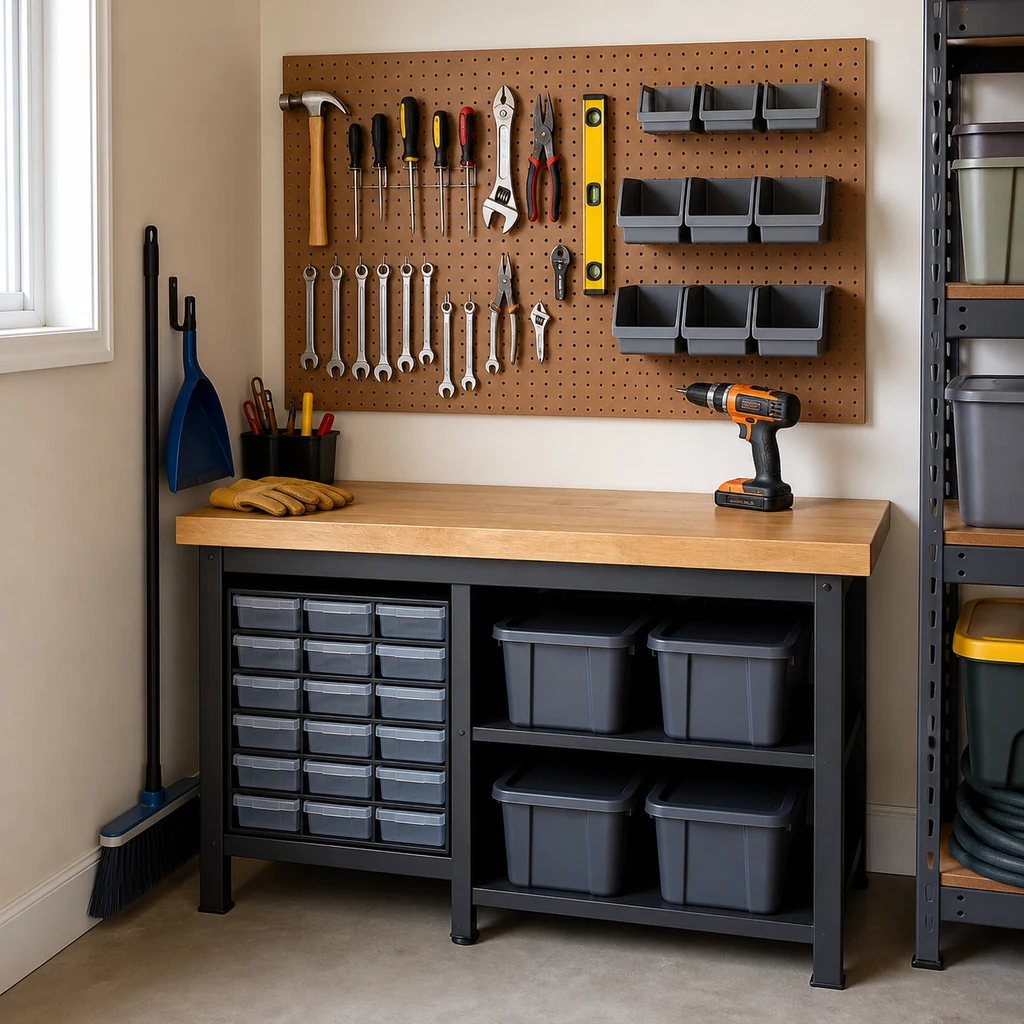
A workbench does not need to be huge. A small surface with pegboard above it can hold the tools used for repairs, picture hanging, bike adjustments, and quick fixes. Put sharp tools out of reach of children, store batteries according to their labels, and keep loose hardware in shallow drawers. The goal is to finish projects without spreading tools across the garage floor.
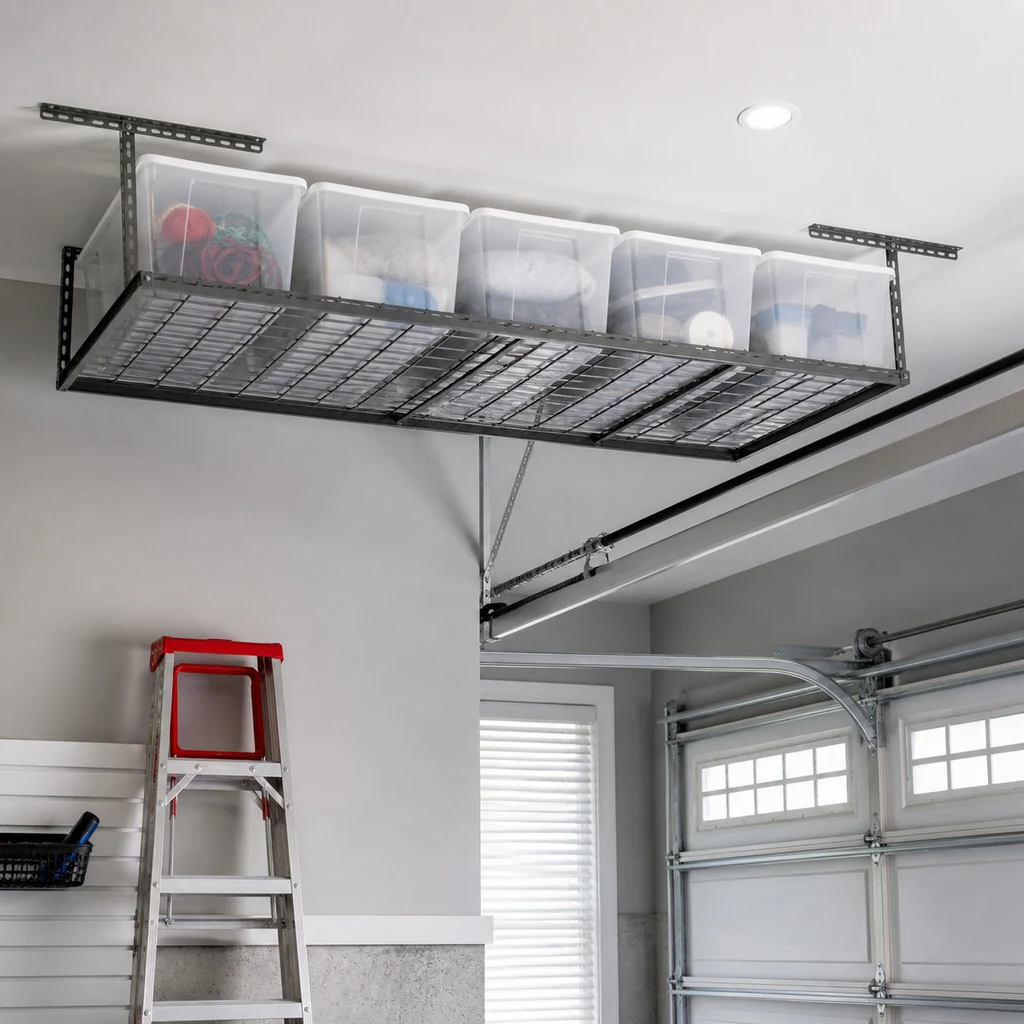
4. Add Overhead Storage Carefully
Ceiling storage is best for bulky, lightweight, rarely used items such as empty coolers or seasonal decor. Keep racks away from garage door tracks, lights, sprinkler components, and anything that needs service clearance. Respect stated load limits and never store heavy bins overhead just because the floor is crowded. If you cannot lift it safely, it does not belong above your head.
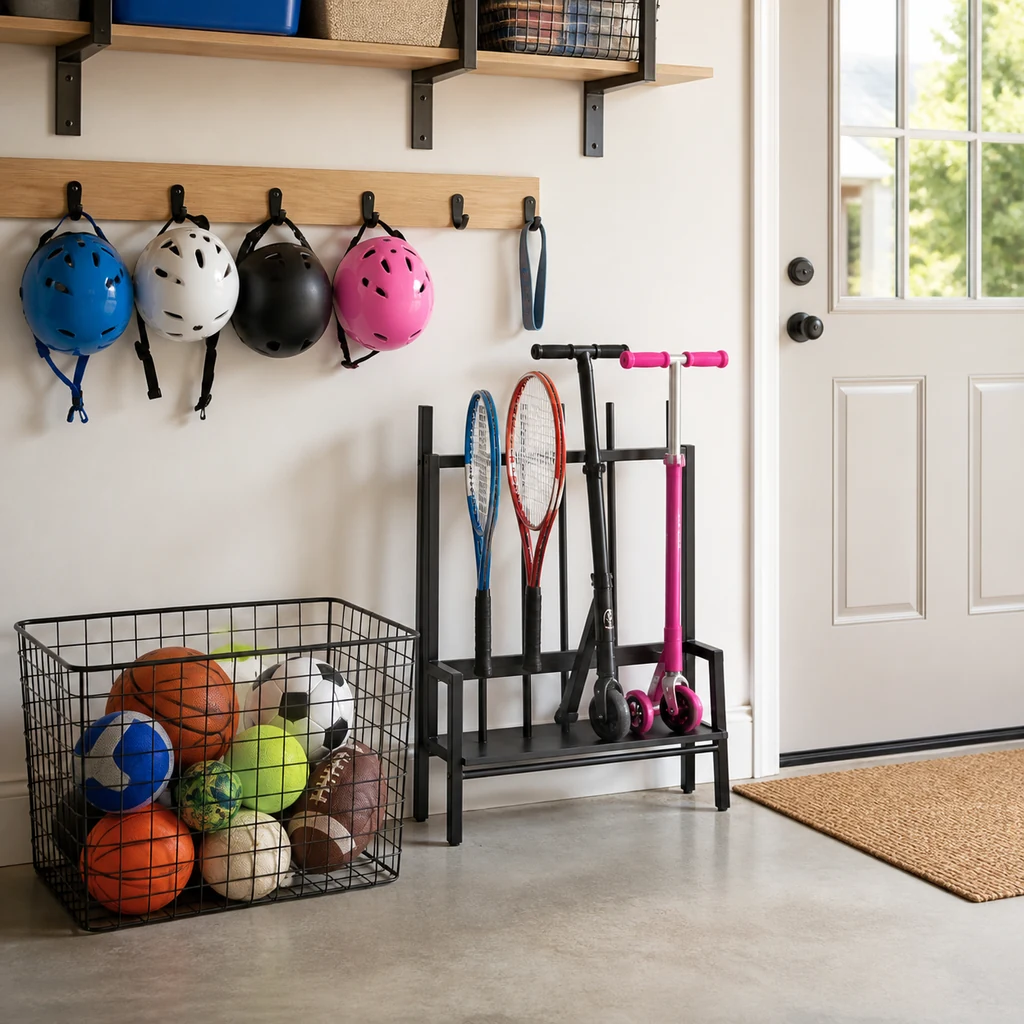
5. Create a Grab-and-Go Sports Zone
Sports gear works best near the exit, not in sealed bins on a high shelf. Use open baskets for balls, low hooks for helmets, and a narrow rack for bats, rackets, or scooters. Children are more likely to return items when the home is obvious and reachable. Keep the zone away from parked-car doors so gear does not scratch paint.
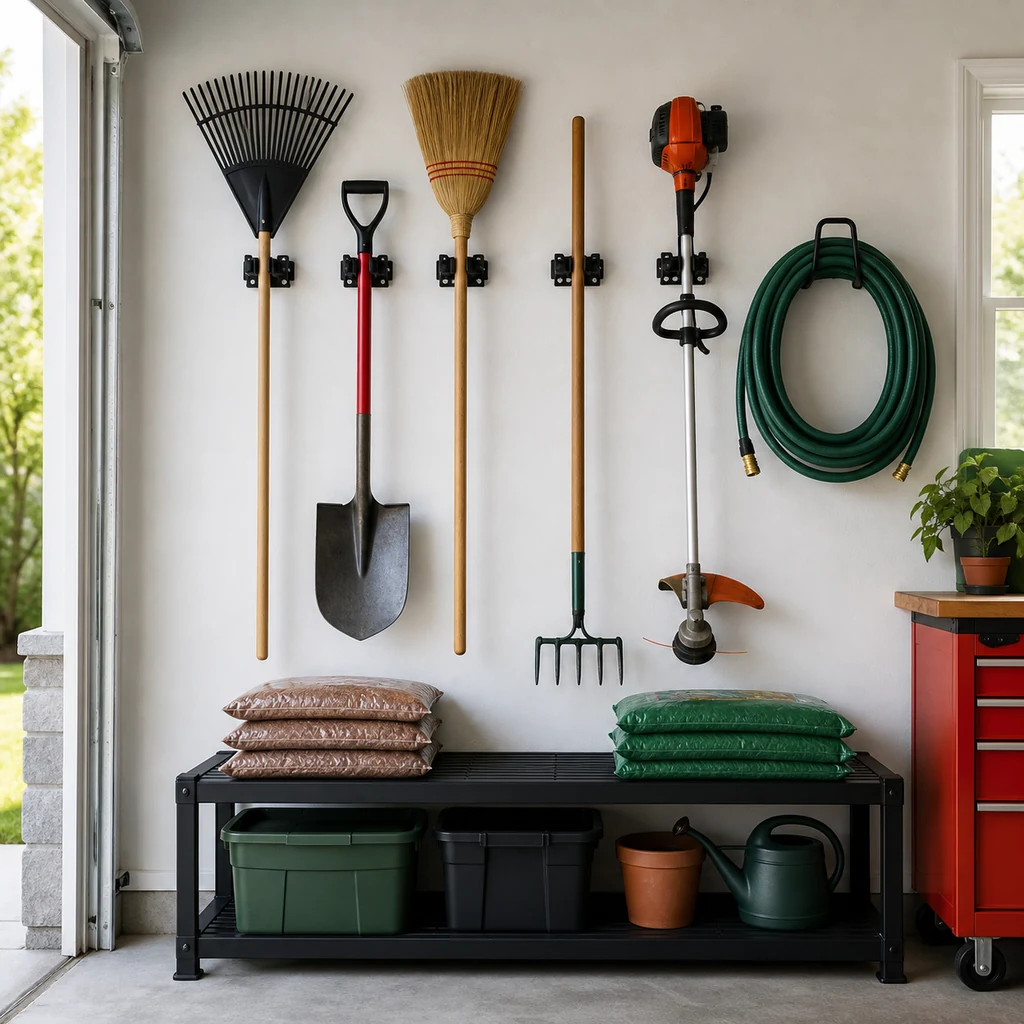
6. Store Yard Tools Upright and Visible
Long-handled tools become a tangle when they lean in a corner. Hang rakes, shovels, and brooms vertically with the heads controlled and the handles easy to grab. Place heavy soil, salt, or fertilizer low on sturdy shelving and follow every product label for storage. Avoid storing strong-smelling or hazardous products where fumes can enter the house.
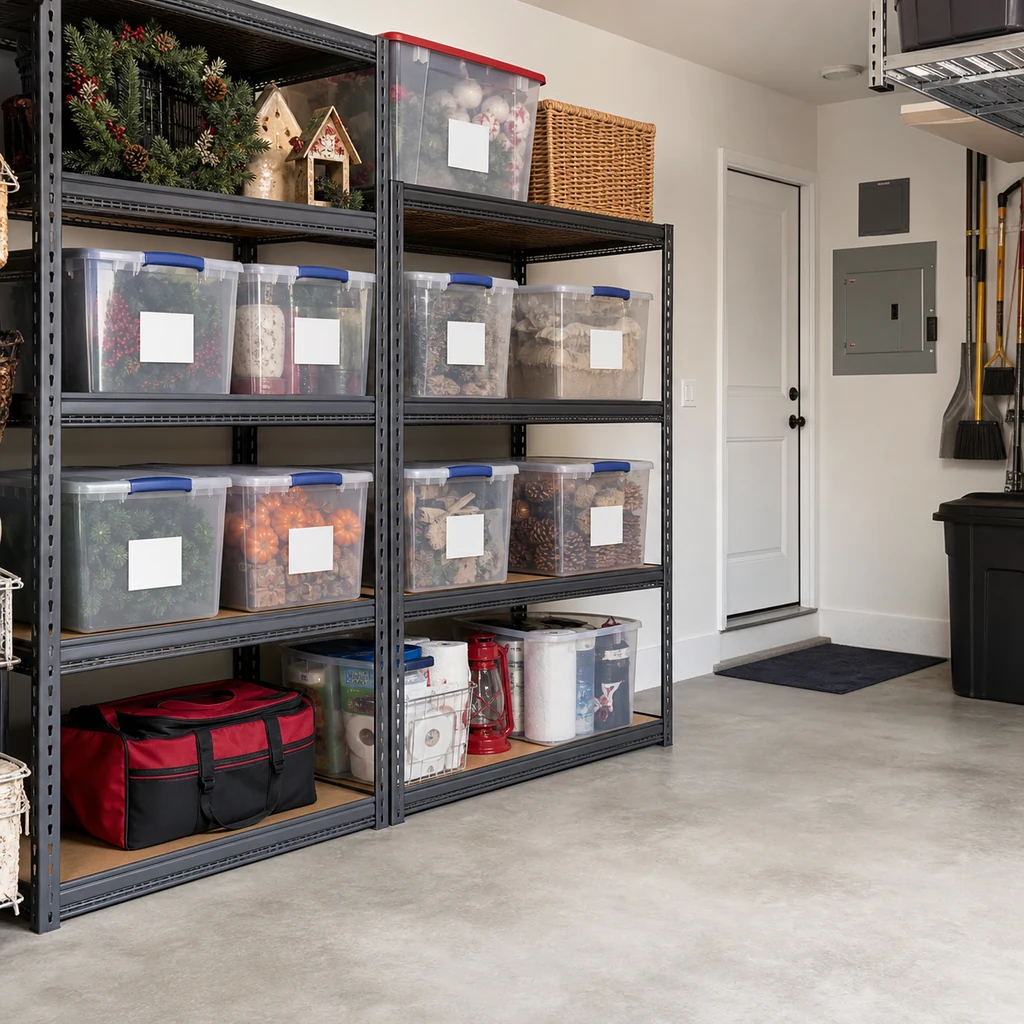
7. Sort Seasonal Bins by Access Frequency
Seasonal storage should be boring in the best way: clear, limited, and easy to pull down. Put rare-use decor higher, keep emergency supplies accessible, and group items by season instead of by random box size. Use clear bins or large blank tags, but avoid overloading a bin until it bends. A shelf that sags is telling you the system is wrong.
8. Create a Weekly Reset Station
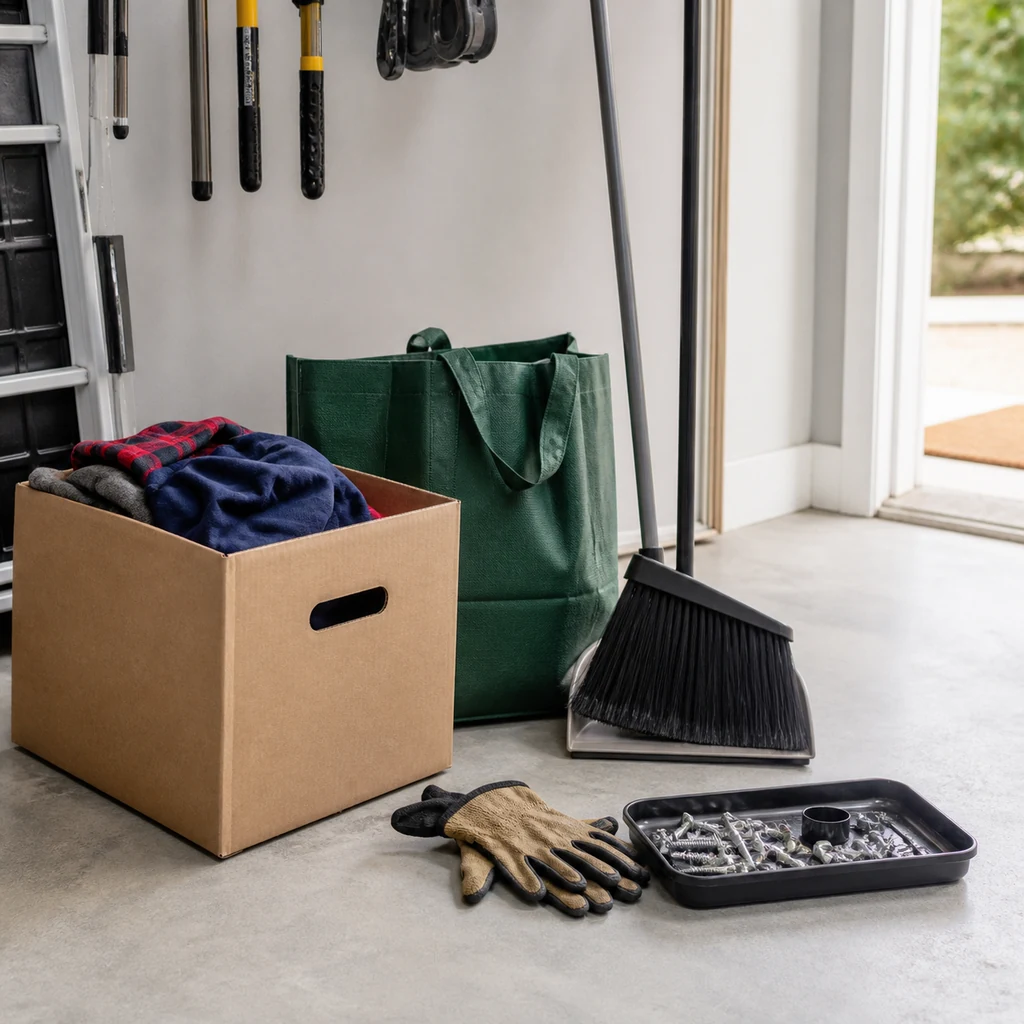
Garages fall apart when small items have no temporary home. Create one reset station with a donation box, return bag, broom, dustpan, and tray for loose hardware. Empty it once a week. This simple station catches the items that would otherwise land on the nearest shelf and slowly erase every good decision you made.
Substitutions & Variations
If you rent, use freestanding shelves, rolling carts, and tension-based bike stands instead of permanent wall systems. If the garage is narrow, prioritize one wall of shallow storage rather than deep shelves on both sides. For a shared household, assign one bin per activity and use open containers for categories that need quick cleanup.
What to Pair With These Garage Storage Solutions
Pair the system with a quarterly disposal run, a donation appointment, and a rule that the floor is not a storage zone. A small shop vacuum, broom, and work gloves near the reset station make maintenance faster. For major shelving, ceiling racks, or heavy wall systems, follow the product instructions or hire a qualified installer.
FAQ
What should not be stored in a garage?
Avoid items that require stable indoor temperatures or dry conditions. Follow labels and local rules for chemicals, fuels, batteries, and paint.
Is overhead garage storage safe?
It can be safe when installed correctly, loaded within limits, and used for light, rarely needed items.
How do I keep the garage organized long term?
Keep categories visible, empty the reset station weekly, and remove donations before they become permanent garage inventory.