
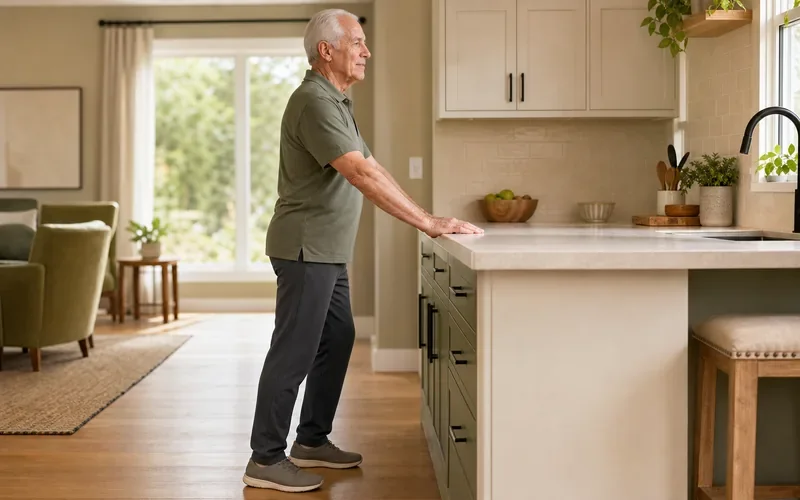
This supported heel-to-toe rocking routine gives seniors five minutes of slow ankle and weight-shift practice. A sturdy counter or chair remains within easy reach throughout.
5-Minute Heel to Toe Rocking Seniors Routine
- Total time: 5 minutes
- Position: Standing with support
- Equipment: Sturdy counter or heavy chair
- Intensity: Gentle and controlled
- Footwear: Supportive nonslip shoes
No single drill prevents every fall. This is general exercise information, not treatment for dizziness, neuropathy, stroke effects, or a diagnosed balance disorder. Use prescribed mobility aids.
Set Up Safely
- Clear rugs, cords, and pets from the area.
- Stand beside a fixed counter when possible.
- Keep both hands close to support.
- Place feet hip-width apart.
- Ask a helper to stay nearby if needed.
The Five-Minute Rocking Routine
- Ankle warm-up, 1 minute: Hold support. Lift both heels slightly, lower, then lift the toes. Complete ten slow cycles.
- Forward-back rocking, 1 minute: Shift toward the balls of the feet without lifting heels, then toward the heels without leaning backward. Repeat ten times.
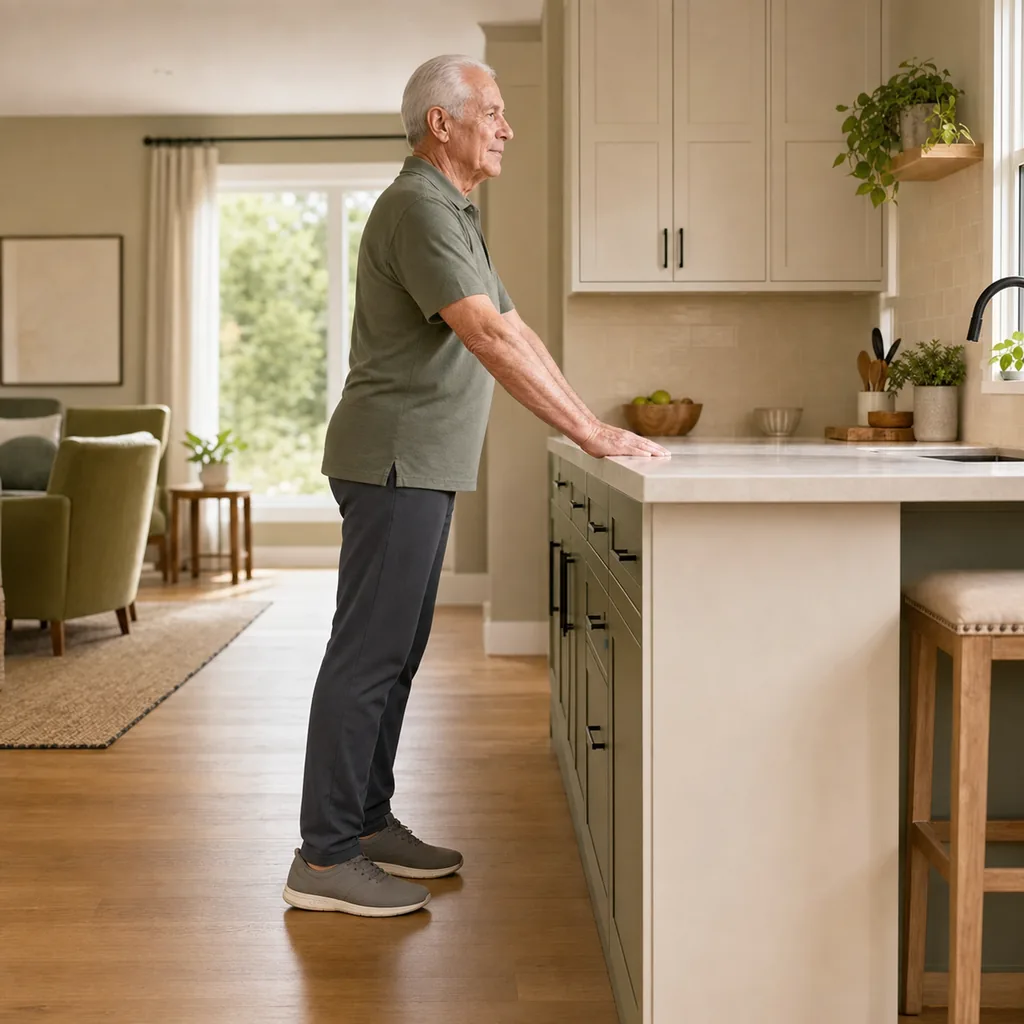
Forward-back rocking. - Heel raises, 1 minute: Rise onto both forefeet for 2 seconds, lower slowly, and complete ten repetitions.
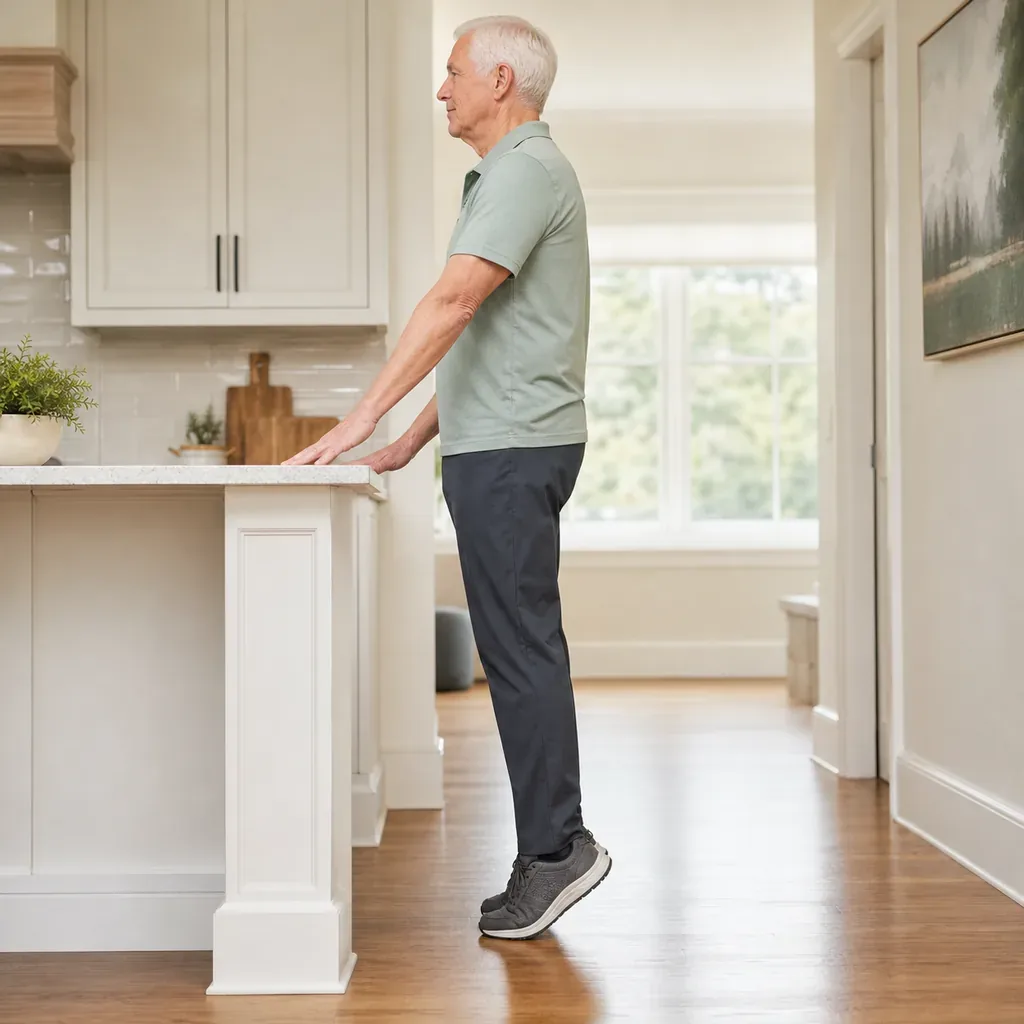
Supported heel raise. - Toe raises, 1 minute: Keep heels down, lift the forefeet slightly, pause, and lower for ten controlled repetitions.
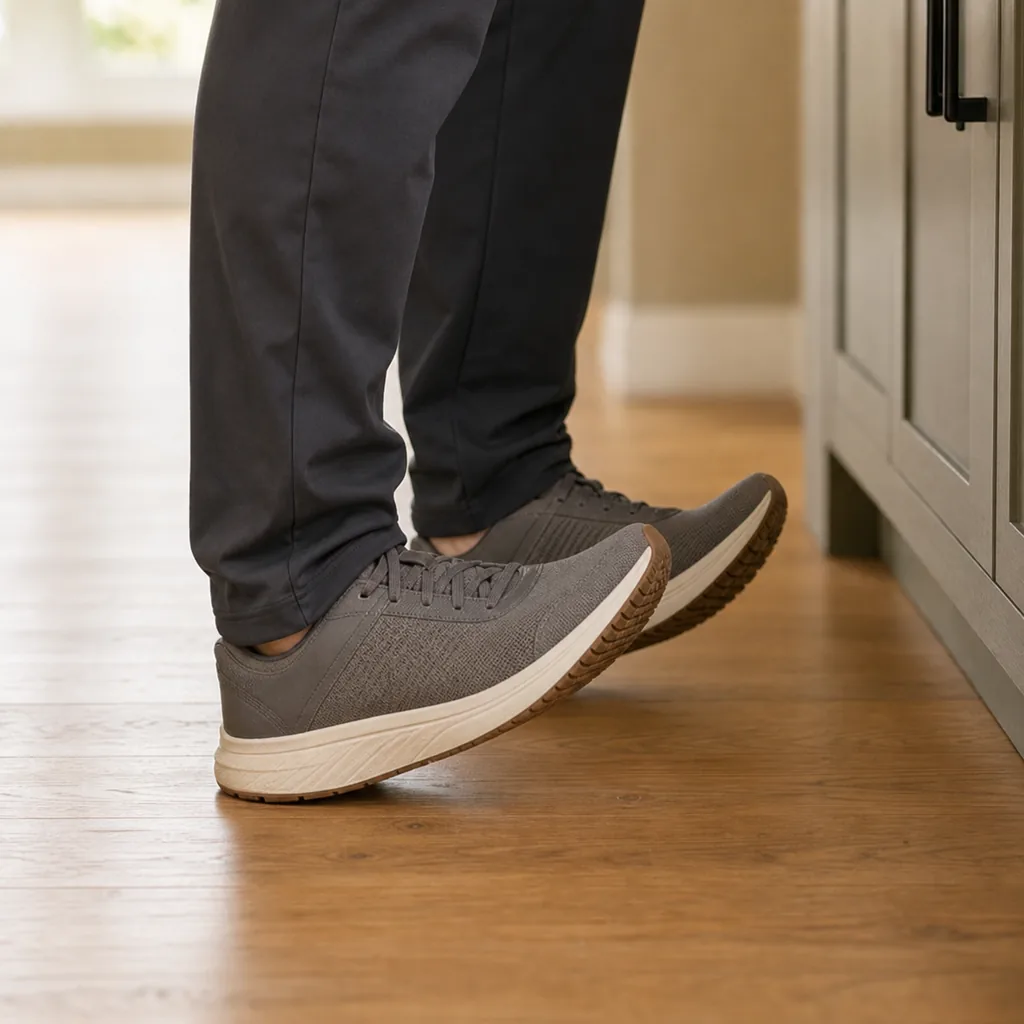
Supported toe raise. - Centered finish, 1 minute: Stand evenly, soften the knees, and complete five small forward-back shifts followed by three breaths.
Form Cues and Modifications
- Keep the body tall rather than hinging.
- Use both hands whenever unsteady.
- Make the shift smaller before releasing support.
- Keep knees soft, not locked.
- Stop before calf fatigue changes control.
Build a broader routine with our standing balance exercises, supported hip-hinge practice, or seated foot arch exercises.
Progress Without Losing Safety
First reduce hand pressure while keeping fingertips on the counter. Do not close the eyes, stand on a cushion, or remove support unless a qualified professional has approved that progression.
The National Institute on Aging recommends slow, mindful balance practice with a sturdy chair, person, or wall nearby. Review its older-adult exercise guidance.
Safety Checklist
- Support cannot slide or tip.
- The floor is dry and uncluttered.
- Shoes grip the surface.
- No dizziness or blurred vision appears.
- Movement remains slow and symmetrical.
Stop for chest pain, faintness, sudden weakness, new numbness, or severe shortness of breath. Seek medical advice after a fall or when dizziness, unsteadiness, or foot pain is new or worsening.
What This Drill Practices
Rocking shifts pressure gradually across the foot while the ankles control a small movement. It is not a test and should never require letting go of support.
Improvement may look like smoother transitions, lighter hand pressure, or less effort. Faster repetitions and a larger sway are not necessary signs of progress.
- Keep the head level.
- Pause fully at the center.
- Rest between minutes when needed.
Frequently Asked Questions
Should the toes leave the floor?
Only slightly during the toe-raise minute. During weight shifts, keep the whole foot in contact with the floor.
How often can seniors practice?
Begin two or three days weekly if comfortable. A physical therapist can provide an individualized frequency and support level.