

These morning bed stretches for sciatica offer five minutes of gentle, symptom-guided movement before standing. No single stretch suits every cause of leg pain.
5-Minute Morning Bed Stretches Sciatica Routine
- Total time: 5 minutes
- Position: Lying on a firm bed
- Equipment: Pillow and optional towel
- Intensity: Gentle
- Goal: Comfortable movement, not a cure
Sciatica can involve nerve irritation or compression. This routine is general information and cannot diagnose the cause of pain, numbness, tingling, or weakness.
Before You Begin
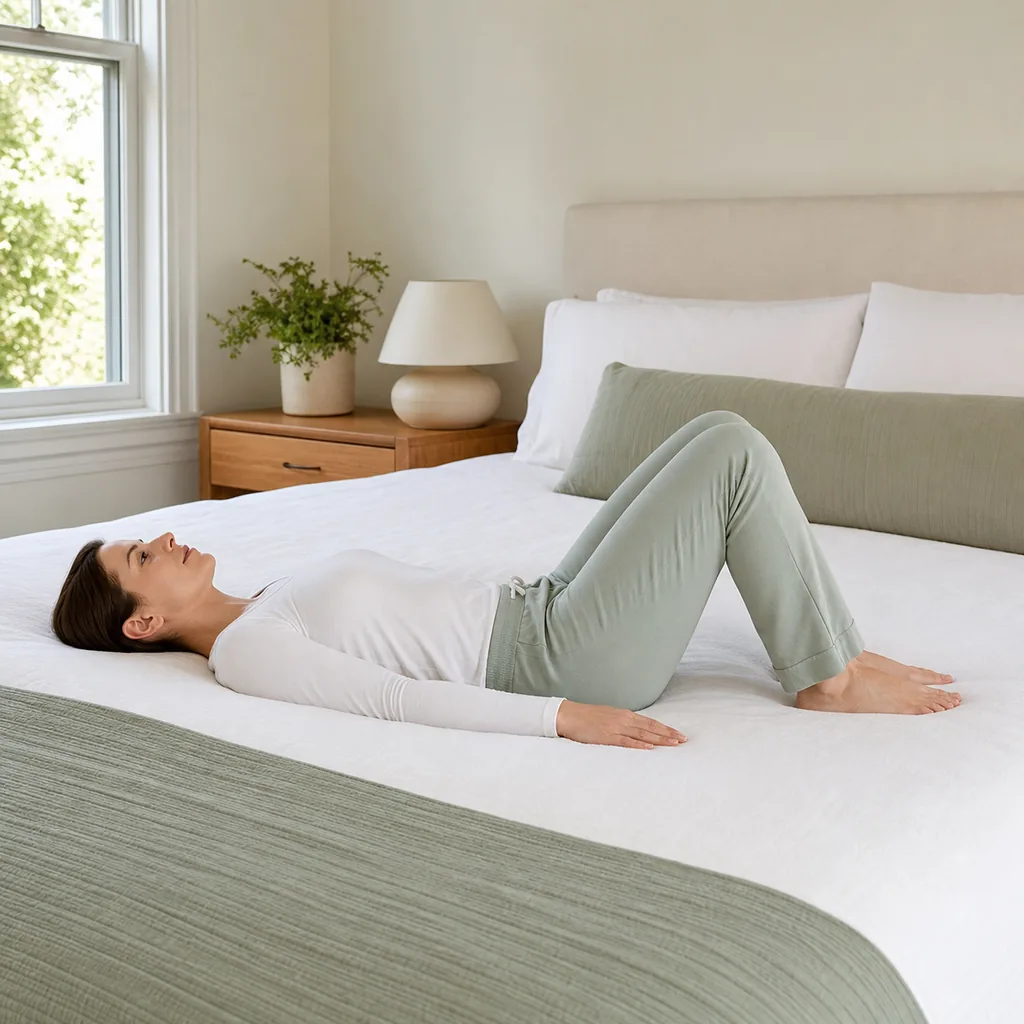
- Move slowly and keep breathing.
- Use the least painful side first.
- Keep every range small.
- Stop if symptoms travel farther down the leg.
- Roll to the side before standing.
The Five-Minute Bed Routine
- Breathing reset, 1 minute: Lie on your back with knees bent and feet supported. Take five slow breaths without pressing the spine flat.
- Pelvic rocks, 1 minute: Gently tip the pelvis forward and back through a small comfortable range for eight repetitions.
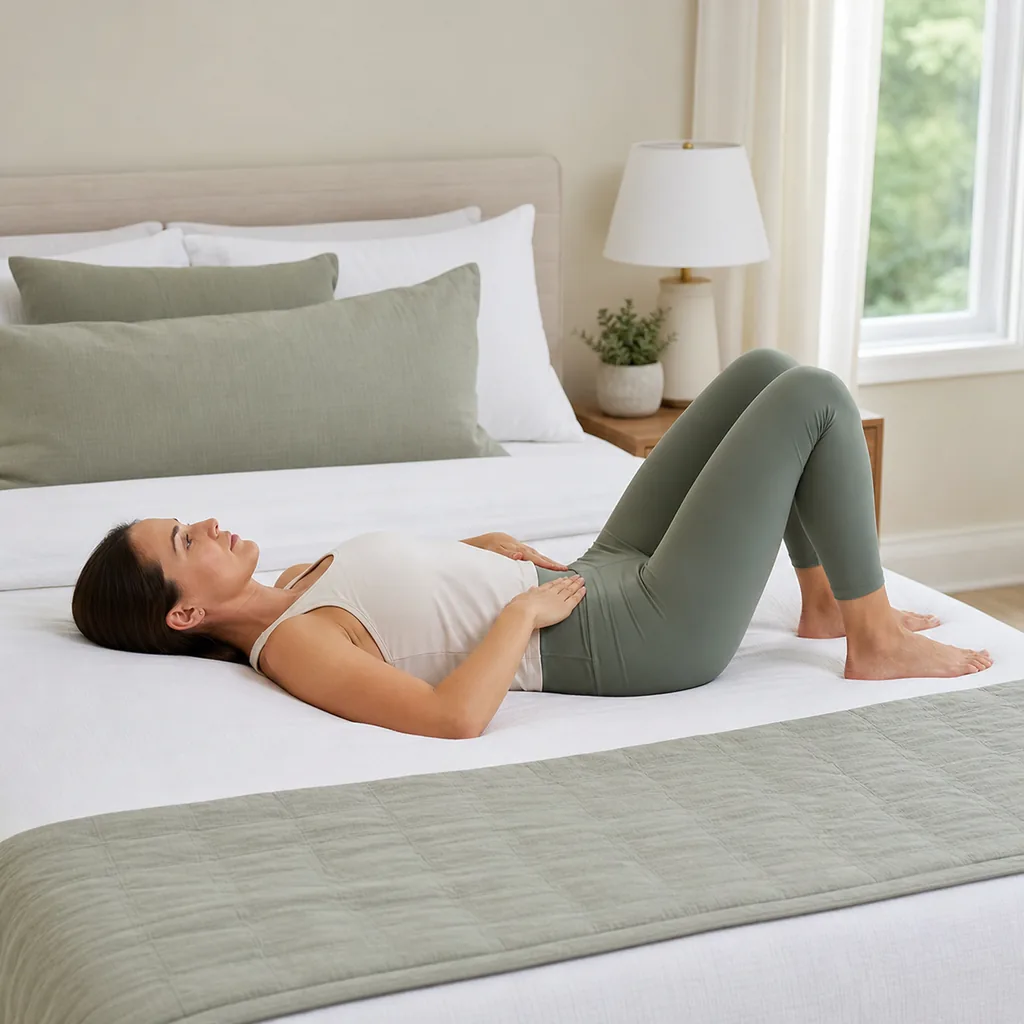
Small comfortable pelvic rock on a firm bed - Single-knee approach, 1 minute: Slide one foot closer and bring the knee slightly toward the chest. Hold behind the thigh, not over the kneecap.

Gentle single-knee approach with thigh support - Supported leg movement, 1 minute: With the thigh supported, slowly bend and straighten the knee five times without forcing the ankle.
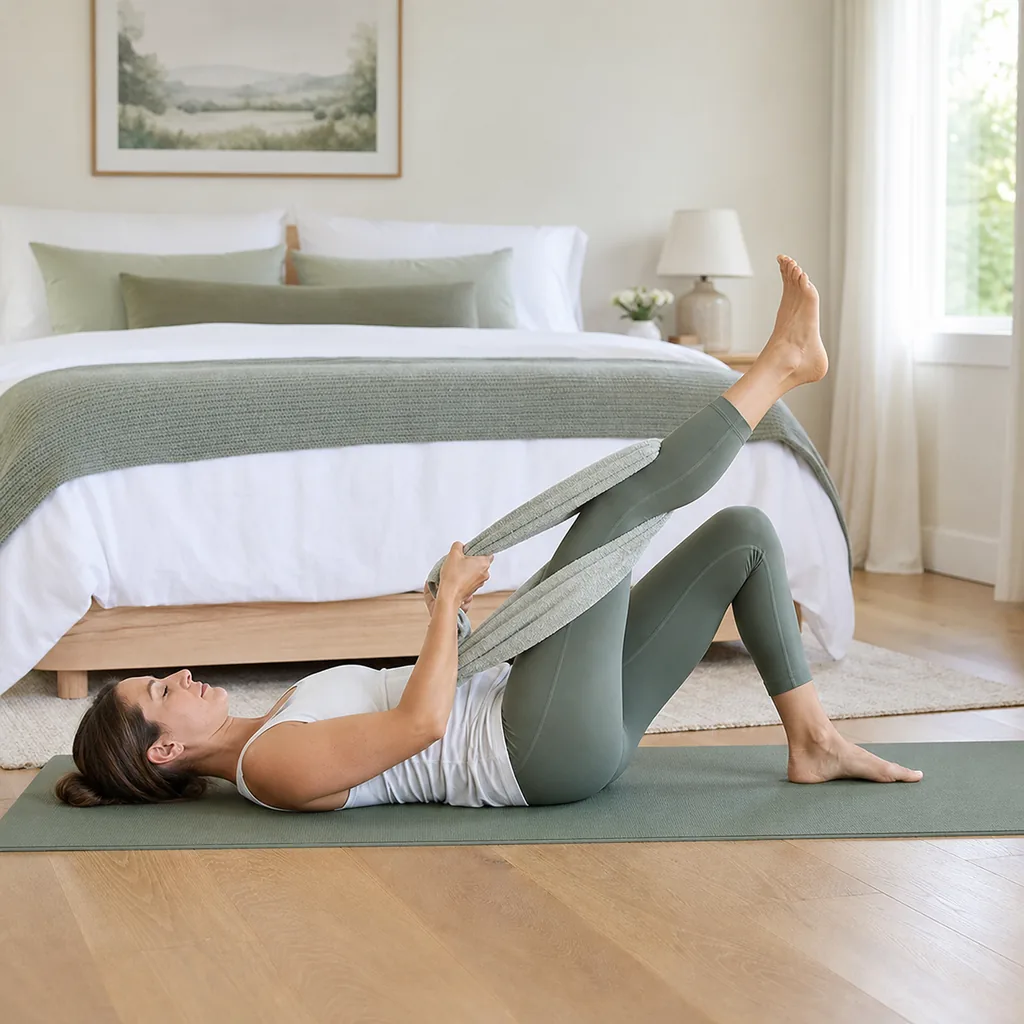
Supported bend-and-straighten leg movement - Side-roll finish, 1 minute: Return both feet, roll onto the easier side, pause, then use the arms to sit up.
Symptom Rules
- Mild back movement is acceptable.
- Leg pain should not spread downward.
- Numbness or weakness must not increase.
- No position is forced or bounced.
- Symptoms should settle after stopping.
For other gentle options, see our bed yoga for back stiffness, bed yoga for hip flexors, or seated pelvic tilts.
Medical Safety
NHS guidance encourages gentle activity but advises professional review when symptoms worsen or disrupt normal activity. Review its sciatica guidance.
Seek emergency care for numbness around the genitals or anus, difficulty controlling bladder or bowel function, severe or worsening weakness in both legs, or symptoms on both sides.
Stop this routine for sharp pain, rapidly increasing numbness, new weakness, dizziness, or pain that travels farther down the leg. Ask a clinician which direction of movement suits your symptoms.
Morning Transition Tips
- Sit at the bedside before standing.
- Use stable footwear.
- Avoid sudden toe-touch stretching.
- Take a short comfortable walk if advised.
A soft mattress may not provide enough support. Do not perform the routine near the edge where rolling could cause a fall.
Adjusting the Positions
Place a pillow under the knees if lying flat increases symptoms. During the knee approach, hold behind the thigh and keep the opposite foot supported.
If straightening the knee increases leg pain, make the movement smaller or remain with simple breathing and pelvic rocks. More range is not automatically better.
- Pause between positions.
- Change only one movement at a time.
- Keep morning transitions unhurried.
Frequently Asked Questions
Should I stretch through leg pain?
No. Reduce the range or stop when leg symptoms increase or travel farther downward.
Will this cure sciatica?
No. Sciatica has different causes and may require individualized assessment and treatment.