
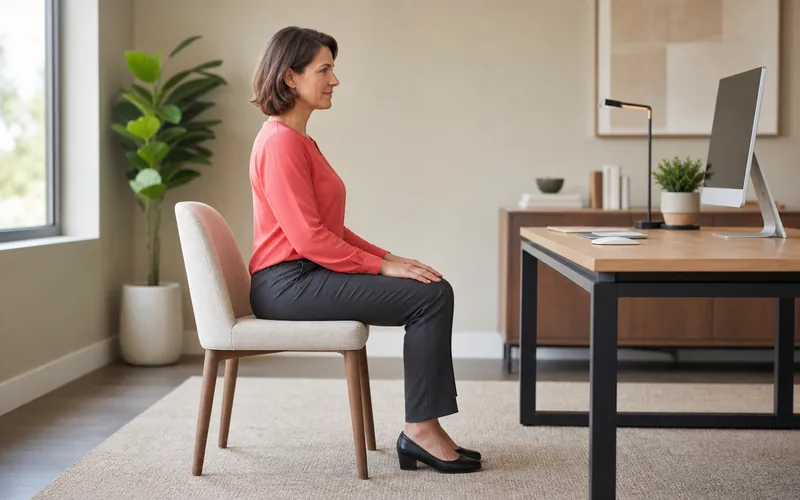
This seated pelvic tilt desk routine creates a five-minute movement break for office workers. Small forward and backward pelvic rolls explore comfortable lumbar motion without leaving the chair.
5-Minute Seated Pelvic Tilt Desk Routine
- Total time: 5 minutes
- Position: Seated near the chair edge
- Equipment: Stable chair without wheels
- Intensity: Gentle, pain-free motion
- Goal: Mobility break, not treatment
This general routine cannot diagnose or treat back, pelvic, hip, or nerve conditions. Avoid it after recent surgery or injury unless your clinician has approved seated spinal movement.
Set Up at Your Desk
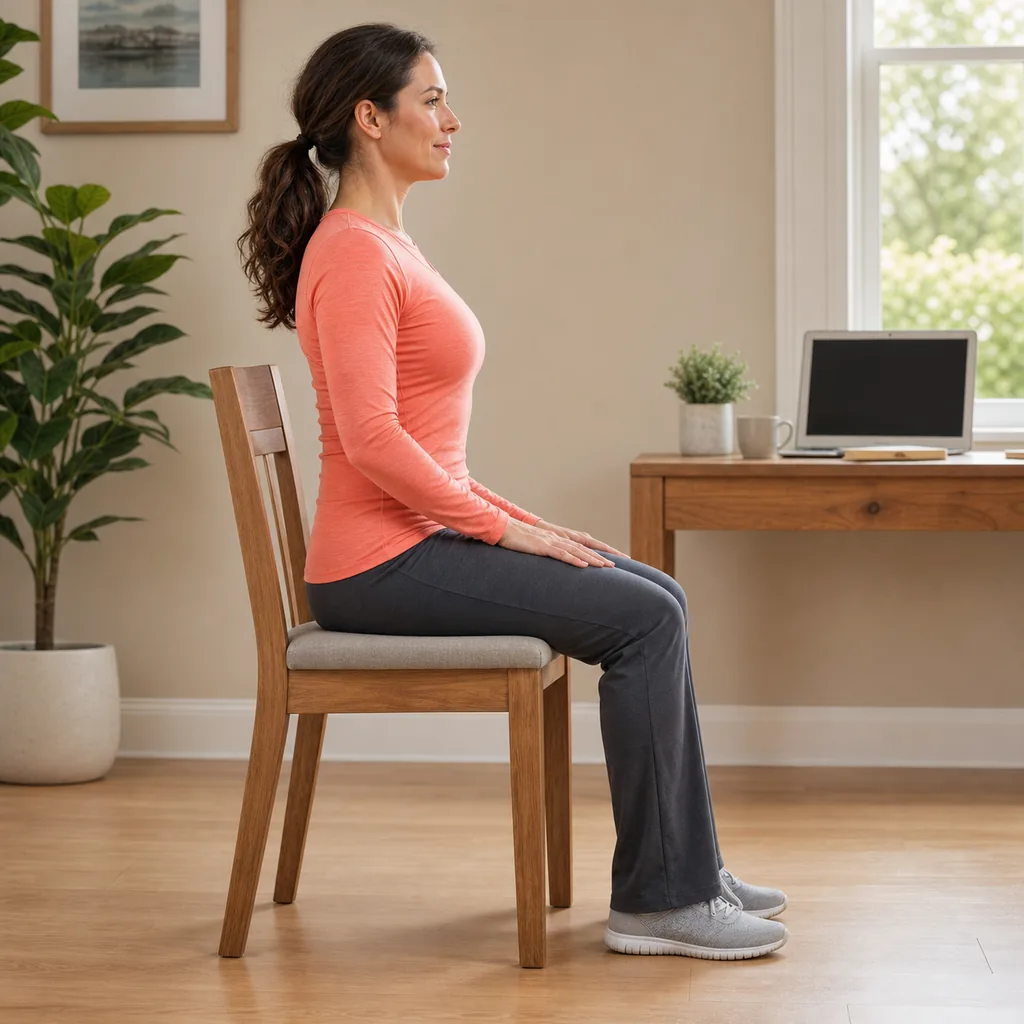
- Move away from drawers and sharp edges.
- Place both feet fully on the floor.
- Keep knees near 90 degrees.
- Sit evenly on both sitting bones.
- Rest hands lightly on the thighs.
The Five-Minute Pelvic Tilt Routine
- Breathing reset, 1 minute: Sit tall without stiffening. Take six relaxed breaths and let the shoulders soften.
- Backward tilts, 1 minute: Gently tuck the tailbone and let the lower back round slightly. Return to neutral for ten repetitions.
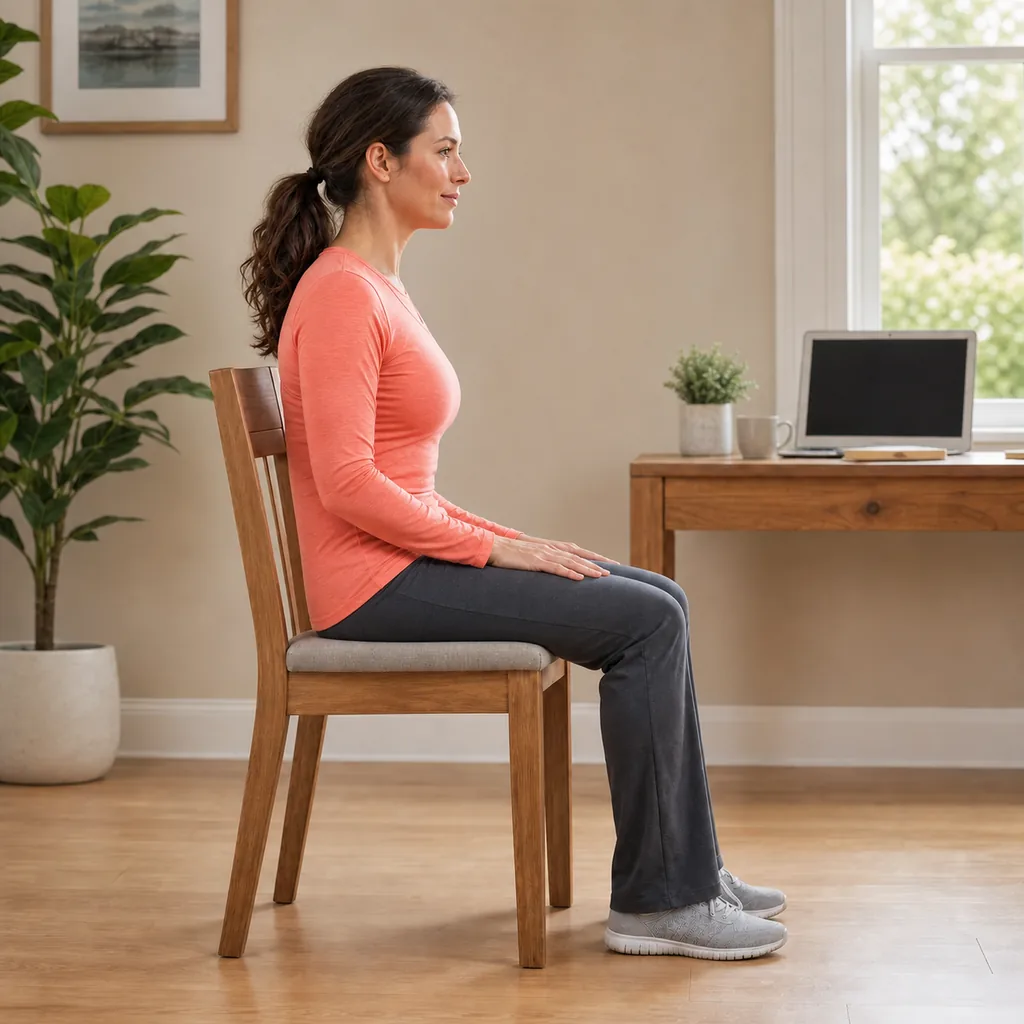
Posterior tilt: Gently tuck the tailbone and allow the lower back to flatten slightly. - Forward tilts, 1 minute: Roll toward the front of the sitting bones, creating only a small comfortable arch. Return for ten repetitions.
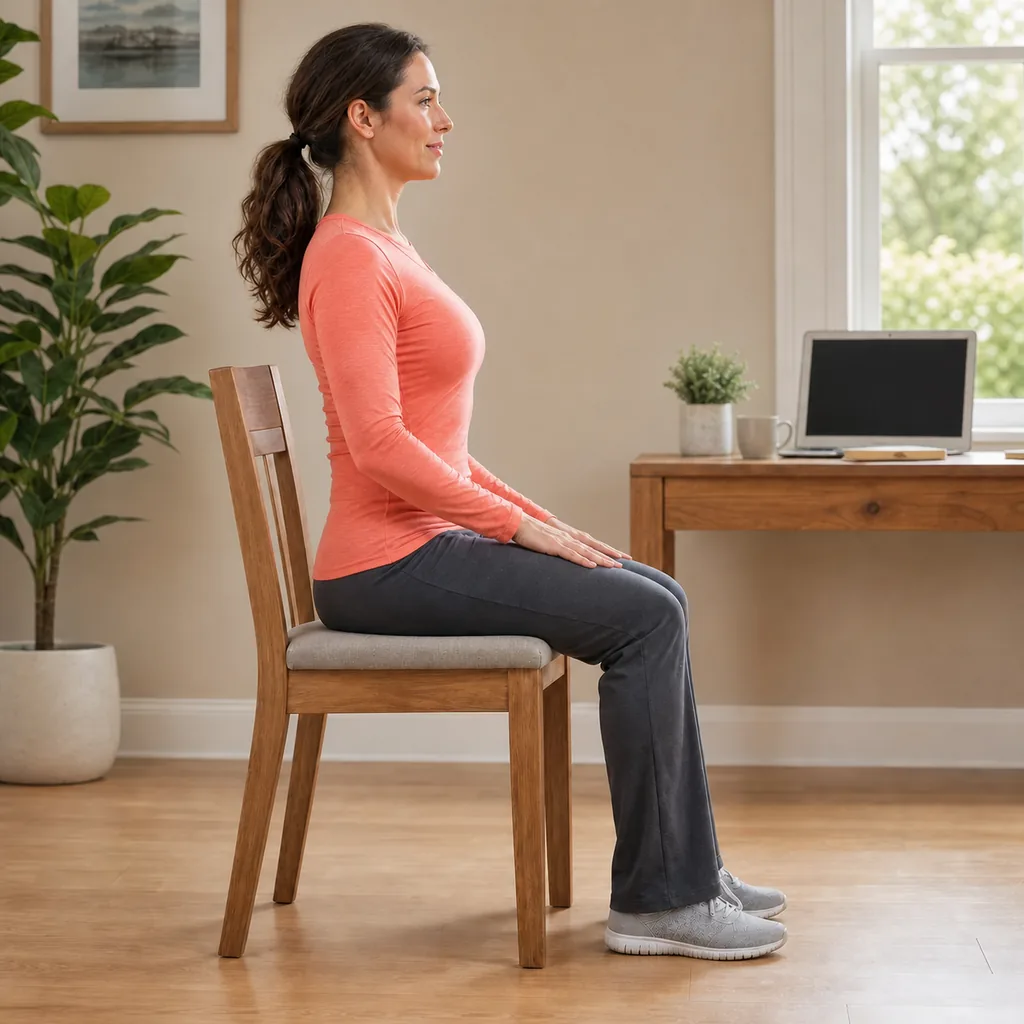
Anterior tilt: Roll toward the front of the sitting bones with a small comfortable lumbar curve. - Full rocking, 1 minute: Move slowly from a small backward tilt through neutral into a small forward tilt. Complete eight cycles.
- Neutral finish, 1 minute: Settle midway between both positions. Complete five breaths, then stand or walk if comfortable.
Form Cues and Modifications
- Lead with the pelvis, not the shoulders.
- Keep both feet grounded.
- Use a smaller range if one direction pinches.
- Do not force an exaggerated arch.
- Stop before fatigue creates slumping.
Continue with our seated spinal twist, bed yoga for lower-back stiffness, or five-minute desk stretches.
Clinical Form Reference
South Tees Hospitals describes slowly rolling the pelvis backward, returning to the start, and then rolling forward in its seated pelvic tilt guidance.
Follow individualized physiotherapy instructions when they differ. A short movement break also cannot correct workstation height, chair fit, or prolonged uninterrupted sitting.
Safety Checklist
- The chair remains stable.
- Movement stays small and smooth.
- Breathing continues normally.
- No pain travels down a leg.
- Symptoms settle in neutral.
Stop for sharp pain, new numbness, weakness, saddle-area sensory change, or loss of bladder or bowel control. Seek urgent medical care for serious neurological symptoms or pain following major trauma.
Using Neutral as a Reference
Neutral is the comfortable midpoint between the small forward and backward rolls, not a single perfect posture. It may feel different after walking or changing chairs.
Use the final minute to notice this midpoint without holding the muscles rigidly. Then vary position during the workday rather than trying to remain fixed.
- Release the jaw and shoulders.
- Keep weight even through both feet.
- Stand gradually after the routine.
Frequently Asked Questions
Should I brace my stomach hard?
No. Keep breathing and use only enough gentle abdominal support to control the motion without rigidity.
Can I perform this in a rolling chair?
A fixed chair is safer. If unavailable, lock the wheels securely and confirm the chair cannot move before beginning.
How the Movement Should Feel
A seated pelvic tilt is a small, controlled movement. It should feel like your pelvis is gently rocking forward and backward on the chair, not like your upper body is forcing a big stretch. The goal is to wake up the lower back, hips, and deep core after long periods of sitting.
Start with both feet flat on the floor. Sit close enough to the front of the chair that your spine can move freely, but keep enough support under your thighs to feel stable. Place your hands on your hips or lower ribs so you can feel the motion rather than guessing.
Simple Form Cues for Office Workers
On the forward tilt, let your lower back gently arch and your sitting bones point slightly behind you. On the backward tilt, draw your lower belly in lightly and let your tailbone tuck under. Keep your shoulders relaxed and avoid holding your breath.
The movement should stay pain-free. A mild sense of stiffness easing is normal, but sharp pain, numbness, tingling, or symptoms traveling down the leg are signs to stop and seek professional guidance.
Desk-Friendly Routine
Use this routine once or twice during a long workday:
- 30 seconds of slow seated pelvic tilts
- 20 seconds of easy breathing with hands on the ribs
- 30 seconds of pelvic tilts with a slightly smaller range
- 20 seconds sitting tall without bracing
- 30 seconds of gentle side-to-side weight shifts
This sequence keeps the exercise short enough for a work break while adding enough variety to reduce stiffness from one repeated posture.
Common Mistakes
Moving too fast: slow down until each tilt feels smooth. Speed often hides tension in the ribs, neck, or shoulders.
Using the chest instead of the pelvis: keep the movement low. Your chest may move a little, but the action should begin from the hips and lower spine.
Forcing a big arch: a small range is enough. Bigger is not automatically better, especially if your back is already irritated from sitting.
When to Use This Exercise
Seated pelvic tilts work well before a walk, after a long meeting, or before a short stretching routine. They are not a cure for back pain, but they can be a helpful mobility reset when your body has been still for too long.
If you have a recent injury, surgery, pregnancy-related pain, or a diagnosed spine condition, ask a qualified clinician whether this movement is appropriate for you.