
This quiet five-move break pairs comfortable breathing with small seated motions, helping you pause without needing a mat, workout clothes, or floor space.
Desk Yoga for Reducing Stress: A 5-Minute Routine
Choose a solid chair without wheels and place both feet flat. Move away from the desk edge, silence notifications, and use a range that feels calm rather than demanding.
Set Up Your Workspace
Lock away rolling chairs and leave enough room for both arms to move freely. Remove hot drinks, sharp objects, and unstable equipment from the immediate exercise area.
Keep your screen at a comfortable height when you finish. A short movement break works best alongside varied positions, regular walking, hydration, and manageable work pacing throughout the working day.
- Total time: 5 minutes
- Equipment: stable armless chair
- Format: five one-minute practices
- Effort: gentle
The Five-Minute Desk Yoga Sequence
-
Supported Seated Breathing — 1 Minute
Sit upright with shoulders relaxed. Place one hand on the chest and one on the abdomen. Let each inhale and exhale remain smooth and unforced.
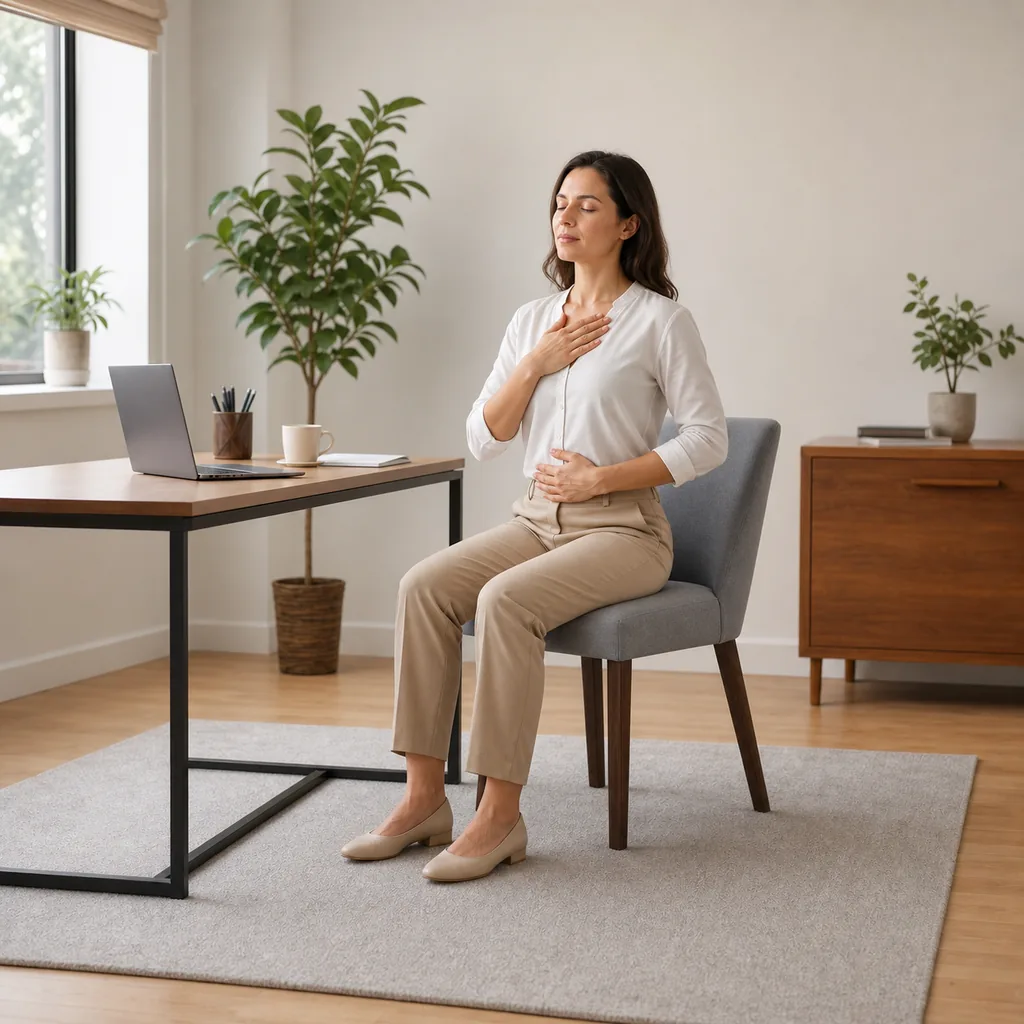
Supported seated breathing. -
Seated Side Stretch — 1 Minute
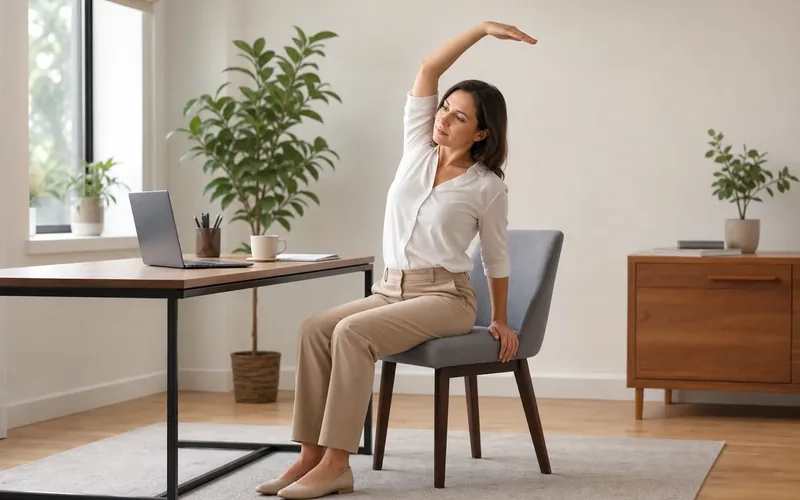
Hold the chair seat with one hand and reach the other arm overhead. Lean slightly sideways for 20 seconds, return slowly, and switch sides.
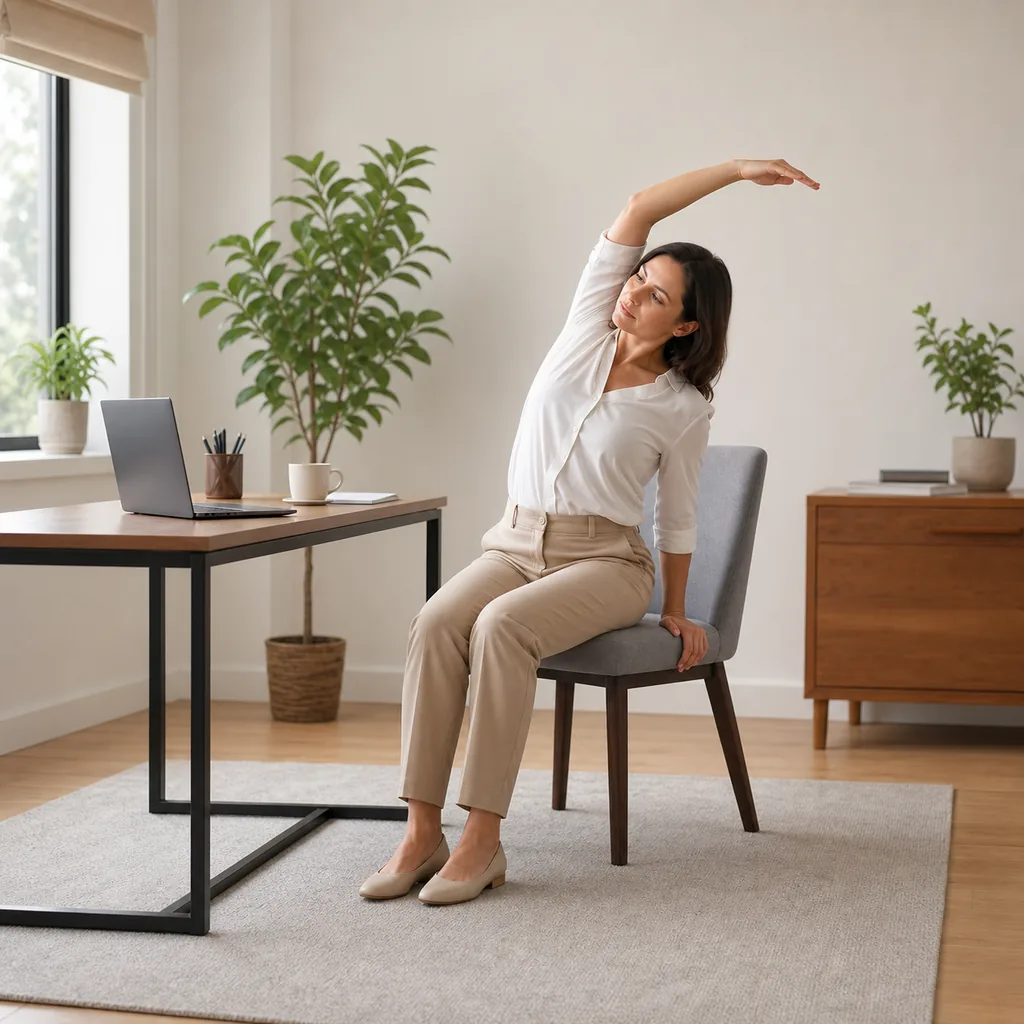
Supported seated side stretch. -
Seated Cat-Cow — 1 Minute
Rest hands on the thighs. Inhale while gently lifting the chest; exhale while softly rounding the upper back. Complete six slow, comfortable cycles.
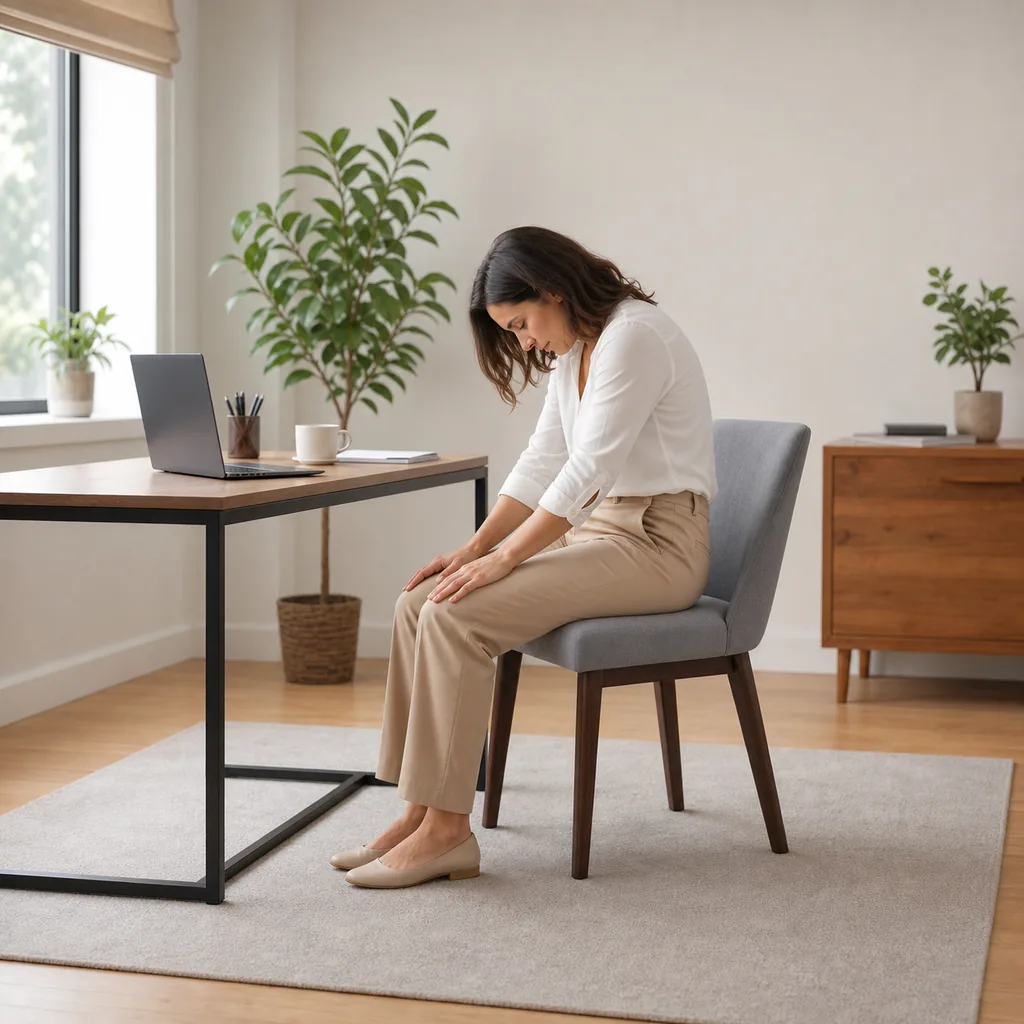
Rounded seated cat-cow phase. -
Seated Spinal Twist — 1 Minute
Keep both feet grounded and hips facing forward. Rotate the rib cage gently, hold for 20 seconds, return to center, and repeat opposite.
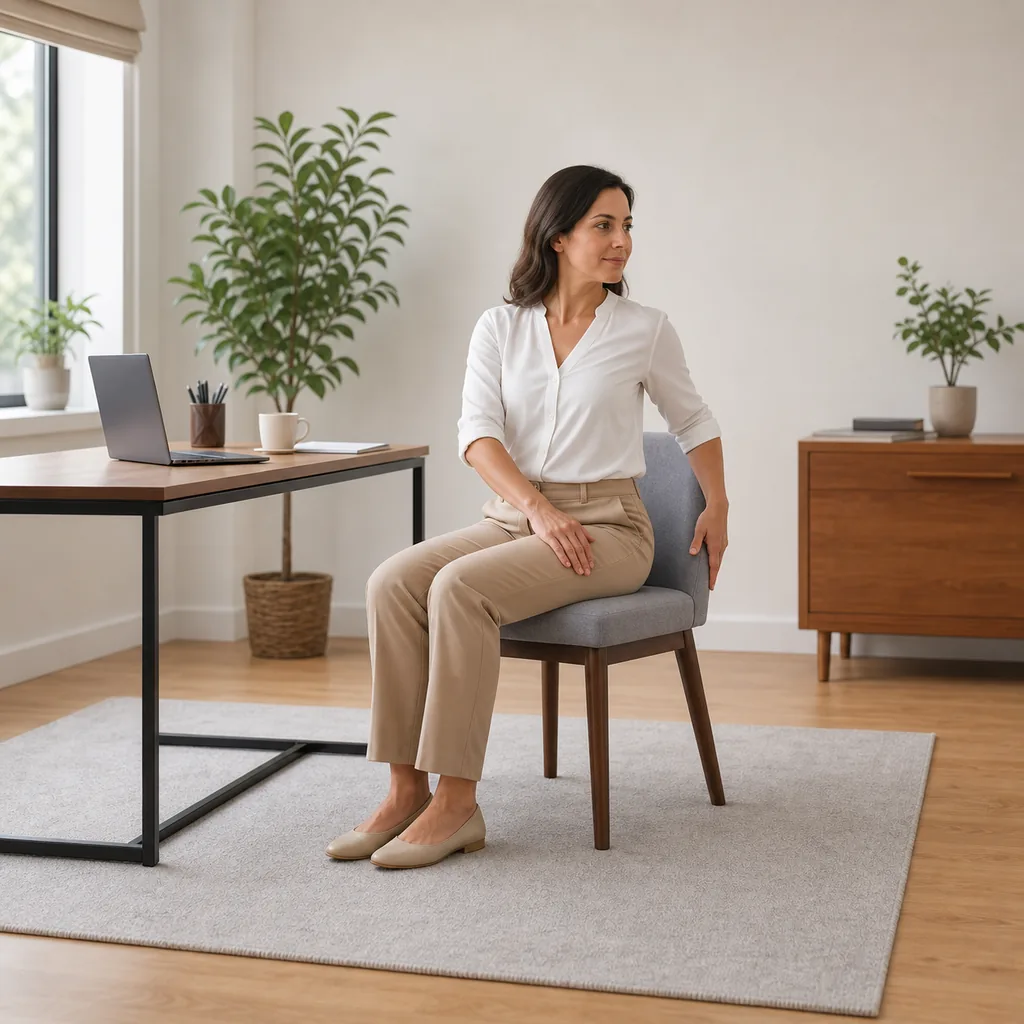
Gentle seated spinal twist. -
Supported Forward Fold — 1 Minute
Widen the feet slightly and hinge forward from the hips. Rest forearms on the thighs, relax the neck, then rise slowly after 30 seconds.
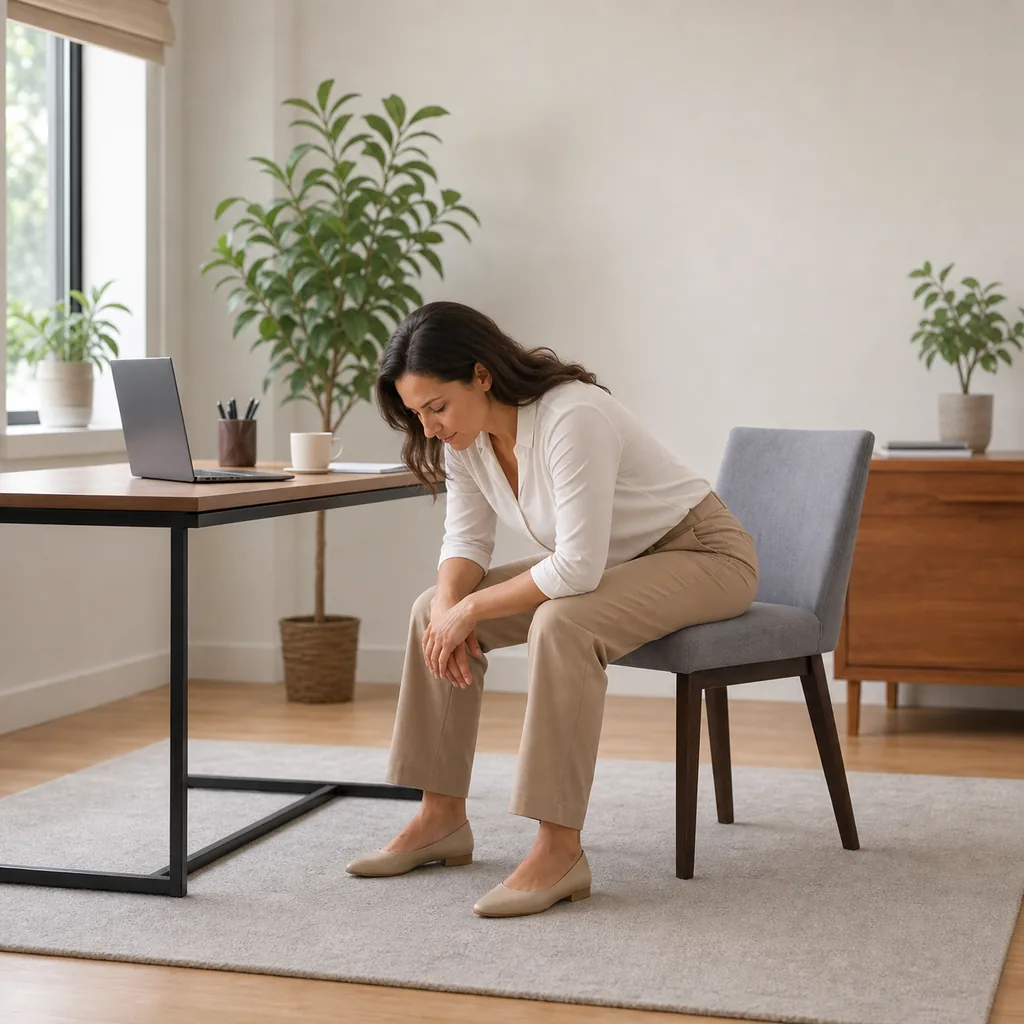
Supported seated forward fold.
Breathing and Stress Guidance
The NHS breathing guide recommends letting the breath travel into the belly only as deeply as comfortable, without forcing it. Skip counting if it makes you tense.
- Keep the jaw, hands, and shoulders soft.
- Never hold your breath during a stretch.
- Use a smaller range when returning after inactivity.
- Resume work gradually instead of standing abruptly.
Safety and Workday Options
Stop for sharp pain, dizziness, numbness, chest pain, or unusual shortness of breath. Skip forward folding if it worsens dizziness, reflux, or eye-pressure symptoms. Ask a clinician about movements affected by surgery, pregnancy, or injury.
For related breaks, try a seated pelvic tilt routine, these wall stretches for rounded shoulders, or a resistance-band posture reset.
Frequently Asked Questions
When should I use this break?
Try it after a long sitting block or before a demanding task. Regular brief breaks may feel more manageable than waiting until tension becomes distracting.
Does desk yoga treat anxiety?
No. Gentle movement may support a calming routine, but it does not replace professional mental-health care. Seek qualified help when stress or anxiety is persistent or disruptive.
This routine provides general wellness information and is not medical or mental-health treatment.