
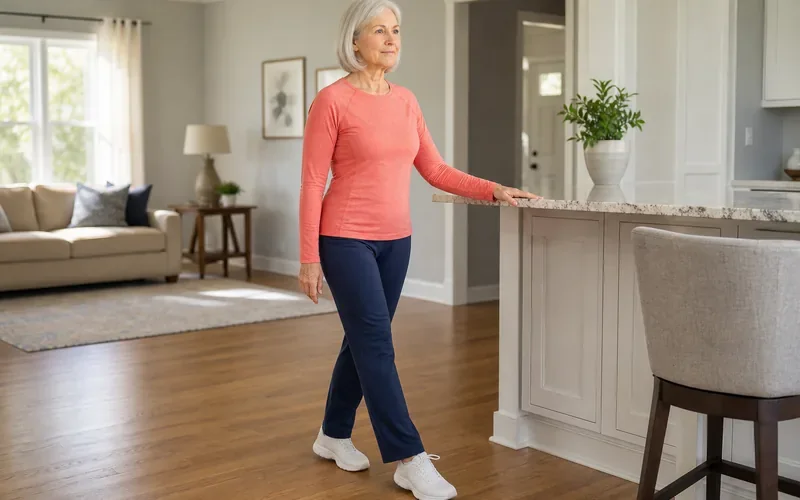
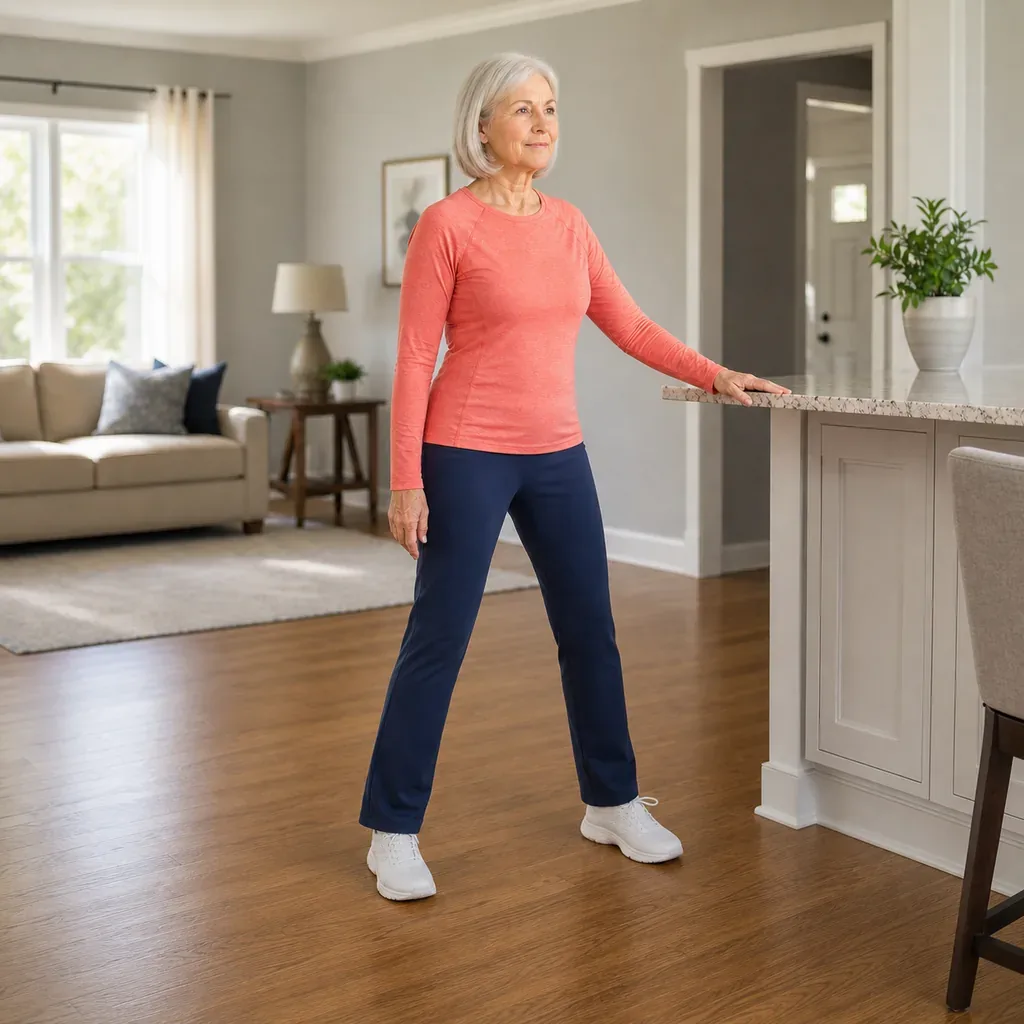
This supported 10-minute routine practices weight shifting, heel control, narrow stance, single-leg stability, and side stepping beside a sturdy counter.
Standing Balance Exercises for Seniors: 10-Minute Routine
Use a fixed counter that can support your hands. Clear the floor, wear supportive shoes, and keep a sturdy chair nearby for rest.
- Total time: 10 minutes
- Equipment: Fixed counter and sturdy chair
- Format: Five movements, 2 minutes each
- Effort: Light and controlled
- Support: Fingertips or both hands as needed
The 10-Minute Supported Balance Routine
1. Side-to-side weight shifts, 2 minutes
- Face the counter with feet hip-width and parallel.
- Shift weight toward the right foot for 3 seconds.
- Return to center, then shift left for 3 seconds.
- Complete 10 shifts per side and rest for the remaining time.

2. Supported heel raises, 2 minutes
- Stand tall with both hands lightly on the counter.
- Rise onto the balls of both feet for 2 seconds.
- Lower the heels for 3 seconds.
- Complete 12 repetitions, rest 20 seconds, then repeat if comfortable.
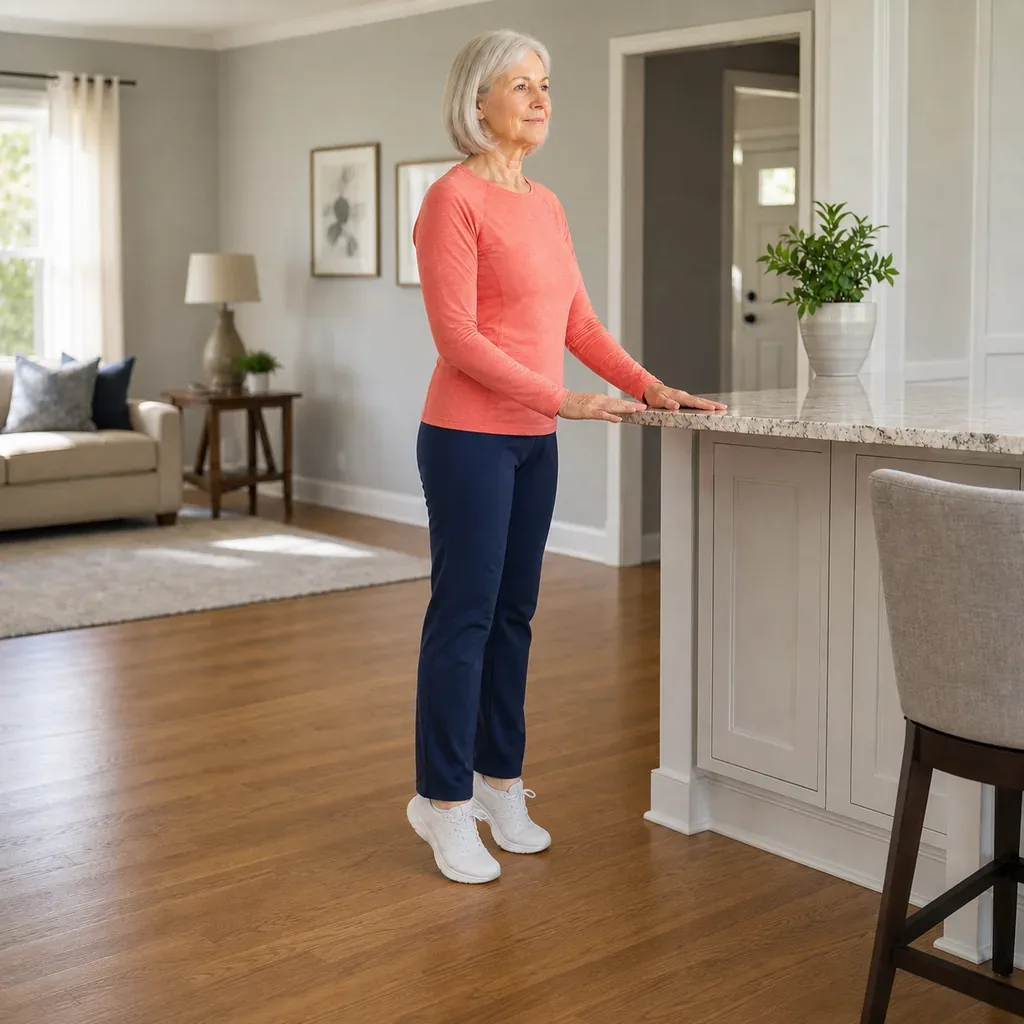
3. Supported heel-to-toe stance, 2 minutes
- Turn sideways and keep one hand on the counter.
- Place the right foot directly in front of the left, heel to toe.
- Hold for 20 seconds and return to a hip-width stance.
- Repeat with the left foot in front for 20 seconds.
- Complete two rounds per side.
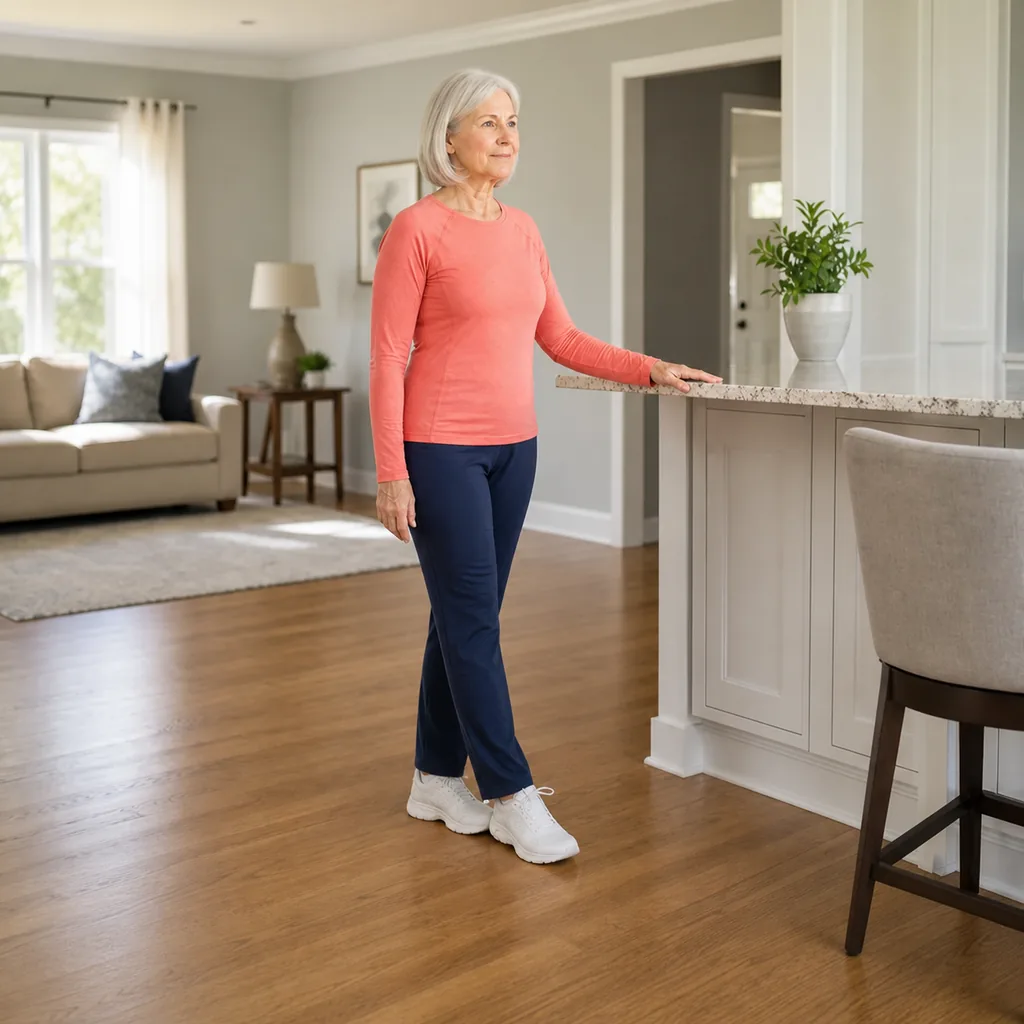
4. Supported single-leg balance, 2 minutes
- Stand side-on with the right hand on the counter.
- Lift the left foot 1 to 2 inches.
- Hold for 10 seconds, lower, and repeat 3 times.
- Change sides and complete 3 holds.
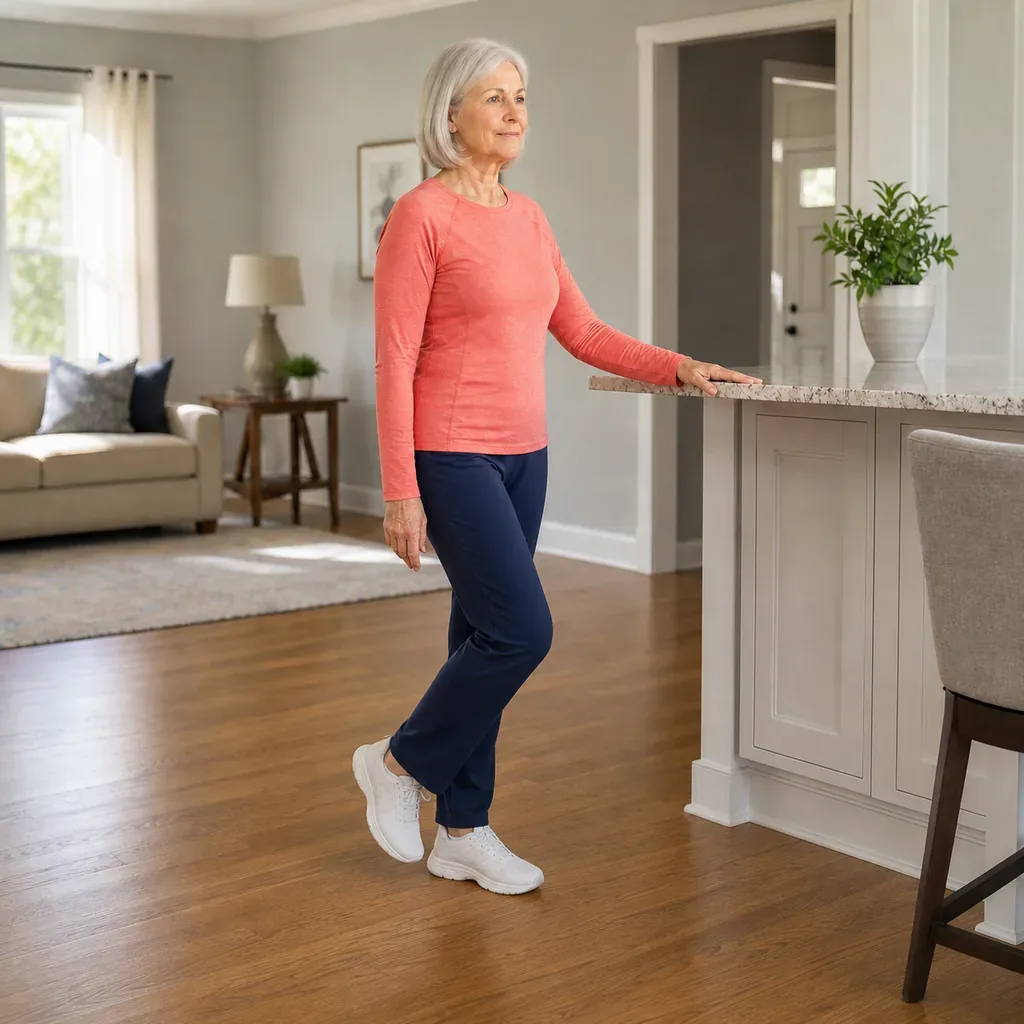
5. Supported side steps, 2 minutes
- Face the counter with fingertips touching it.
- Take 4 small steps right, keeping the feet parallel.
- Take 4 small steps left to return.
- Repeat for 60 seconds, rest 20 seconds, then complete one more round.
Safety Before You Begin
The NHS balance guide advises practicing near a stable chair or wall and building repetitions gradually.
- Stop immediately for chest pain, severe shortness of breath, dizziness, faintness, new weakness, or sudden vision changes.
- Use both hands on the counter whenever one-hand support feels uncertain.
- Have another adult nearby if you have fallen recently or feel unsteady while standing.
- Do not practice on a loose rug, wet floor, or near pets and clutter.
- This routine is general fitness information, not diagnosis, treatment, rehabilitation, or a guarantee against falls.
- New balance problems, repeated falls, or sudden dizziness require assessment from a qualified clinician.
On lower-energy days, use seated stretching, seated arm exercises, or seated core exercises.
Standing Balance Exercise FAQ
Should I let go of the counter?
No. Keep the amount of support needed for steady, controlled movement. Releasing support is not required.
What if heel-to-toe stance feels too narrow?
Place the front foot slightly forward and to the side, creating a small gap between the feet.
How often can I practice?
Practice on comfortable days, but stop and seek guidance if balance worsens or new symptoms appear.