
These five seated leg movements offer a practical ten-minute desk break for ankles, calves, knees, and hips without leaving your chair.
10-Minute Seated Leg Exercises for Office Workers
Choose a stable chair without wheels and sit away from the desk edge. Keep both feet within a comfortable range and your torso tall. Perform each movement for one minute, then repeat the entire sequence once.
- Equipment: stable chair or wall as shown
- Effort: gentle to moderate
- Rule: smooth, pain-free range
Follow the Movement Sequence
-
Seated Ankle Pumps
Place both heels on the floor and lift the toes toward the shins. Lower them, then point gently forward. Continue at an even pace while the knees stay relaxed.
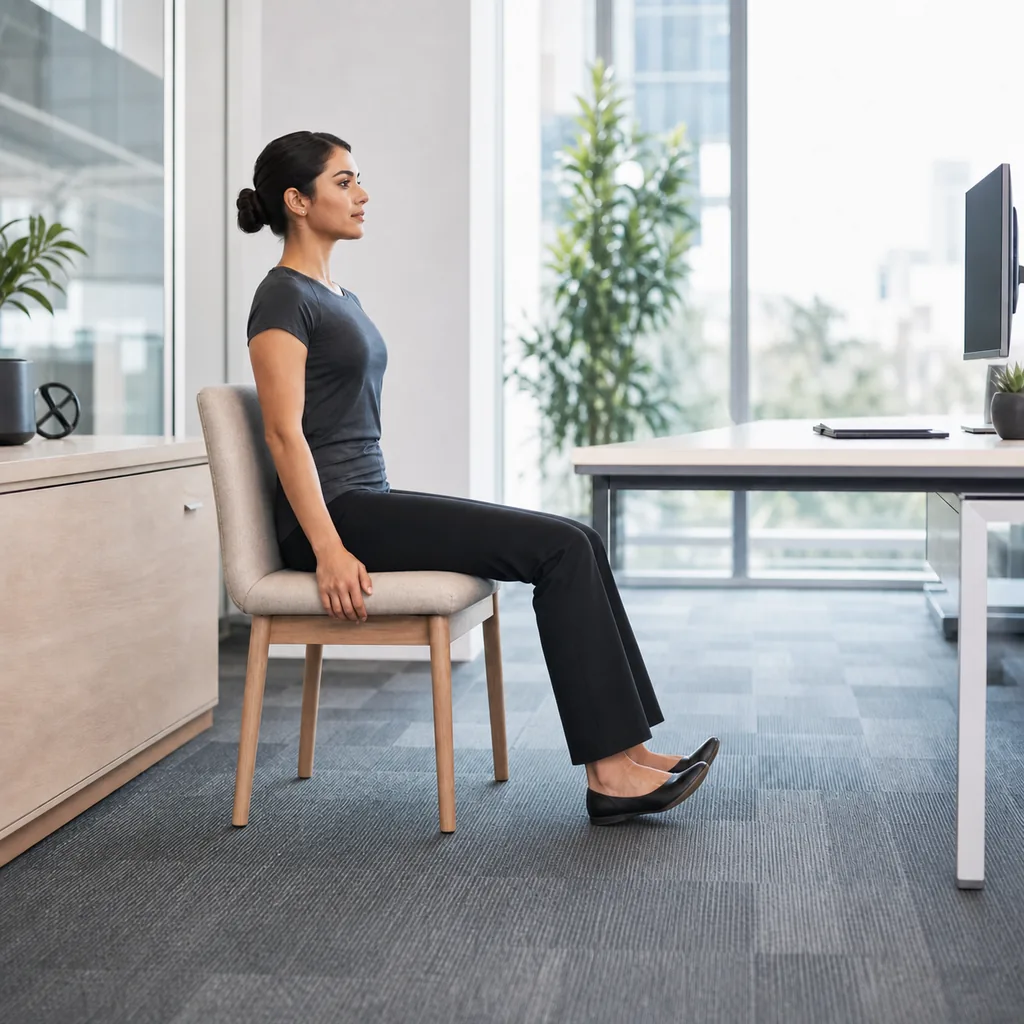
Lift the toes while keeping the heels down. -
Seated Knee Extensions
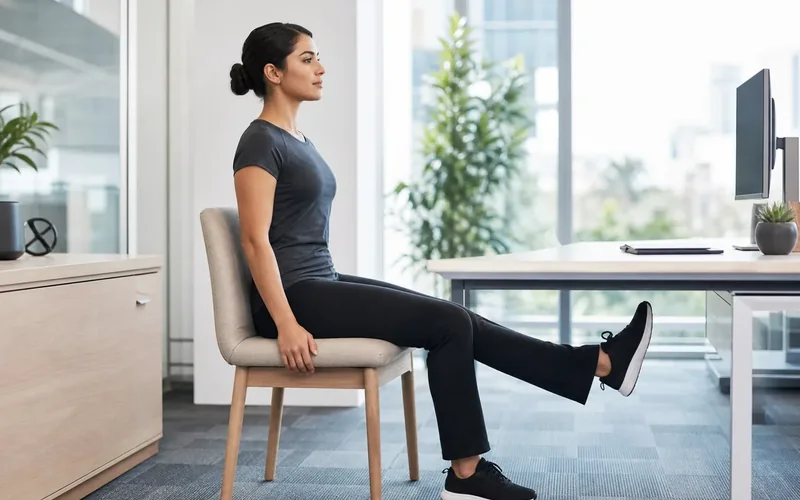
Straighten one knee until the leg is nearly level, pause briefly, and lower with control. Alternate sides. Stop just short of locking the knee and avoid kicking quickly.
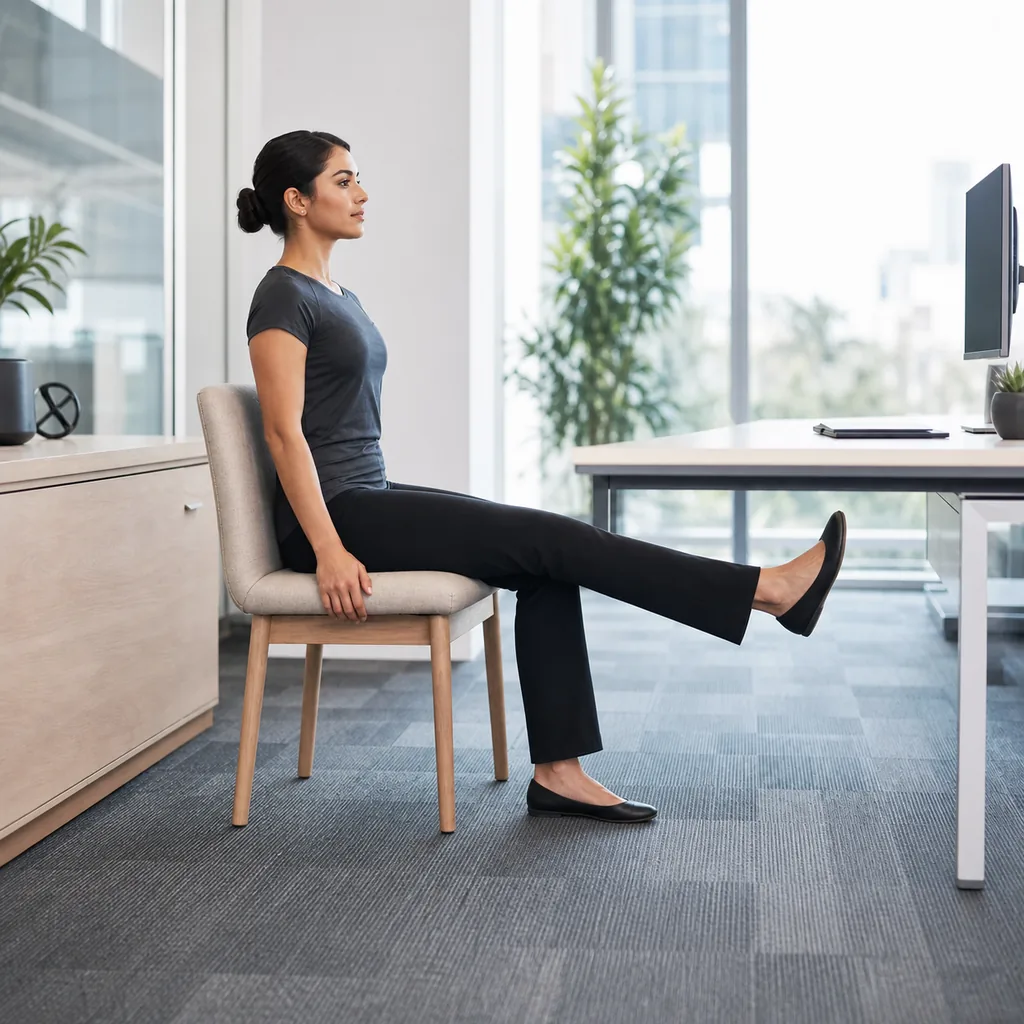
Knee extension without locking the joint. -
Seated Calf Raises
Keep the balls of both feet down and lift the heels. Pause at the top, lower slowly, and repeat. Add gentle hand pressure on the thighs only if the movement remains comfortable.
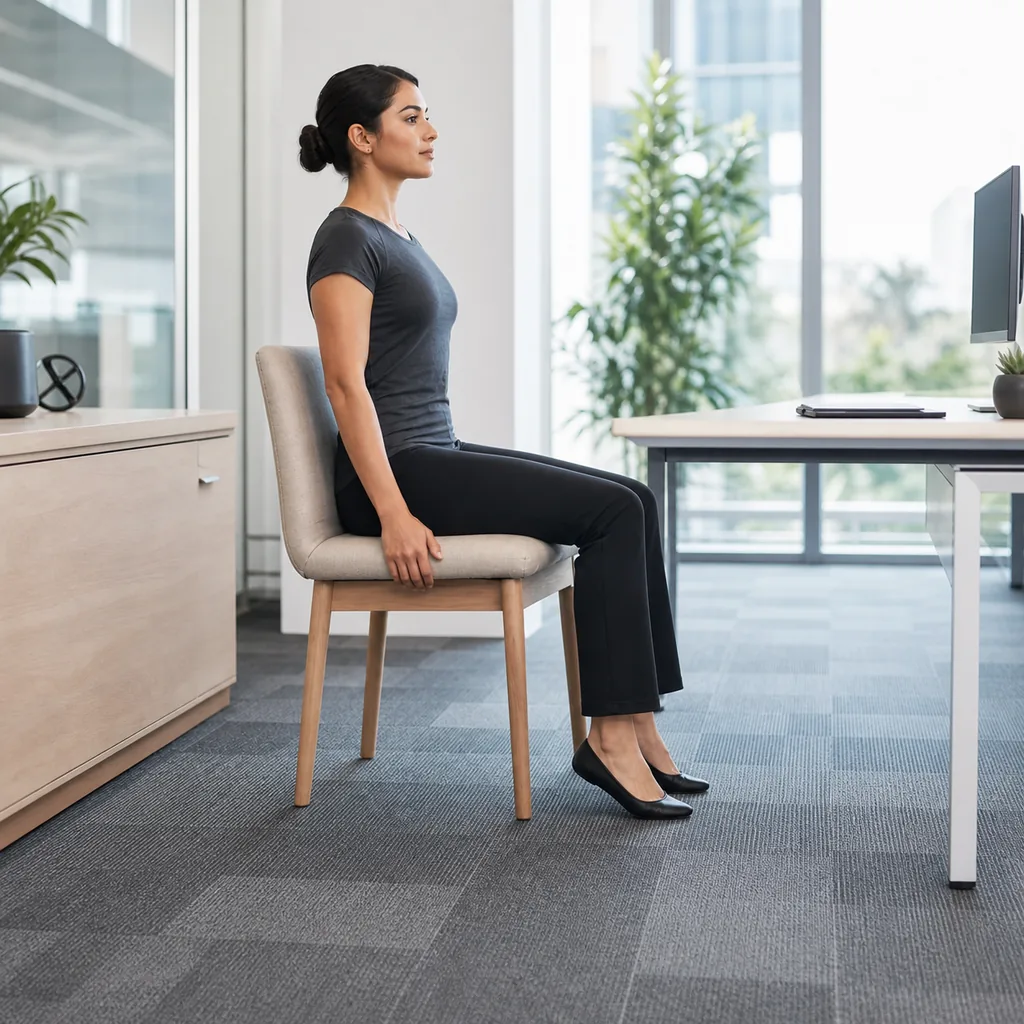
Raise both heels while forefeet stay grounded. -
Seated Ankle Circles
Lift one foot slightly and draw five slow circles in each direction. Lower it before changing sides. Keep the thigh supported so the movement comes mainly from the ankle.
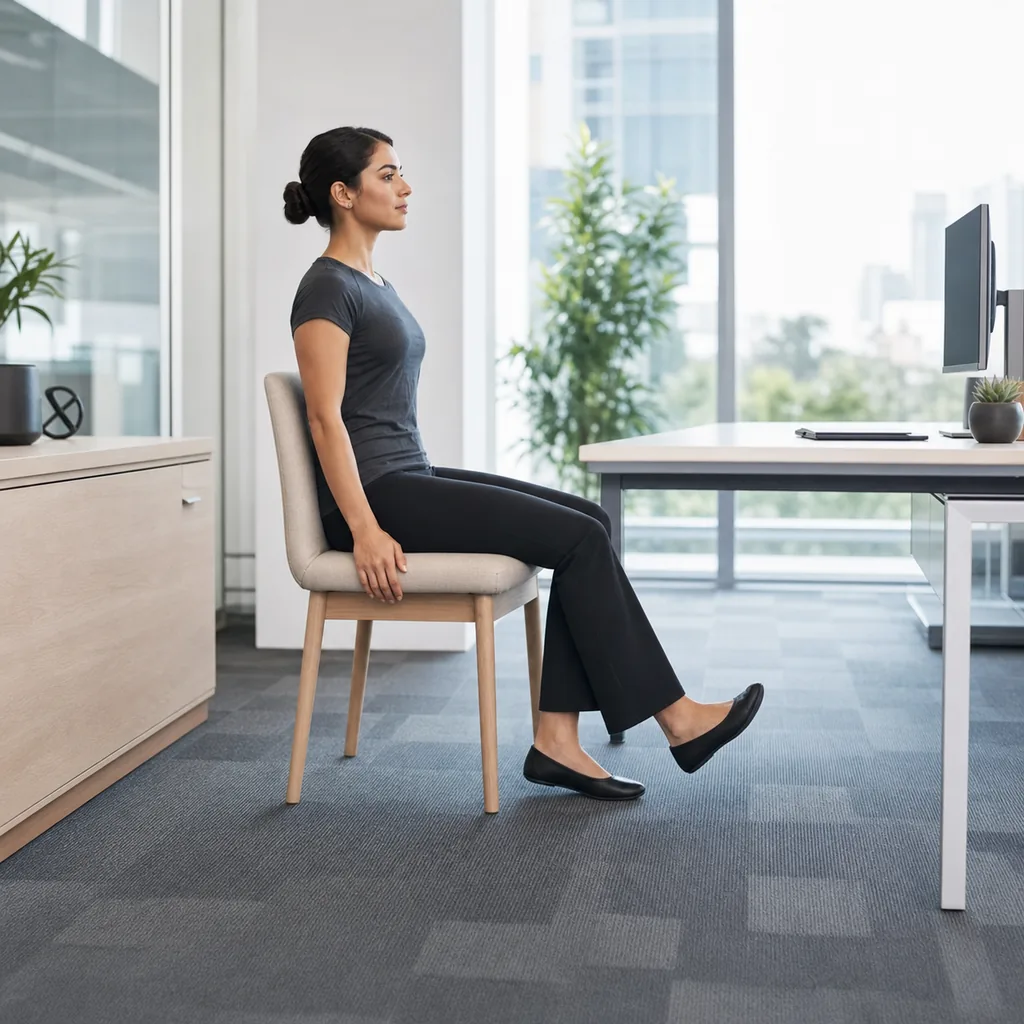
Lift one foot for small ankle circles. -
Seated Marches
Lift one knee a few inches without leaning back, lower the foot quietly, and switch sides. Continue alternating while the abdomen stays gently engaged and the shoulders remain relaxed.
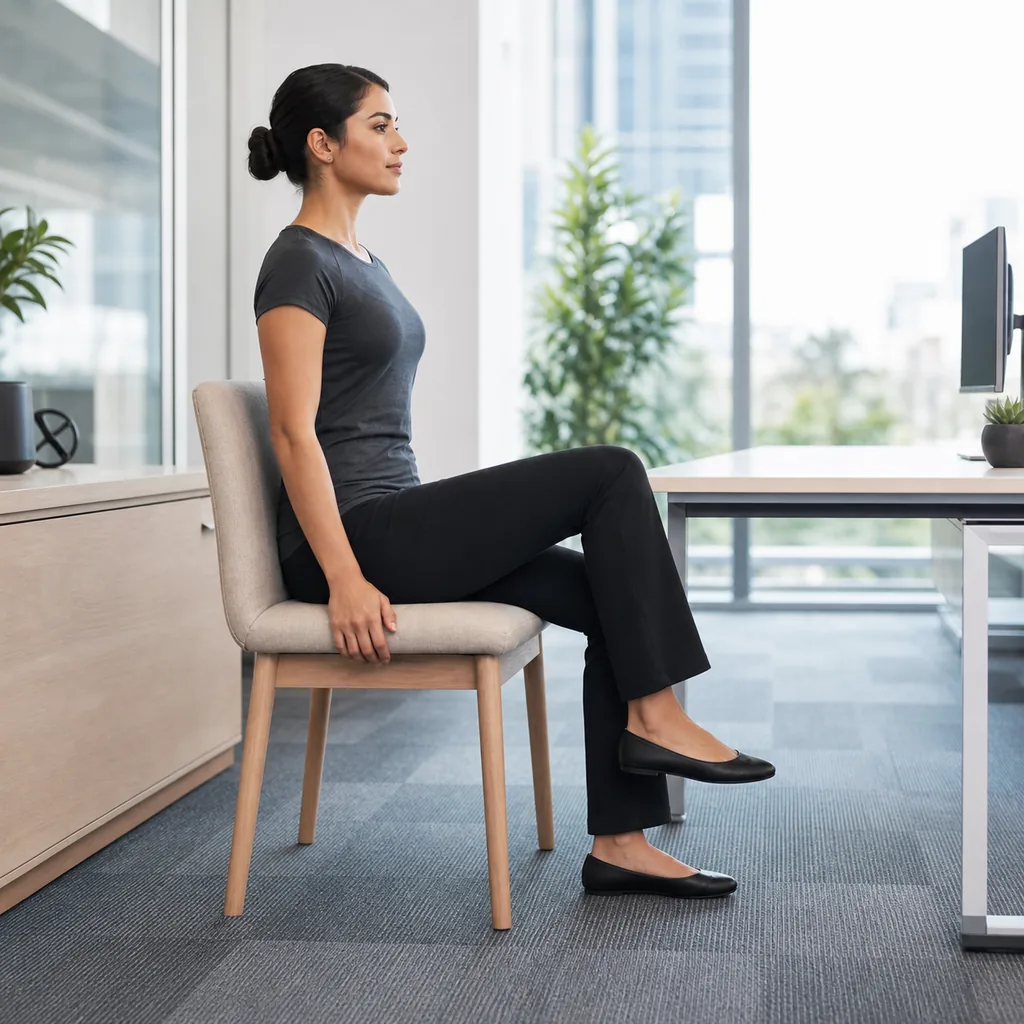
Controlled seated march with upright posture.
Safety and Comfortable Progression
The NHS exercise guidance recommends comfortable, controlled movement and gradual progression. Stop immediately for sharp pain, chest pain, dizziness, unusual breathlessness, new numbness, or weakness.
- Do not bounce, force a joint, or hold your breath.
- Use stable support whenever balance is uncertain.
- Ask a clinician before starting after surgery, injury, a fall, or a major symptom change.
Use this routine as a movement break rather than a substitute for regular walking and activity. Start with one round when your legs feel unusually tired. Increase speed only after you can keep every repetition quiet and controlled.
Build a Consistent Movement Break
Pair this session with desk stretches for tight hips, seated side bend stretches, or a desk posture reset. Choose the option that matches your energy, available space, and current comfort.
Finish by returning to a neutral position and taking two easy breaths. Notice how the body feels during the next hour. Persistent or worsening symptoms deserve assessment from a qualified health professional.
Frequently Asked Questions
Should the movements feel intense?
No. Mild muscular effort or a gentle stretch may be appropriate, but pinching, burning, tingling, or sharp pain is a reason to reduce the range or stop.
How often can I use this routine?
Begin with two or three sessions each week. Add sessions only when you recover comfortably and the movements do not worsen symptoms later that day.
This routine provides general fitness information and is not medical treatment or individualized rehabilitation.