
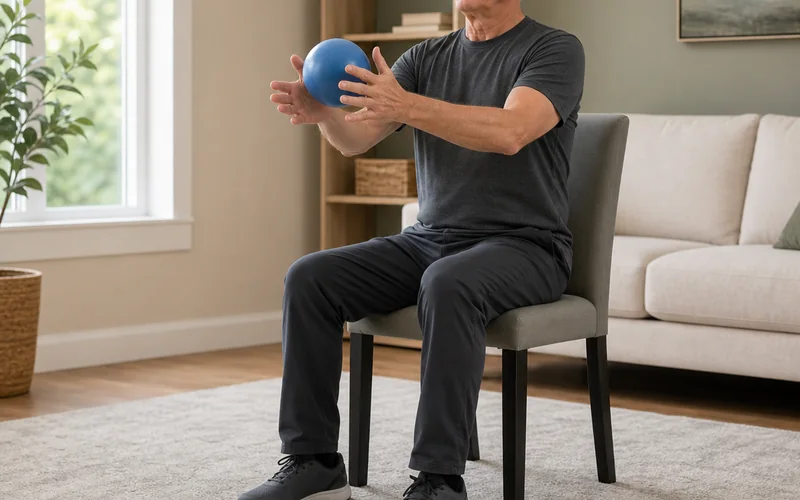
These seated eye-hand coordination exercises give seniors a supported ten-minute practice using a scarf and soft ball. Every drill stays slow, predictable, and easy to stop.
10-Minute Seated Eye Hand Coordination Exercises
- Total time: 10 minutes
- Position: Seated in a stable chair
- Equipment: Scarf and soft foam ball
- Intensity: Light concentration and movement
- Space: Clear, well-lit area
This routine is general activity information, not vision, neurological, or occupational therapy. New double vision, sudden weakness, severe headache, confusion, or loss of coordination requires urgent medical attention.
Safe Setup
- Choose a solid chair without wheels.
- Place both feet fully on the floor.
- Remove drinks and breakable objects.
- Use only a soft, lightweight ball.
- Ask a helper to stand nearby if needed.
The 10-Minute Coordination Routine
- Visual tracking, 2 minutes: Hold one thumb at arm’s length. Move it slowly left, right, up, and down while the head remains comfortable.
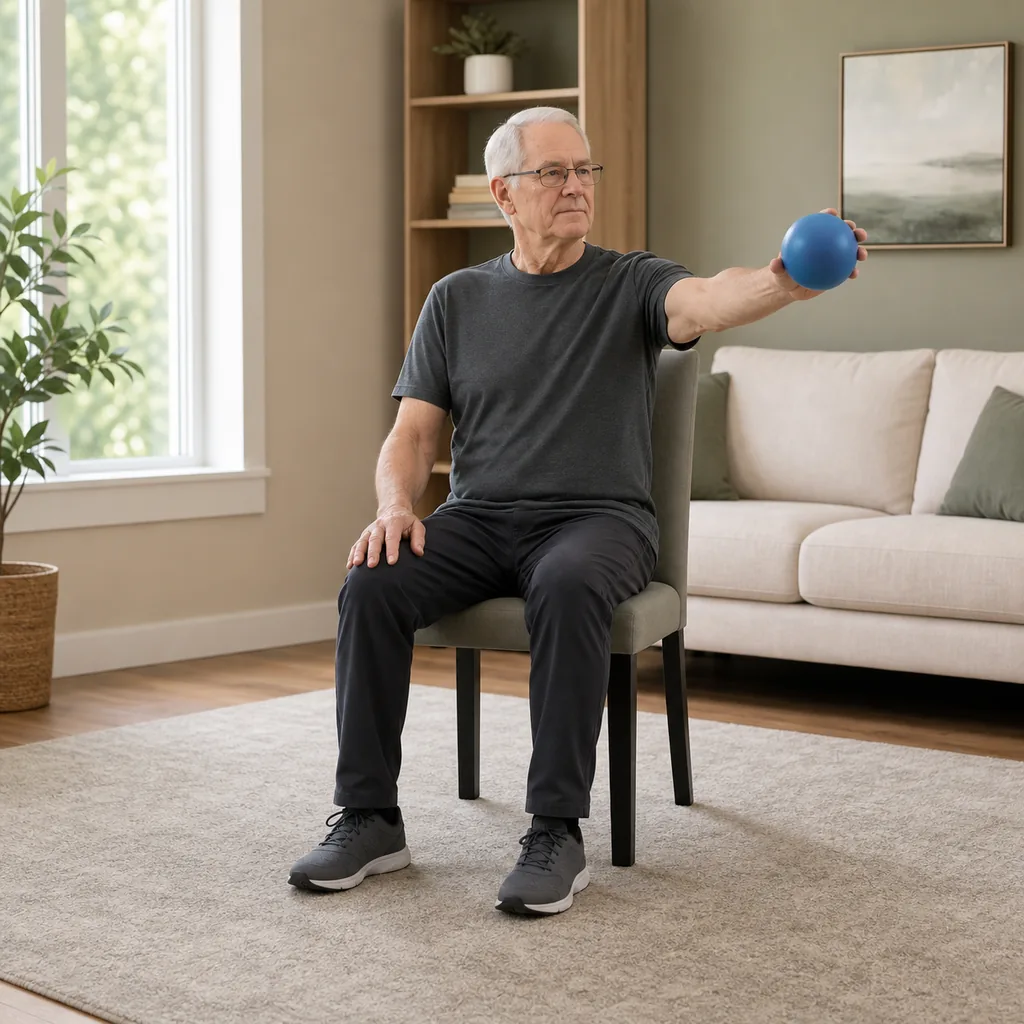
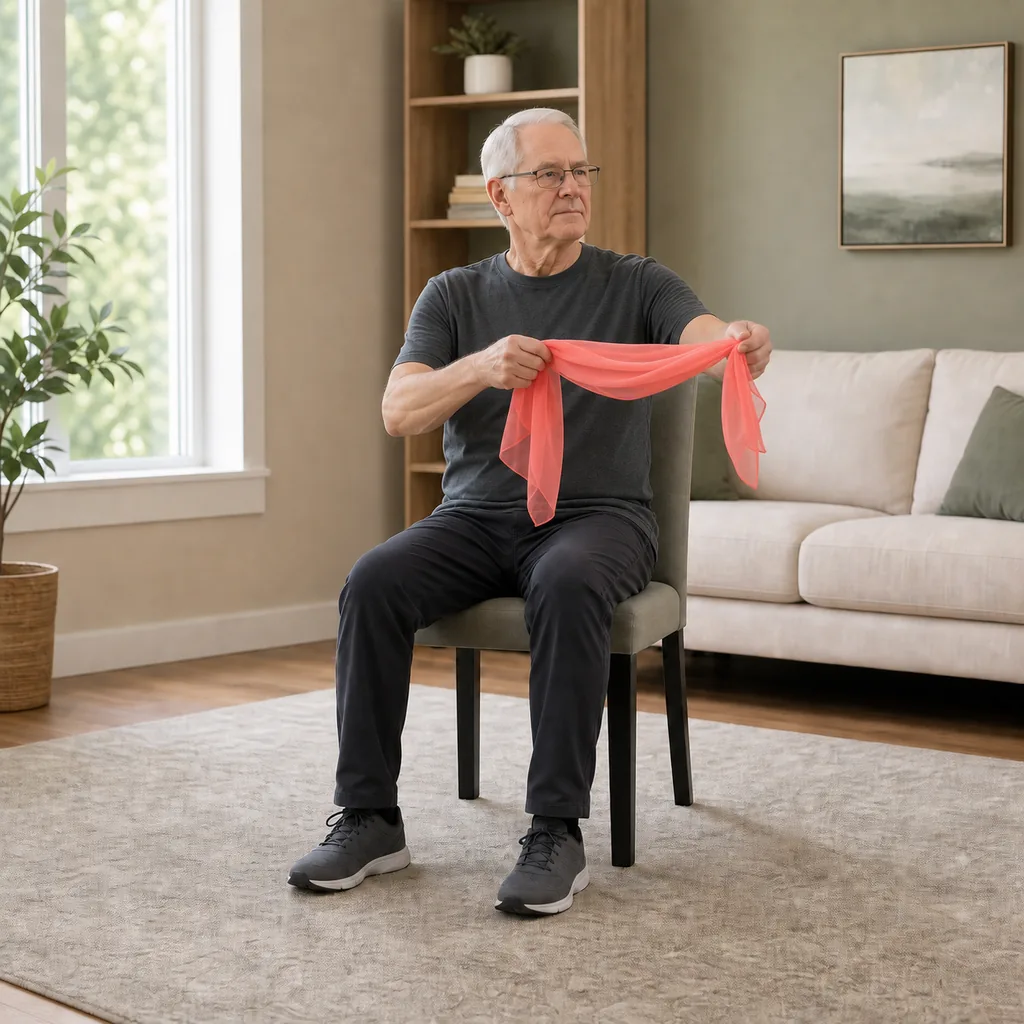
Visual tracking position. - Scarf transfer, 2 minutes: Pass a scarf from right hand to left at chest height. Change the transfer point slightly every five repetitions.
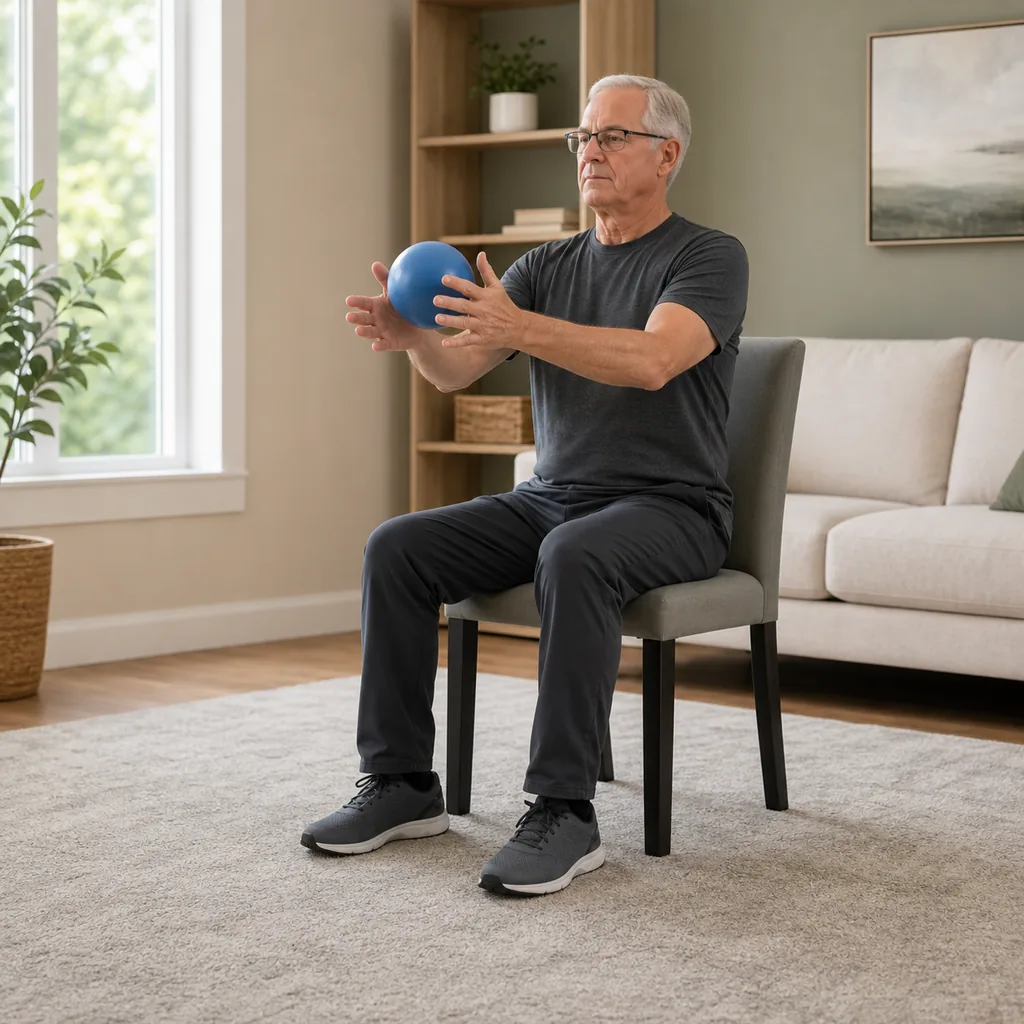
Scarf transfer. - Ball hand-to-hand, 2 minutes: Pass a foam ball between open palms. Keep it below shoulder height and complete 20 controlled transfers.
Ball hand-to-hand transfer. - Target taps, 2 minutes: Place the ball on one palm. Tap it gently with the opposite index finger, then switch hands every 30 seconds.
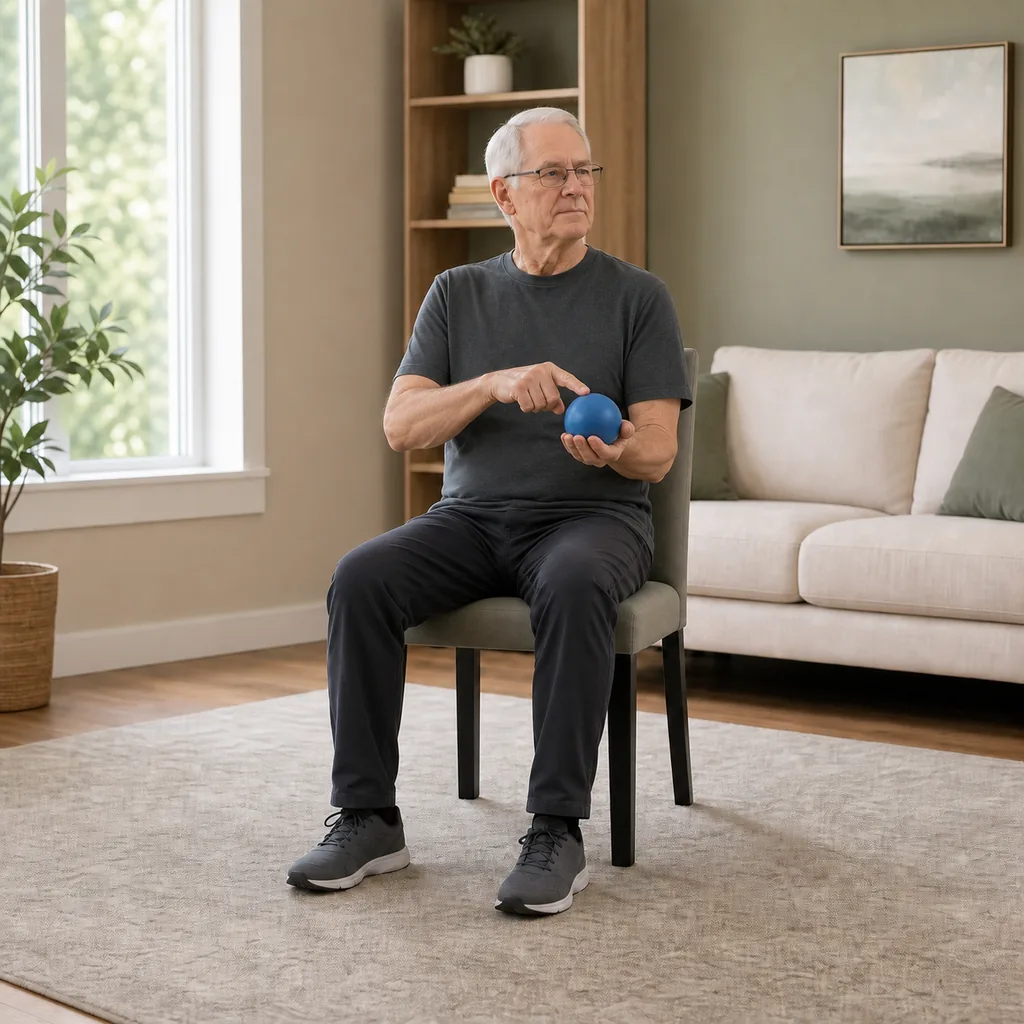
Target tap position. - Pattern finish, 2 minutes: Move the scarf right, center, left, center while naming each position. Repeat slowly, then rest the hands.
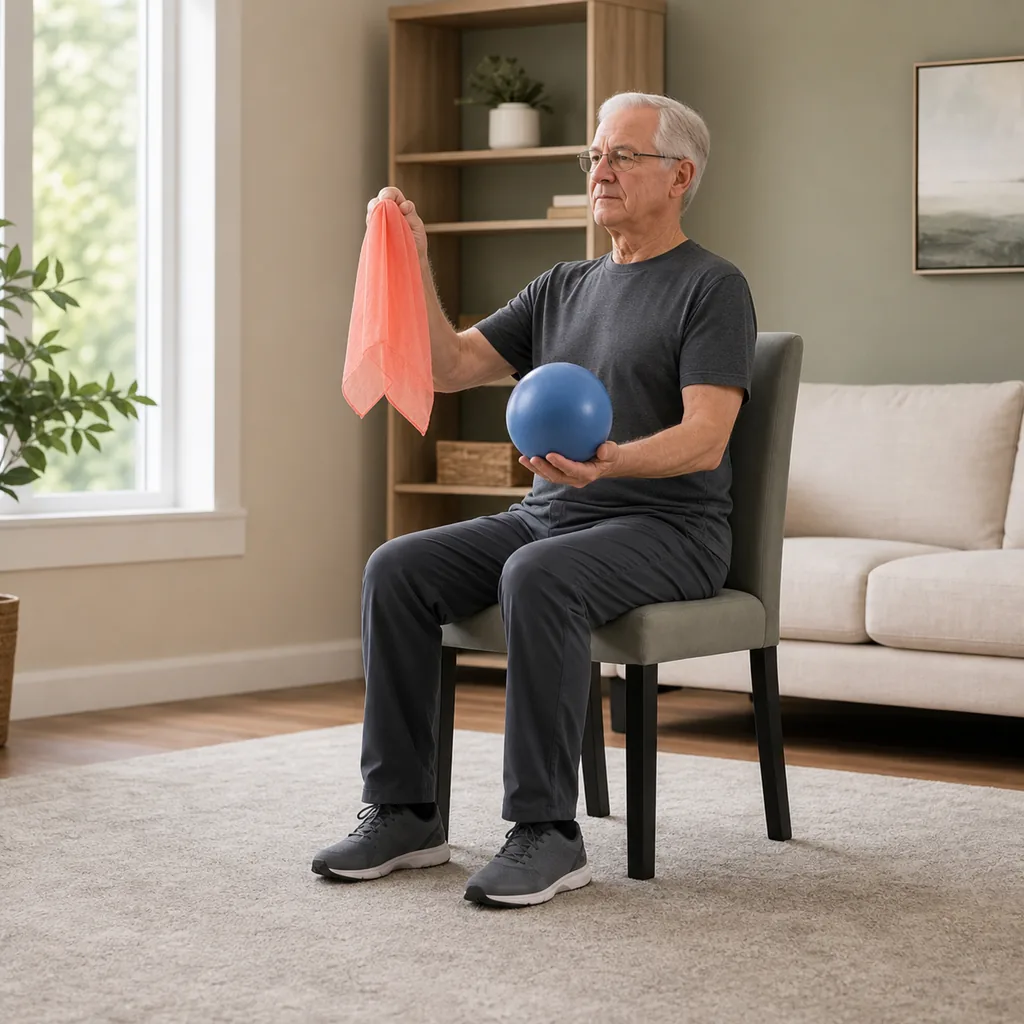
Pattern finish setup.
Ways to Adjust Difficulty
- Move objects more slowly.
- Keep hands closer to the body.
- Use a larger foam ball.
- Perform one side at a time.
- Stop before eye strain or fatigue.
Support hand control with our hand and finger dexterity exercises, seated core exercises, or seated stretching routine.
Practice Guidance
The National Institute on Aging recommends slow, mindful activity and having support available when balance is uncertain. Review its older-adult exercise guidance.
Coordination can vary with fatigue, medication, vision, and neurological conditions. Keep the practice simple and follow recommendations from an occupational therapist, physical therapist, eye specialist, or physician when applicable.
Track Comfortable Progress
Use the same object, chair, and lighting for several sessions. Progress may look like fewer drops, smoother transfers, or less effort rather than faster movement.
Change only one variable at a time. A slightly smaller target, longer reach, or more complex pattern can each increase difficulty, so avoid combining them initially.
Safety Checklist
- The chair remains stable.
- The room is bright and uncluttered.
- Objects remain below face level.
- Breathing stays relaxed.
- No dizziness, nausea, or double vision appears.
Stop if the activity causes headache, blurred or double vision, dizziness, nausea, unusual weakness, or worsening tremor. Seek emergency care for sudden neurological symptoms, even if they improve quickly.
Frequently Asked Questions
Should seniors toss the ball?
Passing is safer for this beginner routine. Tossing adds speed and unpredictability and should be introduced only when seated control is reliable.
Can someone with poor vision participate?
Ask an eye-care or rehabilitation professional for suitable contrast, distance, and lighting. A bright object against a plain background may be easier to track.