

These seated hand movements practice controlled finger opening, thumb opposition, and simple object handling. The five-minute routine uses a stable table and stays gentle enough for an everyday movement break.
5-Minute Hand Dexterity Exercises for Seniors
- Total time: 5 minutes
- Position: Seated at a stable table
- Equipment: Towel and three large coins or buttons
- Effort: Easy, controlled movement
This general routine is not rehabilitation for arthritis, stroke, nerve damage, surgery, or injury. A hand therapist can adapt movements for a diagnosed condition.
Dexterity means performing small, controlled hand movements accurately. This routine emphasizes coordination rather than grip strength, speed, or resistance, so every repetition should remain deliberate, unhurried, and comfortable for safe daily home practice.
Safe Seated Setup

- Sit with feet supported and shoulders relaxed.
- Place forearms on a folded towel.
- Keep wrists straight rather than bent backward.
- Use objects too large to swallow.
- Work within a comfortable, pain-free range.
The Five-Minute Dexterity Routine
- Open and close, 1 minute: Spread the fingers comfortably, pause for 2 seconds, then make a loose fist. Complete eight slow repetitions.

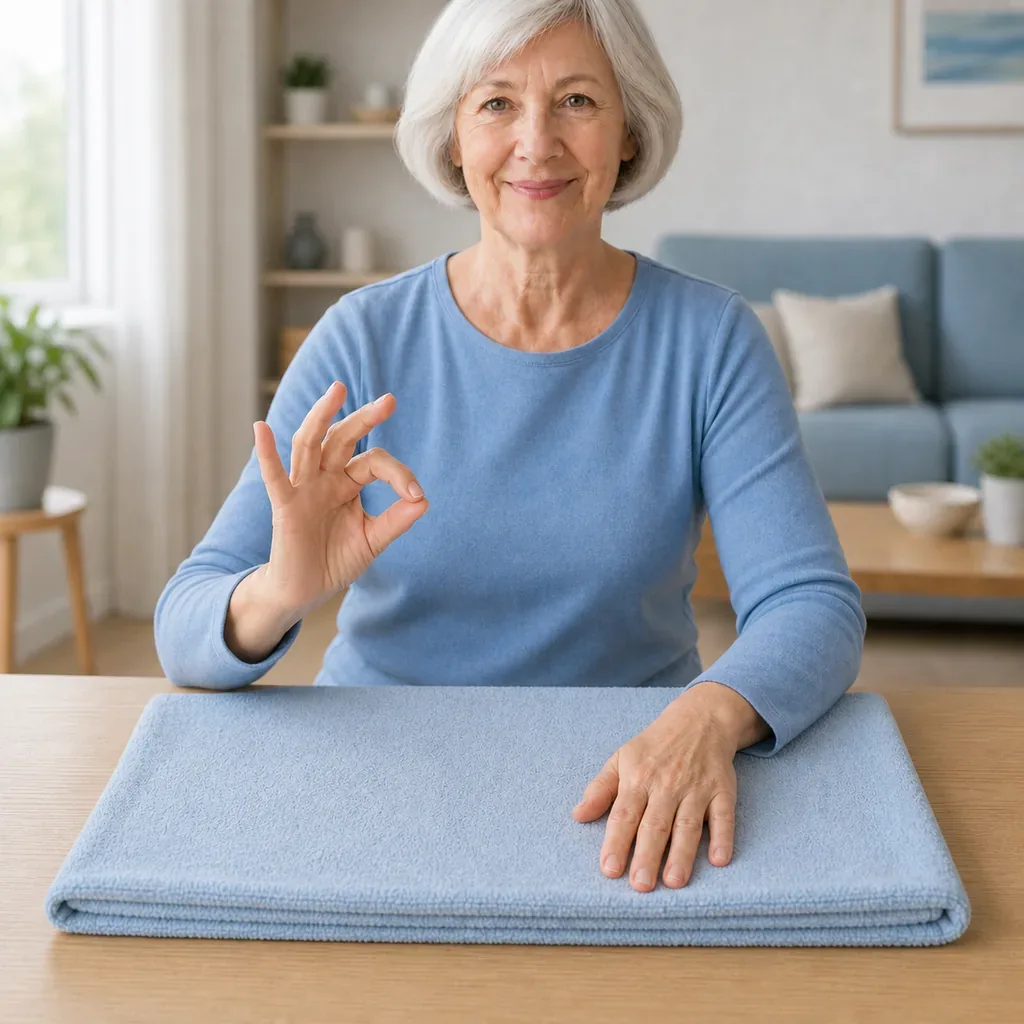
Open-and-close phases. - Thumb taps, 1 minute: Touch the thumb to each fingertip from index to little finger. Reverse direction and repeat four rounds per hand.
Thumb-to-fingertip taps. - Table walk, 1 minute: Rest one palm down. Walk the index and middle fingers apart, then together. Switch hands after 30 seconds.
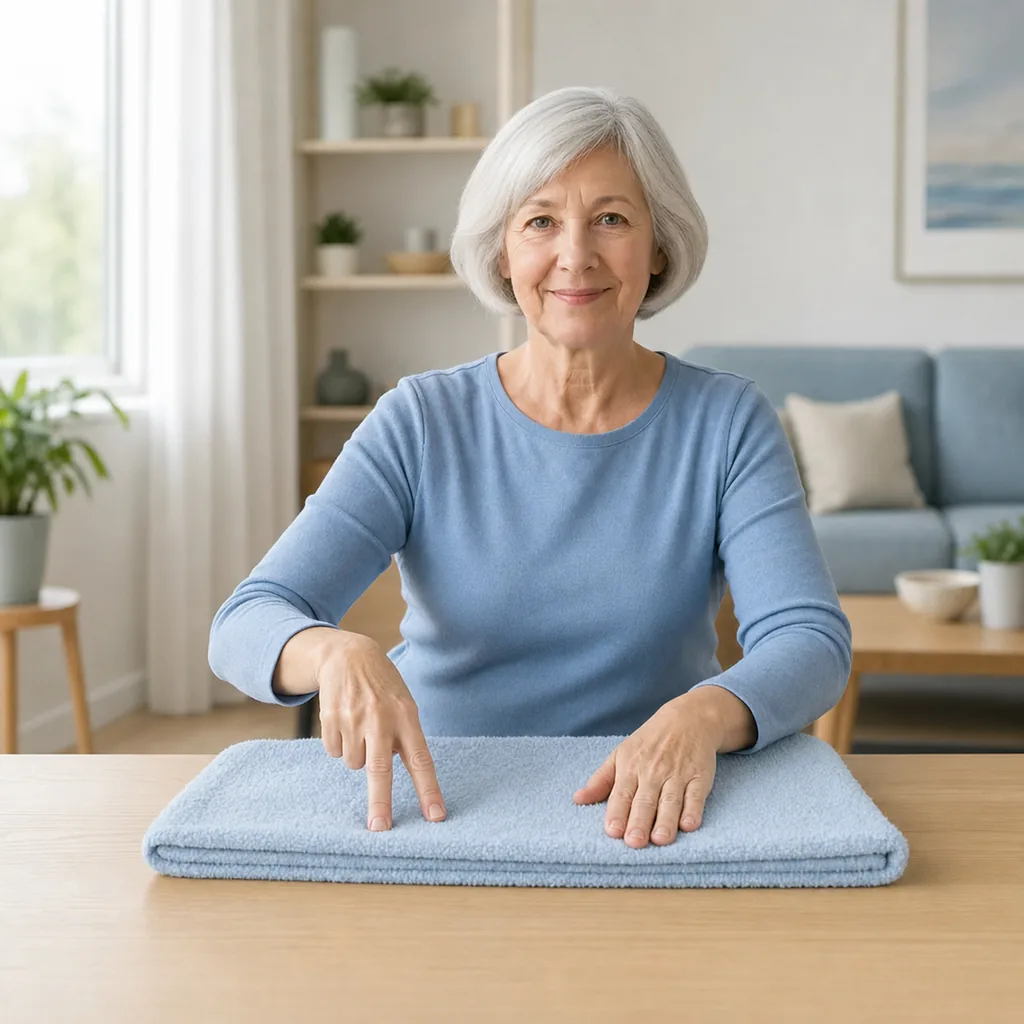
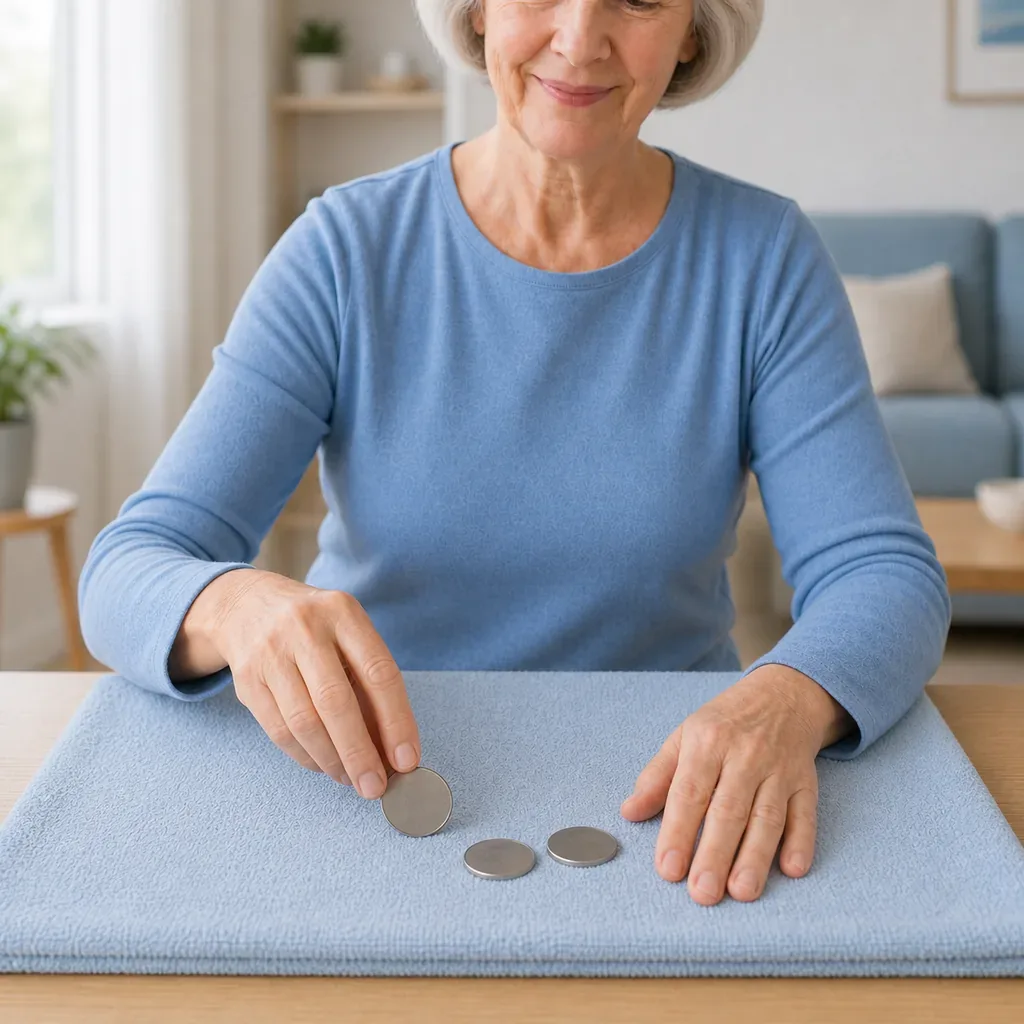
Table walk position. - Coin turns, 1 minute: Pick up one large coin, turn it over, and set it down. Alternate hands every three turns.
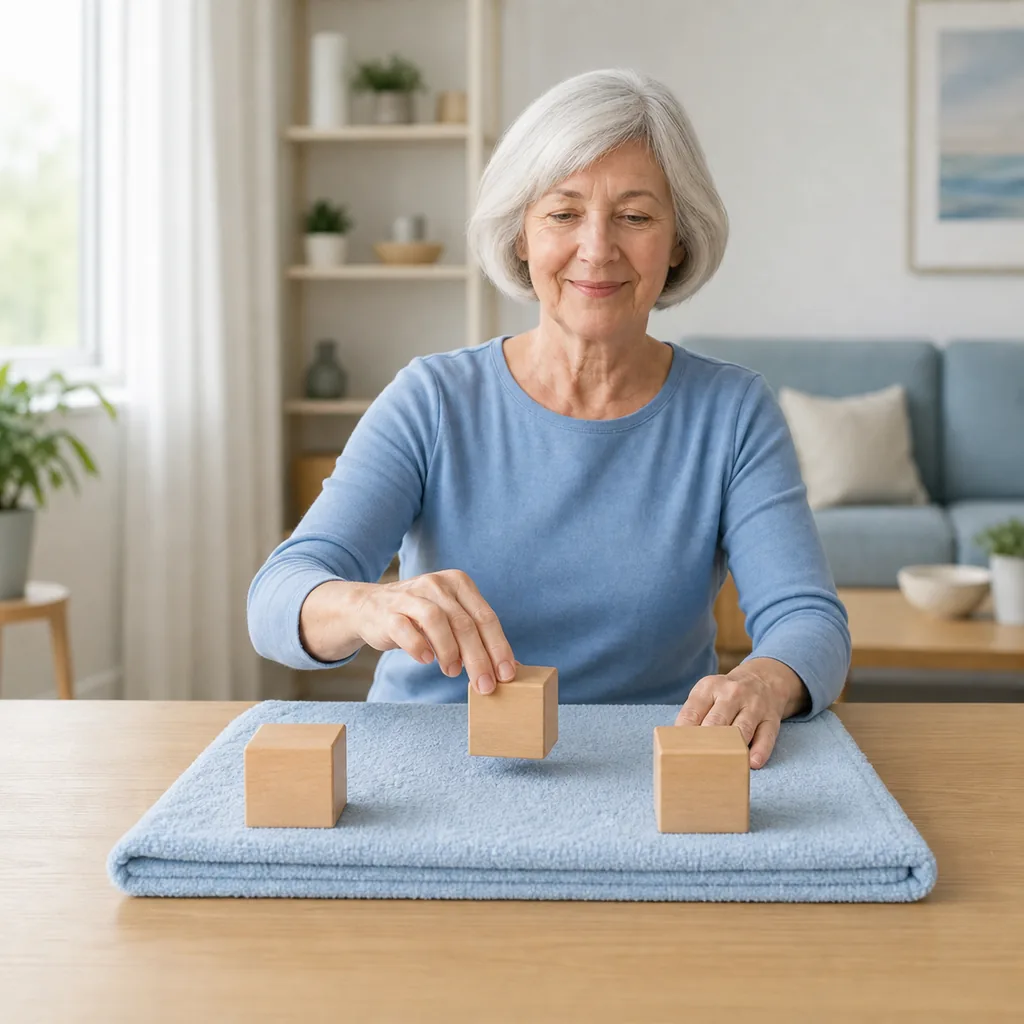
Large-coin turns. - Transfer and reset, 1 minute: Move three objects one at a time across the towel, then gently shake out both hands.
Object transfer.
Form Cues and Easier Options
- Move slowly enough to control each fingertip.
- Use larger objects if pinching feels difficult.
- Slide objects instead of lifting them.
- Complete fewer repetitions on a stiff hand.
- Keep breathing normally and relax the shoulders.
Combine this practice with our wrist and hand stretches, seated forearm self-massage, or seated arm exercises.
What This Routine Practices
- Opening and closing the fingers with control.
- Coordinating the thumb with each fingertip.
- Using a light pinch on a larger object.
- Switching attention between the right and left hands.
- Maintaining a neutral wrist during tabletop tasks.
Cambridge University Hospitals includes finger spreading, tabletop shapes, hook positions, and gentle fist patterns in its hand therapy exercise guidance. Individual clinical instructions take priority over this routine.
Safety Checklist
- No sharp pain, tingling, or new numbness occurs.
- Joints are not red, hot, or newly swollen.
- Objects remain secure on the table.
- Wrists stay comfortably straight.
- Movement remains smooth without forcing range.
Stop for sudden weakness, dropping objects unexpectedly, new one-sided symptoms, severe pain, or symptoms following a fall. Seek prompt medical advice when these signs appear.
Frequently Asked Questions
Should the exercises feel tiring?
Mild effort is acceptable, but the hands should not shake or ache. Pause, reduce repetitions, or stop if control declines.
Can I use small beads?
Large coins or buttons are safer and easier to control. Avoid small objects when vision, sensation, or swallowing safety is a concern.