
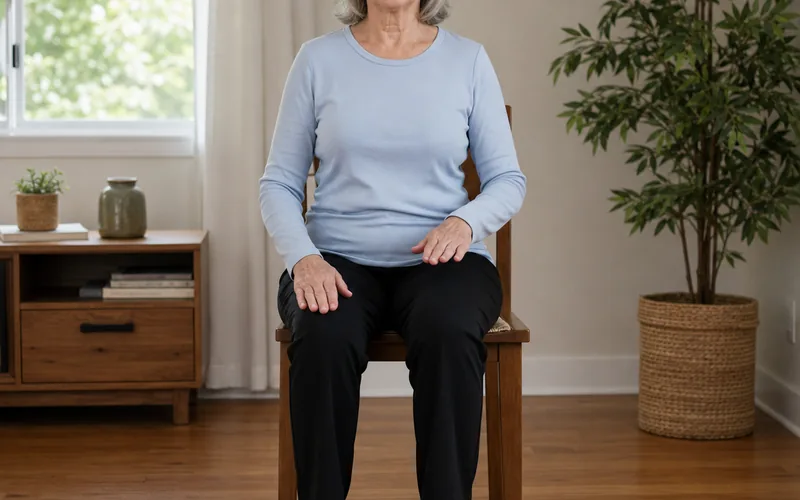
These seated cognitive-motor tapping drills pair simple thinking prompts with gentle hand and foot movements. The ten-minute routine stays supported, slow, and easy to pause.
10-Minute Seated Cognitive Motor Exercises Seniors Routine
- Total time: 10 minutes
- Position: Seated in a stable chair
- Equipment: Two colored cards
- Intensity: Light movement and concentration
- Space: Quiet, well-lit room
This is general activity information, not cognitive rehabilitation or treatment for neurological disease. Sudden confusion, weakness, facial drooping, speech difficulty, or loss of coordination requires emergency medical care.
Safe Setup
- Choose a sturdy chair without wheels.
- Place both feet fully on the floor.
- Remove rugs and nearby obstacles.
- Keep movements below shoulder height.
- Ask a helper to read prompts if useful.
The 10-Minute Cognitive Motor Routine
- Alternating hand taps, 2 minutes: Tap right hand, then left hand on the thighs while counting slowly from one to twenty.
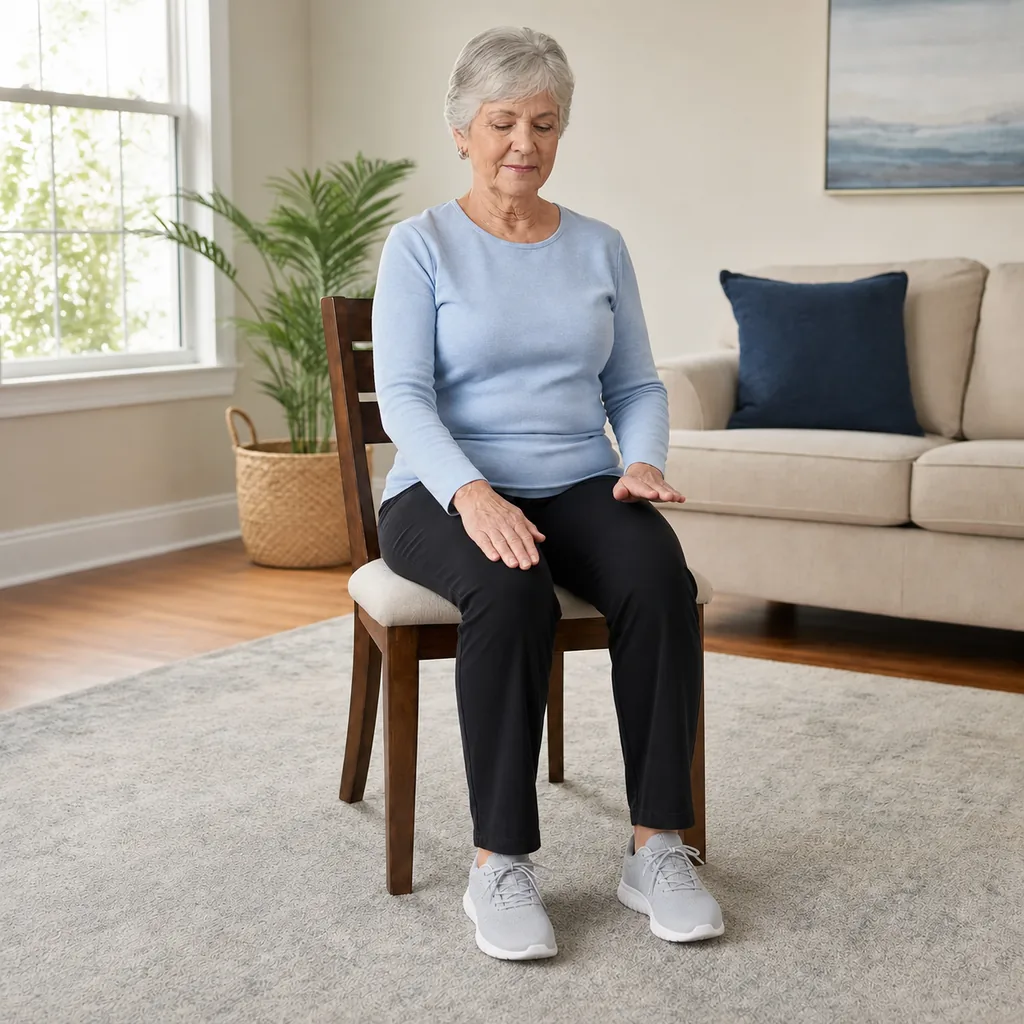
Alternating hand taps: Keep both feet grounded while one palm taps and the other hand prepares to alternate. - Color response, 2 minutes: A helper shows two cards. Tap the right thigh for one color and left thigh for the other.
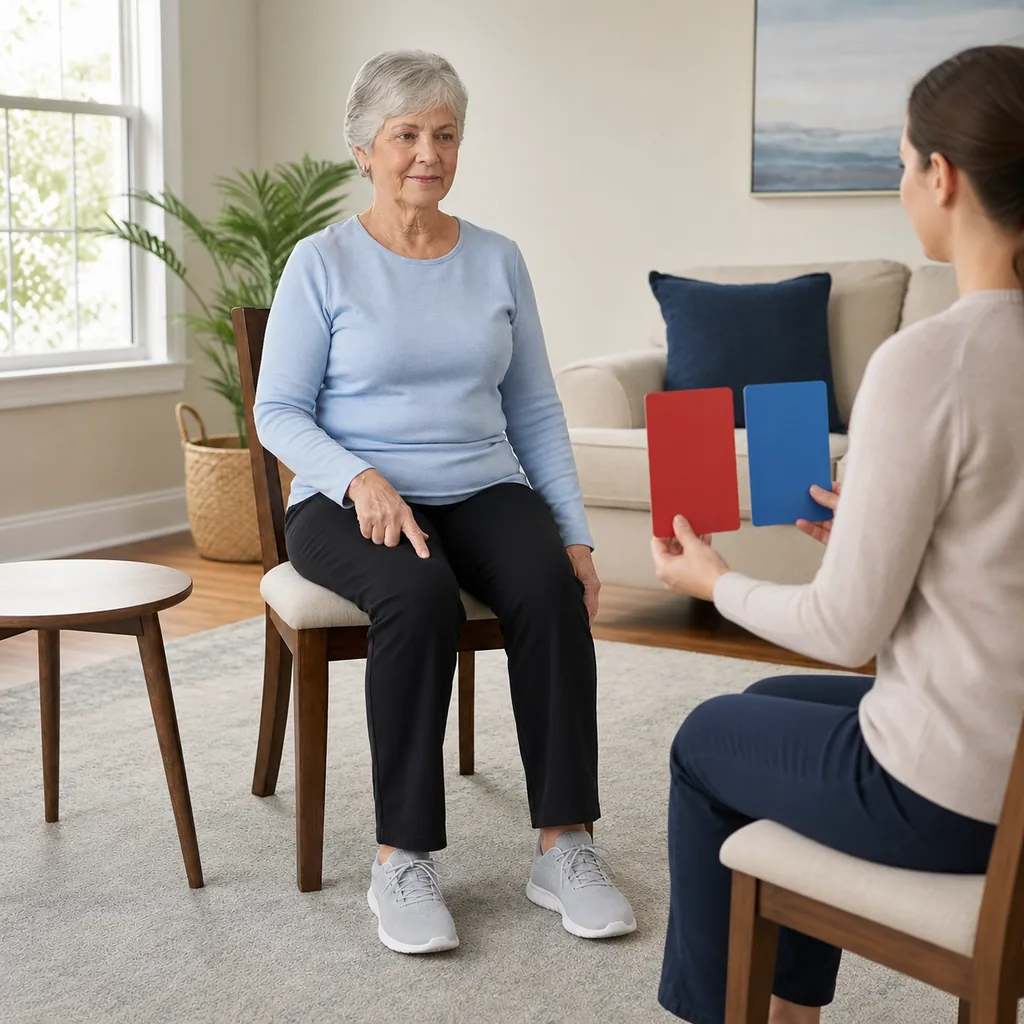
Color response: Use exactly two colors and assign one thigh tap to each card. - Hand-foot pattern, 2 minutes: Tap right hand, left hand, right foot, then left foot. Repeat at a comfortable pace.
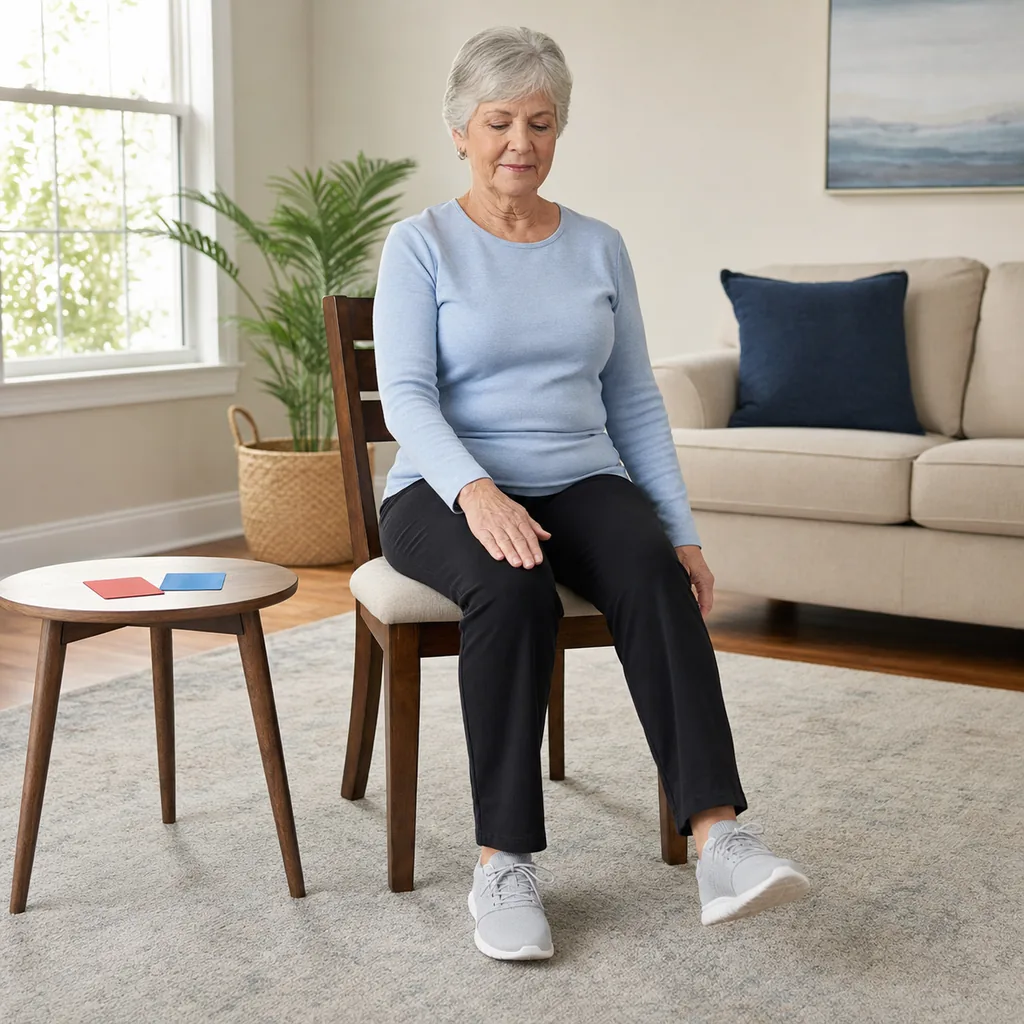
Hand-foot pattern: Tap right hand, left hand, right foot, then left foot at a comfortable pace. - Category naming, 2 minutes: Alternate thigh taps while naming fruits, cities, or animals. Pause whenever the pattern becomes frustrating.
- Slow-fast finish, 2 minutes: Complete four slow alternating taps, then four slightly quicker taps. Repeat without rushing.
Ways to Adjust Difficulty
- Use one hand only.
- Remove the counting task.
- Slow the card changes.
- Practice the movement before adding words.
- Stop before mental or physical fatigue.
Support coordination with our eye-hand coordination exercises, hand dexterity exercises, or seated core routine.
Practice Guidance
Accuracy matters more than speed. Complete the motor pattern alone first, then add a simple word or color prompt only when the movement feels predictable.
The National Institute on Aging advises older adults to listen to their bodies, progress gradually, and seek professional guidance when unsure about a movement. Review its exercise guidance.
Safety Checklist
- The chair cannot roll or tip.
- Feet remain supported.
- Prompts stay simple and familiar.
- Breathing remains relaxed.
- No dizziness, headache, or distress appears.
Stop for new confusion, blurred or double vision, severe headache, unusual weakness, chest pain, or shortness of breath. Persistent cognitive or coordination changes need assessment by an appropriate health professional.
Keep the Session Encouraging
Choose familiar categories and allow plenty of response time. A missed word or tap is a cue to simplify the task, not to correct or rush the participant.
Record only simple observations, such as which pattern felt comfortable. Do not use this home routine to score memory, diagnose impairment, or compare one person with another.
- Offer one instruction at a time.
- Use a quiet conversational voice.
- Always finish with an easy successful pattern.
Frequently Asked Questions
Should the tapping become fast?
No. Use a pace that preserves the pattern and allows normal conversation. Speed is optional and never the main goal.
Can someone practice alone?
Yes, using two colored cards placed safely on a table. A helper is preferable when prompts or movement require supervision.