
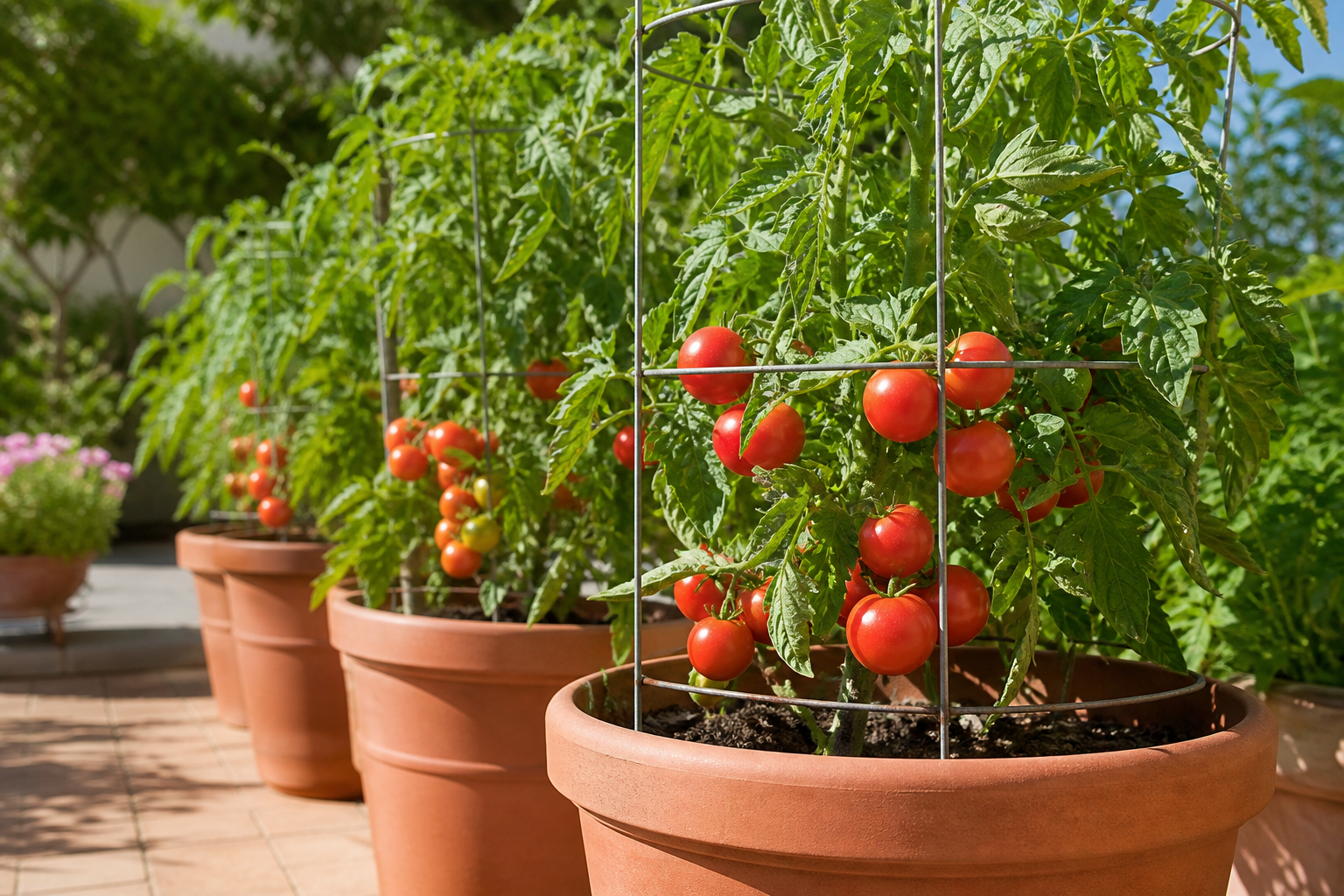
Learning how to grow tomatoes in pots makes it possible to harvest fresh tomatoes from a patio, balcony, deck, or small sunny yard. Container tomatoes can be just as productive as garden-grown plants when they receive enough root space, steady moisture, strong support, and consistent feeding.
The most common container tomato problems begin with pots that are too small or watering that changes dramatically from day to day. Start with the right setup and the plants become much easier to manage. This guide covers container size, tomato varieties, planting, summer care, and troubleshooting from seedling to harvest.
Why Grow Tomatoes in Pots?
- Flexible placement: Move containers to the sunniest practical part of a patio or yard.
- Better soil control: Start with clean, well-draining potting mix instead of difficult garden soil.
- Convenient care: Plants are easy to monitor, water, support, and harvest.
- Small-space friendly: One productive plant can fit on a balcony or compact patio.
- Fewer soil-related problems: Fresh potting mix can reduce exposure to some garden soil diseases.
Container tomatoes still need room and regular care. They are not miniature plants unless you deliberately select a compact variety. For a broader foundation, review this container gardening guide for beginners.
Choose the Right Tomato Variety
Determinate, patio, dwarf, and compact cherry tomato varieties are generally easiest in containers. Determinate tomatoes grow to a more predictable size and produce much of their harvest within a concentrated period. Dwarf varieties remain shorter while still producing full-sized or cherry tomatoes.
Indeterminate tomatoes can also grow successfully in pots, but they continue growing and producing until cold weather. They require the largest containers, the strongest supports, and more frequent pruning and tying. Read the plant label and choose a variety that fits your available height and space.
Use a Large Container With Excellent Drainage
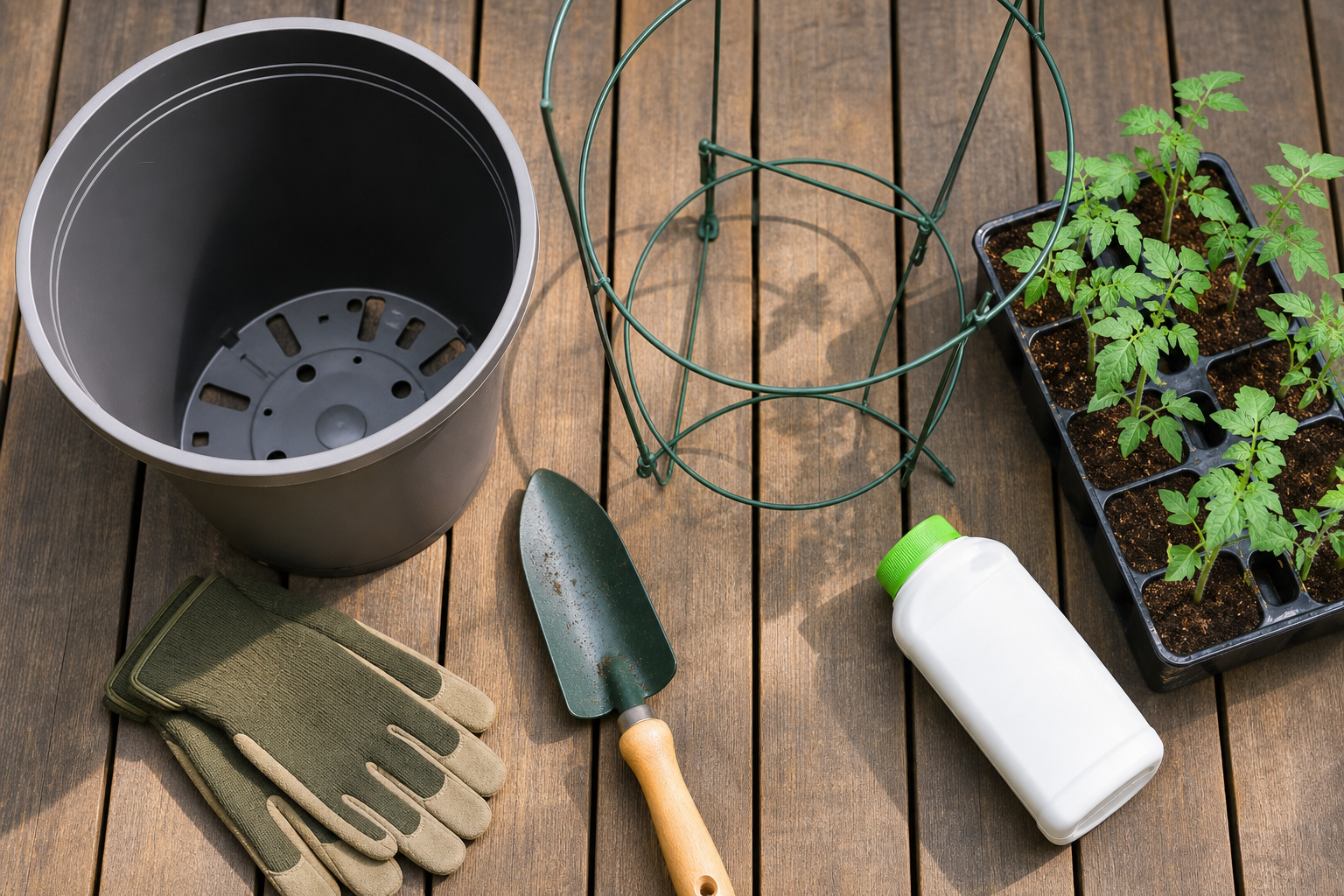
For most tomato plants, use a container that holds at least 10 gallons; 15 to 20 gallons is even better for vigorous or indeterminate plants. A large pot holds moisture more steadily, gives roots room to grow, and reduces stress during hot weather. Compact dwarf tomatoes may grow in smaller containers if the variety instructions specifically allow it.
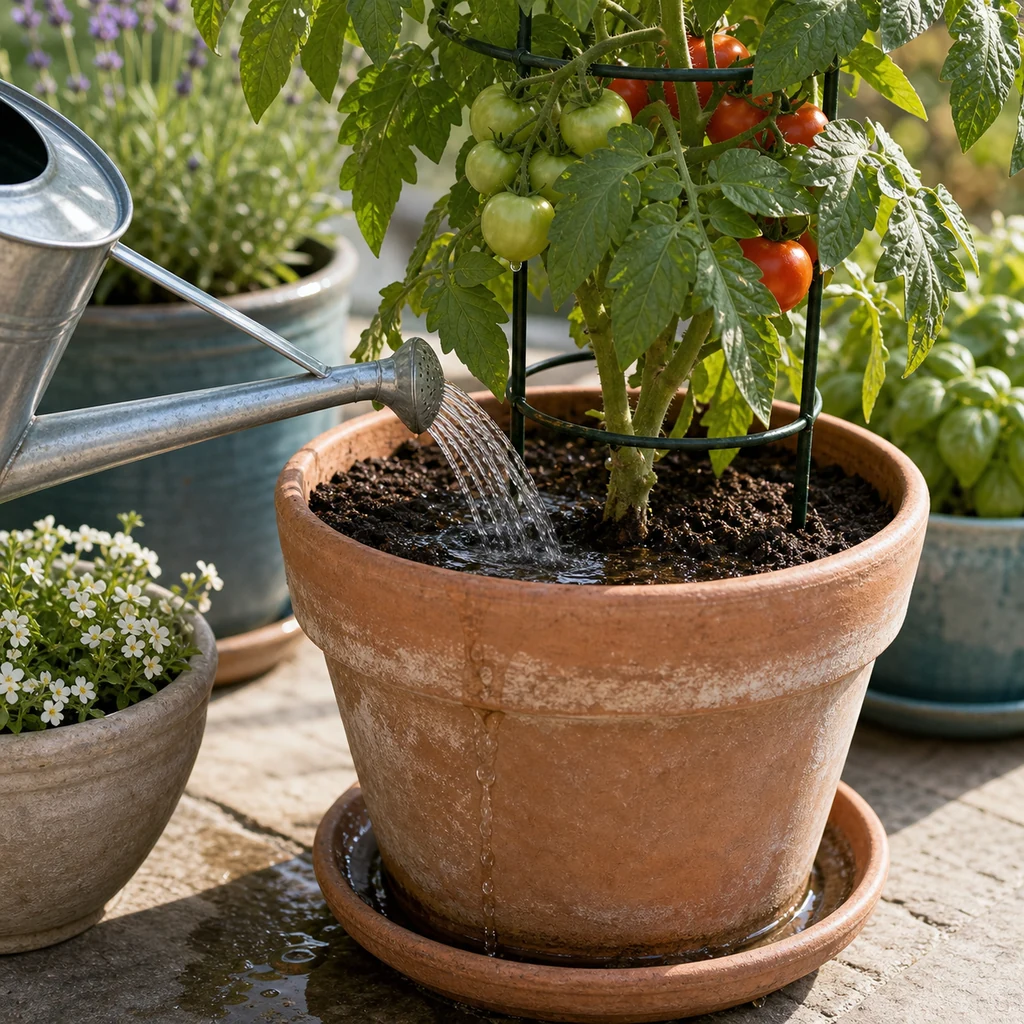
The pot must have several open drainage holes. Elevate it slightly on pot feet if necessary so water can escape freely. Avoid letting the container sit in a saucer of water after drainage finishes. Plastic and glazed pots retain moisture longer than unglazed terracotta, which may need more frequent watering.
Fill the Pot With Quality Potting Mix
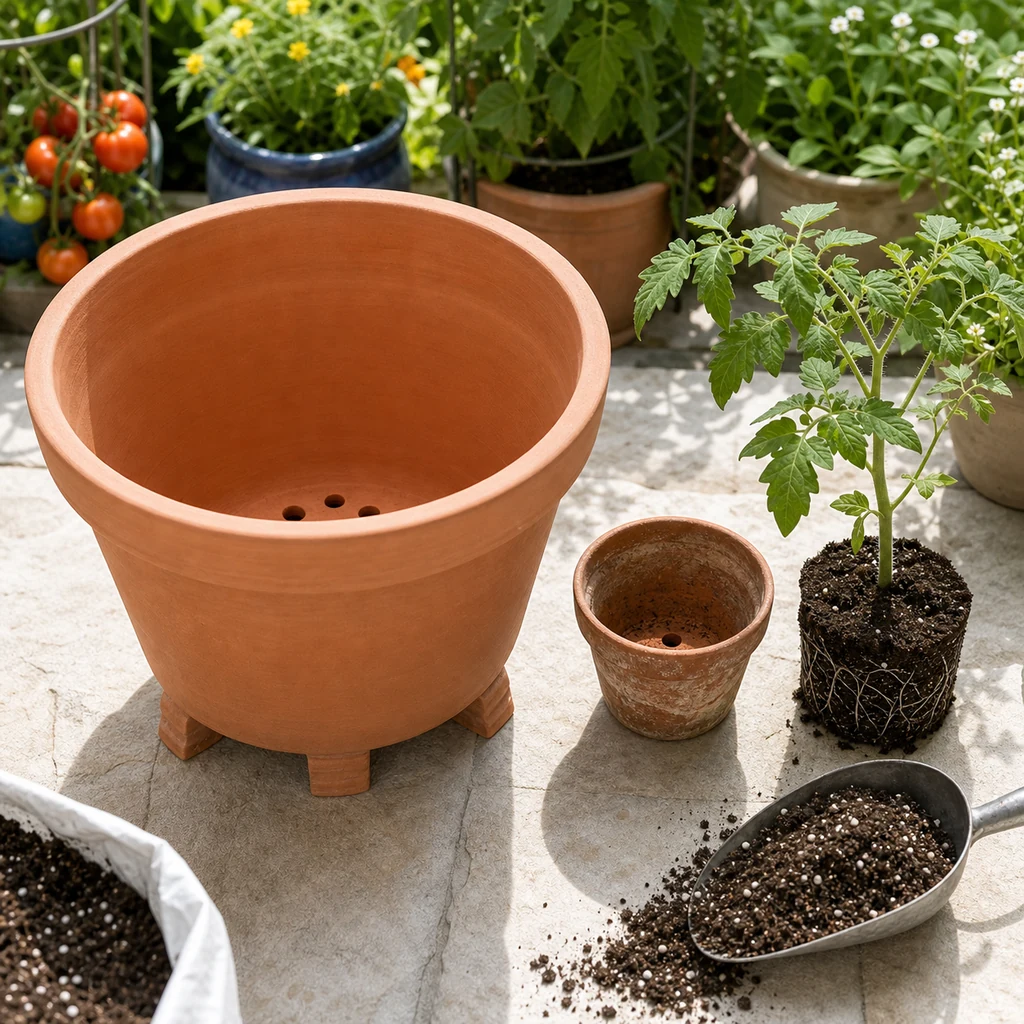
Use fresh container potting mix rather than heavy garden soil. Potting mix is designed to balance moisture retention with drainage and airflow. Garden soil often compacts in a container, limiting oxygen around the roots and slowing drainage.
Mix in finished compost according to the potting mix instructions, but do not fill the entire pot with compost. Tomatoes need a balanced growing medium, not an overly rich or dense mix. Leave one to two inches of space below the rim to make watering easier.
Plant the Tomato Seedling Deeply
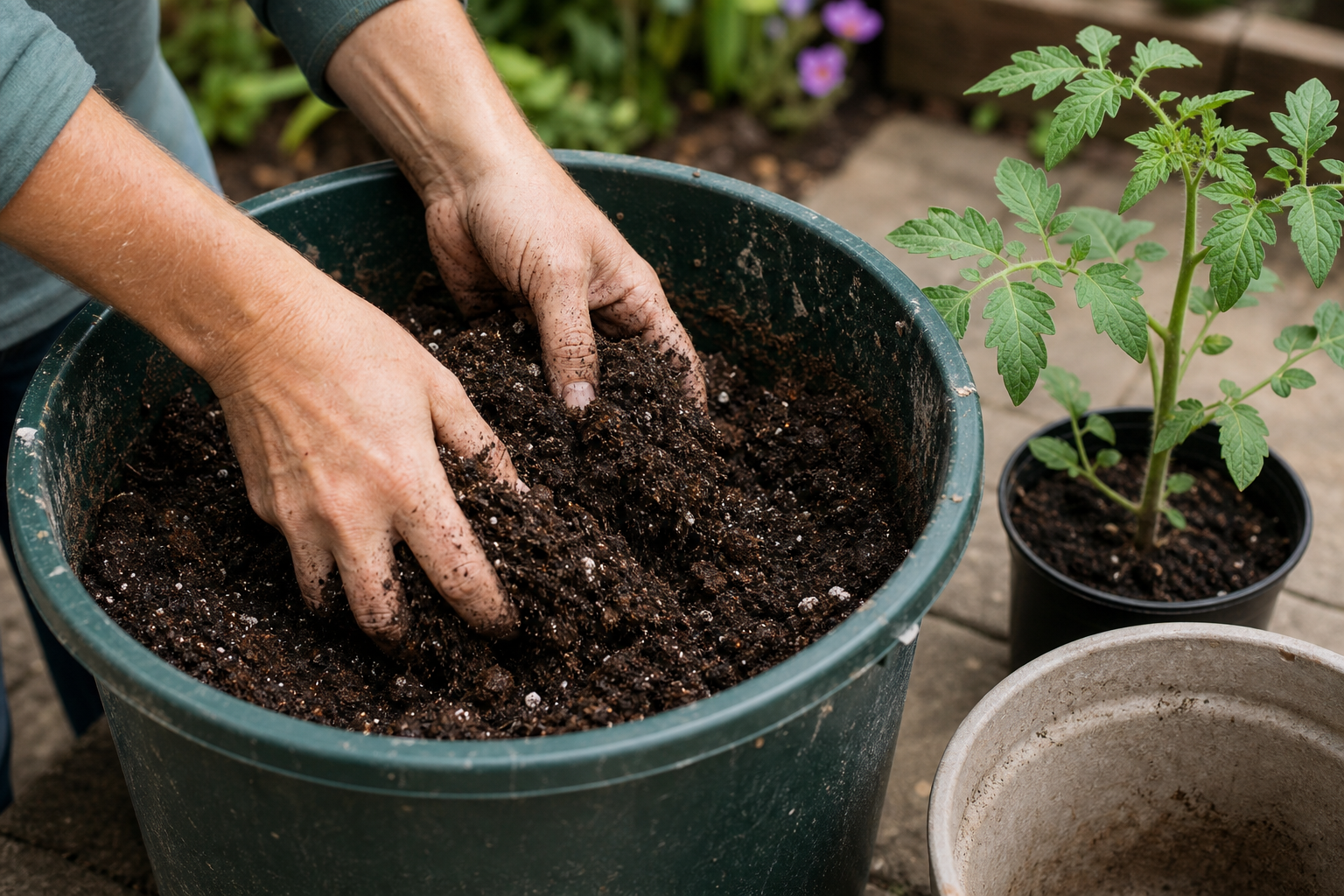
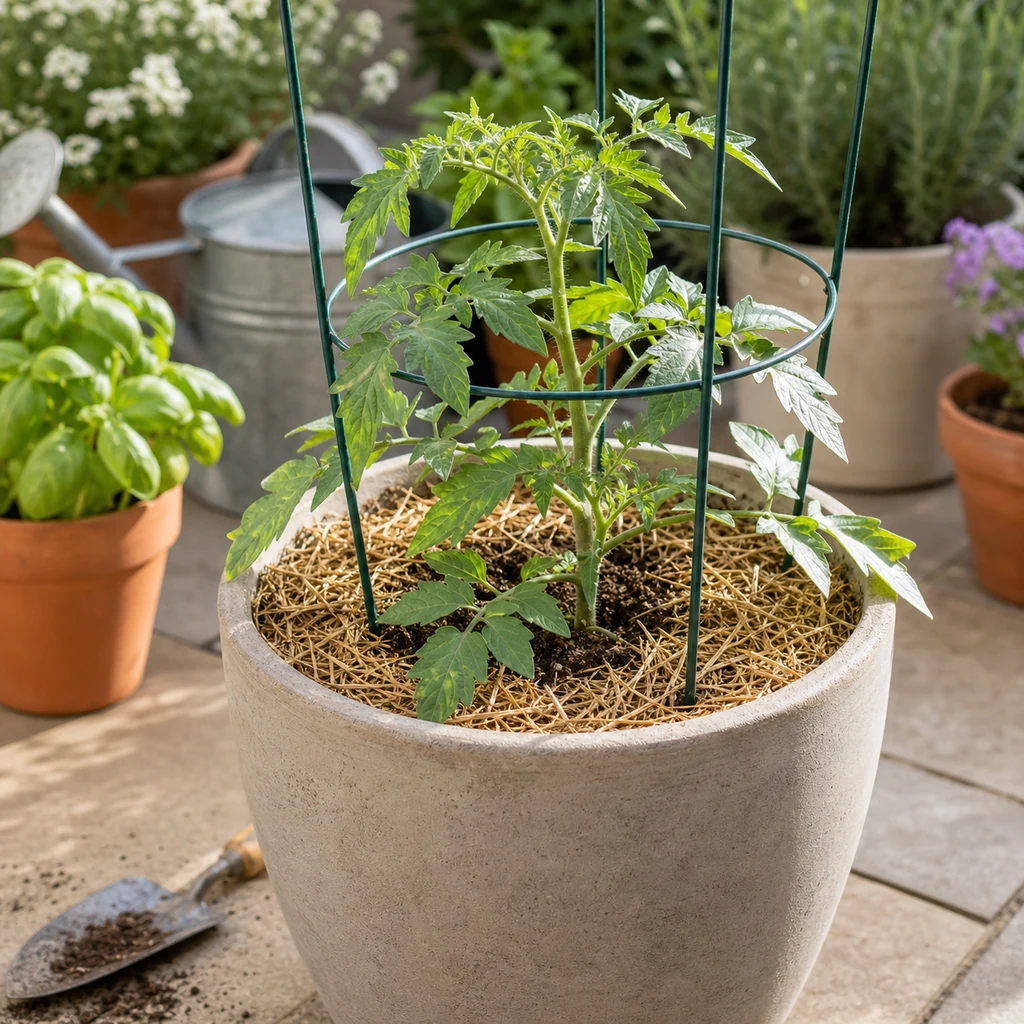
Remove the lowest leaves from the seedling and plant part of the stem below the soil surface. Tomatoes can develop roots along the buried stem, helping the plant establish a stronger root system. Water thoroughly after planting to settle the mix around the roots.
Install the tomato cage, stake, or trellis at planting time. Adding support later can damage established roots. Apply a thin layer of clean straw or other lightweight mulch over the potting mix to reduce evaporation without covering the plant stem.
Give Container Tomatoes Enough Sun
Tomato plants need at least six hours of direct sunlight daily, and eight hours is ideal for strong growth and fruit production. Observe the space before placing a heavy planted container. Morning and early afternoon sun are especially useful.
In extremely hot climates, intense late-afternoon heat can stress container roots and cause rapid wilting. A location with strong morning sun and some protection during the harshest late-day heat may work better. Light-colored containers also heat less than dark containers.
Water Deeply and Consistently
Check the soil daily during warm weather. Water when the top inch feels dry, applying water slowly at soil level until excess begins draining from the bottom. Empty collected runoff after the pot finishes draining so the roots do not remain in standing water.
Consistency matters more than following a fixed calendar. Hot, windy weather may require daily watering, while cooler or cloudy days require less. Repeatedly allowing the plant to wilt and then soaking it can contribute to cracked fruit and blossom-end rot.
Feed Tomatoes Throughout the Season
Container nutrients wash out gradually with regular watering. Begin feeding according to the fertilizer label after the plant settles into its pot and shows active growth. Use a fertilizer formulated for tomatoes or vegetables, following the package rate rather than adding extra.
Too much nitrogen can produce a large leafy plant with few flowers. Once flowering begins, choose a balanced tomato fertilizer that supports fruit development. Never apply concentrated fertilizer to dry roots; water first if the potting mix is very dry.
Support, Tie, and Prune Carefully
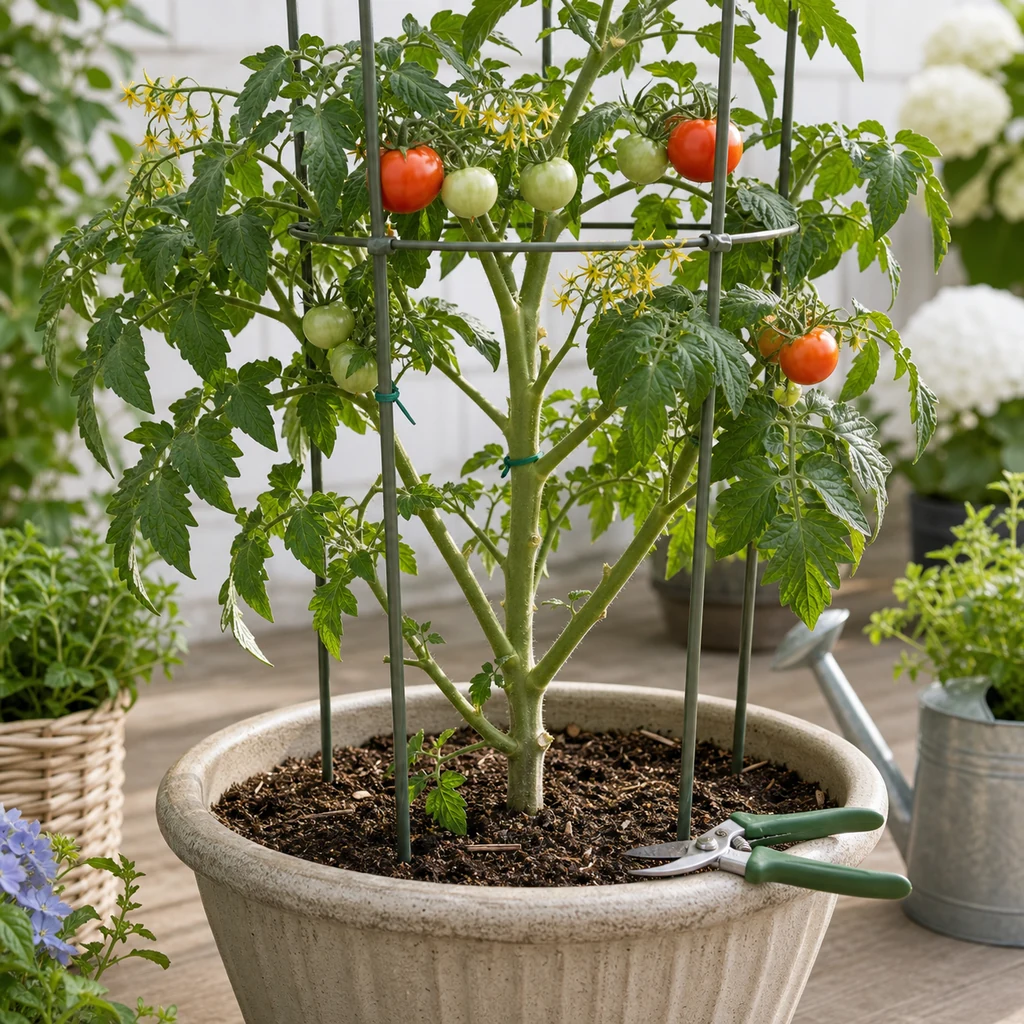
A sturdy cage or trellis prevents stems from breaking under the weight of fruit. Secure long stems loosely with soft plant ties as they grow. Check ties regularly and loosen them before they restrict the thickening stems.
Remove yellow or damaged lower leaves and any foliage touching the soil to improve airflow. Indeterminate tomatoes may benefit from selective sucker pruning, but avoid removing too much healthy foliage because leaves protect fruit from sunscald and power plant growth. Determinate plants generally need little pruning.
Common Container Tomato Problems
Leaves Wilt During the Day
Check the potting mix before watering. Dry soil means the plant needs water, but wet soil with wilted leaves may indicate poor drainage or root stress. Temporary afternoon wilting during extreme heat can improve by evening.
Flowers Drop Without Producing Fruit
Extreme heat, cold nights, irregular watering, and excessive nitrogen can cause blossom drop. Maintain steady moisture and avoid overfeeding. Gently shaking flowering branches can help distribute pollen when air movement is limited.
Fruit Develops a Dark Bottom
Blossom-end rot is commonly associated with inconsistent moisture affecting calcium movement within the plant. Maintain steady watering and avoid damaging roots. Adding extra calcium without confirming a deficiency may not solve the underlying moisture problem.
Leaves Turn Yellow
One or two old lower leaves may yellow naturally. Widespread yellowing can signal overwatering, poor drainage, nutrient imbalance, or disease. Inspect the soil moisture, drainage holes, leaf patterns, and stems before choosing a treatment.
Harvest Tomatoes at the Right Time
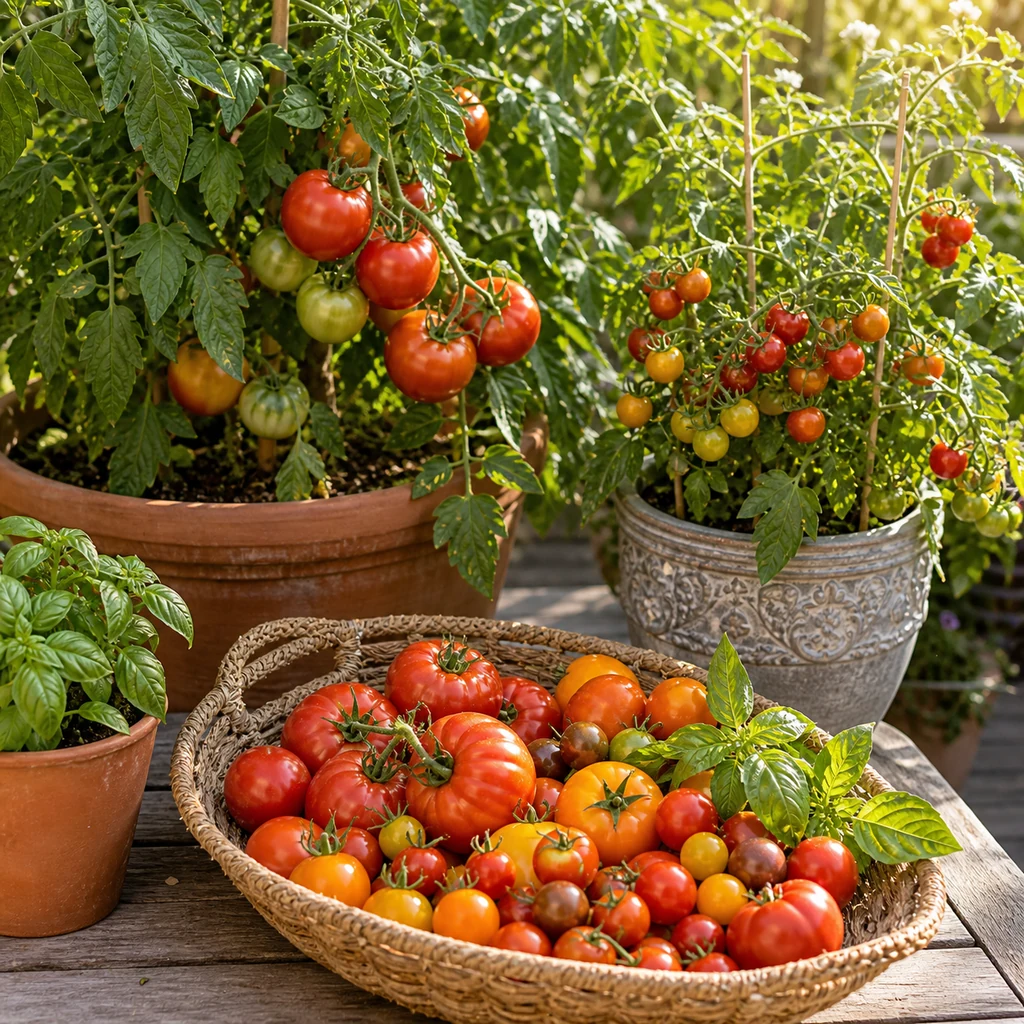
Harvest when tomatoes reach their mature color and feel slightly soft with gentle pressure. Pick regularly to reduce weight on the plant and encourage continued production. Tomatoes that begin coloring can finish ripening indoors if pests, storms, or extreme heat threaten the crop.
Use your harvest in fresh summer recipes such as quick garden-to-table summer recipes. Growing basil in a nearby separate pot also creates a convenient pairing; see these easy garden herbs to grow in pots.
Growing Tomatoes in Pots Checklist
- Select a compact variety or plan strong support for an indeterminate plant.
- Use a container of at least 10 gallons, preferably 15 to 20 gallons.
- Confirm that drainage holes are open and unobstructed.
- Fill the container with fresh quality potting mix.
- Plant the seedling deeply and install support immediately.
- Place the pot where it receives at least six hours of direct sun.
- Check soil moisture daily and water deeply at soil level.
- Feed according to the fertilizer label throughout active growth.
- Remove damaged lower leaves and tie stems loosely.
- Harvest ripe fruit regularly.
Frequently Asked Questions
What size pot is best for a tomato plant?
A 15-to-20-gallon container is a reliable choice for most tomato plants. Compact varieties may tolerate smaller pots, while vigorous indeterminate varieties benefit from the largest practical container.
How often should I water tomatoes in pots?
Check them daily in warm weather and water when the top inch of potting mix feels dry. The actual frequency changes with temperature, wind, plant size, container material, and sunlight.
Can I grow two tomato plants in one pot?
One tomato plant per container is usually best. Two plants compete for root space, water, nutrients, light, and airflow unless the container is exceptionally large.
Do container tomatoes need cages?
Most do. Even compact plants become heavy when covered with fruit. Install a sturdy cage, stake, or trellis when planting to avoid disturbing the roots later.
Can I reuse potting mix for tomatoes next year?
Reusing mix can carry pests, diseases, depleted nutrients, and compacted material into the next season. For the strongest results, replace it or thoroughly refresh and sanitize it according to local extension guidance, especially if the previous plant was unhealthy.
What is the best potting mix for tomatoes in pots?
Use a fresh, lightweight container potting mix with good drainage and airflow. Blend in a modest amount of finished compost if the label allows, but avoid filling the entire pot with garden soil or pure compost because dense mixes can limit root oxygen and drainage.
A Productive Tomato Garden Without Garden Beds
Successful container tomatoes depend on a few practical decisions: choose a suitable variety, provide generous root space, use fresh potting mix, support the plant early, and keep moisture consistent. With those basics in place, a sunny patio or balcony can produce fresh tomatoes throughout the summer without a traditional garden bed.